
Research article · 2026 · Full text
International Journal of Biology SciencesArtificial Intelligence in entomology: Emerging applications for insect pest surveillance, identification, and precision pest management
Volume 8(7) · Pages 203–218 · DOI: 10.33545/26649926.2026.v8.i7c.947 ↗
Research areasSmart Agriculture and AIInsect behavior and control techniquesAdvanced Neural Network Applications
Abstract
Author-writtenInsect pests represent one of the most significant biological constraints affecting global agricultural productivity, food security, and ecosystem stability. Conventional pest monitoring and identification approaches largely depend on manual field scouting, morphological expertise, and laboratory-based taxonomic confirmation, which are often time-consuming, labour-intensive, and difficult to implement at large spatial and temporal scales. Recent advances in Artificial Intelligence (AI), particularly Machine Learning (ML), Deep Learning (DL), computer vision, and Internet of Things (IoT)-based sensing technologies, have created new opportunities for transforming modern entomological research and pest management practices. AI-driven systems enable automated insect detection, species identification, population estimation, outbreak prediction, and real-time decision-making by integrating large datasets derived from images, environmental sensors, remote sensing platforms, and historical pest records. Deep learning algorithms, especially convolutional neural networks (CNNs) and object detection frameworks such as YOLO, have demonstrated remarkable capabilities in recognizing insect species, analysing trap images, and monitoring pest populations under field conditions. Furthermore, AI-based predictive models incorporating climatic variables, crop phenology, and ecological parameters provide improved forecasting of pest outbreaks and support precision Integrated Pest Management (IPM). The integration of AI with drones, smart traps, mobile applications, and autonomous agricultural systems has further strengthened sustainable pest management by enabling targeted interventions and reducing unnecessary pesticide applications. Despite significant progress, challenges including limited annotated datasets, environmental variability, model interpretability, infrastructure requirements, and adoption barriers remain major concerns. Future developments involving explainable AI, edge computing, generative AI, and digital twin technologies are expected to further enhance intelligent entomological systems. This review discusses recent advancements, applications, challenges, and future perspectives of AI in entomology, with particular emphasis on insect pest surveillance, automated identification, and precision pest management strategies.
Summary
Source-checkedPlain-language reading of the full paper, prepared with AI and checked against the text. Each point links to the authors' own words.
Why it matters
- Insect pests are a major threat to global food security, causing an estimated 20–40% loss in annual global crop production. View evidence ↗
- Traditional pest monitoring relies on manual scouting and expert taxonomic knowledge, which are often too slow and labor-intensive for large-scale use. View evidence ↗
- Standard pest management is typically reactive, meaning actions are taken only after crop damage is already visible. View evidence ↗
The question
- The paper aims to review the advancements, applications, and challenges of using Artificial Intelligence (AI) for insect pest surveillance, identification, and precision management. View evidence ↗
What they did
- The review focuses on two primary AI computational approaches: machine learning (ML) and deep learning (DL). View evidence ↗
- Convolutional Neural Networks (CNNs) are highlighted as a primary architecture for recognizing insects from images. View evidence ↗
- The YOLO framework is used for real-time object detection to identify the location and number of insects in images. View evidence ↗
What they found
- CNN-based systems can classify insect species within seconds by automatically extracting morphological features from images. View evidence ↗
- AI models using hyperspectral imaging can identify pest infestation patterns and plant stress with high accuracy. View evidence ↗
- AI-driven precision spraying can significantly lower the amount of pesticide used without compromising the effectiveness of pest control. View evidence ↗
- CNNs have been successfully applied to the automated identification and classification of aphids from digital images. View evidence ↗
- The combination of IoT sensors and AI-based traps enables early detection and monitoring of the red palm weevil. View evidence ↗
- A significant limitation is that many AI training datasets use laboratory images, which do not reflect the complexity of real-world field environments. View evidence ↗
What it means
- The authors conclude that AI should serve as a decision-support tool to enhance human expertise rather than replace entomologists. View evidence ↗
- High initial costs for sensors, drones, and computing infrastructure may prevent small-scale farmers from adopting AI systems. View evidence ↗
Visual summary
1 visualsIllustrations explain the paper; they do not show study data.
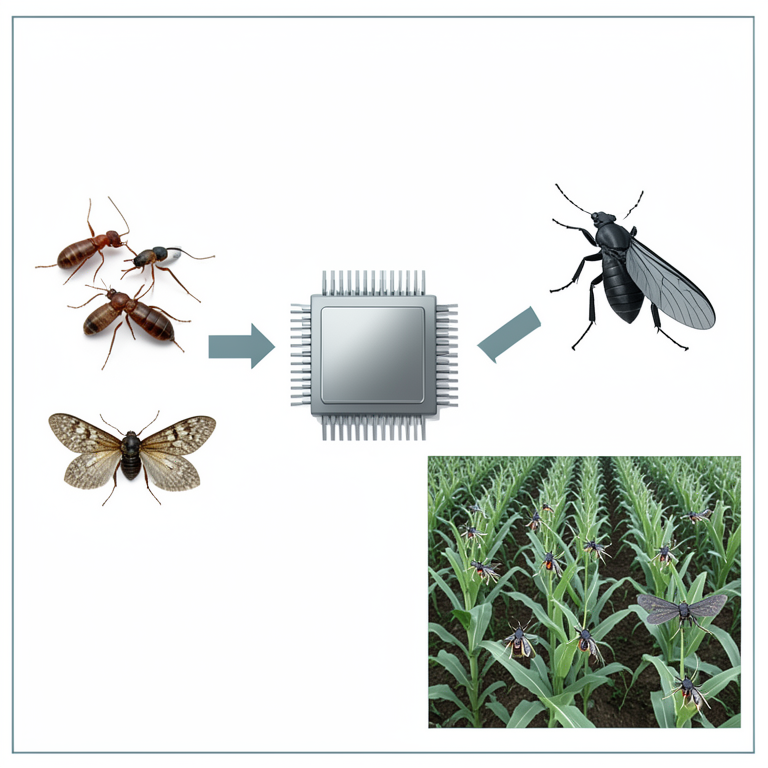
AI Framework for Entomology
AI-generated conceptual illustration (various agricultural insect pests (aphids, beetles, and moths) and a digital computer processor). It explains the idea and does not show study data.
View source evidence ↗Figures & tables
From the original paper Table 1
Introduction 1.1 Global importance of insect pests in agriculture and ecosystems
Insect pests represent one of the most significant biological constraints affecting global agricultural productivity, food security, and ecosystem stability. Approximately 20-40% of global crop production is estimated to be lost annually due to pests and diseases, with insect herbivores contributing substantially to these losses (Savary et al., 2019) [50] . Insect pests affect agricultural systems through direct feeding damage, destruction of plant tissues, contamination of harvested products, and transmission of economically important plant pathogens (Oerke, 2006) [44] . The increasing intensification of agriculture, global trade, habitat modification, and climate change have further altered insect population dynamics, geographical distribution, and outbreak frequency of several invasive and emerging pest species (Deutsch et al., 2018) [15] . Economically important pests such as fall armyworm (Spodoptera frugiperda), brown planthopper (Nilaparvata lugens), aphids, whiteflies, fruit flies, and invasive beetle species continue to threaten agricultural sustainability worldwide. The recent global spread of
Dependency on taxonomic expertise
Accurate insect identification is a fundamental requirement for effective pest management. However, traditional identification depends heavily on morphological expertise, taxonomic keys, and laboratory confirmation. The shortage of trained taxonomists and increasing complexity of insect diversity create significant challenges for rapid species identification (Hopkins & Freckleton, 2002) [29] . Closely related insect species often exhibit similar morphological characteristics, making identification difficult, particularly for immature stages such as eggs and larvae. Although molecular techniques such as DNA barcoding provide reliable species confirmation, they require specialised laboratory facilities, additional processing time, and financial resources (Hebert et al., 2003) [27] . AI-based identification approaches provide an alternative by enabling rapid image-based classification and automated recognition of insect species.
Delayed detection and reactive pest management
Conventional pest management strategies are frequently reactive rather than predictive because interventions are often initiated after visible crop damage occurs. Such delayed responses reduce management efficiency and may encourage unnecessary pesticide use (Kogan, 1998) [35] . Climate variability further complicates pest forecasting because temperature, humidity, rainfall, and crop conditions strongly influence insect population growth and migration patterns (Skendrović Babojelić et al., 2021) [51] . AI-based predictive models overcome several limitations by integrating multiple data sources, including historical pest records, climatic variables, satellite observations, and crop information. Machine learning algorithms can identify complex relationships between environmental factors and pest outbreaks, enabling early warning systems and improved management decisions (Benos et al., 2021) [5] .
Labour-intensive identification and data processing
Modern pest surveillance generates large volumes of biological information, including insect images, geographic observations, environmental measurements, and population records. Processing these datasets manually is timeconsuming and often impractical for large-scale agricultural applications. AI-based analytical systems provide automated approaches for extracting meaningful patterns from complex datasets. Deep learning techniques, particularly convolutional neural networks (CNNs), have demonstrated strong performance in image recognition tasks and have been increasingly applied for insect detection, classification, and population monitoring (LeCun et al., 2015; Thenmozhi & Reddy, 2019) [36, 54] . These approaches allow automated analysis of thousands of insect images and provide rapid diagnostic support for farmers and researchers.
Evolution from conventional entomology to digital entomology
Historically, entomology has relied on morphological identification, ecological observation, behavioural studies, and population monitoring. These approaches established the foundation of insect science; however, increasing agricultural complexity and the need for real-time decisionmaking have encouraged integration with digital technologies. The concept of digital entomology represents the transition from traditional observation-based approaches toward datadriven insect monitoring systems. Digital entomology combines artificial intelligence, computer vision, automated sensors, geographic information systems (GIS), and big-data analytics to improve understanding of insect populations and their interactions with agricultural ecosystems (Bjerge et al., 2022) [6] . Computer vision-based systems can automatically detect and classify insects from images captured by field cameras, smart traps, and mobile devices. Recent studies have demonstrated successful applications of deep learning models for insect recognition, biodiversity monitoring, and automated pest surveillance (Wang et al., 2021; Hartbauer, 2024) [26,58] .
Role of artificial intelligence in transforming pest surveillance and management
Artificial intelligence has emerged as a transformative technology capable of improving multiple aspects of entomological research. AI-based systems can support insect identification, population monitoring, pest forecasting, and precision management through automated analysis of biological and environmental data (Liakos et al., 2018) [39] . Major applications include: 1. Automated insect identification AI-based image recognition models, particularly CNNs and object detection algorithms, enable rapid identification of insect species and developmental stages (Thenmozhi & Reddy, 2019) [54] .
2. Smart pest surveillance AI-integrated traps and IoT-based monitoring systems allow continuous insect detection and remote population assessment (Bjerge et al., 2022) [6] .
Predictive pest modelling
Machine learning algorithms analyse environmental and historical datasets to forecast pest outbreaks and improve IPM decisions (Benos et al., 2021) [5] .
Precision pest management
AI facilitates targeted pesticide application, autonomous spraying systems, and site-specific pest control strategies, reducing chemical inputs and improving sustainability (Klerkx et al., 2019) [34] . Thus, AI represents a major advancement in entomology by shifting pest management from conventional reactive approaches toward predictive, automated, and precisionbased systems.
Fundamentals of artificial intelligence in entomology
Artificial Intelligence (AI) represents a rapidly developing area of computational science that enables machines to perform tasks traditionally associated with human intelligence, including learning, pattern recognition, prediction, classification, and decision-making. In entomology, AI has emerged as a transformative analytical approach for improving understanding of insect population dynamics, automating species identification, predicting pest outbreaks, and strengthening integrated pest management (IPM) strategies. The increasing availability of biological datasets generated through field sensors, automated traps, remote sensing platforms, geographic information systems (GIS), and historical pest databases has created new opportunities for applying AI-based approaches in insect science. The application of AI in entomology mainly involves two interconnected computational approaches: machine learning (ML) and deep learning (DL). Machine learning enables computational systems to identify meaningful patterns from structured biological and environmental datasets, whereas deep learning uses multilayer artificial neural networks to automatically extract complex features from large-scale image, spatial, and sensor-based datasets (Jordan & Mitchell, 2015; LeCun et al., 2015) [31,36,42] . Unlike conventional statistical approaches, AI models are capable of analysing multidimensional datasets and identifying nonlinear relationships among insect populations, climatic conditions, crop characteristics, and management practices. This capability has significantly contributed to the development of predictive and precision-based pest management systems (Liakos et al., 2018; Benos et al., 2021) [5,39] .
Machine learning is a major branch of artificial intelligence that enables computer systems to learn relationships and improve predictive performance through experience gained from available datasets without requiring explicit programming. In agricultural entomology, ML algorithms have become increasingly important for analysing complex interactions between insect populations, environmental variables, crop conditions, and management interventions. Unlike traditional statistical models, which generally depend on predefined assumptions regarding relationships among variables, machine learning approaches can identify complex nonlinear patterns and hidden relationships within large biological datasets (Mitchell, 1997; Jordan & Mitchell, 2015) [31,42] . The application of machine learning in entomology primarily focuses on pest population prediction, outbreak forecasting, climate-insect interaction modelling, and pesticide decision-support systems. These applications enable researchers and agricultural practitioners to move from conventional reactive pest management approaches toward predictive and data-driven decision-making systems.
Pest population prediction
Accurate estimation of insect population density is a fundamental requirement for implementing effective economic threshold-based pest management strategies. Conventional pest monitoring methods generally depend on manual field sampling, visual observation, and expert assessment. Although these methods provide valuable information, they are often limited by restricted sampling frequency, high labour requirements, and difficulty in monitoring large agricultural areas. Machine learning approaches provide an alternative solution by integrating multiple factors influencing insect population development, including temperature, rainfall, relative humidity, crop growth stage, historical pest abundance, and vegetation indices. By analysing these variables simultaneously, ML models can identify complex relationships between environmental conditions and pest population trends. Artificial neural network-based models have demonstrated significant potential for predicting insect population dynamics by analysing nonlinear relationships between environmental factors and insect development patterns (Damos, 2015) [12] . Similarly, machine learning-based forecasting approaches have shown improved performance compared with conventional regression models for predicting agricultural pest populations (Mishra et al., 2022) [43] . Such predictive systems allow farmers and pest management specialists to implement preventive strategies before insect populations exceed economic thresholds, thereby reducing crop losses and unnecessary pesticide applications.
Outbreak Forecasting
Insect pest outbreaks are influenced by multiple interacting factors, including climatic variability, host availability, insect migration behaviour, and landscape characteristics. Due to the complexity of these interactions, predicting pest outbreaks using conventional approaches remains challenging. Machine learning algorithms provide powerful tools for outbreak forecasting because they can analyse large historical datasets and identify patterns associated with pest emergence and population expansion. Algorithms such as Random Forest, Support Vector Machine (SVM), and Artificial Neural Networks (ANNs) have been applied for predicting pest occurrence, distribution patterns, and outbreak risks. Machine learningbased species distribution models have successfully combined climatic variables with geographic information system (GIS) datasets to improve predictions of insect distribution and ecological responses (Elith et al., 2006) [19] . Similarly, species modelling approaches incorporating machine learning techniques have enhanced predictions of insect responses under changing climate conditions (Thuiller et al., 2009) [55] . The application of AI-based forecasting systems has become particularly important for invasive insect pests. For example, predictive models developed for fall armyworm (Spodoptera frugiperda) have integrated climate information, crop distribution patterns, and pest occurrence records to estimate potential invasion risks and outbreak probability (Early et al., 2018) [18] . Such approaches provide valuable early warning information for developing effective pest management strategies.
Climate-insect interaction modelling
Climate conditions strongly influence insect development, reproduction, migration, survival, and geographical distribution. Temperature, precipitation, and humidity directly affect insect growth rates, generation time, and population increase. However, insect responses to environmental variables are often nonlinear and involve complex interactions that are difficult to capture using traditional statistical methods. Machine learning approaches provide advanced analytical capabilities for understanding climate-insect relationships by integrating environmental datasets with insect population information. These models have been applied to predict pest distribution under future climate scenarios, estimate changes in insect phenology, and identify climate-driven outbreak risks. Species distribution models based on machine learning algorithms have demonstrated effectiveness in predicting habitat suitability and potential distribution changes of insect species under changing environmental conditions (Guisan et al., 2017) [24] . The integration of ML models with climate datasets is expected to become increasingly important for developing climate-resilient pest management strategies, particularly under conditions of global warming and changing agricultural environments.
Pesticide decision support systems
Excessive pesticide application remains a major challenge in agricultural production due to environmental contamination, development of insecticide resistance, and harmful effects on beneficial organisms. Machine learning-based decisionsupport systems provide an opportunity to improve pesticide efficiency by integrating pest population data, crop conditions, weather information, and economic threshold levels. AI-based decision-support systems can assist farmers and agricultural experts by determining whether pesticide application is necessary, identifying the most appropriate intervention timing, recommending suitable management strategies, and predicting expected treatment effectiveness. Research has demonstrated that digital agriculture and AIsupported decision systems can improve resource-use efficiency and reduce unnecessary chemical inputs by enabling precise and targeted pest management decisions (Klerkx et al., 2019) [34] . These systems represent an important step toward environmentally sustainable pest control.
Major machine learning algorithms used in entomology Random Forest (RF)
Random Forest is an ensemble machine learning algorithm that combines multiple decision trees to improve predictive accuracy and reduce overfitting. The algorithm is particularly useful for analysing complex ecological datasets containing multiple interacting environmental and biological variables (Breiman, 2001) [8] . In entomology, Random Forest models have been applied for predicting pest occurrence, analysing habitat suitability, and modelling insect species distribution. Their ability to handle large datasets with multiple variables makes them suitable for ecological and agricultural applications.
Support vector machine (SVM)
Support Vector Machine is a supervised learning algorithm that classifies data by identifying optimal decision boundaries between different categories. In insect science, SVM approaches have been applied for insect species classification, pest recognition, and image-based identification. SVM-based classification systems have demonstrated high accuracy in distinguishing insect species when combined with morphological and image-derived features (Xia et al., 2018) [60] . These characteristics make SVM useful for automated insect identification systems.
Gradient boosting algorithms
Gradient boosting algorithms, including XGBoost-based approaches, improve predictive performance by combining multiple weak learning models into a stronger predictive framework. These methods have demonstrated effectiveness in analysing complex agricultural datasets involving environmental variability and biological interactions (Chen & Guestrin, 2016) [11] . In entomological applications, gradient boosting approaches have been used for pest outbreak prediction, environmental risk assessment, and agricultural forecasting.
Artificial neural networks (ANNs)
Artificial Neural Networks are computational models inspired by biological neural systems. They consist of interconnected processing units capable of learning complex relationships from large datasets. Due to their ability to model nonlinear interactions, ANNs have become valuable tools in insect population forecasting, climate-based pest prediction, and decision-support systems.
ANN models have successfully demonstrated the ability to predict insect population dynamics by analysing relationships between environmental conditions and pest development patterns (Damos, 2015) [12] .
Deep Learning (DL)
Deep learning represents an advanced branch of machine learning based on artificial neural networks containing multiple hidden layers capable of automatically extracting complex features from raw datasets. Unlike traditional machine learning methods that require manual feature extraction, deep learning algorithms automatically identify important patterns from images, videos, and sensorgenerated data (LeCun et al., 2015) [36] . In entomology, deep learning has revolutionized insect identification and monitoring by enabling automated analysis of large image datasets generated through smart traps, field cameras, drones, and mobile devices.
Convolutional neural networks (CNNs)
Convolutional Neural Networks are among the most widely applied deep learning architectures for image-based insect recognition. CNNs automatically extract important visual characteristics such as body shape, colour patterns, wing structure, morphology, and texture features from insect images.
Insect image classification
CNN-based models have achieved high accuracy in classifying insect species from digital images. These systems significantly reduce dependence on manual taxonomic identification and allow rapid processing of large image datasets (Thenmozhi & Reddy, 2019) [54] .
Species recognition
Deep learning models have been successfully applied for automated recognition of economically important insect pests, including aphids, beetles, moths, whiteflies, and fruit flies. CNN-based approaches provide rapid species-level identification and support real-time pest diagnosis systems (Wang et al., 2021) [58] .
Life-stage identification
Identification of insect developmental stages is essential because management strategies often depend on specific life stages. CNN models have demonstrated capability in distinguishing eggs, larvae, pupae, and adult stages of economically important insect pests (Li et al., 2020).
YOLO-based object detection
You Only Look Once (YOLO) is a real-time object detection framework designed for rapid identification and localization of objects within images. Unlike conventional classification models, YOLO simultaneously determines object identity, location, and number within a single imageprocessing step (Redmon et al., 2016) [48] . In entomology, YOLO-based models have been applied for automated insect counting, trap image analysis, and field-level pest monitoring. These systems can analyse sticky trap images, pheromone trap images, and field photographs to rapidly identify insect individuals and estimate population density. AI-based trap monitoring systems using YOLO have demonstrated potential for improving insect surveillance efficiency by reducing manual counting requirements and providing real-time pest population information (Rustia et al., 2020) [49] .
Vision Transformers (ViTs): Vision Transformers represent a recent advancement in computer vision that applies transformer-based architectures originally developed for natural language processing to image analysis. Unlike CNNs that primarily focus on local image features, Vision
Transformers analyse relationships between different image regions using self-attention mechanisms (Dosovitskiy et al., 2021) [17] . In entomology, Vision Transformers provide promising opportunities for fine-grained insect recognition, particularly for distinguishing closely related species with subtle morphological differences. They are also valuable for analysing complex field images containing leaves, soil, multiple insects, and variable lighting conditions. Recent transformer-based approaches have demonstrated improved performance in complex image classification tasks and may significantly enhance future insect recognition systems (Touvron et al., 2021) [56] .
AI-Based insect pest surveillance systems
Effective pest surveillance is the foundation of integrated pest management (IPM) because timely detection of insect populations allows preventive and targeted management interventions. Traditional surveillance methods based on manual scouting and trap inspection are often limited by labour requirements, sampling frequency, and dependence on expert knowledge. Artificial intelligence (AI)-based surveillance systems overcome these limitations by integrating automated imaging devices, Internet of Things (IoT) sensors, remote sensing platforms, and machine learning algorithms for continuous and large-scale monitoring of insect populations. These intelligent systems enable real-time detection, identification, and prediction of pest outbreaks, thereby supporting sustainable and precision-based pest management strategies (Liakos et al., 2018; Benos et al., 2021) [5,39] .
Automated smart traps
Automated smart traps represent one of the most promising applications of AI in modern entomological surveillance. Conventional pheromone and sticky traps are widely used for monitoring economically important insect pests; however, manual inspection of traps is time-consuming, requires skilled personnel, and provides discontinuous information. The integration of digital cameras, embedded computing systems, and AI algorithms has transformed conventional traps into intelligent monitoring platforms capable of automatically detecting and analysing insect populations (Rustia et al., 2020) [49] . AI-enabled smart traps generally consist of a trapping mechanism, image acquisition system, environmental sensors, communication module, and machine learningbased analytical framework. The operational workflow follows a sequential process: [36,48] . Smart traps have been successfully applied for monitoring several economically important insect groups. Automated monitoring of moth species using camera-equipped pheromone traps has received considerable attention because many Lepidopteran pests are difficult to monitor manually over large agricultural areas. AI-based systems have demonstrated the ability to identify and count moth species from trap images, providing continuous information on pest population dynamics (Mayo & Watson, 2007; Rustia et al., 2020) [41,49] . Fruit fly surveillance is another important application area because species such as Bactrocera spp. and Ceratitis capitata cause significant economic losses in horticultural crops. AI-assisted trap systems allow automated detection and classification of fruit flies, reducing dependence on manual identification and improving early warning capabilities (Solis-Sánchez et al., 2011) [52] . Similarly, stored grain pest monitoring has benefited from AI-based imaging systems. Storage pests such as weevils, beetles, and moth larvae can cause substantial post-harvest losses, and early detection is essential for preventing infestation development. Computer vision-based approaches enable rapid assessment of insect presence in stored commodities and support automated quality management systems (Jha et al., 2019). The major advantages of AI-based smart traps include continuous monitoring, reduced labour requirements, remote accessibility, and improved accuracy of pest population estimation. However, challenges remain regarding field variability, image quality under different environmental conditions, power requirements, and the availability of large annotated datasets for training AI models (Bjerge et al., 2022) [6] .
Drone-based pest surveillance
Unmanned aerial vehicles (UAVs), commonly known as drones, have emerged as valuable tools for large-scale agricultural monitoring. When integrated with AI-based image analysis systems, drones provide rapid assessment of crop health, pest distribution, and infestation severity across large agricultural landscapes. Unlike ground-based monitoring methods, drone-based surveillance enables spatially continuous observation and identification of pest hotspots before severe crop damage occurs (Zhang & Kovacs, 2012) [61] . Drone-based pest surveillance primarily relies on different imaging technologies, including RGB cameras, multispectral sensors, and hyperspectral imaging systems. RGB cameras provide high-resolution visible images suitable for detecting visible symptoms associated with pest infestation, such as leaf discoloration, feeding damage, and canopy changes. AI algorithms can analyse these images to identify abnormal crop patterns and estimate pest-related damage (Mahlein, 2016) [40] . Multispectral imaging provides additional information beyond visible light by capturing reflected radiation at specific wavelengths. These spectral signatures can reveal physiological changes in plants caused by insect feeding before visible symptoms appear. When combined with machine learning models, multispectral data can improve early detection of pest stress and differentiation between healthy and affected plants (Zhang et al., 2019) [61] . Hyperspectral imaging represents an advanced sensing approach capable of collecting hundreds of narrow spectral bands. This technology provides detailed information regarding plant biochemical changes associated with insect attack. AI models can analyse hyperspectral datasets to classify pest-induced stress and identify infestation patterns with high accuracy (Behmann et al., 2015) [4] . A major advantage of drone-based AI surveillance is the development of spatial pest distribution maps. By combining UAV imagery with geographic information systems (GIS), researchers can generate pest risk maps showing infestation intensity and distribution patterns. Such information enables farmers to apply targeted management interventions rather than uniform pesticide applications, reducing chemical usage and improving environmental sustainability (Deng et al., 2021) [16] . Despite their potential, drone-based systems face limitations including regulatory restrictions, operational costs, weather dependency, and the need for advanced computational infrastructure. Future integration with edge computing and autonomous navigation systems is expected to improve the scalability of drone-based pest monitoring.
IoT and sensor-based entomological monitoring
The Internet of Things (IoT) has introduced new possibilities for continuous environmental and biological monitoring in agricultural ecosystems. IoT-based entomological systems combine distributed sensors, wireless communication networks, cloud computing, and AI algorithms to provide real-time information about pest activity and environmental conditions. The fundamental workflow of IoT-enabled pest monitoring involves: IoT sensors → Environmental data collection → Data transmission → AI prediction models → Early pest warning system → Management recommendation IoT sensors installed in agricultural fields can continuously collect environmental parameters that influence insect population dynamics, including temperature, humidity, rainfall, soil conditions, crop growth characteristics, and insect activity patterns. These datasets are analysed using machine learning algorithms to predict pest emergence and population increases (Kamilaris & Prenafeta-Boldú, 2018) [32] . Temperature and humidity are particularly important because insect development rates, reproductive capacity, and survival are strongly influenced by climatic conditions. AI models can integrate environmental data with historical pest records to generate predictive models capable of forecasting pest outbreaks before economic damage occurs (Damos, 2015) [12] . Smart sensor networks have also been developed for monitoring insect activity directly. Acoustic sensors, optical sensors, and automated imaging systems can detect insect movement, wingbeat patterns, or trap captures. These data streams provide valuable information for developing early warning systems and improving decision-making in IPM programs (Potamitis et al., 2015) [46] . The integration of IoT with AI enables the transition from traditional reactive pest management toward predictive and autonomous agricultural systems. However, challenges related to sensor reliability, communication infrastructure, energy requirements, and data management must be addressed for widespread adoption.
Artificial Intelligence for Insect Identification
Accurate insect identification is fundamental for successful pest management, biodiversity assessment, and ecological research. Conventional identification methods rely mainly on morphological examination, microscopy, taxonomic keys, and expert knowledge. Although these approaches remain scientifically important, they are often timeconsuming and difficult to apply for large-scale monitoring. AI-based image recognition technologies provide alternative approaches by enabling rapid, automated, and scalable insect identification.
Image-based identification
Traditional insect identification depends on detailed morphological examination performed by trained taxonomists. Identification often requires analysis of external characteristics such as body shape, wing venation, antennae structure, colour patterns, and developmental characteristics. However, morphological identification becomes challenging when dealing with closely related species, immature life stages, damaged specimens, or large numbers of samples (Hopkins & Freckleton, 2002) [29] . AIbased image identification systems overcome several limitations of conventional approaches by automatically extracting visual features from insect images. Deep learning architectures, particularly CNNs, have demonstrated excellent performance in recognising complex patterns associated with insect morphology (LeCun et al., 2015) [36] . AI-based identification provides several advantages: • rapid species recognition • automated processing of large image datasets • reduced dependency on expert taxonomists • field-level diagnostic capability through mobile devices CNN-based systems have been developed for identifying several economically important insect groups, including aphids, whiteflies, beetles, mosquitoes, and Lepidopteran pests. For example, deep learning models have achieved high classification accuracy in agricultural pest recognition by analysing insect body characteristics and image features (Thenmozhi & Reddy, 2019) [54] . Mosquito identification represents another important application because accurate species recognition is essential for disease surveillance. AI models trained on mosquito images have demonstrated the ability to differentiate mosquito species and support automated vector monitoring programs (Fedorova et al., 2020) [20] .
Mobile-based ai identification platforms
The development of smartphone-based AI applications has significantly increased accessibility of insect identification technologies. Mobile platforms combine smartphone cameras, cloud-based AI models, and user-friendly interfaces to provide real-time pest diagnosis directly in agricultural fields. These systems are particularly valuable for farmers, agricultural extension workers, and citizen scientists who may lack specialised taxonomic expertise. Users can capture insect images using smartphones, which are analysed by AI algorithms to provide pest identification and management recommendations. Mobile-based AI platforms support:
• farmer-friendly pest diagnosis • extension service delivery • citizen science monitoring • rapid reporting of invasive species Applications such as image-based pest recognition systems have demonstrated potential for improving agricultural advisory services by reducing the time required between pest detection and management action (Ramcharan et al., 2017) [47] .
AI-assisted taxonomy and biodiversity monitoring
Beyond agricultural pest management, AI has become an important tool for taxonomy, biodiversity assessment, and ecological monitoring. Large-scale biodiversity studies generate enormous quantities of insect images and specimen records that are difficult to process manually. AI-assisted systems provide automated approaches for analysing these datasets and improving ecological understanding. AI applications in biodiversity monitoring include: [6] .
AI applications in precision pest management
Precision pest management represents a significant advancement over conventional pest control strategies by integrating real-time monitoring, predictive modelling, and targeted intervention approaches. Traditional pest management practices often involve uniform pesticide application across entire fields, regardless of the actual distribution and severity of pest infestation. This approach may result in unnecessary chemical usage, increased production costs, pesticide resistance development, and negative impacts on non-target organisms. Artificial intelligence (AI) provides a pathway toward sustainable pest management by combining biological information, environmental data, remote sensing, and automated decision-making systems to optimize pest control strategies (Klerkx et al., 2019; Benos et al., 2021) [5,34] . AI-driven precision pest management systems are based on the principle of "detect, predict, and intervene", where pest populations are continuously monitored, future risks are predicted, and management actions are implemented only when and where required. These systems integrate machine learning algorithms, IoT networks, satellite imagery, drones, and agricultural databases to provide accurate and timely pest management recommendations.
Predictive pest forecasting
Predictive pest forecasting is one of the most important applications of AI in modern entomology. The ability to predict pest outbreaks before they reach economically damaging levels allows farmers to implement preventive management strategies and reduce dependence on chemical pesticides. Conventional pest forecasting systems generally rely on historical observations and simple statistical relationships between environmental variables and pest occurrence. However, insect population dynamics are influenced by multiple interacting factors, including temperature, rainfall, humidity, crop development stage, landscape characteristics, and pest migration behaviour. AIbased models overcome these limitations by analysing large and complex datasets to identify hidden relationships between environmental conditions and pest population trends (Damos, 2015) [12] . AI forecasting models integrate multiple data sources, including:
• Weather data: temperature, humidity, rainfall, wind speed, and climatic variability [39] . For example, climate-based AI models have been used to predict the potential distribution and outbreak risk of invasive insect pests under changing climatic conditions. Species distribution models incorporating machine learning algorithms have successfully predicted habitat suitability and geographical expansion of several insect species (Elith et al., 2006; Guisan et al., 2017) [19,24] . Such predictive approaches are particularly valuable for invasive pests, where early warning can significantly reduce economic losses. The major outputs generated by AI-based pest forecasting systems include:
Pest risk maps AI models combined with Geographic Information Systems (GIS) can generate spatial risk maps showing areas with high probability of pest infestation. These maps enable farmers and agricultural agencies to prioritize monitoring efforts and implement targeted control measures.
Outbreak prediction
Machine learning models can estimate the probability and severity of future pest outbreaks by analysing environmental and historical data. Such predictions support proactive rather than reactive pest management.
Intervention timing
AI-based forecasting helps determine the optimal timing for pest control interventions by predicting when insect populations are likely to exceed economic thresholds. Correct timing improves pesticide efficiency and reduces unnecessary applications. The integration of AI forecasting with climate-smart agriculture is expected to become increasingly important under global climate change scenarios, where altered temperature and rainfall patterns are influencing insect distribution and outbreak frequency (Deutsch et al., 2018) [15] . In AI-based IPM systems, data collected from smart traps, drones, satellites, and field sensors are continuously analysed using machine learning models. These systems provide real-time information regarding pest abundance, spatial distribution, and future outbreak probability. For example, AI-powered monitoring platforms can identify early pest infestation patterns and recommend appropriate management actions before severe crop damage occurs. This improves the efficiency of biological control, cultural practices, and selective pesticide applications (Dara, 2019) [13] . AI-driven IPM provides several advantages:
AI-driven integrated pest management (IPM)
AI-driven integrated pest management (IPM)
Improved pest detection
Continuous monitoring enables early detection of pest populations, reducing the risk of severe outbreaks.
Reduced pesticide usage
By identifying specific locations requiring treatment, AI systems support site-specific pesticide application rather than blanket spraying.
Enhanced decision-making AI-based decision-support tools provide farmers with evidence-based recommendations by combining pest information, environmental conditions, and economic thresholds.
Enhanced decision-making AI-based decision-support tools provide farmers with evidence-based recommendations by combining pest information, environmental conditions, and economic thresholds.
Sustainable crop protection
Reduced pesticide use contributes to environmental protection by minimizing contamination of soil, water resources, and beneficial insect populations. The integration of AI into IPM represents a transition from traditional reactive pest management toward predictive and adaptive agricultural systems. [61] .
Precision application technologies
Precision application technologies
Autonomous agricultural robots
Autonomous agricultural robots equipped with AI-based vision systems are emerging as advanced tools for precision pest management. These robots can navigate agricultural fields, identify pest-infested plants, and perform targeted treatment. AI-enabled agricultural robots integrate:
• computer vision • GPS navigation • machine learning algorithms • robotic manipulation systems Such technologies have potential applications in greenhouse pest management, weed-pest discrimination, and targeted insecticide delivery.
Targeted insecticide delivery AI systems enable precise delivery of insecticides by identifying individual plants or areas requiring treatment.
This approach reduces chemical wastage and minimizes exposure of beneficial organisms. Targeted delivery systems are particularly valuable in highvalue crops where pesticide reduction is economically and environmentally important.
Advantages of Ai-based precision application reduced chemical load
AI-guided application minimizes unnecessary pesticide use, reducing chemical accumulation in agricultural ecosystems.
Lower production cost
Optimized pesticide usage decreases input costs and improves resource efficiency.
Environmental protection
Reduced chemical exposure protects pollinators, natural enemies, soil organisms, and surrounding ecosystems. Overall, AI-based precision application technologies represent a major step toward sustainable agriculture by integrating automation, ecological knowledge, and datadriven decision-making.
Case studies of ai applications in entomology
Artificial intelligence applications in entomology have expanded rapidly across insect identification, surveillance, population monitoring, and ecological assessment. Different insect groups require different AI approaches depending on their behaviour, habitat, and monitoring requirements. The following examples demonstrate the diversity of AI applications in modern insect science. [54] .
Fruit flies: AI-based trap monitoring: Fruit flies cause serious economic losses in horticultural crops worldwide.
AI-enabled trap monitoring systems equipped with cameras and computer vision algorithms can automatically detect, count, and classify fruit flies captured in monitoring traps. These systems improve surveillance efficiency and provide real-time information for fruit fly management programs (Rustia et al., 2020) [49] .
Fall armyworm: Deep learning-based early detection
Fall armyworm (Spodoptera frugiperda) is a highly invasive pest affecting maize and other crops globally. AI-based systems have been developed to detect infestation symptoms, identify larvae, and predict pest distribution using environmental and remote sensing data. Early detection enables timely intervention and reduces crop losses (Early et al., 2018) [18] .
Mosquitoes: Acoustic AI for species classification
Mosquito monitoring is important for both agricultural and public health applications. Acoustic AI systems analyse mosquito wingbeat frequencies and behavioural patterns to differentiate species. These approaches provide automated alternatives to traditional mosquito identification methods (Potamitis et al., 2015) [46] .
Red palm weevil: IoT and AI-based early detection
Red palm weevil (Rhynchophorus ferrugineus) is a destructive pest of palm species. IoT-based sensor systems combined with AI algorithms have been developed for early detection by monitoring insect movement, acoustic signals, and environmental conditions. Such systems allow timely management before severe internal damage occurs.
Advantages of AI-based entomological systems
The integration of artificial intelligence (AI) into entomological research and pest management has introduced significant improvements in the efficiency, accuracy, and scalability of insect monitoring systems. Traditional entomological approaches often depend on manual observation, expert taxonomic knowledge, and periodic field surveys, which can be time-consuming and difficult to implement over large geographical areas. AI-based systems overcome several of these limitations by enabling automated analysis of biological data, continuous monitoring, predictive modelling, and precision-based decision-making. [5,39] .
Rapid Pest identification
One of the most important advantages of AI-based entomological systems is the ability to rapidly identify insect species with high accuracy. Conventional insect identification relies on morphological examination, taxonomic keys, microscopy, and expert knowledge, which may require considerable time and specialized expertise. This becomes particularly challenging when dealing with large numbers of samples, cryptic species, immature life stages, or geographically diverse insect populations. AI-based image recognition systems, particularly convolutional neural networks (CNNs), have demonstrated the ability to automatically extract morphological features from insect images and classify species within seconds. These systems can analyse characteristics such as body shape, colour patterns, wing structure, and external morphology without requiring manual feature selection (LeCun et al., 2015; Thenmozhi & Reddy, 2019) [36,54] . Rapid AI-assisted identification is especially valuable for agricultural pests, invasive species surveillance, and diseasevector monitoring. For example, automated identification systems have been developed for aphids, mosquitoes, beetles, fruit flies, and Lepidopteran pests, enabling faster diagnosis and timely management decisions (Wang et al., 2021) [58] . Such technologies reduce dependence on limited taxonomic expertise and allow farmers, extension workers, and researchers to access reliable identification tools.
Continuous monitoring and real-time surveillance
A major limitation of conventional pest monitoring is that field observations are usually conducted periodically, resulting in gaps in pest population information. Insect populations can increase rapidly under favourable environmental conditions, and delayed detection may result in severe crop losses. AI-based monitoring systems enable continuous surveillance through smart traps, automated cameras, IoT sensors, drones, and remote sensing platforms. These systems can collect biological and environmental information continuously and analyse data in real time using AI algorithms. For example, AI-enabled smart traps equipped with cameras can automatically detect and count insects captured in pheromone or sticky traps, reducing the need for manual inspection (Rustia et al., 2020) [49] . Similarly, drone-based monitoring systems can provide repeated observations of crop fields and detect early signs of pest infestation through changes in vegetation characteristics (Zhang & Kovacs, 2012) [62] . Continuous monitoring improves understanding of pest population dynamics and allows early intervention before pest populations exceed economic thresholds.
Reduction in pesticide application
Excessive pesticide use is a major concern in modern agriculture due to environmental contamination, pesticide resistance, and negative impacts on beneficial organisms. AI-based precision pest management systems contribute to pesticide reduction by enabling targeted application rather than uniform field-wide spraying. AI algorithms analyse pest distribution, crop health information, and environmental conditions to determine where and when pest control measures are required. This approach allows farmers to apply pesticides only in affected areas, reducing chemical inputs while maintaining effective pest suppression (Klerkx et al., 2019). Variable-rate spraying technologies supported by AI and remote sensing can significantly improve pesticide-use efficiency. In addition, AI-driven decision-support systems help farmer's select appropriate management strategies based on real-time pest risk assessments rather than routine pesticide application schedules.
Reduced pesticide usage provides multiple benefits, including:
• protection of beneficial insects and pollinators,
• reduced chemical residues in agricultural ecosystems,
• Improved environmental sustainability.
Decision-based pest management
AI transforms pest management from a reactive approach into a predictive and decision-based system. Traditional pest management decisions are often based on visual observations and fixed treatment schedules. However, AI systems integrate multiple information sources, including pest population data, weather conditions, crop stage, and historical outbreak records, to generate scientifically informed recommendations. Machine learning models can predict pest risk levels, estimate outbreak probability, and suggest appropriate intervention strategies. These decision-support systems assist farmers and agricultural specialists in selecting management options based on actual field conditions rather than assumptions (Dara, 2019) [13] . [47] .
Challenges and limitations of Ai-based entomological systems
Although AI has demonstrated remarkable potential in transforming entomology, several technological, biological, and practical challenges limit its widespread adoption. The performance of AI systems depends strongly on data quality, model robustness, computational resources, and successful integration with agricultural practices. Addressing these limitations is essential for developing reliable and globally applicable AI-based pest management systems.
Dataset limitations Insufficient labelled insect images
The success of AI models, particularly deep learning systems, depends on the availability of large and diverse labelled datasets. Unlike general image recognition datasets, insect datasets are comparatively limited because collecting, identifying, and annotating insect images requires specialized biological expertise. Many available datasets contain images collected under controlled laboratory conditions, which may not represent the complexity of real agricultural environments. Limited availability of annotated images restricts the ability of AI models to recognize diverse insect species, developmental stages, and geographical variations (Bjerge et al., 2022) [6] . Developing comprehensive insect image databases with standardized annotations is therefore a major requirement for improving AI performance.
Geographical bias
Insect morphology, colour patterns, and population characteristics may vary across geographical regions due to environmental adaptation. AI models trained using images from one region may perform poorly when applied to different ecological zones.
For example, an AI model developed using images of a pest collected from one agricultural region may fail to accurately identify the same species under different climatic conditions or crop environments. This geographical bias reduces model transferability and limits global application.
To overcome this challenge, datasets must include insect populations from diverse geographical locations and environmental conditions.
Life-stage variation
Many insect pests undergo significant morphological changes throughout their life cycle. Eggs, larvae, pupae, and adults may appear completely different, making automated identification challenging. AI models trained mainly on adult insect images may not accurately recognize immature stages. Since management decisions often depend on identifying specific life stages, developing multi-stage recognition systems is essential.
Model generalization challenges Differences between laboratory and field conditions
Many AI models achieve excellent accuracy under controlled laboratory conditions but show reduced performance in real agricultural environments. Field conditions introduce several sources of variability, including:
• Image noise. For example, an insect image captured on a clean laboratory background is significantly different from an insect partially hidden among leaves or soil. Therefore, AI systems require extensive field validation before practical deployment (Wang et al., 2021) [58] .
Insect camouflage
Many insect species have evolved camouflage mechanisms that allow them to blend with plant surfaces and environmental backgrounds. This creates difficulties for computer vision systems because the visual differences between insects and their surroundings may be extremely small. Advanced deep learning architectures and multispectral imaging approaches may help overcome these limitations by identifying features beyond human visual perception.
Overlapping species
Closely related insect species often share similar morphological characteristics, making automated differentiation difficult. This is particularly challenging for species complexes where accurate identification requires microscopic examination or molecular analysis. Combining AI with molecular techniques, ecological information, and expert validation may provide more reliable identification systems.
Explainability and trust
A major limitation of AI adoption in biological sciences is the lack of transparency in decision-making processes. Many deep learning models function as "black boxes," where predictions are generated without clear explanations regarding the features influencing the decision. In agricultural applications, explainability is particularly important because incorrect pest identification or management recommendations may result in economic losses or unnecessary pesticide use. Therefore, there is increasing interest in Explainable Artificial Intelligence (XAI) approaches that provide interpretable outputs and demonstrate why a model reached a particular conclusion (Gunning et al., 2019) [25] . Human expert validation remains essential, particularly for high-risk decisions involving invasive species detection, pesticide recommendations, and biodiversity assessments.
Cost requirements
AI-based systems involving cameras, sensors, drones, and computing infrastructure may require significant initial investment. Small-scale farmers may face difficulties adopting such technologies without financial support or affordable solutions.
Internet availability
Many AI applications rely on cloud computing and online databases. However, rural agricultural regions may have limited internet connectivity, restricting access to real-time AI services. Edge computing approaches, where AI processing occurs directly on devices, may provide solutions for lowconnectivity environments.
Farmer training
Successful adoption requires farmers and agricultural workers to understand how to operate AI-based tools and interpret recommendations. Lack of digital literacy can limit technology adoption. Training programs and user-friendly interfaces are essential for ensuring effective utilization.
Computational requirements
Deep learning models often require powerful computational resources for training and operation. High-performance processors, large storage capacity, and specialized hardware may not always be available in agricultural settings. Future development of lightweight AI models, mobile-based systems, and edge AI technologies will be important for making AI applications more accessible.
Future perspectives of artificial intelligence in entomology
Artificial intelligence has already demonstrated significant potential in transforming entomological research, insect pest surveillance, and precision pest management. However, the current generation of AI-based systems represents only the initial stage of digital transformation in insect science. Future developments are expected to focus on improving model intelligence, reducing computational requirements, increasing field adaptability, and integrating multiple biological and environmental data sources. Emerging technologies such as generative artificial intelligence (Generative AI), edge computing, and digital twin-based ecosystem modelling are expected to further enhance the ability to predict, monitor, and manage insect populations in a sustainable manner. The future of AI-driven entomology will likely move beyond simple insect recognition toward intelligent systems capable of understanding complex ecological interactions among insects, crops, climate, and management practices. Such systems will support a transition from reactive pest control toward predictive, autonomous, and environmentally responsible pest management frameworks (Benos et al., 2021; Hartbauer, 2024) [5,26] .
Generative AI in entomology
Generative Artificial Intelligence (Generative AI) represents a rapidly emerging area of AI capable of creating new content, including images, text, biological models, and synthetic datasets, by learning patterns from existing information. Unlike conventional machine learning approaches that primarily perform classification or prediction tasks, generative models can generate new data representations and assist researchers in solving data limitations commonly encountered in biological sciences. In entomology, Generative AI has significant potential because many AI applications are restricted by the limited availability of high-quality annotated insect datasets. Training deep learning models requires thousands of accurately labelled images representing different insect species, developmental stages, geographic regions, and environmental conditions. However, collecting and annotating such datasets is expensive and time-consuming. Generative models, including Generative Adversarial Networks (GANs) and diffusion-based models, can generate realistic synthetic insect images to expand training datasets and improve model robustness (Goodfellow et al., 2014; Ho et al., 2020) [23] .
Synthetic insect datasets
Synthetic Dataset generation is one of the most promising applications of Generative AI in insect science. AIgenerated insect images can help overcome several challenges associated with limited biological datasets, including:
• insufficient labelled images, • rare insect species representation, • variation in insect orientation,
• Environmental background diversity. For example, synthetic images can simulate insects under different lighting conditions, backgrounds, developmental stages, and field environments. These generated datasets can improve the ability of computer vision models to recognize insects under complex real-world conditions. Generative AI may become particularly valuable for rare species identification, invasive pest surveillance, and biodiversity monitoring, where naturally collected image datasets are often limited.
Automated literature analysis and knowledge discovery
Entomological research generates a vast amount of scientific literature covering insect taxonomy, ecology, behaviour, pest management, and biological control. Reviewing and integrating this rapidly expanding information manually is challenging. Large language models (LLMs) and AI-based text-mining systems can assist researchers by: • analysing scientific publications,
• identifying emerging research trends, • extracting biological information,
• summarizing pest management strategies, • Supporting systematic reviews. These tools can accelerate scientific discovery by transforming large volumes of unstructured scientific information into organized knowledge frameworks (Bommasani et al., 2021) [7] . However, expert validation remains essential because AIgenerated information may contain inaccuracies or lack biological context.
AI-based pest advisory systems
Generative AI also has potential applications in farmeroriented pest advisory systems. Future AI assistants may combine:
• insect image recognition, • environmental data, • crop information, • weather forecasts, • local management recommendations to provide personalized pest management advice. A farmer could capture an insect image using a smartphone, and an AI system could identify the pest, estimate infestation severity, recommend management options, and provide preventive recommendations. Such AI-based advisory systems may significantly improve agricultural extension services, especially in regions with limited access to professional entomological support.
Edge AI for real-time entomological applications
Although cloud-based AI systems provide powerful computational capabilities, dependence on internet connectivity and remote servers limits their application in rural agricultural environments. Edge AI offers a solution by enabling AI algorithms to operate directly on local devices such as smartphones, cameras, drones, and field sensors. Edge AI involves deploying optimized machine learning models on small computational devices rather than relying entirely on cloud-based processing. This approach provides faster response times, improved data privacy, reduced communication requirements, and greater accessibility. [53] .
Smartphone
Smartphone
Digital twins for pest management
Digital twin technology represents an advanced approach that combines artificial intelligence, IoT networks, environmental modelling, and real-time data analysis to create virtual representations of biological systems. In agriculture, digital twins are emerging as powerful tools for simulating crop ecosystems, predicting pest behaviour, and optimizing management decisions. A digital twin for pest management can integrate: AI + IoT sensors + crop growth models + climate data + pest population models to create a dynamic digital representation of agricultural ecosystems. Unlike conventional forecasting models that provide predictions based on historical data, digital twins continuously update themselves using real-time information from sensors and monitoring systems.
Digital ecosystems for predictive pest management
Digital ecosystems for predictive pest management
Figures and tables from the paper
References
60 in the original paper- Afonso M, Gaspar PD, Oliveira J. Machine learning approaches for precision agriculture: a review. Agriculture. 2020;10(10):1-22. DOI:10.3390/agriculture10100471.
- Athanassiou CG, Arthur FH. Recent advances in storedproduct protection. J Stored Prod Res. 2018;77:1-4. DOI:10.1016/j.jspr.2018.02.003.
- Bajwa AA, Kogan M, Jhala AJ. Artificial intelligence applications in integrated pest management. Pest Manag Sci. 2021;77(9):3959-3971.
- Behmann J, Steinrücken J, Plümer L. Detection of early plant stress responses in hyperspectral images using machine learning methods. Remote Sens. 2015;7(10):12528-12551. DOI:10.3390/rs71012528.
- Benos L, Tagarakis AC, Dolias G, Berruto R, Kateris D, Bochtis D. Machine learning in agriculture: a comprehensive updated review. Sensors. 2021;21(11):3758. DOI:10.3390/s21113758.
- Bjerge K, Høye TT, Bjerge K. Computer vision and deep learning for insect monitoring and biodiversity assessment. Curr Opin Insect Sci. 2022;50:100892. DOI:10.1016/j.cois.2022.100892.
- Bommasani R, Hudson DA, Adeli E, Altman R, Arora S, von Arx S, et al. On the opportunities and risks of foundation models. Stanford: Stanford Center for Research on Foundation Models; 2021. DOI:10.48550/arXiv.2108.07258.
- Brewster CC, Allen JC, Kopp DD. The use of artificial neural networks for predicting insect population dynamics. Environ Entomol. 2010;39(5):1465-1472. DOI:10.1603/EN10068.
- Cardinale M, Bellingeri M. Artificial intelligence applications in agriculture: current status and future perspectives. Comput Electron Agric. 2023;205:107633.
- Chen T, Guestrin C. XGBoost: a scalable tree boosting system. In: Proceedings of the 22nd ACM SIGKDD International Conference on Knowledge Discovery and Data Mining. 2016. p. 785-794. DOI:10.1145/2939672.2939785.
- Damos P. Forecasting of insect population dynamics: an approach based on artificial neural networks. J Appl Entomol. 2015;139(5):389-398. DOI:10.1111/jen.12169.
- Dara SK. The new integrated pest management paradigm for the modern age. J Integr Pest Manag. 2019;10(1):12.
- Dent D. Insect pest management. 2nd ed. CABI Publishing; 2000.
- Deutsch CA, Tewksbury JJ, Tigchelaar M, Battisti DS, Merrill SC, Huey RB, et al. Increase in crop losses to insect pests in a warming climate. Science. 2018;361(6405):916-919. DOI:10.1126/science.aat3466.
- Deng L, Mao Z, Li X, Hu Z, Duan F, Yan Y. UAVbased multispectral remote sensing for precision International Journal of Biology Sciences https://www.biologyjournal.net agriculture applications. Remote Sens. 2021;13(11):2121.
- Dosovitskiy A, Beyer L, Kolesnikov A, Weissenborn D, Zhai X, Unterthiner T, et al. An image is worth 16×16 words: transformers for image recognition at scale. In: International Conference on Learning Representations (ICLR); 2021.
- Early R, González-Moreno P, Murphy ST, Day R. Forecasting the global extent of invasions of the fall armyworm (Spodoptera frugiperda) under climate change. J Appl Ecol. 2018;55(5):2427-2437. DOI:10.1111/1365-2664.13212.
- Elith J, Graham CH, Anderson RP, Dudík M, Ferrier S, Guisan A, et al. Novel methods improve prediction of species' distributions from occurrence data. Ecography. 2006;29(2):129-151. DOI:10.1111/j.2006.09067590.04596.x.
- Fedorova M, Mikhailov A, Zhukov V. Automated mosquito species identification using machine learning approaches. Sci Rep. 2020;10:18620.
- Fennell M, Dongen SV, Noble D. Artificial intelligence approaches for insect identification and ecological monitoring. Ecol Inform. 2023;74:101994.
- Foster SP, Devine G, Devonshire A. Insecticide resistance and integrated pest management: challenges and opportunities. Pest Manag Sci. 2020;76(10):32553265.
- Goodfellow I, Pouget-Abadie J, Mirza M, Xu B, Warde-Farley D, Ozair S, et al. Generative adversarial networks. Adv Neural Inf Process Syst. 2014;27:26722680.
- Guisan A, Zimmermann NE, Thuiller W. Habitat suitability and species distribution modelling: with applications in R. Cambridge: Cambridge University Press; 2017.
- Gunning D, Stefik M, Choi J, Miller T, Stumpf S, Yang GZ. XAI-explainable artificial intelligence. Sci Robot. 2019;4(37):eaay7120. DOI:10.1126/scirobotics.aay7120.
- Hartbauer M. Artificial neuronal networks are revolutionizing entomological research. J Appl Entomol. 2024;148(1):1-12. DOI:10.1111/jen.13227.
- Hebert PDN, Cywinska A, Ball SL, DeWaard JR. Biological identifications through DNA barcodes. Proc R Soc B Biol Sci. 2003;270(1512):313-321. DOI:10.1098/rspb.2002.2218.
- Ho J, Jain A, Abbeel P. Denoising diffusion probabilistic models. Adv Neural Inf Process Syst. 2020;33:6840-6851.
- Hopkins GW, Freckleton RP. Declines in the numbers of amateur and professional taxonomists: implications for conservation. Anim Conserv. 2002;5(3):245-249. DOI:10.1017/S1367943002002299.
- Jha K, Doshi A, Patel P, Shah M. A comprehensive review on automation in agriculture using artificial intelligence. Artif Intell Agric. 2019;2:1-12. DOI:10.1016/j.aiia.2019.11.003.
- Jordan MI, Mitchell TM. Machine learning: trends, perspectives, and prospects. Science. 2015;349(6245):255-260. DOI:10.1126/science.aaa8415.
- Kamilaris A, Prenafeta-Boldú FX. Deep learning in agriculture: a survey. Comput Electron Agric. 2018;147:70-90. DOI:10.1016/j.compag.2018.02.016.
- Kenis M, Li H, Fan J, Courtin C, Peng L, Wu K. Climate change and biological invasions: implications for insect pests. Curr Opin Insect Sci. 2022;50:100889.
- Klerkx L, Jakku E, Labarthe P. A review of social science on digital agriculture, smart farming, and agriculture 4.0. Agric Syst. 2019;171:1-11. DOI:10.1016/j.agsy.2019.01.017.
- Kogan M. Integrated pest management: historical perspectives and contemporary developments. Annu Rev Entomol. 1998;43:243-270. DOI:10.1146/annurev.ento.43.1.243.
- Li W, Chen P, Zhang B, Liu C. Automated insect detection and recognition using deep learning approaches. Comput Electron Agric. 2020;176:105632.
- Li Y, Wang H, Dang L, Li Y. Deep learning-based insect pest recognition: a comprehensive review. Artif Intell Agric. 2022;6:1-12.
- Liakos KG, Busato P, Moshou D, Pearson S, Bochtis D. Machine learning in agriculture: a review. Sensors. 2018;18(8):2674. DOI:10.3390/s18082674.
- Mahlein AK. Plant disease detection by imaging sensors-parallels and specific demands for precision agriculture. Plant Dis. 2016;100(2):241-251. DOI:10.1094/PDIS-03-15-0340-FE.
- Mayo M, Watson AT. Automatic species identification of live moths. Knowl Based Syst. 2007;20(2):195-202. DOI:10.1016/j.knosys.2006.11.012.
- Mitchell TM. Machine learning. New York: McGrawHill; 1997.
- Mishra S, Pandey A, Singh A. Artificial intelligence and machine learning approaches for insect pest prediction and management. Comput Electron Agric. 2022;198:107014.
- Peshin R, Dhawan AK. Integrated pest management: innovation-development process. Springer; 2009. DOI:10.1007/978-1-4020-8992-3.
- Potamitis I, Rigakis I, Fysarakis K. The electronic mosquito trap: recording and monitoring wingbeat sounds. J Agric Eng. 2015;46(2):69-78. DOI:10.4081/jae.2015.465.
- Ramcharan A, McCloskey P, Baranowski K, Mbilinyi N, Mrisho L, Ndalahwa M, et al. A mobile-based deep International Journal of Biology Sciences https://www.biologyjournal.net learning model for cassava disease diagnosis. Front Plant Sci. 2017;8:1852. DOI:10.3389/fpls.2017.01852.
- Redmon J, Divvala S, Girshick R, Farhadi A. You only look once: unified, real-time object detection. In: Proceedings of the IEEE Conference on Computer Vision and Pattern Recognition (CVPR); 2016. p. 779788. DOI:10.1109/CVPR.2016.91.
- Rustia DJA, Lin CE, Chung JY, Zhuang YJ, Hsu JC, Lin TT. Application of an image and sensor-based intelligent monitoring system for insect pest management. Comput Electron Agric. 2020;168:105127. DOI:10.1016/j.compag.2019.105127.
- Savary S, Willocquet L, Pethybridge SJ, Esker P, McRoberts N, Nelson A. The global burden of pathogens and pests on major food crops. Nat Ecol Evol. 2019;3:430-439. DOI:10.1038/s41559-018-0793y.
- Skendrović Babojelić M, Živković I, Šubić M. Climate change impacts on insect pest population dynamics and crop protection. Agronomy. 2021;11(10):2040. DOI:10.3390/agronomy11102040.
- Solis-Sánchez LO, Castañeda-Miranda R, GarcíaEscalante JJ, Torres-Pacheco I, Guevara-González RG, González-Soto V. Scale insect identification using computer vision and artificial intelligence techniques. Comput Electron Agric. 2011;78(1):44-50.
- Sze V, Chen YH, Yang TJ, Emer JS. Efficient processing of deep neural networks: a tutorial and survey. Proc IEEE. 2017;105(12):2295-2329. DOI:10.1109/JPROC.2017.2761740.
- Thenmozhi K, Reddy US. Crop pest classification based on deep convolutional neural networks and transfer learning. Neural Comput Appl. 2019;31:51235138. DOI:10.1007/s00521-018-03947-6.
- Thuiller W, Lafourcade B, Engler R, Araújo MB. BIOMOD-a platform for ensemble forecasting of species distributions. Ecography. 2009;32(3):369-373. DOI:10.1111/j.1600-0587.2008.05742.x.
- Touvron H, Cord M, Douze M, Massa F, Sablayrolles A, Jégou H. Training data-efficient image transformers and distillation through attention. In: Proceedings of the International Conference on Machine Learning (ICML); 2021. p. 10347-10357.
- Van Horn G, Mac Aodha O, Song Y, Cui Y, Sun C, Shepard A, et al. The iNaturalist species classification and detection dataset. In: Proceedings of the IEEE Conference on Computer Vision and Pattern Recognition (CVPR); 2018. p. 8769-8778. DOI:10.1109/CVPR.2018.00914.
- Wang R, Zhang X, Li Y. Deep learning-based insect pest recognition: a review. Comput Electron Agric. 2021;187:106287.
- Wang Q, Zhang S, Chen X. Deep learning applications in insect identification and agricultural pest monitoring: current status and future perspectives. Artif Intell Agric. 2023;8:1-14.
- Xia D, Chen P, Wang B, Zhang J, Xie C. Insect detection and classification based on deep learning. Comput Electron Agric. 2018;145:89-98. DOI:10.1016/j.compag.2017.12.015.
- Zhang C, Kovacs JM. The application of small unmanned aerial systems for precision agriculture: a review. Precis Agric. 2012;13:693-712. DOI:10.1007/s11119-012-9274-5.
- Zhang N, Wang M, Wang N. Precision agriculture-a worldwide overview. Comput Electron Agric. 2019;36(2):113-132.
- Zhang C, Walters C, Kovacs JM. Applications of UAV remote sensing in agricultural pest monitoring. Remote Sens. 2019;11(20):2411.