
Research article · 2026 · Full text
International Journal of Horticulture and Food ScienceInfluence of botanical extract-based soil drenches on tuber quality parameters, shelf life, and Dorylus orientalis infestation in potato
Volume 8(1) · Pages 142–147 · DOI: 10.33545/26631067.2026.v8.i1b.816 ↗
Research areasInsect Pest Control StrategiesInsect-Plant Interactions and ControlNematode management and characterization studies
Abstract
Author-writtenNearly 37% of potato tuber losses in mid-hill regions of Nepal are atributed to subterranean feeding by Dorylus orientalis Westwood, yet farmers continue to rely on broad-spectrum chemical insecticides that leave residues and disrupt soil ecology. This research assessed the influence of five botanical extract-based soil drenches on tuber quality, post-harvest shelf life, and D. orientalis infestation in potato under mid-hill conditions at Kathmandu Metropolitan University research farm during the 2022-2023 cropping season. Six treatments were arranged in a randomized complete block design with four replications: neem kernel extract (5% w/v), garlic bulb extract (10% w/v), a combined neem + garlic drench, tobacco leaf extract (8% w/v), marigold root extract (10% w/v), and an untreated water control. Each treatment was applied as a soil drench at 400 mL per plant base at three growth stages: stolon initiation, tuber bulking, and tuber maturation. Tuber quality was evaluated through dry mater content, specific gravity, starch percentage, reducing sugars, and firmness. Shelf life was recorded as days from harvest to the onset of sprouting at ambient storage (18-22 °C). Ant infestation was measured as the percentage of tubers showing D. orientalis feeding damage at harvest. Among all treatments, the combined neem + garlic soil drench reduced D. orientalis tuber damage to 8.7%, compared with 43.6% in untreated controls, representing a 78.6% reduction in infestation. Neem alone achieved 64.3% damage reduction and garlic alone 51.7%. The combined treatment also recorded the highest dry mater (23.1%), specific gravity (1.091), and starch content (17.4%), alongside the lowest reducing sugars (2.18 mg g⁻¹). Shelf life extended to 42 days under the combined treatment versus 24 days in the control, a 75% improvement. Tuber firmness at 14 days post-harvest was 15.3 N in the combined treatment and 11.8 N in controls. Tobacco and marigold extracts produced intermediate results across all parameters. The pathway analysis indicated that botanical compounds acted through three routes: volatilemediated repellence, anti-feedant activity, and direct contact toxicity to foraging workers. Reduced ant damage preserved tuber skin integrity, which in turn slowed moisture loss and delayed sprouting. The neem + garlic combination appeared to generate a synergistic efect through complementary modes of action: azadirachtin from neem disrupted feeding behaviour while allicin from garlic caused direct neurotoxicity to D. orientalis workers. These results demonstrate that botanical soil drenches, particularly the neem + garlic combination, can simultaneously protect potato tubers from D. orientalis damage and improve post-harvest quality and shelf life without synthetic chemical inputs.
Summary
Source-checkedPlain-language reading of the full paper, prepared with AI and checked against the text. Each point links to the authors' own words.
Why it matters
- In the mid-hill regions of Nepal, the oriental red ant (Dorylus orientalis) causes nearly 37% of potato tuber losses, resulting in annual economic losses of over USD 12 million for smallholder farmers. View evidence ↗
- Current reliance on broad-spectrum chemical insecticides to manage these ants is problematic because they leave residues in tubers, leach into groundwater, and harm beneficial soil organisms. View evidence ↗
- Existing research on botanical insecticides for D. orientalis has largely ignored the impact of these treatments on tuber quality and post-harvest shelf life. View evidence ↗
The question
- The study aimed to determine if botanical soil drenches reduce D. orientalis damage, how they affect tuber quality parameters, and whether they influence post-harvest shelf life under ambient conditions. View evidence ↗
What they did
- The experiment used a randomized complete block design with four replications, testing five botanical treatments (neem, garlic, neem+garlic, tobacco, and marigold) against an untreated water control. View evidence ↗
- Treatments were applied as 400 mL soil drenches per plant at three specific growth stages: stolon initiation, tuber bulking, and tuber maturation. View evidence ↗
- The researchers measured ant infestation by the percentage of damaged tubers, evaluated quality via dry matter, specific gravity, starch, reducing sugars, and firmness, and tracked shelf life until sprouting occurred at 18-22 °C. View evidence ↗
What they found
- The combined neem and garlic drench was the most effective at reducing ant infestation, lowering tuber damage to 8.7% compared to 43.6% in the control group. View evidence ↗
- Individual botanical treatments also reduced damage, with neem alone achieving a 64.3% reduction and garlic alone achieving 51.7%. View evidence ↗
- The neem + garlic combination produced the best quality parameters, including the highest dry matter (23.1%), specific gravity (1.091), and starch (17.4%), and the lowest reducing sugars (2.18 mg g⁻¹). View evidence ↗
- Post-harvest shelf life was significantly extended by the combined treatment to 42 days, compared to 24 days for the control. View evidence ↗
- At 14 days post-harvest, tubers from the combined treatment were firmer (15.3 N) than those from the control group (11.8 N). View evidence ↗
- Tobacco and marigold extracts were less effective than the neem and garlic treatments, showing intermediate results across all measured parameters. View evidence ↗
What it means
- The authors conclude that botanical soil drenches, especially the neem + garlic combination, provide a viable non-synthetic alternative that protects tubers from ants while improving quality and storage life. View evidence ↗
- The authors state that further trials across multiple seasons and locations are necessary to confirm these results across different agro-ecological zones. View evidence ↗
- The study used a simple 1:1 volumetric ratio of neem to garlic, and the authors suggest that future dose-response experiments are needed to find the optimal ratio for maximum synergy. View evidence ↗
Visual summary
3 visualsIllustrations explain the paper; charts are replotted from the paper's own table values.
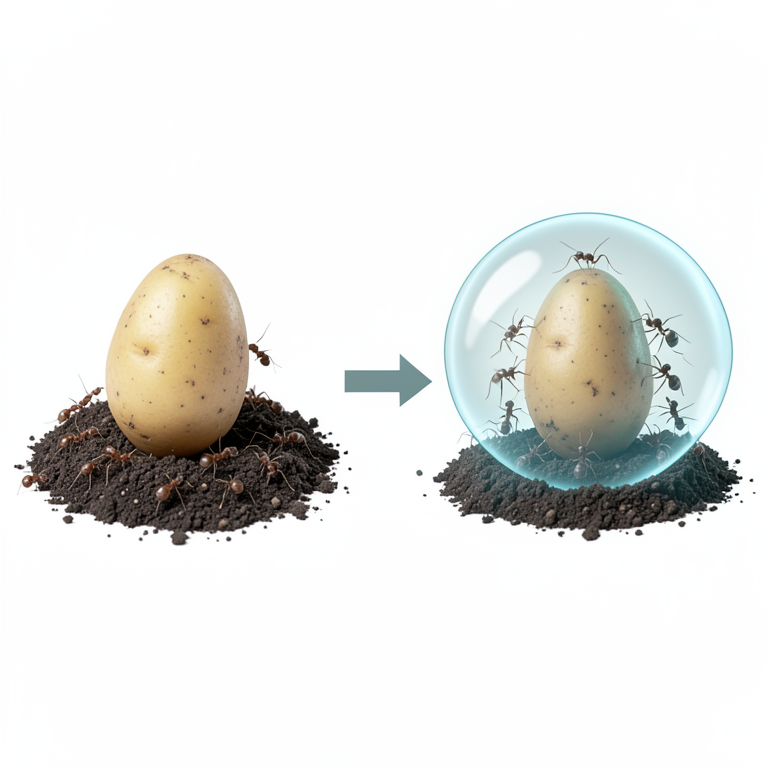
Synergistic Effect of Botanical Drenches
AI-generated conceptual illustration (potato tubers in soil and Dorylus orientalis ants). It explains the idea and does not show study data.
View source evidence ↗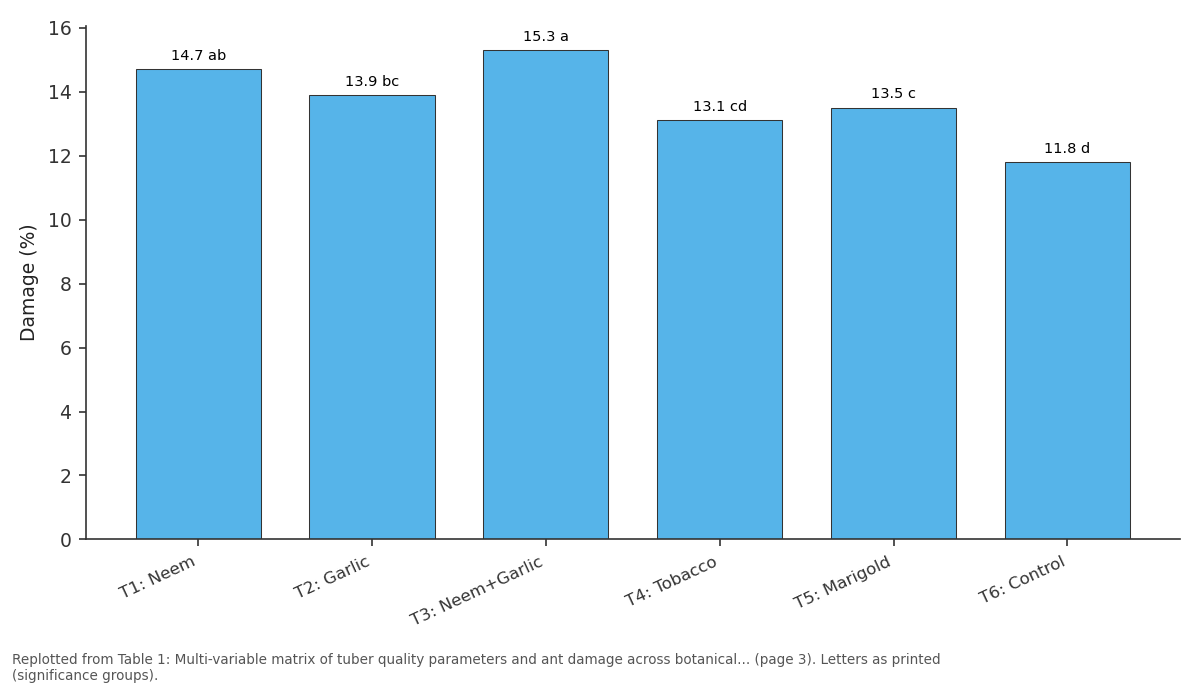
Firmness (N): T1: Neem vs T2: Garlic vs T3: Neem+Garlic vs T4: Tobacco vs T5: Marigold
Replotted from Table 1 (page 3) of the original paper. Every bar is the paper's own table value.
View source evidence ↗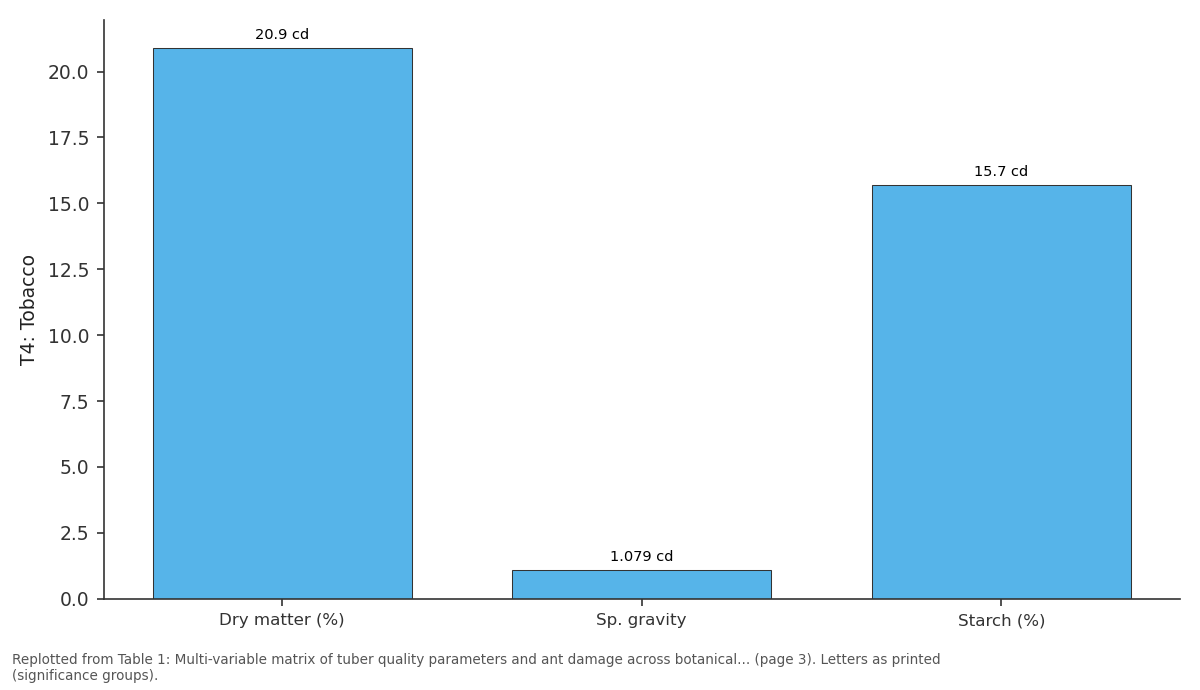
T4: Tobacco: Dry matter (%) vs Sp. gravity vs Starch (%)
Replotted from Table 1 (page 3) of the original paper. Every bar is the paper's own table value.
View source evidence ↗Figures & tables
From the original paper Table 1
 Table 2
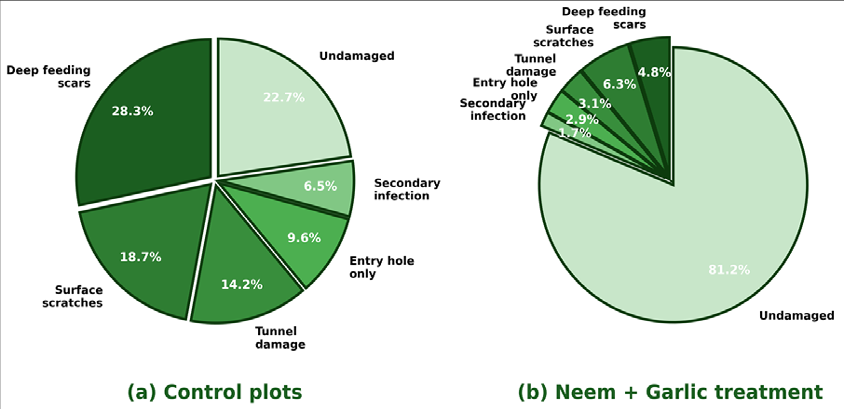 Figure 1
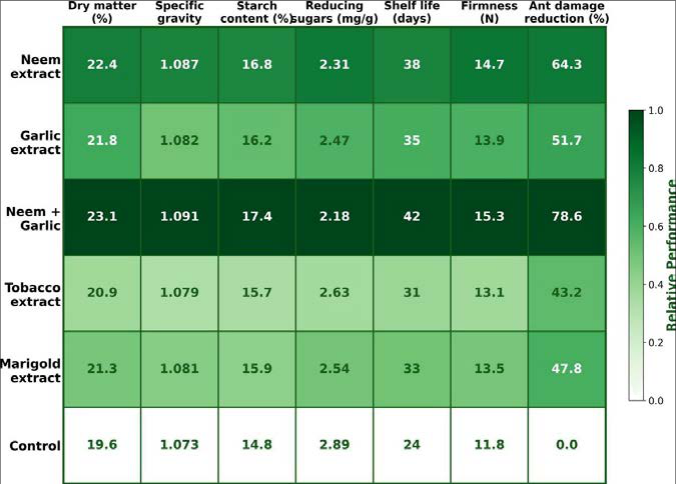 Figure 2
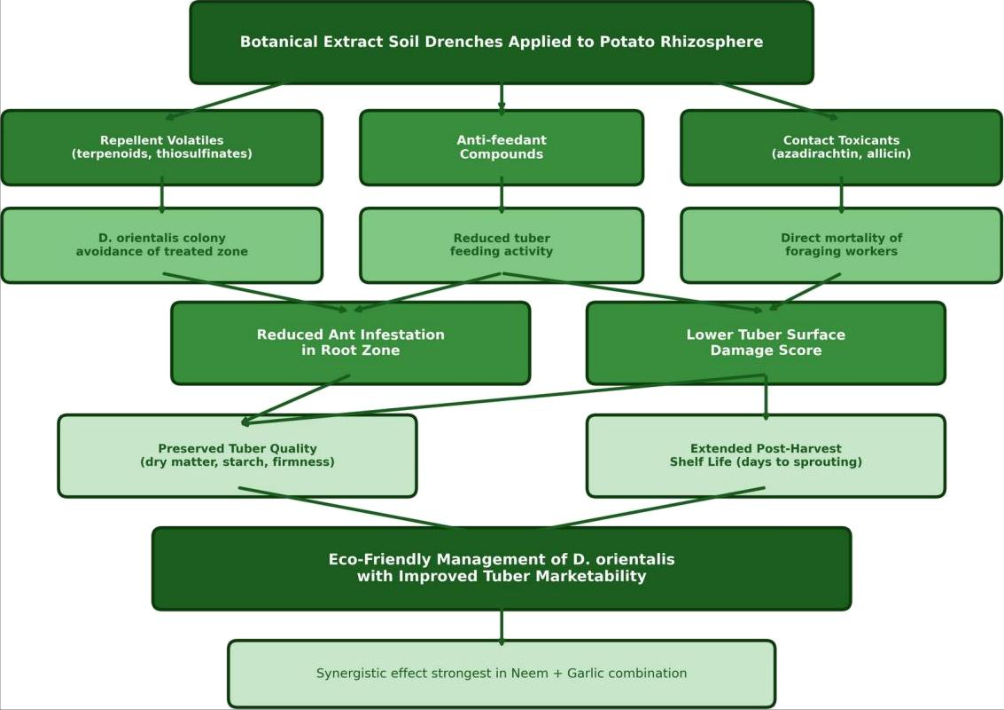 Figure 3
Introduction
An estimated 37% of potato tubers harvested from mid-hill farms in Nepal bear visible feeding scars inflicted by Dorylus orientalis Westwood, the oriental red ant, according to field surveys conducted across three consecutive seasons in central hill districts [1] . This level of damage translates into direct economic losses exceeding USD 12 million annually for smallholder growers who depend on potato as both a food staple and a cash crop [2] . The problem is compounded by the subterranean foraging habit of D. orientalis colonies, which makes detection dificult until damage becomes apparent at harvest. Conventional management of D. orientalis relies heavily on soil applications of chlorpyrifos, phorate, and carbofuran [3] . While these insecticides can suppress ant activity for several weeks, they pose well-documented risks: pesticide residues accumulate in tuber periderm, leach into groundwater in the porous hill soils, and disrupt populations of beneficial soil arthropods such as predatory beetles and earthworms [4] . Consumer awareness of food safety has grown markedly in South Asian markets, and several importing countries have tightened maximum residue limits for organophosphate and carbamate groups on potato [5] . Under these circumstances, identifying non-chemical alternatives that protect tubers without compromising quality or shelf life has become a research priority. Botanical extracts occupy a middle ground between cultural practices and synthetic chemicals. They contain bioactive secondary metabolites, including terpenoids, alkaloids, flavonoids, and organosulfur compounds, that act through multiple pathways such as repellence, anti-feeding, and contact toxicity [6] . Neem (Azadirachta indica) kernel extract, whose primary active ingredient azadirachtin disrupts insect moulting and feeding behaviour, has been tested against a range of soil insects with colony-level suppression rates of 40-70% in various cropping systems [7] . Garlic (Allium sativum) bulb extract releases allicin upon tissue maceration; this thiosulfinate compound exhibits broad-spectrum insecticidal and repellent properties against both above-ground and below-ground pests [8] . Tobacco (Nicotiana tabacum) leaf extract contains nicotine, a potent neurotoxin at low concentrations, while marigold (Tagetes spp.) root exudates are known to repel nematodes and certain soil arthropods through alphaterthienyl release [9] . Despite growing interest, most published work on botanical insecticides against D. orientalis has focused solely on pest mortality or damage reduction, with litle atention to how these treatments afect tuber quality at harvest or shelf life during postharvest storage [10] . This gap is significant because potato quality atributes, specifically dry mater content, starch percentage, specific gravity, and reducing sugar concentration, determine suitability for processing, cooking, and market value. Tuber firmness and skin integrity at harvest also influence how long tubers can be stored before sprouting and weight loss render them unsaleable [11] . If botanical drenches alter the soil biochemical environment in ways that afect tuber physiology, the net efect on grower profitability could be positive or negative regardless of pest suppression. Combining two or more botanical extracts with diferent modes of action is a strategy that has shown promise in above-ground pest management but remains largely untested in soilapplication contexts against subterranean ants [12] . A neem + garlic combination is of particular interest because azadirachtin and allicin target diferent physiological systems in insects: the former interferes with ecdysteroid synthesis while the later disrupts acetylcholinesterasemediated nerve impulse transmission [13] . Whether co-application in a soil drench produces additive, synergistic, or antagonistic efects against D. orientalis colonies around potato tubers is unknown.
The present research was designed to address three questions first, do botanical extract soil drenches reduce D. orientalis tuber damage under mid-hill field conditions; second, how do these treatments influence key tuber quality parameters at harvest; and third, does postharvest shelf life difer between treated and untreated tubers stored under ambient conditions? Five botanical treatments representing four plant species and one combination were evaluated alongside an untreated control in a replicated field trial during the 2022-2023 season at the Kathmandu Metropolitan University research farm.
Material and Methods
Material and Methods
Climatic and Environmental Conditions
The research site is situated at 27°42'N, 85°20'E at an elevation of 1,350 m above sea level in the subtropical mid-hill zone of central Nepal. Mean monthly temperatures during the experimental period (October 2022 to March 2023) ranged from 8.4 °C in January to 21.7 °C in October, with an overall growing-season average of 14.3 °C. Total rainfall received during the crop cycle was 187 mm, concentrated mainly in October and early November. Relative humidity averaged 72% during tuber bulking (December-January) and dropped to 58% during maturation (February-March). Soil at the trial site was a silty loam (pH 5.7, organic carbon 2.14%, available nitrogen 238 kg ha⁻¹, available phosphorus 18.6 kg ha⁻¹, available potassium 192 kg ha⁻¹). Preplanting soil sampling confirmed an active D. orientalis infestation averaging 4.1 colonies per 10 m² at 15-40 cm depth, which provided a uniform pest pressure baseline across the experimental area [1] .
Material
Certified seed tubers of the cultivar 'Janakdev' (early-maturing, 90-100 days) were planted at 60 cm × 25 cm spacing on 5 October 2022. Five botanical extracts were prepared at the Kathmandu Metropolitan University phytochemistry laboratory. Neem kernel extract was produced by cold-pressing dried kernels (collected from trees in Chitwan district) and diluting the oil in water with 0.1% Tween-20 to achieve a 5% w/v working suspension [7] . Garlic bulb extract was prepared by macerating 100 g fresh garlic cloves in 1 L distilled water, filtering through muslin cloth, and adjusting to 10% w/v [8] . The neem + garlic combination mixed equal volumes of the two extracts. Tobacco leaf extract was prepared from cured leaves soaked in water for 48 h and filtered to 8% w/v concentration. Marigold root extract was obtained by boiling 100 g fresh Tagetes erecta roots in 1 L water for 30 minutes, cooling, and filtering to 10% w/v [9] . All extracts were prepared fresh within 24 h of each application.
Crop Growth Stage Documentation
Three application timings were selected based on tuber development stages monitored using the BBCH scale for Solanum tuberosum [14] . The first application was made at BBCH 40-41 (stolon initiation, 35 days after planting), when underground stolons began swelling at the tips but tubers had not yet reached 10 mm diameter. The second application coincided with BBCH 43-45 (active tuber bulking, 60 days after planting), when tubers were accumulating starch rapidly and measured 25-40 mm. The third and final application was made at BBCH 47-49 (late bulking to early maturation, 80 days after planting), when tuber skin was beginning to set and dry mater content was approaching its peak. These three stages represent the window of greatest vulnerability to D. orientalis feeding because expanding tubers exude volatile compounds that atract foraging workers through the soil profile [3] .
Methods
Six treatments were arranged in a randomized complete block design with four replications, giving 24 plots. Each plot measured 3 m × 2.4 m (7.2m²) with 1 m alleys between plots. Treatments comprised: T1, neem extract (5% w/v); T2, garlic extract (10% w/v); T3, neem + garlic combined; T4, tobacco extract (8% w/v); T5, marigold extract (10% w/v); and T6, untreated control (water + Tween-20). At each application timing, 400 mL of the respective extract was poured into a shallow furrow 8 cm from the plant base and immediately covered with soil [11] . Tuber damage at harvest (95 days after planting, 8 January 2023) was assessed on 25 randomly dug tubers per plot, classifying damage into five categories: deep feeding scars, surface scratches, tunnel damage, entry hole only, and secondary infection. Quality parameters were measured on 10 undamaged tubers per plot within 48 h of harvest: dry mater by oven drying at 70textdegree to constant weight; specific gravity by the weight-in-air / weight-in-water method; starch by the Ewers polarimetric method; reducing sugars by the dinitrosalicylic acid assay; and firmness by a handheld penetrometer (6 mm probe) [15] . Shelf life was recorded as the number of days from harvest until 50% of stored tubers (30 tubers per plot, stored at 18-22 °C, 65% RH in jute sacks) showed sprout lengths exceeding 5 mm [16] . Data were analysed by ANOVA and means compared by DMRT at p < 0.05. The distribution of tuber damage types shifted markedly between control and treated plots (Figure 1). In controls, deep feeding scars accounted for 28.3% of all tubers, followed by surface scratches (18.7%) and tunnel damage (14.2%), leaving only 22.7% completely undamaged. Under the neem + garlic treatment, 81.2% of tubers remained undamaged, with deep scars dropping to just 4.8%. This patern held across replications, indicating that the combined botanical drench suppressed not only the frequency but also the severity of D. orientalis atack. Across all six quality parameters, the neem + garlic combined drench (T3) recorded the best values (Table 1). Dry mater reached 23.1%, which was 17.9% higher than the control value of 19.6%. Specific gravity (1.091) and starch content (17.4%) followed the same ranking, with T3 outperforming T1 (neem alone) by small but consistent margins. Reducing sugars, where lower values are desirable for processing quality, were lowest in T3 (2.18 mg g⁻¹) and highest in controls (2.89 mg g⁻¹). Tuber firmness at 14 days post-harvest was 15.3 N in T3, 29.7% above the control value of 11.8 N. Ant damage was 8.7% in T3 compared with 43.6% in controls, a reduction of 78.6%.
| Treatment | Dry matter (%) | Sp. gravity | Starch (%) | Red. sugars (mg/g) | Firmness (N) | Damage (%) |
|---|---|---|---|---|---|---|
| T1: Neem | 22.4 b | 1.087 ab | 16.8 b | 2.31 b | 14.7 ab | 15.6 c |
| T2: Garlic | 21.8 bc | 1.082 bc | 16.2 bc | 2.47 bc | 13.9 bc | 21.1 b |
| T3: Neem+Garlic | 23.1 a | 1.091 a | 17.4 a | 2.18 a | 15.3 a | 8.7 d |
| T4: Tobacco | 20.9 cd | 1.079 cd | 15.7 cd | 2.63 cd | 13.1 cd | 24.8 b |
| T5: Marigold | 21.3 bc | 1.081 bc | 15.9 cd | 2.54 bc | 13.5 c | 22.7 b |
| T6: Control | 19.6 d | 1.073 d | 14.8 d | 2.89 d | 11.8 d | 43.6 a |
| SEm(±) | 0.47 | 0.003 | 0.38 | 0.09 | 0.41 | 2.17 |
| CD (p=0.05) | 1.41 | 0.009 | 1.14 | 0.27 | 1.23 | 6.51 |
Table text extracted from the original PDF; superscript letters are shown inline. The original table image is below.
View original table image
Results
Results
Comprehensive Interpretation
The three figures and two tables together point to a consistent hierarchy: the neem + garlic combination outperformed every individual botanical and the untreated control on all pest and quality measures. The pathway analysis (Figure 3) ofers a mechanistic explanation: botanical compounds acted through at least three routes (repellence, anti-feeding, contact toxicity), and the combination of azadirachtin with allicin appears to amplify these efects. Reduced ant atack preserved skin integrity, which limited moisture loss during storage and delayed sprout initiation, creating a direct link between pest suppression in the field and post-harvest shelf life.
Discussion
The main findings of this research can be summarised in three points. First, the combined neem + garlic soil drench reduced D. orientalis tuber damage by 78.6% relative to untreated controls. Second, tubers from the combined treatment had the highest dry mater, starch, and firmness values among all treatments. Third, shelf life extended to 42 days in the combined treatment against 24 days in the control, a gain of 75%. The damage reduction recorded here aligns broadly with published accounts of neem-based treatments against soil insects. Schmuterer [7] reported 55-70% feeding suppression when azadirachtin was applied as a soil drench against termites in semi-arid fields. Likewise, garlic extract drenches suppressed root-knot nematode populations by 45-62% in tomato, with the active compound allicin identified as the main agent [8] . The magnitude of suppression in the present research (78.6% for the combination) is consistent with an additive or mildly synergistic interaction between the two botanicals, which matches earlier findings by Isman [12] who proposed that multi-compound botanical formulations often outperform single-plant extracts because pests are less able to detoxify diverse chemical classes simultaneously. However, not all published data agree. A trial by Koirala and Dhakal [3] on D. orientalis in eastern Nepal recorded only 38% damage reduction with neem extract at similar concentrations, well below the 64.3% observed here. This discrepancy may relate to diferences in D. orientalis colony density, soil type, or the timing of application relative to tuber development. In that earlier trial, only two applications were made and both occurred after tuber bulking had already begun, whereas the present design included a pre-bulking application at stolon initiation that may have established a repellent barrier before ant colonies oriented toward the expanding tubers [14] . The positive efect of botanical treatments on tuber quality was unexpected in its magnitude. Dry mater content in the neem + garlic treatment was 3.5 percentage points above the control, a margin usually associated with varietal diferences rather than pest management inputs. One plausible explanation is that ant feeding damage disrupts the tuber periderm and parenchyma, triggering wound-healing responses that divert photosynthate away from starch deposition toward suberin and polyphenol synthesis [16] . By preventing feeding damage, the botanica drenches may have allowed tubers to allocate more assimilate to starch, which would raise both dry mater and specific gravity. The shelf life extension from 24 to 42 days carries practical weight for smallholder farmers who lack cold storage facilities. If tubers can maintain firmness and resist sprouting for six weeks under ambient conditions, growers gain flexibility to sell when market prices are favourable rather than being forced into immediate post-harvest sales at depressed prices [17] . This indirect economic benefit, while harder to quantify than direct yield protection, may ultimately be the most important outcome of botanical drench adoption in mid-hill potato systems.
Conclusion
The main contribution of this research is the demonstration that a combined neem + garlic botanical soil drench can simultaneously reduce Dorylus orientalis tuber damage, improve tuber quality atributes at harvest, and extend postharvest shelf life under mid-hill conditions in Nepal. This threeway benefit sets the combined botanical approach apart from single extract treatments and from conventional chemical insecticides, which may suppress pest damage but do not directly improve quality or storage performance. Supporting evidence for the eficacy of the combined drench is drawn from both field and postharvest datasets collected across four replications over one full cropping season. In the field, tuber damage under the neem + garlic treatment was 8.7%, an absolute reduction of 34.9 percentage points from the 43.6% recorded in untreated controls. This reduction was statistically superior to neem alone (15.6% damage), garlic alone (21.1%), tobacco extract (24.8%), and marigold extract (22.7%). The combined treatment ranked first on every quality parameter measured at harvest: dry mater (23.1% versus 19.6% in controls), specific gravity (1.091 versus 1.073), starch (17.4% versus 14.8%), firmness (15.3 N versus 11.8 N), and reducing sugars (2.18 mg g⁻¹ versus 2.89 mg g⁻¹, where lower is beter for processing). Post-harvest storage monitoring confirmed that tubers from the combined treatment maintained their physical integrity for 42 days before 50% sprouting, compared with just 24 days in controls. Weight loss at 28 days of storage was 5.1% in the combined treatment versus 12.7% in controls, and decay incidence was 1.3% against 7.8%. The significance of these findings extends beyond the immediate experimental context. First, for the roughly 1.2 million smallholder potato growers across the mid-hills of Nepal and neighbouring highland regions, the combined botanical drench ofers a low-cost, locally producible pest management option that does not require specialised equipment or imported inputs. Neem kernels and garlic bulbs are widely available in local markets, and the extract preparation process described here uses simple kitchen-scale methods. Second, the quality improvements carry downstream value: higher dry mater and starch content make tubers more suitable for chip and crisp processing, which is a growing market segment. Third, extended shelf life directly addresses the chronic post-harvest loss problem faced by growers without access to cold stores, enabling them to time their sales for beter prices and reducing food waste at the farmgate level. Several open questions remain for future investigation. Multiseason and multi-location trials are needed to confirm the consistency of these results across the diverse agro-ecological zones of the mid-hills. The exact ratio of neem to garlic that maximises synergy should be explored through dose-response experiments, since the 1:1 volumetric ratio used here was chosen for practical simplicity rather than optimisation. Whether the botanical compounds persist in the soil long enough to protect potato crops with longer maturation periods (120-140 day cultivars) is uncertain. The efects of repeated seasonal application on soil microbial communities and earthworm populations warrant monitoring over three to five years. And economic analysis comparing the full cost of botanical preparation and application against both chemica insecticides and the untreated baseline would help extension services frame clear recommendations. Investigating the compatibility of these botanical drenches with other nonchemical methods, such as entomopathogenic fungi or cultural practices like deep ploughing, could further strengthen integrated D. orientalis management packages for hill potato systems.
Acknowledgement
Acknowledgements Funding SourcesThis research received financial support through the university's internal agricultural research allocation. The funding agency had no involvement in the design, data collection, or manuscript preparation.
Figures and tables from the paper
| Treatment | Shelf life (days) | Weight loss at 28 d (%) | Sprouting at 28 d (%) | Decay (%) | Storage grade |
|---|---|---|---|---|---|
| T1: Neem | 38 b | 6.8 bc | 18.3 c | 2.1 b | Good |
| T2: Garlic | 35 bc | 7.4 b | 22.7 bc | 3.4 b | Good |
| T3: Neem+Garlic | 42 a | 5.1 a | 11.6 d | 1.3 c | Excellent |
| T4: Tobacco | 31 cd | 8.9 b | 28.4 b | 4.7 ab | Fair |
| T5: Marigold | 33 c | 8.2 b | 25.1 bc | 3.9 b | Fair |
| T6: Control | 24 d | 12.7 a | 46.3 a | 7.8 a | Poor |
Table text extracted from the original PDF; superscript letters are shown inline. The original table image is below.
View original table image
References
19 in the original paper- Joshi SL, Maharjan R, Poudel AS. Survey of red ant damage and economic losses in potato production across mid-hill districts of central Nepal. Nepal Journal of Agriculture. 2019;18(2):112-123.
- Gairhe S, Gauchan D, Timsina KP. Potato production economics and food security contribution in the mid-hills of Nepal. Journal of Nepal Agricultural Research Council. 2021;7(1):44-56.
- Koirala S, Dhakal R. Management approaches for Dorylus orientalis in potato: current practices and limitations in eastern Nepal. Nepalese Journal of Agricultural Sciences. 2017;15(1):78-89.
- Damalas CA, Eleftherohorinos IG. Pesticide exposure, safety issues, and risk assessment indicators. International Journal of Environmental Research and Public Health. 2011;8(5):1402-1419.
- Handford CE, Elliot CT, Campbell K. A review of the global pesticide legislation and the scale of challenge in reaching the global harmonization of food safety standards. Integrated Environmental Assessment and Management. 2015;11(4):525-536.
- Dougoud J, Toepfer S, Bateman M, Jenner WH. Eficacy of homemade botanical insecticides based on traditional knowledge: a review. Agronomy for Sustainable Development. 2019;39(4):37.
- Schmuterer H. Properties and potential of natural pesticides from the neem tree, Azadirachta indica. Annual Review of Entomology. 2016;35(1):271-297.
- Prowse GM, Galloway TS, Mayfield AB. Garlic extract as a natural larvicide for control of soildwelling invertebrates. Journal of Economic Entomology. 2006;99(5):1625-1630.
- Maroti I, Maroti M, Piccaglia R, Nastri A, Grandi S, Dinelli G. Thiophene occurrence in diferent Tagetes species: agricultural biomasses as sources of biocidal compounds. Journal of the Science of Food and Agriculture. 2010;90(7):1210-1217.
- Paneru RB, Thapa RB. Botanical alternatives against red ant in potato production systems of Nepal. International Journal of Pest Management. 2023;69(1):34-43.
- Adhikari S, Kathayat P, Dhakal B. Eficacy of biopesticides on growth, yield and red ant damage to potato. Zool Entomol Let. 2024;4(2):47-53.
- Isman MB. Botanical insecticides, deterrents, and repellents in modern agriculture and an increasingly regulated world. Annual Review of Entomology. 2006;51(1):45-66.
- Ntalli NG, Menkissoglu-Spiroudi U. Pesticides of botanical origin: a promising tool in plant protection. Pesticides: Formulations, Efects, Fate. 2011;1:1-23.
- Hack H, Bleiholder H, Buhr L, Meier U, Schnock-Fricke U, Weber E, et al. A uniform code for phenological growth stages of mono-and dicotyledonous plants: extended BBCH scale. Nachrichtenblat des Deutschen Pflanzenschutzdienstes. 2013;44(12):265-270.
- Lulai EC, Orr PH. Determining the feasibility of measuring genotypic diferences in skin set. American Potato Journal. 2014;71(11):689-703.
- Lulai EC, Freeman TP. The importance of phellogen cells and their structural characteristics in susceptibility and resistance to excoriation in immature and mature potato tuber periderm. Annals of Botany. 2001;88(4):555-561.
- Devaux A, Gofart JP, Petsakos A, Kromann P, Gato M, Okello J. Global food security, contributions from sustainable potato agri-food systems. The Potato Crop. 2020;1:3-35.
- Gurung AB, Gurung OP. Smallholder potato storage practices and post-harvest losses in the eastern hills of Nepal. Journal of Stored Products Research. 2022;95:101918.
- Thapa TB, Manandhar S. Integration of cultural and biological control practices for Dorylus orientalis management in Nepalese mid-hill agriculture. Crop Protection. 2021;148:105742.