
Research article · 2026 · Full text
International Journal of Biology SciencesAdvances in the integrated management of mustard aphid (Lipaphis erysimi kalt.): Current status, challenges, and future prospects
Volume 8(7) · Pages 191–202 · DOI: 10.33545/26649926.2026.v8.i7c.946 ↗
Research areasInsect-Plant Interactions and ControlInsect Pest Control StrategiesHemiptera Insect Studies
Abstract
Author-writtenMustard aphid, Lipaphis erysimi (Kaltenbach) (Hemiptera: Aphididae), is one of the most destructive insect pests associated with rapeseed–mustard cultivation worldwide. The pest causes substantial economic losses by infesting plants during critical crop growth stages, particularly flowering and pod formation, when nutrient demand is high and yield components are actively developing. The aphid damages mustard plants through direct phloem sap extraction, resulting in reduced photosynthetic efficiency, premature senescence, flower abortion, poor pod development, and reduced seed quality. In addition, its ability to transmit plant viruses further increases its agricultural significance. The pest has gained importance due to its high reproductive potential, short generation interval, wide host range, seasonal population outbreaks, and ability to adapt to changing environmental conditions. Conventional management of L. erysimi has mainly relied on synthetic insecticides; however, repeated application has resulted in insecticide resistance, resurgence of pest populations, elimination of natural enemies, and environmental concerns. Therefore, sustainable management approaches based on integrated pest management (IPM) have become essential. Recent advances in mustard aphid management include the development of resistant mustard genotypes, conservation and augmentation of natural enemies, use of entomopathogenic microorganisms, botanical insecticides, pheromone-based monitoring, ecological engineering, and integration of selective chemical insecticides. However, several challenges remain, including limited availability of durable resistant cultivars, inadequate understanding of aphid population ecology, changing pest dynamics due to climate variability, and insufficient adoption of IPM technologies among farmers. This review critically discusses recent developments in the integrated management of mustard aphid, including pest biology, distribution, economic importance, damage mechanisms, conventional and modern management strategies, resistance issues, and future research priorities. Emphasis is placed on developing environmentally sustainable, economically feasible, and climate-resilient approaches for long-term suppression of L. erysimi populations in mustard-based cropping systems.
Summary
Source-checkedPlain-language reading of the full paper, prepared with AI and checked against the text. Each point links to the authors' own words.
Why it matters
- The mustard aphid (Lipaphis erysimi) is recognized as one of the most destructive pests for rapeseed-mustard crops globally. View evidence ↗
- The pest causes damage by extracting phloem sap, which leads to reduced photosynthesis, flower abortion, and poor seed quality. View evidence ↗
- Traditional reliance on synthetic insecticides has led to problems such as pest resistance, the loss of natural enemies, and environmental damage. View evidence ↗
The question
- The authors aim to review recent developments in the integrated management of the mustard aphid, covering its biology, damage, and current management strategies. View evidence ↗
What they did
- The paper is a critical review that synthesizes existing literature on the biology and management of Lipaphis erysimi. View evidence ↗
What they found
- In highly favorable seasons, uncontrolled mustard aphid populations can cause yield losses between 35% and 70%. View evidence ↗
- Temperatures between approximately 15–25°C are identified as suitable conditions for the growth of aphid populations. View evidence ↗
- Natural suppression of aphids is significantly aided by predatory insects, including ladybird beetles, lacewings, and syrphid flies. View evidence ↗
- Resistant mustard genotypes often utilize thicker epidermal layers and higher levels of glucosinolates and phenolic compounds to deter aphids. View evidence ↗
- The application of Beauveria bassiana formulations has been shown in field studies to cause significant mortality in mustard aphids. View evidence ↗
- The development of insecticide resistance reduces the efficacy of common chemicals, forcing a dependence on newer molecules. View evidence ↗
What it means
- The authors conclude that the future of management lies in integrated strategies that combine biological, ecological, and selective chemical controls. View evidence ↗
- Current limitations include a lack of understanding of aphid genetics, incomplete knowledge of resistance mechanisms, and low farmer adoption of IPM. View evidence ↗
Visual summary
1 visualsIllustrations explain the paper; they do not show study data.
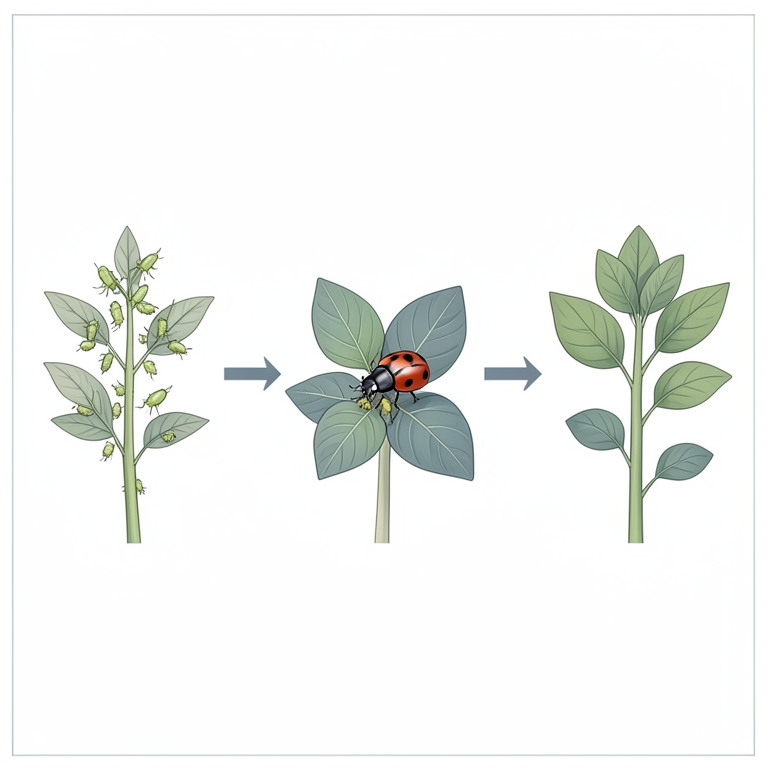
Integrated Pest Management (IPM) Framework
AI-generated conceptual illustration (mustard plants and mustard aphids (Lipaphis erysimi)). It explains the idea and does not show study data.
View source evidence ↗Introduction
Rapeseed-mustard crops (Brassica spp.) represent one of the most important groups of oilseed crops cultivated globally due to their contribution to edible oil production, livestock feed, and agricultural economies. These crops are extensively grown in Asia, Europe, Canada, Australia, and other temperate and subtropical regions. In India, mustard occupies a significant position among winter oilseed crops and contributes substantially to domestic edible oil requirements. However, productivity of mustard is constrained by several abiotic and biotic stresses, among which insect pests remain a major limiting factor. Among various insect pests associated with mustard, the mustard aphid, Lipaphis erysimi (Kaltenbach), is considered one of the most destructive and economically important pests. The insect belongs to the family Aphididae and has been reported as a major constraint in rapeseed-mustard production systems across South Asia and other mustard-growing regions. Severe infestations frequently occur during the reproductive stages of the crop, leading to considerable yield reduction. Aphids are highly specialized phloem-feeding insects characterized by piercing-sucking mouthparts that allow them to extract plant sap directly from vascular tissues.
Continuous feeding by L. erysimi causes depletion of plant nutrients and disrupts normal physiological functions. Infested plants exhibit symptoms including leaf curling, yellowing, reduced growth, flower drop, shriveled seeds, and poor pod development. Under severe infestation conditions, plants may become completely covered with aphid colonies, resulting in significant reduction in photosynthetic activity and crop productivity. The importance of mustard aphid is largely associated with its exceptional reproductive ability. The species reproduces mainly through viviparous parthenogenesis, enabling females to produce numerous offspring without mating. This biological advantage allows rapid population multiplication within a short period under favourable environmental conditions. A few aphids introduced into a crop field can develop into large colonies within weeks, creating epidemiclike infestation situations. The population dynamics of L. erysimi are influenced by several ecological factors, including temperature, relative humidity, rainfall, host plant condition, crop phenology, and availability of natural enemies. Moderate winter temperatures generally favour aphid multiplication, whereas extreme temperatures and heavy rainfall may suppress populations. Climate variability has further complicated pest prediction by altering seasonal occurrence patterns and increasing the possibility of unexpected outbreaks. Historically, chemical insecticides have been the primary method used for mustard aphid suppression. Several insecticide groups, including organophosphates, carbamates, pyrethroids, neonicotinoids, and newer selective molecules, have demonstrated effectiveness against aphid populations. However, excessive dependence on chemical control has created several problems, including development of insecticide resistance, destruction of beneficial insects, pesticide residue accumulation, and disruption of ecological balance. The emergence of insecticide resistance in aphid populations has become a significant challenge worldwide. Aphids possess remarkable genetic variability and can rapidly develop resistance through mechanisms such as metabolic detoxification, target-site modification, and behavioural adaptation. Consequently, repeated application of the same insecticide molecule often results in reduced efficacy and increased production costs. In recent years, integrated pest management (IPM) has emerged as a sustainable alternative for mustard aphid management. IPM emphasizes the integration of multiple compatible approaches, including cultural practices, resistant cultivars, biological control agents, botanical pesticides, microbial formulations, and judicious chemical intervention. Such approaches aim to maintain pest populations below economic threshold levels while minimizing environmental risks. Biological control has gained considerable attention due to the availability of effective natural enemies of L. erysimi. Predatory insects such as ladybird beetles (Coccinellidae), lacewings (Chrysopidae), and syrphid flies (Syrphidae) contribute significantly to natural aphid suppression. Parasitoids belonging to Aphidius and related genera have also demonstrated potential for biological regulation. Similarly, entomopathogenic fungi such as Beauveria bassiana and Verticillium lecanii have shown promise as microbial control agents.
Host plant resistance represents another important component of sustainable management. Screening of mustard germplasm has identified variations in aphid preference, antibiosis, and tolerance mechanisms. Resistant cultivars can reduce aphid establishment, population growth, and dependence on insecticides. However, development of stable and commercially acceptable resistant varieties remains a major research challenge. Botanical insecticides and plant-derived compounds have also received increasing attention due to their environmental safety and compatibility with natural enemies. Neem-based formulations, essential oils, and other botanical extracts have demonstrated insecticidal and antifeedant activity against mustard aphid. Nevertheless, variability in effectiveness under field conditions limits their widespread adoption. Therefore, effective management of mustard aphid requires a comprehensive understanding of its biology, ecology, population dynamics, and interaction with management interventions. This review provides an updated synthesis of current knowledge on L. erysimi, emphasizing pest biology, distribution, crop damage, economic importance, integrated management approaches, resistance issues, existing challenges, and future research opportunities.
Taxonomy and Biological Characteristics of Lipaphis erysimi 2.1 Taxonomic Classification
The mustard aphid belongs to the order Hemiptera and family Aphididae. The systematic classification of Lipaphis erysimi is presented below: The species was first described by Kaltenbach and is commonly referred to as mustard aphid, turnip aphid, or cabbage aphid depending on the geographical region and host association.
Morphological Characteristics
The mustard aphid exhibits two major adult forms: wingless (apterous) and winged (alate) individuals. The development of these forms represents an ecological adaptation that enables survival and dispersal under changing environmental conditions.
Apterous Adults
The wingless females are mainly responsible for colony establishment and reproduction. They possess: Soft pear-shaped body Greenish-yellow to pale green coloration Dark markings on body surface Short antennae Pair of cornicles at the posterior abdominal region
These forms remain concentrated on tender shoots, inflorescences, and developing pods where phloem availability is high.
Alate Adults
Winged individuals develop mainly under conditions of overcrowding, deteriorating host quality, or environmental stress. They possess: Developed wings Darker head and thoracic regions Greater mobility Enhanced dispersal capability
The production of winged forms allows colonization of new host plants and survival during unfavourable conditions.
Life Cycle and Reproductive Biology
The reproductive biology of L. erysimi is the primary reason for its pest status. Unlike many insects that depend on sexual reproduction, mustard aphids reproduce predominantly through asexual reproduction.
Parthenogenetic Reproduction
During favourable seasons, females reproduce without fertilization and give birth directly to living nymphs. This reproductive strategy provides several advantages: Rapid population increase Short generation cycle Efficient colonization of host plants Multiple generations within a crop season The nymphs pass through several developmental stages before becoming adults. Under optimum environmental conditions, the complete life cycle may be completed within approximately two weeks, allowing several overlapping generations during mustard cultivation. Population growth follows an exponential pattern when environmental conditions are favourable, resulting in sudden aphid outbreaks.
Host Range and Host Association
Although commonly known as mustard aphid, Lipaphis erysimi is not restricted only to mustard crops. The species exhibits a broad host association, primarily involving plants belonging to the family Brassicaceae. The availability of diverse host plants enables the pest to survive throughout the year and facilitates migration between cultivated crops and alternative weed hosts. The major cultivated hosts of L. erysimi include Indian mustard (Brassica juncea), rapeseed (Brassica napus), turnip (Brassica rapa), cabbage (Brassica oleracea var. capitata), cauliflower (Brassica oleracea var. botrytis), broccoli, and radish (Raphanus sativus). Among these, B. juncea is considered one of the most preferred hosts due to its favourable nutritional composition and physiological characteristics that support rapid aphid multiplication. The host preference of mustard aphid is influenced by several plant characteristics, including: Nutritional quality of phloem sap Concentration of amino acids and sugars Presence of secondary metabolites Plant growth stage Morphological characteristics of leaves and shoots Young and actively growing tissues generally support greater aphid establishment because of higher nutrient availability. During flowering and pod development stages, mustard plants become particularly vulnerable due to increased assimilate movement towards reproductive structures. Several studies have demonstrated significant variation among Brassica genotypes regarding aphid infestation levels. Resistant genotypes often possess morphological and biochemical mechanisms such as thicker epidermal layers, higher levels of phenolic compounds, glucosinolates, and reduced nutritional suitability. These traits influence aphid settling behaviour, feeding efficiency, survival, and reproduction. Alternative weed hosts also play an important ecological role by acting as reservoirs between cropping seasons. Weeds belonging to Brassicaceae, such as Chenopodium, Capsella, Coronopus, and related species, may support aphid populations during periods when cultivated mustard is unavailable. Therefore, weed management forms an important component of integrated mustard aphid management.
Population Dynamics and Factors Influencing Aphid Development
The population dynamics of Lipaphis erysimi are determined by complex interactions among climatic conditions, crop phenology, host quality, and natural enemy activity. Understanding these ecological relationships is essential for predicting outbreaks and implementing timely management interventions.
Effect of Temperature
Temperature is one of the most important environmental factors regulating mustard aphid development. Moderate winter temperatures generally favour rapid multiplication, whereas extremely low or high temperatures negatively affect survival and reproduction. Studies have reported that temperatures ranging between approximately 15-25°C provide suitable conditions for aphid population growth. Under these conditions: Development period decreases Reproductive rate increases Colony formation occurs rapidly However, temperatures above optimum levels may reduce aphid longevity, reproductive capacity, and survival of immature stages. The influence of temperature is particularly important because mustard is primarily cultivated during winter seasons when favourable conditions frequently coincide with aphid population development. Changes in climate patterns may therefore alter aphid distribution, seasonal abundance, and outbreak frequency.
Influence of Relative Humidity and Rainfall
Relative humidity significantly affects aphid survival and population establishment. Moderate humidity levels generally support aphid development, whereas excessive rainfall can reduce populations through: Mechanical removal of aphids from plants Increased mortality of immature stages Reduced feeding activity Heavy rainfall events often interrupt aphid colonization; however, intermittent rainfall followed by favourable weather may promote rapid population recovery. These predators consume large numbers of aphids throughout their larval and adult stages.
Role of Host
Role of Host
Syrphid Flies (Syrphidae)
Syrphid larvae are highly effective aphid predators and frequently occur naturally in mustard ecosystems.
Green Lacewings (Chrysopidae)
Larvae of Chrysoperla carnea are generalist predators capable of suppressing aphid colonies.
Parasitoids
Parasitoids
Important parasitoids associated with mustard aphid include: Diaeretiella rapae Aphidius colemani
These parasitoids reduce aphid populations by converting aphids into characteristic parasitized forms known as "mummies". However, excessive use of broad-spectrum insecticides can disrupt these beneficial organisms and indirectly contribute to aphid resurgence.
Distribution and Current Status of Mustard Aphid 3.1 Global Distribution
Lipaphis erysimi is widely distributed across regions where Brassica crops are cultivated. The pest has been reported from Asia, Europe, Africa, North America, and Australia.
The highest economic importance is observed in tropical and subtropical regions, particularly:
The global distribution of mustard aphid is closely associated with: Availability of Brassica hosts Climatic suitability Agricultural practices Movement of plant materials Its wide geographical distribution reflects its strong adaptive ability and ecological flexibility.
Distribution and Importance in India
India represents one of the most important regions affected by mustard aphid due to extensive cultivation of rapeseedmustard crops. The pest is particularly significant in major mustard-growing states including:
Among Indian oilseed crops, mustard experiences frequent aphid outbreaks because winter environmental conditions often favour rapid population increase. The pest has been reported as a major limiting factor in mustard productivity, especially during years with prolonged favourable winter conditions. The secretion of honeydew by aphids also encourages fungal growth, particularly sooty mould development, which further reduces photosynthetic efficiency.
Seasonal Occurrence and Outbreak Pattern
Seasonal Occurrence and Outbreak Pattern
Quantitative Yield Losses Due to Mustard Aphid
Infestation: Mustard aphid is considered one of the major biological constraints responsible for productivity reduction in rapeseed-mustard cultivation. The magnitude of yield loss varies depending on aphid population density, duration of infestation, crop growth stage, climatic conditions, and cultivar susceptibility. Several studies have demonstrated that infestation during the reproductive phase causes the greatest economic damage because flowering and pod development determine final seed yield. Aphid feeding during these stages directly reduces assimilate availability, resulting in poor seed filling and reduced oil accumulation. Yield losses caused by L. erysimi have been reported to range from moderate reductions under low infestation intensity to severe losses under epidemic conditions. In highly favourable seasons, uncontrolled aphid populations may result in yield losses ranging from 35-70%, depending on geographical location and crop management conditions. The relationship between aphid density and yield reduction is not linear. Initial aphid populations may cause limited economic damage; however, once the population exceeds the economic threshold level, rapid multiplication results in accelerated yield decline. The economic injury caused by mustard aphid is mainly associated with: Reduction in number of siliquae per plant Decreased seed weight Reduced oil percentage Lower germination quality Poor market value of harvested seeds
The critical period of infestation generally corresponds with flowering and early pod formation. Aphid feeding during this period causes maximum reduction because reproductive tissues act as strong nutrient sinks.
Economic Threshold Level of Mustard Aphid
Economic threshold level (ETL) represents the pest population density at which management intervention becomes necessary to prevent economic injury. For mustard aphid, the recommended threshold varies according to: Crop variety Environmental conditions Natural enemy population Production system Several researchers have suggested intervention when aphid colonies reach approximately: 50-60 aphids per 10 cm terminal shoot or Presence of dense aphid colonies on flowering branches The use of ETL-based management is important because unnecessary insecticide application increases production costs and negatively affects beneficial organisms.
Economic Importance of Mustard Aphid
Mustard aphid represents a major economic concern because mustard production contributes significantly to edible oil security and farmer income. Losses caused by this pest influence not only crop productivity but also the profitability and sustainability of mustard cultivation. The economic significance of L. erysimi can be understood through several aspects:
Impact on Mustard Production
Mustard is an important oilseed crop cultivated extensively in South Asia. Reduction in mustard yield due to aphid infestation directly affects: Domestic edible oil availability Import dependency Farmer profitability Agricultural sustainability In regions where mustard cultivation represents a major livelihood activity, aphid outbreaks can create substantial economic losses at both farm and regional levels.
Effect on Seed Quality and Oil Content
Apart from reducing seed quantity, mustard aphid also affects qualitative characteristics of harvested produce. Aphid infestation may result in: Reduced thousand-seed weight Poor seed viability Altered biochemical composition Decreased oil content Since mustard is primarily cultivated for oil extraction, reduction in oil percentage significantly affects economic returns.
Increased Cost of Crop Protection
Repeated insecticide application against mustard aphid increases production expenses through: Chemical purchase costs Labour requirement Application expenses Additional crop monitoring Farmers often apply insecticides multiple times without considering pest density or economic thresholds, increasing unnecessary expenditure.
Ecological and Environmental Costs
The economic impact of mustard aphid management also includes indirect ecological consequences associated with chemical control. Frequent insecticide use may cause: Decline of natural enemies Secondary pest outbreaks Environmental contamination Residue accumulation Development of resistant aphid populations Therefore, sustainable management strategies are essential to reduce both economic and ecological costs.
Factors Influencing Mustard Aphid Population Outbreaks:
The development of mustard aphid populations is governed by interactions between environmental factors, host plant characteristics, and agricultural practices. Understanding these factors is essential for forecasting outbreaks and implementing timely management strategies.
Climatic Factors
Climatic Factors
Rainfall
Rainfall has a direct mechanical effect on aphid populations. Heavy rainfall can: Remove aphids from plants Reduce colony size Increase mortality However, dry periods following rainfall may allow rapid population recovery.
Crop Management Practices
Agronomic practices significantly influence aphid infestation levels. Important factors include:
Sowing Date
Late-sown mustard crops generally suffer greater aphid damage because flowering coincides with peak aphid population periods. Early sowing helps escape severe infestation.
Fertilizer Management
Excessive nitrogen fertilization often increases aphid infestation by: Increasing nitrogen concentration in plant tissues Improving phloem quality Enhancing aphid reproduction Balanced nutrient management is therefore important for reducing susceptibility.
Plant Density
Dense crop stands may create favourable microclimatic conditions for aphids by increasing humidity and reducing airflow. Tolerance Some varieties maintain productivity despite aphid infestation through better physiological compensation.
Host Plant Resistance Factors
Host Plant Resistance Factors
Integrated Management Approaches for Mustard Aphid
Integrated pest management (IPM) represents a sustainable approach that combines multiple compatible strategies to maintain pest populations below economic injury levels while conserving ecological balance. Unlike conventional pest control, which depends mainly on insecticides, IPM emphasizes prevention, monitoring, biological regulation, and selective intervention. The major components of mustard aphid IPM include:
Cultural Management Practices
Cultural practices are preventive approaches that reduce aphid establishment and population development.
Timely Sowing
Early sowing of mustard is one of the most effective cultural methods for reducing aphid damage. Early-planted crops generally complete flowering before peak aphid multiplication, thereby avoiding severe infestation.
Balanced Fertilization
Excess nitrogen application should be avoided because nitrogen-rich plants often become more favourable hosts. Recommended nutrient management improves plant resistance and reduces aphid population growth.
Weed Management
Removal of alternative host plants reduces survival sites and limits aphid migration into mustard fields. Weed management is particularly important because several Brassicaceae weeds serve as reservoirs for aphid populations.
Crop Rotation
Crop rotation with non-host crops helps interrupt pest population cycles and reduces carryover between seasons.
Host Plant Resistance
Host plant resistance is considered one of the most environmentally sustainable approaches for mustard aphid management. Breeding programmes have focused on identifying Brassica genotypes possessing resistance traits. Resistance sources include: Wild Brassica relatives Resistant germplasm lines Genetically diverse mustard varieties
Mechanisms of Resistance Morphological Resistance
Leaf toughness Surface wax characteristics Plant architecture These characteristics influence aphid feeding and colonization.
Biochemical Resistance
Plants may produce compounds such as: Phenolics Glucosinolates Defensive proteins These compounds interfere with aphid feeding and reproduction.
Limitations of Host Resistance
Despite advantages, several limitations exist: Limited availability of highly resistant varieties Difficulty maintaining resistance with high yield potential Possible adaptation of aphid populations Therefore, resistance breeding must be combined with other IPM components.
Biological Control
Biological control is an important component of integrated pest management because it provides an environmentally sustainable method for regulating mustard aphid populations. Natural enemies suppress aphid populations naturally by predation, parasitism, or pathogen-induced mortality. Conservation and augmentation of biological control agents can significantly reduce dependence on chemical insecticides and support ecological balance in mustard agroecosystems.
Predatory Insects
Several predatory insects contribute significantly to natural suppression of L. erysimi. These predators are often naturally present in mustard fields but their populations may decline due to indiscriminate insecticide application.
Ladybird Beetles (Coccinellidae)
Ladybird beetles are among the most effective predators of mustard aphid. Important species include: Coccinella septempunctata Menochilus sexmaculatus Hippodamia variegata Both larvae and adults actively consume aphids. A single larva can consume hundreds of aphids during its development, making coccinellids valuable biological regulators. The abundance of ladybird beetles in mustard fields is often positively associated with aphid density because predators respond to increasing prey availability. However, broad-spectrum insecticides used against aphids can severely reduce predator populations, resulting in pest resurgence.
Syrphid Flies (Syrphidae)
Syrphid flies, commonly known as hoverflies, are important aphid predators. Their larvae feed actively on aphid colonies located on: Leaves Shoots Inflorescences Species belonging to genera such as Episyrphus, Syrphus, and Sphaerophoria have been reported as effective natural enemies. Adult syrphid flies also contribute indirectly by feeding on pollen and nectar, which improves their survival and reproductive capacity. Conservation of flowering plants near agricultural fields can enhance syrphid populations and improve biological suppression.
Green Lacewings (Chrysopidae)
Green lacewings are generalist predators widely recognized for their role in management. A holistic integrated management approach will therefore remain the most promising pathway for ensuring sustainable mustard production and minimizing economic losses caused by mustard aphid.
References
10 in the original paper- Blackman RL, Eastop VF. Aphids on the World's Crops: An Identification and Information Guide. 2nd ed. Chichester: Wiley; 2000.
- Singh PK, Sachan GC. Population dynamics of mustard aphid, Lipaphis erysimi (Kalt.), in relation to weather parameters. Indian J Entomol. 1994.
- Patel SR, Awasthi AK, Tomar RKS. Assessment of yield losses due to mustard aphid, Lipaphis erysimi (Kalt.), in Indian mustard. Indian J Entomol. 2004.
- Bakhetia DRC, Sekhon BS. Insect pests and their management in rapeseed-mustard. J Oilseeds Res. 1989.
- Singh SP, Singh Y, Singh VS. Management of mustard aphid through integrated pest management approaches. Indian J Agric Sci. 2007.
- Koul O, Dhaliwal GS, Cuperus GW. Integrated Pest Management: Potential, Constraints and Challenges. Wallingford: CABI Publishing; 2004.
- van Emden HF, Harrington R, editors. Aphids as Crop Pests. Wallingford: CABI Publishing; 2007.
- Dedryver CA, Le Ralec A, Fabre F. The conflicting relationships between aphids and men: a review of aphid damage and control strategies. C R Biol. 2010.
- Fones HN, Gurr SJ. Noxious gases and the unpredictability of emerging plant pathogens under climate change. BMC Biol. 2017.
- Desneux N, Decourtye A, Delpuech JM. The sublethal effects of pesticides on beneficial arthropods. Annu Rev Entomol. 2007;52:81-106.