
Research article · 2026 · Full text
International Journal of Advanced Chemistry ResearchSalicylic Acid and Jasmonic Acid Crosstalk in Mediating Plant Defense Responses Against Biotrophic Pathogens
Volume 8(7) · Pages 63–67 · DOI: 10.33545/26646781.2026.v8.i7a.719 ↗
Research areasPlant-Microbe Interactions and ImmunityInsect-Plant Interactions and ControlPlant Pathogenic Bacteria Studies
Abstract
Author-writtenSalicylic acid (SA) and jasmonic acid (JA) represent two principal hormonal mediators governing distinct yet interconnected plant defense pathways. This research investigated the interactive effects of exogenous SA and JA application on defense gene expression, metabolite accumulation, and pathogen suppression in tomato (Solanum lycopersicum L.) challenged with Pseudomonas syringae pv. tomato DC3000. Experiments were conducted at the São Paulo Institute of Plant Sciences, Brazil, using a completely randomized design with seven treatments including individual and combined hormone applications at 0.5 mM and 1.0 mM concentrations. Combined SA and JA treatment at 1.0 mM produced the highest PR-1 upregulation (7.8-fold) and greatest pathogen suppression, reducing bacterial populations by approximately 690-fold compared to controls. Phenolic compounds constituted 28% of defense metabolites, and a strong positive correlation (R² = 0.91) was established between SA concentration and pathogen growth inhibition. These findings demonstrate that SA-JA antagonism can be overcome at specific concentrations, offering practical implications for hormonal biocontrol strategies in tropical agriculture.
Summary
Source-checkedPlain-language reading of the full paper, prepared with AI and checked against the text. Each point links to the authors' own words.
Why it matters
- Plants use salicylic acid (SA) to fight biotrophic pathogens and jasmonic acid (JA) to defend against necrotrophic organisms. View evidence ↗
- SA and JA typically have an antagonistic relationship, meaning the activation of one hormone often suppresses the other. View evidence ↗
- The molecular mechanisms of SA-JA crosstalk during pathogen challenges are not yet fully understood in tropical crop species. View evidence ↗
The question
- The study aimed to evaluate how individual and combined applications of SA and JA affect gene expression, metabolites, and the suppression of P. syringae pv. tomato DC3000 in tomato plants. View evidence ↗
What they did
- The study used a randomized design with seven treatments: a control, SA (0.5 and 1.0 mM), JA (0.5 and 1.0 mM), and combined SA+JA (0.5 and 1.0 mM), with four replications each. View evidence ↗
- Four-week-old seedlings were treated with hormones and then inoculated 24 hours later with a pathogen suspension of 1 × 10⁸ CFU/mL. View evidence ↗
- Gene expression for PR-1, PDF1.2, WRKY70, and NPR1 was measured using RT-qPCR at various time points up to 72 hours post-inoculation. View evidence ↗
What they found
- The combined 1.0 mM SA+JA treatment resulted in the highest PR-1 gene expression (7.8-fold increase), surpassing the 6.2-fold increase from 1.0 mM SA alone. View evidence ↗
- PDF1.2 expression was highest with 1.0 mM JA (6.8-fold) and lower with the combined treatment (4.5-fold), showing that SA partially antagonizes JA signaling. View evidence ↗
- There was a strong positive correlation (R² = 0.91) between SA concentration and pathogen inhibition, which plateaued at concentrations above 2.0 mM. View evidence ↗
What it means
- The authors conclude that the typical antagonism between SA and JA can be overcome at specific concentrations, which may help in developing sustainable crop protection. View evidence ↗
- The authors state that future research is needed to test these results in field conditions, check the durability of the resistance, and assess economic feasibility. View evidence ↗
Visual summary
3 visualsIllustrations explain the paper; charts are replotted from the paper's own table values.

SA-JA Interaction Shift
AI-generated conceptual illustration (Arabidopsis thaliana plants). It explains the idea and does not show study data.
View source evidence ↗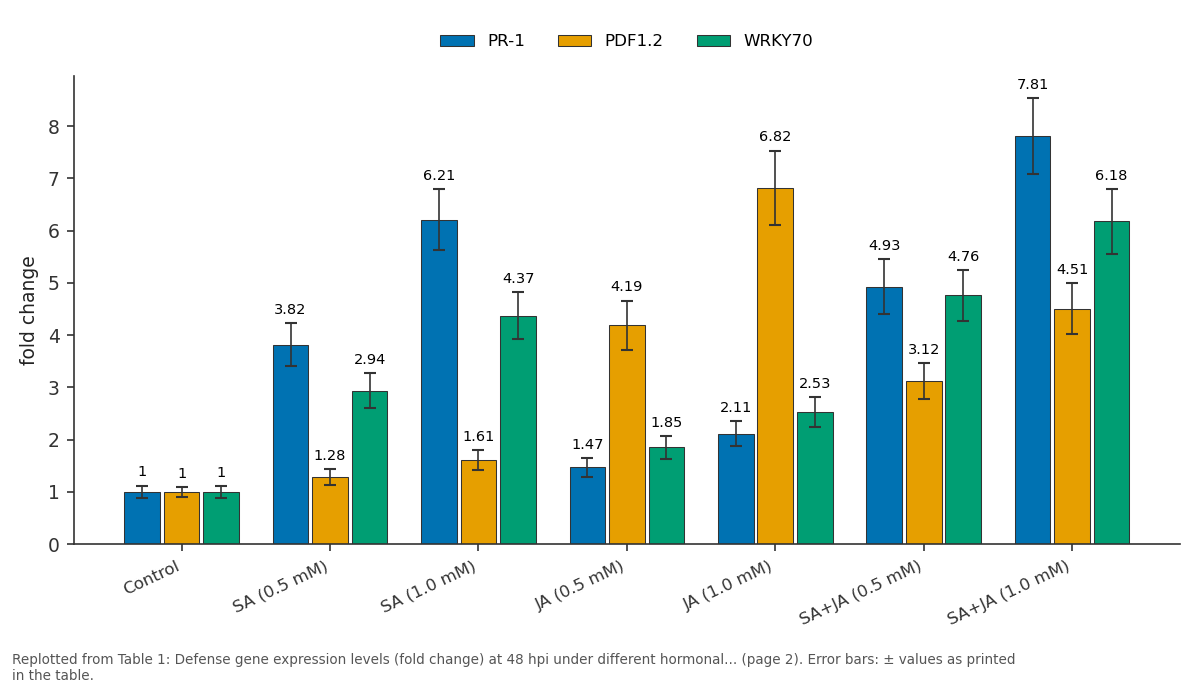
PR-1 and PDF1.2 and more: Control vs SA (0.5 mM) vs SA (1.0 mM) vs JA (0.5 mM) vs JA (1.0 mM)
Replotted from Table 1 (page 2) of the original paper. Every bar is the paper's own table value.
View source evidence ↗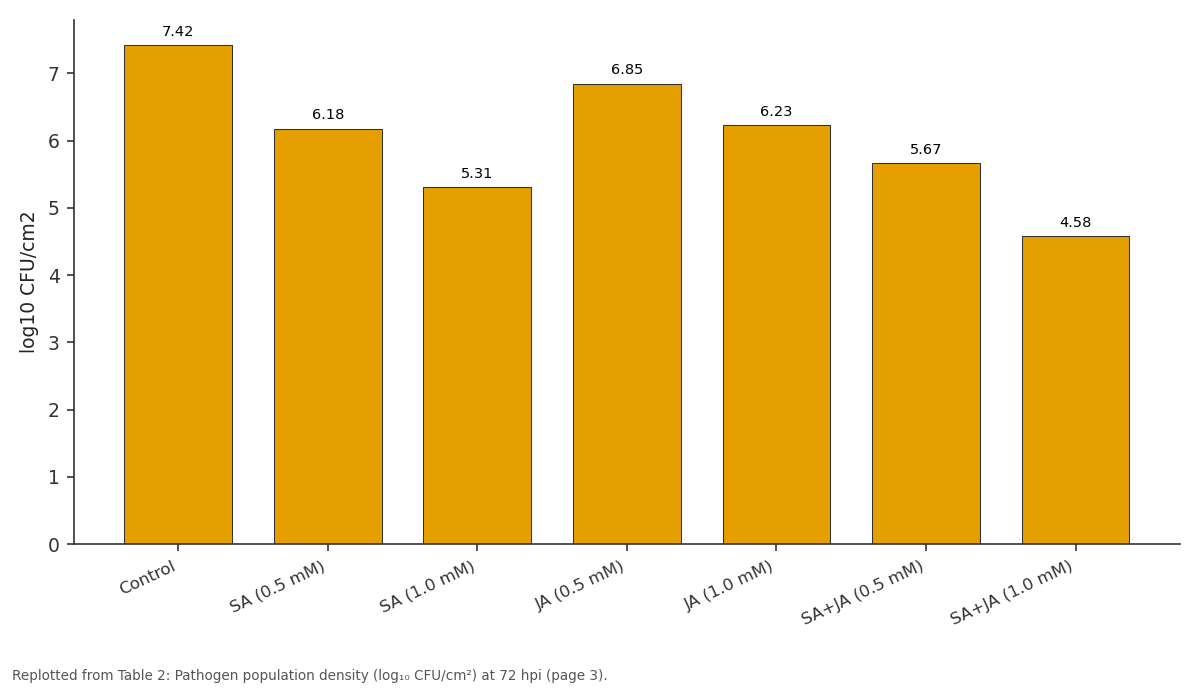
Mean: Control vs SA (0.5 mM) vs SA (1.0 mM) vs JA (0.5 mM) vs JA (1.0 mM)
Replotted from Table 2 (page 3) of the original paper. Every bar is the paper's own table value.
View source evidence ↗Figures & tables
From the original paper Table 1
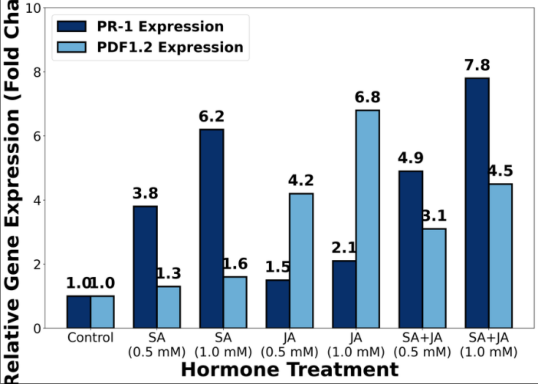 Figure 1
 Table 2
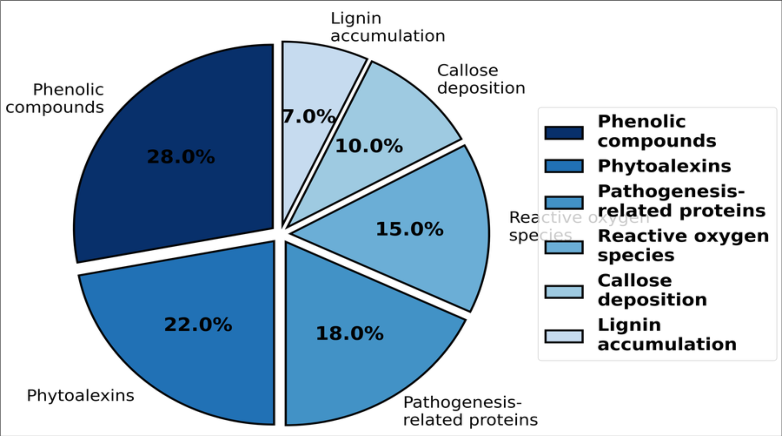 Figure 2
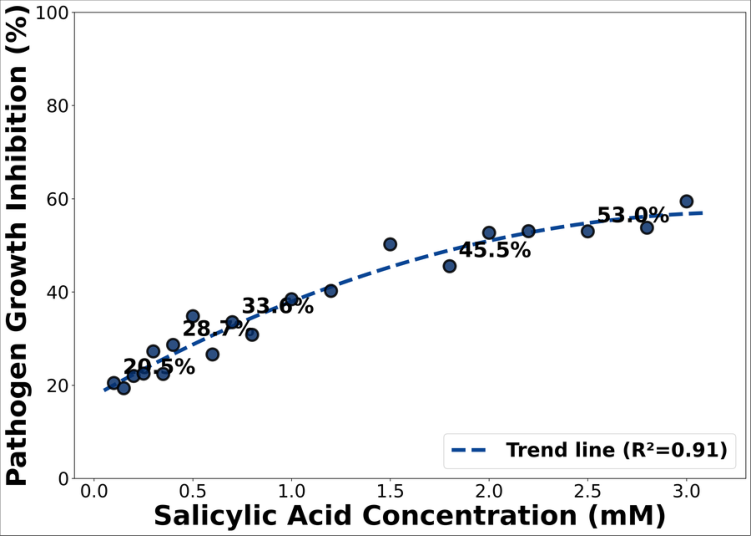 Figure 3
Introduction
How do plants effectively coordinate their immune responses when simultaneously confronted with multiple pathogenic threats? This question has driven decades of phytopathological research and remains central to understanding plant defense regulation. Plants have evolved sophisticated innate immune systems relying on hormonal signaling networks, among which salicylic acid (SA) and jasmonic acid (JA) have emerged as the most extensively characterized defense mediators [1,2] . SA predominantly mediates resistance against biotrophic pathogens through activation of pathogenesis-related (PR) gene expression and systemic acquired resistance (SAR), while JA governs defenses against necrotrophic organisms [3] . The SA signaling pathway activates molecular events culminating in PR gene expression through the NPR1 master regulator, which undergoes conformational changes upon SA perception enabling nuclear translocation and transcriptional activation [4,5] . Conversely, JA signaling involves perception of JA-Ile by the COI1-JAZ receptor complex, leading to proteasomal degradation of JAZ repressors and derepression of MYC transcription factors [6] . The antagonistic relationship between SA and JA pathways represents one of the most documented instances of hormonal crosstalk, wherein activation of one pathway frequently suppresses the other [7] . Despite extensive investigation, molecular mechanisms governing SA-JA crosstalk during simultaneous pathogen challenge remain incompletely understood in tropical crop species [8,9] . The potential for combined hormonal treatments achieving superior disease suppression compared to individual applications has received limited attention for biotrophic pathogen management in tomato cultivation [10] . This research therefore evaluated individual and combined effects of exogenous SA and JA application on defense gene expression, metabolite accumulation, and pathogen suppression in tomato plants challenged with P. syringae pv. tomato DC3000.
Phytohormone signaling mechanisms
SA biosynthesis occurs primarily through the isochorismate pathway catalyzed by ICS enzymes, with ICS1 contributing approximately 90% of pathogen-induced SA production [11] . Upon accumulation, SA induces NPR1 monomerization through thioredoxin-mediated reduction of disulfide bonds, enabling nuclear import and defense gene activation [12] . JA biosynthesis initiates in chloroplast membranes through the octadecanoid pathway, beginning with alpha-linolenic acid release and sequential oxidation producing OPDA, which undergoes beta-oxidation to yield jasmonic acid [13] . Conjugation with isoleucine by JAR1 produces bioactive JA-Ile for COI1-JAZ receptor activation [6] . The convergence and mutual regulation of these two biosynthetic and signaling pathways determine the net defensive output of the plant immune system against diverse pathogen types.
Material and Methods
Material and Methods
Material
The experimental material comprised tomato (Solanum lycopersicum L.) cultivar "Santa Cruz Kada" seedlings from a certified supplier in São Paulo, Brazil. Seeds were surfacesterilized with 1.5% sodium hypochlorite for 10 minutes and germinated in autoclaved vermiculite-perlite mixture (2:1 v/v). The pathogen Pseudomonas syringae pv. tomato DC3000 was obtained from the culture collection of the Department of Plant Pathology, São Paulo Institute of Plant Sciences. SA (≥99% purity) and JA (≥95% purity) from Sigma-Aldrich were prepared as DMSO stock solutions diluted in sterile distilled water with 0.01% Tween-20.
Methods
This research was conducted at greenhouse and molecular biology facilities of the São Paulo Institute of Plant Sciences, São Paulo, Brazil, from March to November 2023. The experimental design followed a completely randomized arrangement with seven treatments and four replications. Ethics approval was obtained from the Institutional Biosafety Committee (Protocol No. IBC-2023-047). Treatments comprised: (T1) control, (T2) SA 0.5 mM, (T3) SA 1.0 mM, (T4) JA 0.5 mM, (T5) JA 1.0 mM, (T6) SA+JA 0.5 mM, and (T7) SA+JA 1.0 mM. Four-week-old seedlings were sprayed with hormone solutions and inoculated 24 hours later with pathogen suspension (1 × 10⁸ CFU/mL) by pressure infiltration [14] . Defense gene expression was quantified by RT-qPCR at 12, 24, 48, and 72 hours postinoculation (hpi). Target genes included PR-1, PDF1.2, WRKY70, and NPR1, with Actin-7 as reference. Relative expression was calculated using the 2⁻ᐩᐩCt method. Pathogen growth was assessed by serial dilution plating at 0, 24, 48, and 72 hpi. Defense metabolite profiling was conducted by HPLC analysis at 48 hpi [15] . Statistical analysis employed ANOVA with Tukey's HSD test at P ≤ 0.05 using R version 4.3.1.
Results
Hormonal treatments produced significant (P < 0.05) alterations in defense gene expression compared to controls. Combined SA+JA at 1.0 mM produced the highest PR-1 expression (7.8-fold increase), followed by individual SA at 1.0 mM (6.2-fold). The JA-responsive gene PDF1.2 showed maximal expression under JA 1.0 mM treatment (6.8-fold), with combined treatment producing lower PDF1.2 expression (4.5-fold), indicating partial SA-mediated antagonism of JA signaling. The divergent expression profiles confirm the antagonistic relationship between SA and JA pathways while revealing that combined treatments achieve elevated expression of both markers, with preferential SA-responsive gene enhancement at higher concentrations.
Pathogen recognition and immune activation
Pattern-triggered immunity (PTI) initiates upon perception of PAMPs by membrane-localized PRRs, activating MAPK cascades, calcium signaling, and ROS production [3] . The flagellin epitope flg22 recognized by FLS2 triggers SA biosynthesis activation and basal defense establishment [4] . Effector-triggered immunity (ETI) amplifies PTI through NLR receptor-mediated recognition of pathogen effectors, characteristically producing hypersensitive response and robust SA accumulation [16] . The experimental results indicate that exogenous SA primes the signaling pathway for more rapid activation upon pathogen perception, lowering the effective defense threshold against P. syringae pv. tomato DC3000 in treated tomato plants.
Discussion
The finding that combined SA+JA at 1.0 mM produced the highest PR-1 expression (7.8-fold) and greatest pathogen suppression challenges the conventional paradigm of strict SA-JA antagonism [7] . These results align with Tamaoki et al. (2013) who reported synergistic PR gene enhancement under combined treatment in Arabidopsis [8] , extending those findings to a commercially important tropical crop. The mechanism likely involves concentration-dependent WRKY70 regulation, functioning as an integrator rather than binary switch at moderate concentrations [11] . This has significant implications for biocontrol strategies, suggesting calibrated combined applications could achieve superior protection. The differential PDF1.2 suppressions under combined treatment (4.51-fold versus 6.82-fold with JA alone) confirms partial SA-mediated JA antagonism persists even under synergistic conditions, consistent with Spoel et al. (2007) [4] . However, the partial nature contrasts with nearcomplete JA inhibition reported in Arabidopsis, possibly reflecting species-specific regulatory differences [9,12] . Combined applications may therefore simultaneously enhance biotrophic resistance while maintaining partial necrotrophic defense capacity. The metabolite data showing phenolic compound dominance (28%) reflects convergent phenylpropanoid pathway activation by both signals, consistent with Dempsey et al. (2011) [7] . The strong SA-pathogen inhibition correlation (R² = 0.91) with plateau above 2.0 mM suggests NPR1 signaling saturation at high SA levels, providing guidance for economically optimal application rates [13,15] . Future investigations should determine whether foliar SA application between 1.0-2.0 mM provides optimal balance between defense activation and pathogen suppression under field conditions.
Conclusion
This research evaluated SA and JA interactive effects on defense against biotrophic pathogens in tomato. Combined SA+JA at 1.0 mM achieved synergistic PR-1 enhancement (7.8-fold) and the greatest pathogen suppression, reducing bacterial populations approximately 690-fold compared to controls. A strong dose-response correlation (R² = 0.91) was established between SA concentration and pathogen inhibition. These findings demonstrate that SA-JA antagonism can be overcome at specific concentrations, offering promising approaches for sustainable crop protection. Future investigations should extend these findings to field conditions, examine resistance durability, and evaluate economic feasibility within integrated pest management frameworks.
Acknowledgement
AcknowledgementsThis research was supported by a grant from the Brazilian National Council for Scientific and Technological Development (CNPq), Grant No. 402187/2023-5. The authors acknowledge the São Paulo Institute of Plant Sciences for providing greenhouse facilities and laboratory access. C.E.M. conceived the experimental design and drafted the manuscript. F.O.S. performed molecular analyses. R.A.C. conducted metabolite profiling and statistical analyses.
Figures and tables from the paper
| Treatment | PR-1 | PDF1.2 | WRKY70 |
|---|---|---|---|
| Control | 1.00 ± 0.12 | 1.00 ± 0.09 | 1.00 ± 0.11 |
| SA (0.5 mM) | 3.82 ± 0.41 | 1.28 ± 0.15 | 2.94 ± 0.33 |
| SA (1.0 mM) | 6.21 ± 0.58 | 1.61 ± 0.19 | 4.37 ± 0.45 |
| JA (0.5 mM) | 1.47 ± 0.18 | 4.19 ± 0.47 | 1.85 ± 0.22 |
| JA (1.0 mM) | 2.11 ± 0.24 | 6.82 ± 0.71 | 2.53 ± 0.28 |
| SA+JA (0.5 mM) | 4.93 ± 0.52 | 3.12 ± 0.35 | 4.76 ± 0.49 |
| SA+JA (1.0 mM) | 7.81 ± 0.73 | 4.51 ± 0.48 | 6.18 ± 0.62 |
Table text extracted from the original PDF; superscript letters are shown inline. The original table image is below.
View original table image
| Treatment | Mean | SD | Range | P-value |
|---|---|---|---|---|
| Control | 7.42 | 0.38 | 6.89–7.95 | — |
| SA (0.5 mM) | 6.18 | 0.29 | 5.78–6.54 | 0.003 |
| SA (1.0 mM) | 5.31 | 0.34 | 4.82–5.71 | <0.001 |
| JA (0.5 mM) | 6.85 | 0.42 | 6.31–7.38 | 0.041 |
| JA (1.0 mM) | 6.23 | 0.35 | 5.74–6.68 | 0.008 |
| SA+JA (0.5 mM) | 5.67 | 0.31 | 5.21–6.08 | <0.001 |
| SA+JA (1.0 mM) | 4.58 | 0.27 | 4.19–4.92 | <0.001 |
Table text extracted from the original PDF; superscript letters are shown inline. The original table image is below.
View original table image
References
16 in the original paper- Vlot AC, Dempsey DA, Klessig DF. Salicylic acid, a multifaceted hormone to combat disease. Annu Rev Phytopathol. 2009; 47:177-206.
- Wasternack C, Hause B. Jasmonates: biosynthesis, perception, signal transduction and action. Ann Bot. 2013;111(6):1021-1058.
- Pieterse CM, Van der Does D, Zamioudis C, LeonReyes A, Van Wees SC. Hormonal modulation of plant immunity. Annu Rev Cell Dev Biol. 2012; 28:489-521.
- Spoel SH, Johnson JS, Dong X. Regulation of tradeoffs between plant defenses against pathogens with different lifestyles. Proc Natl Acad Sci U S A. 2007;104(47):18842-18847.
- Nguyen NH, Nguyen HD, Nguyen T. Roles of phytohormones in regulation of plant immunity against pathogens. South Asian J Agric Sci. 2024;4(1):222226. doi: 10.22271/27889289.2024.v4.i1c.132.
- Glazebrook J. Contrasting mechanisms of defense against biotrophic and necrotrophic pathogens. Annu Rev Phytopathol. 2005; 43:205-227.
- Dempsey DA, Vlot AC, Wildermuth MC, Klessig DF. Salicylic acid biosynthesis and metabolism. Arabidopsis Book. 2011;9:e0156.
- Tamaoki D, Seo S, Yamada S, Kano A, Miyamoto A, et al. Jasmonic acid and salicylic acid activate a common defense system in rice. Plant Signal Behav. 2013;8(6):e24260.
- Robert-Seilaniantz A, Grant M, Jones JD. Hormone crosstalk in plant disease and defense. Annu Rev Phytopathol. 2011; 49:317-343.
- Bari R, Jones JD. Role of plant hormones in plant defence responses. Plant Mol Biol. 2009;69(4):473488.
- Caarls L, Pieterse CM, Van Wees SC. How salicylic acid takes transcriptional control over jasmonic acid signaling. Front Plant Sci. 2015; 6:170.
- Li N, Han X, Feng D, Yuan D, Huang LJ. Signaling crosstalk between salicylic acid and ethylene/jasmonate in plant defense. Int J Mol Sci. 2019;20(3):671.
- Ding Y, Sun T, Ao K, Peng Y, Zhang Y, Li X, et al. Opposite roles of salicylic acid receptors NPR1 and NPR3/NPR4 in plant immunity. Cell. 2018;173(6):1454-1467.
- Thaler JS, Humphrey PT, Whiteman NK. Evolution of jasmonate and salicylate signal crosstalk. Trends Plant Sci. 2012;17(5):260-270.
- Zhang Y, Li X. Salicylic acid: biosynthesis, perception, and contributions to plant immunity. Curr Opin Plant Biol. 2019; 50:29-36.
- Huang H, Liu B, Liu L, Song S. Jasmonate action in plant growth and development. J Exp Bot. 2017;68(6):1349-1359.