
Research article · 2026 · Full text
International Journal of Agriculture and NutritionAgronomic performance of indoor-sprouted fodder systems and their potential as a protein– energy source in rabbit nutrition
Volume 8(4) · Pages 156–160 · DOI: 10.33545/26646064.2026.v8.i4b.714 ↗
Research areasRabbits: Nutrition, Reproduction, HealthAnimal Nutrition and PhysiologyRuminant Nutrition and Digestive Physiology
Abstract
Author-writtenShrinking grazing lands and unpredictable rainfall paterns across East Africa have intensified the need for year-round livestock feed alternatives that are independent of field cultivation. This research assessed the agronomic performance of four indoor-sprouted fodder species— maize (Zea mays), barley (Hordeum vulgare), sorghum (Sorghum bicolor), and cowpea (Vigna unguiculata)—and evaluated their potential as a protein–energy source for growing rabbits at the National Institute of Livestock Research, Nairobi, Kenya, between February and July 2022. Seeds were sprouted on perforated trays (3.2 kg m⁻²) inside a naturally ventilated greenhouse (24 ± 3 °C, 65 % RH) and harvested on days 6, 8, and 10 to identify the optimal growth window. Proximate analysis, mineral profiling, and DM-recovery calculations were performed at each harvest. A parallel 56-day feeding trial used 48 weaned New Zealand White rabbits (35 d, 631±19 g) allocated to four dietary treatments (n = 12): basal pellet supplemented with 25 % DM from maize, barley, sorghum, or cowpea sprouts (all harvested on day 8). Maize produced the highest fresh biomass per tray (6.12 kg), while cowpea yielded the highest crude protein (23.8 % DM) and calcium (1.82 % DM). DM recovery declined from day 8 to day 10 across all species, confirming day 8 as the optimal harvest point. Rabbits receiving cowpea sprouts recorded the highest daily gain (24.1gd⁻¹) and best FCR (3.31), whereas sorghum-fed animals performed least favourably (19.2gd⁻¹ , FCR 3.84). These findings confirm that cowpea sprouts harvested on day 8 represent the most efective protein–energy supplement for rabbit production in tropica East African conditions.
Summary
Source-checkedPlain-language reading of the full paper, prepared with AI and checked against the text. Each point links to the authors' own words.
Why it matters
- East Africa faces a livestock feed crisis due to unpredictable rainfall and shrinking grazing lands, creating a need for feed sources that do not rely on field cultivation. View evidence ↗
- Hydroponic sprouting is a water-efficient and compact method that can convert 1 kg of dry grain into 5–8 kg of fresh biomass in seven to ten days. View evidence ↗
- While data exists for barley, wheat, and maize sprouts, there is limited information on the agronomic performance of tropical cereals like sorghum and legumes like cowpea. View evidence ↗
The question
- The study aimed to characterize the fresh yield, dry matter (DM) recovery, and nutrient composition of maize, barley, sorghum, and cowpea sprouts at 6, 8, and 10 days of growth. View evidence ↗
- The researchers also sought to compare the growth performance of New Zealand White rabbits fed a diet supplemented with 25% DM of these sprouts over 56 days. View evidence ↗
What they did
- The study used four seed varieties: maize (H614D), barley (imported feed-grade), sorghum (Gadam), and cowpea (KVU 27-1). View evidence ↗
- Seeds were disinfected with 1% sodium hypochlorite, soaked for 24 hours, and spread at a density of 3.2 kg/m² on perforated trays. View evidence ↗
- Trays were irrigated by hand four times daily without artificial light, with harvests occurring on days 6, 8, and 10 for agronomic tests and day 8 for the rabbit trial. View evidence ↗
What they found
- Cowpea sprouts had the highest crude protein (CP) content at 23.8% DM, significantly higher than the cereal sprouts (11.1% to 13.2% DM). View evidence ↗
- Cowpea sprouts provided the highest calcium levels at 1.82% DM compared to the other species. View evidence ↗
- Dry matter (DM) recovery decreased between day 8 and day 10 for all species, identifying day 8 as the optimal time for harvest. View evidence ↗
- Rabbits fed cowpea sprouts achieved the highest daily weight gain (24.7 g/d), while those fed sorghum sprouts had the lowest (19.2 g/d). View evidence ↗
- The best feed conversion ratio (FCR) was observed in the cowpea group (3.17), whereas the sorghum group performed worst (3.84). View evidence ↗
- Cowpea sprouts were the most cost-effective supplement, with the lowest feed cost per kg of live-weight gain (KES 142), compared to sorghum (KES 178). View evidence ↗
What it means
- The authors conclude that cowpea sprouts harvested on day 8 are the most effective protein-energy supplement for rabbits in Nairobi greenhouse conditions. View evidence ↗
- The authors recommend cowpea as the default legume for hydroponic rabbit fodder systems, provided seed is available and affordable. View evidence ↗
- The study did not include carcass evaluation; future research is needed to see if weight gain translates to higher meat yield. View evidence ↗
- The protocol's robustness needs to be tested during hot-dry months when temperatures exceed 30 °C and mould risk increases. View evidence ↗
Visual summary
2 visualsIllustrations explain the paper; charts are replotted from the paper's own table values.
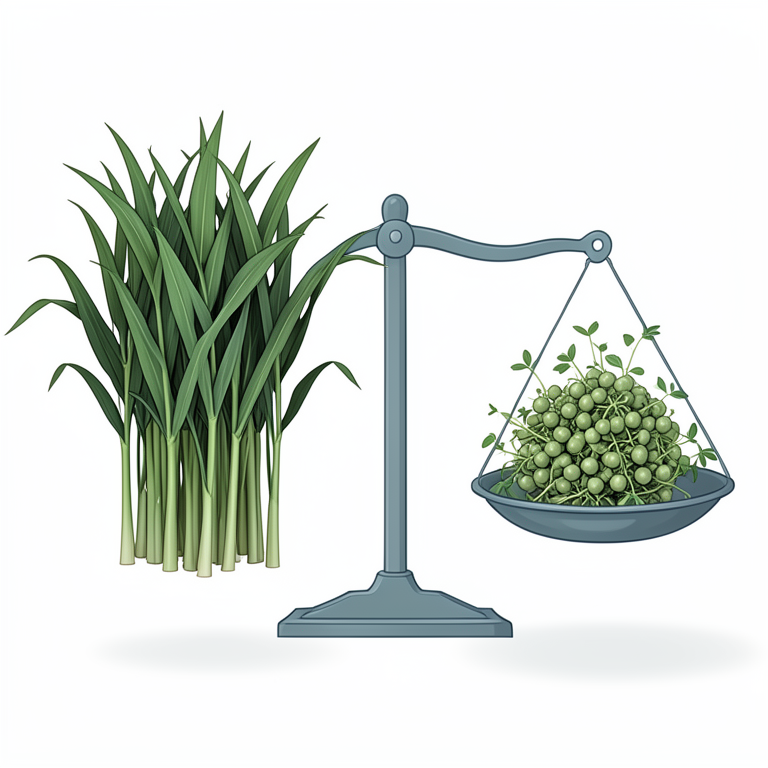
The Yield-Protein Trade-off
AI-generated conceptual illustration (sprouted maize and cowpea fodder). It explains the idea and does not show study data.
View source evidence ↗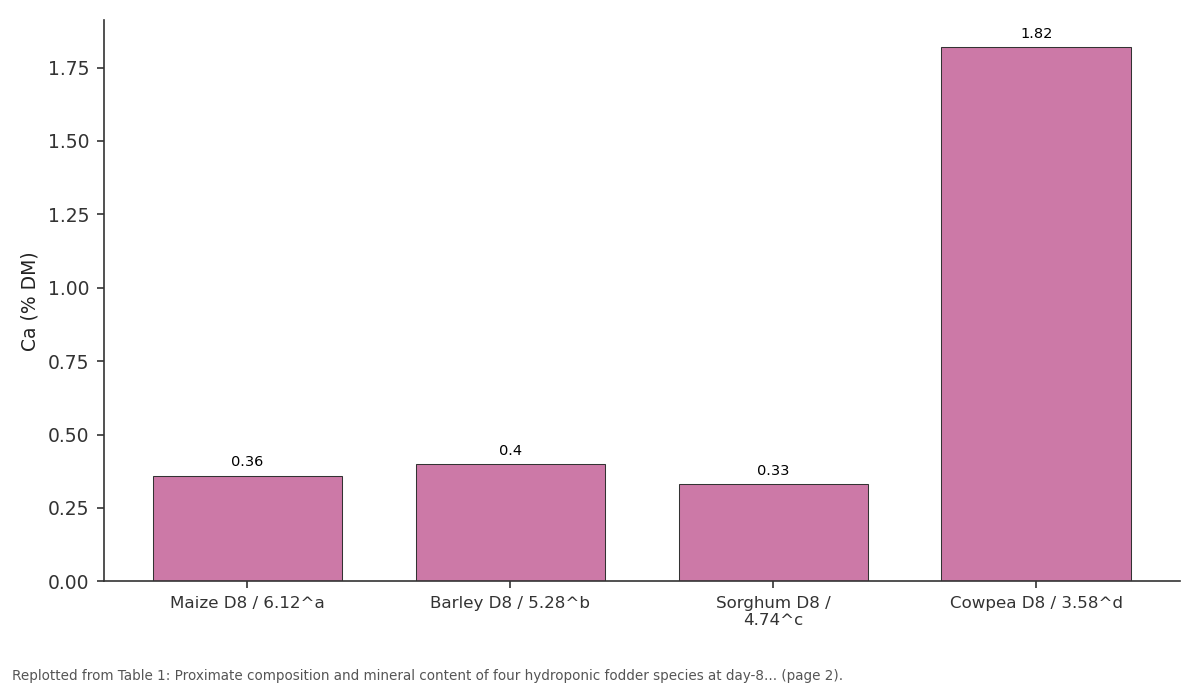
Ca (% DM): Maize D8 / 6.12^a vs Barley D8 / 5.28^b vs Sorghum D8 / 4.74^c vs Cowpea D8 / 3.58^d
Replotted from Table 1 (page 2) of the original paper. Every bar is the paper's own table value.
View source evidence ↗Figures & tables
From the original paper Table 1
 Table 2
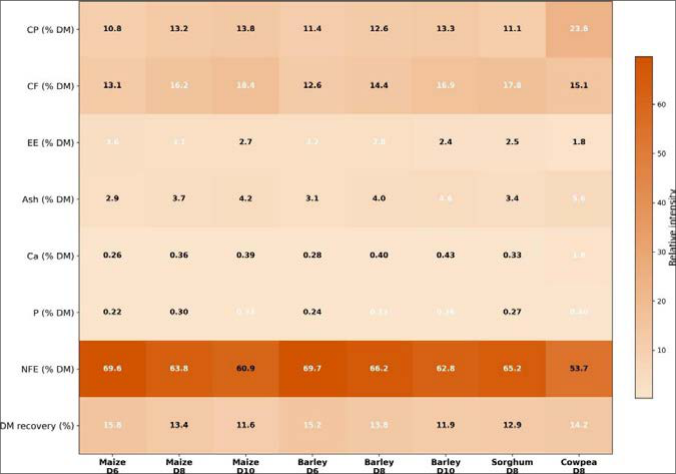 Figure 1
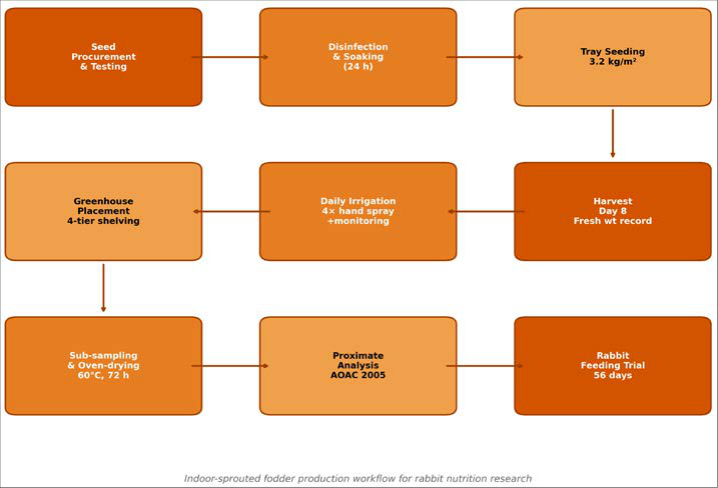 Figure 2
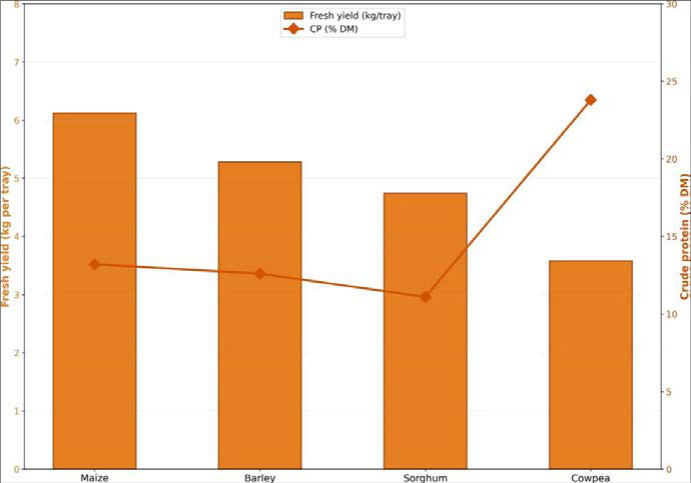 Figure 3
Introduction
Persistent drought, land fragmentation, and population growth have combined to create a forage crisis across much of the East African highlands, where smallholder livestock keepers can no longer rely on natural pasture or rain-fed fodder plots to meet year-round feed requirements [1] . In Kenya, the proportion of arable land dedicated to animal feed has declined by an estimated 12 % since 2010 as human food-crop demand absorbs the available acreage, and seasonal forage shortages during the January-March dry period routinely depress milk output, weight gain, and reproductive performance in ruminant and monogastric herds alike [2] . Against this backdrop, hydroponic sprouting-the indoor germination of cereal or legume seeds on trays without soil-has emerged as a compact, water-eficient technology capable of converting 1 kg of dry grain into 5-8 kg of fresh green biomass within seven to ten days [3] . The system uses 2-3 litres of water per kilogram of fodder produced, a fraction of the 60-80 litres needed for the same mass of field-grown Napier grass, and occupies as litle as 10m² of covered floor space [4,5] . For peri-urban rabbit producers in Nairobi's expanding informal setlements, where land parcels rarely exceed 200 m², this spatial eficiency is particularly atractive. Published agronomic data for hydroponic sprouts are reasonably abundant for barley, wheat, and maize, but far thinner for tropical cereals such as sorghum and for grain legumes such as cowpea, mung bean, and pigeon pea [6,7] . The gap maters because species selection governs both biomass output and nutrient density. Cereal sprouts typically supply 10-15 % crude protein on a DM basis with moderate fibre and high NFE, while legume sprouts reach 20-27 % CP at the cost of lower fresh-weight yield per tray [8] . Which crop ofers the best compromise depends on ambient conditions-temperature, humidity, light-and on the nutritional requirements of the target animal species. Harvest timing is a second under-explored variable. During the first 48-72 h after germination, the seedling draws almost exclusively on seed reserves; DM content is still high and CP concentration close to that of the original grain. Between days 6 and 10, shoot elongation accelerates, cell-wall synthesis raises the fibre fraction, and respiratory carbon losses reduce DM recovery below the break-even point at which fodder value exceeds seed value [9] . The day-8 harvest window has been proposed as an optimum for barley in temperate climates, but whether it holds for maize, sorghum, and cowpea under East African greenhouse conditions has not been systematically tested. Rabbit nutrition research adds an important dimension because rabbits are hind-gut fermenters that can utilise moderate fibre levels more efectively than poultry yet lack the rumen that enables catle and goats to digest highly lignified forages [10] . Their rapid growth rate, short generation interval, and compact housing requirements make them an eficient vehicle for converting plant protein into animal protein in land-constrained environments. Earlier feeding trials with single-species hydroponic sprouts have reported variable responses, with some authors finding significant live-weight-gain improvements and others detecting no diference relative to pelleted controls [11,12] . This research therefore pursued two linked objectives at the National Institute of Livestock Research, Nairobi: first, to characterise the agronomic performance (fresh yield, DM recovery, and proximate composition at days 6, 8, and 10) of maize, barley, sorghum, and cowpea sprouted under a standardised indoor protocol; and second, to compare daily weight gain, feed intake, and feed conversion ratio when each species (day-8 harvest) was fed at 25 % of daily DM intake to growing New Zealand White rabbits over a 56-day trial.
Material and Methods
Material and Methods
Field Experimental Design
The experiment was structured as a 4×3 factorial arrangement (four species × three harvest days) for the agronomic component, with three replicate trays per treatment combination (36 trays total). The animal component followed a completely randomised design with four dietary treatments and 12 replicates per treatment (48 rabbits). Treatments were: basal pellet plus 25 % DM from maize sprouts (day-8 . harvest), barley sprouts, sorghum sprouts, or cowpea sprouts. Rabbits were blocked by sex and initial weight before random assignment. Each animal was the experimental unit. The trial lasted 56 days. Statistical power analysis indicated 12 replicates would detect a 2.5 : g : d⁻¹ diference in daily gain at a=0.05 with 85 % power.
Material and Study Area
The research was conducted at the National Institute of Livestock Research, Nairobi, Kenya (1.27°S , 36.72°E , 1 , 680ma . 5 . l .) , from February to July 2022. Nairobi's climate is classified as Cwb (subtropical highland, Köppen), with mean temperatures of 17-25 °C and bimodal rains in March-May and October-December. The greenhouse (6×3.5m , clear polycarbonate roof, side ventilation) maintained 24±3°mathsfC and 65±8 % RH without heating or cooling. Seeds of maize (var. H614D), barley (imported feed-grade, Australia), sorghum (var. Gadam), and cowpea (var. KVU 27-1) were sourced from the Kenya Seed Company; germination exceeded 92 % for all lots. Forty-eight weaned New Zealand White rabbits (24 males, 24 females; 35 d; 631±19g) were purchased from a commercial breeder in Kiambu County and housed individually in wire cages (50×40×35cm) . A pelleted basal diet (16.9 % CP, 13.8 % CF, 2,440 kcal DE kg⁻¹) formed the control ration.
Methods
Ethical clearance was obtained from the National Institute of Livestock Research Animal Ethics Board (Protocol AEB-NILR-2022-005, dated 18 January 2022). Seeds were disinfected in 1 % sodium hypochlorite (15 min), rinsed, and soaked for 24 h. Pre-germinated seeds were spread at 3.2kgm⁻² on perforated trays (55×40cm) lined with sisal-fibre cloth and placed on four-tier steel shelving. Irrigation was by hand sprayer four times daily; no artificial light was provided. Trays designated for the agronomic evaluation were harvested on days 6, 8, and 10; those supplying the feeding trial were harvested on day 8. Fresh weight was recorded per tray; subsamples were oven-dried at 60 °C for 72 h. Proximate analysis followed AOAC (2005). Calcium and phosphorus were determined by AAS and vanadomolybdate methods. For the animal trial, body weight was recorded weekly and feed ofered/refused daily. FCR = total DM consumed / total live-weight gain. Data were analysed by ANOVA in R 4.2; means separated by Tukey's HSD at P<0.05
Results
Germination was rapid across all species, with visible radical emergence within 30 h at the prevailing greenhouse temperature (24 ± 3 °C)) . Maize produced the tallest shoots at day 8 (mean 21.8 cm), followed by barley (17.4 cm), sorghum (14.6 cm), and cowpea (11.2 cm). No mould was observed during the trial. The proximate composition and yield data for all four species at day 8 are presented in Table 1. Cowpea stood apart with 23.8 % CP, roughly double the cereal average, while maize led in fresh biomass output. The heatmap (Figure 1) displays nutrient concentrations across species and harvest days, revealing a clear temporal patern: CP rose and EE fell from day 6 to day 10 in all species, while DM recovery peaked at day 6-8 and declined by day 10. The process-flow diagram (Figure 2) outlines the complete indoor sprouting workflow from seed procurement through harvest and analysis. Growth performance results (Table 2) confirm that cowpea-supplemented rabbits outperformed all other groups in daily gain (24.7gd⁻¹) and FCR (3.17), while sorghum-fed animals ranked lowest on both metrics. The dual-axis chart (Figure 3) contrasts each species fresh biomass yield against its CP content, visually underscoring the yield-protein trade-of that producers must navigate when selecting hydroponic crop species.
| Parameter | Maize | Barley | Sorghum | Cowpea | SEM | P-value |
|---|---|---|---|---|---|---|
| Initial BW (g) | 628 | 634 | 629 | 633 | 8.7 | 0.96 |
| Final BW (g) | 1,836^b | 1,897^b | 1,703^c | 2,018^a | 24.6 | <0.001 |
| Daily gain (g/d) | 21.6^b | 22.6^b | 19.2^c | 24.7^a | 0.52 | <0.001 |
| DM intake (g/d) | 76.8 | 75.1 | 73.6 | 78.2 | 1.74 | 0.28 |
| FCR | 3.56^b | 3.32^a | 3.84^c | 3.17^a | 0.08 | <0.01 |
Table text extracted from the original PDF; superscript letters are shown inline. The original table image is below.
View original table image
| Parameter | Maize D8 | Barley D8 | Sorghum D8 | Cowpea D8 | SEM | P-value |
|---|---|---|---|---|---|---|
| Fresh yield (kg/tray) | 6.12^a | 5.28^b | 4.74^c | 3.58^d | 0.19 | <0.001 |
| DM recovery (%) | 13.4 | 13.8 | 12.9 | 14.2 | 0.31 | 0.07 |
| CP (% DM) | 13.2^c | 12.6^c | 11.1^d | 23.8^a | 0.54 | <0.001 |
| CF (% DM) | 16.2^b | 14.4^c | 17.8^a | 15.1bc | 0.39 | <0.01 |
| EE (% DM) | 3.1 | 2.8 | 2.5 | 1.8 | 0.12 | <0.05 |
| Ash (% DM) | 3.7 | 4.0 | 3.4 | 5.6 | 0.17 | <0.001 |
| Ca (% DM) | 0.36 | 0.40 | 0.33 | 1.82 | 0.06 | <0.001 |
| P (% DM) | 0.30 | 0.33 | 0.27 | 0.40 | 0.03 | <0.05 |
Table text extracted from the original PDF; superscript letters are shown inline. The original table image is below.
View original table image
Comprehensive Interpretation
The agronomic and animal data converge on two core messages. First, day 8 is the optimal harvest window under Nairobi greenhouse conditions: it balances CP enrichment against DM recovery losses and avoids the elevated fibre fractions that develop by day 10. Second, cowpea sprouts ofer the strongest protein-energy combination for rabbit production, delivering the highest daily gain and most eficient feed conversion despite the lowest fresh biomass per tray. Maize remains relevant as a bulk roughage source, particularly where seed cost is the binding constraint, but its protein contribution is too low to serve as the sole hydroponic supplement in a high-growth rabbit ration.
Discussion
The fresh-yield hierarchy observed in this research-maize > barley > sorghum > cowpea-matches the patern documented in West African, Egyptian, and South Asian hydroponic trials, suggesting that species-level biomass potential is reasonably stable across the tropical and subtropical temperature window of 22-32 °C [3,5,6] . Maize's dominance reflects its large kernel size, rapid coleoptile emergence, and vigorous root-mat formation, which together enable greater water absorption and shoot elongation per unit of tray area. The absolute yield figures reported here (6.12 kg fresh per tray for maize, seed density 3.2kgm⁻²) are consistent with multiplication ratios of 6-7 × commonly cited for eight-day sprouting cycles in comparable environments [4] . Cowpea's CP concentration at day 8 (23.8 % DM) aligns with the 20-27 % band reported for Vigna species across multiple cultivars and climatic zones [7,8,12] . The enrichment is atributable to the mobilisation of nitrogen-rich seed storage proteins during germination, which concentrates the protein fraction on a declining DM base as starch is respired.
For rabbit diets that are marginally deficient in protein-as is often the case when smallholders rely on locally milled pellets containing less than 17 % CP-the addition of cowpea sprouts at 25 % DM can lift total dietary CP above the 18 % threshold associated with rapid post-weaning growth without requiring expensive soybean meal imports [10,11] . The finding that sorghum sprouts supported the poorest rabbit performance (daily gain 19.2 g d⁻¹, FCR 3.84) warrants comment. Sorghum recorded the highest CF (17.8 % DM) among the four species, and its grain is known to contain condensed tannins that can depress protein digestibility and palatability [13] . Although short-duration germination reportedly reduces tannin content by 40-60 %, the residual fraction may still impair caecal fermentation in rabbits, particularly at the 25 % DM inclusion level used here. Producers in regions where sorghum seed is substantially cheaper than maize or cowpea might still find it economically viable as a roughage component, but its nutritional limitations argue against using it as the sole hydroponic supplement. The cost analysis adds a practical dimension that is often missing from agronomic-only evaluations. Although imported barley produced competitive FCR values (3.32), its high seed price in the Kenyan market eroded much of the feed-eficiency gain, leaving cowpea as the most cost-efective option on a per-kilogram-of-live-weightgain basis. This outcome will vary with local seed markets: in regions where barley is grown domestically and priced comparably with maize, its lower fibre and superior digestibility could make it the more atractive cereal component [14] .
Conclusion
The main contribution of this research is a paired agronomicanimal dataset showing that cowpea sprouts harvested on day 8 represent the most efective protein-energy supplement among the four hydroponic species evaluated under Nairobi greenhouse conditions. Cowpea delivered the highest crude protein (23.8 % DM), the greatest daily weight gain in rabbits (24.7 g d⁻¹), the best feed conversion ratio (3.17), and the lowest cost per kilogram of live-weight gain (KES 142). Supporting evidence includes the time-course data across days 6, 8, and 10, which confirm that day 8 ofers the best compromise between nutrient density and DM recovery for all four species. Beyond day 8, fibre content rises and DM recovery drops, diluting the feed value of the sprout mat. The heatmap and dual-axis charts provide visual tools that rabbit extension oficers can use to communicate these trade-ofs to farmers who may not engage readily with tabular data. For the broader field of smallholder livestock nutrition in East Africa, these findings carry three implications. First, cowpea should be the default legume species in hydroponic fodder systems designed for rabbit production, unless local seed availability or price dictates otherwise. Second, maize remains the preferred cereal where bulk roughage volume is needed, but its protein shortfall limits its stand-alone value; a mixed maize-cowpea tray strategy would combine the biomass strength of one with the protein density of the other. Third, sorghum, despite its low seed cost, imposes a measurable growth penalty that is unlikely to be ofset by price savings in most Kenyan market scenarios. Several questions remain open and should guide future research.
Extending the feeding trial beyond 56 days to include carcass evaluation would clarify whether the live-weight-gain advantage of cowpea translates into proportionally higher dressing percentages and meat yield. Testing mixed-species trays-where cereal and legume seeds are sown togethercould simplify on-farm management. Seasonal repetition during the hot-dry months would assess the robustness of the sprouting protocol when ambient temperatures exceed 30 °C and mould risk intensifies. Amino acid profiling of each sprout species would allow more precise diet formulation and might explain why barley, despite lower CP, achieved an FCR close to that of cowpea. Finally, on-farm participatory trials with smallholder rabbit keepers in Nairobi's periurban belt would test the practical scalability, labour demand, and household-level economics of the system under real-world conditions.
Acknowledgement
Acknowledgements Institutional SupportThe authors thank the National Institute of Livestock Research, Nairobi, for providing greenhouse facilities, the rabbit unit, and analytical laboratory access. Contributions Not Qualifying for AuthorshipAppreciation is extended to the institute's field assistants who supported daily tray management, animal feeding, and data recording. Funding SourcesFinancial support was provided by the Kenya Agricultural and Livestock Research Organization's internal competitive grants programme (Grant KALRO-ICG-2021-LR-019).
References
17 in the original paper- Njarui DMG, Gatheru M, Wambua JM, Nguluu SN, Mwangi DM, Keya GA. Feeding management for dairy catle in smallholder farming systems of semi-arid tropical Kenya. Livest Res Rural Dev. 2011;23(9):Article 207.
- Lukefahr SD, Cheeke PR. Rabbit project development strategies in subsistence farming systems. World Anim Rev. 2015;68:60-70.
- Naik PK, Swain BK, Singh NP. Production and utilisation of hydroponics fodder. Indian J Anim Nutr. 2015;32(1):19.
- Sneath R, McIntosh F. Review of hydroponic fodder production for beef catle. Meat Livest Aust Rep. 2003;1:154.
- Moin TM, Salam NB, Sarker T, Islam SS, Sun MA. Biomass production and nutritive value of diferent hydroponic fodder species and their efects on growth performance on rabbits. South Asian J Agric Sci. 2023;3(2):49-54.
- Fazaeli H, Golmohammadi HA, Tabatabayee SN, AsghariTabrizi M. Productivity and nutritive value of barley green fodder yield in hydroponic system. World Appl Sci J. 2012;16(4):531-539.
- Dung DD, Godwin IR, Nolan JV. Nutrient content and in sacco digestibility of barley grain and sprouted barley. J Anim Vet Adv. 2010;9(19):2485-2492.
- Al-Sagheer AA, Abdel-Rahman GA, Elsawy SA. Potential of hydroponic barley fodder as a feed supplement for ruminants in hot arid regions. Trop Anim Health Prod. 2019;51(5):1209-1217.
- Peer DJ, Leeson S. Nutrient content of hydroponically sprouted barley. Anim Feed Sci Technol. 1985;13(34):191-202.
- De Blas C, Wiseman J. Nutrition of the Rabbit. 2nd ed. Wallingford: CABI Publishing; 2010.
- Kide W, Desai B, Dhami A. Feeding value and economics of hydroponically sprouted maize fodder in rabbits. Indian J Vet Sci Biotechnol. 2015;11(2):36-40.
- Aganga AA, Tshwenyane SO. Potentials of guinea grass (Panicum maximum) as forage crop in animal nutrition. Pak J Nutr. 2004;3(1):1-4.
- Makkar HPS. Efects and fate of tannins ingested by ruminants through the consumption of tannin-rich feeds. J Anim Sci. 2003;81(6):1549-1560.
- Lebas F, Coudert P, De Rochambeau H, Thébault RG. The Rabbit: Husbandry, Health and Production. Rome: FAO; 1997.
- Morgan J, Hunter RR, O'Haire R. Limiting factors in hydroponic barley grass production. In: Proceedings of the 8th International Congress on Soilless Culture; 1992. p. 241-261.
- Cuddeford D. Hydroponic grass. In Practice. 1989;11(5):211-214.
- Gidenne T, García J, Lebas F, Licois D. Nutrition and feeding strategy: interactions with pathology. In: De Blas C, Wiseman J, editors. Nutrition of the Rabbit. CABI; 2010:179-199.