
Research article · 2026 · Full text
International Journal of Horticulture and Food ScienceIntegrated fertilization approaches for improving crop productivity, nutrient use efficiency, and soil health: A review
Volume 8(7) · Pages 96–100 · DOI: 10.33545/26631067.2026.v8.i7b.803 ↗
Research areasAgricultural Science and FertilizationSoil Carbon and Nitrogen DynamicsAgriculture, Plant Science, Crop Management
Abstract
Author-writtenThe need to double worldwide food output by 2050 in the face of deteriorating farmland, water shortages, and quickly changing climate has made it very clear that depending only on synthetic chemical fertilizers is not an option. Even though the Green Revolution was able to produce great increases in crop yields with extensive use of synthetic nitrogen, phosphorus, and potassium (NPK), at the same time, it exposed the soil to loss of biodiversity and pollution problems on a large scale. As a result, Integrated Nutrient Management (INM) or Integrated Soil Fertility Management (ISFM) is becoming the basis of climate-smart agronomy. These fertilization strategies that combine not only inorganic fertilizers but also organic amendments (like compost, manure, crop residues, and biochar) and biological inoculants (such as nitrogen-fixing bacteria and mycorrhizal fungi) in a harmonious way help in satisfying both agronomic and environmental needs. This all-encompassing review combines agricultural knowledge of more than 40 years, including research papers, detailing the various ways these practices increase crop productivity, highly improve nutrient-use efficiency (NUE), and bring back the physical, chemical, and biological health of degraded soils. Besides that, we analyze the pivotal contribution of integrated methods in lowering agricultural greenhouse gas emissions, increasing carbon storage, and boosting microbial resilience. The current paper shows that a change from chemical-only practices to biologically and organically integrated fertilization systems that consider the specific situation is actually a must rather than just a good option for the continued growth in production with minimum harm to the environment worldwide.
Summary
Source-checkedPlain-language reading of the full paper, prepared with AI and checked against the text. Each point links to the authors' own words.
Why it matters
- Global food production needs to double by 2050, but relying solely on synthetic chemical fertilizers is unsustainable due to climate change, water shortages, and land degradation. View evidence ↗
- While the Green Revolution increased yields using synthetic NPK fertilizers, it caused large-scale pollution and a loss of soil biodiversity. View evidence ↗
- Despite the increased use of nitrogen fertilizers, nutrient-use efficiency remains low because nutrients are frequently lost through runoff, leaching, denitrification, or volatilization. View evidence ↗
The question
- The authors aim to review the theoretical basis of Integrated Nutrient Management (INM) and its effects on crop yields, nutrient-use efficiency, soil health, microbial diversity, and climate change mitigation. View evidence ↗
What they did
- The study is a comprehensive review synthesizing over 40 years of agricultural research papers regarding productivity, nutrient-use efficiency, and soil health. View evidence ↗
- The reviewed strategies combine inorganic fertilizers with biological inoculants (e.g., mycorrhizal fungi and nitrogen-fixing bacteria) and organic amendments (e.g., biochar, manure, compost, and crop residues). View evidence ↗
What they found
- Integrated fertilization consistently leads to substantial increases in biomass production and grain yield for cereal crops such as wheat, rice, and maize. View evidence ↗
- In legume crops, combining organic materials and phosphate-solubilizing microorganisms with phosphorus fertilization can increase biological nitrogen fixation and nodulation. View evidence ↗
- The global average for nitrogen use efficiency (NUE) is currently estimated to be between 40% and 50%. View evidence ↗
- Adding organic materials improves soil structure by creating stable aggregates, which increases porosity and reduces bulk density. View evidence ↗
- Integrated fertilization systems significantly increase the activity of soil enzymes like dehydrogenase, phosphatase, and urease, which are critical for nutrient mineralization and transformation. View evidence ↗
- Nitrous oxide (N₂O) emissions can be reduced by replacing some synthetic fertilizers with biofertilizers, biochar, manure, and compost, which lowers the amount of reactive nitrogen in the system. View evidence ↗
- Incorporating organic materials regularly pulls carbon dioxide (CO₂) from the atmosphere and increases soil carbon stocks, which improves soil fertility. View evidence ↗
- Precision tools such as UAVs, GIS, satellite images, soil sensors, and remote sensing enable site-specific fertilizer application by providing real-time monitoring of nutrient status. View evidence ↗
What it means
- The authors conclude that Integrated Fertilization Strategies are an effective and sensible way to achieve long-term soil health, food security, and sustainable agricultural intensification. View evidence ↗
- The authors recommend that future research focus on integrating digital technology with biological inputs, improving farmer access to advanced tools, and developing location-specific fertilization strategies. View evidence ↗
Visual summary
1 visualsIllustrations explain the paper; they do not show study data.
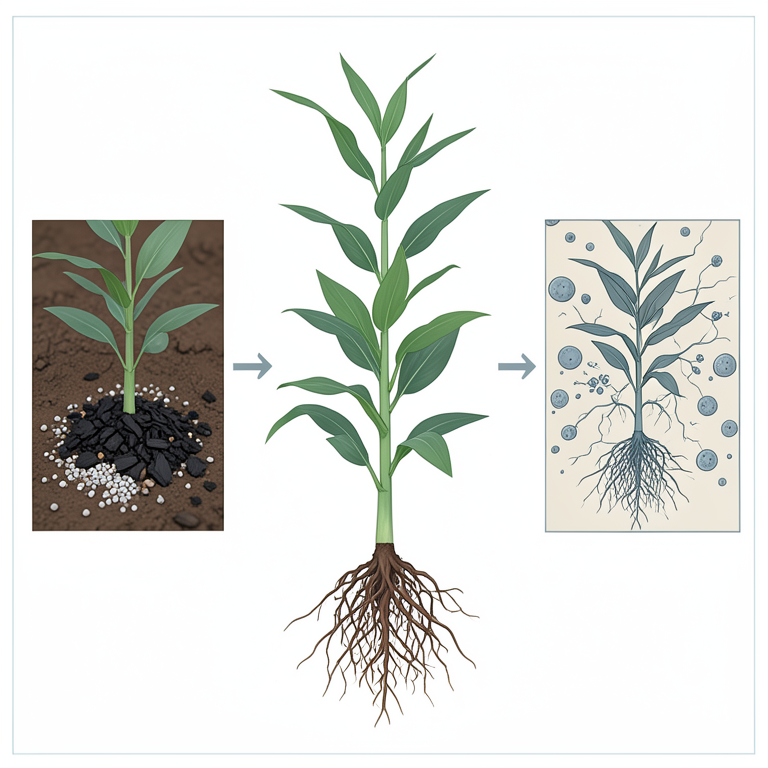
Components of Integrated Fertilization
AI-generated conceptual illustration (maize plants in soil). It explains the idea and does not show study data.
View source evidence ↗Introduction
Global agriculture has an immense and critical need to address rapidly increasing world population, climate change, degradation of soil fertility, and greater competition for natural resources. The demand for food globally is expected to grow enormously by 2050, which will require, on the one hand, major agricultural productivity enhancements and, on the other, environmental sustainability (Amanullah et al., 2023; Nogueira de Sousa & Moreira, 2024) [1,2] . Since the Green Revolution, increasing crop production has been greatly dependent on synthetic fertilizers, irrigation, and improved crop varieties. Those technologies, although having contributed to ending hunger, over-reliance on mineral fertilizers is mad environmental and agronomic problems such as soil acidification, nutrient imbalances, loss of biodiversity, greenhouse gas emissions, and eutrophication of water bodies (Paramesh et al., 2023; Rahman et al., 2021) [3,4] . The use of nitrogen fertilizer has escalated dramatically all over the world, but still nutrient-use efficiency (NUE) is very low. The major parts of the applied nutrients are lost either through leaching, volatilization, runoff, or denitrification, which not only diminishes fertilizers efficacy but also raises production cost and environmental hazards (Sapkota et al., 2021; Wang et al., 2024) [5,6] . These concerns have led to a growing interest in Integrated Nutrient Management (INM), which is a green agricultural system working by using the right combination of organic resources, chemical fertilizers, and bio-inputs to bestow nutrients to plants in adequate amounts and times while, at the same time, preserving soil workability and environmental quality (Fashola et al., 2022; Kugedera et al., 2023) [7,8] . Compost, farmyard manure, crop residues, and biochar etc. are examples of organic inputs that slowly supply nutrients and at the same time, maintain or improve soil organic matter and microbial activity. Nitrogen-fixing bacteria, phosphate-Solubilizing microorganisms, and arbuscular mycorrhizal fungi are among biological inputs that stimulate nutrient uptake and growth. A combination of these with the right mineral fertilizers can have synergistic effects in improving fertilizer use efficiency, crop yields, and environmental sustainability. (Gupta et al., 2022; Kushwah et al., 2023) [9,10] This article suggests a review of the theoretical basis of INM, its influence on crop yields and nutrient-use efficiency, its role in soil health and microbial diversity, and finally its part in climate change mitigation and sustainable food production.
Theoretical Framework and Principles of Integrated Fertilization
Integrated Fertilization Strategies (IFS) rely on using mineral fertilizers, organic amendments, and biological inputs in such a way that they complement each other to sustain crop production. In contrast to the conventional fertilization systems that almost exclusively rely on chemical fertilizers, IFS seeks to maximize nutrient availability, improve nutrient-use efficiency, and conserve soil fertility in the long run by taking advantage of the complementary interaction among different nutrient sources (Fashola et al., 2022; Paramesh et al., 2023) [3,7] . An important element of IFS is the so-called nutrient synchronization, which means that the nutrients supplied by fertilizers are aligned with the crops' nutrient requirements. Mineral fertilizers can deliver nutrients rapidly in a form readily available to plants, whereas organic inputs have to undergo microbial breakdown before their nutrients become available. The combination of these sources results in a sustained nutrient supply that cuts down on nutrient loss and boosts fertilizer efficiency (Nogueira de Sousa & Moreira, 2024; Wang et al., 2024) [2,6] . Besides that, organic amendments enhance the physical and biological characteristics of soil by raising the content of organic matter, improving the capacity of soil to hold water, and activating microbial communities. Microbial communities through their metabolic activities expedite nutrient transformations and enhance availability of nutrients to plants. In soils that have been subjected to land degradation, the application of organic inputs not only improves nutrient retention but also raises the efficiency of added fertilizers (Kugedera et al., 2023) [8] . Besides natural nitrogen fixation by plants with the help of bacteria, integrated fertilization systems are further empowered by the use of biological inputs like phosphate-solubilizing microorganisms, rhizobacteria that promote plant growth (PGPR), and arbuscular mycorrhizal fungi (AMF). All these good microorganisms assist in nutrient solubilization, root development, nutrient absorption, and plant resistance to environmental stresses, which ultimately lead to improved crop growth and resource-use efficiency (Gupta et al., 2022; Kushwah et al., 2023) [9,10] . Improved methods of precision agriculture have recently given more power to IFS via such things as soil sensors, remote sensing, geographic information systems (GIS), and artificial intelligence-based decision-support tools. These technologies allow for sitespecific fertilizer management, thereby not only enhancing nutrient-use efficiency but also reducing environmental impacts (Sapkota et al., 2021) [5] . After all, integrated fertilization strategies can be regarded as a holistic approach to improving crop productivity, soil fertility, and overall agricultural sustainability.
Mechanisms of Enhancing Crop Productivity Cereal Cropping Systems
Integrated Fertilization Strategies (IFS) improve crop productivity mainly by making nutrients more accessible, also by increasing nutrient-use efficiency, soil health, and biological activity. Synergistic effects are created by the application of mineral fertilizers, organic amendments, and biological inputs, combined, throughout the growing season that supports plant growth. In contrast to the use of chemical fertilizers alone, integrated fertilization not only supplies to the plant nutrients that are immediately available but also provisions that ensure the continuance of the nutrient supply, therefore, meeting crop nutrient requirements at different stages (Paramesh et al., 2023; Wang et al., 2024) [3,6] . Cereal crops like maize, rice, and wheat will keep on benefiting from integrated fertilization as evident by the substantial increases in grain yield and biomass production that have been regularly reported. Soil structure, water-holding capacity, and microbial activity are among the unchanged aspects of the soil benefiting from organic amendments whereas mineral fertilizers mainly supply the crop with nutrients that are readily available and that support rapid growth. Together, the two promote root development, nutrient uptake, and plant tolerance to stresses such as drought and nutrient deficiency increasing by far the likelihood of a better plant growth. (Wang et al., 2024) [6] The inclusion of organic manures and biofertilizers with soil-test-based fertilizer recommendations in rice-based systems is a proven method not only to boost grain yield but also to improve nutrient recovery and farm profitability (Singh et al., 2021) [11] .
Legume and Oilseeds
The integration of fertilizers substantially enhances the growth of legume crops. Applying phosphorus fertilization combined with the use of phosphate-solubilizing microorganisms and organic materials can increase nodulation and biological nitrogen fixation. Higher microbial activities in the rhizosphere lead to better nutrient availability and consequently higher crop growth and yield (Gupta et al., 2022) [9] . In the same way, oilseed crops show a positive response to balanced fertilization in terms of seed yield, oil content, and nutrient-use efficiency. Besides, organic amendments help retain soil moisture and make nutrients more available, especially in conditions where water is scarce (Kushwah et al., 2023) [10] . Increased microbial activity, better nutrient synchronization, and improved soil physical conditions are the factors that further enhance the productivity benefits of integrated fertilization. These factors jointly improve nutrient uptake efficiency, encourage healthy plants, and support sustainability in terms of yield improvement. Thus, integrated fertilization methods are a powerful solution to increasing agricultural production and, at the same time, preserving soil fertility and the environment for the future.
Decoupling Yield from Nutrient Losses: Enhancing Nutrient-Use Efficiency (NUE) Nitrogen Dynamics
Nitrogen use efficiency (NUE) is still one of the biggest problems in agriculture today, with the global average NUE hovering around 40% to 50% (Sapkota et al., 2021; Rahman et al., 2021) [4,5] . A large fraction of the nitrogen applied gets lost via ammonia volatilization, nitrate leaching, and denitrification resulting in not just economic losses but also environmental degradation. Integrated Nutrient Management (INM) enhances NUE by releasing nutrients in sync with crop requirements and increasing the nutrient retention capability of the soil. Organic materials like compost, farmyard manure, and biochar increase soil organic matter and cation exchange capacity (CEC), improving the retention of ammonium (NH₄ ⁺) and limiting nutrient losses especially through leaching (Rahman et al., 2021; Oduor et al., 2023) [4,12] . Also, organic matter enhances the soil's structural aggregation and supports microbial activities, which further improve nutrient cycling. Adding precision nutrient management solutions to the mix enhances NUE even further. Sapkota et al. (2021) [5] have shown that the Nutrient Expert decision support system leads to significant gains in fertilizer-use efficiency, crop productivity, and farmer profitability by offering nutrient recommendations tailored to the specific conditions of each site. The fine-tuning of nutrient application, in relation to soil nutrient levels and crop nutrient requirements, helps to sidestep issues of both nutrient overuse and underuse. On the other hand, using biological inputs alongside nitrification inhibitors as part of INM systems can delay the conversion of ammonium to nitrate and thus help in reducing nitrogen losses while increasing nitrogen availability in the crop root zone (Paramesh et al., 2023; Nogueira de Sousa & Moreira, 2024) [2,3] . These techniques lead to improved nitrogen use efficiency and less environmental impacts.
Phosphorus and Potassium Management
Agricultural soils often suffer from a lack of Phosphorus (P) due to fixation reactions that convert dissolved phosphorus into unavailable forms. Through the integrated use of organic amendments along with phosphate-solubilizing microorganisms, nutrient use efficiency in terms of phosphorus is improved (Gupta et al., 2022; Fashola et al., 2022) [7,9] . The breakdown of organic materials releases organic acids that can free up bound phosphorus, while the beneficial microbes help in both solubilization and uptake of phosphorus by roots. Potassium (K) is crop nutrition element that can also reap big benefits from integrated management approaches. Crop residues, especially cereal straws, are a high-level source of potassium and recycling of the nutrients present can be done through residue retention and incorporation (Kugedera et al., 2023) [8] . This strengthens the whole farming system by balancing the use of nutrients and reducing the need for potassium fertilizers. Moreover, residue retention practice prevents the burning of residues and associated nutrient losses, apart from keeping the soil organic matter levels high.
Soil Physical and Chemical Rejuvenation
The concept of soil fertility is a complicated one involving the interaction of physical, chemical, and biological properties, all of which are favorably affected by integrated nutrient management practices (Fashola et al., 2022; Paramesh et al., 2023) [3,7] . The continuous addition of organic materials improves soil structure through the formation of stable soil aggregates. Organic compounds and microbial products act as binding agents that enhance aggregate stability, resulting in reduced bulk density and increased porosity (Oduor et al., 2023) [12] . The improvement in soil structure leads to better water movement, air permeability, and root growth, as well as an increase in water storage capacity. Such changes are important for crops as they help them cope better with drought and rainfall irregularities, which are likely to become more frequent with climate change (Paramesh et al., 2023) [3] . Chemically, organic materials play a major role in enhancing soil buffering capacity. The long-term application of synthetic nitrogen fertilizers tends to result in soil acidification, nutrient imbalance, and decreased availability of nutrients. Compost and manure incorporation helps manage soil pH and at the same time, provide the soil with essential base cations such as calcium (Ca), magnesium (Mg), and potassium (K) (Rahman et al., 2021) [4] . Also, integrated nutrient management encourages Soil Organic Carbon (SOC) buildup, which is an important indicator of soil health. Elevated SOC levels result in increased cation exchange capacity, nutrient retention, moisture storage, and overall ecosystem productivity (Nogueira de Sousa & Moreira, 2024) [2] . As a result, soils managed under INM are often more fertile, resilient, and sustainable than those operated under conventional fertilization systems.
Biological Health and the Soil Microbiome
One of the greatest strengths of integrated nutrient management is its capacity to revive and encourage soil biological activity. The soil is a live ecosystem made up of different kinds of microorganisms, fungi, fauna, and plant roots, which together manage nutrient circulation and ecosystem productivity (Paramesh et al., 2023) [3] . While chemical fertilizers give the essential nutrients, they rarely contribute to preserving microbial mass and diversity. Reliance only on mineral fertilizers can, over time, lessen the microbial activity and soil biological processes. On the other hand, the inclusion of organic amendments results in carbon substrates that act as energy sources for a wide range of microbial communities (Gupta et al., 2022) [9] . Studies have found that integrated fertilization systems drastically enhance the level of activity of important soil enzymes, such as urease, phosphatase, and dehydrogenase, which are directly linked to the processes of nutrient transformation and mineralization (Paramesh et al., 2023; Gupta et al., 2022) [3,9] . Greater enzyme activity quickens nutrient cycling and enhances nutrient provision to crops. Besides that, biofertilizers and plant growth-promoting rhizobacteria (PGPR) are added to further improve the biological fertility by encouraging root development, nutrient absorption, and disease suppression (Gupta et al., 2022) [9] . Likewise, arbuscular mycorrhizal fungi (AMF) form symbiotic connections with plant roots, thereby extending the effective root system and facilitating access to phosphorus and water in soil niches inaccessible to root hairs (Fashola et al., 2022) [7] . The positive interplay among organic amendments, beneficial microbes, and proper fertilizer application generates a biologically rich soil environment characterized by efficient nutrient cycling, enhanced disease resistance, and greater ecosystem stability. This balanced soil food web forms a foundation for sustainable agricultural production systems.
Environmental Implications and Climate Change Mitigation
One of the major contributors to environmental degradation and greenhouse gas (GHG) emissions is agriculture due to factors like excessive fertilizer use, nutrient losses, soil degradation, and water pollution. Integrated Fertilization Strategies (IFS) provide a sustainable way to tackle these issues by increasing nutrient-use efficiency, lowering environmental impacts, and enhancing ecosystem resilience (Paramesh et al., 2023; Amanullah et al., 2023) [1,3] . On top of that, IFS reduce nutrient losses which is one of the biggest environmental benefits. The simultaneous use of mineral fertilizers, organic amendments, and biological inputs leads to a much better synchronization of nutrients with crop demands, which means far fewer losses through leaching, runoff, volatilization, and denitrification. Besides improving fertilizer efficiency, the reduction of nutrient losses also minimizes the contamination of surface and groundwater resources and the risk of eutrophication (Wu & Ma, 2015) [13] . It is also important to recognize that integrated fertilization plays a role in climate change mitigation by lowering the emissions of greenhouse gases connected with agricultural production. Replacing a portion of synthetic fertilizers with compost, manure, biochar, and biofertilizers decreases the amount of reactive nitrogen present in agricultural systems and can bring down nitrous oxide (N₂O) emissions.
Fertilization systems based on biochar are particularly good at this since they manage to improve nutrient retention, enhance carbon stabilization, and favor beneficial microbial activity (Nogueira de Sousa & Moreira, 2024) [2] . An equally significant aspect of IFS is increasing the sequestration of soil organic carbon. Regular incorporation of organic materials bolsters soil carbon stocks, enhancing soil fertility at the same time as pulling carbon dioxide (CO₂) from the atmosphere. Elevated levels of soil organic carbon also contribute to better water retention, nutrient availability, and ecosystem stability (Bayu, 2020) [14] . Integrated fertilization also advocates for sustainable use of resources by recycling crop residues and organic wastes, thereby reducing the reliance on fast-depleting fertilizer resources. By aligning productivity with environmental conservation, IFS serve as a vehicle for climate-smart agriculture and sustainable intensification. In other words, integrated fertilization strategies are indispensable in ensuring long-term food security while reducing agriculture's ecological footprint and increasing resilience to climate change.
Technological Innovations and the Future of Integrated Nutrient Management
Integrated Fertilization Strategies (IFS) have been getting a great boost through recent developments in agriculture technology that is not only enhancing their performance but also involvement in sustainable crop production. Combining precision farming, new digital tools, bio-engineering, and superior fertilizer products is offering great opportunities to enhance the efficiency of nutrient use, minimize environmental harm, and increase agricultural output (Nogueira de Sousa & Moreira, 2024) [2] . Precision farming has been instrumental in boosting fertilizer optimization efforts. Availability and realtime monitoring of crop nutrient status through remote sensing, GIS, UAVs, soil sensors, and satellite images have facilitated the implementation of site-specific fertilizer applications. This approach ensures correct nutrient application both in quantity and time leading to a reduction in nutrient losses while keeping production costs low along with a better utilization of fertilizers (Sapkota et al., 2021) [5] . Moreover, artificial intelligence and machine learning do help nutrient management in processing huge databases on soil fertility, plant growth, weather conditions, and fertilizer effects, etc. AI-powered systems offer predictions on crop nutrient needs and propose suitable fertilizer strategies thus optimize nutrient management. Changing fertilizer technologies also present a major opportunity for enhancing IFS. Nano-fertilizers and controlled-release fertilizers aim at fulfilling the nutrient requirements of crops with a minimal wastage helping increase nutrient uptake by plants and thereby their performance through better environmental safety. Besides, when combined with organic materials and microbes these innovations may raise the level of nutrient use efficiency and crop yields even further (Kushwah et al., 2023) [10] . With the help of biotechnology, highly potent biofertilizers have been formulated containing various bacteria capable of fixing nitrogen, solubilizing phosphate, mobilizing potassium, and plant growth-promoting rhizobacteria (PGPR). These advanced microbial inoculants enhance nutrient uptake and contribute to sustainable crop production even in varied environmental conditions (Gupta et al., 2022) [9] . Going ahead, developing fertilization strategies tailored to specific locations, digital technology integration with biological inputs, and better availability of advanced nutrient management tools to farmers should be the focus of research. The implementation of such innovations would definitely assist integrated fertilization strategies to achieve sustainable agricultural intensification, environmental conservation, and global food security.
Conclusion
By featuring mineral fertilizers, organic amendments, and biological inputs, Integrated Fertilization Strategies (IFS) offer a balanced solution to crop productivity, nutrient-use efficiency, and soil fertility enhancement. IFS achieves this integration by promoting nutrient harmony, lowering nutrient loss, and maintaining a steady and efficient supply of nutrients to plants. The current data indicates that IFS not only boosts yield production in various cropping situations but also improves the soil's physical, chemical, and biological aspects. Organic materials raise the level of soil organic matter, enhance soil structure and moisture holding capacity, and encourage the growth of beneficial microbes, whereas biological agents play a role in making nutrients more accessible and increasing their uptake by crops. Besides the agronomic advantages that IFS brings, it also mitigates environmental degradation through lowering the release of greenhouse gases, decreasing nutrient runoffs from agriculture, and increasing carbon storage in the soil. Tools that are just coming on the scene such as precision agriculture, AI-based decision aids, and improved fertilizer technologies provide that extra punch in making integrated fertilization even more effective. In short, Integrated Fertilization Strategies stands as a sensible and effective means for us to move towards sustainable agricultural intensification as well as food and soil health security in the long run.
Acknowledgement
AcknowledgementsI would like to extend my heartfelt thanks to the School of Agriculture Sciences, K.K. University, Nalanda, Bihar, for providing me with the best academic surroundings and facilities along with support in conducting this research. The help provided by them was immensely useful in accomplishing this research. Funding: No funding
References
29 in the original paper- Nogueira de Sousa R, Moreira LA. Plant nutrition optimization: Integrated soil management and fertilization practices. Agricultural Sciences. 2024;15:114848.https://DOI.org/10.5772/intechopen.1148 48
- Paramesh V, et al. Integrated nutrient management for improving crop yields, soil properties, and reducing greenhouse gas emissions. Frontiers in Sustainable Food Systems. 2023;7:1173258.https://DOI.org/10.3389/fsufs.2023.1173 258
- Rahman MM, et al. Integrated nutrient management enhances productivity and nitrogen use efficiency of crops in acidic soils. Plants. 2021;10(11):2547.https://DOI.org/10.3390/plants1011254
- Sapkota TB, et al. Crop nutrient management using Nutrient Expert improves yield, income, and reduces greenhouse gas emissions. Scientific Reports. 2021;11:79883.https://DOI.org/10.1038/s41598-02079883-x
- Wang Z, et al. Advancing sustainable agriculture: The role of integrated soil-crop management in maize production. Frontiers in Environmental Science. 2024;12:1426956.https://DOI.org/10.3389/fenvs.2024.142 6956
- Fashola KO, et al. Integrated soil fertility management: A strategy for improving crop productivity and soil health. Journal of Agriculture and Food Research. 2022;10:100293.https://DOI.org/10.1016/j.jafr.2022.1002 93
- Kugedera AT, et al. Integrated soil fertility management practices for improved crop production in semi-arid farming systems. Cogent Food & Agriculture. 2023;9(1):2256137.https://DOI.org/10.1080/23311932.20 23.2256137
- Gupta G, et al. Microbe-mediated integrated nutrient management for improved rhizosphere modulation, pigeonpea productivity, and soil biofertility. Frontiers in Microbiology. 2022;13:924407.https://DOI.org/10.3389/fmicb.2022.924 407
- Kushwah N, et al. Integrated nutrient management for optimal plant health and crop yield. Plant Science Archives. 2023;8(2):10.https://DOI.org/10.51470/psa.2023.8.2.10
- Singh VK, et al. Soil test-based fertilizer application improves productivity and nutrient use efficiency of rice under direct-seeded conditions. Agronomy. 2021;11(9):1756.https://DOI.org/10.3390/agronomy11091 756
- Oduor NO, et al. Soil water use efficiency under integrated soil management practices in drylands. Heliyon. 2023;9:e16145.https://DOI.org/10.1016/j.heliyon.2023.e1 6145
- Wu W, Ma B. Integrated nutrient management for sustaining crop productivity and reducing environmental impact: A review. Science of the Total Environment. 2015;512:114.https://DOI.org/10.1016/j.scitotenv.2014.12.101
- Bayu T. Review on contribution of integrated soil fertility management for climate change mitigation and agricultural sustainability. Cogent Environmental Science. 2020;6(1):1823631.https://DOI.org/10.1080/23311843.20 20.1823631
- Laub M, et al. Modeling integrated soil fertility management for maize production using DayCent simulation. Biogeosciences. 2024;21:36913708.https://DOI.org/10.5194/bg-21-
- Xia L, et al. A meta-analysis of greenhouse gas emissions from integrated nutrient management. Agriculture, Ecosystems & Environment. 2017;247:105115.https://DOI.org/10.1016/j.agee.2017.06.010
- Zhang X, et al. Managing nitrogen for sustainable development. Nature. 2015;528:51-
- Zingore S, et al. Soil type, management history, and crop productivity variability in African farms. Field Crops Research. 2008;108:121-132.
- Chivenge P, et al. Crop residue management and soil organic carbon in smallholder systems. Plant and Soil. 2011;338:15-30.https://DOI.org/10.1007/s11104-01020.
- Fixen P, et al. Nutrient use efficiency trends and measurement. In Managing Water and Fertilizer for Sustainable Intensification. Springer; 2014.https://DOI.org/10.1007/978-3-31921.
- Giller KE, et al. Communicating complexity in integrated soil fertility management. Plant and Soil. 2011;339:116.https://DOI.org/10.1007/s11104-011-0772-2
- Lal R. Soil carbon sequestration and climate change. Science. 2004;304(5677):16231627.https://DOI.org/10.1126/science.1097395
- Pan G, et al. Soil organic carbon sequestration in China: Meta-analysis. Agriculture, Ecosystems & Environment. 2009;129:220227.https://DOI.org/10.1016/j.agee.2009.09.010
- Pimentel D, et al. Environmental and energy analysis of organic vs conventional systems. BioScience. 2005;55(7):573582.https://DOI.org/10.1641/00063568(2005)055[0573:E EAECO]2.0.CO;2
- Stewart WM, et al. Contribution of fertilizer nutrients to food production. Agronomy Journal. 2005;97:16.https://DOI.org/10.2134/agronj2005.0001
- Tilman D, et al. Agricultural sustainability and intensive production. Nature. 2002;418:671677.https://DOI.org/10.1038/nature01014
- Cong WF, et al. Plant species richness and soil carbon inputs. Nature Communications. 2015;6:791.https://DOI.org/10.1038/ncomms791
- Bationo A, et al. Nutrient management in West African ecosystems. Advances in Agronomy. 2007;94:151.https://DOI.org/10.1016/S0065-2113(06)95004-7
- Cassman KG, et al. Meeting cereal demand while protecting resources. Annual Review of Environment and Resources. 2003;28:315-
- Foley JA, et al. Solutions for a cultivated planet. Nature. 2011;478:337-342.https://DOI.org/10.1038/nature10452