
Research article · 2026 · Full text
International Journal of Horticulture and Food ScienceIntercultural operations as a tool for sustainable weed management in vegetable crops: Current status, technological advances, challenges, and future perspectives
Volume 8(7S) · Pages 20–33 · DOI: 10.33545/26631067.2026.v8.i7sa.807 ↗
Research areasWeed Control and Herbicide ApplicationsAllelopathy and phytotoxic interactionsAgricultural Engineering and Mechanization
Abstract
Author-writtenWeeds are among the most serious constraints limiting vegetable production, causing significant reductions in crop yield, quality, and profitability through competition for light, water, nutrients, and space. Vegetable crops are particularly susceptible to weed interference during the early stages of growth, making timely weed management essential for successful production. This review examines the role of intercultural operations as a sustainable approach to weed management in vegetable crops. Traditional practices such as hand weeding, hoeing, mechanical cultivation, mulching, stale seedbed techniques, and cover crop management are discussed along with recent advancements in precision agriculture technologies. The review highlights how innovations such as machine vision, artificial intelligence, robotics, autonomous weeders, and precision-guided cultivation systems are improving the efficiency, accuracy, and sustainability of weed control. The mechanisms of weed suppression, crop-specific applications, economic benefits, environmental advantages, and integration of intercultural operations within Integrated Weed Management (IWM) programs are also evaluated. In addition, key challenges including labor scarcity, high investment costs, technological limitations, soil and weather-related constraints, and issues associated with biodegradable mulch performance are critically discussed. Available evidence suggests that the integration of traditional intercultural practices with modern precision technologies can effectively reduce weed pressure, decrease dependence on herbicides, improve resource-use efficiency, and support environmentally responsible vegetable production. Future research should focus on long-term soil health impacts, technology adoption among smallholder farmers, life-cycle assessment of emerging technologies, and the development of cost-effective precision weed management solutions. Overall, intercultural operations remain an essential component of sustainable, resilient, and productive vegetable production systems and will continue to play a vital role in future weed management strategies.
Summary
Source-checkedPlain-language reading of the full paper, prepared with AI and checked against the text. Each point links to the authors' own words.
Why it matters
- Weeds significantly limit vegetable production by competing for essential resources, which reduces crop yield, quality, and overall profitability. View evidence ↗
- In India, weed interference causes annual agricultural losses exceeding USD 11 billion, with yield reductions between 14% and 36% across major crops. View evidence ↗
- The emergence of herbicide resistance in over 260 weed species poses a major threat to sustainable crop production, increasing the need for non-chemical alternatives. View evidence ↗
The question
- The review aims to evaluate the current state and future of intercultural operations for sustainable weed management in vegetables, focusing on precision technology, soil health, and economic viability. View evidence ↗
What they did
- The authors used a PRISMA-inspired framework to ensure a transparent and reproducible synthesis of evidence. View evidence ↗
- The literature search spanned six major scientific databases, initially identifying 1,452 potentially relevant records. View evidence ↗
What they found
- Severe weed interference can cause drastic yield losses: 70-95% in tomato, 40-80% in onion, 60-70% in chilli pepper, up to 90% in carrot, and 45-80% in cabbage. View evidence ↗
- Thorough hand weeding performed at appropriate intervals can achieve weed control efficiencies of over 90-95%. View evidence ↗
- Hand weeding is highly labor-intensive, typically requiring between 100 and 400 person-hours per hectare. View evidence ↗
- AI models used in precision weed management frequently achieve plant detection and classification accuracies exceeding 95%, even in dense canopies. View evidence ↗
- Properly executed mechanical cultivation, mulching, and integrated weed management can produce yields comparable to those achieved with chemical weed control. View evidence ↗
What it means
- The authors conclude that combining traditional intercultural practices with modern precision technologies enhances weed control and resource efficiency while supporting sustainability. View evidence ↗
- There is a lack of information regarding the long-term impacts of repeated robotic cultivation and micro-tillage on soil biology and carbon dynamics. View evidence ↗
- More research is needed to understand the barriers to technology adoption among smallholder farmers in developing countries. View evidence ↗
Figures & tables
From the original paper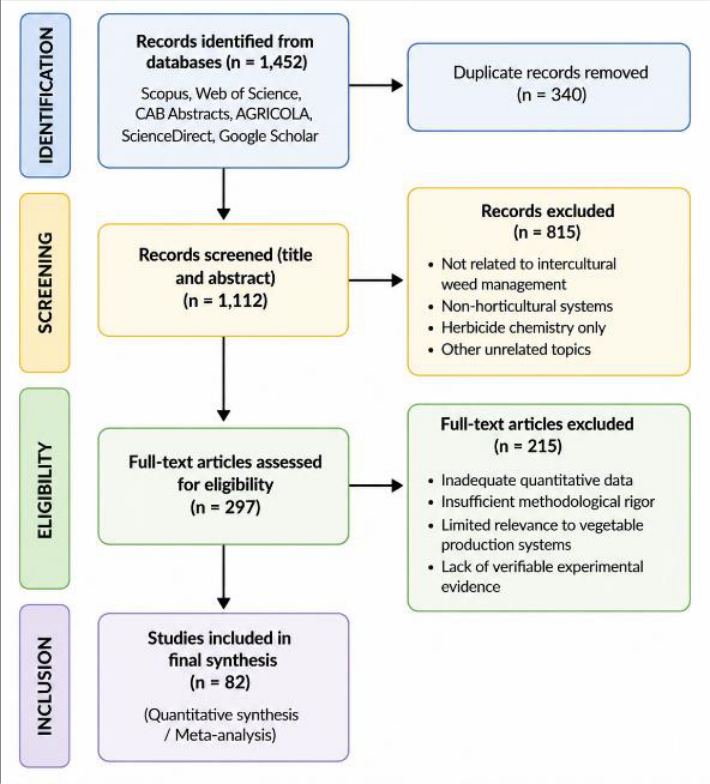 Figure 1
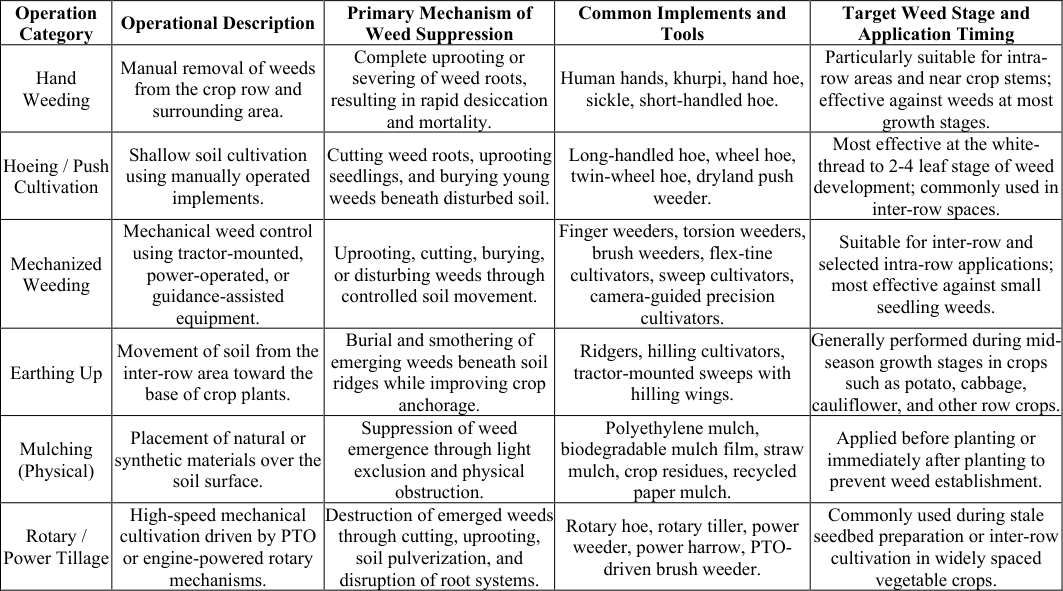 Table 1
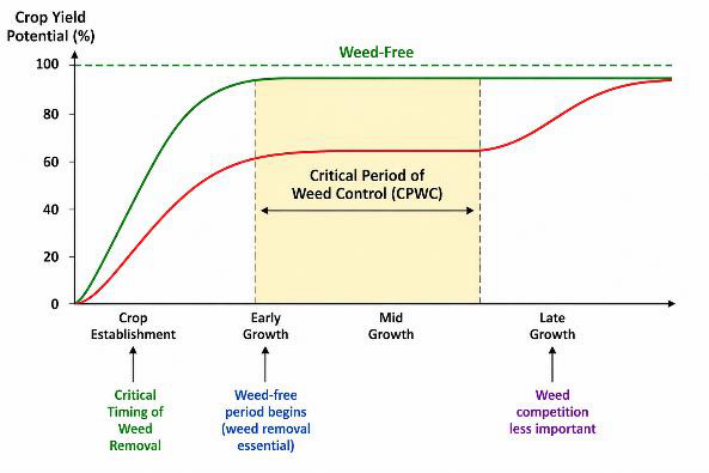 Figure 2
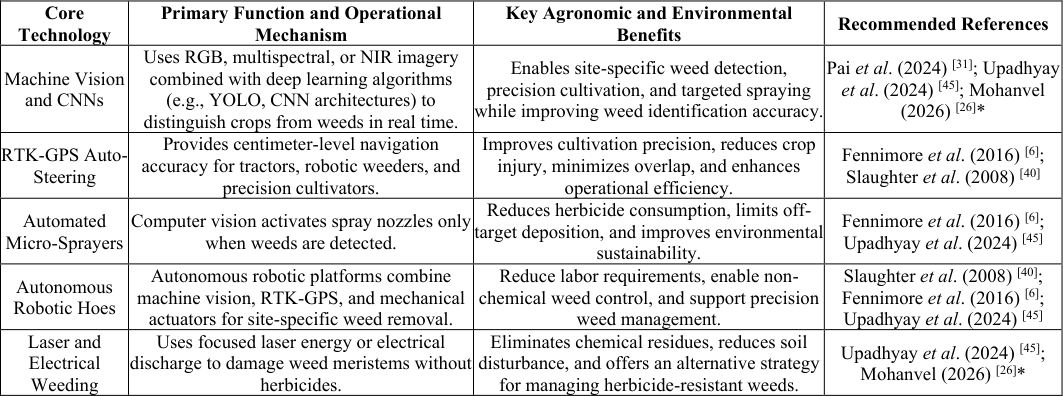 Table 2
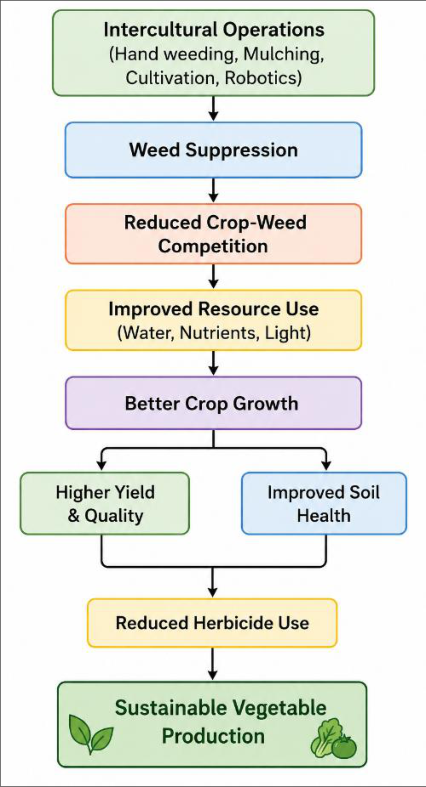 Figure 3
Introduction
Vegetable crops occupy a central role in global agriculture and human nutrition, serving as major sources of vitamins, minerals, antioxidants, and dietary fiber. However, the productivity and profitability of vegetable-based production systems are severely constrained by weed interference, which is widely recognized as one of the most important biological factors limiting crop yield and quality (Gharde et al., 2018) [7] . Weeds compete aggressively with crops for light, water, nutrients, and space, thereby reducing growth, marketable yield, and product quality. Globally, weeds are estimated to cause greater crop losses than insect pests and diseases when left unmanaged (Oerke, 2006) [29] . In India, weeds account for substantial economic losses in agriculture, with yield reductions across major crops ranging from approximately 14% to 36%, resulting in annual losses exceeding USD 11 billion (Gharde et al., 2018) [7] . In vegetable production systems, characterized by relatively slow early growth and incomplete canopy closure, weed competition can be particularly severe, causing yield losses exceeding 70% in susceptible crops under uncontrolled conditions (Rana et al., 2011; Oerke, 2006) [35,29] .
For several decades, synthetic herbicides have been the primary tool for weed management because of their effectiveness, rapid action, and relatively low labor requirements. However, extensive and repeated herbicide use has resulted in serious ecological and agronomic challenges. The evolution of herbicide-resistant weed populations has emerged as one of the most significant threats to sustainable crop production worldwide. According to Heap (2014) [12] , hundreds of weed biotypes representing more than 260 species have evolved resistance to one or more herbicide modes of action. Furthermore, concerns regarding groundwater contamination, impacts on nontarget organisms, biodiversity loss, and herbicide residues in agricultural ecosystems have intensified scrutiny of chemical-dependent weed management strategies (Duke, 2012; Kniss, 2017) [5,19] . Simultaneously, the discovery of novel herbicide modes of action has slowed considerably, with very few new mechanisms introduced during the past three decades, increasing the urgency of developing alternative weed management approaches (Duke, 2012) [5] . These challenges have accelerated the search for sustainable weed management strategies that reduce dependence on synthetic herbicides while maintaining effective weed suppression. Within this context, intercultural operationsincluding hand weeding, hoeing, cultivation, earthing up, and mulching-have regained considerable importance as integral components of integrated weed management systems (Bond & Grundy, 2001; Hatcher & Melander, 2003) [3,11] . Such practices provide direct physical suppression of weeds without imposing the strong selection pressure associated with herbicide use. In addition to weed control, intercultural operations frequently improve soil aeration, enhance water infiltration, conserve soil moisture, and promote favorable root-zone conditions for crop growth. Recent advances in agricultural engineering have transformed intercultural weed management from laborintensive manual operations into highly sophisticated precision-based interventions. The integration of machine vision, artificial intelligence, robotics, sensor technologies, and automated guidance systems has enabled the development of precision weed management platforms capable of detecting and removing weeds with high spatial accuracy (Fennimore et al., 2016; Slaughter et al., 2008) [6,40] . Sensor-guided cultivators, autonomous robotic weeders, and site-specific mechanical weed control systems have demonstrated the potential to achieve weed control levels comparable to conventional herbicide-based approaches while substantially reducing labor requirements and chemical inputs (Fennimore et al., 2016; Upadhyay et al., 2024) [6,45] . Therefore, the objective of this review is to critically examine the current status, technological advancements, challenges, and future prospects of intercultural operations for sustainable weed management in vegetable crops, with particular emphasis on precision agriculture technologies, soil health implications, economic viability, and long-term sustainability.
Review Methodology
To ensure a transparent, reproducible, and scientifically rigorous evaluation of the literature, this review was conducted following a PRISMA-inspired (Preferred Reporting Items for Systematic Reviews and Meta-Analyses) framework for evidence synthesis (Page et al., 2021; Moher et al., 2009) [30,27] .
Literature Search Strategy
A comprehensive literature search was conducted using major scientific databases, including Scopus, Web of Science, CAB Abstracts, AGRICOLA, ScienceDirect, and Google Scholar. The search strategy employed combinations of keywords and Boolean operators to identify relevant studies associated with intercultural operations and sustainable weed management in vegetable crops. The primary search string included: ("Intercultural Operations" OR "Intercultivation" OR "Mechanical Weed Control" OR "Precision Weed Management") AND ("Vegetable Crops" OR "Horticulture" OR "Tomato" OR "Onion" OR "Cabbage") AND ("Sustainable Weed Management" OR "Robotic Weeder" OR "Biodegradable Mulch" OR "Weed Ecology"). Additional searches were conducted using reference lists of relevant review articles and research papers to identify potentially eligible studies not captured through database searches.
Inclusion and Exclusion Criteria
The review primarily included peer-reviewed journal articles published between 2010 and 2025. Foundational studies published prior to this period were included when they contributed essential concepts related to weed ecology, critical weed-free periods, or intercultural management principles. Eligible studies were required to focus on vegetable production systems and report measurable outcomes related to weed control efficiency, crop productivity, soil health indicators, economic performance, or technological innovations in intercultural operations. Studies published in predatory journals, non-peer-reviewed reports, opinion articles lacking empirical evidence, and research focused exclusively on broadacre cereal crops without direct applicability to vegetable production systems were excluded.
Data Extraction Process
Data extraction was performed using a standardized review matrix adapted from established systematic review procedures (Kitchenham & Charters, 2007) [17] . For each selected study, information was recorded regarding authorship, publication year, crop species, weed flora, intercultural practice evaluated, experimental conditions, weed control efficiency, crop yield response, economic indicators, and reported environmental impacts. Particular emphasis was placed on extracting quantitative information that could facilitate comparison among different intercultural weed management approaches.
Quality Assessment
The methodological quality of included studies was critically evaluated before synthesis. Assessment criteria included experimental design, replication adequacy, treatment structure, statistical rigor, duration of experimentation, and practical relevance under field conditions. Greater weight was assigned to studies employing randomized complete block designs, replicated field experiments, multi-location trials, or long-term evaluations. For engineering and robotic weed-management studies, additional consideration was given to detection accuracy, operational precision, field performance, and validation under commercial production environments. This quality assessment approach ensured that conclusions were derived from scientifically robust and reliable evidence (Higgins et al., 2022) [13] .
PRISMA Flow Diagram
The study selection process followed the Preferred Reporting Items for Systematic Reviews and Meta-Analyses (PRISMA 2020) framework to ensure transparency and reproducibility throughout the review process (Page et al., 2021) [30] . Figure 1 presents the PRISMA flow diagram illustrating the identification, screening, eligibility assessment, and final inclusion of studies. • Inclusion Phase: Ultimately, 82 peer-reviewed studies met all inclusion criteria and were incorporated into the final evidence synthesis. These studies constituted the primary scientific basis for evaluating traditional intercultural practices, precision weed management technologies, robotic weed control systems, biodegradable mulches, and integrated weed management approaches in vegetable crops.
Weed Problems in Vegetable Crops
The biological and morphological characteristics of vegetable crops frequently place them at a competitive disadvantage relative to many annual and perennial weed species. Understanding the ecological basis of crop-weed interactions is essential for developing effective and sustainable weed management strategies.
Weed-Crop Competition
Weed interference encompasses the total negative impact of weeds on crop growth and productivity through resource competition and other ecological interactions, including allelopathy (Harper, 1970; Zimdahl, 2018) [49] . Competition occurs primarily for light, water, nutrients, and physical space, particularly during the early stages of crop establishment when vegetable crops exhibit relatively slow growth and incomplete canopy development (Radosevich et al., 2007) [34] . Most weed species possess rapid germination characteristics, aggressive vegetative growth, and extensive root systems, enabling them to exploit environmental resources more efficiently than crop plants. The growth pattern of many weed species follows a sigmoid curve, with the exponential growth phase representing the period of maximum resource acquisition and competitive pressure on associated crops (Radosevich et al., 2007) [34] . Furthermore, dense weed infestations can modify the crop microclimate by reducing air circulation and increasing relative humidity within the canopy, thereby creating favorable conditions for disease development and providing alternative hosts for insect pests (Zimdahl, 2018) [49] .
Critical Period of Crop-Weed Competition
The Critical Period of Weed Control (CPWC) is defined as the period in the crop life cycle during which weeds must be controlled to prevent unacceptable yield losses (Knezevic et al., 2002) [18] . The duration of this period varies considerably among vegetable species and depends on crop growth rate, planting method, weed density, environmental conditions, and management practices.
• Tomato: The critical period of weed control differs substantially between transplanted and direct-seeded tomato production systems. Weaver and Tan (1983) [48] reported that transplanted tomatoes require weed-free conditions from approximately 28 to 35 days after transplanting, whereas direct-seeded tomatoes may require weed control for up to nine weeks following emergence because of their slower early growth. • Chilli and Bell Pepper: Pepper crops exhibit relatively poor competitive ability during early growth stages. Amador-Ramirez (2002) [1] determined that the critical period of weed control in transplanted chilli pepper begins between 0.7 and 3. [23,32] . • Onion and Garlic: Onion and garlic are among the least competitive vegetable crops due to their slow initial growth, narrow upright leaves, and poor canopy closure. Consequently, these crops require extended weed-free periods, and weed emergence throughout much of the growing season can significantly reduce bulb yield and quality (Bond & Burston, 1996; Qasem, 2005) [2,33] . • Okra: Okra is highly susceptible to weed competition during the early stages of crop development. Research indicates that the critical period of weed control generally extends from 15 to 40 days after sowing, during which effective weed management is necessary to prevent substantial reductions in growth and pod yield (Rao & Nagamani, 2010) [36] . • Cabbage and Cauliflower: Brassica vegetables become relatively competitive following canopy establishment. Weaver (1984) [47] demonstrated that cabbage requires weed-free conditions primarily during the first three to five weeks after transplanting, after which canopy closure substantially suppresses subsequent weed emergence. • Cucurbits: Cucurbit crops, including cucumber, melon, and squash, require effective early-season weed control until vine expansion and canopy closure occur. The critical period generally encompasses the first four to six weeks after crop establishment, depending on environmental conditions and planting density (Van Acker et al., 1993) [46] . • Leafy Vegetables: Short-duration leafy vegetables such as lettuce and spinach are particularly vulnerable to weed interference during the first two to three weeks after emergence. Early weed competition can reduce leaf expansion, marketable yield, and harvested product quality (Santos et al., 2004) [38] .
Yield, Quality, and Economic Impacts
The agronomic and economic consequences of uncontrolled weed infestations in vegetable crops are substantial. When weeds are allowed to compete beyond the critical period of weed control, significant reductions in crop growth, yield, and product quality frequently occur (Knezevic et al., 2002; Oerke, 2006) [18,29] . The magnitude of these losses varies according to crop species, weed density, duration of competition, and environmental conditions. Previous studies have reported yield reductions ranging from 70-95% in tomato, 40-80% in onion, 60-70% in chilli pepper, up to 90% in carrot, and 45-80% in cabbage under severe weed interference conditions (Weaver & Tan, 1983; Bond & Burston, 1996; Amador-Ramirez, 2002; Weaver, 1984; Oerke, 2006) [48,2,1,47,29] .
In addition to direct yield losses, weeds compete aggressively with crops for essential resources, resulting in substantial nutrient depletion from agricultural soils. Dense weed populations can remove considerable quantities of nitrogen, phosphorus, and potassium, thereby reducing nutrient availability for crop growth and lowering fertilizeruse efficiency (Zimdahl, 2018) [49] . Weed competition is particularly severe during the early growth stages of vegetable crops, when developing root systems are less capable of competing for limited soil resources.
The adverse effects of weeds extend beyond quantitative yield reduction to include deterioration in product quality. Competition for light, water, and nutrients can impair normal crop development, resulting in smaller fruits, delayed maturity, uneven ripening, reduced pigmentation, and diminished marketability of harvested produce (Radosevich et al., 2007; Zimdahl, 2018) [34,49] . In root and tuber vegetables, intense underground competition may lead to malformed roots and reduced storage quality, while dense weed canopies may increase humidity around crop plants and favor the development of diseases and insect pests (Zimdahl, 2018) [49] . The economic implications of weed infestation are equally significant. Uncontrolled weeds reduce marketable yield, increase harvesting and grading costs, interfere with mechanical harvesting operations, and may necessitate additional labor-intensive management interventions. At the farm level, these factors collectively reduce profitability, while at regional and national scales they contribute substantially to agricultural production losses (Gharde et al., 2018) [7] . Consequently, timely and effective intercultural weed management is essential not only for maximizing crop productivity but also for ensuring economic sustainability in vegetable production systems.
Intercultural Operations: Concept and Classification
Intercultural operations encompass a broad range of physical, mechanical, and cultural interventions performed after crop establishment to manage weeds, improve soil conditions, and promote crop growth. These practices include hand weeding, hoeing, cultivation, earthing up, mulching, and mechanical weed control operations conducted during the crop growth period (Table 1).
Collectively, intercultural operations constitute a fundamental component of integrated weed management systems and play a crucial role in maintaining crop productivity while reducing dependence on synthetic herbicides (Hatcher & Melander, 2003; Zimdahl, 2018) [11,49] .
The historical foundations of intercultivation can be traced to the pioneering work of Jethro Tull, whose concept of "horse-hoeing husbandry" emphasized row planting and repeated soil cultivation for weed suppression and crop improvement. The underlying principles of intercultural operations are based on the physical disruption of weed growth, burial or uprooting of emerging seedlings, modification of the soil surface environment, and gradual depletion of the soil weed seed bank through repeated disturbance and control of successive weed flushes (Mohler, 2001; Radosevich et al., 2007) [28,34] . From a weed management perspective, intercultural operations suppress weed populations through several complementary mechanisms. Mechanical cultivation damages or uproots weeds, reduces competition for light and nutrients, and interrupts weed reproductive cycles before seed production. Repeated cultivation also influences weed seed bank dynamics by stimulating germination of dormant seeds and subsequently eliminating newly emerged seedlings, thereby reducing future weed pressure (Mohler, 2001; Liebman et al., 2001) [28,22] . In contemporary sustainable agriculture, intercultural operations have regained considerable importance due to increasing concerns regarding herbicide resistance, environmental contamination, and the long-term sustainability of chemical-intensive production systems. The rapid global expansion of herbicide-resistant weed populations has intensified interest in non-chemical weed management approaches capable of reducing selection pressure associated with repeated herbicide use (Heap, 2014) [12] . Furthermore, intercultural operations are essential components of certified organic production systems, where synthetic herbicides are prohibited and weed management relies predominantly on preventive, cultural, and mechanical practices (Bond & Grundy, 2001) [3] . Consequently, intercultural operations are increasingly recognized as indispensable tools for achieving sustainable weed management, conserving environmental quality, and supporting resilient vegetable production systems in both conventional and organic agriculture. [28,3,11,6,49] .
Mechanisms of Weed Suppression
The effectiveness of intercultural operations arises from multiple interacting physical, biological, and ecological processes that collectively suppress weed populations while enhancing crop growth and competitiveness (Figure 2). Rather than relying on a single mode of action, these operations employ several complementary mechanisms that reduce weed establishment, limit resource competition, and improve crop performance.
Direct Physical Weed Removal (Uprooting and Slicing)
The most immediate mechanism of weed suppression involves the physical destruction of weed plants through uprooting, cutting, or root severance. Mechanical implements such as hoes, cultivator sweeps, finger weeders, and torsion weeders disrupt weed tissues at or below the soil surface. Once detached from their root systems or uprooted and exposed to the atmosphere, weed seedlings rapidly lose moisture and die through desiccation, particularly under warm and dry environmental conditions (Mohler, 2001; Zimdahl, 2018) [28,49] .
Soil Disturbance and Seedling Burial
Mechanical cultivation disturbs the upper soil layer and displaces soil onto emerging weed seedlings. Young weeds at the white-thread, cotyledon, or early leaf stages are particularly vulnerable to burial because their limited carbohydrate reserves are rapidly exhausted before emergence can occur. Shallow cultivation and harrowing therefore provide highly effective control of newly germinated weed cohorts (Mohler, 2001; Radosevich et al., 2007) [28,34] .
Strategic Weed Seed Bank Depletion
Intercultural operations influence the dynamics of the soil weed seed bank by stimulating germination of dormant seeds through increased light exposure, improved aeration, and fluctuations in soil temperature. This principle forms the basis of the stale seedbed technique, in which weed seeds are encouraged to germinate and are subsequently destroyed before crop establishment. Repeated cultivation cycles can progressively reduce the density of viable weed seeds in the surface soil layer, thereby lowering future weed pressure (Bond & Grundy, 2001; Mohler, 2001) [3,28] .
Enhanced Crop Competitiveness and Soil Aeration
Cultivation operations improve soil physical conditions by breaking surface crusts, reducing compaction, and increasing soil aeration. Improved pore space facilitates greater oxygen diffusion into the root zone, enhances water infiltration, and promotes root growth and nutrient uptake. These improvements accelerate crop establishment and canopy development, enabling crops to capture more light and compete more effectively with emerging weeds (Lal, 1993; Zimdahl, 2018) [20,49] .
Light Exclusion and Smothering through Mulching
Mulching suppresses weed emergence by creating a physical barrier between the soil surface and the atmosphere. Opaque mulches reduce or eliminate the transmission of photosynthetically active radiation to the soil surface, thereby inhibiting the germination of many light-sensitive weed species. In addition, the physical barrier restricts seedling emergence and often causes germinated weeds to die from etiolation and depletion of seed reserves before reaching the surface (Teasdale & Mohler, 2000; Kasirajan & Ngouajio, 2012) [43,16] . Collectively, these mechanisms provide the scientific basis for the effectiveness of intercultural operations in sustainable vegetable production systems. By combining direct weed destruction with ecological manipulation of weed emergence and crop competition, intercultural practices offer a robust alternative or complement to chemical weed control strategies.
Role of Specific Intercultural Operations
The selection and effectiveness of intercultural operations depend on crop geometry, weed flora, soil conditions, farm size, labor availability, and the stage of crop development. Different intercultural practices contribute uniquely to sustainable weed management and are often integrated to maximize weed suppression while minimizing production costs.
Hand Weeding
Hand weeding is the oldest and most precise method of weed control and remains indispensable in many vegetable production systems. It is particularly effective for removing weeds growing within crop rows and in close proximity to crop stems where mechanical equipment cannot operate safely. When conducted thoroughly and at appropriate intervals, hand weeding can achieve weed control efficiencies exceeding 90-95% (Bond & Grundy, 2001; Fennimore et al., 2016) [3,6] . Despite its effectiveness, hand weeding is highly laborintensive and physically demanding. Labor requirements commonly range from 100 to over 400 person-hours per hectare depending on weed density, soil conditions, and crop spacing (Fennimore et al., 2016) [6] . Rising labor costs and shortages of agricultural workers have therefore reduced the economic feasibility of exclusive reliance on manual weed control in commercial vegetable production systems.
Hoeing and Wheel Hoes
Hoeing represents an intermediate approach between hand weeding and mechanized cultivation. Long-handled hoes enable operators to sever weed roots below the soil surface while reducing physical strain compared with hand pulling. Further technological development has led to wheel hoes, twin-wheel hoes, and push weeders that improve operational efficiency through mechanical leverage. These implements effectively control weeds at the whitethread and early seedling stages while substantially reducing operator drudgery. Although manual and wheel-operated weeders often achieve high weed control efficiency, their field capacity remains relatively low compared with motorized systems, limiting their suitability for large-scale commercial production (Mohler, 2001; Hatcher & Melander, 2003) [28,11] .
Earthing Up
Earthing up, also known as hilling, is a multipurpose intercultural operation commonly practiced in row-planted vegetable crops. Soil is moved from the inter-row space toward the crop base using ridgers or hilling implements. This process buries and suppresses emerging weeds while simultaneously improving crop anchorage and reducing lodging risk. In crops such as potato, cabbage, cauliflower, and other widely spaced vegetables, earthing up promotes adventitious root development and increases the effective root zone available for nutrient and water uptake. The operation therefore contributes both to weed suppression and improved crop growth (Mohler, 2001; Zimdahl, 2018) [28,49] .
Mulching
Mulching is one of the most effective intercultural strategies for weed suppression and soil environment modification in vegetable crops. By covering the soil surface, mulches reduce weed emergence, conserve moisture, moderate soil temperature, and improve crop establishment (Kasirajan & Ngouajio, 2012) [16] .
Organic Mulches
Organic mulches such as rice straw, wheat straw, barley straw, grass residues, and crop by-products suppress weeds primarily through physical coverage and light exclusion. These materials gradually decompose and contribute organic matter to the soil, thereby improving soil structure and fertility. However, weed suppression efficiency may vary depending on mulch thickness, decomposition rate, and weed species present, and generally remains lower than that achieved by synthetic plastic mulches (Teasdale & Mohler, 2000; Kasirajan & Ngouajio, 2012) [43,16] .
Plastic Mulches (Polyethylene)
Black polyethylene (PE) mulch is widely used in vegetable production because of its excellent weed suppression capability. By blocking light transmission and forming a physical barrier, PE mulch effectively suppresses most annual weed species while simultaneously conserving soil moisture and increasing soil temperature during early crop growth (Kasirajan & Ngouajio, 2012) [16] . Nevertheless, polyethylene mulches present environmental challenges associated with disposal difficulties, accumulation of plastic residues, and the generation of microplastics within agricultural soils. These concerns have stimulated increased interest in sustainable alternatives (Steinmetz et al., 2016) [41] .
Biodegradable Mulches (BDMs)
Biodegradable mulch films manufactured from materials such as thermoplastic starch, polylactic acid (PLA), polyhydroxyalkanoates (PHA), and polybutylene adipate terephthalate (PBAT) have emerged as promising alternatives to conventional polyethylene mulches. Numerous studies have demonstrated that biodegradable mulches can provide weed suppression and crop yields comparable to those obtained with polyethylene films under many vegetable production systems (Kasirajan & Ngouajio, 2012; Jiang et al., 2023) [16,14] . A major advantage of biodegradable mulches is that they can be incorporated into the soil after crop harvest, where they are gradually decomposed by soil microorganisms, reducing disposal costs and minimizing persistent plastic pollution. Recent developments in sprayable biodegradable mulch formulations derived from plant fibers and bio-based polymers further expand the potential applications of mulch technology in specialty crop production systems (Sintim & Flury, 2017) [39] .
Mechanical Weeders
Mechanical weeders constitute the principal means of nonchemical weed management in medium-and large-scale vegetable production systems. Conventional inter-row cultivators utilize rigid or spring-loaded shanks equipped with sweeps, knives, or duckfoot shares that sever weed roots and disturb the upper soil layer, thereby reducing weed competition and improving soil aeration (Mohler, 2001; Fennimore et al., 2016) [28,6] . The control of intra-row weeds presents a considerably greater challenge because weeds occur in close proximity to crop plants. To address this limitation, several specialized precision cultivation tools have been developed. Finger weeders employ flexible rubber or polyurethane fingers that rotate into the crop row and selectively dislodge small weed seedlings. Torsion weeders use spring-loaded steel rods that penetrate the soil near crop stems and uproot shallow-rooted weeds while minimizing crop injury. The effectiveness of these systems relies on the greater root development and stem stability of established crop plants relative to young weed seedlings, allowing selective weed removal within the crop row (Fennimore et al., 2016; Slaughter et al., 2008) [6,40] . Modern precision cultivators increasingly incorporate camera-guidance systems and machine-vision technologies to improve operational accuracy and reduce crop damage. These advancements have substantially enhanced the effectiveness of mechanical weed control in high-value vegetable crops while reducing dependence on herbicides (Fennimore et al., 2016; Upadhyay et al., 2024) [6,45] .
Rotary and Power Weeders
Rotary and power weeders utilize actively driven mechanical components to achieve intensive weed control and soil cultivation. These implements include rotary hoes, power weeders, power harrows, and brush weeders equipped with rotating tines, blades, or bristles that disturb the soil surface and uproot established weeds (Melander et al., 2013) [24] . Compared with passive cultivator sweeps, rotary weeders often provide superior control of larger and more established weeds because the rotating elements physically disrupt root systems and break surface soil crusts. In addition to weed suppression, these operations can improve soil aeration and water infiltration under suitable field conditions (Mohler, 2001) [28] . The performance of rotary weeders is strongly influenced by soil moisture, travel speed, and implement adjustment. Excessive operating speeds or improper calibration may increase crop injury, particularly in young vegetable crops. Similarly, cultivation under excessively dry conditions may generate substantial dust and increase the risk of soil erosion, whereas excessively wet soils can reduce weed mortality due to rapid re-rooting of uprooted plants. Consequently, careful operational management is essential to maximize weed control efficiency while minimizing adverse impacts on crop growth and soil quality (Melander et al., 2013; Zimdahl, 2018) [24,49] .
Crop-Specific Applications
The architectural diversity and varying growth rates of different vegetable species dictate the agronomic appropriateness and efficacy of specific intercultural operations.
Intercultural Operations in Integrated Weed Management
Integrated Weed Management (IWM) is a comprehensive and ecologically based approach that combines multiple weed control tactics to maintain weed populations below economically damaging thresholds while minimizing reliance on herbicides and reducing environmental impacts (Swanton & Weise, 1991; Harker & O'Donovan, 2013) [42,9] . Rather than depending on a single control strategy, IWM integrates preventive, cultural, mechanical, physical, biological, and chemical methods to achieve long-term and sustainable weed suppression. Intercultural operations constitute a central component of IWM programs in vegetable production systems because they provide effective non-chemical weed control while enhancing crop competitiveness. The integration of intercultural practices with complementary management strategies improves weed suppression, reduces selection pressure for herbicide resistance, and contributes to more resilient production systems (Hatcher & Melander, 2003; Heap, 2014) [11,12] .
Preventive Tactics: Preventive measures aim to reduce the introduction, establishment, and spread of weed species within production systems. These practices include the use of certified weed-free seed, sanitation of farm machinery and equipment, management of irrigation water sources, and control of weeds along field borders and non-cropped areas to prevent seed dispersal (Radosevich et al., 2007) [34] .
Cultural Tactics
Cultural weed management strategies enhance crop competitiveness and disrupt weed life cycles. Important practices include crop rotation, optimization of planting density, selection of vigorous cultivars, adjustment of planting dates, and the use of cover crops. These approaches alter resource availability and create unfavorable conditions for weed establishment and reproduction (Liebman & Dyck, 1993; Radosevich et al., 2007) [21,34] .
Mechanical and Physical Tactics
Mechanical and physical control methods include hand weeding, hoeing, inter-row cultivation, mulching, stale seedbed preparation, and thermal weed control techniques. These methods directly reduce weed populations and are particularly important in vegetable crops where precise weed management is required and herbicide options may be limited (Hatcher & Melander, 2003; Bond & Grundy, 2001) [11, 3] .
Chemical Tactics
Within IWM systems, herbicides are used strategically rather than as the sole weed management tool. Practices such as banded herbicide application, site-specific treatment, precision spraying, and AI-assisted micro-dosing can substantially reduce total herbicide use while maintaining effective weed control. Such approaches help delay the evolution of herbicide-resistant weed populations and minimize environmental contamination (Duke, 2012; Slaughter et al., 2008; Upadhyay et al., 2024) [5,40,45] . The integration of these complementary tactics provides a robust framework for sustainable weed management in vegetable crops by combining immediate weed suppression with long-term ecological resilience.
Key Synergistic Strategies Integrating Intercultural Operations 1. Stale Seedbed Technique
The stale seedbed technique is a widely recognized preventive weed management strategy that aims to reduce weed emergence before crop establishment. The seedbed is prepared several days or weeks prior to planting, and irrigation or natural rainfall is used to stimulate weed seed germination. Emerging weed seedlings are subsequently eliminated using shallow mechanical cultivation, thermal flaming, or non-residual herbicides immediately before crop planting (Boyd et al., 2006) [4] . This approach effectively reduces the initial weed burden encountered by the crop while minimizing disturbance of deeper soil layers that contain dormant weed seeds. Studies have demonstrated substantial reductions in weed emergence and weed biomass following stale seedbed implementation, contributing to improved crop establishment and reduced dependence on post-emergence weed control measures (Boyd et al., 2006; Kanatas et al., 2025) [4,15] .
Cover Crops and Roller-Crimper Technology
Cover crops such as cereal rye, oats, and hairy vetch are increasingly integrated into vegetable production systems to suppress weeds, improve soil health, and conserve soil moisture. During growth, cover crops compete with weeds for light, water, and nutrients, and certain species may exert allelopathic effects that further inhibit weed germination and growth (Liebman & Dyck, 1993) [21] . At termination, roller-crimpers are used to flatten mature cover crops and create a uniform residue mulch on the soil surface. The resulting mulch layer suppresses weed emergence by limiting light penetration and acting as a physical barrier while simultaneously reducing soil moisture loss and soil erosion. Vegetable crops can then be established with minimal soil disturbance, preserving many of the ecological benefits of the cover crop residue.
3.
Herbicide-Mechanical Integration (Banded Application) Integration of herbicide application with mechanical cultivation represents an effective strategy for reducing overall herbicide use while maintaining high levels of weed control. In this system, herbicides are applied in narrow bands over crop rows where mechanical cultivation is difficult, while inter-row weed management is achieved through cultivation, hoeing, or precision mechanical weeders (Hatcher & Melander, 2003) [11] . This approach can substantially reduce total herbicide consumption, lower production costs, and decrease environmental loading while preserving weed control efficacy. Recent advances in precision agriculture, including camera-guided cultivators, robotic weeders, and site-specific herbicide application systems, have further enhanced the effectiveness of integrated mechanical-chemical weed management programs (Fennimore et al., 2016; Upadhyay et al., 2024) [6,45] .
Precision Agriculture and Emerging Technologies
The most profound, revolutionary paradigm shift in the history of intercultural operations is currently underway, driven by the rapid maturation of precision weed management (PWM) technologies powered by advanced robotics and artificial intelligence (Table 2).
Sensor-Based Weed Detection and AI-Assisted Identification
Traditional, non-intelligent mechanical weeders are inherently limited by their lack of spatial awareness; they cannot cultivate the intra-row space without risking catastrophic physical damage to the vegetable crop. The integration of high-resolution Red-Green-Blue (RGB) imaging cameras, multi-spectral sensors, and Near-Infrared (NIR) technology has fundamentally solved this limitation. These advanced optical sensors capture continuous, highfidelity visual data of the crop canopy, allowing sophisticated onboard computer systems to differentiate between crop and weed pixels based on subtle variations in leaf morphology, color matrices, and unique spectral reflectance signatures. Deep learning algorithms, particularly advanced Convolutional Neural Networks (CNNs) such as the YOLO (You Only Look Once) architecture, process these immense visual data streams in real-time, functioning at the edge of the network directly on the machine. These AI models achieve astonishing plant detection and classification accuracies, frequently exceeding 95%, even when operating within highly complex, dense, and heavily occluded crop canopies.
Robotics, Autonomous Weeders, and Site-Specific Management
Recent advances in robotics, artificial intelligence, and precision agriculture have accelerated the development of autonomous weed management systems capable of performing site-specific weed control with minimal human intervention. Autonomous Unmanned Ground Vehicles (UGVs) equipped with machine vision systems, RTK-GPS guidance, onboard sensors, and automated actuators are increasingly being adopted for weed management in highvalue vegetable crops. Commercial platforms such as FarmDroid, Naïo Technologies' Oz and Dino robots, and the Ecorobotix AVO system demonstrate the growing commercial viability of robotic weed control technologies (Slaughter et al., 2008; Fennimore et al., 2016) [40,6] .
Intelligent Mechanical Actuation
Vision-guided cultivation systems combine cameras, machine-learning algorithms, and hydraulic side-shift mechanisms to maintain precise alignment with crop rows. These systems enable accurate inter-row and intra-row cultivation while minimizing crop injury. Recent studies have demonstrated that camera-guided hoeing integrated with finger weeders can achieve high levels of weed suppression comparable to conventional herbicide-based programs while reducing crop damage associated with conventional mechanical cultivation (Fennimore et al., 2016) [6] . [40,45] .
Targeted Micro-Dosing and Smart Spraying
Targeted Micro-Dosing and Smart Spraying
Laser and Electrical Weed Control
Laser-based and electrical weeding technologies represent emerging non-chemical alternatives for site-specific weed management. These systems use focused laser energy or targeted electrical discharge to damage weed meristematic tissues, thereby suppressing weed growth without chemical inputs or extensive soil disturbance. Although currently constrained by energy requirements, operational speed, and economic considerations, these technologies show considerable potential for future integration into sustainable vegetable production systems, particularly in organic and herbicide-resistant weed management programs (Mohanvel, 2026; Upadhyay et al., 2024) [26,45] . [31] ; Upadhyay et al. (2024) [45] ; Mohanvel (2026) [26] *
RTK-GPS Auto-Steering
Provides centimeter-level navigation accuracy for tractors, robotic weeders, and precision cultivators.
Improves cultivation precision, reduces crop injury, minimizes overlap, and enhances operational efficiency.
Fennimore et al. (2016) [6] ; Slaughter et al. (2008) [40] Automated Micro-Sprayers Computer vision activates spray nozzles only when weeds are detected.
Reduces herbicide consumption, limits offtarget deposition, and improves environmental sustainability.
Fennimore et al. (2016) [6] ; Upadhyay et al. (2024) [45] Autonomous Robotic Hoes
Autonomous robotic platforms combine machine vision, RTK-GPS, and mechanical actuators for site-specific weed removal.
Reduce labor requirements, enable nonchemical weed control, and support precision weed management.
Slaughter et al. (2008) [40] ; Fennimore et al. (2016) [6] ; Upadhyay et al. (2024) [45] Laser and Electrical Weeding Uses focused laser energy or electrical discharge to damage weed meristems without herbicides.
Eliminates chemical residues, reduces soil disturbance, and offers an alternative strategy for managing herbicide-resistant weeds.
Upadhyay et al. (2024) [45] ; Mohanvel (2026) [26] *
Effects on Soil Health and Crop Performance
The implementation of intercultural operations exerts profound, multi-dimensional impacts on the physical, chemical, and biological integrity of the pedosphere.
Soil Physical Properties and Aeration
Mechanical intercultural operations can improve soil physical conditions by disrupting surface crusts formed after rainfall or irrigation events. This process may enhance soil aeration, increase macroporosity, and facilitate gas exchange between the soil and atmosphere. Improved soil structure can also promote water infiltration, reduce surface runoff, and support root growth and nutrient uptake. The magnitude of these benefits depends on soil texture, moisture conditions, cultivation depth, and management intensity (Lal, 1993; Hamza & Anderson, 2005) [20,8] . [16,39,41] . [18,34,49] .
Economic Analysis
The ultimate economic viability of specific weed management interventions is the paramount driver dictating widespread grower adoption at the commercial scale.
Cost of Operation and Labor Constraints
Labor availability and weeding costs are among the most important factors influencing weed management decisions in vegetable production systems. In many vegetable crops, particularly those produced under organic or labor-intensive management systems, manual hand weeding represents a major component of production costs. Rising labor wages, seasonal labor shortages, and increasing competition for agricultural workers have made exclusive reliance on manual weeding progressively less economical and more difficult to sustain (Fennimore et al., 2016; Hatcher & Melander, 2003) [6,11] . Consequently, growers are increasingly adopting mechanical cultivation, precision weed management technologies, and automated systems to reduce labor dependence while maintaining effective weed control. These approaches offer opportunities to improve operational efficiency and enhance the economic sustainability of vegetable production systems.
Profitability and Benefit-Cost Ratio (B:C Ratio)
Economic evaluations consistently demonstrate that effective weed management contributes directly to improved crop productivity and farm profitability. Mechanized intercultural operations often reduce labor requirements and increase operational efficiency, resulting in improved benefit-cost ratios compared with exclusively manual weed management approaches. For example, studies have reported that mechanical weeders can substantially reduce labor inputs while maintaining satisfactory weed control and crop yields, thereby improving overall economic returns (Singh et al., 2022; Fennimore et al., 2016) [6] .
Recent advances in robotic and autonomous weed management systems have further expanded opportunities for reducing labor dependence and optimizing input use. Precision-guided cultivators, robotic weeders, and smart spraying systems have demonstrated potential to reduce labor requirements and herbicide consumption while maintaining effective weed control. Although these technologies require considerable initial investment, their economic feasibility is expected to improve as equipment costs decline and service-based business models such as Robotics-as-a-Service (RaaS) become more widely available (Upadhyay et al., 2024) [45] .
Environmental and Sustainability Benefits
Environmental and Sustainability Benefits
Enhanced Biodiversity and Herbicide Resistance Management
Diversified weed management strategies that integrate mechanical, cultural, and physical control measures reduce dependence on a single control method and lower the selection pressure associated with repeated herbicide use. Such approaches contribute to herbicide resistance management and support the conservation of non-target vegetation and beneficial organisms, including pollinators, natural enemies, and other components of agroecosystem biodiversity (Hatcher & Melander, 2003; Heap, 2014) [11,12] .
Soil Conservation and Sustainable Mulching Systems
The use of organic mulches and biodegradable mulch materials offers opportunities to reduce dependence on conventional polyethylene films. [16,41,39] .
Challenges and Limitations
Despite undeniable, profound technological leaps in the domain of precision weed management, several formidable limitations continue to hinder the ubiquitous, frictionless adoption of modernized intercultural operations across all scales of global agriculture.
Future Perspectives
The future development of intercultural weed management is increasingly oriented toward the integration of automation, advanced materials, artificial intelligence, and data-driven decision support systems. Continued advances in these areas are expected to improve weed control efficiency while enhancing the environmental and economic sustainability of vegetable production systems.
AI-Guided Intercultivation and Swarm Robotics
Future robotic weed management systems may progressively shift from large, centralized machinery toward coordinated fleets of smaller autonomous units operating collaboratively within production fields. Such swarm-based robotic systems have the potential to reduce soil compaction, improve operational flexibility, and facilitate continuous field monitoring and site-specific weed management. Integration of artificial intelligence, machine vision, RTK-GPS navigation, and real-time sensor networks may further enhance the precision and adaptability of these systems (Slaughter et al., 2008; Upadhyay et al., 2024) [40,45] .
Crop Signalling and Advanced Phenotyping
Improving crop-weed discrimination remains a major challenge in precision weed management, particularly under dense crop canopies and in situations where crops and weeds exhibit similar morphological characteristics. Emerging research is exploring advanced phenotyping approaches, including multispectral imaging, fluorescencebased crop identification, sensor fusion technologies, and the selection of crop traits that facilitate machine recognition. These innovations may improve the accuracy of automated weed detection and enable more precise sitespecific management strategies in the future (Pai et al., 2024; Upadhyay et al., 2024) [31,45] .
Climate-Resilient Production Systems
Climate change is expected to increase the frequency of environmental stresses such as drought, heat waves, and extreme rainfall events, creating new challenges for weed management in vegetable production systems. Future research should focus on developing climate-resilient intercultural practices, including improved biodegradable mulch technologies, adaptive mechanical weeders, and decision-support systems capable of responding to variable field conditions. Advances in biodegradable materials may enhance soil moisture conservation, weed suppression, and thermal regulation, while next-generation cultivation equipment may improve operational effectiveness across a wider range of soil and weather conditions (Kasirajan & Ngouajio, 2012; Sintim & Flury, 2017) [16,39] .
Research Gaps
Research Gaps
Conclusion
Intercultural operations remain a fundamental component of sustainable weed management in vegetable production systems, providing effective weed suppression while reducing dependence on synthetic herbicides. This review demonstrates that the integration of traditional intercultural practices with emerging technologies such as precision cultivation, artificial intelligence, machine vision, robotics, and biodegradable mulches can enhance weed control efficiency, improve resource-use efficiency, and support environmental sustainability. Although challenges related to technology adoption, economic feasibility, and long-term ecological impacts persist, continued advancements in precision agriculture and integrated weed management are expected to expand the effectiveness and accessibility of these approaches. Overall, the strategic integration of intercultural operations with modern technological innovations offers a promising pathway toward resilient, productive, and environmentally sustainable vegetable production systems capable of addressing future agricultural and weed management challenges.
Declaration of Competing Interest
The author formally declares that there are no known competing financial interests, institutional affiliations, or personal relationships that could have appeared to influence the objective, empirical analysis and scholarly work reported in this manuscript.
Figures and tables from the paper
References
49 in the original paper- Amador-Ramírez MD. Critical period of weed control in transplanted chilli pepper. Weed Res. 2002;42(3):203-209.
- Bond W, Burston S. Timing the removal of weeds from drilled salad onions to prevent crop losses. Crop Prot. 1996;15(2):205-211.
- Bond W, Grundy AC. Non-chemical weed management in organic farming systems. Weed Res. 2001;41(5):383405.
- Boyd NS, Brennan EB, Fennimore SA. Stale seedbed techniques for organic vegetable production. Weed Technol. 2006;20(4):1052-1057.
- Duke SO. Why have no new herbicide modes of action appeared in recent years? Pest Manag Sci. 2012;68(4):505-512.
- Fennimore SA, Slaughter DC, Siemens MC, Leon RG, Saber MN. Technology for automation of weed control in specialty crops. Weed Technol. 2016;30(4):823-837.
- Gharde Y, Singh PK, Dubey RP, Gupta PK. Assessment of yield and economic losses in agriculture due to weeds in India. Crop Prot. 2018;107:12-18.
- Hamza MA, Anderson WK. Soil compaction in cropping systems: A review of the nature, causes and possible solutions. Soil Tillage Res. 2005;82(2):121145.
- Harker KN, O'Donovan JT. Recent weed control, weed management, and integrated weed management. Weed Technol. 2013;27(1):1-11.
- Harper JL, White J. The dynamics of plant populations. In: Proceedings of the Advanced Study Institute on Dynamics of Numbers in Populations; 1970 Sep 7-18;
- Oosterbeek, Netherlands. Wageningen: Centre for Agricultural Publishing and Documentation; 1971. p. 41-63.
- Hatcher PE, Melander B. Combining physical, cultural and biological methods: prospects for integrated nonchemical weed management strategies. Weed Res. 2003;43(5):303-322.
- Heap I. Herbicide resistant weeds. In: Pimentel D, Peshin R, editors. Integrated pest management: pesticide problems. Vol. 3. Dordrecht: Springer Netherlands; 2014. p. 281-301.
- Higgins JPT, Thomas J, Chandler J, Cumpston M, Li T, Page MJ, et al., editors. Cochrane handbook for systematic reviews of interventions. Version 6.3. Cochrane; 2022.
- Jiang B, Zhang JL, Su WH, Hu R. A SPH-YOLOv5xbased automatic system for intra-row weed control in lettuce. Agronomy. 2023;13(12):2915.
- Kanatas P, Gazoulis I, Tataridas A, Tsekoura A, Travlos I. Weed management-identification and treatment. In: Precision agriculture in field horticulture: the potential for agri-technology to facilitate innovation and promote value in outdoor fruit and vegetable production. Cham: Springer Nature Switzerland; 2025. p. 93-118.
- Kasirajan S, Ngouajio M. Polyethylene and biodegradable mulches for agricultural applications: a review. Agron Sustain Dev. 2012;32(2):501-529.
- Kitchenham B, Charters S. Guidelines for performing systematic literature reviews in software engineering. Technical Report EBSE 2007-001. Keele University and Durham University Joint Report; 2007.
- Knezevic SZ, Evans SP, Blankenship EE, Van Acker RC, Lindquist JL. Critical period for weed control: the concept and data analysis. Weed Sci. 2002;50(6):773786.
- Kniss AR. Long-term trends in the intensity and relative toxicity of herbicide use. Nat Commun. 2017;8(1):14865.
- Lal R. Tillage effects on soil degradation, soil resilience, soil quality, and sustainability. Soil Tillage Res. 1993;27(1-4):1-8.
- Liebman M, Dyck E. Crop rotation and intercropping strategies for weed management. Ecol Appl. 1993;3(1):92-122.
- Liebman M, Mohler CL, Staver CP. Ecological management of agricultural weeds. Cambridge: Cambridge University Press; 2001.
- Marques LJP, Bianco S, Cecílio Filho AB, Bianco MS, Lopes MDS. Weed interference in eggplant crops. Rev Caatinga. 2017;30(4):866-875.
- Melander B, Munier-Jolain N, Charles R, Wirth J, Schwarz J, van der Weide R, et al. European perspectives on the adoption of nonchemical weed management in reduced-tillage systems for arable crops. Weed Technol. 2013;27(1):231-240.
- Mirsky SB, Ryan MR, Curran WS, Teasdale JR, Maul J, Spargo JT, et al. Conservation tillage issues: Cover crop-based organic rotational no-till grain production in the mid-Atlantic region, USA. Renew Agric Food Syst. 2012;27(1):31-40.
- Mohanvel P, Keerthi DE, Thiruppathi M, Nithiya Sri. Artificial intelligence-driven weed management in precision agriculture: advances, challenges, and future perspectives. Int J Res Agron. 2026;9(2S):27-32.
- Moher D, Liberati A, Tetzlaff J, Altman DG. Preferred reporting items for systematic reviews and metaanalyses: the PRISMA statement. BMJ. 2009;339:b2535.
- Mohler CL, Liebman M, Staver CP. Mechanical management of weeds. In: Liebman M, Mohler CL, Staver CP, editors. Ecological management of agricultural weeds. New York: Cambridge University Press; 2001. p. 139-209.
- Oerke EC. Crop losses to pests. J Agric Sci. 2006;144(1):31-43.
- Page MJ, McKenzie JE, Bossuyt PM, Boutron I, Hoffmann TC, Mulrow CD, et al. The PRISMA 2020 statement: an updated guideline for reporting systematic reviews. BMJ. 2021;372:n71.
- Pai DG, Kamath R, Balachandra M. Deep learning techniques for weed detection in agricultural environments: A comprehensive review. IEEE Access. 2024;12:113193-113214.
- Patel TU, Parmar PV, Italiya AP, Chaudhary CS, Patel DD. Weed management effect on density, growth parameters and yield of cowpea. Indian J Weed Sci. 2023;55(3):276-281.
- Qasem JR. Critical period of weed competition in onion (Allium cepa L.) in Jordan. Jordan J Agric Sci. 2005;1(1):32-43.
- Radosevich SR, Holt JS, Ghersa CM. Ecology of weeds and invasive plants: relationship to agriculture and natural resource management. 3rd ed. Hoboken: John Wiley & Sons; 2007.
- Rana MK, Sood S, Sood R. Weed management in vegetable crops. In: Fundamentals of vegetable production. New Delhi: New India Publishing Agency; 2011. p. 484-528.
- Rao AN, Nagamani A. Integrated weed management in India-revisited. Indian J Weed Sci. 2010;42(3):1-10.
- Rasmussen J. Punch planting, flame weeding and stale seedbed for weed control in row crops. Weed Res. 2003;43(6):393-403.
- Santos BM, Dusky JA, Stall WM, Bewick TA, Shilling DG. Influence of method of phosphorus application on smooth pigweed (Amaranthus hybridus) and common purslane (Portulaca oleracea) interference in lettuce. Weed Sci. 2004;52(5):797-801.
- Sintim HY, Flury M. Is biodegradable plastic mulch the solution to agriculture's plastic problem? Environ Sci Technol. 2017;51(3):1068-1069.
- Slaughter DC, Giles DK, Downey D. Autonomous robotic weed control systems: A review. Comput Electron Agric. 2008;61(1):63-78.
- Steinmetz Z, Wollmann C, Schaefer M, Buchmann C, David J, Tröger J, et al. Plastic mulching in agriculture. Trading short-term agronomic benefits for long-term soil degradation? Sci Total Environ. 2016;550:690-705.
- Swanton CJ, Weise SF. Integrated weed management: the rationale and approach. Weed Technol. 1991;5(3):657-663.
- Teasdale JR, Mohler CL. The quantitative relationship between weed emergence and the physical properties of mulches. Weed Sci. 2000;48(3):385-392.
- Tull J. The horse-hoeing husbandry. London: W. Cobbett; 1829.
- Upadhyay A, Zhang Y, Koparan C, Rai N, Howatt K, Bajwa S, et al. Advances in ground robotic technologies for site-specific weed management in precision agriculture: A review. Comput Electron Agric. 2024;225:109363.
- Weaver SE. Critical period of weed competition in three vegetable crops in relation to management practices. Weed Res. 1984;24(5):317-325.
- Weaver SE, Tan CS. Critical period of weed interference in transplanted tomatoes (Lycopersicon esculentum): growth analysis. Weed Sci. 1983;31(4):476-481.
- Zimdahl RL. Fundamentals of weed science. 5th ed. London: Academic Press; 2018.