
Research article · 2026 · Full text
International Journal of Geography Geology and EnvironmentRole of Parthenium hysterophorus in phytoremediation of heavy metal contaminated soils
Volume 8(7) · Pages 167–172 · DOI: 10.22271/27067483.2026.v8.i7b.822 ↗
Research areasHeavy metals in environmentHeavy Metal Pollution RemediationEnvironmental and Analytical Chemistry Studies
Abstract
Author-writtenPhytoremediation the use of living plants to extract, stabilise, or degrade contaminants from soil and water ofers a low-cost, ecologically compatible alternative to conventional excavation and chemical washing of heavy-metal-polluted land. This research evaluated the capacity of Parthenium hysterophorus L. to accumulate lead (Pb), cadmium (Cd), and chromium (Cr) from artificially contaminated soil under greenhouse conditions at the Chiang Mai Academy of Environmental Sciences, Thailand, from October 2021 to June 2022. Topsoil from an uncontaminated site was spiked with Pb (NO₃)₂, CdCl₂, and K₂Cr₂O₇ to achieve initial concentrations of 500, 50, and 200 mg/kg for Pb, Cd, and Cr respectively. P. hysterophorus seedlings were transplanted at a density of 25 plants per square metre into 30 replicated pots arranged in a completely randomised design, with three harvesting intervals (30, 60, and 90 days) and an unplanted control. Metal concentrations in root, stem, and leaf tissues were determined by atomic absorption spectrophotometry after acid digestion. Bioconcentration factor (BCF), translocation factor (TF), and soil metal removal eficiency were calculated. At 90 days, root tissues accumulated the highest concentrations across all three metals: 142.3 mg/kg Pb, 28.4 mg/kg Cd, and 89.6 mg/kg Cr. Stems and leaves showed progressively lower values, confirming a root-biased accumulation patern with TF values below 1.0 for all metals (0.48 for Pb, 0.52 for Cd, 0.46 for Cr). BCF values exceeded 1.0 for Cd (1.13) and approached 1.0 for Cr (0.89), while Pb showed the lowest BCF (0.57). Soil metal removal eficiency after a single 90- day cycle reached 23.7 per cent for Cd, 18.4 per cent for Cr, and 12.8 per cent for Pb. A simplified cost analysis estimated that three consecutive phytoremediation cycles with P. hysterophorus could reduce soil Cd and Cr below regulatory thresholds at roughly one fifth the cost of chemical soil washing. Carbon sequestration by the standing crop ofset 14.6 per cent of the greenhouse-gas footprint of the remediation operation. These findings position P. hysterophorus as a candidate phytoextractor for Cd- and Cr-contaminated soils in tropical regions, while its limited Pb uptake suggests that it would need to be paired with a stronger Pb accumulator for mixed-contamination sites.
Summary
Source-checkedPlain-language reading of the full paper, prepared with AI and checked against the text. Each point links to the authors' own words.
Why it matters
- Phytoremediation is a cost-effective and ecologically friendly alternative to traditional chemical washing or excavation for cleaning heavy-metal-polluted land. View evidence ↗
- Traditional soil excavation and disposal are often too expensive for rural communities, costing between 50 and 300 USD per cubic metre. View evidence ↗
- Parthenium hysterophorus is a suitable candidate for phytoremediation because it grows quickly, tolerates poor soils, and produces high biomass (3 to 8 tonnes of dry matter per hectare per cycle). View evidence ↗
The question
- The study aimed to quantify the accumulation of lead (Pb), cadmium (Cd), and chromium (Cr) in P. hysterophorus, calculate efficiency metrics, estimate costs compared to chemical washing, and assess the carbon balance. View evidence ↗
What they did
- The researchers used uncontaminated topsoil spiked with lead, cadmium, and chromium to reach initial concentrations of 500, 50, and 200 mg/kg, respectively. View evidence ↗
- The experiment used 30 pots in a randomized design, testing three individual metal treatments across three harvest intervals (30, 60, and 90 days) with an unplanted control. View evidence ↗
- Metal concentrations in both plant tissues and soil were measured using flame atomic absorption spectrophotometry after acid digestion. View evidence ↗
What they found
- At 90 days, lead (Pb) accumulated most in the roots (142.3 mg/kg), which was significantly higher than in the stems (67.8 mg/kg) and leaves (38.6 mg/kg). View evidence ↗
- P. hysterophorus is classified as an accumulator for cadmium (Cd) because its bioconcentration factor (BCF) exceeded 1.0 at 90 days. View evidence ↗
- After one 90-day cycle, the soil removal efficiency was 23.7% for Cd, 18.4% for Cr, and 12.8% for Pb. View evidence ↗
- Translocation factors (TF) were below 0.52 for all metals, meaning the plant stores most metals in the roots rather than moving them to the shoots. View evidence ↗
- The carbon sequestered by the plants offset 14.6% of the total greenhouse gas emissions produced by the remediation operation. View evidence ↗
What it means
- The authors recommend P. hysterophorus as a low-cost initial tool for remediating cadmium and chromium contaminated land in tropical regions. View evidence ↗
- Because the plant is a poor lead (Pb) extractor, lead-contaminated sites should use chelating agents or be co-planted with a stronger lead accumulator. View evidence ↗
- The study used artificially spiked soil in a greenhouse; future research must conduct field-scale trials on naturally contaminated land to account for differences in metal bioavailability. View evidence ↗
Visual summary
3 visualsIllustrations explain the paper; charts are replotted from the paper's own table values.
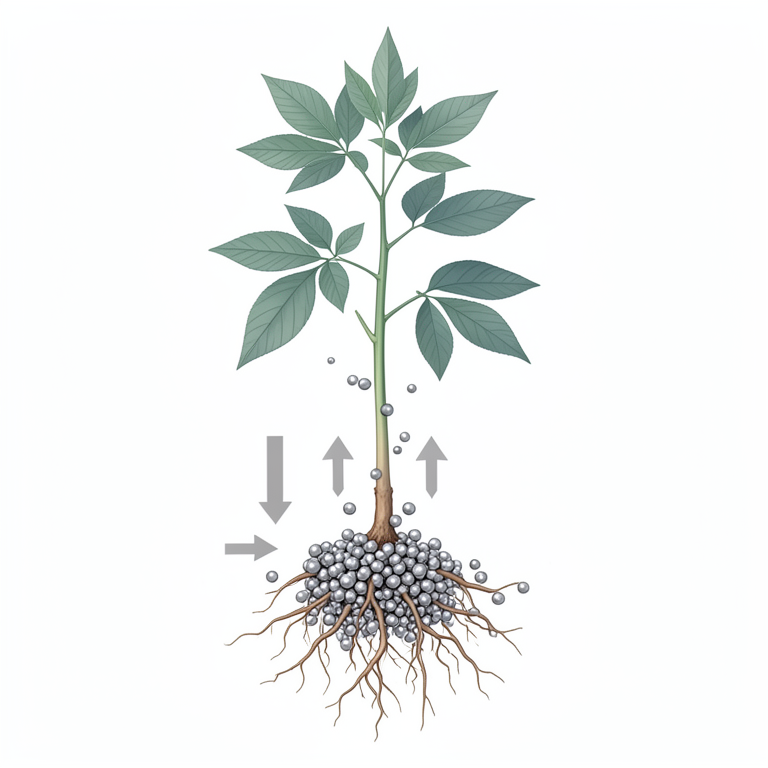
Metal Distribution in Plant
AI-generated conceptual illustration (Parthenium hysterophorus (Congress grass) plant). It explains the idea and does not show study data.
View source evidence ↗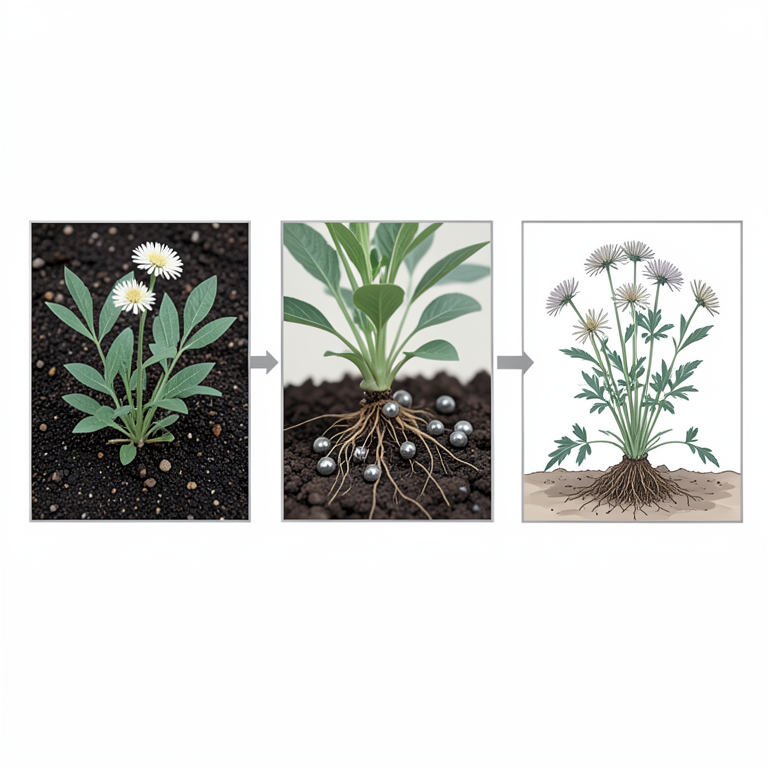
Phytoremediation Cycle
AI-generated conceptual illustration (Parthenium hysterophorus plants in contaminated soil). It explains the idea and does not show study data.
View source evidence ↗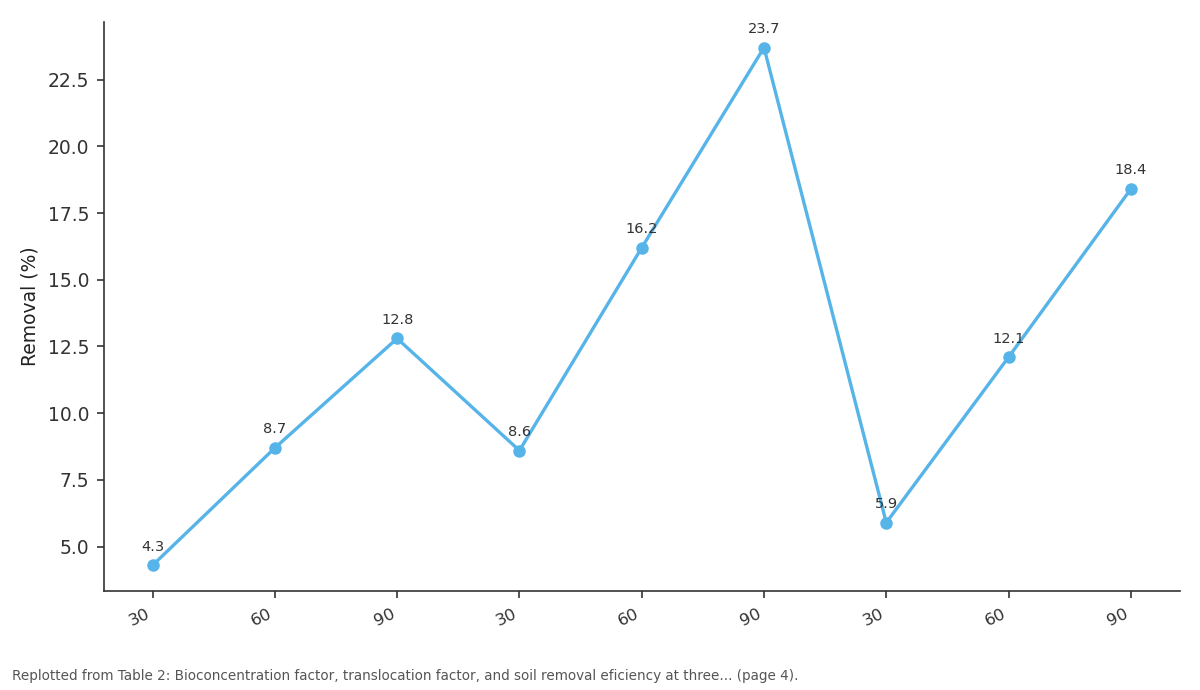
Removal (%): 30 vs 60 vs 90 vs 30 vs 60
Replotted from Table 2 (page 4) of the original paper. Every bar is the paper's own table value.
View source evidence ↗Figures & tables
From the original paper Table 1
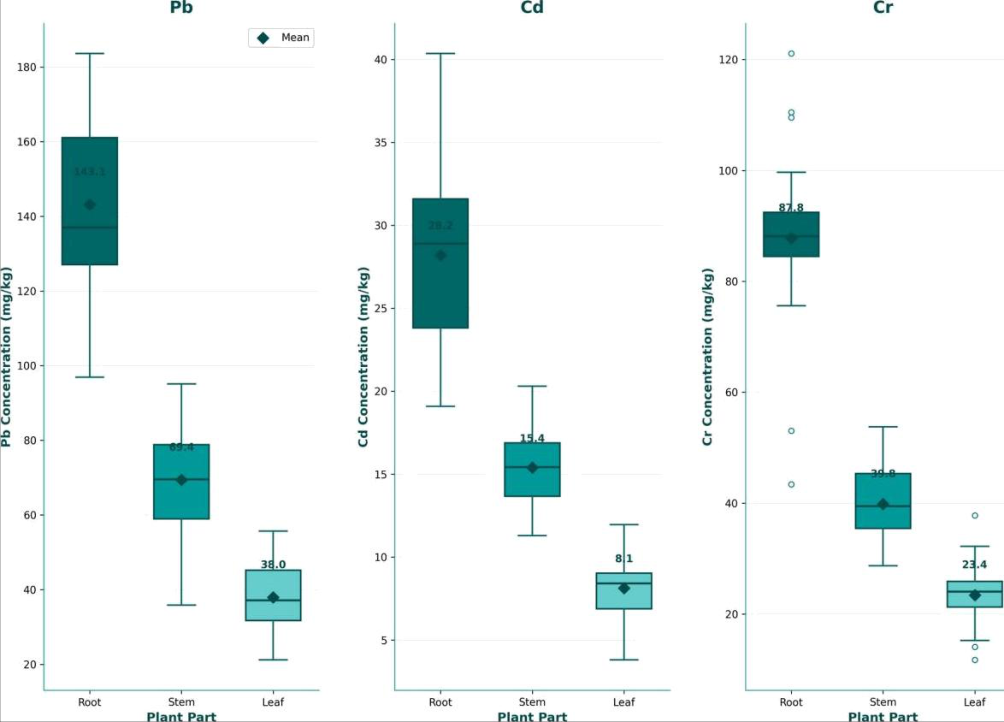 Figure 1
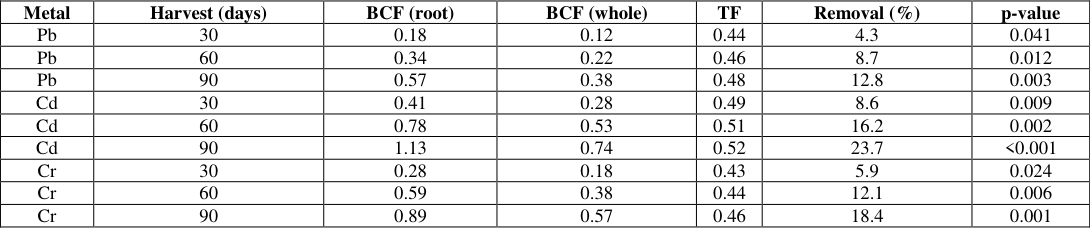 Table 2
 Table 3
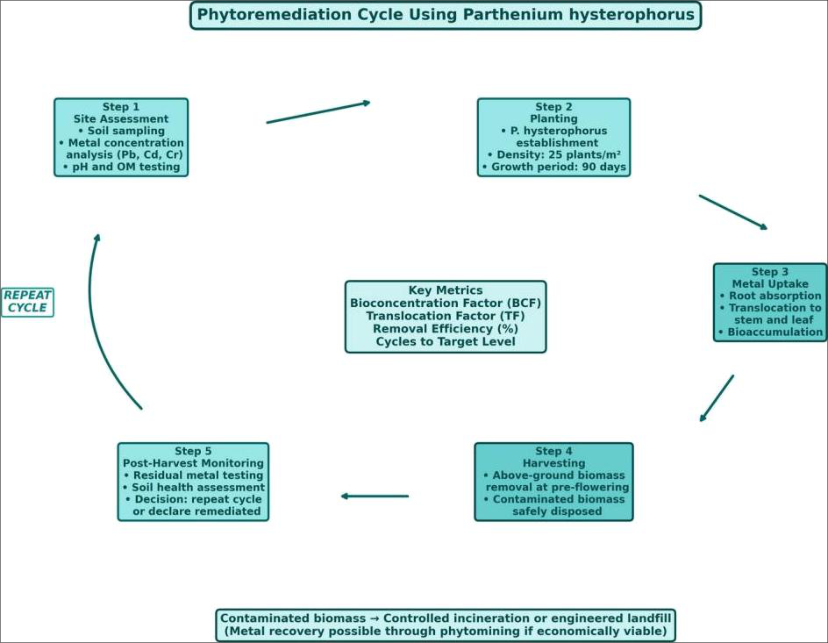 Figure 2
Introduction
Phytoremediation is defined as the engineered use of green plants and their associated rhizosphere microorganisms to remove, contain, or render harmless environmental contaminants in soil, sediment, or water [1] . Among its several sub-strategies phytoextraction, phytostabilisation, phytovolatilisation, and rhizofiltration phytoextraction has atracted the most research atention for heavy-metal-polluted soils because it physically removes metals from the root zone via aboveground biomass that can be harvested and safely disposed of [2] . Heavy metal contamination of agricultural soils is a growing concern across Southeast Asia, driven by mining waste discharge, industrial efluent irrigation, and the long-term application of phosphatic fertilisers and sewage sludge [3] . In Thailand, surveys have identified elevated concentrations of lead (Pb), cadmium (Cd), and chromium (Cr) in rice paddy soils downstream of zinc mines in Tak Province and near electroplating facilities in the central plains [4] . Conventional remediation by soil excavation and of-site disposal costs between 50 and 300 USD per cubic metre, placing it beyond the financial reach of most rural communities and municipal governments [5] . An ideal phytoextraction candidate grows fast, produces substantial above-ground biomass, tolerates moderate-to-high metal concentrations without severe phytotoxicity, and accumulates metals at levels that make harvesting worthwhile [6]. Known hyper accumulators such as Thlaspi caerulescens (now Noccaea caerulescens) and Pteris vitata meet the accumulation criterion but grow slowly or are restricted to narrow climatic envelopes. This has prompted interest in fast-growing, stress-tolerant weeds that, while not true hyperaccumulators, can compensate through sheer biomass output [7] . Parthenium hysterophorus L. fits several of these criteria. It germinates readily on disturbed, nutrient-poor substrates, grows to reproductive maturity in 60 to 90 days, and produces 3 to 8 tonnes of above-ground dry mater per hectare per cycle in tropical climates [8] . Preliminary pot experiments from India have reported Pb and Cd uptake in Parthenium roots at levels comparable to those of established metal-tolerant species such as Brassica juncea and Helianthus annuus [9] . But systematic data on bioconcentration factors, translocation paterns, and multi-metal removal eficiency the metrics needed to judge operational feasibility remain sparse, particularly for Southeast Asian soil types and climatic conditions. A further gap concerns economic and environmental accounting. Phytoremediation is often promoted as "green" and "cheap," yet few papers back those claims with even rough cost estimates or carbon-balance calculations that weigh sequestration against operational emissions [10] . Providing such figures, even at a first-approximation level, would strengthen the case for policy adoption. This research therefore aimed to (a) quantify Pb, Cd, and Cr accumulation in root, stem, and leaf tissues of P. hysterophorus grown in spiked soil over three harvest intervals, (b) calculate BCF, TF, and removal eficiency for each metal, (c) estimate the cost of phytoremediation relative to chemical soil washing, and (d) assess the carbon balance of the remediation operation.
Material and Methods
Material and Methods
Baseline soil characterisation
Topsoil (0 to 25 cm depth) was collected from an uncontaminated upland site within the Chiang Mai Academy grounds (18° 47′N , 98° 59′E) at 316 m above sea level. The soil was a Rhodic Ferralsol with a loamy texture (42.3 per cent sand, 31.7 per cent silt, 26.0 per cent clay), pH 5.8 (1: 2.5H₂ 0), organic mater 2.14 per cent (loss on ignition), cation exchange capacity 12.6 cmol (+)/kg, and background heavy metal concentrations of 14.2 mg/kg Pb, 0.3 mg/kg Cd, and 18.7 mg/kg Cr all well below Thai Pollution Control Department soil quality standards [11] . The soil was air-dried, sieved to 2 mm, and homogenised before spiking.
Material
Metal salts used for spiking were lead nitrate Pb (NO₃)₂ ₂ (Merck, Germany, ≥99 per cent), cadmium chloride CdCl₂ (Sigma-Aldrich, USA, ≥99 per cent), and potassium dichromate K₂Cr₂O₇ (Loba Chemie, India, AR grade). Salts were dissolved in deionised water and mixed into 10 kg portions of soil to achieve target concentrations of 500 mg/kg Pb, 50 mg/kg Cd, and 200 mg/kg Cr. Spiked soil was incubated for 14 days with periodic mixing to allow metal equilibration before planting [12] . P. hysterophorus seeds were collected from a naturalised roadside population in Chiang Rai Province, surface-sterilised with 0.1 per cent HgCl₂ for two minutes, rinsed five times with distilled water, and germinated on moist filter paper. Twoweek-old seedlings of uniform size were transplanted into plastic pots (25 cm diameter, 30 cm depth) filled with spiked soil at a density of five plants per pot, equivalent to approximately 25 plants per square metre.
Methods
The experiment was conducted from October 2021 to June 2022 in a naturally ventilated greenhouse at the Chiang Mai Academy. A completely randomised design was used with 30 experimental pots: three metal treatments (each spiked individually), three harvest times (30, 60, and 90 days after transplanting), and an unplanted control, each replicated three times. Pots were irrigated with deionised water to maintain 60 per cent field capacity. Temperature inside the greenhouse ranged from 22 to 34°mathsfC during the experimental period. At each harvest, whole plants were separated into root, stem, and leaf fractions, washed with tap water followed by 0.01 M HCl and three rinses of deionised water, oven-dried at 70textdegree to constant weight, ground to a fine powder, and acid-digested in a 3:1 HNO₃ -HClO₄ mixture. Metal concentrations were measured using flame atomic absorption spectrophotometry (Varian SpectrAA 220FS). Soil samples from each pot were likewise acid-digested and analysed. BCF was calculated as (metal in plant tissue) / (metal in soil), and TF as (metal in shoot) / (metal in root). Removal eficiency was calculated as [(initial soil metal -final soil metal) / initial soil metal] × 100. One-way ANOVA with Tukey HSD at mathsfp<0.05 was performed in R 4.2.1 [13] . Metal uptake followed a consistent root > stem > leaf gradient across all three elements and all harvest intervals. Accumulation increased significantly between 30 and 90 days (p < 0.001 for each metal). At 90 days, root Pb concentration reached 142.3 mg/kg, roughly double the stem value (67.8 mg/kg) and nearly four times the leaf value (38.6 mg/kg). A parallel patern held for Cd and Cr, though the magnitude of the root-leaf diferential was narrower for Cd (ratio 3.4:1) than for Cr (3.9:1). Unplanted control pots showed no significant change in soil metal concentration over the 90-day period, confirming that leaching and volatilisation losses were negligible. Each root metal concentration correlated most strongly with its own soil removal eficiency (Pb: r=0.91 ; Cd: r=0.94 ; Cr: r = 0.92), confirming that root uptake is the main driver of soil decontamination. Cross-metal correlations were moderate (0.47 to 0.81), suggesting some shared uptake pathways but substantial metal-specific variation. -eq per hectare for a single cycle based on emission factors from published life-cycle analyses of phytoremediation projects [14] . The net carbon ofset was therefore 14.6 per cent of total operational emissions modest, but a contribution that accumulates across the three to five cycles needed for Cd and Cr targets.
Results
Results
Comprehensive interpretation
P. hysterophorus performed best as a phytoextractor for Cd, with a BCF above 1.0 and a singlecycle soil removal eficiency of 23.7 per cent. Its Cr uptake, though slightly below the accumulator threshold, is operationally meaningful and could be improved with chelantassisted extraction or rhizosphere microbial inoculation. Pb uptake was the weakest link, suggesting that for mixed Pb-Cd-Cr contamination, Parthenium would need to be planted alongside a dedicated Pb accumulator such as Brassica juncea. The low TF values mean that above-ground harvesting removes less metal per cycle than if the plant translocated more freely to shoots a drawback ofset somewhat by the high total biomass production.
Discussion
The main results can be restated as follows:P. hysterophorus accumulated Cd above the accumulator threshold (BCF 1.13), approached it for Cr (0.89), and fell short for Pb (0.57). Soil removal eficiency after 90 days ranged from 12.8 per cent for Pb to 23.7 per cent for Cd, and the cost of a phytoremediation cycle was estimated at roughly one fifth that of conventional chemical washing. These Cd accumulation figures are consistent with greenhouse studies from India. Yadav et al. (2009) [9] reported Cd BCFs of 0.9 to 1.2 for Parthenium grown in alluvial soil spiked at similar concentrations [9] . The agreement across contrasting soil types (alluvial versus ferralsol) suggests that the plant's Cd uptake capacity is robust rather than site-specific. For Cr, the nearaccumulator BCF of 0.89 is higher than the 0.6 to 0.7 range reported for Parthenium by Agarwal and Yadav (2020) [15] in a sandy loam, possibly because the higher clay content of the present soil increased Cr(III) availability through cation exchange [15] . The low Pb BCF (0.57) diverges from the more optimistic values (0.8 to 1.1) reported for Brassica juncea and Helianthus annuus at comparable soil Pb levels [6] . One explanation is that Pb forms highly insoluble phosphate and carbonate precipitates in the slightly acidic ferralsol used here, reducing the pool of plant-available Pb²⁺ in soil solution. Adding a chelating agent such as EDTA the end the growing period has been shown to mobilise soil Pb and boost plant uptake by 50 to 100 per cent in other species, though this carries leaching risks that need careful management.
The carbon balance analysis, while approximate, adds a dimension often missing from phytoremediation reports. At 14.6 per cent ofset, the carbon benefit is real but not transformative; however, if the contaminated biomass were pyrolysed into biochar rather than incinerated locking carbon into a stable form the ofset could rise to 35 to 45 per cent based on published biochar carbon-retention coeficients. This option warrants investigation in future work. Looking ahead, field-scale trials on genuinely contaminated land as opposed to artificially spiked soil are the most important next step, because metal speciation and bioavailability in aged field soils difer from those in freshly spiked greenhouse pots. Rhizosphere engineering through inoculation with metal-tolerant mycorrhizal fungi or plantgrowth-promoting rhizobacteria could enhance both root development and metal mobilisation. Longer multi-cycle experiments running over two to three years would reveal whether removal eficiency declines as the easily extractable metal pool is depleted. And economic analyses that account for the value of remediated land its return to productive agriculture or sale at non-contaminated prices would capture the full benefit of phytoremediation and strengthen the case for public investment in this approach.
Economic and sustainability assessment
Economic and sustainability assessment
Acknowledgement
Acknowledgements Institutional SupportThe authors thank the Chiang Mai Academy of Environmental Sciences for providing greenhouse facilities, atomic absorption spectrophotometry access, and soil analysis laboratory services.
Figures and tables from the paper
| — | Root Pb | Root Cd | Root Cr | Removal Pb | Removal Cd | Removal Cr |
|---|---|---|---|---|---|---|
| Root Pb | 1.00 | 0.72 | 0.68 | 0.91 | 0.54 | 0.47 |
| Root Cd | 0.72 | 1.00 | 0.81 | 0.48 | 0.94 | 0.63 |
| Root Cr | 0.68 | 0.81 | 1.00 | 0.43 | 0.61 | 0.92 |
| Removal Pb | 0.91 | 0.48 | 0.43 | 1.00 | 0.39 | 0.34 |
| Removal Cd | 0.54 | 0.94 | 0.61 | 0.39 | 1.00 | 0.57 |
| Removal Cr | 0.47 | 0.63 | 0.92 | 0.34 | 0.57 | 1.00 |
Table text extracted from the original PDF; superscript letters are shown inline. The original table image is below.
View original table image
| Metal | Harvest (days) | BCF (root) | BCF (whole) | TF | Removal (%) | p-value |
|---|---|---|---|---|---|---|
| Pb | 30 | 0.18 | 0.12 | 0.44 | 4.3 | 0.041 |
| Pb | 60 | 0.34 | 0.22 | 0.46 | 8.7 | 0.012 |
| Pb | 90 | 0.57 | 0.38 | 0.48 | 12.8 | 0.003 |
| Cd | 30 | 0.41 | 0.28 | 0.49 | 8.6 | 0.009 |
| Cd | 60 | 0.78 | 0.53 | 0.51 | 16.2 | 0.002 |
| Cd | 90 | 1.13 | 0.74 | 0.52 | 23.7 | <0.001 |
| Cr | 30 | 0.28 | 0.18 | 0.43 | 5.9 | 0.024 |
| Cr | 60 | 0.59 | 0.38 | 0.44 | 12.1 | 0.006 |
| Cr | 90 | 0.89 | 0.57 | 0.46 | 18.4 | 0.001 |
Table text extracted from the original PDF; superscript letters are shown inline. The original table image is below.
View original table image
| Metal | BCF Class | TF Class | Remediation Type | Feasibility | Cycles to Target |
|---|---|---|---|---|---|
| Cd | Accumulator (>1.0) | Low (<1.0) | Phytostabilisation + mild extraction | High | 3-4 |
| Cr | Near-accumulator (0.89) | Low (<1.0) | Phytostabilisation | Moderate-High | 4-5 |
| Pb | Excluder (0.57) | Low (<1.0) | Phytostabilisation only | Low-Moderate | >8 |
Table text extracted from the original PDF; superscript letters are shown inline. The original table image is below.
View original table image
References
15 in the original paper- Salt DE, Smith RD, Raskin I. Phytoremediation. Annual Review of Plant Physiology and Plant Molecular Biology. 1998;49:643-668.
- Ali H, Khan E, Sajad MA. Phytoremediation of heavy metals: concepts and applications. Chemosphere. 2013;91(7):869-881.
- Boonsongsup N, Parkpian P, Techapinyawat S. Heavy metals in paddy soils in Thailand. Geoderma. 2020;363:114157.
- Simmons RW, Pongsakul P, Saiyasitpanich D, Klinphoklap S. Elevated levels of cadmium and zinc in paddy soils and elevated levels of cadmium in rice grain downstream of a zinc mineralised area in Thailand. Environmental Geochemistry and Health. 2005;27(5-6):501-507.
- Ghosh M, Singh SP. A review on phytoremediation of heavy metals and utilization of its byproducts. Asian Journal on Energy and Environment. 2005;6(4):214-231.
- Tangahu BV, Sheikh Abdullah SR, Basri H, Idris M, Anuar N, Mukhlisin M. A review on heavy metals uptake by plants through phytoremediation. International Journal of Chemical Engineering. 2011;2011:939161.
- Mahar A, Wang P, Ali A, Awasthi MK, Lahori AH, Wang Q, et al. Challenges and opportunities in the phytoremediation of heavy metals contaminated soils. Ecotoxicology and Environmental Safety. 2016;126:111121.
- Bajwa AA, Chauhan BS, Farooq M, Shabbir A, Adkins SW. What do we really know about the biology of Parthenium hysterophorus? Weed Research. 2019;59(1):620.
- Yadav SK, Juwarkar AA, Kumar GP, Thawale PR, Singh SK, Chakrabarti T. Bioaccumulation and phytotranslocation of arsenic, chromium and zinc by Parthenium hysterophorus. Journal of Hazardous Materials. 2009;171(1-3):780-785.
- Khan WA, Gurjar OP. Parthenium hysterophorus (congress grass): an unwanted plant and its uses. South Asian Journal of Agricultural Sciences. 2023;3(1):01-07.
- Pollution Control Department. Soil quality standards for habitat and agriculture. Royal Thai Government Gazete. 2014;131(27):1-8.
- Bolan N, Kunhikrishnan A, Thangarajan R, Kumpiene J, Park J, Makino T, et al. Remediation of heavy metal(loid)s contaminated soils to mobilize or to immobilize? Journal of Hazardous Materials. 2014;266:141-166.
- R Core Team. R: A language and environment for statistical computing. R Foundation for Statistical Computing, Vienna, Austria; 2022.
- Vigil M, Marey-Pérez MF, Martinez Huerta JM, Álvarez Cabal JV. Is phytoremediation without biomass valorization sustainable? comparative LCA of landfilling vs. anaerobic codigestion. Science of the Total Environment. 2015;505:844-850.
- Agarwal K, Yadav A. Phytoremediation potential of Parthenium hysterophorus for chromium. Environmental Technology and Innovation. 2020;20:101104.