
Research article · 2026 · Full text
International Journal of Horticulture and Food ScienceEarly flowering in apple using MADS-box gene overexpression: A review
Volume 8(7S) · Pages 34–41 · DOI: 10.33545/26631067.2026.v8.i7sa.808 ↗
Research areasPlant Molecular Biology ResearchPlant Physiology and Cultivation StudiesFlowering Plant Growth and Cultivation
Abstract
Author-writtenThe extended juvenile phase in apple (Malus × domestica Borkh.) represents a major bottleneck in breeding programs, typically requiring 5-12 years before seedlings reach reproductive maturity. This prolonged juvenility significantly delays trait introgression, cultivar development, and genetic improvement efforts. Recent advances in molecular genetics have revealed that MADS-box transcription factors play pivotal roles in regulating flowering time and phase transitions in apple. Overexpression of specific MADS-box genes, particularly heterologous genes such as BpMADS4 from silver birch (Betula pendula) and endogenous apple genes including MdFT1, MdFT2, and suppression of MdTFL1, has successfully induced early flowering in transgenic apple plants, reducing the juvenile period to as little as 3-6 months. This review synthesizes current knowledge on MADS-box gene function in apple flowering regulation, examines transformation strategies and their outcomes, discusses the molecular mechanisms underlying early flowering phenotypes, and evaluates the application of early flowering technologies in accelerated breeding programs. The review highlight successful case studies where transgenic early flowering approaches have been combined with marker-assisted selection to rapidly introgress disease resistance traits from wild apple species into elite germplasm. The review also addresses regulatory considerations, phenotypic stability, and future directions for utilizing MADS-box gene manipulation to overcome juvenility barriers in apple and related fruit tree species.
Summary
Source-checkedPlain-language reading of the full paper, prepared with AI and checked against the text. Each point links to the authors' own words.
Why it matters
- Apple is a globally significant economic fruit crop, with annual production surpassing 95 million tons. View evidence ↗
- Apple breeding is severely hindered by a long juvenile phase, where seedlings typically take 5 to 12 years to reach reproductive maturity. View evidence ↗
- This prolonged juvenility limits the number of breeding cycles possible, making it difficult to combine multiple traits or respond quickly to new diseases. View evidence ↗
The question
- The review aims to examine how overexpressing MADS-box genes can induce early flowering in apple, the molecular mechanisms involved, and the practical application of these methods in breeding. View evidence ↗
What they did
- One primary method involved using Agrobacterium tumefaciens to transform the 'Pinova' apple cultivar with the BpMADS4 gene from silver birch under a CaMV 35S promoter, creating 25 transgenic lines. View evidence ↗
- Other strategies included the suppression of the endogenous apple gene MdTFL1 using antisense and RNAi-mediated silencing techniques. View evidence ↗
- A non-transgenic alternative uses Apple latent spherical virus (ALSV) vectors to transiently express flowering genes in seedlings. View evidence ↗
What they found
- Overexpression of BpMADS4 in certain transgenic lines (T1165, T1187, and T1190) induced flowering within 3 to 4 months after transfer to greenhouse conditions. View evidence ↗
- Antisense suppression of MdTFL1 reduced the juvenile phase to 8-15 months post-grafting, whereas non-transformed controls remained vegetative for more than 5 years. View evidence ↗
- Using ALSV vectors to express the Arabidopsis FT gene induced flowering within 1 year, compared to the 5-12 years required for non-inoculated controls. View evidence ↗
- While strong constitutive expression of MdFT can cause extremely early flowering, it often severely compromises vegetative growth and can lead to plant death. View evidence ↗
- Using early flowering transgenics allowed the identification of BC1 seedlings with multiple resistance genes in a single cycle, a process that would normally take 10-15 years. View evidence ↗
- The early flowering approach enabled the creation of fifth-generation fire blight-resistant selections in only 7 years. View evidence ↗
What it means
- The authors conclude that manipulating MADS-box genes successfully overcomes the juvenility barrier, potentially reducing flowering time from 5-12 years down to 3-6 months. View evidence ↗
- A stated challenge is the need to balance early flowering with adequate vegetative growth to avoid compromising plant vigor and fruit quality. View evidence ↗
- The authors note that varying global regulatory frameworks for transgenic plants create complex approval processes for using transgenic intermediates in breeding. View evidence ↗
Visual summary
1 visualsIllustrations explain the paper; they do not show study data.
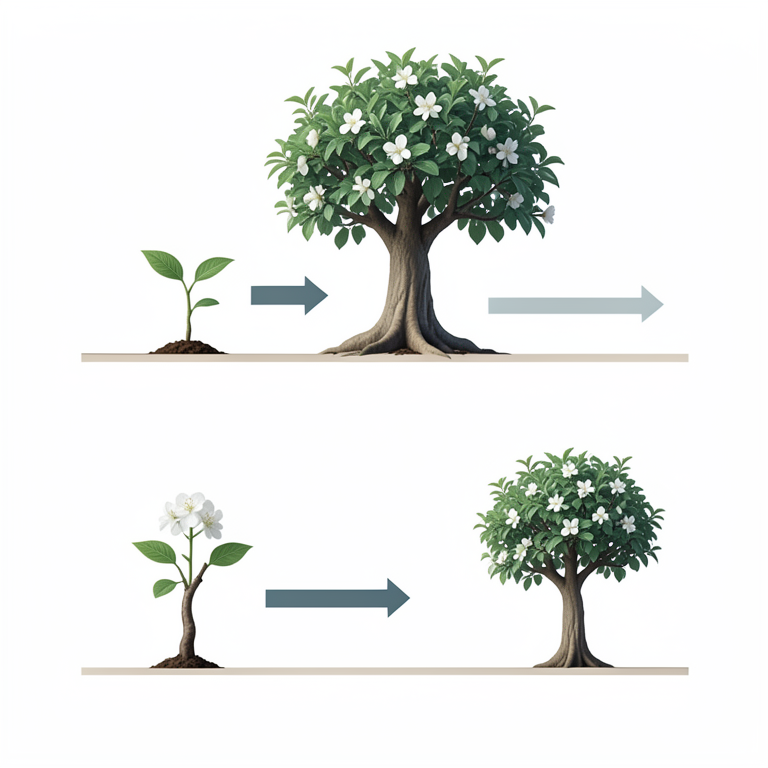
Comparison of Flowering Timelines
AI-generated conceptual illustration (Apple trees (Malus domestica)). It explains the idea and does not show study data.
View source evidence ↗Introduction
Apple (Malus × domestica Borkh.) ranks among the most economically important fruit crops worldwide, with global production exceeding 95 million tons annually. Despite its agricultural significance, apple breeding remains constrained by biological limitations inherent to perennial woody species. Chief among these is the extended juvenile phase, during which seedlings are incapable of flowering and fruiting, typically lasting 5-12 years depending on genotype and environmental conditions (Kotoda et al., 2006) [1] . This protracted juvenility severely impedes breeding efficiency, trait introgression from wild relatives, and the development of improved cultivars responsive to evolving market demands and climate challenges (Flachowsky et al., 2009; Hanke, 2007) [2,3] . The molecular regulation of flowering time in plants has been extensively studied in the model organism Arabidopsis thaliana, revealing complex genetic networks involving photoperiod, vernalization, autonomous, and gibberellin pathways that converge on floral integrator genes (Sun et al., 2022) [4] . Among the key regulatory components are MADS-box transcription factors, which control developmental transitions and floral organ identity (Kumar et al., 2016) [5] . Comparative genomics and functional studies have demonstrated that many flowering regulatory genes are conserved between herbaceous annuals and woody perennials, although their expression patterns and regulatory contexts may differ substantially (Hättasch et al., 2008; Kurokura et al., 2013) [6,7] . In apple, homologs of Arabidopsis flowering genes including FLOWERING LOCUS T (FT), TERMINAL FLOWER 1 (TFL1), SUPPRESSOR OF OVEREXPRESSION OF CONSTANS 1 (SOC1), and various MADS-box genes have been identified and characterized (Kotoda et al., 2010; Mimida et al., 2009; Hättasch et al., 2009) [8,9,10] .
Functional analyses through heterologous expression and transgenic approaches have revealed that manipulation of these genes can dramatically alter flowering time, offering potential solutions to overcome juvenility barriers (Flachowsky et al., 2007; Tränkner et al., 2010) [11,12] . This review focuses specifically on the use of MADS-box gene overexpression to induce early flowering in apple and also the molecular basis of flowering regulation, describe successful transformation strategies, analyze phenotypic outcomes, and discuss practical applications in breeding programs. Particular emphasis is placed on the pioneering work using BpMADS4 from silver birch and the manipulation of endogenous apple flowering genes, which have collectively demonstrated the feasibility of reducing the juvenile phase to less than one year.
The Juvenile Phase in Apple: A Breeding Constraint
The life cycle of apple trees comprises distinct developmental phases: a juvenile vegetative phase characterized by vigorous growth and inability to flower, a transition phase of increasing reproductive competence, and an adult phase marked by regular flowering and fruiting (Gottschalk et al., 2013) [13] . The duration of juvenility varies considerably among apple genotypes, ranging from 3 years in some wild species to over 12 years in certain cultivars (Fischer, 1994) [14] . This extended juvenile period poses multiple challenges for breeding programs. First, the long generation time severely limits the number of breeding cycles that can be completed within a reasonable timeframe, making it difficult to pyramid multiple traits or respond rapidly to emerging disease pressures (Campa et al., 2023) [15] . Second, maintaining large populations of juvenile seedlings for extended periods requires substantial land, labor, and financial resources (Flachowsky et al., 2011) [16] . Third, the inability to evaluate fruit quality and other reproductive traits until seedlings reach maturity introduces significant uncertainty into selection decisions (Gottschalk et al., 2021) [17] . Traditional approaches to shorten juvenility have included cultural practices such as growth regulators, grafting onto precocious rootstocks, and environmental manipulations (Zurawicz et al., 2013) [18] . While these methods can reduce the juvenile phase by 1-3 years, they have not achieved the dramatic reductions necessary for truly accelerated breeding (Kotoda, 2021) [19] . The molecular understanding of flowering regulation has opened new possibilities for genetic interventions that can fundamentally alter developmental timing (Mushtaq et al., 2024) [20] . The transition from juvenile to adult phase in apple involves complex changes in gene expression, epigenetic modifications, and hormonal signaling (Guo et al., 2017) [21] . Key molecular markers of phase change include alterations in microRNA expression, particularly miR156 and miR172, which regulate SQUAMOSA PROMOTER BINDING PROTEIN-LIKE (SPL) transcription factors (Li et al., 2019) [22] . Understanding these molecular transitions has provided targets for genetic manipulation aimed at accelerating reproductive maturity (Fan et al., 2018) [23] .
MADS-Box Transcription Factors in Flowering Regulation
MADS-Box Transcription Factors in Flowering Regulation
Overview of MADS-Box Gene Families
MADS-box genes encode transcription factors characterized by a highly conserved DNA-binding domain (the MADS domain) and play fundamental roles in developmental processes across eukaryotes (Sung et al., 2000) [24] . In plants, MADS-box genes are particularly prominent in regulating floral meristem identity, floral organ specification, and flowering time (Kitahara et al., 2004) [25] . The plant MADS-box family is divided into two major lineages: Type I (M-type) and Type II (MIKC-type), with the latter being more extensively studied due to their roles in flower development (Yao et al., 2001) [26] . MIKC-type MADS-box proteins contain four domains: the MADS (M) domain for DNA binding, an Intervening (I) region, a Keratin-like (K) domain mediating protein-protein interactions, and a variable C-terminal region (Yan et al., 2025) [27] . These proteins typically function as dimers or higher-order complexes, with specific combinations determining target gene specificity and developmental outcomes (Falavigna et al., 2021) [28] . In apple, comprehensive genome-wide analyses have identified 142 MADS-box genes, including multiple paralogs resulting from whole-genome duplication events (Kumar et al., 2016) [5] . Phylogenetic [5] .
Key MADS-Box Genes in Apple Flowering
Several MADS-box genes have been implicated in apple flowering regulation through expression profiling and functional studies. MdMADS2 and MdMADS5, homologs of Arabidopsis AP1/FUL, show elevated expression during floral transition and are considered floral meristem identity genes (Sung et al., 2000; Yan et al., 2025) [24,27] . Transcriptional activation of these genes marks the commitment to reproductive development in apple buds (Hättasch et al., 2008) [6] . The Dormancy-Associated MADS-box (DAM) genes, orthologs of SVP, play crucial roles in both flowering time regulation and seasonal dormancy (Kumar et al., 2016) [5] . Apple possesses multiple DAM genes, including MdDAM1 and MdDAM4, which exhibit high expression during bud dormancy and are dramatically downregulated during dormancy release and floral initiation (Sung et al., 2000; Yan et al., 2025) [24,27] . Functional characterization through RNA silencing demonstrated that MdDAM1 suppression results in loss of growth cessation and an evergrowing phenotype, confirming its role as a flowering repressor (Sung et al., 2000) [24] . FLC-like genes in apple, including MdMADS135 and MdMADS136, also function as flowering repressors, with their expression decreasing during the transition to flowering (Kumar et al., 2016) [5] . The reciprocal expression patterns of FLC-like/DAM genes and floral promoters such as FT and SOC1 orthologs suggest conserved regulatory networks between Arabidopsis and apple, despite differences in life history (Hättasch et al., 2008) [6] . Recent studies have revealed complex regulatory interactions among apple MADS-box genes. For instance, MdWRKY6 interacts with both MdFT1 and MdTFL1 to regulate AFL1 (APPLE FLORICAULA/LEAFY) expression, with the balance between these interactions determining flowering outcomes (Kumar et al., 2016) [5] . Additionally, transcription factors such as MdbHLH48 directly regulate both MdFT1 (positively) and MdTFL1 (negatively), finetuning the flowering response (Kumar et al., 2016) [5] .
Genetic Strategies for Inducing Early Flowering 4.1. Overexpression of BpMADS4 from Silver Birch
The most successful and widely applied strategy for inducing early flowering in apple has been the constitutive overexpression of BpMADS4, an AP1/FUL-like MADS-box gene from silver birch (Betula pendula Roth.) (Flachowsky et al., 2007) [11] . Flachowsky et al. (2007) [11] transformed apple cultivar 'Pinova' with BpMADS4 under control of the CaMV 35S promoter via Agrobacterium tumefaciensmediated transformation, generating 25 independent transgenic lines (Flachowsky et al., 2007) [11] . Eight transgenic clones produced solitary flowers on in vitro shoots, demonstrating the capacity of BpMADS4 to override endogenous flowering repression even under tissue culture conditions (Flachowsky et al., 2007) [11] . When transferred to greenhouse conditions, three lines (T1165, T1187, and T1190) exhibited robust flowering, with some plants initiating flowers within 3-4 months post-transfer (Flachowsky et al., 2007) [11] . Flowers appeared both as solitary terminal structures and as lateral clusters containing 3-5 individual flowers, resembling normal apple inflorescence architecture (Flachowsky et al., 2007) [11] . Critically, the flowers produced by BpMADS4overexpressing plants were morphologically normal and functionally fertile (Flachowsky et al., 2007) [11] . Pollen viability and germination rates were comparable to nontransgenic controls, and successful pollination yielded small but viable apple fruits (Flachowsky et al., 2007) [11] . This fertility is essential for breeding applications, as it enables the use of early flowering transgenics as parents in crossing programs (Flachowsky et al., 2011) [16] . Among the early flowering lines, T1190 was selected for extensive characterization and breeding applications due to its balanced phenotype combining early flowering with acceptable vegetative growth (Flachowsky et al., 2011) [16] . Molecular analysis revealed that the T-DNA insertion in T1190 mapped to linkage group 4, and inheritance studies confirmed stable transmission of the transgene and early flowering phenotype to progeny (Flachowsky et al., 2011) [16] . Approximately 50% of T1190 offspring inherited the transgene and exhibited early flowering, consistent with Mendelian segregation of a single dominant locus (Sung et al., 2000) [24] . The mechanism by which BpMADS4 induces early flowering in apple likely involves activation of floral meristem identity genes and suppression of flowering repressors (Flachowsky et al., 2007) [11] . BpMADS4 shares high sequence similarity with AP1/FUL genes, which in Arabidopsis directly activate floral organ identity genes and repress TFL1 (Sun et al., 2022) [4] . Heterologous expression of BpMADS4 may functionally substitute for or enhance endogenous apple AP1/FUL activity, triggering premature floral commitment (Flachowsky et al., 2007) [11] .
Manipulation of Endogenous Apple Flowering Genes
In parallel with heterologous gene approaches, researchers have manipulated endogenous apple flowering genes to induce early flowering. The TERMINAL FLOWER 1 (TFL1) gene family in apple includes MdTFL1-1 and MdTFL1-2, which function as flowering repressors by maintaining inflorescence meristem identity and suppressing floral meristem genes (Mimida et al., 2009) [9] . Kotoda et al. (2006) [1] demonstrated that antisense suppression of MdTFL1 reduced the juvenile phase, with transgenic apple plants flowering 8-15 months after grafting onto rootstocks, compared to non-transformed controls that remained vegetative for over 5 years (Kotoda et al., 2006) [1] . Subsequently, RNAi-mediated silencing of MdTFL1 was shown to induce even more rapid flowering, with regenerated transgenic shoots flowering within 6 months under in vitro conditions and continuing to flower after greenhouse transfer (Yan et al., 2025) [27] . Quantitative RT-PCR confirmed substantial reduction in MdTFL1 transcript levels in transgenic lines, correlating with the early flowering phenotype (Yan et al., 2025) [27] . Conversely, overexpression of FLOWERING LOCUS T (FT) homologs promotes flowering in apple. Apple possesses two FT-like genes, MdFT1 and MdFT2, with distinct expression patterns (Kotoda et al., 2010) [8] . MdFT1 is predominantly expressed in apical buds of adult fruit-bearing shoots, while MdFT2 shows higher expression in reproductive organs (Kotoda et al., 2010) [8] . Overexpression of MdFT1 under the CaMV 35S promoter induced precocious flowering in transgenic apple, with some lines flowering during in vitro culture (Kotoda et al., 2010; Sung et al., 2000) [8,24] . Tränkner et al. (2010) [12] demonstrated that MdFT1 overexpression accelerated flowering not only in apple but also in Arabidopsis and poplar, confirming functional conservation of FT orthologs across diverse plant species (Tränkner et al., 2010) [12] . Transgenic apple clone T780 expressing 35S::MdFT1 produced its first flowers in vitro, representing one of the most rapid flowering responses achieved through genetic manipulation (Tränkner et al., 2010) [12] . Interestingly, the promoter choice significantly affects phenotypic outcomes. While constitutive 35S::MdFT1 expression induced extremely early flowering, it often compromised vegetative growth, with some transformants failing to establish viable plants (Kumar et al., 2016) [5] . Use of the rolC promoter, which confers vascular-specific expression, resulted in early flowering with better maintenance of vegetative growth, although floral architecture was sometimes abnormal with altered petal and stamen numbers (Kumar et al., 2016) [5] . Functional characterization studies have revealed that MdFT1 and MdTFL1 act antagonistically in apple flowering regulation, similar to their Arabidopsis counterparts (Sung et al., 2000) [24] . Both proteins interact competitively with MdWRKY6 transcription factor, with MdFT1 promoting and MdTFL1 inhibiting MdWRKY6mediated activation of AFL1, the apple LEAFY ortholog (Kumar et al., 2016) [5] . This competitive interaction provides a molecular mechanism for the balance between vegetative and reproductive development (Kumar et al., 2016) [5] .
Molecular Mechanisms of Early Flowering 5.1. Flowering Regulatory Networks in Apple
The molecular control of flowering in apple involves complex regulatory networks integrating environmental signals (photoperiod, temperature) with endogenous developmental programs (Hättasch et al., 2008) [6] . Transcriptomic analyses during floral transition have revealed coordinated changes in expression of hundreds of genes, including transcription factors, hormone signaling components, and metabolic enzymes (Li et al., 2019) [22] . Key components of the apple flowering network include orthologs of Arabidopsis flowering pathway genes. The photoperiod pathway, involving CONSTANS (CO) and FT, appears to function in apple, although its role may differ from photoperiodic annuals (Hättasch et al., 2009) [10] . MdCOL1 and MdCOL2 (CO-like genes) show variable expression patterns during vegetative phase change, suggesting possible involvement in juvenility rather than seasonal flowering (Hättasch et al., 2008) [6] . The age/maturation pathway, regulated by miR156-SPL modules, plays a crucial role in the juvenile-to-adult transition in apple (Guo et al., 2017) [21] . High miR156 levels in juvenile tissues repress SPL transcription factors, preventing flowering competence (Guo et al., 2017) [21] . As plants age, miR156 declines and SPL expression increases, enabling responsiveness to floral inductive signals (Guo et al., 2017) [21] . Manipulation of miR156 or SPL genes represents an alternative strategy for modulating juvenility, though this has been less extensively explored in apple compared to MADS-box gene approaches (Kotoda, 2021) [19] . Hormone signaling, particularly gibberellin (GA) and cytokinin (CK), integrates with genetic pathways to regulate flowering (Fan et al., 2018) [23] . Transcriptomic analysis of 6-BA (cytokinin) treated apple buds revealed upregulation of SPL, SOC1, FD, and COL genes, along with changes in sugar metabolism genes (Li et al., 2019) [22] . GA signaling components show complex expression patterns, with GA promoting vegetative growth but also being required for floral transition under certain conditions (Fan et al., 2018) [23] .
Interactions Between FT, TFL1, and MADS-Box Genes
The antagonistic relationship between FT and TFL1 represents a central regulatory module controlling flowering time in apple (Kumar et al., 2016) [5] . Despite high sequence similarity, these proteins have opposite effects: FT promotes flowering while TFL1 maintains vegetative growth (Mimida et al., 2009) [9] . Recent molecular studies have elucidated the mechanisms underlying this antagonism. Zuo et al. (2024) [34] demonstrated that MdbHLH48 transcription factor directly binds to and activates MdFT1 promoter while repressing MdTFL1 promoter, providing a mechanism for coordinated reciprocal regulation (Kumar et al., 2016) [5] . Overexpression of MdbHLH48 in Arabidopsis and tomato accelerated flowering, confirming its role as a floral promoter (Kumar et al., 2016) [5] . Both MdFT1 and MdTFL1 proteins interact with MdWRKY6, but with opposite functional consequences (Kumar et al., 2016) [5] . The MdFT1-MdWRKY6 complex activates AFL1 expression, promoting floral meristem identity, while MdTFL1 competitively inhibits this activation (Kumar et al., 2016) [5] . This competitive interaction provides a molecular switch mechanism where the relative abundance of FT and TFL1 determines developmental fate (Kumar et al., 2016) [5] . MADS-box genes function both upstream and downstream of FT/TFL1 in flowering regulation (Sun et al., 2022) [4] . MdSOC1, a MADS-box gene orthologous to Arabidopsis SOC1, is upregulated during floral transition and likely acts downstream of FT signaling (Hättasch et al., 2008) [6] . MdSOC1 in turn activates floral meristem identity genes including AFL1 and AFL2 (apple LEAFY-like genes) and MdMADS2 (Hättasch et al., 2008) [6] . The DAM and FLC-like MADS-box genes function as flowering repressors, with their downregulation being necessary for floral transition (Kumar et al., 2016) [5] . Expression profiling during dormancy release and floral initiation revealed dramatic reduction in MdDAM1, MdDAM4, and FLC-like gene expression coinciding with increased FT and SOC1 expression (Kumar et al., 2016) [5] . This reciprocal pattern suggests that relief from DAM/FLC repression is required for FT-mediated floral induction (Kumar et al., 2016) [5] . Overexpression of BpMADS4 likely bypasses normal flowering regulatory checkpoints by directly activating floral meristem identity genes (Flachowsky et al., 2007) [11] . As an AP1/FUL ortholog, BpMADS4 may substitute for endogenous apple AP1/FUL genes (MdMADS2, MdMADS5), which normally require upstream activation by FT-SOC1 signaling (Sung et al., 2000) [24] . Constitutive BpMADS4 expression thus short-circuits the regulatory network, inducing flowering independent of age, photoperiod, or vernalization signals (Flachowsky et al., 2007) [11] .
Phenotypic Characteristics of Early Flowering Transgenics
Early flowering transgenic apple plants exhibit a range of phenotypic characteristics depending on the gene construct, promoter, and genetic background (Flachowsky et al., 2011) [16] . BpMADS4-overexpressing lines generally display relatively normal vegetative morphology, with the primary distinguishing feature being precocious flower production (Flachowsky et al., 2007) [11] . Line T1190, extensively characterized for breeding applications, shows moderate vegetative vigor with shorter internodes compared to wildtype seedlings but maintains sufficient growth to support flower and fruit development (Flachowsky et al., 2011) [16] . Flowers produced by BpMADS4 transgenics are typically morphologically normal, with correct numbers and arrangements of sepals, petals, stamens, and carpels (Flachowsky et al., 2007) [11] . Pollen fertility is generally maintained, enabling successful crosses with non-transgenic cultivars (Flachowsky et al., 2007) [11] . Fruit set following pollination occurs normally, though fruits may be smaller than those from mature trees, likely reflecting the limited vegetative framework of young transgenic plants (Flachowsky et al., 2007) [11] . In contrast, some MdFT overexpression lines exhibit more severe phenotypic alterations (Kumar et al., 2016) [5] . Strong constitutive expression (35S::MdFT) can result in extremely early flowering, sometimes directly from callus tissue, but often compromises vegetative growth to the point of plant lethality (Tränkner et al., 2010) [12] . Flowers from such lines may show abnormalities including altered petal numbers, reduced stamen development, and absent or malformed pistils (Kumar et al., 2016) [5] . Pollen from these flowers often exhibits reduced viability and germination capacity (Kumar et al., 2016) [5] . Use of tissue-specific or inducible promoters can mitigate some of these pleiotropic effects (Kumar et al., 2016) [5] . The rolC promoter, which drives expression primarily in vascular tissues, resulted in early flowering with better vegetative growth maintenance, though floral architecture was sometimes abnormal with perpetual flowering behavior (Kumar et al., 2016) [5] . MdTFL1-silenced plants generally show normal floral morphology and fertility, with the primary phenotype being reduced juvenile phase (Kotoda et al., 2006) [1] . These plants transition to flowering earlier than controls but subsequently exhibit relatively normal adult phase characteristics (Kotoda et al., 2006) [1] . An important consideration for breeding applications is the stability of the early flowering phenotype across generations (Flachowsky et al., 2011) [16] . In BpMADS4 transgenics, the early flowering trait segregates in progeny according to Mendelian ratios, with hemizygous offspring (carrying one transgene copy) flowering early while null segregants (lacking the transgene) revert to normal juvenility (Flachowsky et al., 2011) [16] . This predictable inheritance enables breeding strategies where the transgene is used to accelerate crossing cycles and then segregated out in advanced generations (Flachowsky et al., 2007) [11] .
Application in Accelerated Breeding Programs
The practical utility of early flowering transgenics has been convincingly demonstrated through accelerated breeding programs aimed at introgressing disease resistance traits from wild apple species (Flachowsky et al., 2011) [16] . Flachowsky et al. (2011) [16] pioneered the application of BpMADS4 line T1190 in a rapid breeding scheme targeting fire blight resistance from Malus fusca (Flachowsky et al., 2011) [16] . In this program, T1190 was crossed with M. fusca, and transgenic F₁ seedlings carrying the BpMADS4 transgene were selected using PCR markers (Flachowsky et al., 2011) [16] . These early flowering F₁ plants flowered within 1 year and were backcrossed to elite cultivars 'Regia' and 98/6-10, which carry apple scab resistance genes (Rvi2, Rvi4), powdery mildew resistance (Pl-1, Pl-2), and fire blight resistance QTL (FB-F7) (Flachowsky et al., 2011) [16] . Marker-assisted selection was applied to identify BC₁ seedlings pyramiding multiple resistance genes (Flachowsky et al., 2011) [16] . Within a single breeding cycle, three transgenic BC₁ seedlings combining Rvi2, Rvi4, and FB-F7 were identified, along with three additional BC₁ seedlings carrying Pl-1 and Pl-2 (Flachowsky et al., 2011) [16] . This represented a dramatic acceleration compared to conventional breeding, which would require 10-15 years to achieve equivalent introgression (Flachowsky et al., 2011) [16] . Subsequent work extended this approach through multiple generations. Roux et al. (2012) [44] used T1190 to introgress the highly effective fire blight resistance locus Fb_E from ornamental cultivar 'Evereste' (Flachowsky et al., 2007) [11] . Background selection using SSR markers distributed across the apple genome enabled identification of BC₁ seedlings carrying less than 15% 'Evereste' genome, minimizing linkage drag (Flachowsky et al., 2007) [11] . Schlathölter et al. (2018) [43] reported generation of advanced fire blight-resistant selections of the fifth generation within just 7 years using the early flowering approach (Flachowsky et al., 2007) [11] . Eighteen advanced selections were established, with 15 showing normal apple seedling habitus and maintaining high fire blight resistance (Flachowsky et al., 2007) [11] . Eight selections retained only 4% of 'Evereste' genome, demonstrating effective reduction of linkage drag through rapid cycling (Flachowsky et al., 2007) [11] . Notably, some selections also carried apple scab resistance (Rvi6) and additional fire blight resistance QTL (Fb_F7), demonstrating feasibility of pyramiding multiple resistance traits (Flachowsky et al., 2007) [11] . A critical regulatory consideration is the status of null segregants-progeny that have lost the transgene through segregation (Flachowsky et al., 2007) [11] . In the United States, such null segregants are not considered genetically modified organisms (GMOs) and face no special regulatory requirements (Flachowsky et al., 2007) [11] . If similar regulatory treatment is adopted in Europe, null segregants from early flowering breeding programs could be directly used as parents in conventional breeding or potentially as commercial cultivars (Flachowsky et al., 2007) [11] . The early flowering approach has also been applied to other Rosaceae species. Tomes et al. (2023) [45] demonstrated that BpMADS4 overexpression in European pear (Pyrus communis) induced flowering within 6-18 months after grafting, with normal tree habit and fertile flowers (Flachowsky et al., 2007) [11] . Progeny from these transgenic pears showed 50% flowering within 3 months of sowing, confirming applicability to accelerated pear breeding (Flachowsky et al., 2007) [11] . Beyond disease resistance introgression, early flowering technologies enable rapid evaluation of fruit quality traits, assessment of combining ability, and development of new rootstocks (Campa et al., 2023) [15] . The ability to complete 5-7 generations in the time conventionally required for one generation fundamentally transforms the economics and feasibility of apple breeding (Flachowsky et al., 2011) [16] .
Challenges and Future Perspectives
Despite remarkable successes, several challenges remain in optimizing and expanding early flowering technologies for apple breeding. First, the balance between early flowering and adequate vegetative growth requires careful management (Flachowsky et al., 2011) [16] . Extremely early flowering can compromise plant vigor and fruit quality, necessitating selection of transgenic lines with appropriate phenotypic balance (Tränkner et al., 2010) [12] . Development of inducible or developmentally regulated promoters may provide better control over flowering timing (Kumar et al., 2016) [5] . Second, while BpMADS4 and MdTFL1 manipulation have proven effective, these approaches may not be optimal for all breeding objectives or genetic backgrounds (Kotoda, 2021) [19] . Exploration of additional flowering regulatory genes, including other MADS-box family members, SPL genes, and microRNA targets, may yield alternative strategies with distinct advantages (Guo et al., 2017) [21] . Combinatorial approaches manipulating multiple genes simultaneously could provide enhanced control over flowering time and plant architecture (Campa et al., 2023) [15] . Third, regulatory frameworks for transgenic plants vary globally and continue to evolve (Campa et al., 2023) [15] . While null segregants from early flowering programs may face reduced regulatory barriers, the use of transgenic intermediates in breeding programs requires navigation of complex approval processes in many jurisdictions (Campa et al., 2023) [15] . Development of non-transgenic alternatives, such as the ALSV viral vector system or genome editing approaches, may provide more broadly acceptable solutions (Hättasch et al., 2008) [6] . Genome editing technologies, particularly CRISPR/Cas9, offer new possibilities for manipulating flowering time without introducing foreign genes (Campa et al., 2023) [15] . Targeted knockout of MdTFL1 or DAM genes, or modification of FT promoter regions to enhance expression, could achieve early flowering phenotypes that may be considered non-GMO in some regulatory frameworks (Campa et al., 2023) [15] . Multiplexed editing could simultaneously target multiple flowering repressors, potentially achieving more robust early flowering (Campa et al., 2023) [15] . Fourth, the long-term stability and potential unintended effects of early flowering modifications require continued evaluation (Flachowsky et al., 2007) [11] . While short-term studies have demonstrated fertility and normal fruit development, comprehensive assessment across multiple environments and over extended periods will strengthen confidence in these technologies (Flachowsky et al., 2011) [16] . Epigenetic effects and potential impacts on other developmental processes warrant investigation (Mushtaq et al., 2024) [20] . Fifth, integration of early flowering technologies with other breeding innovations, including genomic selection, highthroughput phenotyping, and speed breeding protocols, could further accelerate genetic gain (Campa et al., 2023) [15] . Combining rapid cycling with precise molecular markers and predictive models may enable unprecedented breeding efficiency (Campa et al., 2023) [15] . Finally, extension of early flowering approaches to other fruit tree species with long juvenile phases, including citrus, avocado, and various nut crops, represents an important frontier (Campa et al., 2023) [15] . While some progress has been made in pear and stone fruits, many economically important tree crops remain constrained by juvenility (Flachowsky et al., 2007) [11] . Comparative studies of flowering regulation across diverse species will inform development of tailored strategies for each crop (Sun et al., 2022) [4] .
Conclusion
The manipulation of MADS-box genes and related flowering regulators has successfully overcome the juvenility barrier in apple, reducing the time to flowering from 5-12 years to as little as 3-6 months. Overexpression of BpMADS4 from silver birch has emerged as a particularly effective and widely applied strategy, enabling accelerated breeding programs that have achieved trait introgression and resistance gene pyramiding in timeframes previously considered impossible. Complementary approaches involving suppression of MdTFL1 and overexpression of MdFT genes have further demonstrated the plasticity of flowering time regulation and the conservation of flowering pathways between herbaceous and woody species. The successful application of early flowering line T1190 in multiple breeding programs, achieving five generations of selection within 7 years, provides compelling proof-ofconcept for this technology. The ability to rapidly introgress disease resistance traits from wild species while minimizing linkage drag through marker-assisted selection represents a transformative advance in apple breeding methodology. Looking forward, continued refinement of genetic strategies, integration with genome editing technologies, development of non-transgenic alternatives, and expansion to additional fruit tree species will further enhance the impact of early flowering technologies. As regulatory frameworks evolve and public acceptance of plant biotechnology increases, these tools are poised to play an increasingly important role in developing improved apple cultivars capable of meeting the challenges of climate change, emerging diseases, and evolving consumer preferences. The work reviewed here demonstrates that fundamental knowledge of flowering regulation, when coupled with modern genetic engineering capabilities, can overcome longstanding biological constraints and enable new paradigms in perennial crop improvement. The early flowering revolution in apple breeding serves as a model for addressing juvenility barriers across diverse tree crop species, with implications extending far beyond a single crop or trait.
References
45 in the original paper- Kotoda N, Wada M, Komori S, Kidou S, Abe K, Masuda T, et al. Antisense expression of MdTFL1, a TFL1-like gene, reduces the juvenile phase in apple. J Am Soc Hortic Sci. 2006;131(1):74-81.
- Flachowsky H, Hanke MV, Peil A, Strauss SH, Fladung M. A review on transgenic approaches to accelerate breeding of woody plants. Plant Breed. 2009;128(3):217-226.
- Hanke MV. No flower no fruit -genetic potentials to trigger flowering in fruit trees. Proc Int Symp Biotechnol Temp Fruit Crops Trop Species. 2007.
- Sun L, Zhang Q, Wu J, Zhang L. From floral induction to blooming: the molecular mysteries of flowering in woody plants. Int J Mol Sci. 2022;23(18):10959.
- Kumar G, Arya P, Gupta K, Randhawa V, Acharya V, Singh AK. Comparative phylogenetic analysis and transcriptional profiling of MADS-box gene family identified DAM and FLC-like genes in apple (Malus × domestica). Sci Rep. 2016;6:20695.
- Hättasch C, Flachowsky H, Kapturska D, Hanke MV. Isolation of flowering genes and seasonal changes in their transcript levels related to flower induction and initiation in apple (Malus domestica). Tree Physiol. 2008;28(10):1459-1466.
- Kurokura T, Mimida N, Battey NH, Hytönen T. The regulation of seasonal flowering in the Rosaceae. J Exp Bot. 2013;64(14):4131-4141.
- Kotoda N, Hayashi H, Suzuki M, Igarashi M, Hatsuyama Y, Kidou S, et al. Molecular characterization of FLOWERING LOCUS T-like genes of apple (Malus × domestica Borkh.). Plant Cell Physiol. 2010;51(4):561-575.
- Mimida N, Kotoda N, Ueda T, Igarashi M, Hatsuyama Y, Iwanami H, et al. Four TFL1/CEN-like genes on distinct linkage groups show different expression patterns to regulate vegetative and reproductive development in apple (Malus × domestica Borkh.). Plant Cell Physiol. 2009;50(2):394-412.
- Hättasch C, Flachowsky H, Kapturska D, Schulz K, Ruiz D, Hanke MV. The switch to flowering: genes involved in floral induction of the apple cultivar 'Pinova' and the role of the flowering gene MdFT. Acta Hortic. 2009;839:609-616.
- Flachowsky H, Peil A, Sopanen T, Elo A, Hanke V. Overexpression of BpMADS4 from silver birch (Betula pendula Roth.) induces early-flowering in apple (Malus × domestica Borkh.). Plant Breed. 2007;126(2):137145.
- Tränkner C, Lehmann S, Hoenicka H, Hanke MV, Fladung M, Lenhardt D, et al. Over-expression of an FT-homologous gene of apple induces early flowering in annual and perennial plants. Planta. 2010;232(6):1309-1324.
- Gottschalk C, Janssen A, Volk GM. Diversity in seasonal bloom time and floral development among apple species and hybrids. J Am Soc Hortic Sci. 2013;138(5):367-376.
- Fischer C. Shortening of the juvenile period in apple breeding. Acta Hortic. 1994;363:373-384.
- Campa M, Bénard C, Jamar L, Fassotte B, Sindic M, Caromel B, et al. Application of new breeding techniques in fruit trees. Plant Physiol. 2023;193(3):1813-1834.
- Flachowsky H, Le Roux PM, Peil A, Patocchi A, Richter K, Hanke MV. Application of a high-speed breeding technology to apple (Malus × domestica) based on transgenic early flowering plants and markerassisted selection. New Phytol. 2011;192(2):364-377.
- Gottschalk C, Volk GM, Hummer KE. Genetic mechanisms associated with floral initiation and the repressive effect of fruit on flowering in apple (Malus × domestica Borkh). PLOS ONE. 2021;16(1):e0245487.
- Zurawicz E, Masny A, Mądry W. The effect of ethrel application on length of the juvenile phase of apple seedlings. J Agric Sci. 2013;5(8):17-24.
- Kotoda N. Flowering and juvenility in apple. In: The apple genome. Cham: Springer; 2021. p. 211-228.
- Mushtaq M, Bhat JA, Mir MA, Sakina A, Ali S, Singh AK, et al. Insights into flowering mechanisms in apple (Malus × domestica Borkh.) amidst climate change: an exploration of genetic and epigenetic factors. Biochim Biophys Acta Gen Subj. 2024;1868(4):130593.
- Guo DL, Li Q, Lv WQ, Zhang GH, Yu YH. Small RNA-sequencing links physiological changes and RdDM process to vegetative-to-floral transition in apple. Front Plant Sci. 2017;8:873.
- Li Y, Zhang D, Zhang S, Zhang X, Xing L, Fan S, et al. Transcriptomic analysis reveals the regulatory module of apple (Malus × domestica) floral transition in response to 6-BA. BMC Plant Biol. 2019;19:93.
- Fan S, Zhang D, Zhang L, Gao C, Xin M, Tahir MM, et al. Mediation of flower induction by gibberellin and its inhibitor paclobutrazol: mRNA and miRNA integration comprises complex regulatory cross-talk in apple. Plant Cell Physiol. 2018;59(10):2288-2307.
- Sung SK, An G, Kim WT. Developmentally regulated expression of two MADS-box genes, MdMADS3 and MdMADS4, in the morphogenesis of flower buds and fruits in apple. Planta. 2000;210(4):519-528.
- Kitahara K, Hirai S, Fukui H, Matsumoto S. Cloning and characterization of apple class B MADS-box genes including a novel AP3 homologue MdTM6. J Jpn Soc Hortic Sci. 2004;73(3):208-215.
- Yao JL, Dong YH, Morris BAM. Parthenocarpic apple fruit production conferred by transposon insertion mutations in a MADS-box transcription factor. Proc Natl Acad Sci U S A. 2001;98(3):1306-1311.
- Yan Y, Zhu X, Guo L, Zhang X, Chen P, Yin H, et al. Functional diversity of two apple paralogs MADS5 and MADS35 in regulating flowering and parthenocarpy. Plant Physiol Biochem. 2025;218:109763.
- Falavigna VDS, Porto DD, Buffon V, Margis-Pinheiro M, Pasquali G, Revers LF. Unraveling the role of MADS transcription factor complexes in apple tree dormancy. New Phytol. 2021;232(6):2071-2088.
- Mei Z, Chen Y, Chen L, Wang Y, Zeng L, Zhu Q, et al. Identification of apple flower development-related gene families and analysis of transcriptional regulation. Int J Mol Sci. 2024;25(14):7510.
- Mimida N, Saito T, Moriguchi T, Suzuki A, Komori S, Wada M. Expression of DORMANCY-ASSOCIATED MADS-BOX (DAM)-like genes in apple. Biol Plant. 2015;59(2):237-244.
- Moser M, Asquini E, Miolli GV, Weigl K, Hanke MV, Flachowsky H, et al. The MADS-box gene MdDAM1 controls growth cessation and bud dormancy in apple. Front Plant Sci. 2020;11:1003.
- Lempe J, Peil A, Flachowsky H, Hanke MV, Tränkner C. Functional evidence on the involvement of the MADS-box gene MdDAM4 in bud dormancy regulation in apple. Front Plant Sci. 2024;15:1433865.
- Porto DD, Bruneau M, Perini P, Anzanello R, Revers LF, Fialho FB, et al. Structural genomics and transcriptional characterization of the DormancyAssociated MADS-box genes during bud dormancy progression in apple. Tree Genet Genomes. 2016;12:71.
- Zuo X, Wang S, Xiang S, Zhu L, Luo F, Gao S, et al. FLOWERING LOCUS T1 and TERMINAL FLOWER1 regulatory networks mediate flowering initiation in apple. Plant Physiol. 2024;194(3):1729-1748.
- Kotoda N, Hayashi H, Suzuki M, Igarashi M, Hatsuyama Y, Kidou S, et al. The break-through in the reduction of juvenile phase in apple using transgenic approaches. Acta Hortic. 2003;625:337-343.
- Szankowski I, Basti L, Schönherr J, Espley RV, Janssen BJ, Flachowsky H, et al. RNAi-silencing of MdTFL1 induces early flowering in apple. Acta Hortic. 2009;839:615-618.
- Flachowsky H, Szankowski I, Waidmann S, Peil A, Tränkner C, Hanke MV. Functional characterization of two antagonistic acting flowering genes in apple Malus × domestica Borkh. Acta Hortic. 2012;929:409-415.
- Tanaka N, Ureshino A, Shigeta N, Mimida N, Komori S, Takahashi S, et al. Overexpression of Arabidopsis FT gene in apple leads to perpetual flowering. Plant Biotechnol. 2014;31(1):11-20.
- Yamagishi N, Kishigami R, Yoshikawa N. Reduced generation time of apple seedlings to within a year by means of a plant virus vector: a new plant-breeding technique with no transmission of genetic modification to the next generation. Plant Biotechnol J. 2014;12(1):60-68.
- Yamagishi N, Sasaki S, Yamagata K, Komori S, Nagase M, Wada M, et al. Promotion of flowering and reduction of a generation time in apple seedlings by ectopical expression of the Arabidopsis thaliana FT gene using the Apple latent spherical virus vector. Plant Mol Biol. 2011;75(1-2):193-204.
- Yamagishi N, Kishigami R, Watanabe K, Komori S, Yoshikawa N. Promotion of flowering by Apple spherical virus vector and virus elimination at high temperature allow accelerated breeding of apple and pear. Front Plant Sci. 2016;7:171.
- Kasajima I, Ide Y, Hirai H, Fujimoto Y. ALSV vector substantially shortens generation time of horticultural plants. In: Viral vectors for plant genetic engineering. London: IntechOpen; 2017. p. 193-211.
- Schlathölter I, Jänsch M, Flachowsky H, Broggini GAL, Hanke MV, Patocchi A. Generation of advanced fire blight-resistant apple (Malus × domestica) selections of the fifth generation within 7 years of applying the early flowering approach. Planta. 2018;247(6):1475-1488.
- Roux PML, Flachowsky H, Hanke MV, Gessler C, Patocchi A, Broggini GAL. Use of a transgenic early flowering approach in apple (Malus × domestica Borkh.) to introgress fire blight resistance from cultivar Evereste. Mol Breed. 2012;30(2):857-874.
- Tomes S, Pilkington SM, Gleave AP, Schaffer RJ, Janssen BJ. A MADS-box gene-induced early flowering pear (Pyrus communis L.) for accelerated pear breeding. Front Plant Sci. 2023;14:1235963.