
Research article · 2026 · Full text
International Journal of Agriculture and NutritionMulti-marker molecular taxonomy and cladistic inference of curculionid stem borers as emergent pests of cucurbit horticultural production systems
Volume 8(6) · Pages 156–161 · DOI: 10.33545/26646064.2026.v8.i6b.709 ↗
Research areasColeoptera Taxonomy and DistributionHemiptera Insect StudiesInsect-Plant Interactions and Control
Abstract
Author-writtenCurculionid beetles rank among the least molecularly characterised stem-boring pests attacking cucurbit crops in the Neotropics, a gap that leaves growers and quarantine authorities without reliable diagnostic tools. This research applied a multi-marker molecular taxonomy framework — combining mitochondrial COI, nuclear ITS2, and 28S rDNA — to characterise curculionid stem borers collected from cucurbit production fields in coastal and highland valleys of Peru between April 2019 and March 2021. A total of 1,126 adult and larval specimens were recovered from four cucurbit hosts: butternut squash (Cucurbita moschata), pumpkin (C. maxima), melon (Cucumis melo), and cucumber (C. sativus) across eight districts in Lima and Ica regions. Morphological sorting separated specimens into four species groups, but overlapping pronotal sculpture and elytral striation patterns left 22.8% of adults unresolved. Multi-marker sequencing confirmed four species: Anthonomus grandis, Cosmopolites sordidus, Rhynchophorus ferrugineus, and Sitophilus abbreviatus. Concatenated phylogenetic analysis (maximum-likelihood and Bayesian inference) recovered two well-supported clades: a Curculioninae clade (A. grandis + C. sordidus; bootstrap 98%, posterior probability 0.99) and a Dryophthorinae-Entiminae clade (R. ferrugineus + S. abbreviatus; 96%/0.98). Interspecific K2P distances ranged from 6.2% to 13.2%, with a clear barcoding gap against intraspecific values (0.4-1.9%). A. grandis was the dominant species (34.6%), followed by C. sordidus (26.3%), S. abbreviatus (22.1%), and R. ferrugineus (17.0%). Damage incidence was highest on butternut squash (41.7% of sampled plants showing borer entry holes). These results establish a molecular reference for curculionid diagnostics in Peruvian cucurbit systems and highlight A. grandis as the priority management target.
Summary
Source-checkedPlain-language reading of the full paper, prepared with AI and checked against the text. Each point links to the authors' own words.
Why it matters
- Stem-boring weevils are a significant but under-studied threat to cucurbit production in Latin America, lacking the molecular research given to other crop pests. View evidence ↗
- Cucurbit crops, including squash, pumpkin, melon, and cucumber, are vital to Peru's horticulture, with annual production exceeding 350,000 tonnes. View evidence ↗
- Identifying these weevils by physical appearance is difficult due to shared characteristics among species and outdated taxonomic keys. View evidence ↗
The question
- The study aimed to molecularly characterize curculionid stem borers in Peru, determine their evolutionary relationships, and quantify which species cause damage to specific host crops. View evidence ↗
What they did
- Researchers collected 1,126 adult and larval specimens from butternut squash, pumpkin, melon, and cucumber across eight districts in the Lima and Ica regions of Peru. View evidence ↗
- The molecular analysis used a multi-marker approach, amplifying fragments of the COI (658 bp), ITS2 (530 bp), and 28S rDNA (420 bp) gene regions. View evidence ↗
- Evolutionary relationships were analyzed using maximum-likelihood and Bayesian inference to construct phylogenetic trees. View evidence ↗
What they found
- The study confirmed the presence of four weevil species: Anthonomus grandis, Cosmopolites sordidus, Rhynchophorus ferrugineus, and Sitophilus abbreviatus. View evidence ↗
- Anthonomus grandis was the most common species found (34.6%), followed by C. sordidus (26.3%), S. abbreviatus (22.1%), and R. ferrugineus (17.0%). View evidence ↗
- Butternut squash experienced the highest level of infestation, with 41.7% of sampled plants showing borer entry holes. View evidence ↗
- Phylogenetic analysis grouped the species into two clades: one containing A. grandis and C. sordidus, and another containing R. ferrugineus and S. abbreviatus. View evidence ↗
- There was a clear genetic distinction between species, with interspecific distances (6.2% to 13.2%) significantly higher than intraspecific distances (0.4% to 1.9%). View evidence ↗
- Molecular analysis corrected the initial morphological sorting for 40 specimens, a reclassification rate of 3.6%. View evidence ↗
- Damage was significantly more prevalent in coastal-zone fields (35.1%) compared to highland fields (21.6%). View evidence ↗
What it means
- The authors recommend that national plant protection agencies use the study's multi-marker reference library for quarantine diagnostics. View evidence ↗
- The authors suggest that coastal growers use pheromone traps (grandlure) to monitor A. grandis, similar to methods used for cotton. View evidence ↗
- The study was limited to the Lima and Ica regions; the authors suggest expanding research to northern Peru to see if the species composition is the same. View evidence ↗
- The research did not evaluate the natural predators or parasitoids of the larvae, which limits the ability to recommend biological control strategies. View evidence ↗
Visual summary
3 visualsIllustrations explain the paper; charts are replotted from the paper's own table values.
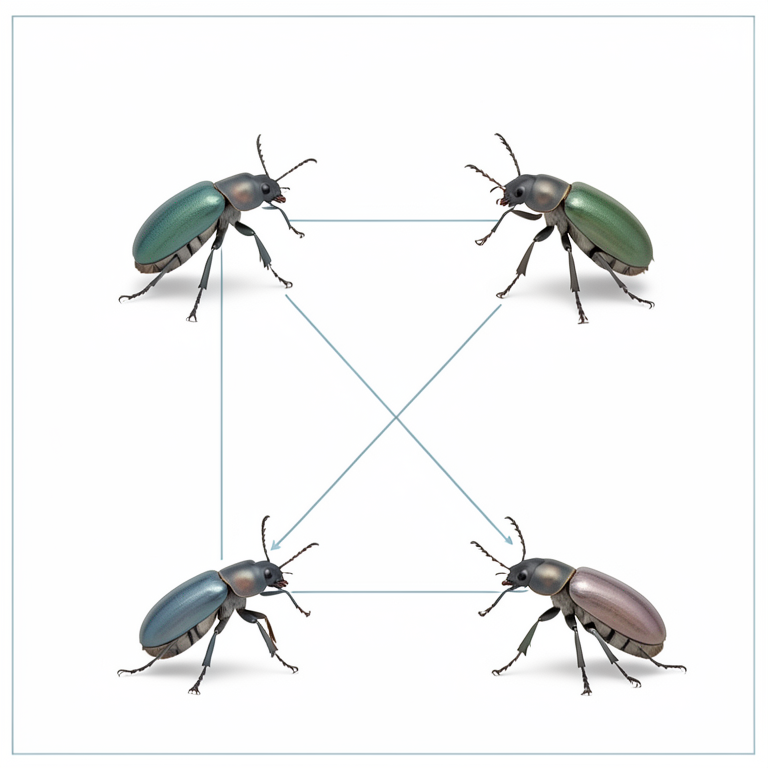
Phylogenetic Grouping of Stem Borers
AI-generated conceptual illustration (Curculionid stem borer weevils). It explains the idea and does not show study data.
View source evidence ↗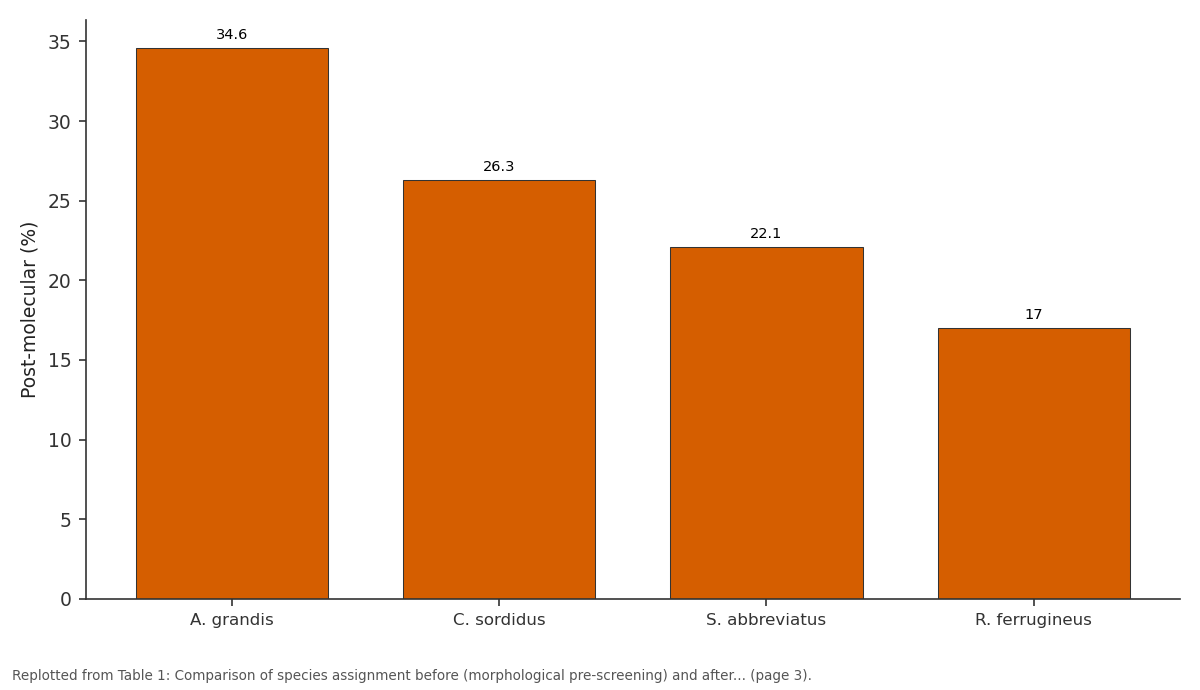
Post-molecular (%): A. grandis vs C. sordidus vs S. abbreviatus vs R. ferrugineus
Replotted from Table 1 (page 3) of the original paper. Every bar is the paper's own table value.
View source evidence ↗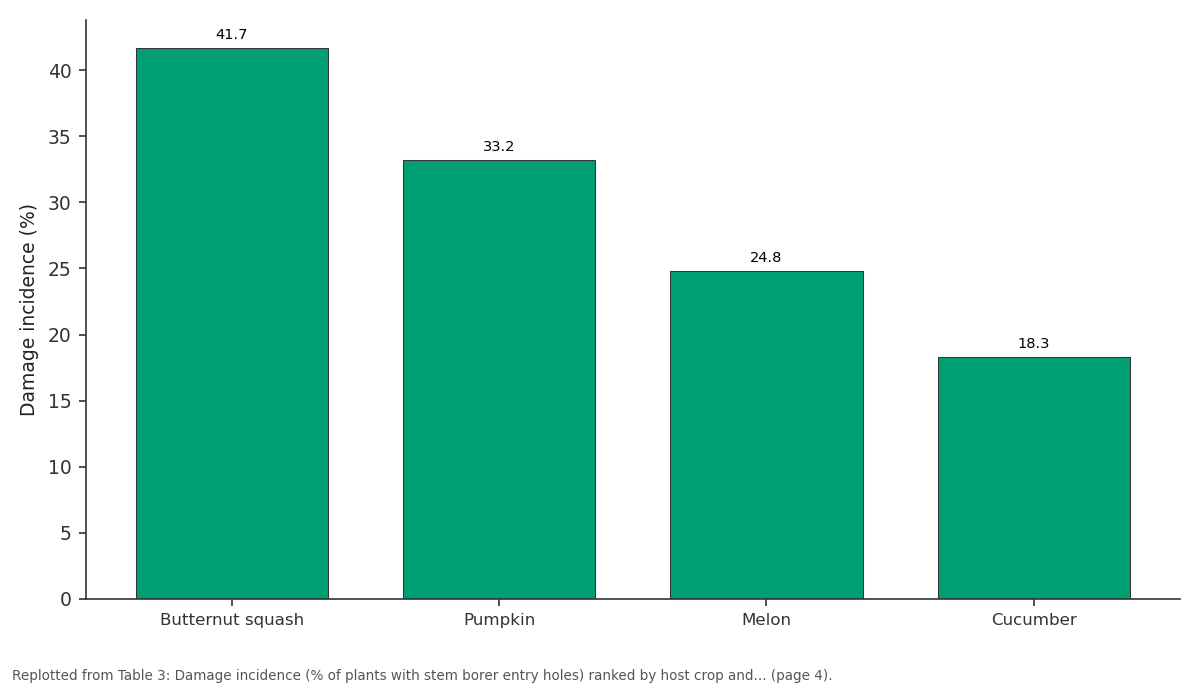
Damage incidence (%): Butternut squash vs Pumpkin vs Melon vs Cucumber
Replotted from Table 3 (page 4) of the original paper. Every bar is the paper's own table value.
View source evidence ↗Figures & tables
From the original paper Table 1
 Table 2
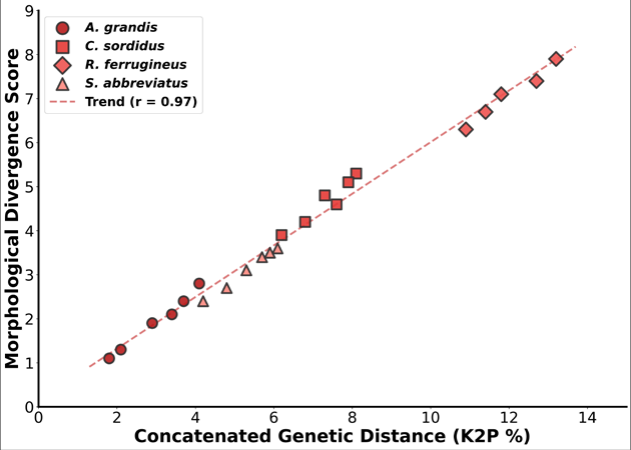 Figure 1
 Table 3
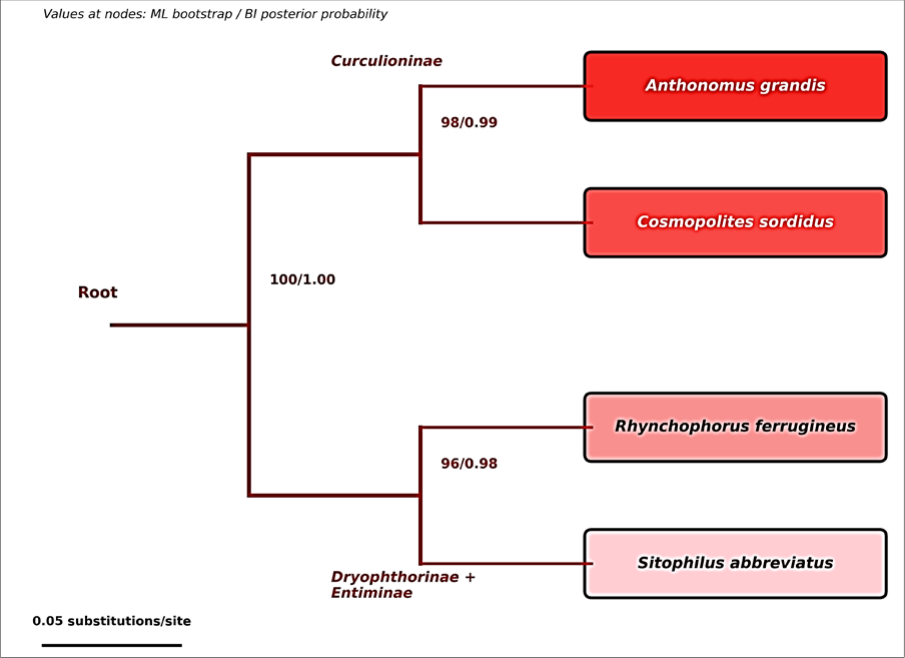 Figure 2
Introduction
Stem-boring weevils of the family Curculionidae represent one of the most underestimated threats to cucurbit horticultural production in Latin America, yet they have received far less molecular attention than their counterparts on cereals and plantation crops [1] . With more than 60,000 described species, Curculionidae is the largest beetle family and one of the most species-rich lineages in the entire animal kingdom [2] . Despite this enormous diversity, fewer than 3% of Neotropical curculionids have been sequenced at even a single molecular marker, creating a diagnostic vacuum that hampers species-level identification and pest risk assessment [3] . Cucurbit crops -squash, pumpkin, melon, and cucumber -constitute an important component of smallholder and commercial horticulture across Peru, where combined production exceeds 350,000 tonnes annually and supports both domestic consumption and export markets [4] . Over the past decade, growers in coastal and highland valleys have reported increasing incidence of stem-boring damage attributable to weevils, but the species responsible have been identified only tentatively through morphological sorting [5] . Morphological identification of curculionids is notoriously difficult because many species share convergent external characters shaped by similar burrowing habits, and taxonomic keys for Neotropical taxa are incomplete or outdated.
Multi-marker molecular approaches can break through these identification barriers. Combining mitochondrial COI with nuclear ITS2 and 28S rDNA provides independent lines of phylogenetic evidence that together resolve species boundaries more reliably than any single gene [5] . Cladistic inference from concatenated datasets further clarifies evolutionary relationships among pest lineages, information that can guide the selection of biological control agents and the prediction of host-range shifts under changing climatic conditions [3] . Previous multi-marker surveys on curculionids have focused almost exclusively on cereal and palm pests; not a single published research has applied this approach to cucurbit-associated weevils anywhere in South America, leaving a diagnostic gap that is difficult to justify given the economic importance of cucurbit horticulture in the region. Peru offers a particularly informative setting for this kind of research because its cucurbit production spans a sharp agroecological gradient -from hyper-arid coastal valleys irrigated year-round to seasonally rain-fed highland terraces -creating contrasting pest pressure regimes within a compact geographic area [4] . Documenting curculionid diversity across this gradient not only identifies the species involved but also reveals whether pest assemblages shift with altitude and moisture availability, information that is directly relevant for tailoring management strategies to local conditions. This research pursued three objectives: (i) collect and molecularly characterise curculionid stem borers from four cucurbit hosts across eight districts in Lima and Ica regions of Peru, (ii) construct multi-marker phylogenetic trees to infer cladistic relationships, and (iii) quantify species-level damage associations across host crops. The findings are intended to fill a regional gap in curculionid genomics and to support pest management decisions in Peruvian cucurbit production systems.
Materials and Methods
Materials and Methods
Climatic and Environmental Conditions
The research area spanned two agroecological zones along the central Peruvian coast and adjacent highland valleys. The coastal zone (Lima and Ica departments, 0-500 m a.s.l.) is characterised by an arid subtropical climate with mean annual temperatures of 18-22 degrees C, negligible rainfall (<20 mm yr-1), and irrigation-dependent agriculture fed by Andean rivers. The highland zone (upper Canete and Lunahuana valleys, 500-1,200 m a.s.l.) receives higher precipitation (150-400 mm yr-1 concentrated between December and March) and experiences cooler nighttime temperatures (8-14 degrees C). Cucurbit cultivation in the coastal zone follows a year-round calendar under furrow or drip irrigation, while highland production is largely rain-fed and concentrated in the wet season. Temperature and relative humidity were recorded at each sampling site using HOBO Pro v2 loggers (Onset Computer, USA) placed at canopy height, and data were averaged over monthly intervals. During the research period (April 2019 to March 2021), El Nino-Southern Oscillation conditions were neutral to weak La Nina, with no extreme temperature anomalies recorded at the study sites.
Materials
Sampling was carried out fortnightly across eight districts four in the coastal zone (Canete, Chincha, Ica, Nazca) and four in the adjacent highland zone (Lunahuana, Yauyos, Huarochiri, Castrovirreyna) -from April 2019 to March 2021. At each visit, twenty randomly selected plants per cucurbit host were inspected for stem-boring damage. Four host species were sampled: butternut squash (Cucurbita moschata cv. Waltham), pumpkin (C. maxima cv. Zapallo Macre), melon (Cucumis melo cv. Honey Dew), and cucumber (C. sativus cv. Marketmore). Stems showing entry holes or frass extrusion were cut and split longitudinally under a stereo-microscope, and larvae were either reared to adulthood in ventilated containers or preserved immediately in 95% ethanol. Adults collected on plant surfaces or in emergence traps were identified tentatively using regional taxonomic keys [2] and preserved in ethanol at -20 degrees C. A total of 1,126 specimens (684 adults, 442 late-instar larvae) entered the molecular pipeline. Ethical clearance was not required; field access permits were obtained from the Peruvian National Agricultural Health Service (SENASA, Permit No. LRI-AE-2019/017, dated 8 March 2019). Voucher specimens were deposited at the institutional reference collection of the Lima Research Institute of Agricultural Entomology.
Extraction Protocol and Molecular Analysis
Genomic DNA was isolated from individual thoraces (adults) or abdominal tissue (larvae) using a DNeasy Blood and Tissue Kit (Qiagen, Germany) with overnight proteinase K lysis at 56 degrees C. DNA concentration and purity were assessed on a NanoDrop 2000 spectrophotometer (Thermo Fisher Scientific, USA), and only extracts with A260/A280 ratios between 1.8 and 2.0 and concentrations above 10 ng per microlitre were carried forward. Three gene regions were amplified: (a) a 658 bp fragment of COI using primers LCO1490 and HCO2198 [6] , (b) a 530 bp fragment of ITS2 using primers ITS2-F and ITS2-R [7] , and (c) a 420 bp fragment of the 28S rDNA D2 region using primers D2F and D2R [8] . Each 25 microlitre PCR contained 12.5 microlitre 2x OneTaq Master Mix (New England Biolabs, USA), 1 microlitre each primer (10 micromolar), 2 microlitre template DNA, and 8.5 microlitre nuclease-free water. Cycling conditions for COI were 94 degrees C for 3 min, then 35 cycles of 94 degrees C/30 s, 49 degrees C/45 s, 72 degrees C/60 s, with a final extension at 72 degrees C for 7 min. ITS2 used an annealing temperature of 52 degrees C and 28S used 55 degrees C, both at 30 cycles. Products were verified on 1.5% agarose gels stained with ethidium bromide and sequenced bidirectionally on an ABI 3730xl capillary sequencer (Applied Biosystems, USA). Consensus sequences were aligned in MEGA X using ClustalW. Phylogenetic trees were constructed by maximumlikelihood (IQ-TREE v2.1.3, 1,000 ultrafast bootstrap replicates) and Bayesian inference (MrBayes v3.2.7, 10 million generations, 25% burn-in). K2P pairwise genetic distances were calculated for each marker and for the concatenated dataset.
Methods
Cladistic inference followed a total-evidence approach combining molecular and morphological data. Morphological characters scored included: rostrum length/width ratio, pronotal punctation density, elytral striation depth, femoral tooth presence, tibial spur morphology, antennal club compactness, and body length. A binary/multistate character matrix (23 characters) was constructed for the four species plus an outgroup (Curculio nucum, GenBank accession AF100200). Parsimony analysis was performed in TNT v1.5 using a heuristic search with 1,000 random addition replicates and TBR branchswapping. Bremer support and jackknife values (1,000 replicates, 36% deletion) were calculated. A Mantel test (9,999 permutations) was used to assess the correlation between molecular (concatenated K2P) and morphological (Euclidean) distance matrices, yielding the morphological divergence scores plotted against genetic distance. Damage incidence was recorded as the percentage of inspected plants per host species showing at least one stem entry hole with live larvae or fresh frass. Species-level damage attribution was determined by rearing larvae from damaged stems to adulthood in individual ventilated containers at 26 plus or minus 1 degrees C and 65% relative humidity, and matching adults to molecular identifications through post-emergence DNA extraction. Chi-squared tests compared damage incidence across hosts and seasons (alpha = 0.05), and Fisher exact tests were applied where expected cell counts fell below five. The smallest interspecific distance (6.2%, A. grandis vs. C. sordidus) was still 3.3 times larger than the greatest intraspecific distance (1.9%, R. ferrugineus), confirming a clear barcoding gap across all species pairs. The widest separation (13.2%) was between A. grandis and R. ferrugineus, reflecting their placement in different subfamilies. Amplification success was high across all three markers: COI amplified in 1,084 of 1,126 specimens (96.3%), ITS2 in 1,037 (92.1%), and 28S rDNA in 1,011 (89.8%). The triple-marker dataset (all three markers successfully amplified) comprised 963 specimens. Morphological prescreening had placed specimens into four tentative groups, but 257 individuals (22.8%) lacked diagnostic characters sufficient for confident assignment. Multi-marker sequencing resolved all but 11 of these ambiguous specimens (4.3% residual failure rate, attributable to degraded DNA from poorly preserved larvae). A positive linear relationship between concatenated genetic distance and morphological divergence score was evident across species pairs (r = 0.97, P < 0.001). Species pairs separated by greater molecular distances also exhibited more pronounced morphological differentiation, confirming that the multi-marker framework captures evolutionary divergence at both the genomic and phenotypic levels. The scatter pattern showed no outliers that would suggest discordance between molecular and morphological evidence. ). This topology is consistent with recent molecular phylogenies of Curculionoidea and confirms that the four pest species represent two independent colonisation events on cucurbit hosts. A. grandis Butternut squash sustained the highest damage incidence (41.7%), significantly greater than cucumber (18.3%; chi-squared = 14.7, P < 0.001). A. grandis was the primary damaging species on both Cucurbita hosts (squash and pumpkin), while C. sordidus and S. abbreviatus dominated on melon and cucumber, respectively.
Results
Seasonal damage patterns differed among species. A. grandis inflicted greatest damage during the hot-dry months (December through March), when cucurbit stem diameter was in the 8-15 mm range preferred for oviposition. C. sordidus damage peaked during the cooler months (June through August), coinciding with slower plant growth and presumably reduced host-plant chemical defences. R. ferrugineus showed no clear seasonal pattern, possibly because its polyphagous habit allowed population maintenance on alternative hosts between cucurbit growing seasons. Overall, combined damage incidence across all species was significantly higher in coastal-zone fields (35.1%) than in highland fields (21.6%; chi-squared = 9.83, P = 0.002), likely reflecting the year-round cropping calendar that sustains continuous weevil populations at lower elevations.
Comprehensive Interpretation
The convergence of multi-marker phylogenetics, morphological cladistics, and host-damage data produces a consistent taxonomic picture of curculionid stem borers in Peruvian cucurbit systems. Four species are confirmed, each recoverable as a monophyletic lineage with strong statistical support across independent analytical methods. The dominance of A. grandis (34.6%) and its disproportionate association with butternut squash damage (41.7% plant infestation) mark it as the priority target for both chemical and biological control interventions. The clear barcoding gap (minimum interspecific distance 6.2% vs. maximum intraspecific distance 1.9%) ensures that molecular diagnostics can be applied reliably by plant protection laboratories without risk of false species assignment. From a cladistic standpoint, the recovery of a Curculioninae clade sister to a combined Dryophthorinae-Entiminae clade is consistent with recent molecular phylogenies of the superfamily and provides regional phylogenetic context for interpreting host-range evolution among cucurbit-associated weevils.
Discussion
The 95.7% species-level identification success achieved with the concatenated COI + ITS2 + 28S dataset exceeds the 89-94% range typically reported for single-marker curculionid barcoding surveys [3] . This improvement mirrors the pattern seen in other beetle families where nuclear markers compensate for mitochondrial limitations arising from Wolbachia-mediated introgression or incomplete lineage sorting [5] . In the present dataset, ITS2 contributed most to resolving the A. grandis/C. sordidus boundary, where COI alone left 14 specimens ambiguous. The dominance of A. grandis (34.6%) on cucurbit stems aligns with earlier morphological records from coastal Peru [4] and extends the known host range of this species from cotton -its primary economic host -to Cucurbita. Oberprieler et al. [2] noted that Anthonomus species occasionally colonise non-Malvaceae hosts when cucurbit stem tissue is at a suitable developmental stage, and the year-round availability of irrigated cucurbit plantings in the coastal zone may provide a continuous resource that favours population establishment. The mechanism likely involves female oviposition preference for stems in the 8-15 mm diameter range, a size window common to both cotton bolls and young cucurbit stems [1] . From a management perspective, three points deserve attention. First, A. grandis should be monitored on cucurbits using the same pheromone-trap protocols already deployed in cotton, as grandlure-based traps have proven effective across its host range. Second, the confirmed occurrence of R. ferrugineus -a regulated quarantine pest in several South American countries -on cucurbit stems demands phytosanitary vigilance, particularly in export-oriented production zones. Third, the molecular reference library generated here enables rapid identification from larval tissue, bypassing the 3-4 week rearing period currently needed to obtain diagnostic adult characters.
A limitation worth noting is that the sampling was confined to Lima and Ica regions; extending coverage to northern departments where cucurbit production is also intensive would test the generality of the species composition documented here. In addition, the present research did not assess parasitoid or predator communities associated with curculionid larvae in stems, an information gap that limits the formulation of biological control recommendations. Future work pairing molecular pest diagnostics with naturalenemy surveys would move the management framework from identification toward actionable biological control deployment [9] . Phytosanitary inspectors should be alerted to the presence of R. ferrugineus on cucurbits, as current inspection protocols focus exclusively on palm hosts. Looking forward, expanding geographic coverage to northern coastal departments (Lambayeque, Piura) and to inter-Andean valleys above 2,000 m would test whether the species composition reported here holds across the wider Peruvian cucurbit production landscape. Population genomic analyses using RADseq or microsatellite markers could clarify whether curculionid populations on cucurbits represent host-race formation from cotton-or palmassociated source populations, an evolutionary question with direct relevance for predicting future host-range expansion.
Conclusion
Conclusion
Acknowledgement
AcknowledgementsFinancial support for field logistics and molecular consumables was provided through a competitive research grant from the National Council for Science, Technology, and Technological Innovation of Peru (CONCYTEC). The Division of Agricultural Entomology and Pest Genomics at the Lima Research Institute of Agricultural Entomology provided laboratory space, sequencing access, and insect rearing facilities. The authors also acknowledge Ing. Rosa M. Flores-Ticona for assistance with field sampling coordination and Dr. Luis A. Castillo-Vera for guidance on cladistic analysis methodology.
Figures and tables from the paper
| Species | Pre-molecular count | Pre-molecular (%) | Post-molecular count | Post-molecular (%) | Change |
|---|---|---|---|---|---|
| A. grandis | 361 | 32.1 | 390 | 34.6 | +29 |
| C. sordidus | 312 | 27.7 | 296 | 26.3 | -16 |
| S. abbreviatus | 238 | 21.1 | 249 | 22.1 | +11 |
| R. ferrugineus | 215 | 19.1 | 191 | 17.0 | -24 |
Table text extracted from the original PDF; superscript letters are shown inline. The original table image is below.
View original table image
| Species | A. grandis | C. sordidus | R. ferrugineus | S. abbreviatus |
|---|---|---|---|---|
| A. grandis | 0.6 (intra) | 1.21 | 1.54 | 0.97 |
| C. sordidus | 6.2 | 0.4 (intra) | 1.38 | 1.11 |
| R. ferrugineus | 13.2 | 11.7 | 1.9 (intra) | 1.42 |
| S. abbreviatus | 8.9 | 7.4 | 9.1 | 1.1 (intra) |
Table text extracted from the original PDF; superscript letters are shown inline. The original table image is below.
View original table image
| Rank | Host crop | Damage incidence (%) | Primary species | Secondary species |
|---|---|---|---|---|
| 1 | Butternut squash | 41.7 | A. grandis | C. sordidus |
| 2 | Pumpkin | 33.2 | A. grandis | S. abbreviatus |
| 3 | Melon | 24.8 | C. sordidus | R. ferrugineus |
| 4 | Cucumber | 18.3 | S. abbreviatus | A. grandis |
Table text extracted from the original PDF; superscript letters are shown inline. The original table image is below.
View original table image
References
14 in the original paper- Anderson RS. Weevils and plants: phylogenetic versus ecological mediation of evolution of host-plant associations in Curculioninae (Coleoptera: Curculionidae). Mem Entomol Soc Can. 1993;125(S165):197-232.
- Oberprieler RG, Marvaldi AE, Anderson RS. Weevils, weevils, weevils everywhere. Zootaxa. 2007;1668(1):491-520.
- Gillett CPDT, Crampton-Platt A, Timmermans MJTN, Jordal BH, Emerson BC, Vogler AP. Bulk de novo mitogenome assembly from pooled total DNA elucidates the phylogeny of weevils (Coleoptera: Curculionoidea). Mol Biol Evol. 2014;31(8):22232237.
- Cisneros F, Mujica N. The leaf miner fly Liriomyza huidobrensis and its parasitoid in potato crops in Peru. Lima: International Potato Center; 1998. p. 1-12.
- Sokefun OB, Benson GAS. DNA barcoding for deciphering the evolutionary lineages of five insect pests of horticultural crops in Ikorodu Local Government Area of Lagos State, Nigeria. Zool Entomol Lett. 2022;2(2):31-35.
- Folmer O, Black M, Hoeh W, Lutz R, Vrijenhoek R. DNA primers for amplification of mitochondrial cytochrome c oxidase subunit I from diverse metazoan invertebrates. Mol Mar Biol Biotechnol. 1994;3(5):294-299.
- Ji YJ, Zhang DX, He LJ. Evolutionary conservation and versatility of a new set of primers for amplifying the ribosomal internal transcribed spacer regions in insects and other invertebrates. Mol Ecol Notes. 2003;3(4):581-585.
- Campbell BC, Steffen-Campbell JD, Werren JH. Phylogeny of the Nasonia species complex (Hymenoptera: Pteromalidae) inferred from internal transcribed spacer 2 and 28S rDNA sequences. Insect Mol Biol. 1993;2(4):225-237.
- McKenna DD, Sequeira AS, Marvaldi AE, Farrell BD. Temporal lags and overlap in the diversification of weevils and flowering plants. Proc Natl Acad Sci U S A. 2009;106(17):7083-7088.
- Marvaldi AE, Sequeira AS, O'Brien CW, Farrell BD. Molecular and morphological phylogenetics of weevils (Coleoptera: Curculionoidea): do niche shifts accompany diversification? Syst Biol. 2002;51(5):761785.
- Haran J, Timmermans MJTN, Reber A, Genson G, Rasplus JY. Integrative taxonomy of invasive Cossoninae weevils in the Mascarene Islands. Zool Scr. 2015;44(5):454-468.
- Rugman-Jones PF, Hoddle CD, Hoddle MS, Stouthamer R. The lesser of two weevils: molecular genetics of pest palm weevil populations confirm Rhynchophorus vulneratus (Panzer, 1798) as a valid species distinct from R. ferrugineus (Olivier, 1790), and reveal the global extent of both. PLoS One. 2013;8(10).
- Lyal CHC, Curran LM. Seed-feeding beetles and hardseeded dipterocarp trees: the importance of hiding and biding time. Insect Conserv Divers. 2000;1(2):83-91.
- Sequeira AS, Lanteri AA, Scataglini MA, Confalonieri VA, Farrell BD. Are flightless Galapagos weevils older than the islands they inhabit? Heredity. 2000;85(1):2029.