
Research article · 2026 · Full text
International Journal of Horticulture and Food ScienceClimate change-induced physiological disorders in fruit crops: Mechanisms, impacts, and mitigation strategies
Volume 8(7) · Pages 101–110 · DOI: 10.33545/26631067.2026.v8.i7b.804 ↗
Research areasPlant Physiology and Cultivation StudiesClimate change impacts on agriculturePlant Stress Responses and Tolerance
Abstract
Author-writtenClimate change is increasingly influencing the productivity, quality, and sustainability of fruit production systems through the intensification of abiotic stresses such as heat waves, drought, erratic precipitation, elevated solar radiation, and chilling-related events. These climatic disturbances are contributing to a rising incidence of physiological disorders that adversely affect fruit growth, marketability, storage life, and economic returns. This review synthesizes current knowledge on the mechanisms, impacts, and mitigation strategies associated with climate change-induced physiological disorders in fruit crops. Major disorders, including fruit cracking, bitter pit, chilling injury, internal browning, sunburn, russeting, and premature fruit drop, are examined in relation to their climatic drivers and underlying physiological responses. The evidence indicates that climate-induced disruptions in water relations, calcium transport and partitioning, hormonal signaling, photosynthetic efficiency, carbohydrate metabolism, membrane stability, and reactive oxygen species homeostasis play central roles in disorder development. Furthermore, the increasing occurrence of compound stress conditions, particularly combinations of drought, heat, and excessive irradiance, often amplifies physiological damage beyond the effects of individual stressors. The review highlights the importance of integrated mitigation approaches encompassing climate-smart orchard management, precision irrigation, balanced mineral nutrition, canopy and microclimate modification, improved postharvest handling, and the development of stress-resilient cultivars. Emerging technologies, including remote sensing, artificial intelligence, molecular diagnostics, and precision horticulture, are also discussed as promising tools for early detection and proactive management. Overall, enhancing the resilience of fruit production systems will require multidisciplinary strategies that integrate physiological, agronomic, genetic, and technological innovations to sustain fruit quality and productivity under increasingly variable climatic conditions.
Summary
Source-checkedPlain-language reading of the full paper, prepared with AI and checked against the text. Each point links to the authors' own words.
Why it matters
- Fruit crops are highly valuable to global agriculture and human health because they provide essential nutrients, including vitamins, minerals, and antioxidants. View evidence ↗
- Fruit production is particularly sensitive to climate because key developmental stages, from flowering to postharvest physiology, are tightly regulated by environmental conditions. View evidence ↗
- Physiological disorders are economically significant because even small internal or cosmetic defects can make fruit unmarketable, reducing profits and increasing losses. View evidence ↗
The question
- The review aims to identify major climate-induced physiological disorders in fruit crops, understand their biochemical mechanisms, evaluate their impact on productivity, and discuss mitigation strategies. View evidence ↗
What they did
- The authors used a PRISMA-inspired narrative review framework to systematically synthesize existing knowledge on the topic. View evidence ↗
What they found
- Fruit cracking is triggered by drought followed by rainfall or irrigation, which causes rapid water uptake and skin rupture. View evidence ↗
- Bitter pit is associated with heat stress, drought, and irregular moisture, leading to localized calcium deficiency and sunken dark spots. View evidence ↗
- Chilling injury occurs at low non-freezing temperatures, causing membrane damage and oxidative stress that manifests as pitting and discoloration. View evidence ↗
- Sunburn is caused by high temperatures and solar radiation, resulting in photooxidative damage and necrotic fruit surfaces. View evidence ↗
- Excessive reactive oxygen species (ROS) production under stress leads to lipid peroxidation and membrane destabilization, which impairs cellular function. View evidence ↗
- Drought and heat stress reduce photosynthetic activity, limiting the carbohydrates available for fruit development and resulting in smaller fruits with impaired color. View evidence ↗
- Precision irrigation and soil moisture monitoring are effective agronomic strategies for reducing drought-related physiological stress. View evidence ↗
- Canopy management tools like shade nets and kaolin particle films can lower fruit surface temperatures and reduce the incidence of sunburn. View evidence ↗
What it means
- The authors conclude that mitigating these disorders requires an integrated approach combining smart management, precision tools, balanced nutrition, and stress-tolerant cultivars. View evidence ↗
- A major challenge in managing these disorders is their multifactorial nature, as they result from complex interactions between genetics, environment, and nutrition. View evidence ↗
- The authors note a significant gap between the findings of controlled laboratory studies and the actual conditions found in commercial orchards. View evidence ↗
Figures & tables
From the original paper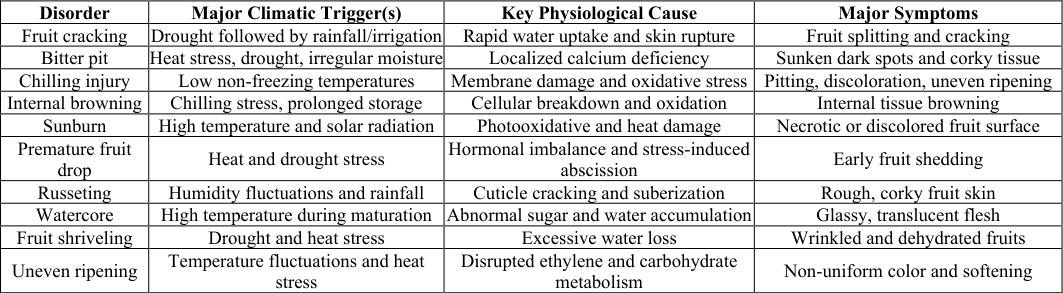 Table 1
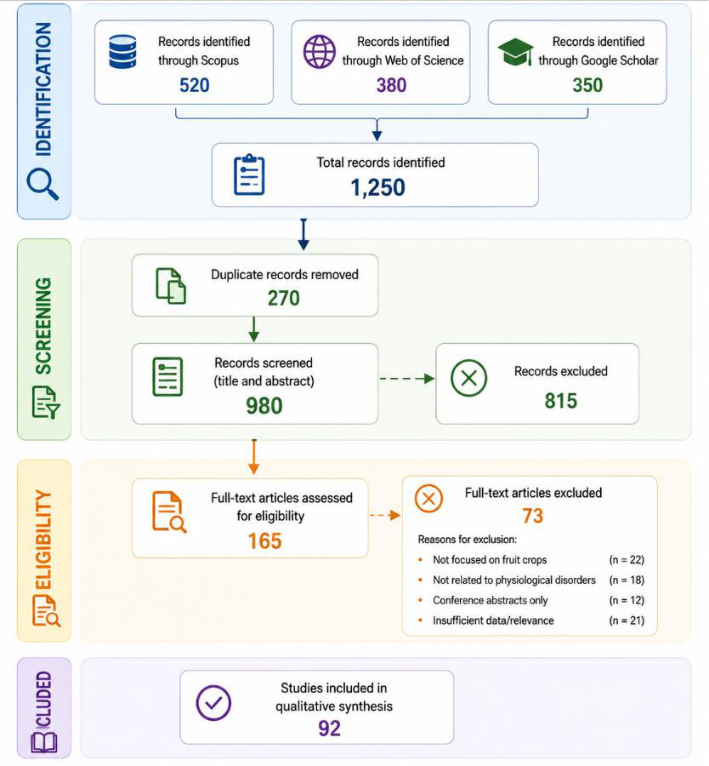 Figure 1
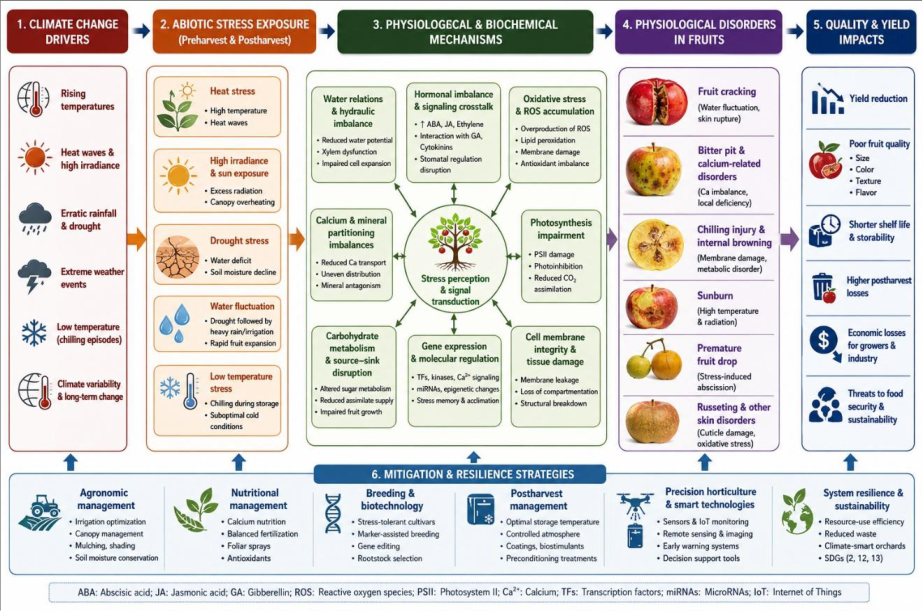 Figure 2
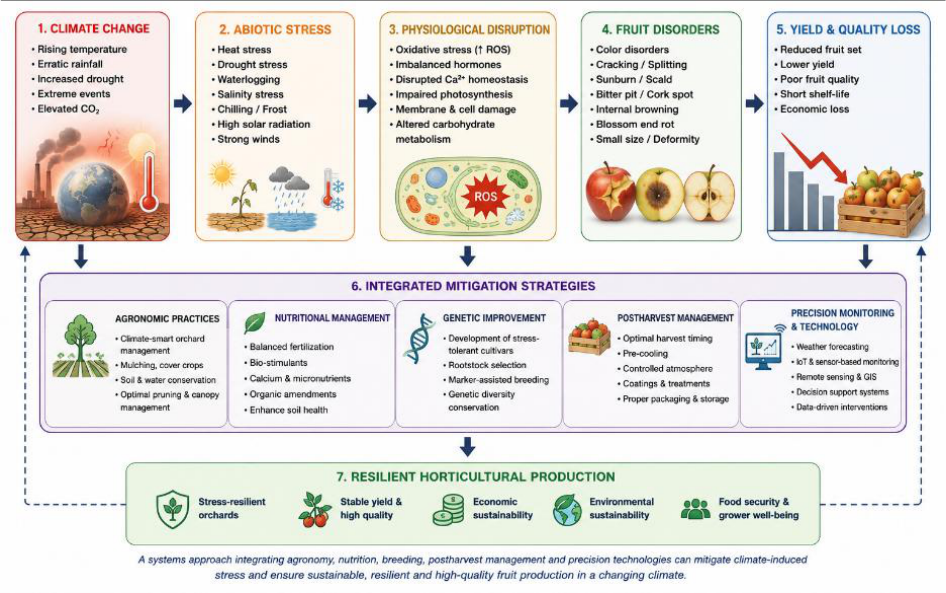 Figure 3
Introduction
Fruit crops constitute some of the most valuable components of global agriculture and human nutrition, providing essential vitamins, minerals, dietary fiber, antioxidants, and bioactive compounds. However, fruit production systems are highly sensitive to environmental fluctuations because critical processes such as flowering, fruit set, fruit enlargement, mineral accumulation, ripening, and postharvest physiology are closely regulated by climatic conditions (Atkinson & Urwin, 2012; IPCC, 2023) [1,10] . Consequently, climate change has emerged as one of the most significant challenges facing modern horticulture, with rising temperatures, altered precipitation patterns, prolonged droughts, and increasing frequency of extreme weather events adversely affecting fruit yield and quality worldwide (Lesk et al., 2016; IPCC, 2023) [14,10] . Unlike annual crops, perennial fruit trees are exposed to climatic variability over multiple growing seasons. Repeated exposure to environmental stresses can alter tree vigor, canopy architecture, source-sink relationships, water-use efficiency, and mineral transport processes, thereby increasing susceptibility to physiological disorders (Atkinson & Urwin, 2012; Hatfield & Prueger, 2015) [1,9] . These disorders often develop independently of pathogenic organisms and may manifest as fruit cracking, sunburn, bitter pit, internal browning, chilling injury, premature fruit drop, and other quality-related defects. Their economic significance is substantial because even minor cosmetic or internal defects can render fruit unmarketable, resulting in reduced profitability, increased postharvest losses, and shortened storage life (Kalcsits et al., 2017; Lurie & Crisosto, 2005) [11,15] . Recent advances in plant stress physiology have significantly improved understanding of how drought, heat stress, chilling stress, and compound abiotic stresses affect fruit development and quality. Research has demonstrated that climate-induced stresses disrupt plant water relations, calcium transport, photosynthetic performance, hormonal regulation, redox homeostasis, and carbohydrate metabolism, thereby increasing the likelihood of physiological disorder development (Zandalinas et al., 2020; Moretti et al., 2010) [22,18] . Furthermore, growing evidence suggests that combined or sequential stress events often produce more severe physiological consequences than individual stresses acting alone, emphasizing the need for integrated approaches to climate resilience in horticultural systems (Mittler, 2006; Zandalinas et al., 2020) [17,22] . Given the increasing vulnerability of fruit production systems to climate variability, a comprehensive synthesis of current knowledge is needed to better understand the links between climate change and physiological disorder development. Therefore, this review examines the major climate change-induced physiological disorders affecting fruit crops, explores the underlying physiological and biochemical mechanisms, evaluates their impacts on fruit quality and productivity, and discusses current and emerging mitigation strategies for developing climateresilient horticultural production systems. The occurrence and severity of physiological disorders in fruit crops are increasingly influenced by climate changedriven abiotic stresses, including heat waves, drought, erratic rainfall, elevated solar radiation, and chilling events. These stresses disrupt key physiological processes such as water balance, calcium transport, photosynthesis, membrane stability, hormonal regulation, and oxidative metabolism, resulting in a range of quality-limiting disorders. As summarized in Table 1, major climate change-induced physiological disorders-including fruit cracking, bitter pit, chilling injury, internal browning, sunburn, russeting, and premature fruit drop-are associated with distinct climatic triggers, physiological mechanisms, and characteristic symptoms. Understanding these relationships is essential for developing effective mitigation strategies and improving the resilience of fruit production systems under changing climatic conditions. Source: Atkinson and Urwin (2012) [1] , De Freitas and Mitcham (2012) [3] , Lurie and Crisosto (2005) [15] , Kalcsits et al. (2017) [11] , Wang et al. (2023) [27] , Moretti et al. (2010) [18] , and Zandalinas et al. (2020) [22] . [20,10] .
| Disorder | Major Climatic Trigger(s) | Key Physiological Cause | Major Symptoms |
|---|---|---|---|
| Fruit cracking | Drought followed by rainfall/irrigation | Rapid water uptake and skin rupture | Fruit splitting and cracking |
| Bitter pit | Heat stress, drought, irregular moisture | Localized calcium deficiency | Sunken dark spots and corky tissue |
| Chilling injury | Low non-freezing temperatures | Membrane damage and oxidative stress | Pitting, discoloration, uneven ripening |
| Internal browning | Chilling stress, prolonged storage | Cellular breakdown and oxidation | Internal tissue browning |
| Sunburn | High temperature and solar radiation | Photooxidative and heat damage | Necrotic or discolored fruit surface |
| Premature fruit drop | Heat and drought stress | Hormonal imbalance and stress-induced abscission | Early fruit shedding |
| Russeting | Humidity fluctuations and rainfall | Cuticle cracking and suberization | Rough, corky fruit skin |
| Watercore | High temperature during maturation | Abnormal sugar and water accumulation | Glassy, translucent flesh |
| Fruit shriveling | Drought and heat stress | Excessive water loss | Wrinkled and dehydrated fruits |
| Uneven ripening | Temperature fluctuations and heat stress | Disrupted ethylene and carbohydrate metabolism | Non-uniform color and softening |
Table text extracted from the original PDF; superscript letters are shown inline. The original table image is below.
View original table image
Review Methodology Literature Search Strategy
Review Methodology Literature Search Strategy
Inclusion and Exclusion Criteria
Studies were included if they met the following criteria: Priority was also given to recent review articles and landmark studies that have significantly advanced understanding of fruit responses to abiotic stress and physiological disorder development.
Study Selection Process
The study selection process followed the general principles of the Preferred Reporting Items for Systematic Reviews and Meta-Analyses (PRISMA) framework (Page et al., 2021) [20] . Records identified through database searches were screened based on title, abstract, and full-text evaluation. Duplicate records were removed prior to eligibility assessment. Studies meeting the predefined inclusion criteria were retained for qualitative synthesis and thematic analysis.
PRISMA Flow Diagram
A formal PRISMA flow diagram should be prepared following completion of the final database search and screening process. The diagram should include:
• Records identified through database searching.
• Records remaining after duplicate removal.
• Records screened by title and abstract.
• Full-text articles assessed for eligibility.
• Studies included in the qualitative synthesis. [1,22] . [19,18] . In perennial fruit crops, the consequences of drought extend beyond immediate reductions in growth. Water deficits alter hydraulic conductivity, root-to-shoot communication, carbon allocation patterns, and fruit sink strength, thereby affecting fruit size, mineral composition, and susceptibility to physiological disorders. Repeated drought episodes may also induce long-term changes in orchard performance and stress memory, influencing productivity across multiple growing seasons (Atkinson & Urwin, 2012; Chaves et al., 2010) [1,2] .
Drought Stress and Fruit Production
Drought Stress and Fruit Production
Heat Stress and Compound Climate Stressors
Heat stress has emerged as a critical threat to fruit production, particularly in regions experiencing recurrent extreme temperature events. Elevated temperatures disrupt photosynthesis, respiration, pollen viability, fruit set, and cellular membrane stability, ultimately reducing fruit yield and quality (Hatfield & Prueger, 2015) [9] . However, under field conditions, heat stress rarely occurs in isolation and is frequently accompanied by drought, creating compound stress scenarios that produce more severe physiological consequences than either stress alone.
Recent studies have demonstrated that combined heat and drought stress can exert non-additive effects on plant metabolism. Under such conditions, hormonal regulation, stomatal behavior, ROS homeostasis, carbohydrate metabolism, and energy balance become increasingly dysregulated, leading to greater reductions in growth, productivity, and fruit quality than predicted from single-stress responses (Mittler, 2006; Zandalinas et al., 2020) [17,22] . In citrus and other evergreen fruit species, the simultaneous occurrence of drought, high temperature, and excessive solar radiation has been shown to impair photosystem II activity, disrupt redox homeostasis, increase oxidative damage, and reduce net photosynthetic rates. These findings highlight how multiple climate-related stressors converge to influence fruit-tree physiology and increase the risk of physiological disorder development under future climate scenarios (Guidi et al., 2019; Zandalinas et al., 2020) [7,22] .
Major Physiological Disorders Fruit Cracking
Fruit cracking is among the most economically important climate-sensitive physiological disorders affecting fleshy fruits. The disorder results from complex interactions among fruit growth dynamics, water relations, cuticular characteristics, epidermal elasticity, and environmental conditions. Rapid fluctuations in water availability frequently generate excessive internal pressure within fruit tissues, exceeding the mechanical strength of the skin and resulting in cracking (Knoche & Lang, 2017) [12] .
Fruit cracking has been widely reported in sweet cherry, apple, pomegranate, litchi, jujube, grape, and several other fruit crops. Economic losses arise not only from direct fruit splitting but also from increased susceptibility to microbial infection, reduced storage life, and diminished market quality (Knoche & Lang, 2017; Knoche et al., 2018) [12,13] . Climatic conditions characterized by prolonged drought followed by heavy rainfall or excessive irrigation are particularly conducive to cracking because rapid water uptake alters fruit turgor pressure and disrupts normal tissue integrity.
Chilling Injury and Internal Browning Syndromes
In pome and stone fruits, chilling-related physiological disorders include superficial scald in apples and pears, internal browning, flesh breakdown, mealiness, woolliness, and texture deterioration in peaches and nectarines. These disorders significantly reduce consumer acceptance, storage potential, and commercial value, thereby representing a major challenge for modern fruit supply chains (Lurie & Crisosto, 2005; Valenzuela et al., 2017) [15,24] .
Sunburn, Fruit Drop, Russeting, and Other Climate-Related Disorders
In addition to fruit cracking, bitter pit, and chilling injury, climate change has increased the incidence of several other economically important physiological disorders, including sunburn, premature fruit drop, russeting, and skin blemishes. Elevated air temperatures, excessive solar radiation, water deficit, and altered canopy microclimates are among the primary environmental factors contributing to these disorders (Glenn et al., 2002) [6] . Atkinson & Urwin, 2012) [6,1] .
Physiological and Biochemical Mechanisms Underlying Climate Change-Induced Disorders
Climate change-induced physiological disorders arise when environmental stress exceeds the capacity of fruit crops to maintain cellular homeostasis, hydraulic functionality, metabolic balance, and reproductive stability. Across diverse fruit species, abiotic stresses such as drought, heat, chilling, and excessive radiation converge on several interconnected physiological pathways, including water relations, hormonal regulation, calcium signaling, reactive oxygen species metabolism, photosynthesis, carbohydrate partitioning, and stress-responsive gene networks (Mittler, 2006; Zandalinas et al., 2020) [17,22] . [1,19] .
Hormonal Imbalance and Signaling Crosstalk
Plant hormones play central roles in coordinating responses to environmental stress. Among these, abscisic acid (ABA) serves as a primary regulator of drought adaptation by promoting stomatal closure, osmotic adjustment, and stressresponsive gene expression. However, under climate change-related stress scenarios, ABA signaling interacts extensively with other hormonal pathways, including ethylene, jasmonic acid, salicylic acid, gibberellins, cytokinins, and auxins (Verma et al., 2016) [25] . Under combined heat and drought stress, complex hormonal crosstalk can alter reproductive development, carbon allocation, stomatal regulation, and stress tolerance. Such interactions often generate non-linear physiological responses that contribute to fruit abortion, premature fruit drop, reduced fruit size, and increased susceptibility to physiological disorders (Mittler, 2006; Zandalinas et al., 2020) [17,22] .
Oxidative Stress and Membrane Damage
Reactive oxygen species are essential signaling molecules involved in plant stress perception and acclimation. However, excessive ROS production under severe environmental stress can overwhelm antioxidant defense systems and result in oxidative damage to cellular structures. Elevated ROS concentrations promote lipid peroxidation, protein oxidation, DNA damage, and membrane destabilization, ultimately impairing cellular function and fruit quality (Hasanuzzaman et al., 2020) [8] .
Oxidative stress has been repeatedly implicated in droughtinduced physiological disorders, heat injury, sunburn, and chilling injury. In postharvest systems, membrane degradation caused by ROS accumulation is considered one of the principal mechanisms underlying chilling injury symptoms such as internal browning, pitting, mealiness, and tissue breakdown (Valenzuela et al., 2017; Wang et al., 1990) [24,26] .
Photosynthesis and Carbohydrate Metabolism
Photosynthesis is highly sensitive to environmental stress. Elevated temperatures, drought, and excessive irradiance reduce photosynthetic efficiency by impairing photosystem II activity, disrupting electron transport chains, increasing photooxidative stress, and decreasing carbon assimilation rates (Hatfield & Prueger, 2015) [9] . Carbohydrates function not only as metabolic substrates but also as important signaling molecules involved in stress adaptation. Alterations in sugar metabolism can affect osmotic adjustment, antioxidant defense, reproductive success, and fruit development. Consequently, climateinduced disruption of source-sink relationships may contribute to poor fruit filling, internal tissue breakdown, reduced fruit size, premature fruit drop, and quality deterioration (Ruan, 2014; Zandalinas et al., 2020) [21,22] .
Gene Expression and Emerging Molecular Regulation
Recent advances in molecular biology have revealed that fruit crop responses to abiotic stress are regulated through complex gene networks involving transcription factors, protein kinases, calcium-dependent signaling pathways, microRNAs, epigenetic modifications, and stress-memory mechanisms (Osakabe et al., 2014) [19] . [24,27] .
Fruit Quality Effects
Climate change-induced physiological disorders affect not only fruit yield but also a wide range of quality attributes that determine consumer acceptance, storage potential, and market value. The economic consequences of these disorders are often more severe than yield losses because fruit quality directly influences grading standards, postharvest performance, and commercial profitability. Increasing evidence indicates that drought, heat stress, chilling stress, and compound stress events significantly alter fruit morphology, texture, color development, nutritional composition, flavor-related metabolites, and shelf life (Wang et al., 2023; Zandalinas et al., 2020) [27,22] . Abiotic stresses frequently disrupt carbon assimilation and source-sink relationships, thereby reducing fruit growth and affecting the accumulation of sugars, organic acids, and secondary metabolites. Reduced photosynthetic activity under drought and heat stress limits carbohydrate availability for fruit development, resulting in smaller fruits, altered soluble solids concentration, impaired coloration, and reduced overall fruit quality (Chaves et al., 2010; Ruan, 2014) [2,21] . In addition, oxidative stress and membrane deterioration can negatively affect tissue firmness, juiciness, and storability by accelerating cellular senescence and metabolic dysfunction.
Postharvest physiological disorders further intensify quality losses. Chilling injury, for example, reduces consumer acceptance through symptoms such as mealiness, internal browning, pitting, peel discoloration, abnormal ripening, and accelerated deterioration following removal from cold storage. These changes not only shorten shelf life but also diminish nutritional and sensory quality, resulting in substantial postharvest losses throughout the supply chain (Lurie & Crisosto, 2005; Wang et al., 2023) [15,27] . Consequently, the effects of climate-induced physiological disorders extend beyond orchard productivity and have important implications for food quality, market competitiveness, and economic sustainability. [3,11] . Furthermore, climate variability can influence both preharvest physiological status and postharvest disorder expression. Consequently, effective management of physiological disorders in apple requires an integrated approach encompassing orchard nutrition, irrigation scheduling, crop load management, cultivar selection, and optimized storage practices (Kalcsits et al., 2017) [11] .
Crop-Specific
Crop-Specific
Citrus
Citrus species provide an important example of the effects of compound environmental stresses on fruit physiology. Unlike single-stress scenarios frequently studied under controlled conditions, commercial citrus orchards are often exposed simultaneously to drought, high temperature, and excessive solar radiation. Experimental studies have demonstrated that these combined stressors impair photosystem II activity, increase oxidative damage, disrupt redox homeostasis, and reduce photosynthetic efficiency more severely than individual stresses alone (Guidi et al., 2019; Zandalinas et al., 2020) [7,22] . These physiological disturbances contribute to reduced fruit growth, impaired quality development, increased fruit drop, and greater susceptibility to environmental injury. Citrus therefore represents a valuable model for understanding how multiple climate-related stress factors interact to influence fruit crop performance under field conditions.
Peach and Nectarine
Peach (Prunus persica) and nectarine are widely recognized as model systems for studying chilling injury and postharvest physiological disorders. Although lowtemperature storage is essential for extending shelf life and maintaining fruit quality, inappropriate storage temperatures or prolonged storage duration can induce mealiness, woolliness, internal browning, flesh breakdown, and texture deterioration (Lurie & Crisosto, 2005) [15] . The susceptibility of peach and nectarine fruits to chilling injury highlights the delicate balance between postharvest preservation and physiological stress. As global fruit trade increasingly relies on extended cold-chain logistics, understanding the mechanisms underlying chilling injury and developing effective mitigation strategies have become critical priorities for sustainable postharvest management.
Tropical and Subtropical Fruits
Tropical and subtropical fruits, including mango, banana, papaya, avocado, and several citrus species, are particularly vulnerable to chilling injury because they evolved under warm climatic conditions and possess limited tolerance to low-temperature storage. Expansion of international trade and long-distance transportation has increased reliance on refrigerated storage systems, thereby elevating the risk of chilling-related losses. Climate change may further exacerbate these challenges by increasing preharvest stress exposure, which can predispose fruit tissues to postharvest physiological disorders (Valenzuela et al., 2017; Wang et al., 2023) [24,27] .
Mineral Nutrition and Disorder Development
Mineral nutrition plays a central role in maintaining fruit structural integrity, physiological function, and resistance to abiotic stress. Among mineral nutrients, calcium has received the greatest attention because of its wellestablished association with numerous physiological disorders, including bitter pit, cork spot, internal breakdown, and storage-related disorders in pome fruits (De Freitas & Mitcham, 2012) [3] . However, contemporary research increasingly suggests that calcium deficiency alone does not fully explain disorder development. Recent studies indicate that susceptibility to bitter pit is influenced by multiple interacting factors, including genotype, rootstock characteristics, fruit growth rate, xylem functionality, transpiration dynamics, and the spatial distribution of calcium within fruit tissues (Kalcsits et al., 2017) [11] . Consequently, physiological disorders should be viewed as the result of complex interactions among mineral nutrition, environmental stress, and developmental processes rather than simple nutrient deficiencies.
Climate change may intensify these interactions by altering transpiration rates, water relations, and fruit growth dynamics, thereby reducing calcium delivery to developing fruits even under adequate soil fertility conditions. Such findings highlight the importance of integrating nutritional management with irrigation, canopy management, and cultivar selection in climate-resilient fruit production systems.
Although calcium remains the most extensively studied mineral in relation to physiological disorders, other nutrients such as potassium, boron, magnesium, zinc, and silicon also contribute to fruit quality, membrane stability, stress tolerance, and tissue integrity. Nevertheless, compared with calcium-related disorders, mechanistic understanding of how these nutrients interact with climate-induced stress remains relatively limited. Addressing this knowledge gap represents an important research priority for developing comprehensive nutrient management strategies capable of reducing physiological disorder incidence under future climate scenarios.
Mitigation Strategies Agronomic and Orchard-Level Approaches
Effective mitigation of climate change-induced physiological disorders begins with reducing plant exposure to hydraulic, thermal, and radiative stress. Orchard management practices that improve water availability, moderate canopy temperature, and enhance overall plant resilience are increasingly recognized as essential components of climate-smart horticulture. Among these practices, precision irrigation, deficit irrigation scheduling, soil moisture monitoring, mulching, and improved wateruse efficiency have demonstrated considerable potential for reducing drought-related physiological stress while maintaining fruit yield and quality (Chaves et al., 2010; Flexas et al., 2010) [2,5] . Canopy architecture and orchard microclimate management also play critical roles in mitigating heat and radiation stress. Techniques such as reflective mulches, shade nets, evaporative cooling systems, kaolin particle films, and optimized pruning can reduce fruit surface temperature, limit photoinhibition, and decrease the incidence of sunburn and heat-related disorders (Glenn et al., 2002) [6] . Because climate-induced physiological disorders often arise from interactions among multiple environmental stressors, integrated orchard management approaches are generally more effective than single interventions.
Nutritional and Biochemical Interventions
Nutritional management remains one of the most widely adopted strategies for reducing physiological disorder incidence in fruit crops. Calcium-based spray programs are routinely employed to minimize bitter pit, cork spot, and related calcium-deficiency disorders. However, contemporary evidence suggests that calcium applications should not be viewed as standalone solutions. Their effectiveness depends on interactions with cultivar genetics, rootstock characteristics, irrigation management, crop load regulation, and fruit growth dynamics (De Freitas & Mitcham, 2012; Kalcsits et al., 2017) [3,11] . In postharvest systems, several biochemical treatments have shown promise in alleviating chilling injury and preserving fruit quality. Applications of methyl jasmonate, salicylic acid, glycine betaine, nitric oxide donors, edible coatings, and antioxidant-based formulations have been reported to enhance membrane stability, improve antioxidant defense systems, and reduce oxidative damage during cold storage (Valenzuela et al., 2017; Wang et al., 2023) [24,27] . Likewise, preconditioning treatments involving controlled temperature exposure, intermittent warming, and light-based technologies have demonstrated beneficial effects in reducing chilling-related physiological damage.
Breeding and Biotechnology
Long-term adaptation to climate change will require the development of fruit cultivars with enhanced tolerance to drought, heat stress, mineral imbalances, and postharvest physiological disorders. Conventional breeding programs increasingly incorporate physiological and molecular traits associated with stress tolerance, including improved wateruse efficiency, antioxidant capacity, osmotic adjustment, and nutrient-use efficiency (Atkinson & Urwin, 2012) [1] . Advances in genomics, transcriptomics, genome-wide association studies (GWAS), marker-assisted selection, and gene-editing technologies are providing new opportunities to accelerate the development of climate-resilient fruit cultivars. Research has identified numerous transcription factors, stress-responsive genes, calcium-signaling components, and regulatory pathways involved in abiotic stress adaptation. Nevertheless, translating molecular discoveries into commercially successful cultivars remains challenging because stress tolerance is typically governed by complex polygenic interactions that are strongly influenced by environmental conditions (Osakabe et al., 2014; Zandalinas et al., 2020) [19,22] .
Precision Horticulture and Smart Technologies
Precision horticulture represents one of the most promising approaches for proactive management of climate-induced physiological disorders. Advances in sensor technology, remote sensing, thermal imaging, artificial intelligence (AI), machine learning, unmanned aerial vehicles (UAVs), and Internet of Things (IoT)-based monitoring systems are enabling real-time assessment of orchard conditions and plant physiological status (Zhang et al., 2014) [28] . Although direct applications of AI for physiological disorder prediction remain limited, emerging evidence suggests that integration of environmental monitoring, plant physiological indicators, and predictive analytics can substantially improve early detection and risk assessment. Thermal imaging can identify canopy heat stress before visible symptoms appear, while hyperspectral imaging and molecular biomarkers offer opportunities for detecting physiological imbalances associated with nutrient deficiencies, chilling injury, and water stress (Mahlein, 2016; Zhang et al., 2014) [16,28] . From a practical perspective, precision horticulture can be viewed as the operational extension of plant stress physiology, enabling growers to make timely decisions regarding irrigation scheduling, canopy management, harvest timing, storage conditions, and postharvest treatments before irreversible physiological damage occurs.
Sustainability and Climate Resilience
Reducing the incidence of physiological disorders contributes directly to the sustainability of fruit production systems. Improved management of climate-related disorders enhances resource-use efficiency, reduces postharvest losses, improves fruit quality, and stabilizes economic returns for growers. Given the high resource inputs associated with fruit production, minimizing physiological losses represents an important strategy for improving environmental and economic sustainability (FAO, 2023) [4] . Climate-resilient fruit production systems simultaneously support environmental objectives such as water conservation and efficient resource utilization, economic objectives such as yield stability and reduced postharvest losses, and social objectives related to food security, farmer livelihoods, and supply-chain resilience. Consequently, management of physiological disorders contributes directly to the achievement of several United Nations Sustainable Development Goals (SDGs), particularly SDG 2 (Zero Hunger), SDG 12 (Responsible Consumption and Production), and SDG.
Challenges and Limitations
Despite substantial advances in understanding fruit physiological disorders, significant challenges remain. One of the primary difficulties is the multifactorial nature of these disorders. Many disorders develop through complex interactions among environmental conditions, genetic factors, mineral nutrition, physiological status, and postharvest management practices. Consequently, simple cause-and-effect relationships are often insufficient to explain disorder occurrence and severity. For example, bitter pit cannot be attributed solely to calcium deficiency, while chilling injury results from interconnected disturbances involving membrane integrity, oxidative metabolism, hormonal regulation, and energy balance. Such complexity complicates diagnosis, prediction, and management under commercial production conditions (De Freitas & Mitcham, 2012; Kalcsits et al., 2017) [3,11] . Another major limitation is the disconnect between controlled-environment studies and real-world orchard conditions. Although laboratory and greenhouse experiments provide valuable mechanistic insights, orchard environments expose fruit crops to multiple interacting stressors that vary spatially and temporally. Bridging this gap requires multidisciplinary approaches that integrate molecular biology, plant physiology, agronomy, postharvest science, and precision agriculture technologies (Mittler, 2006; Zandalinas et al., 2020) [17,22] .
Research Gaps and Future Directions
Several critical research priorities must be addressed to improve understanding and management of climate changeinduced physiological disorders in fruit crops. First, long-term field-based studies are needed to determine how recurring heat waves, drought cycles, irregular precipitation patterns, and compound stress events influence disorder development across multiple growing seasons in perennial fruit systems. Such studies are essential for understanding cumulative stress effects and stress-memory responses under realistic production conditions (Atkinson & Urwin, 2012) [1] . Second, research efforts should expand beyond relatively well-studied disorders such as apple bitter pit and chilling injury in temperate fruits. Greater attention is needed for tropical and subtropical fruit crops, emerging physiological disorders, and mixed-stress scenarios that better reflect future climate conditions. Third, advances in transcriptomics, proteomics, metabolomics, ionomics, and phenomics should be integrated with physiological and agronomic research to identify reliable biomarkers of disorder susceptibility and stress resilience. Although omics technologies have generated substantial mechanistic knowledge, their practical application in commercial orchard management remains limited (Osakabe et al., 2014; Wang et al., 2023) [19,27] . Finally, precision horticulture technologies require rigorous validation under commercial conditions. Future research should focus on developing robust disorder forecasting systems that combine thermal sensing, hyperspectral imaging, environmental monitoring, machine learning, and physiological indicators to support evidence-based decisionmaking and early intervention strategies.
Conceptual Framework
Climate change-induced physiological disorders can be conceptualized as a cascading sequence of interconnected events. Climate change increases exposure to abiotic stressors such as drought, heat, erratic rainfall, excessive radiation, and chilling stress. These environmental pressures disrupt water relations, hormonal regulation, mineral transport, photosynthesis, carbohydrate metabolism, and redox homeostasis. The resulting physiological imbalances trigger the development of disorders such as fruit cracking, bitter pit, sunburn, chilling injury, internal browning, and premature fruit drop. These disorders subsequently reduce fruit yield, storage life, market quality, and economic returns. However, the implementation of integrated mitigation strategiesincluding climate-smart orchard management, optimized nutrition, genetic improvement, postharvest interventions, and precision monitoring technologies-can substantially enhance system resilience and reduce climate-related losses. This framework emphasizes that physiological disorders should be viewed not as isolated symptoms but as emergent outcomes of complex interactions among environmental stress, plant physiology, and management practices within fruit production systems.
Conclusion
Climate change is significantly increasing the incidence and severity of physiological disorders in fruit crops through rising temperatures, drought, erratic rainfall, excessive solar radiation, and chilling-related stresses. These environmental factors disrupt key physiological processes, including water relations, calcium transport, hormonal regulation, photosynthesis, carbohydrate metabolism, membrane integrity, and redox homeostasis, leading to disorders such as fruit cracking, bitter pit, chilling injury, sunburn, and internal browning. Current evidence indicates that these disorders result from complex interactions among climatic conditions, plant physiology, mineral nutrition, genotype, and management practices rather than from single causal factors. Therefore, effective mitigation requires integrated approaches combining climate-smart orchard management, precision irrigation, balanced nutrition, improved postharvest technologies, stress-tolerant cultivars, and precision horticultural tools. Future research should focus on understanding compound stress effects, validating mitigation strategies under field conditions, and integrating omics-based discoveries with predictive monitoring systems to enhance the resilience and sustainability of fruit production under changing climatic conditions.
Figures and tables from the paper
References
28 in the original paper- Atkinson CJ, Urwin PE. The interaction of plant biotic and abiotic stresses: From genes to the field. Journal of Experimental Botany. 2012;63(10):3523-3543.
- Chaves MM, Flexas J, Pinheiro C. Photosynthesis under drought and salt stress: Regulation mechanisms from whole plant to cell. Annals of Botany. 2010;103(4):551-560.
- De Freitas ST, Mitcham EI. Factors involved in fruit calcium deficiency disorders. Horticultural Reviews. 2012;40(1):107-146.
- Food and Agriculture Organization of the United Nations. The State of Food and Agriculture 2023. Rome: FAO; 2023.
- Flexas J, Galmés J, Gallé A, Gulías J, Pou A, RibasCarbó M, et al. Improving water use efficiency in grapevines: Potential physiological targets for biotechnological improvement. Australian Journal of Grape and Wine Research. 2010;16:106-121.
- Glenn DM, Prado E, Erez A, McFerson J, Puterka GJ. A reflective processed-kaolin particle film affects fruit temperature, radiation reflection, and solar injury in apple. Journal of the American Society for Horticultural Science. 2002;127(2):188-193.
- Guidi L, Lo Piccolo E, Landi M. Chlorophyll fluorescence, photoinhibition and abiotic stress: does it make any difference the fact to be a C 3 or C 4 species? Frontiers in Plant Science. 2019;10:174.
- Hasanuzzaman M, Bhuyan MB, Zulfiqar F, Raza A, Mohsin SM, Mahmud JA, et al. Reactive oxygen species and antioxidant defense in plants under abiotic stress: Revisiting the crucial role of a universal defense regulator. Antioxidants. 2020;9(8):681.
- Hatfield JL, Prueger JH. Temperature extremes: Effect on plant growth and development. Weather and Climate Extremes. 2015;10:4-10.
- Intergovernmental Panel on Climate Change. Climate Change 2023: Synthesis Report. Geneva: IPCC; 2023.
- Kalcsits L, van der Heijden G, Reid M, Mullin K. Calcium Absorption during Fruit Development in 'Honeycrisp' Apple Measured Using 44 Ca as a Stable Isotope Tracer. HortScience. 2017;52(12):1804-1809.
- Knoche M, Lang A. Ongoing growth challenges fruit skin integrity. Critical Reviews in Plant Sciences. 2017;36(3):190-215.
- Knoche M, Khanal BP, Brüggenwirth M, Thapa S. Patterns of microcracking in apple fruit skin reflect those of the cuticular ridges and of the epidermal cell walls. Planta. 2018;248(2):293-306.
- Lesk C, Rowhani P, Ramankutty N. Influence of extreme weather disasters on global crop production. Nature. 2016;529(7584):84-87.
- Lurie S, Crisosto CH. Chilling injury in peach and nectarine. Postharvest Biology and Technology. 2005;37(3):195-208.
- Mahlein AK. Plant disease detection by imaging sensors-parallels and specific demands for precision agriculture and plant phenotyping. Plant Disease. 2016;100(2):241-251.
- Mittler R. Abiotic stress, the field environment and stress combination. Trends in Plant Science. 2006;11(1):15-19.
- Moretti CÁ, Mattos LM, Calbo AG, Sargent SA. Climate changes and potential impacts on postharvest quality of fruit and vegetable crops: A review. Food Research International. 2010;43(7):1824-1832.
- Osakabe Y, Osakabe K, Shinozaki K, Tran LSP. Response of plants to water stress. Frontiers in Plant Science. 2014;5:86.
- Page MJ, McKenzie JE, Bossuyt PM, Boutron I, Hoffmann TC, Mulrow CD, et al. The PRISMA 2020 statement: an updated guideline for reporting systematic reviews. BMJ. 2021;372:n71.
- Ruan YL. Sucrose metabolism: gateway to diverse carbon use and sugar signaling. Annual Review of Plant Biology. 2014;65:33-67.
- Zandalinas SI, Fichman Y, Devireddy AR, Sengupta S, Azad RK, Mittler R. Systemic signaling during abiotic stress combination in plants. Proceedings of the National Academy of Sciences of the United States of America. 2020;117(24):13810-13820. https://doi.org/10.1073/pnas.2005077117
- Schrader LE, Zhang J, Duplaga WK. Two types of sunburn in apple caused by high fruit surface (peel) temperature. Plant Health Progress. 2001;2(1):3.
- Valenzuela JL, Manzano S, Palma F, Carvajal F, Garrido D, Jamilena M. Oxidative stress associated with chilling injury in immature fruit: postharvest technological and biotechnological solutions. International Journal of Molecular Sciences. 2017;18(7):1467.
- Verma V, Ravindran P, Kumar PP. Plant hormonemediated regulation of stress responses. BMC Plant Biology. 2016;16(1):86.
- Wang CY. Chilling injury of horticultural crops. Boca Raton: CRC Press; 1990.
- Wang GL, Wu JQ, Chen YY, Xu YJ, Zhou CL, Hu ZZ, et al. More or less: recent advances in lignin accumulation and regulation in horticultural crops. Agronomy. 2023;13(11):2819.
- Zhang C, Walters D, Kovacs JM. Applications of low altitude remote sensing in agriculture upon farmers' requests-a case study in northeastern Ontario, Canada. PLoS ONE. 2014;9(11):e112894.