
Research article · 2026 · Full text
International Journal of Advanced Chemistry ResearchIonic liquid: Review article
Volume 8(7) · Pages 49–51 · DOI: 10.33545/26646781.2026.v8.i7a.714 ↗
Research areasIonic liquids properties and applicationsLubricants and Their AdditivesN-Heterocyclic Carbenes in Organic and Inorganic Chemistry
Abstract
Author-writtenIonic Liquids (ILs) have emerged as revolutionary green alternatives to hazardous volatile organic solvents in chemical and pharmaceutical industries. Composed of bulky organic cations and smaller anions, these liquid salts (< 100 °C) exhibit unique properties, including high polarity, low vapor pressure, thermal stability, and excellent electrical conductivity. This review highlights the structural characteristics of ILs, their diverse types such as Room-Temperature Ionic Liquids (RTILs) and their promising applications in energy storage and batteries. Additionally, it addresses the critical challenge of IL purity, emphasizing how moisture and residual impurities can significantly alter their physical-chemical behavior.
Summary
Source-checkedPlain-language reading of the full paper, prepared with AI and checked against the text. Each point links to the authors' own words.
Why it matters
- Volatile organic solvents used in pharmaceutical and chemical industries are primary contributors to environmental pollution. View evidence ↗
- Green chemical solvents are essential for reducing the reliance on toxic and environmentally harmful substances. View evidence ↗
- Ionic Liquids (ILs) are considered revolutionary green alternatives to hazardous volatile organic solvents. View evidence ↗
What they did
- For the purpose of this review, ionic liquids are defined as organic molecules consisting of ions that are liquid at temperatures of 100 degrees Celsius. View evidence ↗
- The structural analysis describes ILs as consisting of large organic positive cations and smaller inorganic negative anions. View evidence ↗
What they found
- The size difference between cations and anions creates a weak link, allowing these compounds to remain liquid below 100 °C. View evidence ↗
- Ionic liquids typically demonstrate thermal stability and heat resistance up to 300 °C. View evidence ↗
- A specific category called Room Temperature Ionic Liquids (RTILs) stays liquid at standard room temperature. View evidence ↗
- ILs are being explored for energy applications including fuel cells, super capacitors, hydrogen storage units, and battery electrolytes. View evidence ↗
- The presence of water in ionic liquids regulates chemical characteristics and leads to a decrease in both viscosity and density. View evidence ↗
What it means
- The authors conclude that ILs are powerful green alternatives to volatile solvents because of their structural flexibility, high conductivity, and thermal stability. View evidence ↗
- Industrial use of ILs is limited by the need for high purity, as trace halides or moisture can distort physical properties, and the need for a better understanding of their environmental impact. View evidence ↗
Visual summary
1 visualsIllustrations explain the paper; they do not show study data.
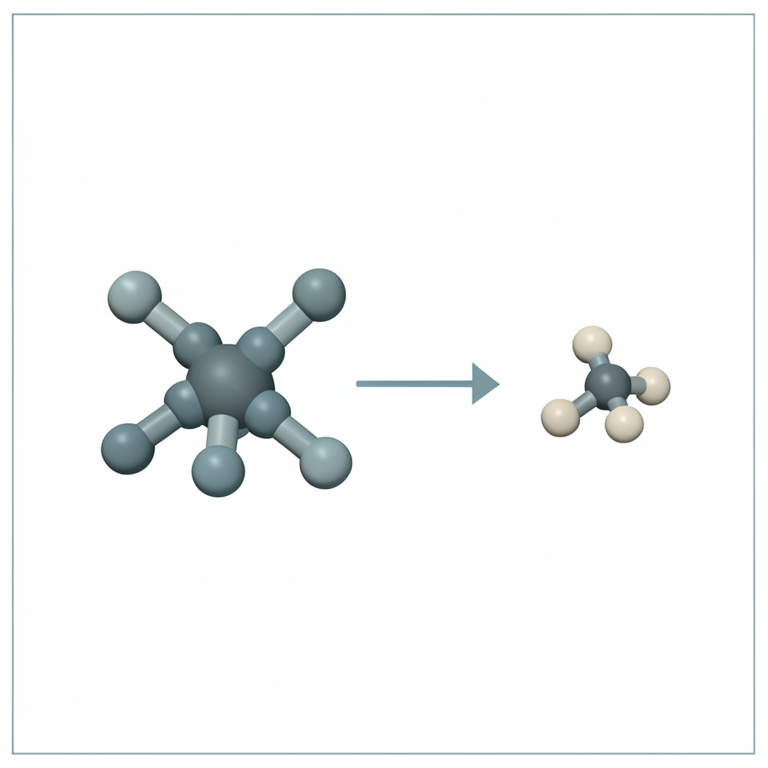
Ionic Liquid Molecular Architecture
AI-generated conceptual illustration (Ionic liquid molecular structures). It explains the idea and does not show study data.
View source evidence ↗Introduction
Ionic liquids, in recent years, have brought about a significant transformation in research institutes and chemical businesses. The components included in green chemicals, such as solvents, play a crucial role in minimizing the usage of dangerous, poisonous, and ecologically detrimental substances [1] . Today, ionic liquids refer to organic molecules consisting of ions that possess a liquid state at a temperature of 100 degrees Celsius. Scientists are now doing extensive study on ionic fluids due to its potential as a practical substitute for volatile solvents in several industries. In the chemical and pharmaceutical industries, organic volatile solvents are the main source of environmental contamination. It is crucial to acknowledge that not all ionic liquids qualify as ecologically benign solvents, as certain varieties exhibit considerable toxicity levels [2] . The distinctive properties of this new chemical group enable a reduction in the use of dangerous and polluting organic solvents. Additionally, they play a role in many novel syntheses. ILs, or ionic liquids, are a kind of salt that remains in a liquid state at normal temperature, unlike high-temperature molten salts. There were few patent filings for ILs, according to research done in 1980. But by 2000, there were 100 patent applications, and by 2004, there were more than 800. This clearly demonstrates the strong connection between academics and industry in relation to the ILs [3] . ILs are being further developed in response to the increasing chemical variety. Ionic liquids include several categories, such as room-temperature ILs, task-specific ILs, poly ILs, and supported membrane ILs. This includes IL composites supported on organic metal frameworks [4] . Several ILs are used in processes that involve high temperatures, such as chemical reactions, extraction, separation, and lubrication. A study [5] has emphasized the significance of thermal stability in ILs. ILs may undergo considerable changes in their structure, content, and characteristics upon degradation [6] . This contradicts the objectives of green chemistry and green solvents. Ionic liquids, in their pure state, has the capability to modify electrical conductivity within the liquid phase via the movement of charged ions. This distinguishes them from typical ionic compounds, which must first be dissolved in water as a solvent in order to form electrolytes, which are in solid form. The appealing characteristics of ILs have prompted researchers to explore their potential in various energy applications, such as serving as electrolytes in specific batteries [7] , fuel cells, electrochemical energy storage systems (super capacitors), and hydrogen storage units [8] . The objective of this review article is to evaluate Ionic Liquids (ILs) as eco-friendly alternatives to volatile organic solvents by detailing their structural characteristics, classification, and versatile applications in green synthesis and energy storage.
Ionic Liquids Structure (ILs)
Ionic liquids are composed of various cations and anions in their molecular structure. In contrast to the anions, which have an inorganic structure and are much smaller in size and carry a negative charge, the cation is typically represented by a big organic molecule with a positive charge. The weak link between the anions and cations in ionic liquids, caused by their size difference, results in these compounds being in a liquid state at temperatures below 100 °C [9] . Ionic liquids have a structure that is comparable to salt. However, the presence of a robust link between the cation and anion, which have similar characteristics in terms of size, charge, and nature, results in a highly crystalline structure for salt. As a result, salt melts at a high temperature of 800°C. Ionic liquids are typically evaluated at temperatures of 100°C. Liquids that have a temperature exceeding 100°C are referred to as molten liquids, whereas those that have a temperature below this threshold are known as ionic liquids. Certain types of ionic liquids, known as Room Temperature Ionic Liquids (RTILs), remain in a liquid state at normal room temperature [10] .
The benefits and features of ionic liquids
Among the most significant benefits of ionic liquids are the following:
• They have a high degree of polarity.
• They are non-volatile and have a low vapor pressure.
• Typically, they exhibit stability and resistance to heat up to 300 °C. • They may be heated to a liquid state up to 200 °C.
• These compounds have a very high level of electrical conductivity. • These compounds are not compatible with a wide range of commonly used organic solvents [11] .
Purity of ionic liquids
Contaminants can change the ionic liquids' chemical and physical properties. Ionic liquids must therefore be filtered.
Halides, together with organic and water-based substrates, are the main ionic liquid contaminants of concern. These pollutants often originate from unreacted compounds, which are precursors used in the synthesis of ionic liquids and stay unmodified throughout the process. Ionic liquids have a pronounced propensity for moisture absorption, so hydrophobic ionic liquids also possess the ability to absorb moisture. Typically, the process of drying ionic liquids involves applying heat in a vacuum environment. However, owing to the presence of strong hydrogen bonding, it is challenging to totally eliminate water. Water's presence decreases the density and viscosity while also regulating the chemical characteristics [12] . Since its inception, Ionic Liquids (ILs) have been extensively studied for many applications, such as solvent chemistry, catalysis, and electrochemistry. This is because they are categorized as designer solvents, which make it possible to alter the chemical and physical characteristics of ionic liquids to satisfy certain needs [13] .
Synthesis of ionic liquids
Ionic liquids, sometimes referred to as room temperature ionic liquids (RTILs), are salts with poorly coordinated ions.
Because of this, some solvents remain liquid below 100°C and sometimes even at ambient temperature. In order for a crystal lattice to be stable, it is necessary for there to be at least one ion with a charge that is spread out and one component that is organic. Transition metal catalysts that are soluble in ionic liquids can be recycled by recombining with the ionic liquid after being extracted using water and the non-polar organic solvent used to separate the product. The ionic liquid and the catalyst are both reusables. Furthermore, the subsequent room temperature ionic liquid (RTIL), which is obtained from fructose (a sustainable raw material), shows great potential as a solvent for the effective implementation of environmentally friendly "green chemistry" techniques (scheme.1) [14] :
Scheme 1: Synthesis of fructose-derived ionic liquids [14]
Conclusion
In conclusion, Ionic Liquids (ILs) offer a powerful, green alternative to traditional volatile solvents due to their remarkable thermal stability, high conductivity, and structural flexibility. Their unique ion-based architecture allows them to excel across diverse fields, from sustainable chemical synthesis to advanced energy storage applications. However, their industrial implementation relies heavily on maintaining high purity and understanding their environmental impact. Since even trace amounts of moisture or halides can significantly distort their physical properties
References
14 in the original paper- Earle MJ, Esperança JMSS, Gilea MA, Lopes JNC, Rebelo LPN, Magee JW, et al. The distillation and volatility of ionic liquids. Nature. 2006;439(7078):831834.
- Kianfar E, Mafi S. Ionic liquids: properties, application, and synthesis. Fine Chem Eng. 2021:21-29.
- Fabre E, Murshed SMS. A review of the thermophysical properties and potential of ionic liquids for thermal applications. J Mater Chem A. 2021;9(29):15861-15879.
- Khan NA, Hasan Z, Jhung SH. Ionic liquids supported on metal-organic frameworks: remarkable adsorbents for adsorptive desulfurization. Chem Eur J. 2014;20(2):376-380.
- Vieira JCB, Villetti MA, Frizzo CP. Thermal stability and decomposition mechanism of dicationic imidazolium-based ionic liquids with carboxylate anions. J Mol Liq. 2021;330:115618.
- Nancarrow P, et al. Comprehensive analysis and correlation of ionic liquid conductivity data for energy applications. Energy. 2021;220:119761.
- Avid A, et al. Revealing the role of ionic liquids in promoting fuel cell catalysts reactivity and durability. Nat Commun. 2022;13(1):6349.
- Johansson A, et al. Hydrogen bonding ability of the amide group. J Am Chem Soc. 1974;96(12):3794-3800.
- Leggio A, et al. One-pot synthesis of amides from carboxylic acids activated using thionyl chloride. RSC Adv. 2016;6(41):34468-34475.
- Mutelet F, Butet V, Jaubert JN. Application of inverse gas chromatography and regular solution theory for characterization of ionic liquids. Ind Eng Chem Res. 2005;44(11):4120-4127.
- Wasserscheid P, Keim W. Ionic liquids new "solutions" for transition metal catalysis. Angew Chem Int Ed. 2000;39(21):3772-3789.
- Wasserscheid P, Welton T, editors. Ionic liquids in synthesis. 2 nd ed. Weinheim: Wiley-VCH; 2008.
- Short PL. Out of the ivory tower. Chem Eng News. 2006;84(17):15-21.
- Handy ST, Okello M, Dickenson G. Solvents from biorenewable sources: ionic liquids based on fructose. Org Lett. 2003;5(14):2513-2515.