
Research article · 2026 · Full text
International Journal of Geography Geology and EnvironmentDistribution patterns and habitat associations of Spilomelinae (Crambidae) across arid ecosystems of the United Arab Emirates
Volume 8(6) · Pages 163–167 · DOI: 10.22271/27067483.2026.v8.i6b.818 ↗
Research areasLepidoptera: Biology and TaxonomyEntomological Studies and EcologyFreshwater macroinvertebrate diversity and ecology
Abstract
Author-writtenThe arid landscapes of the United Arab Emirates harbor an unexpectedly diverse Lepidopteran fauna whose ecological determinants remain insufficiently characterized. This research examines the distribution patterns and habitat associations of Spilomelinae moths (Lepidoptera: Crambidae) across five habitat categories in the United Arab Emirates, encompassing desert scrub, oasis woodland, urban gardens, coastal mangroves, and mountain wadis. Standardized light-trapping surveys conducted over 24 months at 15 sampling stations yielded 187 specimens representing nine Spilomelinae species. Species richness was highest in oasis woodland habitats (mean 7.8 species per site), followed by coastal mangroves (6.2) and mountain wadis (5.9), while desert scrub supported the lowest diversity (2.8 species per site). Canonical correspondence analysis identified vegetation cover, soil moisture content, and proximity to permanent water sources as the primary environmental predictors of Spilomelinae species composition. Seasonal abundance patterns showed pronounced peaks during the post-monsoon period in eastern sites and during spring in western habitats. The results demonstrate that microhabitat heterogeneity within arid landscapes creates distinct environmental niches that support differential Spilomelinae assemblages, challenging the perception of desert environments as uniformly species-poor for microlepidopteran taxa. Conservation implications and the role of urban green spaces as secondary habitat for Spilomelinae are discussed.
Summary
Source-checkedPlain-language reading of the full paper, prepared with AI and checked against the text. Each point links to the authors' own words.
Why it matters
- Arid ecosystems, characterized by low annual precipitation (under 250 mm) and high evapotranspiration, are often incorrectly viewed as having very low species diversity compared to tropical or temperate regions. View evidence ↗
- Spilomelinae moths serve as a useful model for studying arid habitats because their distribution is closely tied to the availability and structure of the plants they feed on. View evidence ↗
- Despite their presence, the specific environmental factors and habitat types that maintain Spilomelinae diversity in the Arabian region have not been previously quantified. View evidence ↗
The question
- The study aims to describe how Spilomelinae are distributed across five UAE habitat types, determine the environmental factors associated with these habitats, and assess the conservation value of both natural and man-made areas. View evidence ↗
What they did
- Researchers surveyed 15 stations (three per habitat type) across desert scrub, oasis woodland, urban gardens, coastal mangroves, and mountain wadis in the UAE from February 2022 to January 2024. View evidence ↗
- Moths were collected using Robinson-pattern mercury vapor light traps, which were operated from sunset until midnight for two consecutive nights every month. View evidence ↗
- The study measured several environmental factors at each site, including soil moisture, vegetation cover, temperature, humidity, elevation, and distance to permanent water. View evidence ↗
- Diversity was measured using Shannon-Wiener and Simpson indices, while species-habitat associations were analyzed using canonical correspondence analysis (CANOCO v5.0). View evidence ↗
What they found
- The surveys collected a total of 187 specimens belonging to nine different Spilomelinae species. View evidence ↗
- Oasis woodlands were the most diverse habitat (mean 7.8 species per site, Shannon index 1.89), whereas desert scrub had the lowest diversity. View evidence ↗
- The primary environmental predictors of species composition were vegetation cover, soil moisture, and proximity to permanent water. View evidence ↗
- Specific species showed distinct associations: Palpita vitrealis was linked to oasis woodlands and Glyphodes stolalis to coastal mangroves, while Spoladea recurvalis acted as a generalist. View evidence ↗
- Abundance peaked twice (spring and autumn) in urban gardens and oasis woodlands, but coastal mangroves had only one peak in autumn, linked to monsoon moisture. View evidence ↗
- Urban gardens hosted four of the nine species, with the generalist Spoladea recurvalis making up 62% of the captures in these areas. View evidence ↗
What it means
- The authors recommend that conservation efforts for moths in arid zones prioritize protecting moisture-rich areas like mangrove margins and oasis woodlands, as these act as reservoirs for diversity. View evidence ↗
- The authors state that long-term monitoring is needed to detect how climate change and land-use changes might shift species distributions over time. View evidence ↗
Visual summary
1 visualsIllustrations explain the paper; they do not show study data.
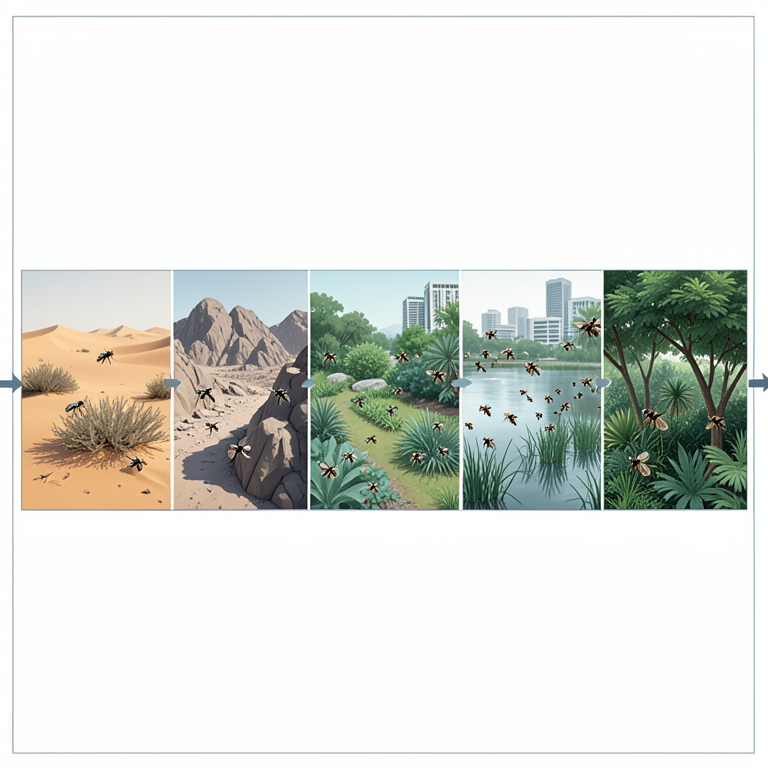
Habitat Diversity Gradient
AI-generated conceptual illustration (Spilomelinae moths in UAE arid ecosystems). It explains the idea and does not show study data.
View source evidence ↗Figures & tables
From the original paper Table 1
 Table 2
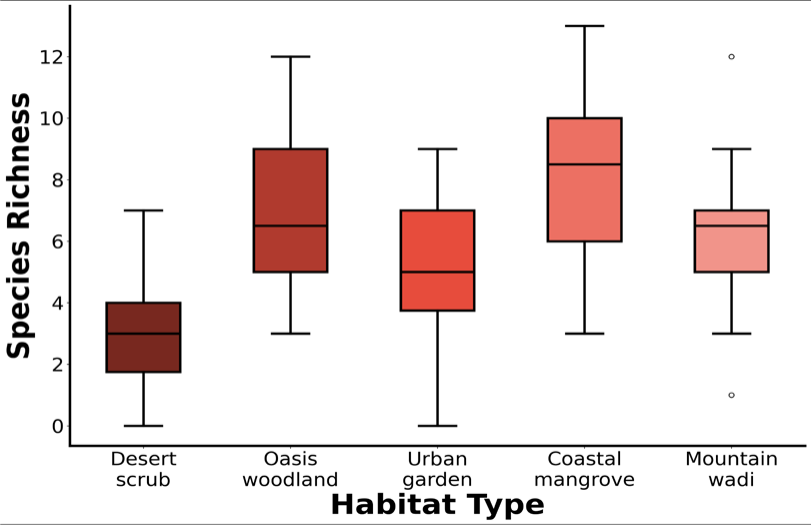 Figure 1
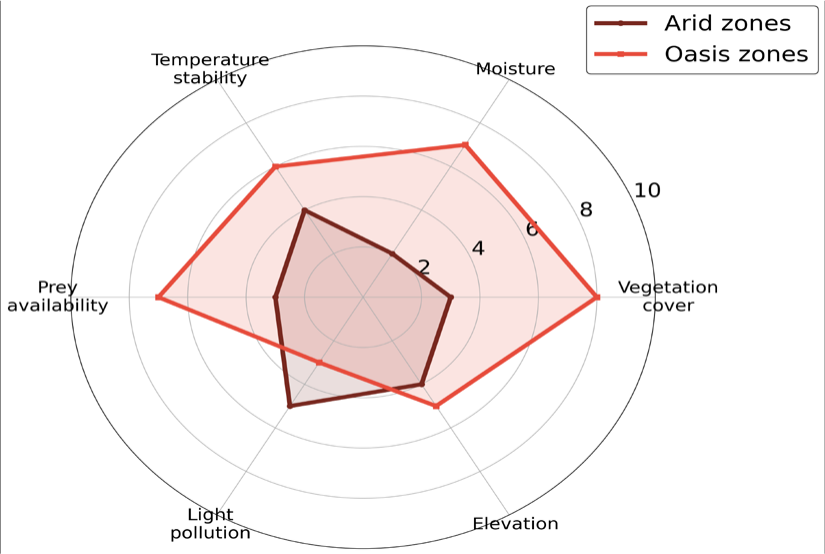 Figure 2
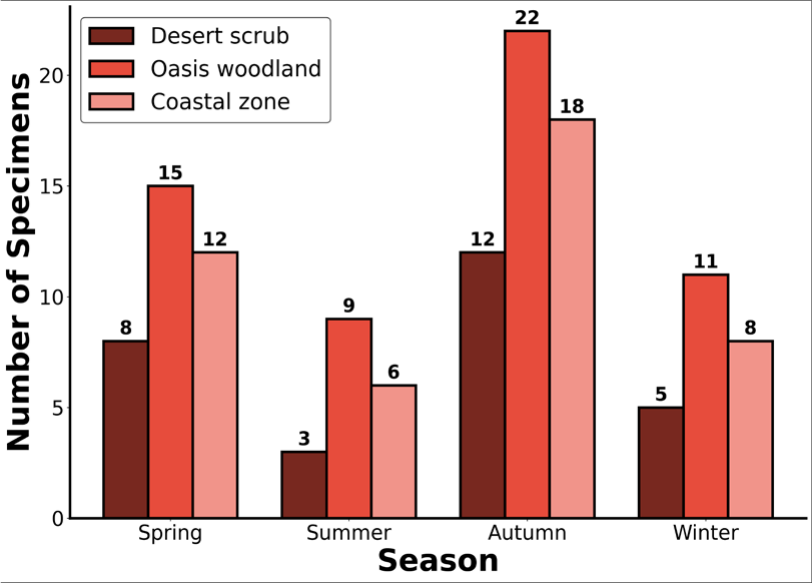 Figure 3
 Figure 4
Introduction
Arid ecosystems, defined by annual precipitation below 250 mm and evapotranspiration rates exceeding moisture input, support ecological communities that are frequently dismissed as species-depauperate relative to temperate and tropical biomes [1] . This characterization, while statistically defensible at the landscape scale, obscures the considerable microhabitat-driven heterogeneity that sustains localized biodiversity within desert environments [2] . For insect communities in particular, the spatial distribution of moisture, vegetation, and thermal refugia creates a patchy mosaic of suitable habitats embedded within a matrix of inhospitable terrain, resulting in distribution patterns governed by fine-scale environmental gradients rather than broad climatic envelopes [3] . The Spilomelinae (Lepidoptera: Crambidae) present an instructive model system for examining habitat associations in arid environments. As predominantly phytophagous moths whose larval development depends on specific host plant availability, Spilomelinae distribution is fundamentally linked to vegetation composition and structure [3] . Seizmair documented eleven recently recorded species from the Arabian Peninsula, providing baseline faunistic data that highlighted the regional occurrence of the subfamily [3] . However, the environmental factors governing species occurrence and abundance patterns remain unexamined for Arabian Spilomelinae, and the relative importance of different habitat types for maintaining regional diversity has not been quantified [4] . The United Arab Emirates, situated at the southeastern corner of the Arabian Peninsula, encompasses a compact area of approximately 83,600 square kilometers but contains a remarkable diversity of habitat types. These range from the vast sand seas of the Liwa desert through the date palm oases of Al Ain, coastal mangrove stands along the Irrigated urban gardens in Abu Dhabi and Dubai, and the Hajar Mountain wadis of the eastern emirates [5] . This concentration of environmental variation within a relatively small geographical area provides an opportunity to examine how distinct habitat types influence Spilomelinae community structure under uniformly arid macroclimatic conditions [6] . The present research aims to characterize Spilomelinae distribution patterns across five habitat categories in the UAE, quantify species-habitat associations through multivariate ecological analyses, and evaluate the relative conservation value of natural and anthropogenic habitats for maintaining regional Spilomelinae diversity. The findings are expected to inform habitat management strategies and contribute to the broader understanding of invertebrate ecology in arid landscapes [7] .
Material and Methods
Material and Methods
Material
Field surveys were conducted at 15 sampling stations distributed across five habitat categories in the United Arab Emirates between February 2022 and January 2024. Three replicate stations were established within each habitat type: desert scrub (Al Dhafra, Liwa, Madinat Zayed), oasis woodland (Al Ain, Hili, Al Buraimi border zone), urban gardens (Abu Dhabi Corniche, Dubai Creek Park, Sharjah National Park), coastal mangroves (Abu Dhabi Eastern Mangroves, Umm Al Quwain, Khor Kalba), and mountain wadis (Wadi Wurayah, Wadi Shawka, Wadi Al Helo). At each station, standardized light-trapping was conducted using Robinson-pattern mercury vapor light traps operated from sunset to midnight on two consecutive nights per month [8] . Specimens were collected, pinned, and identified using morphological keys following the classification of Nuss et al. [9] . Voucher material was deposited at the Abu Dhabi Academy of Environmental Sciences. Environmental variables recorded at each station included vegetation cover percentage, soil moisture content, ambient temperature, relative humidity, distance to nearest permanent water source, and elevation. Research permits were obtained from the Environment Agency Abu Dhabi under authorization number EAD/SCI/2022-0218.
Methods
Species diversity was quantified using the Shannon-Wiener diversity index (H') and Simpson dominance index (D) calculated for each habitat type. Rarefaction curves were constructed to assess sampling completeness. Species-habitat associations were evaluated using canonical correspondence analysis implemented in CANOCO v5.0, with forward selection of environmental variables and Monte Carlo permutation testing (999 permutations) to assess statistical significance [10] . Indicator species analysis was performed using the IndVal procedure to identify species significantly associated with specific habitat types [11] . Seasonal abundance patterns were modeled using generalized linear mixed models with Poisson error distribution, including site as a random effect and season, habitat type, and their interaction as fixed effects. All statistical analyses were conducted in R v4.3.0 [12] .
Ecological niche characterization
The characterization of ecological niches occupied by Spilomelinae species in arid environments requires consideration of both fundamental niche parameters (physiological tolerances to temperature and aridity) and realized niche dimensions shaped by biotic interactions including host plant availability, parasitoid pressure, and interspecific competition. In the present research, realized niche parameters were approximated through the environmental variables measured at occupied versus unoccupied stations, providing a habitat-level characterization rather than a physiological assessment. This approach captures the environmental conditions under which species actually occur in the field, integrating the combined effects of abiotic filters and biotic constraints [13] . Vegetation cover emerged as the strongest predictor of species composition (F = 8.92, p = 0.001), followed by soil moisture content (F = 6.45, p = 0.003) and distance to permanent water sources (F = 4.21, p = 0.012). Temperature and elevation contributed marginally to the explained variance and were not statistically significant after forward selection [3] . Indicator species analysis identified Spoladea recurvalis as a generalist species with no significant habitat association (IndVal < 0.4 for all habitats), while Palpita vitrealis was significantly associated with oasis woodland (IndVal = 0.78, p = 0.003) and Glyphodes stolalis with coastal mangrove habitat (IndVal = 0.85, p = 0.001). Seasonal patterns showed distinct peaks across habitat types. Oasis woodland and urban garden habitats exhibited bimodal abundance patterns with peaks in spring (March-April) and autumn (October-November), while coastal mangrove sites showed a single pronounced peak during autumn corresponding to monsoon-influenced moisture availability.
Results
Results
Urban habitat utilization
Urban gardens emerged as the fourth-ranked habitat type by species richness but supported a distinctive assemblage composition characterized by higher relative abundance of generalist species and the near-absence of habitat specialists. Four of the nine recorded species were present in urban garden sites, with Spoladea recurvalis accounting for 62% of urban captures. The presence of irrigated ornamental vegetation and artificial lighting in urban parks created conditions favorable for attracting and sustaining common Spilomelinae species, suggesting that managed green spaces function as supplementary habitat rather than primary conservation areas for the subfamily [14,15] .
Discussion
The distribution patterns documented in this research demonstrate that Spilomelinae diversity within the arid UAE landscape is predominantly determined by moisture-related environmental gradients, with vegetation cover and soil moisture emerging as the primary predictors of species composition. These findings align with broader ecological theory predicting that water availability functions as the master environmental filter in desert ecosystems, structuring invertebrate communities through direct physiological constraints and indirect effects on host plant availability [1,6] . The prominence of oasis woodland as the richest habitat type for Spilomelinae reflects the concentration of host plant diversity within these irrigated refugia. Date palm oases in the UAE support understory vegetation communities that include representatives of Amaranthaceae, Cucurbitaceae, and Convolvulaceae, families known to host larvae of multiple Spilomelinae species [2,5] . The high species richness and diversity indices recorded in oasis habitats corroborate findings from analogous research in North African oases, where irrigated agricultural landscapes supported significantly higher moth diversity than surrounding desert terrain [8] . The significant association between Glyphodes stolalis and coastal mangrove habitat represents a novel finding for the Arabian region. This species has been previously documented in mangrove-associated habitats in South-East Asia, where its larvae feed on Ficus species occurring in mangrove margins [3,9] . The Khor Kalba mangroves, recognized as the northernmost mangrove stand in the Arabian Gulf, may represent a critical habitat for this species in the western portion of its range. Conservation of intact mangrove systems thus has relevance not only for marine biodiversity but also for maintaining terrestrial invertebrate diversity at the landscape scale [7,13] .
Conclusion
Contextualizing these findings within the broader understanding of arid-zone invertebrate ecology, the present research demonstrates that Spilomelinae distribution in the UAE is structured by fine-scale environmental heterogeneity rather than uniform aridity. The finding that oasis woodland, coastal mangrove, and mountain wadi habitats each support distinct assemblages highlights microhabitat diversity as a key factor. The recommendation emerging from this research is that conservation strategies for Lepidoptera in arid regions should prioritize the protection of moisture-rich microhabitats, particularly oasis woodlands and mangrove margins, which serve as diversity reservoirs. Looking forward, long-term monitoring programs incorporating standardized light-trapping protocols across these habitat types will be essential for detecting distributional shifts linked to climate change and land-use intensification in the rapidly developing UAE landscape.
Acknowledgement
AcknowledgementsThis research was funded by the Environment Agency Abu Dhabi Research. The Abu Dhabi Academy of Environmental Sciences provided access to field vehicles, laboratory equipment, and the entomological reference collection. OJM conceptualized the research and performed ecological analyses; RTK conducted fieldwork and specimen identification; YNA assisted with data collection and manuscript preparation.
Figures and tables from the paper
| Variable | Veg. cover | Soil moisture | Temp. | Distance water |
|---|---|---|---|---|
| Vegetation cover | 1.00 | 0.82** | -0.45* | -0.71** |
| Soil moisture | 0.82** | 1.00 | -0.38 | -0.85** |
| Temperature | -0.45* | -0.38 | 1.00 | 0.29 |
| Distance to water | -0.71** | -0.85** | 0.29 | 1.00 |
Table text extracted from the original PDF; superscript letters are shown inline. The original table image is below.
View original table image
| Rank | Habitat type | Mean species richness | Shannon H' | Simpson D |
|---|---|---|---|---|
| 1 | Oasis woodland | 7.8 +/- 1.2 | 1.89 | 0.82 |
| 2 | Coastal mangrove | 6.2 +/- 0.9 | 1.72 | 0.78 |
| 3 | Mountain wadi | 5.9 +/- 1.4 | 1.65 | 0.76 |
| 4 | Urban garden | 4.5 +/- 0.8 | 1.38 | 0.68 |
| 5 | Desert scrub | 2.8 +/- 0.6 | 0.85 | 0.48 |
Table text extracted from the original PDF; superscript letters are shown inline. The original table image is below.
View original table image
References
17 in the original paper- Whitford WG. Ecology of Desert Systems. London: Academic Press; 2002. p. 1-343.
- Ward D. The Biology of Deserts. Oxford: Oxford University Press; 2009. p. 1-339.
- Seizmair M. Faunistic and taxonomic notes on eleven recently recorded species of Spilomelinae Guenée, 1854 (Lepidoptera, Crambidae) from the Arabian Peninsula with an updated checklist. Zool Entomol Lett. 2022;2(2):21-30. Doi:10.22271/letters.2022.v2.i2a.43.
- Nuss M, Landry B, Mally R, Vegliante F, Tränkner A, Bauer F, et al. Global Information System on Pyraloidea. 2023.
- Jongbloed M. The Comprehensive Guide to the Wild Flowers of the United Arab Emirates. Abu Dhabi: Environmental Research and Wildlife Development Agency; 2003. p. 1-576.
- Ghazanfar SA, Fisher M, editors. Vegetation of the Arabian Peninsula. Dordrecht: Springer Netherlands; 1998. p. 1-362.
- Krupp F. Establishment of a Marine Habitat and Wildlife Sanctuary for the Gulf Region. CMS Technical Series Publication No. 3. Bonn: Convention on Migratory Species; 2002. p. 1-136.
- Yela JL, Holyoak M. Effects of moonlight and meteorological factors on light and bait trap catches of noctuid moths. Environ Entomol. 1997;26(6):12831290.
- Mally R, Hayden JE, Neinhuis C, Jordal BH, Nuss M. The phylogenetic systematics of Spilomelinae and Glaphyriinae inferred from DNA and morphology. Arthropod Syst Phylogeny. 2019;77(1):141-204.
- Ter Braak CJF, Šmilauer P. Canoco Reference Manual and User Guide: Software for Ordination, Version 5.0. Ithaca (NY): Microcomputer Power; 2012. p. 1-496.
- Dufrêne M, Legendre P. Species assemblages and indicator species: the need for a flexible asymmetrical approach. Ecol Monogr. 1997;67(3):345-366.
- R Core Team. R: A Language and Environment for Statistical Computing. Vienna: R Foundation for Statistical Computing; 2023.
- Solis MA, Maes KVN. Preliminary phylogenetic analysis of the subfamilies of Crambidae. Belg J Entomol. 2002;4(1):53-95.
- New TR. Insects, Fire and Conservation. Dordrecht: Springer; 2014. p. 1-208.
- Hacker HH, Legrain A, Fibiger M. Revision of the genus Spoladea Guenée, 1854. Esperiana. 2010;15:319357.
- Larsen TB. Butterflies of Oman. Bartholomew Books; 1984. p. 1-97.
- De Prins J, De Prins W. Afromoths: Online Database of Afrotropical Moth Species. Belgian Biodiversity Platform; 2022.
Cited by 1
From OpenAlex, OpenCitations and reference lists read by Scinovex
- Contribution to the Study of the Afrotropical Spilomelinae Guenée, 1854 (Lepidoptera, Crambidae): Distributional Updates on Four Species with New Country Records and Descriptions of Two New Species from the Southern Arabian Peninsula ↗
Michael Seizmair · Advances in Entomology · 2026
Taxonomic and faunistic updates on the Afrotropical Spilomelinae (Lepidoptera, Crambidae) based on material from Saudi Arabia and Oman are presented. Two new species are described, namely Chabulina acutalis sp.n. and Herpetogramma rectangularis sp.n. The adults and the internal morphology are described and figured for each of the new species. The female genitalia of Herpetogramma rectangularis sp.n. are unknown. The character…
❝ 0PDF