
Research article · 2026 · Full text
International Journal of Agriculture and NutritionMechanical preprocessing and black soldier fly (Hermetia illucens) larvae bioconversion of diaper waste: A scoping review with an illustrative prototype case study
Volume 8(7) · Pages 47–53 · DOI: 10.33545/26646064.2026.v8.i7a.704 ↗
Research areasInsect Utilization and EffectsComposting and Vermicomposting TechniquesMunicipal Solid Waste Management
Abstract
Author-writtenBackground: Disposal of single-use diapers is a growing solid waste issue because they are composed of a mix of composite materials, non-biodegradable, and have a high moisture and pathogen content. Although Black Soldier Fly (BSF, Hermetia illucens) larvae bioconversion is being increasingly proposed as sustainable biotechnology for valorisation of organic-fraction waste, diaper waste has a different composition compared to homogeneous feedstocks that most BSF studies have been performed on. Objective: This scoping review aims to map the published evidence regarding the composition of diaper waste, environmental impacts, disposal practice, mechanical pre-treatment, and BSF bioconversion to characterize the extent and nature of evidence of combining mechanical shredding with larval bioconversion of diaper waste. Methods: The literature search was carried out using a scoping review approach that involved identifying, charting, and thematically synthesising the literature on diaper waste management, shredding pre-treatment, and BSF larval bioconversion. The evidence is summarised and organised by themes and a prototype shredding-sterilising machine is provided as an operational example of the evidence gap identified. Results: Based on the literature reviewed, diaper waste is found to be a very complex waste structurally, which is not suitable for direct biological treatment; mechanical shredding is well known as a pre-treatment technique in composting and anaerobic digestion, and BSF larvae is an efficient bioconverter for homogeneous organic wastes. No integrated experimental system was found that could integrate mechanical pre-treatment and BSF bioconversion for the diaper waste. An illustrative case study is presented, describing a combined shredding and steam-sterilising unit which would help to overcome this challenge by both decreasing particle size and controlling pathogens before larval feeding. Conclusion: There is a definite gap in the research on the combination of mechanical pretreatment and biological conversion of diaper waste using BSF. These gaps can be filled by standardised and integrated experimental studies that quantify the effect of particle size reduction and pre-treatment on the larval performance, pathogen load and resource recovery.
Summary
Source-checkedPlain-language reading of the full paper, prepared with AI and checked against the text. Each point links to the authors' own words.
Why it matters
- Single-use diaper disposal is a significant waste problem due to their non-biodegradable composite materials and high levels of moisture and pathogens. View evidence ↗
- Black Soldier Fly (BSF) larvae are effective for circular-economy waste management because they can convert various organic wastes into protein-rich biomass and nutrient-rich frass. View evidence ↗
- Untreated diaper waste is unsuitable for direct BSF larval feeding due to its complex structural layers (polypropylene, cellulose, superabsorbent polymer, and polyethylene) and contamination risks. View evidence ↗
The question
- The study aims to map existing evidence on diaper waste composition, impacts, and disposal, specifically to evaluate the evidence for combining mechanical shredding with BSF bioconversion. View evidence ↗
What they did
- The researchers used a scoping review approach to identify, chart, and synthesize literature regarding diaper waste management, shredding, and BSF bioconversion. View evidence ↗
- The paper includes an illustrative case study detailing the design rationale for a prototype machine that combines shredding and steam-sterilization. View evidence ↗
What they found
- The review found a total lack of integrated experimental systems that combine mechanical pre-treatment with BSF bioconversion specifically for diaper waste. View evidence ↗
- Literature indicates that mechanical pre-treatment generally improves the efficiency of subsequent biological processes by increasing the surface area of the particles. View evidence ↗
- BSF larval growth and development are sensitive to substrate composition, with even subtle factors like sugar content causing measurable effects. View evidence ↗
- The prototype design incorporates an LPG burner to generate steam for sterilizing shredded diaper material during the mixing process to control pathogens. View evidence ↗
- The prototype's hopper was designed with a total volume of approximately 0.0134 m³ (13.4 liters). View evidence ↗
What it means
- The authors conclude that while individual components of the process are well-studied, there is a clear evidence gap regarding the integration of mechanical pre-treatment and quantified BSF bioconversion for diaper waste. View evidence ↗
- The authors recommend conducting experimental studies to measure larval performance, safety, and resource recovery using pre-treated diaper waste to determine if this is a viable waste-management option. View evidence ↗
- A limitation of the study is that the described prototype design has not been replicated or independently tested. View evidence ↗
- The review lacks quantitative bioconversion data (e.g., larval weight gain or pathogen reduction) because no such completed feeding trials were found in the existing literature. View evidence ↗
Visual summary
1 visualsIllustrations explain the paper; they do not show study data.
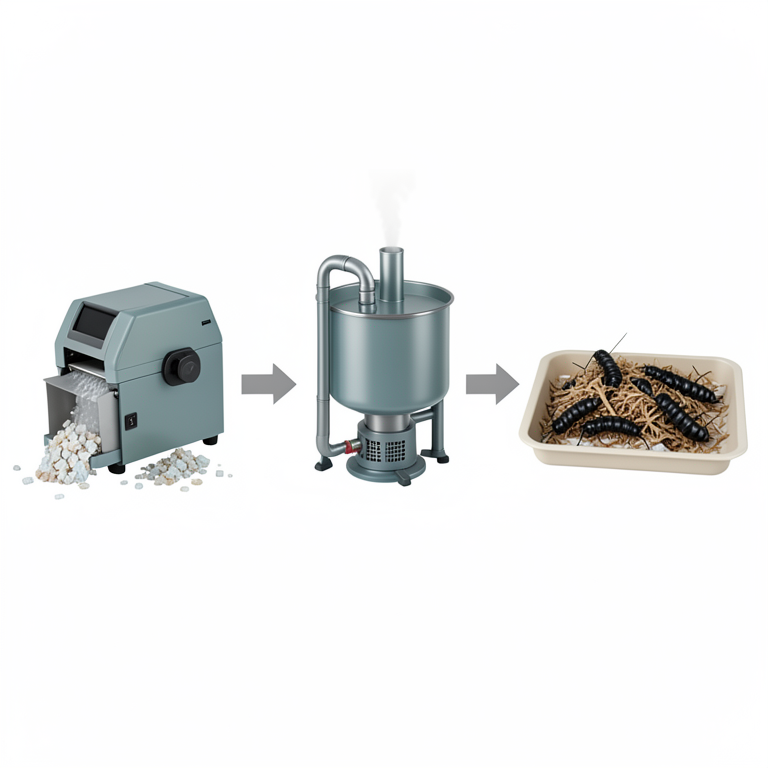
Prototype Pre-treatment Workflow
AI-generated conceptual illustration (diaper waste and black soldier fly larvae). It explains the idea and does not show study data.
View source evidence ↗Figures & tables
From the original paper Table 1
Introduction
The solid-waste management problem of increasing amount of disposable diaper waste is among the more enduring problems that are present in the modern society. The reason the waste stream is challenging to deal with after it leaves the house is because diapers are a composite product of absorbent polymers, cellulose fibres, and a plastic film specifically designed for use and not for end-of-life recovery (Remla, Latha and Prince, 2025). Soiled diapers are unique, as they have a high moisture content, human waste-derived pathogens, and slowly degrading synthetic polymers -all of which traditional waste management solutions like landfilling and incineration struggle to manage, and that result in pollution and disproportionate greenhouse gas and municipal solid waste emissions (Loh et al., 2025) [24, 17] . The problem is a multi-disciplinary one which has been gaining momentum in the field of research over the last few years, and it has been investigated unevenly along the waste-management pipeline. One of the more promising methods of biological valorisation of organic wastes is through insect based bioconversion particularly with the Black Soldier Fly (Hermetia illucens) larvae (Hoque and Sultana, 2024). The BSF larvae are not selective feeders and can utilise a variety of organic waste materials to produce valuable larval biomass and nitrogenrich excrement (frass) which is considered a circulareconomy solution that not only reduces waste volume, but also produces a bio-organic protein and fertiliser co-product (Lim et al., 2022). Most of the work undertaken to date to develop this technology, however, has been performed with comparatively homogenous feedstocks (food waste, animal manure, agriculture residues) with relatively predictable physicochemical properties and degradation pathways. Diaper waste doesn't have these properties. Structurally, it is quite different from the other substrates that have been the subject of much BSF literature, and it is well known that untreated diaper waste is too complex, in terms of both the layers of polypropylene non-woven sheets, cellulose fluff pulp, superabsorbent polymer, and polyethylene backing, and the contamination risk associated with it, to be suitable for direct feeding by larvae (Cohn, 2023) [10, 16, 9] . Mechanical pre-treatment, especially shredding, is an old approach to make the heterogeneous waste streams more suitable for further biological treatment or recycling. Shredding has been observed to have beneficial effects such as decreasing particle size, increasing surface area for microbial or enzymatic reactions and homogenous mixed feedstocks when used in composting, anaerobic digestion and plastics-recycling applications (Brewster et al., 2022). However, mechanical pre-treatment of diaper waste before feeding by the larvae is relatively less explored in the BSF literature, and a prototype diaper-shredding machine has been proposed as one way forward to fill the gap by enhancing uniformity of the substrates and accessibility to the larvae before bioconversion (Lim et al., 2022) [5, 16] . The aim of this review was therefore to map and synthesize the existing evidence on the various segments of this problem, such as the composition of diaper waste and its environmental impacts, current practice and mechanical pretreatment technology, and the BSF larval bioconversion, as well as identify how much of the various segments have been studied together as an integrated system. Due to the aim of the scoping review, to describe the range, spread and development of the evidence base, and not to combine and analyse quantitative outcomes from a limited number of similar studies, a scoping review approach was chosen instead of a systematic review. Considering the relative lack of literature that brings together mechanical preprocessing with BSF bioconversion, this review also presents as an illustrative case study, the design rationale for a prototype having two processes shredding and steam-sterilising for a diaper-derived substrate.
Methods
Methods
Review Approach
This manuscript is presented in the format of a scoping review, which is suitable for a topic that is new and may involve a variety of study designs and/or is too diverse for an evaluation of the methodological quality of a narrow selection of similar studies. What is understood about the composition, generation and environmental effects of diaper waste? (ii) What strategies might reduce the environmental effects of diaper waste?What strategies can be used to mitigate the environmental impacts of diaper waste? (iii) What are potential solutions for the environmental impacts of diaper waste? and (iv) What are the methods for tracking the impacts of diaper waste? (ii) What are the current practices for disposal/management of this waste stream? (iii) What are the evidences for mechanical shredding as a pre-treatment strategy in organic and plastic waste system? (iv) How do we know BSF can bioconvert organic wastes and how has this knowledge been extended to diaper or diaper like heterogeneous substrates?
Eligibility and Source Material
Sources used included peer-reviewed journal articles, book chapters, and conference proceedings that included information on one or more of the following: composition and management of diaper or sanitary waste; environmental or public health impacts of diaper waste; mechanical shredding or comminution of diaper waste as a waste pretreatment method; or BSF (Hermetia illucens) larval rearing, feeding, or performance during bioconversion. The evidence base synthesised in this review was limited to a specific literature set that was identified during the applied engineering study, and possibly not a full systematic search of all electronic databases (this scope and implications are discussed in the limitations section).
Charting and Synthesis
The sources were classified into thematic groups to cover the different aspects of the diaper to bio conversion pathway namely waste characterisation, environmental and health impacts, disposal practice, mechanical pre-treatment and BSF bioconversion performance and determinants. Findings from the themes within each theme were aligned descriptively on a chart and then summarized narratively that highlighted areas of consensus, conflicts, and, importantly, gaps that where the themes within themes had not yet been explored together. This charting process directly led to a description of the integration gap (Section 4) which directly influenced the creation of an illustrative prototype case study (Section 5) of how this gap could be addressed in practice.
Results: Thematic Synthesis of the Literature 3.1 Diaper Waste Composition and the Basis of Its Persistence
Disposable diapers are not a single material, they are a composite product, and this gives a clue to why they are not degraded, nor are they easily recycled. A typical diaper is made up of a non-woven polypropylene top sheet, an absorbent core made of fluff pulp and superabsorbent polymer, a polyethylene back sheet, and a variety of elastics and adhesives, which make the diaper extremely resistant to biodegradation and this multi-material construction, explains Remla, Latha and Prince 2025, contributes to the nonbiodegradable fraction of household and municipal solid waste. The superabsorbent polymer material is designed to absorb large amounts of liquid, which makes used diapers even more absorbent than the majority of other household waste items, making them more challenging to manage, transport, and treat if moisture content is an important parameter (Czarnecka et al., 2022) [7] . With the increasing urbanisation and evolving childcare trends, the consumption of diapers has risen, leading to a higher share of this composite, moisture-absorbing material in the municipal waste stream (Mukherjee, 2025). Adults incontinence waste is another, increasing, waste stream, and data suggests that in some high-income environments, incontinence waste from adults is growing faster than from infants, and is now beyond the scope of child care only (Brewster et al., 2022) [20, 5] .
Effects on the environment and recovery of natural resources
The environmental argument to take action on diaper waste is two-fold, related to the persistence of the waste after landfill and the fact that little of the value of the waste is captured via traditional end-of-life options. The plastic parts of the diapers do not break down environmentally, but fragment slowly, and like the other single-use plastics in the environment, contribute to the overall plastic pollution found in waste streams more broadly (Khoaele et al., 2023). In cases where there is degradation, even that of a diaper product that is labeled as biodegradable, it is often partial and is significantly affected by the general composition of the waste matrix in which the product is found (Czarnecka et al., 2022). The fragmentation of such plastic waste creates microplastic and nanoplastic particles that have been found to disrupt ecological processes in some cases as far removed from the waste of the diaper as interactions between plants and pollinators, which shows how the diaper is part of a much larger, and growingly known, environmental concern of plastic waste (Shah et al., 2023). Concurrently, the literature on resource recovery more and more calls for a recycling approach that is not just about waste, but the use of waste as an underutilized feedstock: open-loop recycling of diaper waste, and upcycling of soiled diaper material through insect bioconversion, highlights the organic and energetic value that is embedded in the waste but simply discarded in the waste bin (Lim et al., 2022;Loh et al., 2025) [15, 7, 25, 16, 17] .
Current Disposal and Management Practice
There is an apparent lack of resources compared to the magnitude of the problem associated with diaper waste management as described throughout the literature, especially outside of a high-income context. Due to the significant differences in physical and hygienic properties of diaper waste, source separation from the general municipal solid waste stream is not common and, in the absence of source separation, diaper material is collected and processed, if at all, alongside the rest of municipal solid waste (MSW) (Hoque and Sultana, 2024). There are two general categories of alternatives to the undifferentiated landfilling: material recovery and substitution. Technical feasibility of materialrecovery approaches, such as the open-loop recycling of diaper components to secondary products, has been reported, but to date they rely on more infrastructure and processing costs that restrict their use in other systems, except those that are well-resourced (Lim et al., 2022). Substitution approaches attempt to tackle part of the problem at the design stage, but they come with feasibility challenges relating to cost, performance and consumer acceptance, in addition to not removing the need for an end-of-life treatment pathway for the substituted diapers that are still in use (Mulungo and Gumede, 2025) [10, 16, 21] . Other behavioural interventions that goal to lessen plastic content or promote more sustainable disposal practices have been examined, emphasizing that the resolution of the diaper waste issue is not simply a technical one but additionally relies on the habits and incentives of households (Allison et al., 2026). Against this background, the COVID-19 literature on solid waste management in general emphasised the rapid increase of the hygiene-related waste streams of sanitary and protective products, and how these waste streams can overload the existing waste collection and treatment systems, which further reinforces the need for targeting specific waste streams for pre-treatment and valorisation actions instead of general municipal waste streams (Jebaranjitham et al., 2022) [1,14] .
Mechanical Shredding as a Pre-treatment Strategy
Mechanical shredding, referred to in the broader wastemanagement literature as comminution, is one of the most consistently described pre-treatment methods, and its role is similar for the various types of waste: to decrease the particle size, to increase the surface area of the particles, and to make an otherwise heterogeneous feedstock more homogeneous. The design of shredders has been studied over and over again in plastics recycling, and size reduction is an integral process in nearly all the subsequent sorting and reprocessing operations (Wong et al., 2022). Other recent evaluations of shredder technology for solid waste processing have confirmed that the performance of shredders in terms of throughput, energy consumption, and particle size distribution produced is significantly influenced by various design parameters such as the design of blades, feed handling systems, and the speed of the shafts, which are all dependent on the specific solid waste stream being processed (Sharma, Washimkar and Belkhode, 2025). Shredding has also been directly used in extraction and recovery of materials of biological origin, and particle size reduction was found to be directly beneficial to the efficiency of the subsequent extraction steps, underlining the more general principle that surface area enhancement by mechanical pre-treatment is generally beneficial to the efficiency of any biological or chemical process that follows it (Baldassini et al., 2025). Mechanical degradation strategies are emerging as one of several complementary methods required to significantly increase the degradation of polymers, in particular biodegradable ones, and are especially well established in the context of polymer breakdown for some components in diapers where the most direct approach is to shred the polymer (Bher, Cho and Auras, 2023). This confirms that simply shredding is not enough to make composite diaper material degradation resistant, but that shredding is a preparatory treatment that enhances the degradation resistance of the subsequent biological or chemical treatments. The field applications of organic waste shredders, such as purpose-built shredders for institutional and smallscale waste-management applications, have demonstrated the maturity and versatility of the shredding technology for its use on waste streams outside of the conventional municipal solid waste categories (MSW) (Muttaqin et al., 2025) [28, 26, 2, 3, 22] .
Organic Waste Bioconverter using Black Soldier Fly Larvae (BSFL)
Black Soldier Fly larvae have been a biological means of two main value streams of larval biomass, which can be processed into a protein-rich material to be used downstream, and frass, a nutrient-rich by-product that can be used as an organic fertiliser. Unlike simple composting, BSF bioconversion reduces the amount of organic waste they are fed to a significant extent, while also reducing pathogenic and competing microorganisms in the substrate, making BSF bioconversion unique (Su et al., 2026). This is one of the main reasons why BSF technology is proposed to be used in general for organic waste management, even for waste streams that carry a risk for hygiene like diaper material (Rehman et al., 2023). However, the performance of BSF larvae is not the same in all substrates. Substrate composition has been found to have measurable effects on larval growth and development, even relatively subtle ones, such as the sugar content of a substrate, which can affect substrate temperature and can also have an effect on the dynamics of growth in the larvae during the process of bioconversion, as has been demonstrated (Fuhrmann et al., 2026). Similarly, substrates with high content of phenolic compounds, which are derived from agroindustrial residues, also generate detectable variations in larvae composition and development from other more traditional substrates, thus demonstrating that BSF performance is not a one-size fits all (Ionica et al., 2026). The sensitivity of substrates is echoed by other studies that investigate BSF as a means to valorise agricultural and animal wastes, which also highlight that the efficiency and safety of the bioconversion process depend on more than just the BSF, but also on the characteristics of the substrate (Iskakov and Sugirbay, 2023). It has also been proven empirically that BSF can have other applications, not just animal feed, as demonstrated by the use of BSF-derived product as ingredients in extruded food products, which shows potential for commercialization of BSF-derived biomass beyond animal feed (Iñaki et al., 2022). Frass and bioconverted material from agro-waste substrates (e.g., olive pomace) have been evaluated for soil application and found to pose low soil hazard in general, which reinforces the potential of BSF bioconversion residues to be safely recycled for agricultural production if the input material is well characterised and regulated (Mostafaie et al., 2025) [27, 23, 8, 12, 13, 11, 19] .
Particle Size, Pre-treatment, and Larval Performance
In addition to the substrate factors known to affect BSF performance, particle size has a special place among those parameters since it is one of the few parameters which can be directly modified by mechanical pretreatment in addition to the selection of feedstock. Smaller and more uniform particle size is associated with improved feeding efficiency (and conversion performance) by providing increased feeding surface area for the larva as well as uniformity of moisture and texture in the substrate. This is in line with the general pre-treatment literature, which indicates that mechanically treating a heterogeneous material before biological treatment (microbial or larval) has a significant impact on the yield of biogas and digestate quality, thus explaining the general principle of mechanically treating a heterogeneous substrate before microbial or larval biological treatment, and the transfer is obviously logical to the BSF field. Substrate accessibility is not the only issue under consideration for interaction between mechanical pretreatment and biological performance. Another possible change in feeding behaviour would be due to changes in particle size and substrate structure, which has been observed in insect systems with altered substrates or plasticcontaminated substrates where the larval gut microbiota composition changed significantly as a function of the physical and chemical nature of the ingested substrate (Misser et al., 2025). The results are also significant for diaper waste as a source of substrates because they are inherently plastic, and indicate that the impact of mechanical pre-treatment on BSF performance with diaper waste cannot be assumed to be the same as purified organic substrates, without an empirical investigation [18] .
Synthesis: The Integration Gap
When considered collectively, the aforementioned themes present a pipeline with documented evidence for each stage; however, when the feedstock is diaper waste, the stages have not always been examined in tandem. The composition and environmental impacts of diaper waste have been established (Remla, Latha and Prince, 2025; Khoaele et al., 2023). Mechanical shredding is a well-characterised and mature pretreatment technology in other waste streams such as plastics recycling and biomass extraction (Wong et al., 2022;Baldassini et al., 2025). The BSF larvae are an efficient organic waste bioconverter and their performance is influenced by the substrate composition and particle size (Su et al., 2026;Fuhrmann et al., 2026). There is a lack of literature that directly correlates a specific mechanical pretreatment step (done in a controlled manner) to diaper waste and its effect on BSF larval feeding efficiency, survival, development time, and the safety of the biomass and frass. For three reasons this gap is important. The first is that pretreatment parameters that would work for food waste or manure are not easily transferable to diaper waste, since the polypropylene and superabsorbent polymer components react to mechanical stress differently from any organic material, for example (Bher, Cho and Auras, 2023). Second, unlike most conventional BSF feedstocks, the potential for the pathogens to be a hygiene concern adds urgency to the need for proper pre-treatment, meaning that pathogen reduction is a co-equal design goal for any pre-treatment system that will be used with diaper waste. Third, the scalability of BSF based diaper waste treatment has not been proven when used in combination with a mechanical-biological system, as mechanical pre-treatment systems and BSF rearing systems have each been scaled in other contexts [24, 15, 28, 2, 27, 8, 3] .
Illustrative Case Study: A Prototype Shredding-Sterilising Unit for Diaper Waste Preprocessing.
In order to make the point of how the integration gap identified above could be achieved in practice, the design rationale of a prototype machine is presented that was developed specifically for combining mechanical shredding with thermal sterilisation as a combined pre-treatment before BSF larval feeding. This case study is offered as an example of the design logic working out the reviewed literature into an operational system and is not a validated performance trial, the numbers below are design specifications not experimental results.
Design Rationale
This unit, known as diaper conditioning and pre-treatment (DCP), was designed to address two needs identified in the literature synthesis above: particle size reduction, which is needed to make the diaper waste as uniform as possible, to allow easy access of the larvae as per shredding pre-treatment principles (Wong et a hygiene risk is associated with the diaper waste before reaching the larval rearing stage. These functions are combined in one machine because the mechanical/hygienic conditioning is treated as a co-equal, simultaneous design goal for this waste stream and not as two sequential processes [28,26] .
Functional Description
The DCP machine has a mechanical shredding unit combined with an LPG-fired steam-heated mixing unit. A 1,5 hp electric motor powering a shredding shaft with circular blades and spacers, which mesh with a stationary set of semi-circular counter-blades in the shredding chamber, is used to shred the diaper material into a particle size range suggested in composting and bioconversion pre-treatment literature as 10 to 25 mm, to meet a balance between the energy put in and the surface area required for rapid heat penetration and subsequent biological accessibility (Haug, 2018) [9] . A bevel gear arrangement is used to convey the drive from the shredding shaft to a vertical mixing shaft including inclined stirrer blades in two layers within a mixing bowl located below the outlet to the shredding chamber. The heat from an LPG burner preheats a water reservoir under the mixing bowl, and the steam from this water reservoir is used to sterilise the shredded material as it is mixed. The length of the time the material spends being sterilised depends upon the rate at which heat is supplied to the mixing unit. The functional design considerations discussed are consistent with a traditional machine design and include feed-handling and shredding performance, steam heating and thermal processing control, safety and regulatory compliance unique to steam-fired machines, energy efficiency, and manufacture and maintainability, including the use of common off-theshelf components for modular assembly and field repair.
Conceptual Design Selection
Three conceptual designs were compared and assessed based on a predetermined set of criteria: Fabrication cost, ease of operation, ease of maintenance, shredding capacity, mixing and heating efficiency, and ergonomics with a weighted scoring matrix, a three point scale, was used to evaluate each. This concept selection method mirrors conventional engineering design process when interpreting qualitative design priorities, including several ones such as cost, maintainability, modularity, which are also echoed in the general shredder-technology literature about the practical deployability of waste-processing machines in less wellresourced environments (Muttaqin et al., 2025), with a single comparable score across competing design options [22] .
Structural and Mechanical Design Basis
Standard mechanical-engineering relationships were used to size the selected design. The volume of the hopper was obtained by summing the volumes of a rectangular base section and a trapezoidal upper transition section (around 0.0134 m³ or 13.4 litres). Shaft power requirements were estimated using the relation between shredding force, angular velocity and shaft radius, while the shredding force was related to the mass of the blades, angular velocity and radius of rotation. The diameter of the shafts was calculated based on maximum shear stress theory, which is the appropriate one for shafts that are subjected to combined bending and torsional loadings, in line with the loading conditions of the shredding and stirring shafts of this design. To ensure that the proposed structural design was able to withstand operating loads without failure, a finite element analysis of these components was performed in Autodesk Inventor following a structured sequence of steps that included creating the model, assigning materials, defining constraints, applying loads, generating a mesh, simulating the design, and reviewing the results.
Operational Role within a BSF Bioconversion Pipeline
So far as the pipeline this review has synthesized goes, the DCP machine itself is seen as the pre-treatment step, prior to the introduction of BSF larval feeding, where diaper waste is shredded to obtain the required particle size, sterilised with the built-in steam system, and discharged as a substrate or mixed into it for BSF larval feeding. This positioning directly translates the gap outlined in Section 4, as it is, to the authors' knowledge, one of the first integrated mechanical/thermal pre-treatment systems that are specifically designed for diaper waste and are intended to be followed by a BSF bioconversion process, rather than be adapted to a different waste stream.
Status of the Study
The purpose of this study is to make clear what it demonstrates and does not demonstrate. The mechanical and structural design of the prototype has been stated and, in accordance with the project documentation, the prototype has been manufactured and assembled. Not yet developed, and therefore not covered in this specific review, is a full quantitative performance test that correlates the pre-treated product of this particular machine with measurable BSF larval growth and survival, feed conversion, and pathogen reduction and frass quality. The case study is provided here as a concrete example of the mechanical-biological integration that is discussed throughout the literature reviewed and is not intended as an indication that this integration gap is closed.
Discussion
This review aimed to trace the evidence base through the various stages of the diaper-waste-to-bioconversion value chain and has identified a body of literature which is fairly well developed but still quite disjointed. The prototype case study in Section 5 provides one practical solution to this challenge: a single integrated machine to achieve both particle-size reduction and thermal sterilisation, designed and structurally tested using typical mechanical engineering procedures and informed by the particle-size targets taken from the composting and pre-treatment literature (Haug, 2018). Including it in this review does not replace the need for controlled experimental performance data as indicated by the literature synthesis, but rather is presented to prove feasibility of design. The following logical step from this review is the creation of the missing data: a controlled trial quantifying effect of different shredding and sterilisation parameters on BSF growth, survival, feed conversion, pathogen indicators and frass and biomass quality, when using diaper waste as feedstock for BSF, either in its sole or combined use with conventional organic feedstock.
In the practical sense, closing this gap is far from academic completion. Moreover, if the mechanically pre-treated waste can be proven to be suitable for BSF bioconversion at an acceptable safety factor, it will provide a lower-cost biological alternative to landfilling or incineration for municipalities or waste managers, especially ones lacking established segregated diaper collection and advanced recycling infrastructure, with the added benefit of recovering value from the waste in the form of larval protein biomass and organic fertilisers. This would help to better integrate diaper waste management with the circular economy approach used in other organic waste streams in the literature reviewed here (Su et
Limitations
There are some limitations in this review that must be taken into account in interpreting the results. First, this is a scoping review, not a systematic review, as it combines a bounded and specific set of literature, rather than the result of a systematic, multi-database search with formal duplicate screening and quality appraisal, meaning that the conclusions drawn in the themes should be understood as a map of the evidence landscape rather than an exhaustive census of it; Secondly, the prototype design described in the case study in Section 5 is not a replicated or independently tested system; the mechanical parameters discussed as optimal for diaper-waste shredding should not be considered to represent a standard set of values for use with other shredding applications. Third, the review does not have any quantitative bioconversion performance data on diaper-derived substrates (such as larval weight gain, feed conversion ratio, or pathogen reduction results), because no completed BSF feeding trial with this particular pre-treated substrate was found for inclusion; this is not a deficiency in the methodology or framework of the review, but rather the main finding on which the review is focused. This type of information should be added in future updates of this review.
Conclusion
This scoping review traced the published evidence to understand the composition of diaper waste, its impact, current disposal practices, mechanical shredding as a pretreatment method, and BSF larval bioconversion of organic waste. While each of these themes has been well reported in isolation, no study was found that integrated mechanical pretreatment with quantified BSF bioconversion performance of diaper wastes in particular. This is a clear and actionable evidence gap. The combined shredding and steam-sterilising unit designed here, based on standard mechanical design principles and targets for particle sizes determined from the composting literature, is an example of a mechanism that can be mechanically designed to integrate the two processes. However, it requires careful experimental studies to take the pre-treated diaper waste through to measured outcomes of larval performance, safety and resource-recovery to realize its potential. Such studies would be able to resolve the evidence gap identified here, and help to clarify if BSF-based bioconversion is a viable, scalable, and safe wastemanagement option for mechanically pre-treated diaper waste.
Figures and tables from the paper
| Parameter | Score 3 | Score 2 | Score 1 |
|---|---|---|---|
| Cost of fabrication | ≤ GH¢7,500 | GH¢7,600-8,000 | ≥ GH¢8,500 |
| Ease of operation | Easy | Moderate | Difficult |
| Ease of maintenance | Easy | Moderate | Difficult |
| Shredding capacity | High | Medium | Low |
| Mixing and heating efficiency | Most efficient | Efficient | Less efficient |
| Ergonomics | Excellent | Acceptable | Needs improvement |
Table text extracted from the original PDF; superscript letters are shown inline. The original table image is below.
View original table image
References
28 in the original paper- Allison AL, O'Reilly AC, Abicht A, Purkiss D, Michie S, Miodownik M, et al. Applying behavioral science to reduce plastic waste from diapers: A mixed-methods study. Clean Responsible Consum. 2026;100400.
- Baldassini R, Corrado B, Lagreca E, Vecchione R, Sardo A, Naviglio D, et al. Shredded bacterial cellulose as a potential carrier of polyphenols derived from apple waste applying rapid solid-liquid dynamic extraction. ACS Omega. 2025;10(14):14010-14019.
- Bher A, Cho Y, Auras R. Boosting degradation of biodegradable polymers. Macromol Rapid Commun. 2023;44(5):2200769.
- Boarino A, Demichelis F, Vindrola D, Robotti E, Marengo E, Martin M, et al. Bio-physical pre-treatments in anaerobic digestion of organic fraction of municipal solid waste to optimize biogas production and digestate International Journal of Agriculture and Nutrition https://www.agriculturejournal.net quality for agricultural use. Waste Manag. 2024;189:114-126.
- Brewster ET, Rounsefell B, Lin F, Clarke W, O'Brien KR. Adult incontinence products are a larger and faster growing waste issue than disposable infant nappies (diapers) in Australia. Waste Manag. 2022;152:30-37.
- Cohn Z. Opportunities for organics valorisation in a circular economy: Substrate sensitivity of black soldier fly (Diptera: Stratiomyidae) larvae production. Preprint. 2023.
- Czarnecka E, Walczak M, Kumar G, Piechota G, Nowaczyk J. Degradation of biodegradable diapers as an element of circular economy in waste containing various plastics. J Clean Prod. 2022;377:134426.
- Fuhrmann A, Gold M, Bi Y, Azzari P, Zorrilla MJ, Puniamoorthy N, et al. Sugars influence substrate temperature and larval growth in black soldier fly bioconversion. Bioresour Technol Rep. 2026.
- Haug RT. The practical handbook of compost engineering. Boca Raton: Routledge; 2018.
- Hoque SR, Sultana SR. Addressing global environmental problems: Challenges, solutions, and opportunities. Soc Sci Rev Multidiscip J. 2024;2(2):124130.
- Iñaki GBJ, Antonio PCG, Efrén D, Hiram MR, Daniela GI, Damián RJ. Black soldier fly: Prospection of the inclusion of insect-based ingredients in extruded foods. Food Chem Adv. 2022;1:100075.
- Ionica CN, Szabo K, Teleky BE, Nemeş SA, Varvara RA, Vodnar DC, et al. In-depth characterization of black soldier fly larvae reared on phenolic-rich agro-industrial substrates. Insects. 2026;17(3):292.
- Iskakov R, Sugirbay A. Technologies for the rational use of animal waste: A review. Sustainability. 2023;15(3):2278.
- Jebaranjitham JN, Christyraj JDS, Prasannan A, Rajagopalan K, Chelladurai KS, Gnanaraja JKJS. Current scenario of solid waste management techniques and challenges in COVID-19: A review. Heliyon. 2022;8(7):e09855.
- Khoaele KK, Gbadeyan OJ, Chunilall V, Sithole B. The devastation of waste plastic on the environment and remediation processes: A critical review. Sustainability. 2023;15(6):5233.
- Lim JK, Müller J, Mahdi FN, Chen SK, Tan KB, Lee OJ. New open-loop recycling approaches for disposable diaper waste. Environ Rev. 2022;30(2):268-279.
- Loh AYY, Mohan AR, Ting KKX, Le Wong J, Lim KY. Green production of ammonia gas and fertilizers via upcycling of soiled diapers by Zophobas morio. J Environ Chem Eng. 2025;120054.
- Misser S, Chen CY, Ismail A, Oliver SV. The effect of larval exposure to plastic pollution on the gut microbiota of the major malaria vector Anopheles arabiensis Patton (Diptera: Culicidae). Environ Microbiol Rep. 2025;17(4):e70169.
- Mostafaie A, Silva ARR, Pinto JN, Prodana M, Lopes IG, Murta D, et al. Towards circularity for agro-waste: Minimal soil hazards of olive pomace bioconverted frass by insect larvae as an organic fertilizer. J Environ Manage. 2025;375:124151.
- Mukherjee A. The development and challenges of infant diapers ensuring good health with sustainability aspects: Landscape of UN perspective. In: Sustainable Textile and Apparel Chain Management: Towards the UN Sustainable Development Goals. Cham: Springer Nature Switzerland; 2025. p.155-190.
- Mulungo V, Gumede TP. Feasibility and implications of biodegradable diaper alternatives. Sustainability. 2025;17(22):10072.
- Muttaqin AN, Sultan AZ, Anshar M, Nurfiansyah N, Mahirullah M, Makhrani M. Innovation of organic waste shredder machine as a solution for sustainable waste management at PNUP. AIP Conf Proc. 2025;3370(1):020005.
- Rehman KU, Hollah C, Wiesotzki K, Rehman RU, Rehman AU, Zhang J, et al. Black soldier fly, Hermetia illucens, as a potential innovative and environmentally friendly tool for organic waste management: A minireview. Waste Manag Res. 2023;41(1):81-97.
- Remla A, Latha M, Prince MJR. A review on the diaper waste issue: Generation, composition, disposal and valorising potential. Int J Environ Waste Manag. 2025;38(4):484-516.
- Shah S, Ilyas M, Li R, Yang J, Yang FL. Microplastics and nanoplastics effects on plant-pollinator interaction and pollination biology. Environ Sci Technol. 2023;57(16):6415-6424.
- Sharma VR, Washimkar P, Belkhode PN. A review of shredder machines for sustainable solid waste processing. J Inst Eng (India) Ser C. 2025:1-10.
- Su H, Zhang B, Yang R, Shi J, He S, Dai S, et al. The valorization of food waste into high-value biomass and organic fertilizers through bioconversion using black soldier fly larvae (Hermetia illucens). Recycling. 2026;11(1):8.
- Wong JH, Gan MJH, Chua BL, Gakim M, Siambun NJ. Shredder machine for plastic recycling: A review paper. IOP Conf Ser Mater Sci Eng. 2022;1217(1):012007.