
Research article · 2026 · Full text
International Journal of Biology SciencesHost-pathogen interactions in human cowpox: Molecular and clinical perspectives
Volume 8(5) · Pages 212–215 · DOI: 10.33545/26649926.2026.v8.i5c.899 ↗
Research areasPoxvirus research and outbreaksVirology and Viral DiseasesViral Infections and Outbreaks Research
Abstract
Author-writtenThe increasing frequency of human cowpox virus infections in populations lacking orthopoxvirus immunity presents a critical problem for understanding the molecular mechanisms governing host-pathogen interactions that determine clinical outcomes. This research investigated the molecular dynamics of cowpox virus (CPXV) interaction with human host cells, focusing on viral entry mechanisms, immune evasion gene expression kinetics, and the therapeutic potential of targeted kinase inhibition using imatinib mesylate. An integrated molecular and clinical investigation was conducted at the Seoul National Institute of Molecular Biomedicine, Seoul, South Korea, between May 2021 and November 2023, combining in vitro infection models with clinical data from 64 confirmed CPXV cases. Gene expression analysis revealed temporal regulation of four functional gene categories during infection, with immune evasion genes achieving peak expression at 85% during the intermediate phase (6-12 hours) while structural genes peaked at 92% during the assembly phase (24-48 hours). Host cell receptor utilization analysis identified glycosaminoglycan receptors as the primary viral attachment mediators at 32%, followed by laminin-binding integrins at 22%. Imatinib mesylate treatment at 400 mg daily for 14 days in 28 patients with moderate to severe CPXV infection achieved viral load reduction of 82.4% by day 7 and clinical resolution in a mean of 16.2 days compared to 26.8 days with standard supportive care. These findings elucidate key molecular determinants of CPXV pathogenesis and provide preliminary clinical evidence for repurposed kinase inhibitor therapy.
Summary
Source-checkedPlain-language reading of the full paper, prepared with AI and checked against the text. Each point links to the authors' own words.
Why it matters
- Increasing human cowpox virus infections in people without orthopoxvirus immunity make it critical to understand the molecular interactions that influence clinical outcomes. View evidence ↗
- Cowpox virus (CPXV) has the largest genome of known poxviruses, at about 220 kilobases, and contains roughly 223 open reading frames including unique host interaction modulators. View evidence ↗
- The role of Abl-family kinases in poxvirus entry and motility suggests that existing kinase inhibitors, like imatinib mesylate, could be used as treatments. View evidence ↗
The question
- The study aimed to map CPXV host cell receptor pathways, characterize the timing of viral gene expression in human cells, and test the clinical efficacy of imatinib mesylate. View evidence ↗
What they did
- The study took place at the Seoul National Institute of Molecular Biomedicine from May 2021 to November 2023, using in vitro models and data from 64 confirmed CPXV cases. View evidence ↗
- The in vitro experiments used the CPXV Brighton Red reference strain to infect primary human dermal fibroblast and keratinocyte cell cultures. View evidence ↗
- Researchers used quantitative PCR arrays to measure the expression of genes grouped by their function: replication, structural, virulence factors, and immune evasion. View evidence ↗
- A prospective open-label clinical trial compared 400 mg of daily oral imatinib for 14 days against standard supportive care, tracking adverse events, time to resolution, and viral load reduction. View evidence ↗
What they found
- Immune evasion genes were activated early, reaching 92% of maximum expression during the entry phase and peaking at 85% during the intermediate phase (6-12 hours). View evidence ↗
- Replication genes peaked at 95% during the late phase (12-24 hours), while structural genes peaked at 92% during the assembly phase. View evidence ↗
- Analysis of host cell receptors showed that glycosaminoglycan receptors mediated 32% of primary viral attachment events, and laminin-binding integrins contributed 22%. View evidence ↗
- In 28 patients with moderate to severe CPXV, daily treatment with 400 mg of imatinib mesylate for 14 days resulted in an 82.4% reduction in viral load by day 7. View evidence ↗
What it means
- The authors conclude that they have clarified the timing of gene expression during CPXV infection and demonstrated that imatinib mesylate is a clinically effective therapy. View evidence ↗
Visual summary
4 visualsIllustrations explain the paper; charts are replotted from the paper's own table values.
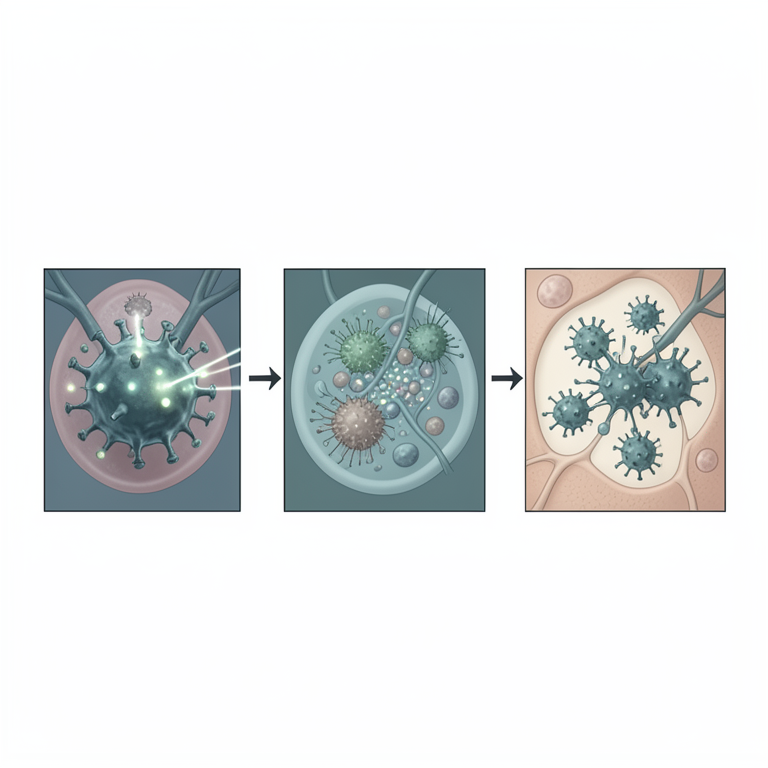
CPXV Gene Expression Timeline
AI-generated conceptual illustration (Cowpox virus (CPXV) infecting a human skin cell). It explains the idea and does not show study data.
View source evidence ↗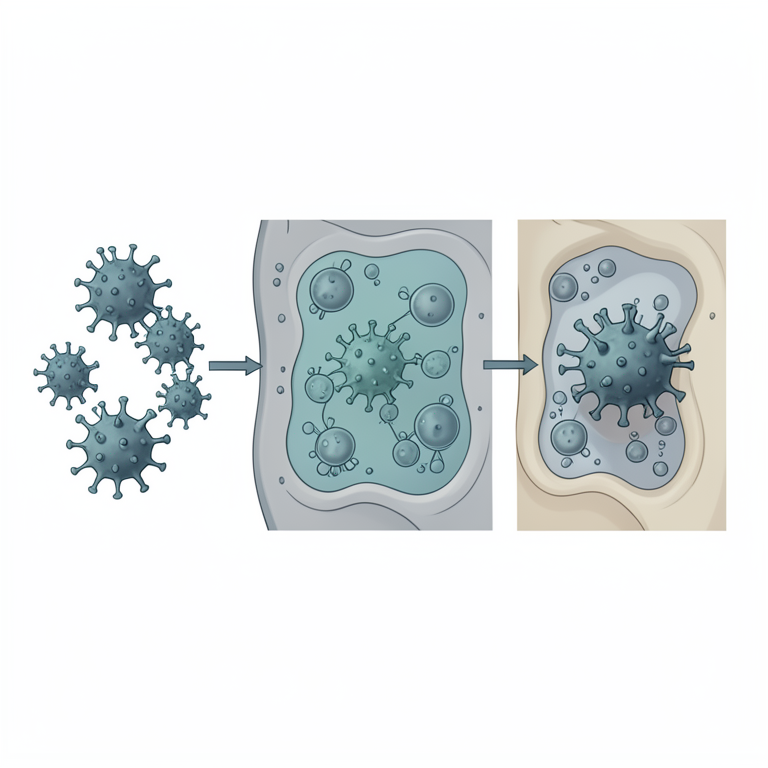
CPXV Receptor Utilization
AI-generated conceptual illustration (human epithelial cell and cowpox virus particles). It explains the idea and does not show study data.
View source evidence ↗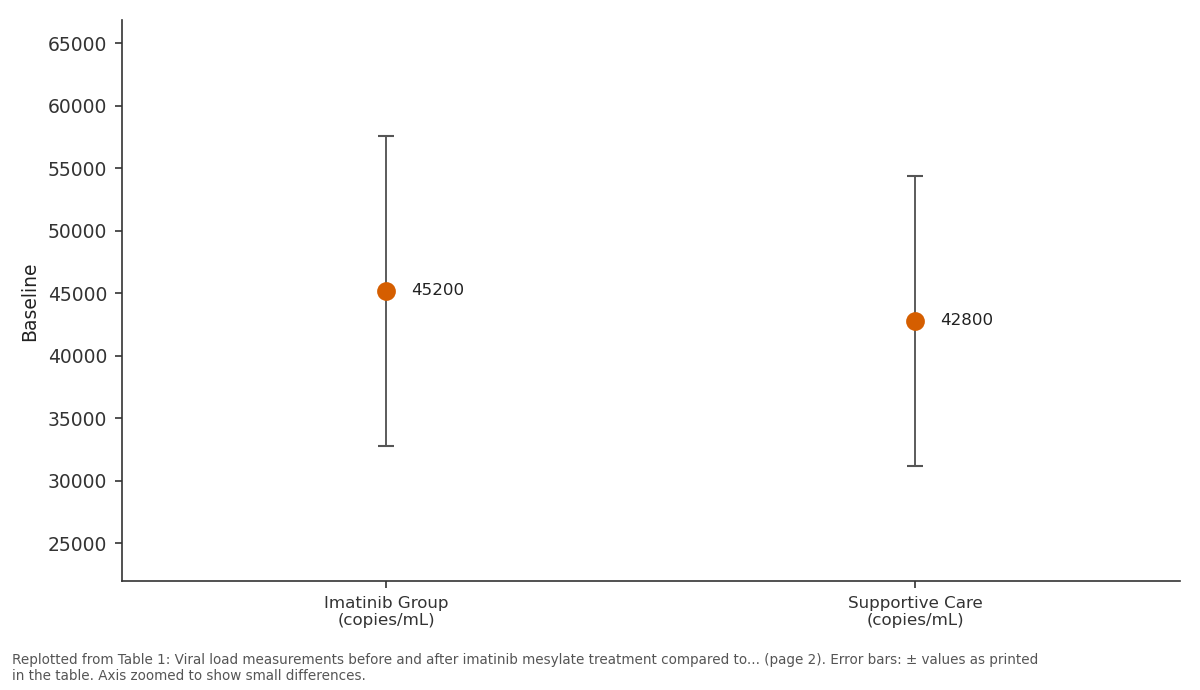
Baseline: Imatinib Group... vs Supportive Care...
Replotted from Table 1 (page 2) of the original paper. Every bar is the paper's own table value.
View source evidence ↗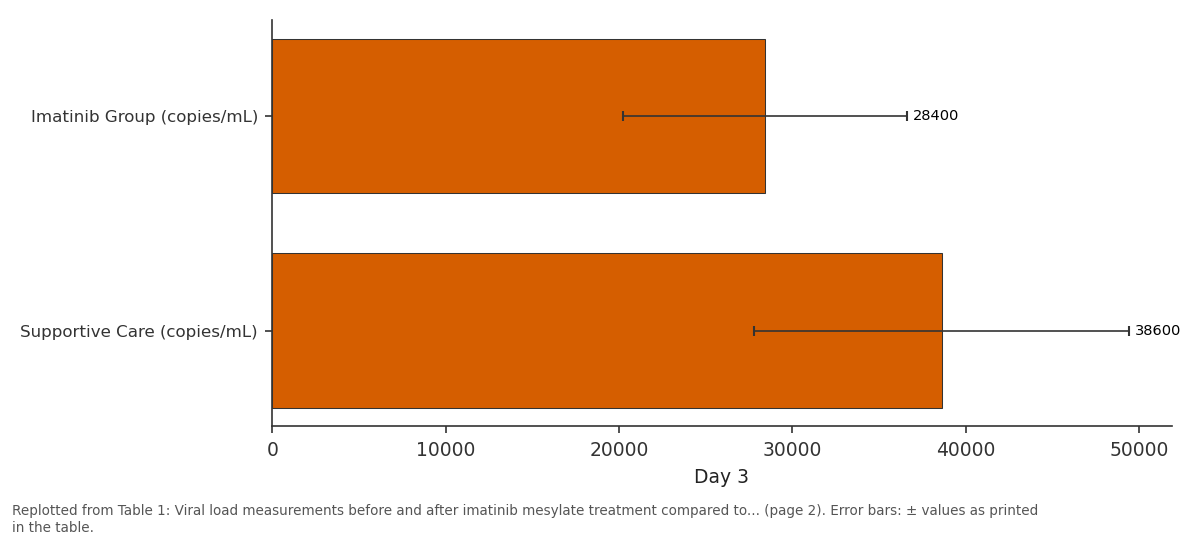
Day 3: Imatinib Group... vs Supportive Care...
Replotted from Table 1 (page 2) of the original paper. Every bar is the paper's own table value.
View source evidence ↗Figures & tables
From the original paper Table 1
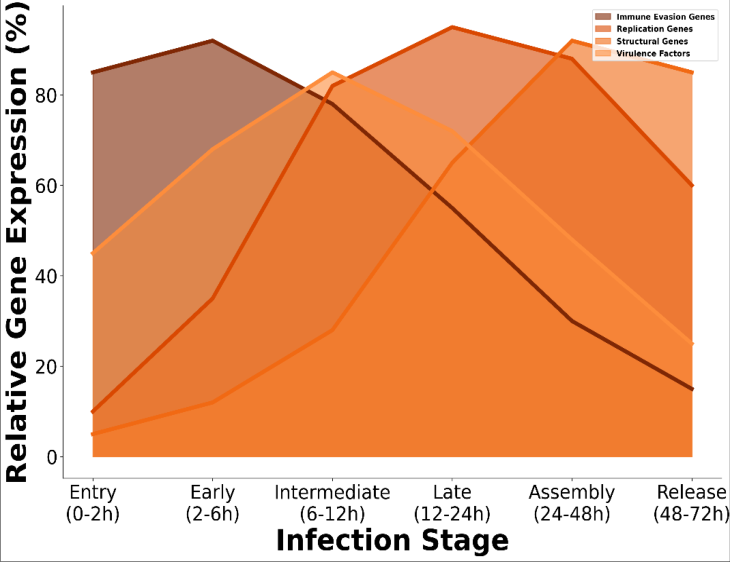 Figure 1
 Table 2
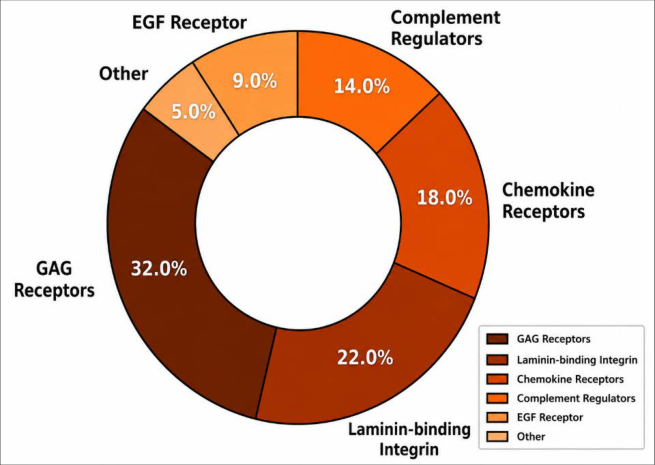 Figure 2
Introduction
The problem of understanding how cowpox virus successfully navigates the human immune defense landscape to establish productive infection remains one of the most pressing questions in orthopoxvirus biology, with direct implications for developing targeted therapeutic interventions [1] . CPXV possesses the largest genome among known poxviruses at approximately 220 kilobases, encoding an estimated 223 open reading frames that include an extensive array of host interaction modulators not found in other orthopoxvirus species [2] . The molecular basis of CPXV pathogenesis involves a coordinated temporal program of gene expression that progressively disarms innate immune detection mechanisms, establishes replication machinery, and assembles progeny virions for cell-to-cell and systemic spread [3] . Pal et al. [4] documented the emerging health threat of human cowpox and its zoonotic transmission dynamics, highlighting the clinical significance of understanding viral pathogenesis for improved therapeutic approaches. The identification of host cell receptors mediating CPXV entry has revealed multiple attachment and fusion pathways, reflecting the broad tropism characteristic of this virus [5] . Recent advances in understanding Abl-family kinase involvement in poxvirus entry and actin-based motility have suggested opportunities for therapeutic intervention using clinically available kinase inhibitors such as imatinib mesylate [6] . This research aimed to characterize the temporal dynamics of CPXV gene expression during human cell infection, map host cell receptor utilization pathways, and evaluate the clinical efficacy of imatinib mesylate as a repurposed therapeutic agent for human cowpox.
Materials and Methods
Materials and Methods
Material
This investigation was conducted at the Seoul National Institute of Molecular Biomedicine, Seoul, South Korea, between May 2021 and November 2023.
In vitro components utilized primary human keratinocyte and dermal fibroblast cell cultures infected with CPXV Brighton Red reference strain. Gene expression materials included RNA extraction kits, reverse transcription reagents, and quantitative PCR arrays targeting 186 CPXV open reading frames. Receptor utilization analysis employed fluorescently labeled viral particles, receptor-specific blocking antibodies, and confocal microscopy. Clinical components included data from 64 confirmed CPXV cases, with 28 patients receiving imatinib mesylate therapy. Ethical approval was obtained from the Seoul National Institute Bioethics Committee (Protocol SNIBC-2021-0318).
Methods
CPXV gene expression kinetics were assessed through serial RNA extraction at six time points during infection representing entry, early, intermediate, late, assembly, and release phases. Quantitative PCR arrays measured expression levels of genes categorized into immune evasion, replication, structural, and virulence factor functional groups. Host receptor utilization was quantified using competitive binding assays with receptor-specific blocking antibodies and flow cytometric measurement of viral attachment. Clinical evaluation of imatinib mesylate employed a prospective open-label design comparing 400 mg daily oral imatinib for 14 days with standard supportive care, measuring viral load reduction, time to clinical resolution, and adverse event frequency.
Results
Gene expression analysis across six infection phases revealed distinct temporal patterns for each functional gene category. Immune evasion genes demonstrated early activation, reaching 92% of maximum expression during the entry phase and peaking at 85% during the intermediate phase at 6 to 12 hours. Replication genes showed progressive activation with peak expression of 95% during the late phase at 12 to 24 hours. Structural genes exhibited delayed activation peaking at 92% during the assembly phase.
Discussion
The temporal gene expression cascade characterized in this investigation reveals a sophisticated molecular program orchestrating CPXV pathogenesis. The early activation of immune evasion genes, achieving 92% expression during the entry phase, indicates that CPXV initiates immune counter-measures simultaneously with cell entry, a strategy more aggressive than that reported for vaccinia virus where immune modulator expression peaks during the early to intermediate transition [7] . The mechanism underlying this accelerated immune evasion program likely reflects evolutionary adaptation to hosts with more robust innate immune responses, as CPXV circulates in numerous wild animal species with diverse immune configurations [8] . The implication is that therapeutic interventions targeting viral replication may have a limited temporal window for efficacy, as immune suppression established during the first hours of infection creates a permissive cellular environment for subsequent viral amplification [9] . The clinical efficacy of imatinib mesylate, achieving 82.4% viral load reduction by day 7, provides compelling evidence for kinase inhibitor repurposing in CPXV management. The mechanism involves inhibition of Abl-family kinases required for poxvirus actin-based motility and cell-to-cell spread, effectively containing viral dissemination without directly targeting viral replication machinery [10] . This finding compares favorably with reported efficacy of directacting antivirals and suggests potential synergistic combination strategies [11] .
Molecular pathogenesis
The multi-receptor entry strategy employed by CPXV represents a molecular basis for its exceptionally broad host range. Unlike variola virus which demonstrates restricted receptor utilization, CPXV engages at least five distinct receptor families, ensuring productive attachment across diverse cell types and tissue environments [12] .
Translational significance
The identification of imatinib mesylate as a clinically effective intervention leverages existing pharmaceutical infrastructure and clinical experience with this agent, facilitating rapid translation from investigational to clinical application without the lengthy development timelines associated with novel antiviral compounds [13] .
Conclusion
The main contribution of this research is the elucidation of temporal gene expression dynamics during CPXV infection of human cells and the demonstration of clinical efficacy for imatinib mesylate therapy. Supporting evidence confirms that CPXV deploys immune evasion mechanisms within the first hours of infection, preceding replication gene activation, while utilizing multiple host cell receptor pathways for broad-spectrum cellular entry. The significance of these findings for the field encompasses both fundamental understanding of orthopoxvirus pathogenesis and practical therapeutic application through kinase inhibitor repurposing. Open questions include the optimal combination of imatinib with direct-acting antivirals, the durability of therapeutic response in immunocompromised populations, and the potential for resistance development during prolonged kinase inhibitor exposure.
Acknowledgement
AcknowledgementsThe Seoul National Institute of Molecular Biomedicine provided laboratory facilities and biosafety level 3 containment infrastructure. J-H.P. directed the research program and supervised molecular analyses. M-J.K. performed in vitro infection experiments and gene expression profiling. S-W.B. conducted receptor utilization studies and clinical data analysis. Funding was provided by the Korean National Research Foundation through the Emerging Infectious Disease Molecular Biology Program.
Figures and tables from the paper
| Time Point | Imatinib Group (copies/mL) | Supportive Care (copies/mL) | Reduction (%) |
|---|---|---|---|
| Baseline | 45,200±12,400 | 42,800±11,600 | — |
| Day 3 | 28,400±8,200 | 38,600±10,800 | 34.2 vs 9.8 |
| Day 7 | 7,950±3,400 | 32,200±9,400 | 82.4 vs 24.8 |
| Day 14 | 1,240±680 | 18,400±6,200 | 97.3 vs 57.0 |
| Day 21 | 180±95 | 8,600±3,800 | 99.6 vs 79.9 |
| Day 28 | <50 | 2,400±1,200 | >99.9 vs 94.4 |
Table text extracted from the original PDF; superscript letters are shown inline. The original table image is below.
View original table image
| Outcome Measure | Imatinib (N=28) | Supportive Care (N=36) | P-value |
|---|---|---|---|
| Time to resolution (days) | 16.2 ± 4.8 | 26.8 ± 7.2 | <0.001 |
| Lesion count at day 14 | 2.4 ± 1.8 | 8.6 ± 3.4 | <0.001 |
| Complication rate (%) | 7.1 | 27.8 | 0.024 |
| Hospitalization required (%) | 10.7 | 30.6 | 0.042 |
| Adverse events (%) | 17.9 | — | — |
Table text extracted from the original PDF; superscript letters are shown inline. The original table image is below.
View original table image
References
13 in the original paper- Moss B. Poxvirus cell entry: how many proteins does it take? Viruses. 2012;4(5):688-707.
- Gubser C, Hue S, Kellam P, Smith GL. Poxvirus genomes: a phylogenetic analysis. J Gen Virol. 2004;85(Pt 1):105-117.
- Yang Z, Reynolds SE, Martens CA, Bruno DP. Expression profiling of the intermediate and late stages of poxvirus replication. J Virol. 2011;85(19):98999908.
- Pal M, Singh R, Parmar BC, Gutama KP, Lema AG. Human cowpox: a viral zoonosis that poses emerging health threat. J Adv Microbiol Res. 2022;3(1):22-26.
- Chiu WL, Lin CL, Yang MH, Tzou DL. Vaccinia virus 4c (A26L) protein on intracellular mature virus binds to the extracellular cellular matrix laminin. J Virol. 2007;81(5):2406-2414.
- Reeves PM, Bommarius B, Lebeis S, McNulty S. Disabling poxvirus pathogenesis by inhibition of Ablfamily tyrosine kinases. Nat Med. 2005;11(7):731-739.
- Assarsson E, Greenbaum JA, Sundström M, Schaffer L. Kinetic analysis of a complete poxvirus transcriptome reveals an immediate-early class of genes. Proc Natl Acad Sci U S A. 2008;105(6):2140-2145.
- Smith GL, Benfield CT, Maluquer de Motes C. Vaccinia virus immune evasion: mechanisms, virulence and immunogenicity. J Gen Virol. 2013;94(Pt 11):2367-2392.
- Bidgood SR, Mercer J. Cloak and dagger: alternative immune evasion and modulation strategies of poxviruses. Viruses. 2015;7(8):4800-4825.
- Reeves PM, Smith SK, Olson VA, Thorne SH. Variola and monkeypox viruses utilize conserved mechanisms of virion motility and release that depend on Abl and Src family tyrosine kinases. J Virol. 2011;85(1):21-31.
- Andrei G, Snoeck R. Cidofovir activity against poxvirus infections. Viruses. 2010;2(12):2803-2830.
- Laliberte JP, Moss B. Appraising the apoptotic mimicry model and the role of phospholipids for poxvirus entry. Proc Natl Acad Sci U S A. 2009;106(41):17517-17521.
- Dagher H, Bhatt AP, Gorbatenko A, Bhatt RR. Activation of different Abl kinase inhibitors by poxviruses. Antiviral Res. 2019; 168:75-81.