
Research article · 2026 · Full text
International Journal of Biology SciencesAge- and Sex-Specific Goitre Prevalence in Selected Areas of Purba Medinipur and Howrah Districts of West Bengal
Volume 8(7) · Pages 96–99 · DOI: 10.33545/26649926.2026.v8.i7b.931 ↗
Research areasThyroid Disorders and TreatmentsThyroid and Parathyroid SurgeryThyroid Cancer Diagnosis and Treatment
Abstract
Author-writtenGoitre prevalence with respect to age and sex was evaluated in the unconventional iodine-sufficient areas of Purba Medinipur and Howrah districts of West Bengal during the post-salt iodization phase. The study was carried out on 4603 school-going children aged 6–12 years of both sexes from 13 randomly selected community development (CD) blocks in these two districts. Children were clinically examined for goitre and categorized by age and sex. The results showed that goitre prevalence reached endemic levels in these districts. A gradual increase in goitre rate was observed from age 6 years up to age 10 years, followed by a decline, suggesting that compensatory adjustment of the thyroid gland may occur after a certain age. Overall, the prevalence of Grade 2 (visible) goitre was significantly higher in girls than in boys, indicating that girls are more susceptible to goitre than boys.
Summary
Source-checkedPlain-language reading of the full paper, prepared with AI and checked against the text. Each point links to the authors' own words.
Why it matters
- Iodine is a critical micronutrient because it forms thyroid hormones (T4 and T3) that are essential for human metabolism, growth, and mental and physical development. View evidence ↗
- Global iodine deficiency can lead to endemic cretinism, goitre, and various motor and cognitive defects. View evidence ↗
- Iodine deficiency disorders (IDD) occur not only in hilly regions but also in plains, riverine areas, deltas, and coastal regions. View evidence ↗
What they did
- The researchers examined 4,603 school children aged 6 to 12 years from 13 randomly selected community development blocks in the Purba Medinipur and Howrah districts. View evidence ↗
- Goitre was graded using WHO/UNICEF/ICCIDD criteria, where Grade 0 is no goitre, Grade 1 is palpable but not visible, and Grade 2 is visible with the neck in a normal position. View evidence ↗
- Clinical examination for goitre was performed via palpation of all eligible students present on the survey days. View evidence ↗
What they found
- The overall goitre prevalence was 35.9% (1,656 children), with 31.5% having Grade 1 (palpable) and 4.4% having Grade 2 (visible) goitre. View evidence ↗
- Goitre prevalence increased steadily from age 6 up to age 10, then slightly declined at ages 11 and 12. View evidence ↗
- The highest prevalence of visible (Grade 2) goitre was 7.9%, observed in the 10-year-old age group. View evidence ↗
- Girls had a higher prevalence of visible (Grade 2) goitre at 5.5% compared to 3.4% in boys. View evidence ↗
- There were no statistically significant differences between boys and girls regarding the prevalence of Grade 1 (palpable) goitre across the age groups. View evidence ↗
What it means
- The authors conclude that endemic goitre remains a serious public health concern in the surveyed regions of West Bengal, despite the post-salt iodization phase. View evidence ↗
- The authors recommend sustained surveillance, better iodine delivery, measures to reduce goitrogens, and community health education to combat the issue. View evidence ↗
- The study did not explore the specific biochemical and molecular mechanisms behind the observed compensatory thyroid adjustments, noting this as an area for future research. View evidence ↗
Visual summary
1 visualsIllustrations explain the paper; they do not show study data.
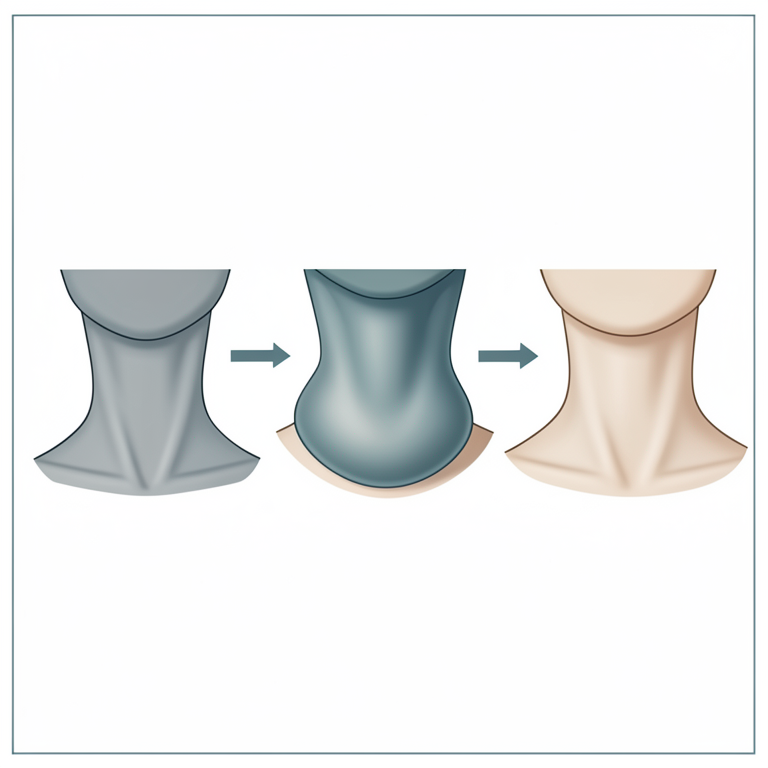
Age-Related Goitre Trend
AI-generated conceptual illustration (human children's necks). It explains the idea and does not show study data.
View source evidence ↗Figures & tables
From the original paper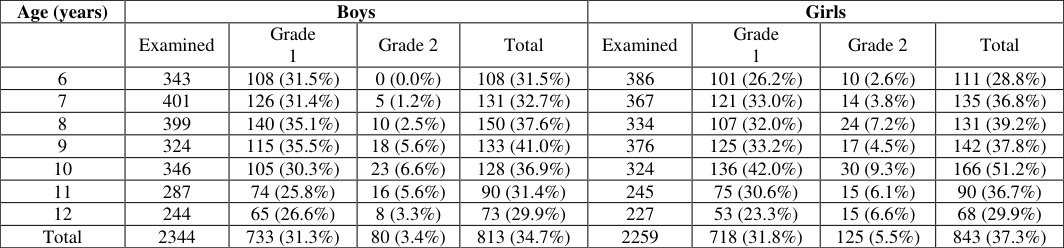 Table 1
 Table 2
Introduction
Iodine is an important micronutrient for human development as it is a constituent of the thyroid hormones thyroxine (T4) and triiodothyronine (T3). These hormones play crucial roles in human metabolism and are essential for normal growth, as well as mental and physical development. Iodine deficiency is a global problem that leads to goitre and endemic cretinism, along with clinical and subclinical defects in motor and cognitive functions. In 1999, the World Health Organization (WHO) estimated that 13% of the world's total population was affected by goitre [1] . Although goitre is the most visible indicator, iodine deficiency produces a spectrum of disorders collectively termed iodine deficiency disorders (IDD) [2] . These include goitre, hypothyroidism, cretinism, congenital abnormalities, neurological dysfunctions, stillbirth, impaired reproduction, and spontaneous abortions. No state in India is free from iodine deficiency and endemic goitre. IDD is not confined to the classical hilly sub-Himalayan goitre-endemic belt; it has also been reported from sub-Himalayan flat lands (terai), plains (especially those subject to annual flooding), riverine areas, deltas, and even coastal regions [3,4,5,6,7,8,9] . The northern part of West Bengal is hilly and lies in the classical iodine-deficient goitreendemic belt [10] , while the major southern region is the fertile, densely populated Gangetic basin. In the post-salt iodization phase, endemic goitre has been reported from many areas in India [11] , including West Bengal [8,12,13] . A retrospective study among schoolchildren in the Sundarban delta of West Bengal reported high goitre prevalence (38.2% and 33.1% in the South and North 24-Parganas districts, respectively), despite the absence of nutritional iodine deficiency, as evidenced by urinary iodine excretion [14,15] . Based on preliminary surveys of IDD in the Ganga basin and Bay of Bengal region, 13 CD blocks located on opposite sides of the Sundarban delta were selected for the present study. The multifactorial nature and complex interactions between host factors (age and sex) and region-specific environmental conditions pose a major challenge in understanding and controlling endemic goitre [16] . Therefore, this study aimed to examine the interaction of host factors specifically age and sex on goitre prevalence among school children in the post-salt iodization phase.
Materials and Methods
Howrah is one of the most densely populated districts in Gangetic West Bengal, with a population of 4, 850, 029 (2011 census) distributed across 14 CD blocks. Most residents live in rural areas, with some in industrial-rural settings. Purba Medinipur has a population of 5, 095, 875 (2011 census) spread across 25 CD blocks. The people are primarily engaged in agriculture, factory work, and fisheries. Their diet is mainly non-vegetarian, consisting of cereals, pulses, fish, vegetables (including those from the Brassicaceae family), and others. Thirteen CD blocks located in the Ganga basin and Bay of Bengal region were selected. From each block, one area was chosen randomly using purposive sampling [17] . In each area, one primary school and the nearest secondary school were selected (or a single combined school when available). This ensured coverage of children aged 6-10 years (primary) and 10-12 years (secondary) [14,15] . Where boys' and girls' schools were separate, both were included. All students in the recommended age group present on the survey day(s) were clinically examined for goitre. Age was recorded from school registers and rounded to the nearest whole number. A total of 4603 students were examined by palpation. The clinical examination was conducted by two trained research staff experienced in IDD survey methodology.
Goitre grading followed WHO/UNICEF/ICCIDD criteria [18] : Grade 0: No goitre. Grade 1: Thyroid palpable but not visible Grade 2: Thyroid visible with the neck in normal position.
Results
Results
A
A
Discussion
The prevalence of endemic goitre among school children is the most widely accepted marker for assessing the severity of IDD in a region [19] . According to WHO/UNICEF/ICCIDD criteria [19] , a prevalence of 5-19.9% is mild, 20-29.9% moderate, and ≥30% severe. The overall goitre prevalence of 35.9% in the study area indicates a severe public health problem. Although most cases were palpable (31.5%), the presence of visible goitre (4.4%) further underscores the severity during the post-salt iodization period. A gradual increase in goitre prevalence from age 6 to 10 years, followed by a decline, was observed.
Similar patterns have been reported in other surveys, where goitre prevalence rises steadily in both sexes up to a certain age and then declines [6,8] . The reduction in older children is likely due to compensatory adjustment of the thyroid gland with advancing age. The thyroid-releasing hormone (TRH) regulates thyroidstimulating hormone (TSH) secretion from the anterior pituitary thyrotrophic cells. TSH, in turn, controls thyroid growth, development, and hormone synthesis/secretion [20] . TRH secretion from the hypothalamus is feedback-regulated by circulating T3 levels, particularly in the brain excess T3 suppresses TRH, and vice versa [21] .
Goitre develops in areas with environmental iodine deficiency or in areas with goitrogenic factors that interfere with iodine nutrition [22] . In such conditions, circulating T4 declines, while T3 is preferentially maintained for a period [23] . Maintenance of normal T3 levels likely supports normal TRH and TSH secretion, thereby limiting further thyroid enlargement and enabling compensatory adjustments with age. The prevalence of Grade 2 goitre was higher in girls (5.5%) than boys (3.4%). This sex difference is generally attributed to increased physiological demands during puberty, pregnancy, and lactation [24] . Thyroid disorders, including endemic goitre, are more common in women, especially in iodine-deficient regions [25] . Estrogens enhance the response to TRH, possibly by increasing the number of TRH receptors in pituitary thyrotrophic cells [26,27] .
Conclusion
The present study clearly demonstrates that the entire surveyed region in Purba Medinipur and Howrah districts of West Bengal is severely affected by endemic goitre, making it a serious public health concern even in the post-salt iodization phase. The overall goitre prevalence of 35.9% places the area in the severe category per WHO/UNICEF/ICCIDD guidelines, with a notable 4.4% rate of visible (Grade 2) goitre further underscoring the gravity of the situation. The age-specific pattern observed a steady rise in goitre prevalence from 6 to 10 years, followed by a decline at 11 and 12 years strongly suggests compensatory physiological adjustments in the thyroid gland as children advance in age. Such adjustments appear to mitigate further enlargement of the gland, possibly through improved hormonal regulation involving the hypothalamic-pituitary-thyroid axis. However, a detailed exploration of the precise biochemical and molecular mechanisms responsible for this compensatory phenomenon lies beyond the scope of the current investigation and warrants future research. Furthermore, the study highlights a clear sex disparity, with girls exhibiting significantly higher rates of Grade 2 goitre (5.5%) compared to boys (3.4%). This finding aligns with established knowledge that females are more susceptible to thyroid disorders in iodine-deficient or goitrogen-exposed environments. The increased vulnerability in girls may be linked to higher physiological demands during periods of rapid growth and the influence of estrogens on enhancing the responsiveness of the pituitary to TRH, thereby promoting greater thyroid stimulation. These observations emphasize the need for targeted interventions focusing on adolescent girls in endemic areas. Taken together, even after widespread salt iodization, endemic goitre continues to pose a significant and ongoing challenge in the studied coastal and riverine areas of West Bengal. The present data emphasize the multifactorial character of iodine deficiency disorders, in which hostrelated factors like age and sex interact with local environmental conditions. To effectively combat this issue, sustained surveillance, improved iodine delivery systems, goitrogen reduction measures, and community-based health education programs are critically needed. Additionally, long-term follow-up research that includes key biochemical indicators such as urinary iodine levels, thyroid function tests, and autoimmunity markers would yield valuable insights for more efficient control strategies. Ultimately, addressing endemic goitre is essential to promote the healthy physical and cognitive development of children in these regions.
Acknowledgement
AcknowledgementThe author is extremely grateful to Prof. Amar Kumar Chandra, Emeritus Professor, Department of Physiology, University College of Science, Technology & Agriculture. The author is also grateful to the students who participated in the study.
Figures and tables from the paper
| Age (years) | Boys | — | — | — | Girls | — | — | — |
|---|---|---|---|---|---|---|---|---|
| Examined | Grade 1 | Grade 2 | Total | Examined | Grade 1 | Grade 2 | Total | |
| 6 | 343 | 108 (31.5%) | 0 (0.0%) | 108 (31.5%) | 386 | 101 (26.2%) | 10 (2.6%) | 111 (28.8%) |
| 7 | 401 | 126 (31.4%) | 5 (1.2%) | 131 (32.7%) | 367 | 121 (33.0%) | 14 (3.8%) | 135 (36.8%) |
| 8 | 399 | 140 (35.1%) | 10 (2.5%) | 150 (37.6%) | 334 | 107 (32.0%) | 24 (7.2%) | 131 (39.2%) |
| 9 | 324 | 115 (35.5%) | 18 (5.6%) | 133 (41.0%) | 376 | 125 (33.2%) | 17 (4.5%) | 142 (37.8%) |
| 10 | 346 | 105 (30.3%) | 23 (6.6%) | 128 (36.9%) | 324 | 136 (42.0%) | 30 (9.3%) | 166 (51.2%) |
| 11 | 287 | 74 (25.8%) | 16 (5.6%) | 90 (31.4%) | 245 | 75 (30.6%) | 15 (6.1%) | 90 (36.7%) |
| 12 | 244 | 65 (26.6%) | 8 (3.3%) | 73 (29.9%) | 227 | 53 (23.3%) | 15 (6.6%) | 68 (29.9%) |
| Total | 2344 | 733 (31.3%) | 80 (3.4%) | 813 (34.7%) | 2259 | 718 (31.8%) | 125 (5.5%) | 843 (37.3%) |
Table text extracted from the original PDF; superscript letters are shown inline. The original table image is below.
View original table image
| Age (years) | Examined | Grade 1 | Grade 2 | Total |
|---|---|---|---|---|
| 6 | 729 | 209 (28.7%) | 10 (1.4%) | 219 (30.1%) |
| 7 | 768 | 247 (32.2%) | 19 (2.5%) | 266 (34.6%) |
| 8 | 733 | 247 (33.7%) | 34 (4.6%) | 281 (38.3%) |
| 9 | 700 | 240 (34.3%) | 35 (5.0%) | 275 (39.3%) |
| 10 | 670 | 241 (36.0%) | 53 (7.9%) | 294 (43.9%) |
| 11 | 532 | 149 (28.0%) | 31 (5.8%) | 180 (33.8%) |
| 12 | 471 | 118 (25.1%) | 23 (4.9%) | 141 (30.0%) |
| Total | 4603 | 1451 (31.5%) | 205 (4.4%) | 1656 (35.9%) |
Table text extracted from the original PDF; superscript letters are shown inline. The original table image is below.
View original table image
References
26 in the original paper- ICCIDD, UNICEF, WHO. Assessment of iodine deficiency disorders and monitoring their elimination: a guide for programme managers. 2nd ed. Geneva: World Health Organization; 2001.
- Hetzel BS. Iodine deficiency disorders (IDD) and their eradication. Lancet. 1983;2:1126-1129.
- Kochupillai N. Neonatal hypothyroidism in India. Mt Sinai J Med. 1992;59:111-115.
- Pandav CS, Malik A, Anand K, Pandav S, Karmakar MG. Prevalence of iodine deficiency disorders among school children of the National Capital Territory of Delhi. New Delhi: ICCIDD Regional Office of South Asia and Pacific; 1996.
- Kapil U, Sohal KS, Sharma TD, Tandon M, Pathak P. Assessment of iodine deficiency disorders using 30 cluster approach in district Kangra, Himachal Pradesh, India. J Trop Pediatr. 2000;46:264-266.
- Chandra AK, Ray I. Evaluation of the effectiveness of salt iodization status in Tripura, northeast India. Indian J Med Res. 2002;115:22-27.
- Biswas AB, Chakraborty I, Das DK, Biswas S, Nandy S, Mitra J. Iodine deficiency disorders among school children of Malda, West Bengal, India. J Health Popul Nutr. 2002;20:180-183.
- Chandra AK, Tripathy S, Mukhopadhyay S, Lahari D. Studies of endemic goitre and associated iodine deficiency disorders (IDD) in a rural area of the Gangetic West Bengal. Indian J Nutr Diet. 2003;40:5358.
- Chandra AK, Tripathy S, Lahari D, Mukhopadhyay S. Iodine nutritional status of the school children in a rural area of Howrah district in the Gangetic West Bengal. Indian J Physiol Pharmacol. 2004;48(2):219-224.
- WHO Regional Office for South-East Asia. Iodine deficiency disorders in Southeast Asia. New Delhi: WHO Regional Office for South-East Asia; 1985. Regional Health Papers No. 10.
- Marwaha RK, Tandon N, Gupta N, et al. Residual goitre in the post-iodization phase: iodine status, thiocyanate exposure and autoimmunity. Clin Endocrinol (Oxf). 2003;59:672-681.
- Chandra AK, Tripathy S, Ghosh D, Debnath A, Mukhopadhyay S. Goitre prevalence and the state of iodine nutrition in Sundarban Delta of North 24Parganas in West Bengal. Asia Pac J Clin Nutr. 2006;15(3):357-361.
- Chandra AK, Tripathy S, Debnath A, Ghosh D. Bioavailability of iodine and hardness (magnesium and calcium salts) in drinking water in the etiology of endemic goitre in Sundarban Delta of West Bengal (India). J Environ Sci Eng. 2007;49(2):139-142.
- Chandra AK, Tripathy S, Ghosh D, Debnath A, Mukhopadhyay S. Iodine nutritional status and prevalence of goitre in Sundarban Delta of South 24Parganas, West Bengal. Indian J Med Res. 2005;122(5):419-424.
- Chandra AK, Singh LH, Tripathy S, Debnath A, Khanam J. Iodine nutritional status of school children in selected areas of Imphal West district, Manipur, North East India. Indian J Pediatr. 2006;73:795-798.
- Gaitan E, Dunn JT. Epidemiology of iodine deficiency. Trends Endocrinol Metab. 1992;3:170-175.
- Cochran WG. Sampling techniques. 3rd ed. Calcutta: Wiley Eastern Ltd.; 1977.
- WHO, UNICEF, ICCIDD. Indicators for assessing iodine deficiency disorders and their control through salt iodization. Geneva: World Health Organization; 1994. WHO/NUT/94.6.
- WHO, UNICEF, ICCIDD. Indicators for assessing iodine deficiency disorders and their control through salt iodization. Geneva: World Health Organization; 1994.
- Wilson JD, Foster DW, Kronenberg HM, Larsen PR. Williams textbook of endocrinology. Philadelphia: WB Saunders; 1998.
- Kakucska I, Rand W, Lechan RM. Thyrotropin releasing hormone expression in the hypothalamic paraventricular nucleus is dependent upon feedback regulation by both triiodothyronine and thyroxine. Endocrinology. 1992;130(5):2845-2850.
- Gaitan E. Goitrogens in food and water. Annu Rev Nutr. 1990;10:31-39.
- Ermans AM, Maberlamaka NB, Delange F, Ahluwalia R. Role of cassava in the etiology of endemic goitre and cretinism. Ottawa: International Development Research Centre; 1980. IRDC-136e.
- Dudani TG, Natu MN. Epidemiology of endemic goitre in Ghodegaon. Indian J Med Res. 1978;68:980-989.
- Faglia G, Beck-Peccoz P, Ferrari C. Enhanced plasma thyrotropin response to thyrotropin releasing hormone following oestradiol administration in man. Clin Endocrinol (Oxf). 1974;2:207-212.
- Gershengorn MC, Marcus-Samuels BE, Geras E. Estrogen increases the number of thyrotropin releasing hormone receptors on mammotropic cells in culture. Endocrinology. 1979;105:171-178.