
Research article · 2026 · Full text
International Journal of Horticulture and Food ScienceNutrient uptake (N, P, K) by spring-planted sugarcane (Saccharum officinarum L.) as influenced by fertilizer and weed management practices
Volume 8(7) · Pages 40–44 · DOI: 10.33545/26631067.2026.v8.i7a.795 ↗
Research areasAgricultural Science and FertilizationWeed Control and Herbicide ApplicationsSugarcane Cultivation and Processing
Abstract
Author-writtenA field experiment was conducted during the spring season of 2024-25 at GSDN College, Parikshitgarh, Meerut, Uttar Pradesh, to evalua0074e the effect of fertilizer levels and weed-control practices on the uptake of nitrogen (N), phosphorus (P), and potassium (K) by spring-planted sugarcane. The trial was laid out in a Factorial Randomized Block Design replicated thrice, comprising three fertility levels (75%, 100%, and 125% of the recommended dose of fertilizer, RDF) and seven weed-management modules. Total N, P, and K uptake increased significantly with rising fertility levels, from 122.50, 31.20, and 230.40 kg/ha under 75% RDF (F1) to 178.02, 46.30, and 266.29 kg/ha under 125% RDF (F3) increases of 45.3%, 48.4%, and 15.6%, respectively (LSD, P = 0.05). Among weed-management modules, the weed-free check (W6) recorded the highest total uptake (200.33 kg N/ha, 48.40 kg P/ha, and 292.49 kg K/ha), while the weedy check (W7) recorded the lowest (112.32, 29.10, and 203.40 kg/ha, respectively) declines of 43.9%, 39.9%, and 30.5% relative to W6, all exceeding the critical difference threshold. The integrated treatment combining directed glyphosate application with one hand weeding (W4) recorded phosphorus uptake (46.80 kg/ha) statistically at par with the weed-free check, while its nitrogen and potassium uptake (180.29 and 271.65 kg/ha) were significantly lower than W6 but substantially higher than all other weed-control treatments. Potassium uptake consistently exceeded nitrogen and phosphorus uptake across all treatments, reflecting the characteristically high K demand of sugarcane. These findings indicate that balanced fertilization combined with efficient early-season weed suppression maximizes nutrient acquisition, and that an integrated glyphosate-hand weeding approach can approach weed-free-level nutrient capture with substantially lower labor input.
Summary
Source-checkedPlain-language reading of the full paper, prepared with AI and checked against the text. Each point links to the authors' own words.
Why it matters
- Sugarcane productivity depends heavily on nutrient uptake efficiency because the crop's long growth period and high biomass create a sustained demand for soil nutrients. View evidence ↗
- Nitrogen, phosphorus, and potassium serve distinct roles in sugarcane: nitrogen drives vegetative growth, phosphorus aids root establishment, and potassium, often needed in higher quantities than nitrogen, regulates sucrose and stalk strength. View evidence ↗
- Spring-planted sugarcane is particularly susceptible to weed competition early in its growth due to slow germination and wide spacing between rows. View evidence ↗
The question
- The study aimed to quantify N, P, and K uptake in spring-planted sugarcane under different fertilizer and weed-management strategies to find a viable combination that maximizes nutrient acquisition. View evidence ↗
What they did
- The field experiment took place during the 2024-25 spring season at GSDN College in Meerut, Uttar Pradesh, India. View evidence ↗
- The researchers used a Factorial Randomized Block Design with three replications, testing three fertilizer levels (75%, 100%, and 125% of the recommended dose) and seven weed-management modules. View evidence ↗
- Nutrient content was measured by analyzing oven-dried samples of the cane, green tops, and trash fractions. View evidence ↗
What they found
- The weed-free check (W6) had the highest nutrient uptake, while the weedy check (W7) showed the lowest, with declines of 43.9% for N, 39.9% for P, and 30.5% for K compared to W6. View evidence ↗
- The integrated treatment W4 (glyphosate plus one hand weeding) achieved phosphorus uptake (46.80 kg/ha) that was statistically equivalent to the weed-free check (48.40 kg/ha). View evidence ↗
- While W4's nitrogen (180.29 kg/ha) and potassium (271.65 kg/ha) uptake were lower than the weed-free check, they were significantly higher than all other active weed-control treatments. View evidence ↗
- Regardless of fertilizer level, the majority of nutrients were captured by the cane, followed by the green tops and then the trash. View evidence ↗
What it means
- The authors conclude that combining 125% of the recommended fertilizer dose with the integrated glyphosate and hand-weeding regime (F3 + W4) is the most efficient way to maximize nutrient acquisition. View evidence ↗
- The authors suggest that future trials should focus on further optimizing nitrogen and potassium uptake within integrated weed-management systems. View evidence ↗
Visual summary
1 visualsIllustrations explain the paper; they do not show study data.
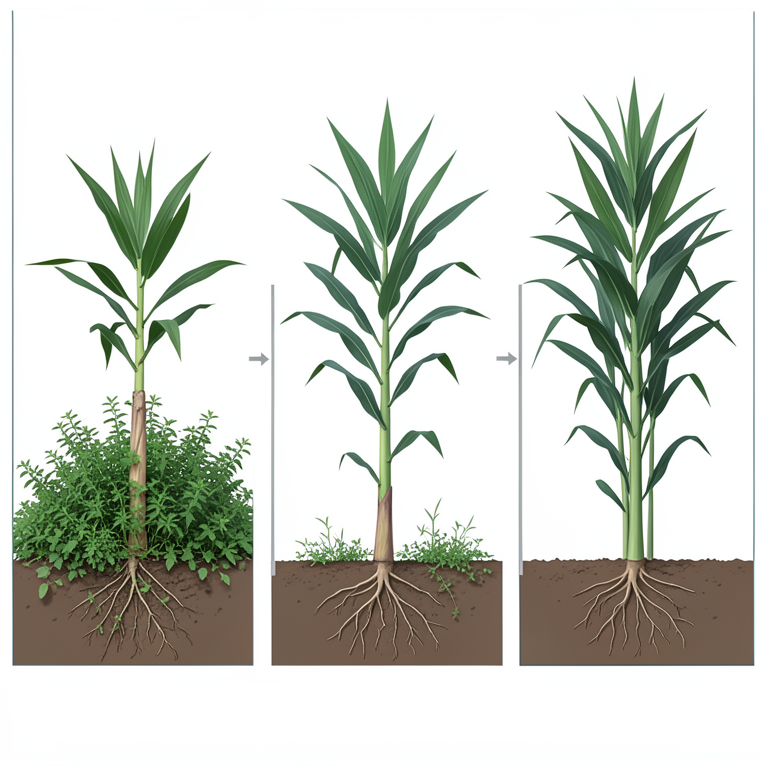
Impact of Weed Management on Nutrient Capture
AI-generated conceptual illustration (spring-planted sugarcane (Saccharum officinarum L.)). It explains the idea and does not show study data.
View source evidence ↗Figures & tables
From the original paper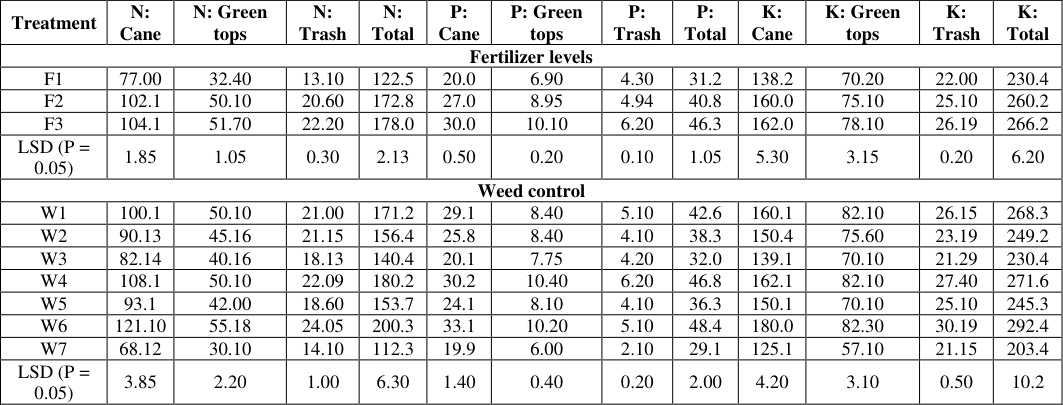 Table 1
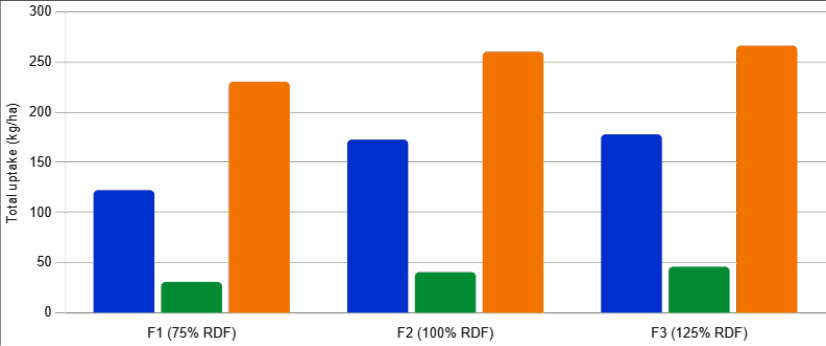 Figure 1
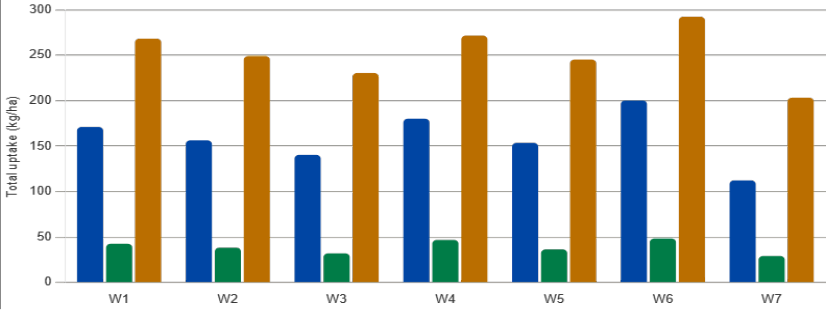 Figure 2
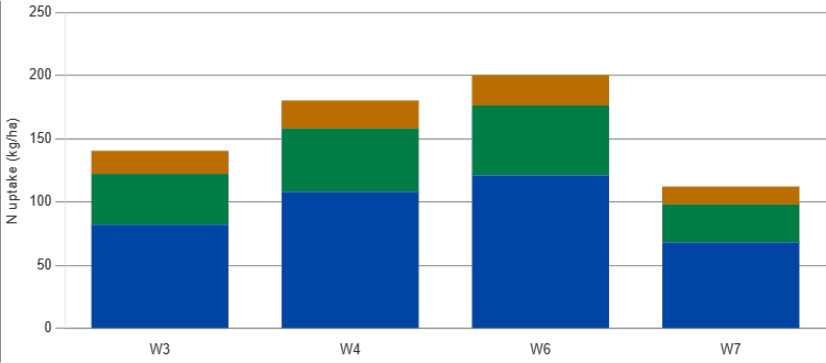 Figure 3
Introduction
Nutrient uptake efficiency is a fundamental determinant of sugarcane (Saccharum officinarum L.) productivity, since the crop's long growth duration and heavy biomass accumulation impose substantial and sustained demand on soil nutrient reserves (Bokhtiar and Sakurai, 2005) [2] . Among the primary macronutrients, nitrogen governs vegetative growth and tillering, phosphorus supports root proliferation and early establishment, and potassium required by sugarcane in quantities that often exceed nitrogen regulates sucrose translocation, water relations, and stalk strength. Adequate and balanced fertilizer supply is therefore essential not merely for biomass accumulation but for the crop's overall capacity to acquire and partition nutrients across its plant parts, including millable cane, green tops, and trash (Banerjee et al., 2018) [1] . A second, often underappreciated constraint on nutrient acquisition is weed competition. Because spring-planted sugarcane is characterized by slow initial germination and wide inter-row spacing, the crop remains vulnerable to aggressive weed colonization during its early growth phase. Weeds are efficient competitors for applied nutrients, and where they are allowed to establish, a substantial share of applied fertilizer is diverted away from the crop rather than being assimilated by it (Srivastava et al., 2002) [4] . This makes weed management not simply a matter of suppressing competition for light and space, but an intervention that directly affects how much of the applied fertilizer dose the crop is actually able to capture.
While the individual effects of fertilizer dose and weed control on sugarcane yield are well documented, comparatively less attention has been paid to how these two management factors jointly shape actual nutrient uptake as distinct from final yield across the different plant fractions (cane, green tops, and trash). Understanding this uptake pattern is important because it clarifies whether yield gains under improved management are being driven by more efficient nutrient capture or simply by greater biomass production. The present study was therefore undertaken to quantify the nitrogen, phosphorus, and potassium uptake by spring-planted sugarcane under varying fertility levels and weed-management modules, and to identify a management combination that maximizes nutrient acquisition while remaining practically and economically viable for farmers.
Materials and Methods
Experimental site. The field investigation was conducted during the spring season of 2024-25 at the research farm of GSDN College, Parikshitgarh, Meerut, Uttar Pradesh, India (29.02° N, 78.01° E). The soil was sandy loam of Indo-Gangetic alluvial origin, classified as a non-calcareous and mixed. The early maturing sugarcane cultivar Co 0238 was planted during the optimal window of 23-24 March, 2024. Sowing was completed in furrows made at a depth of 15 cm with a standardized inter-row spacing of 75 cm over a leveled land surface. All standard agro-techniques and cultural maintenance packages recommended for sugarcane cultivation in the region were systematically executed across all treatments throughout the life cycle. The crop was successfully harvested on 20-21 February, 2025.
Experimental design:
The trial was laid out in a Factorial Randomized Block Design with three replications, comprising three fertility levels F1 (75% RDF), F2 (100% RDF, equivalent to 150:60:60 kg N:P₂O₅:K₂O/ha), and F3 (125% RDF) and seven weed-management modules: W1 (three hand weedings at 30, 60, and 90 DAP), W2 (one hand weeding at 30 DAP + post-emergence atrazine at 2.0 kg/ha), W3 (pre-emergence atrazine at 2.0 kg/ha followed by postemergence 2,4-D at 1.0 kg/ha at 60 DAP), W4 (directed post-emergence glyphosate at 1.0 kg a.i./ha at 25 DAP followed by one hand weeding at 60 DAP), W5 (Sesbania brown manuring at 45 DAP followed by 2,4-D at 1.0 kg/ha), and W6 (weed-free check) and W7 (weed-free check).
Nutrient uptake determination: At harvest, representative plant samples were separated into cane, green tops, and trash fractions, oven-dried, ground, and analyzed for total nitrogen, phosphorus, and potassium content. Nitrogen content was estimated by the Kjeldahl method, phosphorus by the vanadomolybdophosphoric acid (colorimetric) method, and potassium by flame photometry, following standard procedures (Jackson, 1973) [5] . Nutrient uptake (kg/ha) by each plant fraction was computed by multiplying the nutrient concentration (%) by the corresponding drymatter yield of that fraction, and the three fractions were summed to obtain total nutrient uptake per treatment. Data were analyzed using analysis of variance (ANOVA) as per Factorial Randomized Block Design, with treatment means compared using Least Significant Difference (LSD) at 5% probability (Gomez and Gomez, 1984) [3] .
Results and Discussion
Effect of fertilizer levels on nutrient uptake. Total nitrogen, phosphorus, and potassium uptake by sugarcane increased significantly with rising fertility levels (Table 1). Total N uptake rose from 122.50 kg/ha under F1 to 172.80 kg/ha under F2 and further to 178.02 kg/ha under F3a 45.3% increase, exceeding the critical difference (LSD = 2.13 kg/ha). Total P uptake increased from 31.20 kg/ha (F1) to 46.30 kg/ha (F3), a 48.4% rise (LSD = 1.05 kg/ha), while total K uptake rose more modestly from 230.40 kg/ha (F1) to 266.29 kg/ha (F3), a 15.6% increase (LSD = 6.20 kg/ha). Across all fertility levels, the cane fraction accounted for the largest share of total uptake, followed by green tops and then trash, consistent with cane being the primary sink for translocated nutrients at maturity. This steady, statistically significant rise in nutrient uptake with fertility level indicates that yield improvements under higher fertilization are underpinned by genuinely greater nutrient acquisition rather than dilution effects (Banerjee et al., 2018) [1] . The magnitude of total K uptake recorded here (230-266 kg/ha across fertility levels) is consistent with the substantial potassium requirement long documented in sugarcane clonal-nutrition studies, where total K uptake by different genotypes has been reported to range as high as 150-310 kg/ha depending on cultivar and yield level (Rakkiyappan et al). The comparatively smaller proportional increase in K uptake relative to N and P (15.6% versus 45.3% and 48.4%) suggests that potassium acquisition in sugarcane may approach a physiological ceiling at moderate fertility levels, beyond which additional applied K contributes proportionally less to uptake than additional N or P does. This pattern of disproportionately large but plateauing K uptake, alongside consistently high absolute demand, reaffirms sugarcane's characterization as an intensive potassium-feeding crop relative to nitrogen and phosphorus (Bokhtiar and Sakurai, 2005; Kumar et al., 2023) [2,6] . Effect of weed-management modules on nutrient uptake. Weed-control strategy exerted a highly significant influence on nutrient uptake across all three nutrients (Table 1). The weed-free check (W6) recorded the highest total uptake 200.33 kg N/ha, 48.40 kg P/ha, and 292.49 kg K/ha. At the opposite extreme, the weedy check (W7) recorded the lowest uptake of all treatments (112.32 kg N/ha, 29.10 kg P/ha, and 203.40 kg K/ha), representing declines of 43.9%, 39.9%, and 30.5%, respectively, relative to W6 differences far exceeding the corresponding LSD values (6.30, 2.00, and 10.20 kg/ha). This confirms that unchecked weed competition substantially curtails the crop's capacity to acquire even those nutrients that have been applied, independent of its effect on final biomass a finding consistent with the well-established principle that weeds act as direct competitors with sugarcane for applied soil nutrients during the crop's slow early-establishment phase, when a major share of the field surface remains uncanopied (Srivastava et al., 2002) [4] . Among the active weed-control treatments, W3 (pre-emergence atrazine followed by postemergence 2, 4-D) recorded the lowest uptake (140.43, 32.05, and 230.49 kg/ha for N, P, and K), though it remained significantly higher than the weedy check across all three nutrients. This confirms recent field evidence from 2022-23 at Agronomy Research Farm, Kolhapur where a field experiment was conducted to study the effect of different herbicide on yield and uptake of nutrient by sugarcane and where highest uptake of nutrient by sugarcane was found with weed free treatment over weedy check (Kadam et al., 2023) [7] . This is consistent with the principle that weeds act as direct competitors for applied nutrients during slow early-establishment (Srivastava et al., 2002) [4] . The integrated treatment W4 (directed glyphosate + one hand weeding) again performed close to the weed-free check, though the pattern differed by nutrient. For phosphorus, W4's uptake (46.80 kg/ha) was statistically at par with W6 (48.40 kg/ha), since the difference (1.60 kg/ha) fell below the LSD (2.00 kg/ha). For nitrogen and potassium, however, W4's uptake (180.29 and 271.65 kg/ha) was significantly lower than W6 (200.33 and 292.49 kg/ha), as the differences (20.04 and 20.84 kg/ha) exceeded their respective LSD values (6.30 and 10.20 kg/ha) though W4 still comfortably outperformed every other active weedcontrol treatment (W1, W2, W3, W5) for all three nutrients. This is broadly consistent with field evidence from springplanted sugarcane in the eastern Indo-Gangetic plains, where integrated weed-management regimes combining chemical and mechanical intervention have been shown to significantly enhance crop nitrogen, phosphorus, and potassium uptake over conventional single-method approaches, by controlling both early weed flushes and subsequent regrowth within the critical competition window. Wanderley et al. (2021) [8] also worked on nutritional requirement by irrigated Brazilian sugarcane Varieties. Taken together, these results indicate that the early chemical knockdown provided by directed glyphosate at 25 DAP, followed by a single supplementary hand weeding, is sufficient to secure phosphorus capture statistically equivalent to season-long weed-free conditions, while nitrogen and potassium uptake though significantly improved over conventional herbicide or manual regimes do not fully close the gap with continuous weed-free management. This nutrient-specific pattern likely reflects the differing soil mobility of N, P, and K in the weed-crop competitive zone, and offers a practical basis for recommending the integrated W4 strategy as a laborefficient near-equivalent to full weed-free management for phosphorus nutrition in particular, while flagging N and K uptake as areas warranting further optimization in future integrated weed-management trials.
| Treatment | N: Cane | N: Green tops | N: Trash | N: Total | P: Cane | P: Green tops | P: Trash | P: Total | K: Cane | K: Green tops | K: Trash | K: Total |
|---|---|---|---|---|---|---|---|---|---|---|---|---|
| Fertilizer levels | ||||||||||||
| F1 | 77.00 | 32.40 | 13.10 | 122.5 | 20.0 | 6.90 | 4.30 | 31.2 | 138.2 | 70.20 | 22.00 | 230.4 |
| F2 | 102.1 | 50.10 | 20.60 | 172.8 | 27.0 | 8.95 | 4.94 | 40.8 | 160.0 | 75.10 | 25.10 | 260.2 |
| F3 | 104.1 | 51.70 | 22.20 | 178.0 | 30.0 | 10.10 | 6.20 | 46.3 | 162.0 | 78.10 | 26.19 | 266.2 |
| LSD (P = 0.05) | 1.85 | 1.05 | 0.30 | 2.13 | 0.50 | 0.20 | 0.10 | 1.05 | 5.30 | 3.15 | 0.20 | 6.20 |
| Weed control | ||||||||||||
| W1 | 100.1 | 50.10 | 21.00 | 171.2 | 29.1 | 8.40 | 5.10 | 42.6 | 160.1 | 82.10 | 26.15 | 268.3 |
| W2 | 90.13 | 45.16 | 21.15 | 156.4 | 25.8 | 8.40 | 4.10 | 38.3 | 150.4 | 75.60 | 23.19 | 249.2 |
| W3 | 82.14 | 40.16 | 18.13 | 140.4 | 20.1 | 7.75 | 4.20 | 32.0 | 139.1 | 70.10 | 21.29 | 230.4 |
| W4 | 108.1 | 50.10 | 22.09 | 180.2 | 30.2 | 10.40 | 6.20 | 46.8 | 162.1 | 82.10 | 27.40 | 271.6 |
| W5 | 93.1 | 42.00 | 18.60 | 153.7 | 24.1 | 8.10 | 4.10 | 36.3 | 150.1 | 70.10 | 25.10 | 245.3 |
| W6 | 121.10 | 55.18 | 24.05 | 200.3 | 33.1 | 10.20 | 5.10 | 48.4 | 180.0 | 82.30 | 30.19 | 292.4 |
| W7 | 68.12 | 30.10 | 14.10 | 112.3 | 19.9 | 6.00 | 2.10 | 29.1 | 125.1 | 57.10 | 21.15 | 203.4 |
| LSD (P = 0.05) | 3.85 | 2.20 | 1.00 | 6.30 | 1.40 | 0.40 | 0.20 | 2.00 | 4.20 | 3.10 | 0.50 | 10.2 |
Table text extracted from the original PDF; superscript letters are shown inline. The original table image is below.
View original table image
Conclusion
The results of this investigation demonstrate that both fertilizer level and weed-management strategy significantly influence the nitrogen, phosphorus, and potassium uptake of spring-planted sugarcane, and that these two factors govern nutrient acquisition largely independent of one another. Increasing fertility from 75% to 125% of the recommended dose significantly improved total N, P, and K uptake by 45.3%, 48.4%, and 15.6%, respectively, confirming that yield gains under higher fertilization are underpinned by genuinely greater nutrient capture rather than mere biomass dilution. Weed-control strategy exerted an even more pronounced effect: unchecked weed competition (W7) reduced total nutrient uptake by 30.5-43.9% relative to season-long weed-free conditions (W6), underscoring those weeds as direct competitors for applied fertilizer rather than merely for light and space. Among the active weedmanagement options, the integrated approach combining directed post-emergence glyphosate at 25 DAP with one hand weeding at 60 DAP (W4) proved the most efficient practical alternative to season-long weed-free management achieving phosphorus uptake statistically at par with the weed-free check, and nitrogen and potassium uptake significantly higher than all other active weed-control treatments, though still short of the weed-free maximum. Taken together, these findings indicate that combining 125% RDF with the integrated glyphosate-hand weeding regime (F3 + W4) offers the most agronomically sound and resource-efficient strategy for maximizing nutrient acquisition in spring-planted sugarcane, allowing farmers to approach the nutrient-capture benefits of season-long weed-free cultivation without its associated labor burden.
Acknowledgement
Acknowledgements:The authors are grateful to the authorities of GSDN College, Parikshitgarh, Meerut, Uttar Pradesh, for providing necessary facilities and support for conducting the research work. The authors also sincerely thank the local farming community for their valuable assistance during the field experimentation
Figures and tables from the paper
References
8 in the original paper- Banerjee K, Puste AM, Gunri SK, Jana K, Barman M. Effect of integrated nutrient management on growth, yield, quality and soil health of spring planted sugarcane (Saccharum officinarum) in West Bengal. Indian Journal of Agronomy. 2018;63(4):499-505.
- Bokhtiar SM, Sakurai K. Effect of application of inorganic and organic fertilizers on growth, yield and quality of sugarcane. Sugar Tech. 2005;7(1):33-37.
- Gomez KA, Gomez AA. Statistical Procedures for Agricultural Research. 2nd ed. New York: John Wiley and Sons; 1984.
- Srivastava TK, Singh AK, Srivastava SN. Critical period of crop-weed competition in sugarcane ratoon. Indian Journal of Weed Science. 2002;34:320-321.
- Jackson ML. Soil Chemical Analysis. New Delhi: Prentice Hall of India Pvt. Ltd.; 1973.
- Kumar N, Rana L, Singh AK, Pramanick B, Gaber A, Alsuhaibani AM, et al. Precise macronutrient application can improve cane yield and nutrient uptake in widely spaced plant-ratoon cycles in the IndoGangetic plains of India. Frontiers in Sustainable Food Systems. 2023;7:1223881.
- Kadam TS, Bholane JP, Gajbhiye PN, Sonawane AP. Impact of post emergence herbicide on growth, yield, soil fertility and nutrient uptake by weed and crop in sugarcane. International Journal of Statistics and Applied Mathematics. 2023;8(6S):1003-1007.
- Wanderley LRDS, de Oliveira ECA, Freire FJ, Simoes Neto DE, dos Santos RL. Nutritional requirement by irrigated Brazilian sugarcane varieties. Sugar Tech. 2021;23:762-775.