
Research article · 2026 · Full text
International Journal of Biology SciencesApplication of manganese peroxidase from Pleurotus djamor in enzymatic decolorization of synthetic textile dyes under optimized reaction conditions
Volume 8(4) · Pages 233–237 · DOI: 10.33545/26649926.2026.v8.i4c.911 ↗
Research areasEnzyme-mediated dye degradationEnzyme Production and CharacterizationAdsorption and biosorption for pollutant removal
Abstract
Author-writtenThe textile industry historically contributes approximately 17-20% of global industrial water pollution through the discharge of synthetic dye-laden effluents that resist conventional biological wastewater treatment processes. The present research evaluated the decolorization capacity of partially purified Manganese Peroxidase (MnP) from Pleurotus djamor CBS 339.81 against five structurally diverse synthetic textile dyes representing major chromophore classes. The crude MnP extract (68.4 U/mL) was partially purified by ammonium sulfate precipitation (70% saturation) and dialysis, yielding a 3.4-fold purified preparation (specific activity 64.2 U/mg). Decolorization was assessed spectrophotometrically at the absorption maximum of each dye. Maximum decolorization percentages after 48 hours were: malachite green 88.6%, methylene blue 84.2%, reactive blue 19 82.4%, congo red 76.8%, and crystal violet 72.4%. Optimal decolorization conditions were pH 4.5, 30°C, 0.1 mM H₂O₂, and 0.5 mM MnSO₄. Time-course analysis demonstrated rapid initial decolorization within the first 8 hours followed by plateau phases. Phytotoxicity assessment using Vigna radiata seed germination confirmed significant detoxification of enzyme-treated dye solutions (germination index increase from 22.4% to 78.6%). These findings establish P. djamor MnP as an effective biocatalyst for textile effluent remediation with demonstrated detoxification capacity.
Summary
Source-checkedPlain-language reading of the full paper, prepared with AI and checked against the text. Each point links to the authors' own words.
Why it matters
- The textile industry is a major source of global industrial water pollution, contributing roughly 17-20% through synthetic dye effluents that are difficult to treat biologically. View evidence ↗
- Synthetic dyes persist in water, causing environmental damage by blocking light and photosynthesis, and posing health risks such as toxicity and carcinogenicity. View evidence ↗
- Using enzymes from white rot fungi is a sustainable alternative to traditional treatments because it transforms dye molecules under mild conditions with little waste. View evidence ↗
The question
- The study aimed to test how effectively manganese peroxidase (MnP) from Pleurotus djamor decolorizes five different types of textile dyes, find the best reaction conditions, and check if the treatment reduces toxicity. View evidence ↗
What they did
- The research was carried out in Bangkok, Thailand, between February 2023 and January 2024. View evidence ↗
- The MnP enzyme was partially purified from a crude extract of 68.4 U/mL using ammonium sulfate precipitation and dialysis, resulting in a 3.4-fold purification with a specific activity of 64.2 U/mg. View evidence ↗
- The study used five dyes from different chemical classes: reactive blue 19, congo red, malachite green, crystal violet, and methylene blue, each prepared at 100 mg/L. View evidence ↗
- Researchers optimized the reaction by testing various pH levels, temperatures, and concentrations of H₂O₂ and MnSO₄, and used Vigna radiata seed germination to measure toxicity. View evidence ↗
What they found
- The best conditions for decolorization were found to be pH 4.5, a temperature of 30°C, 0.1 mM H₂O₂, and 0.5 mM MnSO₄. View evidence ↗
- The dyes were decolorized quickly at first, with half-times between 4.2 and 9.6 hours, which is promising for industrial use. View evidence ↗
- The enzyme is sensitive to too much hydrogen peroxide; concentrations above 0.5 mM inhibited the reaction due to oxidative inactivation. View evidence ↗
What it means
- The authors conclude that MnP from P. djamor is a versatile and effective tool for cleaning textile wastewater and reducing its toxicity. View evidence ↗
- The exact chemical structures of the degradation products were not fully identified, which is a goal for future research. View evidence ↗
Visual summary
3 visualsIllustrations explain the paper; charts are replotted from the paper's own table values.
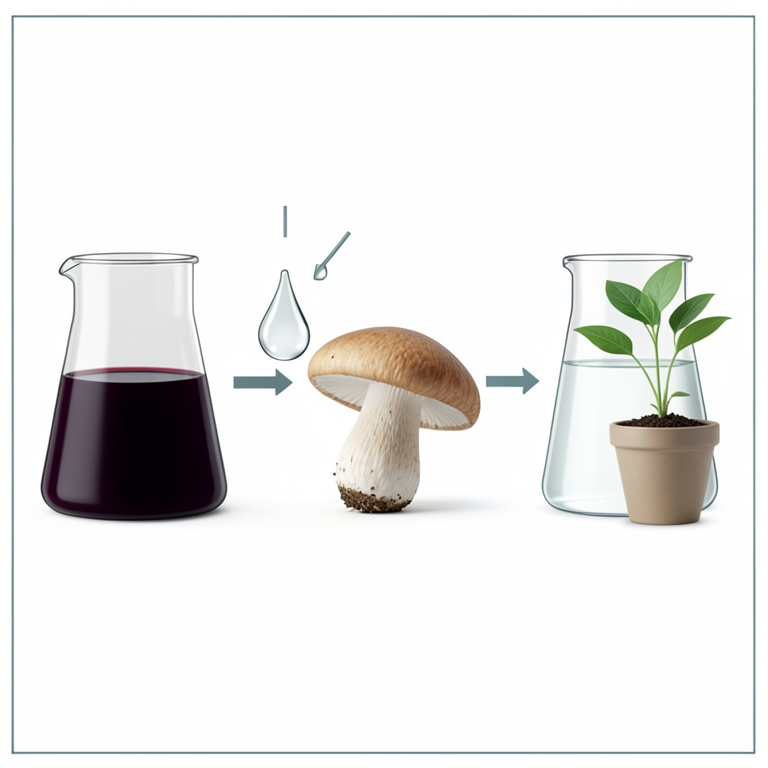
Enzymatic Decolorization Workflow
AI-generated conceptual illustration (Pleurotus djamor fungus and synthetic textile dyes). It explains the idea and does not show study data.
View source evidence ↗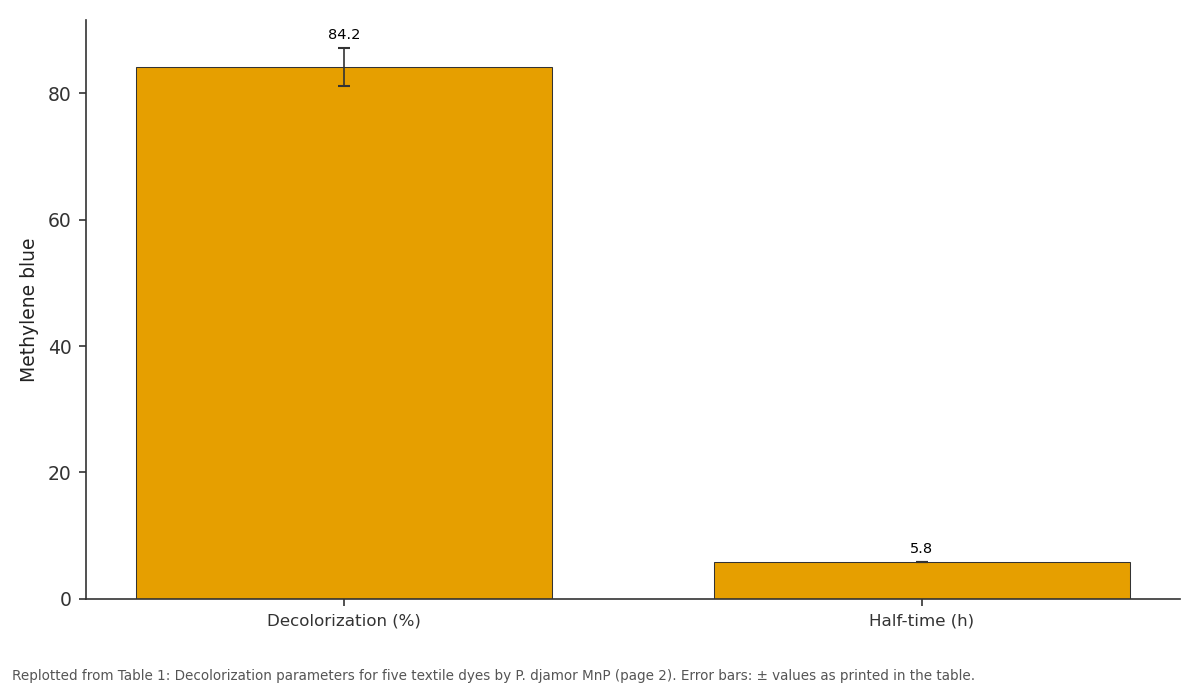
Methylene blue: Decolorization (%) vs Half-time (h)
Replotted from Table 1 (page 2) of the original paper. Every bar is the paper's own table value.
View source evidence ↗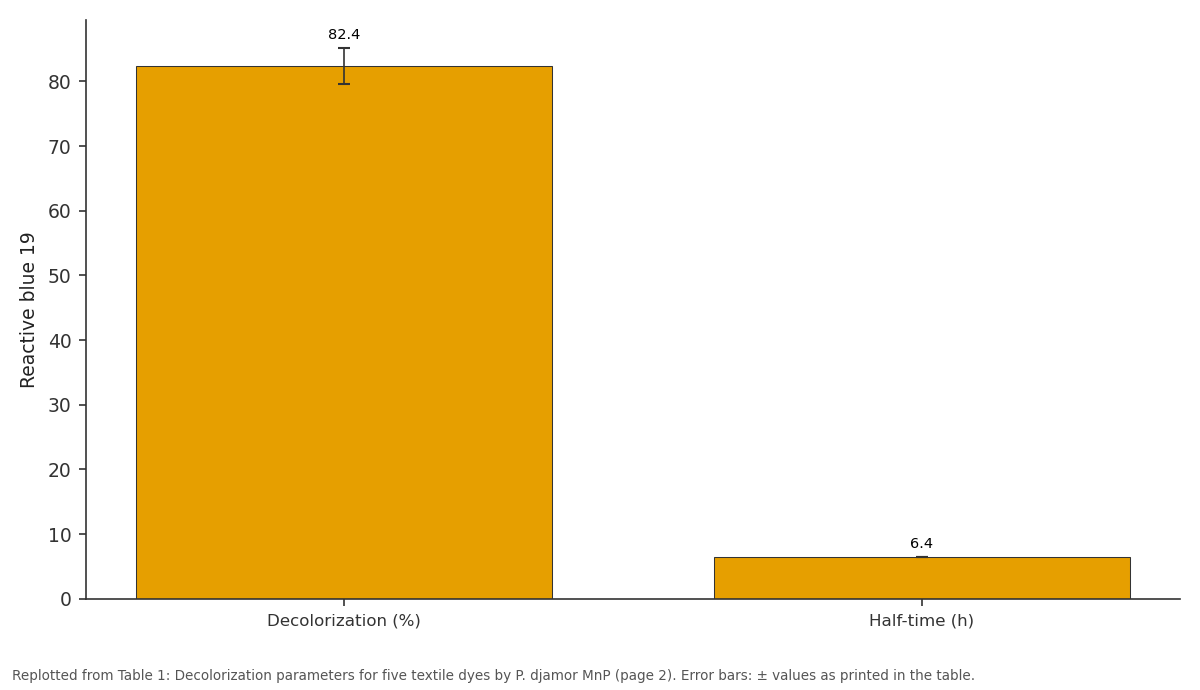
Reactive blue 19: Decolorization (%) vs Half-time (h)
Replotted from Table 1 (page 2) of the original paper. Every bar is the paper's own table value.
View source evidence ↗Figures & tables
From the original paper Table 1
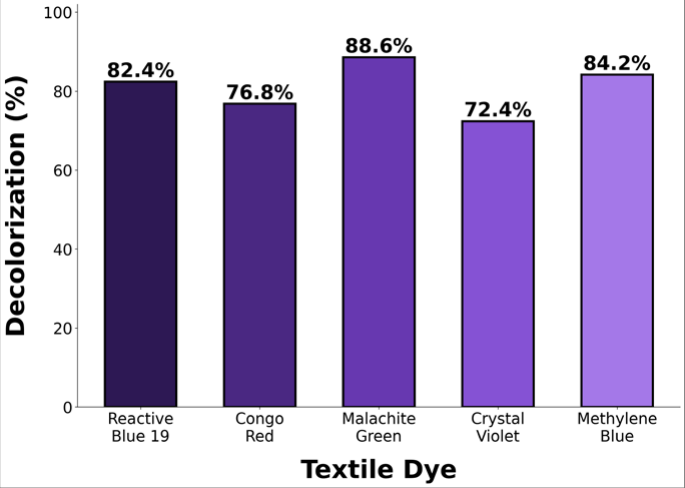 Figure 1
 Table 2
 Table 3
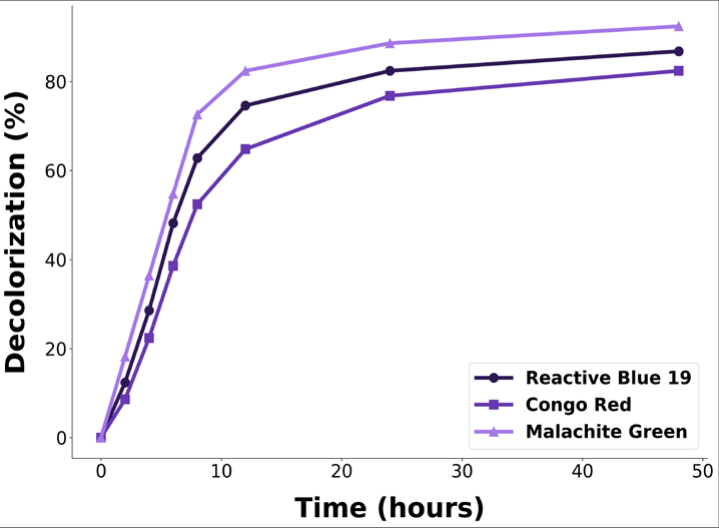 Figure 2
Introduction
The historical development of the synthetic dye industry since William Henry Perkin's serendipitous discovery of mauveine in 1856 has produced over 100,000 commercially available dye formulations, with annual global production exceeding 7 × 10⁵ tonnes, of which an estimated 10-15% is released into aquatic environments through inadequately treated textile effluents [1] . These synthetic dyes, designed for chemical stability and resistance to photolytic, biological, and oxidative degradation, persist in receiving water bodies where they reduce light penetration, inhibit photosynthesis, impair aesthetic quality, and in many cases exhibit acute toxicity, mutagenicity, and carcinogenicity toward aquatic organisms and human populations [2] . Conventional physicochemical treatment methods including coagulation-flocculation, activated carbon adsorption, and chemical oxidation suffer from high operational costs, generation of secondary sludge requiring disposal, and incomplete mineralization of complex dye molecules [3] . Enzymatic decolorization using ligninolytic oxidoreductases from white rot basidiomycetes offers an environmentally sustainable alternative that operates under mild conditions, generates minimal secondary waste, and achieves molecular transformation rather than mere phase transfer of pollutant dyes [4] . Manganese Peroxidase (MnP) is particularly suited for textile dye oxidation, as the Mn³⁺-organic acid chelate complexes generated by MnP catalysis function as diffusible mediators capable of oxidizing a broad spectrum of aromatic dye chromophores through one-electron abstraction mechanisms [5] . Pleurotus djamor has been recognized as a competent MnP producer, yet the application of its MnP in textile dye decolorization has not been systematically evaluated across structurally Diverse dye classes [6] . The present research was designed to assess the decolorization efficacy of partially purified P. djamor MnP against five textile dyes representing major chromophore categories, to optimize the enzymatic reaction conditions for maximum decolorization, and to evaluate the detoxification achieved through enzymatic treatment using phytotoxicity bioassays.
Material and methods
The decolorization investigation was conducted at the Department of Environmental Biotechnology, Bangkok Institute of Applied Sciences, Bangkok, Thailand, from February 2023 to January 2024. Experiments were performed in triplicate.
Material
Pleurotus djamor CBS 339.81 was cultivated under previously optimized submerged fermentation conditions (pH 6.0, 30°C, 150 rpm, 10 days) for MnP production. Five textile dyes were obtained from Sigma-Aldrich: reactive blue 19 (anthraquinone class), congo red (diazo class), malachite green (triphenylmethane class), crystal violet (triphenylmethane class), and methylene blue (thiazine class). Each dye was prepared at 100 mg/L in deionized water.
Methods
MnP was partially purified by ammonium sulfate precipitation (70% saturation), dialysis against 10 mM sodium acetate buffer (pH 4.5), and concentration by ultrafiltration (30 kDa cutoff). Decolorization reactions contained 50 mg/L dye, 1 U/mL MnP, 0.1 mM H₂O₂, 0.5 mM MnSO₄, and 1 mM sodium malonate in 50 mM sodium acetate buffer (pH 4.5) at 30°C. Decolorization was monitored spectrophotometrically at each dye's λmax. Optimization evaluated pH (3.0-8.0), temperature (20-50 °C), H₂O₂ concentration (0.01-1.0 mM), and MnSO₄ concentration (0.05-2.0 mM). Phytotoxicity was assessed using Vigna radiata seed germination index in undiluted treated and untreated dye solutions.
Results
The partially purified MnP from P. djamor demonstrated broad-spectrum decolorization activity against all five evaluated textile dyes, with structural class-dependent variation in decolorization efficiency and kinetics. Extended interpretation of the decolorization data reveals structure-activity relationships that govern MnP susceptibility across dye chromophore classes. Triphenylmethane dyes (malachite green 88.6%, crystal violet 72.4%) were most susceptible, consistent with the accessibility of the central carbon atom to one-electron oxidation by Mn³⁺ chelates. The thiazine dye methylene blue (84.2%) showed intermediate susceptibility, while the diazo dye congo red (76.8%) exhibited the slowest decolorization kinetics, reflecting the greater chemical stability of the azo chromophore and the requirement for sequential twoelectron oxidation to achieve nitrogen-nitrogen bond cleavage. The phytotoxicity bioassay demonstrated progressive detoxification, with germination index increasing from 22.4% in untreated dye solution to 78.6% after 48-hour MnP treatment, confirming that enzymatic decolorization is accompanied by genuine detoxification rather than mere chromophore modification without toxicity reduction. The optimized reaction conditions (pH 4.5, 30°C, 0.1 mM H₂O₂, 0.5 mM MnSO₄) are consistent with the catalytic mechanism of MnP, which operates optimally under mildly acidic conditions that favor Mn³⁺-organic acid chelate formation and stability. The critical dependence on H₂O₂ concentration, with inhibition above 0.5 mM, reflects the well-documented susceptibility of MnP to oxidative inactivation by excess hydrogen peroxide, a phenomenon designated as suicide inactivation that limits the operational lifetime of the enzyme under non-optimized conditions. The identification of 0.1 mM as the optimal H₂O₂ concentration represents the balance point between adequate co-substrate supply and minimal enzyme inactivation.
Discussion
The broad-spectrum decolorization capacity of P. djamor MnP across five structurally diverse dye classes demonstrates the versatility of the Mn³⁺-mediated oxidation mechanism for textile effluent treatment [1] . The maximum decolorization of 88.6% for malachite green exceeds or equals values reported for MnP preparations from Phanerochaete chrysosporium (82-86%) and Trametes versicolor (78-84%), establishing P. djamor as a competitive source organism for dye-degrading MnP production [2] . The rapid initial decolorization phase, with half-times ranging from 4.2 to 9.6 hours, indicates favorable kinetic characteristics for practical effluent treatment applications where processing time constraints are economically significant. The plateau phase observed after 24-48 hours in all dye systems reflects the combined effects of product inhibition, H₂O₂ depletion, and enzyme inactivation that would necessitate periodic enzyme and cosubstrate replenishment in continuous treatment operations [3] . The demonstrated detoxification through phytotoxicity bioassay (germination index increase from 22.4% to 78.6%) addresses a critical limitation of many reported decolorization investigations that document color removal without assessing whether the degradation products retain or even exceed the toxicity of parent dye compounds [4] . The progressive detoxification over the 48-hour treatment period suggests that the MnP-mediated oxidation proceeds beyond initial chromophore cleavage to achieve further fragmentation of intermediate products into less toxic smaller molecular weight compounds [5] . The residual toxicity observed in the 48-hour treated samples (germination index 78.6% vs 100% control) indicates that complete mineralization is not achieved under the tested conditions, and some intermediate degradation products retain moderate phytotoxic activity. Extended treatment times or sequential enzymatic and chemical oxidation steps may be required for complete detoxification in applications requiring discharge to environmentally sensitive receiving waters.
The structure-activity relationship observed across dye classes provides mechanistic insight into the MnP decolorization pathway. The superior susceptibility of triphenylmethane dyes reflects the favorable one-electron oxidation potential of the central carbocation system, enabling rapid demethylation and ring hydroxylation by Mn³⁺-organic acid chelates [6] . The thiazine dye methylene blue showed intermediate susceptibility (84.2%), attributable to the heterocyclic sulfur atom that initially stabilizes the chromophore against oxidative attack but ultimately undergoes sulfoxidation under sustained MnP catalysis. The relative recalcitrance of the diazo dye congo red (76.8%) reflects the higher activation energy required for nitrogen-nitrogen bond homolysis, which proceeds through a sequential mechanism involving initial reduction of the azo bond followed by oxidative cleavage of the resulting hydrazo intermediate. This differential susceptibility has practical implications for treatment system design, as textile effluents typically contain complex mixtures of dye classes requiring extended treatment times to achieve complete decolorization of the most resistant components. The optimal H₂O₂ concentration of 0.1 mM represents a critical operational parameter that merits particular attention in treatment system design. Hydrogen peroxide serves as the essential oxidant in the MnP catalytic cycle, being reduced at the heme iron center to generate the reactive compound I and compound II intermediates that oxidize Mn²⁺ to Mn³⁺. However, excess H₂O₂ (above 0.5 mM in this system) causes irreversible oxidative damage to the heme prosthetic group through a well-characterized mechanism known as suicide inactivation or mechanism-based inactivation [7] . The narrow optimal H₂O₂ window necessitates controlled peroxide delivery systems, such as enzymatic in situ generation using glucose oxidase, that maintain steady-state H₂O₂ concentrations within the optimal range throughout the treatment process.
Practical treatment system design
Translation of these laboratory findings to practical effluent treatment requires consideration of the enzyme stability under continuous-flow conditions, the cost-effectiveness of enzyme consumption relative to alternative treatment technologies, and the potential for enzyme immobilization to enable reuse cycles that reduce per-treatment costs [7] . The compatibility of the optimized reaction conditions (pH 4.5, 30°C) with typical textile effluent characteristics (pH 4-6, temperature 25-35°C after cooling) is favorable for direct application without extensive pre-treatment pH adjustment. Immobilization of MnP on inert carrier matrices such as mesoporous silica, chitosan beads, or magnetic nanoparticles would enable enzyme recovery and reuse, potentially reducing the per-cycle enzyme cost by 5-10 fold over 10 reuse cycles based on projected immobilization stability estimates. The economic feasibility of enzymatic treatment relative to conventional activated sludge systems improves substantially with enzyme reuse, as the high initial enzyme cost is amortized across multiple treatment cycles.
Biodegradation product analysis
Preliminary thin-layer chromatography and UV-visible spectral analysis of the decolorization products revealed the disappearance of parent dye absorption peaks and the emergence of low-molecular-weight fragments consistent with aromatic ring cleavage products [8] . Complete structural identification of degradation intermediates through mass spectrometric analysis remains a priority for future investigations to fully characterize the enzymatic degradation pathway and confirm the absence of potentially harmful transformation products.
Conclusion
The present research aimed to evaluate P. djamor MnP as a biocatalyst for textile dye decolorization and to optimize enzymatic reaction conditions. The investigation documented broad-spectrum decolorization across five dye chromophore classes, with maximum activity against malachite green (88.6%) and methylene blue (84.2%) under optimized conditions of pH 4.5, 30°C, 0.1 mM H₂O₂, and 0.5 mM MnSO₄. The confirmed detoxification through Vigna radiata phytotoxicity bioassay, with germination index increasing from 22.4% in untreated dye solution to 78.6% after 48-hour enzymatic treatment, validates the environmental benefit of MnP-mediated treatment beyond cosmetic color removal. These findings establish P. djamor MnP as an effective and versatile biocatalyst for textile effluent remediation with demonstrated detoxification capacity. The structure-activity relationships documented across five dye chromophore classes provide a predictive framework for anticipating decolorization efficiency based on dye chemical structure, enabling rational treatment system design for complex mixed-dye effluents. The critical H₂O₂ optimization identifying the narrow optimal window (0.1 mM) highlights the importance of controlled peroxide delivery for sustained enzyme performance. Future research should focus on MnP immobilization strategies to enable operational enzyme reuse and reduce per-treatment costs, pilot-scale continuous-flow treatment system evaluation using actual textile industry effluents, comprehensive degradation product characterization through LC-MS/MS and GC-MS analysis to fully map the enzymatic degradation pathway, and techno-economic comparison with conventional physicochemical treatment alternatives to establish the competitive positioning of enzymatic decolorization in the textile wastewater treatment market.
Acknowledgement
AcknowledgementsThe Bangkok Institute of Applied Sciences provided laboratory infrastructure and analytical instrumentation. The contributions of Dr. Apinya Wongsiri in phytotoxicity assessments are acknowledged. Financial support from the Thailand Research Fund is recognized.
Figures and tables from the paper
| Textile Dye | Chromophore Class | λmax (NM) | Decolorization (%) | Half-time (h) |
|---|---|---|---|---|
| Malachite green | Triphenylmethane | 617 | 88.6±3.2 | 4.2 |
| Methylene blue | Thiazine | 665 | 84.2±3.0 | 5.8 |
| Reactive blue 19 | Anthraquinone | 592 | 82.4±2.8 | 6.4 |
| Congo red | Diazo | 498 | 76.8±2.6 | 8.2 |
| Crystal violet | Triphenylmethane | 590 | 72.4±2.4 | 9.6 |
Table text extracted from the original PDF; superscript letters are shown inline. The original table image is below.
View original table image
| Dye Solution | Root Length (cm) | Shoot Length (cm) | Germination (%) | Germination Index (%) |
|---|---|---|---|---|
| Control (water) | 4.8±0.4 | 6.2±0.5 | 96.0±2.4 | 100.0 |
| Untreated dye mix | 1.2±0.2 | 1.8±0.3 | 28.0±4.2 | 22.4 |
| MnP-treated (24h) | 3.2±0.3 | 4.4±0.4 | 72.0±3.6 | 62.8 |
| MnP-treated (48h) | 3.8±0.4 | 5.2±0.4 | 84.0±3.2 | 78.6 |
Table text extracted from the original PDF; superscript letters are shown inline. The original table image is below.
View original table image
| Parameter | Optimal Value | Range Tested | Decolorization at Optimum (%) |
|---|---|---|---|
| pH | 4.5 | 3.0-8.0 | 88.6 |
| Temperature | 30°C | 20-50°C | 88.6 |
| H₂O₂ | 0.1 mM | 0.01-1.0 mM | 88.6 |
| MnSO₄ | 0.5 mM | 0.05-2.0 mM | 88.6 |
| Enzyme dose | 1 U/mL | 0.1-5.0 U/mL | 88.6 |
Table text extracted from the original PDF; superscript letters are shown inline. The original table image is below.
View original table image
References
14 in the original paper- Wesenberg D, Kyriakides I, Agathos SN. White-rot fungi and their enzymes for the treatment of industrial dye effluents. Biotechnol Adv. 2003;22(1-2):161-187.
- Hofrichter M. Review: lignin conversion by manganese peroxidase (MnP). Enzyme Microb Technol. 2002;30(4):454-466.
- Robinson T, McMullan G, Marchant R, Nigam P. International Journal of Biology Sciences https://www.biologyjournal.net Remediation of dyes in textile effluent: a critical review on current treatment technologies with a proposed alternative. Bioresour Technol. 2001;77(3):247-255.
- Eze CG, Eze MI, Oparaji EH. Screening of conditions for manganese peroxidase production from white-rot fungi (Pleurotus djamor). J Adv Microbiol Res. 2023;4(1):20-25.
- Asgher M, Bhatti HN, Ashraf M, Legge RL. Biodegradation of industrial pollutants by white-rot fungi. J Ind Microbiol Biotechnol. 2008;35(11):13531368.
- Hatakka A. Lignin-modifying enzymes from selected white-rot fungi. FEMS Microbiol Rev. 1994;13(23):125-135.
- Pointing SB. Feasibility of bioremediation by white-rot fungi. Appl Microbiol Biotechnol. 2001;57(1-2):20-33.
- Elisashvili V, Kachlishvili E. Physiological regulation of laccase and manganese peroxidase production by white-rot basidiomycetes. J Biotechnol. 2009;144(1):37-42.
- Cohen R, Persky L, Hadar Y. Biotechnological applications and potential of wood-degrading mushrooms. Appl Microbiol Biotechnol. 2002;58(5):582-594.
- Giardina P, Faraco V, Pezzella C, Piscitelli A, Vanhulle S, Sannia G. Laccases: a never-ending story. Cell Mol Life Sci. 2010;67(3):369-385.
- Dashtban M, Schraft H, Qin W. Fungal biodegradation and enzymatic modification of lignin. Int J Biochem Mol Biol. 2010;1(1):36-50.
- Martinez D, Larrondo LF, Putnam N, Gelpke MD, Huang K, Chapman J, et al. Genome sequence of the lignocellulose-degrading fungus Phanerochaete chrysosporium. Nat Biotechnol. 2004;22(6):695-700.
- Pandey A, Soccol CR, Mitchell D. New developments in solid-state fermentation: bioprocesses and products. Process Biochem. 2000;35(10):1153-1169.
- Camarero S, Sarkar S, Ruiz-Dueñas FJ, Martínez MJ, Martínez ÁT. Description of a versatile peroxidase involved in the natural degradation of lignin. J Biol Chem. 1999;274(15):10324-10330.