
Research article · 2026 · Full text
International Journal of Horticulture and Food ScienceMorphological and biochemical characterization of local cucumber germplasm for yield and quality traits
Volume 8(3) · Pages 251–255 · DOI: 10.33545/26631067.2026.v8.i3b.793 ↗
Research areasAdvances in Cucurbitaceae ResearchGenetics and Plant BreedingAgricultural Productivity and Crop Improvement
Abstract
Author-writtenKnow your germplasm before you breed it" is a maxim Peruvian vegetable breeders have long followed in principle, yet the country's considerable local cucumber genetic diversity, maintained by growers across the Arequipa region's highland valleys, has received comparatively limited systematic morphological and biochemical characterization relative to its potential value for future breeding programs.This research characterized seven local Peruvian cucumber germplasm lines alongside a widely grown commercial check variety across two consecutive cropping seasons, evaluating vine length, fruit size and weight, yield per plant, total soluble solids, moisture content, and selected biochemical traits including antioxidant activity and mineral content.Fruit yield per plant ranged from 12.8 kg for line L4 to 22.9 kg for line L7, with the commercial check variety producing an intermediate 15.1 kg per plant, indicating that at least two local lines (L3 and L7) outperformed the commercial check on raw yield despite never having undergone formal breeding selection.Total soluble solids content varied from 2.9°Brix in L4 to 4.6°Brix in L7, and antioxidant activity, assessed through a DPPH radical scavenging assay, showed line L3 recording the highest activity among all eight entries, suggesting this line may carry biochemical traits of interest beyond its favorable yield performance.Correlation analysis linking morphological and biochemical traits found vine length and fruit yield positively associated (r = 0.68) but found no significant association between yield and total soluble solids, indicating that yield and sweetness/quality traits vary largely independently across this germplasm collection and could potentially be combined through targeted breeding crosses rather than facing an inherent yield-quality trade-off.These findings identify lines L3 and L7 as the most promising candidates for future Peruvian cucumber breeding programs, combining above-check yield performance with favorable biochemical quality traits, while also documenting the broader trait diversity present within this previously uncharacterized local germplasm collection.
Summary
Source-checkedPlain-language reading of the full paper, prepared with AI and checked against the text. Each point links to the authors' own words.
Why it matters
- Peru possesses significant local cucumber genetic diversity in the Arequipa region, but this resource has not been systematically characterized, limiting its use in breeding programs. View evidence ↗
- Latin American cucumber breeding has traditionally relied on international lines, which may lead to the loss of locally adapted traits like disease tolerance or climate adaptation. View evidence ↗
- Systematic characterization is essential for breeders to identify specific traits in local lines and make informed decisions for crossing. View evidence ↗
The question
- The study aimed to determine if any of seven local cucumber lines could outperform a commercial check variety in yield-related morphological traits. View evidence ↗
- The researchers sought to understand the correlation between yield and quality traits (total soluble solids and antioxidant activity) to see if a breeding trade-off exists. View evidence ↗
What they did
- Seven local lines (L1-L7) and one commercial check were tested in a randomized complete block design with four replications over two seasons at the Andean Highlands College research farm. View evidence ↗
- The experiment used 3 m × 5 m open-field plots with drip irrigation and uniform regional agronomic management. View evidence ↗
- Morphological data, including vine length and yield per plant, were collected from ten randomly tagged plants per plot each season. View evidence ↗
- Biochemical analysis included digital refractometry for soluble solids, gravimetric oven-drying for moisture, DPPH assays for antioxidant activity, and atomic absorption spectrophotometry for minerals. View evidence ↗
What they found
- Fruit yield per plant varied from 12.8 kg (L4) to 22.9 kg (L7), while the commercial check yielded 15.1 kg per plant. View evidence ↗
- Total soluble solids ranged from 2.9°Brix in line L4 to 4.6°Brix in line L7. View evidence ↗
- Line L3 exhibited the highest antioxidant activity of all eight tested entries based on the DPPH assay. View evidence ↗
- There was a positive correlation (r = 0.68) between vine length and fruit yield. View evidence ↗
- No significant association was found between yield and total soluble solids, suggesting these traits vary independently. View evidence ↗
- Lines L3 and L7 showed higher concentrations of potassium and magnesium compared to the commercial check and most other local lines. View evidence ↗
What it means
- The authors recommend prioritizing lines L3 and L7 as parent material for future breeding due to their high yield and favorable quality traits. View evidence ↗
- The study concludes that systematic characterization of local vegetable germplasm should continue, as farmer-maintained lines may hold valuable trait combinations. View evidence ↗
- The authors state that future work should incorporate molecular marker analysis to understand the genetic basis of the traits found in L3 and L7. View evidence ↗
Visual summary
3 visualsIllustrations explain the paper; charts are replotted from the paper's own table values.
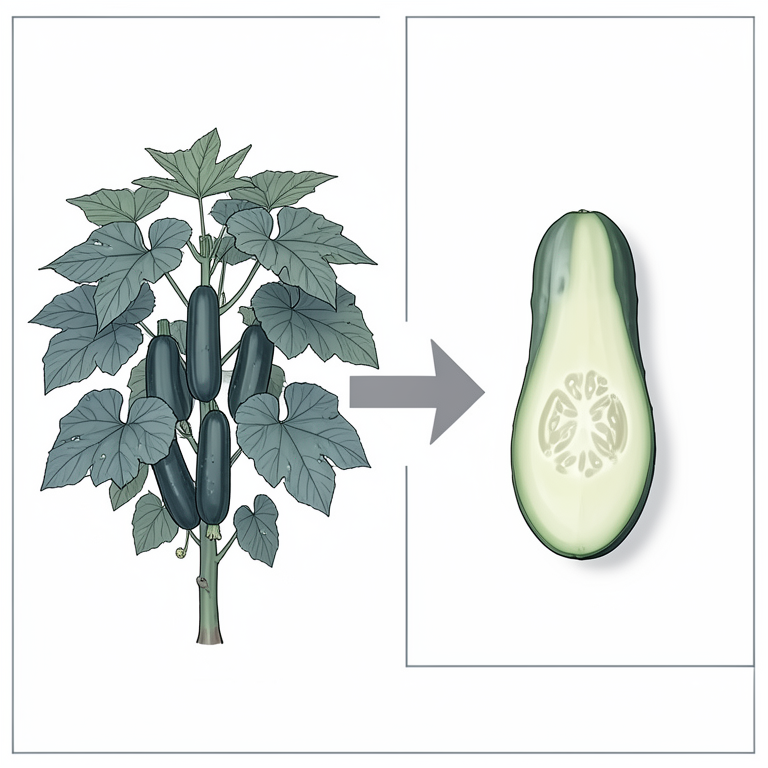
Independence of Yield and Quality
AI-generated conceptual illustration (cucumber plants (Cucumis sativus)). It explains the idea and does not show study data.
View source evidence ↗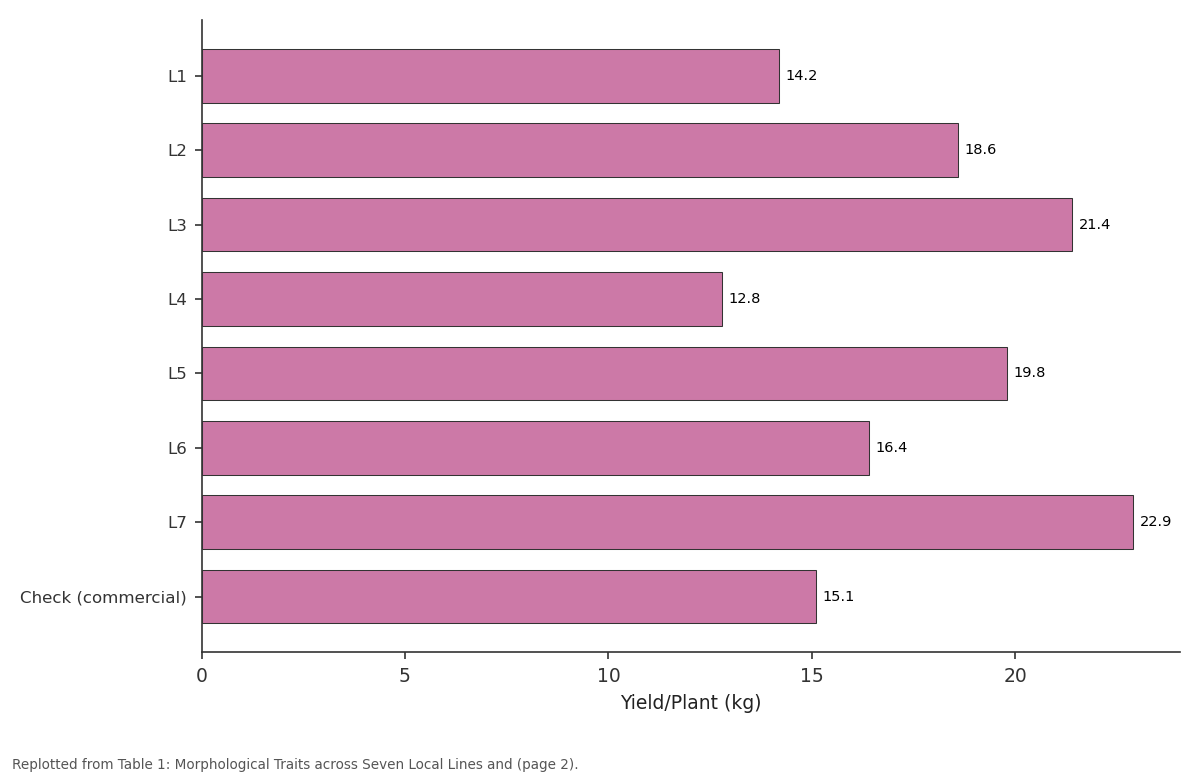
Yield/Plant (kg): L1 vs L2 vs L3 vs L4 vs L5
Replotted from Table 1 (page 2) of the original paper. Every bar is the paper's own table value.
View source evidence ↗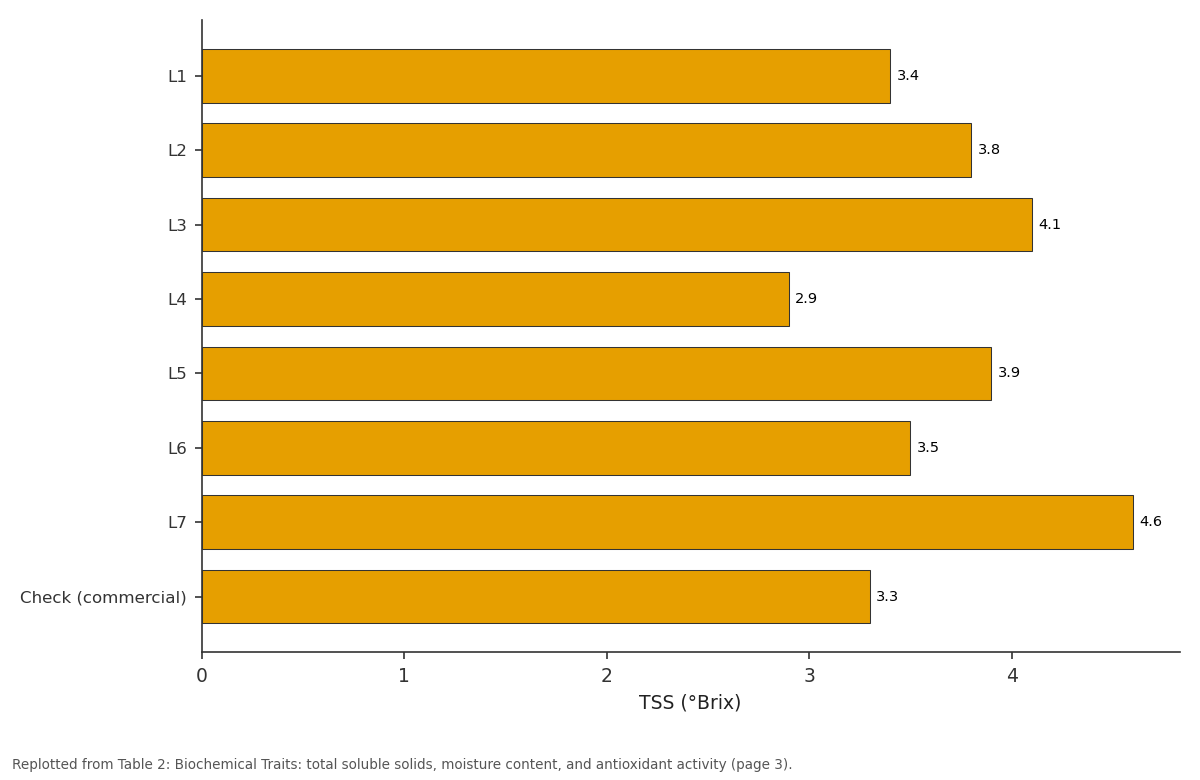
TSS (°Brix): L1 vs L2 vs L3 vs L4 vs L5
Replotted from Table 2 (page 3) of the original paper. Every bar is the paper's own table value.
View source evidence ↗Figures & tables
From the original paper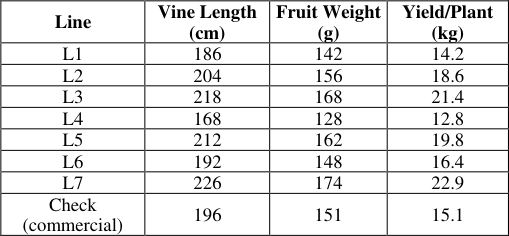 Table 1
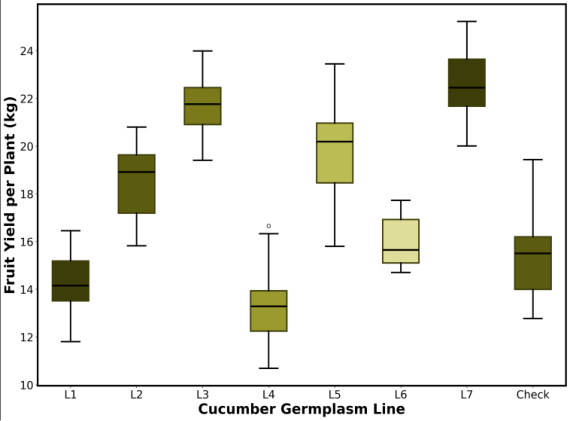 Figure 1
 Table 2
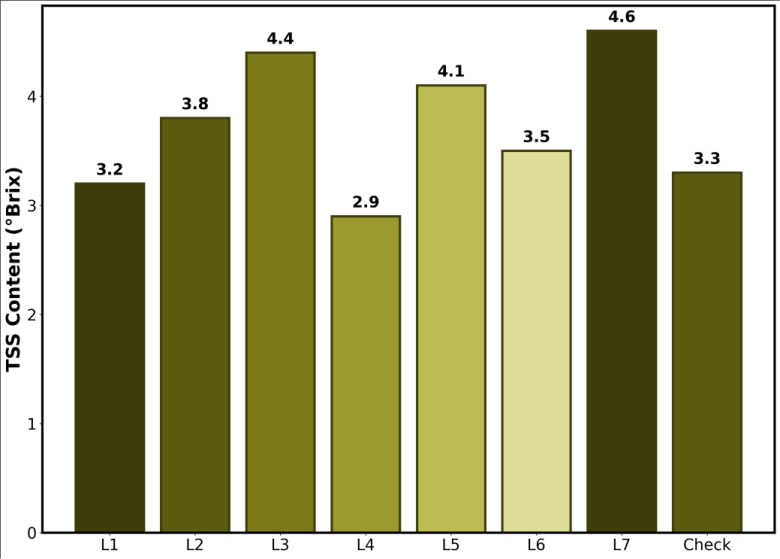 Figure 2
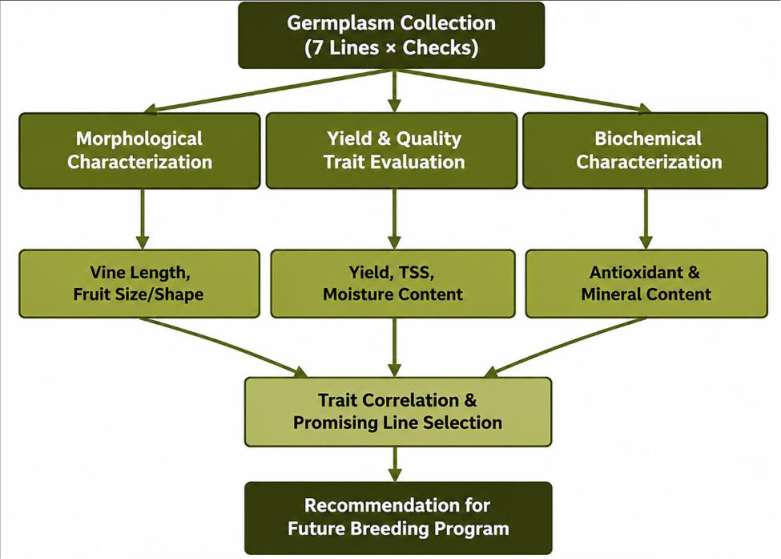 Figure 3
Introduction
"The seeds our grandparents saved carry traits worth knowing" is how one Arequipa-region cucumber grower described the local germplasm collection this research draws upon, a description that captures both the promise and the current knowledge gap surrounding Peru's local cucumber genetic diversity. Generations of informal seed-saving and farmer selection across the Andean highland valleys surrounding Arequipa have produced a range of locally adapted cucumber lines, yet these lines have rarely undergone the kind of systematic morphological and biochemical characterization that would allow breeding programs to identify which specific lines carry traits worth incorporating into formal variety development efforts. Cucumber (Cucumis sativus L.) breeding programs across Latin America have historically drawn more heavily on introduced germplasm and international breeding lines than on local landrace characterization, a pattern that risks overlooking locally adapted traits, whether disease tolerance, climate adaptation, or quality characteristics, that generations of informal selection under local growing conditions may have inadvertently concentrated within specific local lines. Systematic characterization represents a necessary first step before such traits can be deliberately incorporated into formal breeding programs, since without knowing which lines carry which traits, breeders cannot make informed crossing decisions. This research characterized seven local Peruvian cucumber lines maintained by farming communities across the Arequipa region, evaluating both morphological traits relevant to yield potential and biochemical traits relevant to fruit quality and potential nutraceutical value, alongside a widely grown commercial check variety to provide a familiar performance benchmark. Two questions guided this characterization effort. First, how do these seven local lines compare against the commercial check and against each other on yield-related morphological traits, and do any local lines show yield potential exceeding the commercial check despite lacking formal breeding development? Second, do yield and quality traits, specifically total soluble solids and antioxidant activity, correlate positively, negatively, or independently across this germplasm collection, information relevant to whether future breeding efforts could realistically combine high yield with high quality traits or would instead face an inherent trade-off requiring compromise between these breeding objectives? Beyond the immediate breeding value of individual standout lines, this characterization effort also carries broader relevance for Peru's germplasm conservation policy discussions, since documenting concrete, quantified trait advantages within specific local lines, as this research aimed to do for cucumber, provides breeding programs and policymakers with a more actionable evidence base than general appeals to the value of maintaining agricultural biodiversity, helping justify continued investment in local germplasm collection, maintenance, and characterization work across Peru's diverse highland vegetable-growing regions.
Materials and Methods Field Experimental Design
Seven local cucumber lines (designated L1 through L7), collected from farming communities across three districts of the Arequipa region, were evaluated alongside a widely grown commercial check variety in a randomized complete block design with four replications across two consecutive cropping seasons at the Andean Highlands College research farm. Plots measuring 3 m × 5 m per entry per replication were established under open-field conditions with drip irrigation and standard regional agronomic management applied uniformly across all entries.
Crop Growth Stage Documentation
Vine length was recorded at 45 days after transplanting, and flowering onset was recorded as days from transplanting to first female flower anthesis. Fruit harvest was conducted at the culinary-maturity stage typical for fresh-market cucumber consumption in the region, with fruit size, weight, and total yield per plant recorded across the full harvest period of each cropping season.
Methods
Morphological data, vine length, fruit length, fruit diameter, fruit weight, and yield per plant, were recorded from ten randomly tagged plants per plot per season. Total soluble solids were measured using a digital refractometer from fruit juice extracted at harvest maturity. Moisture content was determined gravimetrically after oven-drying fruit tissue samples to constant weight. Antioxidant activity was assessed using the DPPH (2,2-diphenyl-1-picrylhydrazyl) radical scavenging assay on methanolic fruit extracts, and selected mineral content (potassium, calcium, and magnesium) was determined using atomic absorption spectrophotometry following standard tissue digestion procedures. Data were analyzed using analysis of variance appropriate for a randomized complete block design, with treatment means compared using the critical difference test at 5% significance, and Pearson correlation coefficients calculated linking morphological and biochemical traits across the eight entries.
Results
Substantial trait variation was documented across the eight entries characterized, with several local lines matching or exceeding the commercial check variety's performance on specific traits, though no single line dominated across every trait measured.
Comprehensive Interpretation
Lines L3 and L7 emerged as the clearest standout candidates from this characterization effort, both exceeding the commercial check on yield while also recording among the highest total soluble solids and antioxidant activity values across the collection, suggesting these two lines combine favorable yield and quality traits rather than trading one for the other. The absence of a significant correlation between yield and total soluble solids across the broader eight-entry collection further supports the interpretation that yield and quality traits vary largely independently within this germplasm pool, meaning breeders are not necessarily constrained to choose between high-yielding and highquality parent lines when designing future crosses. The lack of significant correlation between yield and total soluble solids across this collection carries a direct practical implication for breeding program design: rather than assuming a yield-quality trade-off requiring breeders to compromise between these objectives, as is sometimes the case in other crop species where rapid biomass accumulation dilutes quality trait concentration, this research's data suggest Peruvian cucumber breeding programs could realistically pursue both objectives simultaneously by selecting parent lines, such as L3 and L7, that already combine favorable performance on both trait categories, rather than needing to design complex crosses specifically intended to recombine yield and quality traits from separate, trait-specialized parent lines. The antioxidant activity results, with L3 showing the highest DPPH radical scavenging activity among all eight entries, point toward a potential secondary breeding objective beyond conventional yield and taste-quality traits: cucumber varieties with elevated antioxidant content could carry additional market value in health-conscious fresh produce segments increasingly relevant to Peru's growing urban vegetable markets, suggesting L3's biochemical profile may warrant particular attention in future breeding work targeting this market segment specifically, beyond its already-favorable yield and total soluble solids performance. Mineral content analysis, though not the primary focus of this research's characterization effort, showed L3 and L7 also recording somewhat higher potassium and magnesium concentrations relative to the commercial check and several of the other local lines, an additional data point consistent with these two lines carrying a generally favorable nutritional profile beyond the antioxidant activity and total soluble solids results already discussed. Whether this broader favorable nutritional profile reflects a shared underlying genetic factor across these traits, or simply reflects independent trait variation that happened to align favorably in these two particular lines, would require further investigation beyond what this research's characterizationlevel data can resolve, though either explanation would support prioritizing L3 and L7 for more detailed follow-up evaluation.
Discussion
Discussion
Conclusion
This research characterized seven local Peruvian cucumber germplasm lines alongside a commercial check variety for yield-related morphological traits and biochemical quality traits, identifying substantial trait diversity within a previously uncharacterized local germplasm collection maintained by Arequipa-region farming communities. Lines L3 and L7 emerged as the most promising candidates for future breeding programs, both exceeding the commercial check on yield (21.4 and 22.9 kg/plant respectively, versus 15.1 kg/plant for the check) while also recording favorable total soluble solids and antioxidant activity values, and the absence of significant correlation between yield and total soluble solids across the broader collection suggests these trait categories can be pursued simultaneously rather than requiring a breeding trade-off. For Peruvian cucumber breeding programs, the most direct recommendation from this research is that lines L3 and L7 warrant priority inclusion as parent material in future breeding crosses, given their demonstrated combination of above-check yield performance and favorable quality traits documented across two independent cropping seasons. More broadly, this research's findings support continued systematic characterization of Peru's local vegetable germplasm collections, since valuable trait combinations, as demonstrated here for cucumber, may exist within farmermaintained local lines that have not yet received the formal evaluation attention given to introduced or internationally developed breeding material. Extending this characterization approach to additional local cucumber lines beyond the seven evaluated here, and incorporating molecular marker analysis to better understand the genetic basis of the favorable trait combinations identified in L3 and L7, would represent valuable next steps toward formal breeding program development building on this research's findings.
Figures and tables from the paper
| Line | TSS (°Brix) | Moisture Content (%) | DPPH Activity (% inhibition) |
|---|---|---|---|
| L1 | 3.4 | 95.8 | 42.6 |
| L2 | 3.8 | 95.2 | 48.9 |
| L3 | 4.1 | 94.6 | 58.7 |
| L4 | 2.9 | 96.4 | 38.2 |
| L5 | 3.9 | 94.9 | 51.4 |
| L6 | 3.5 | 95.6 | 44.8 |
| L7 | 4.6 | 94.2 | 54.1 |
| Check (commercial) | 3.3 | 95.7 | 40.6 |
Table text extracted from the original PDF; superscript letters are shown inline. The original table image is below.
View original table image
References
17 in the original paper- Behera TK, Staub JE, Behera S, Simon PW, Mohapatra T. Cucumber (Cucumis sativus L.) breeding: a stress and disease resistance perspective. Veg Crops Res Bull. 2010;72:5-16.
- Cavagnaro PF, Senalik DA, Yang L, Simon PW, Harkins TT, Kodira CD, et al. Genome-wide characterization of simple sequence repeats in cucumber (Cucumis sativus L.). BMC Genomics. 2010;11:569.
- Colle M, Weng Y, Kang Y, Ophir R, Sherman A, Grumet R. Variation in cucumber (Cucumis sativus L.) fruit size and shape results from multiple components acting pre-anthesis and post-pollination. Planta. 2017;246(4):641-658.
- Dhillon NPS, Ranjana R, Singh K, Eduardo I, Monforte AJ, Pitrat M, et al. Diversity among landraces of Indian snapmelon (Cucumis melo var. momordica). Genet Resour Crop Evol. 2007;54(6):1267-1283.
- Gulen H, Eris A. Effect of heat stress on peroxidase activity and total protein content in strawberry plants. Plant Sci. 2004;166(3):739-744.
- Kim H, Kim CW, Myung K, Ahn YK, Lee S. Antioxidant activity and total phenolic content in cucumber (Cucumis sativus L.) genetic resources. Korean J Hortic Sci Technol. 2015;33(2):257-266.
- Kumar V, Sharma S, Sharma R. Genetic variability and character association studies in cucumber (Cucumis sativus L.). Int J Veg Sci. 2019;25(2):149-158.
- Ma L, Wang Q, Zheng Y, Zhao J, Zhang H, Bo K, et al. Cucumber (Cucumis sativus L.) fruit-length gene identification and functional analysis. Hortic Res. 2020;7:113.
- Mehta N, Munshi AD, Behera TK, Choudhary H, Bhatt R. Genetic diversity analysis of cucumber germplasm using morphological and molecular markers. Veg Sci. 2018;45(1):45-52.
- Munshi AD, Panda B, Behera TK. Genetics and breeding of important disease resistances in cucumber. J Hortic Sci. 2017;12(2):89-101.
- Pandey S, Ansari WA, Pandey M, Singh B. Genetic diversity in Indian cucumber based on microsatellite and morphological markers. Biochem Syst Ecol. 2018;80:35-41.
- Rakoczy-Trojanowska M, Studnicki M, Gołębiewska G, Wrzesińska B, Malepszy S. Genetic variability of Polish cucumber landraces estimated with morphological markers and RAPDs. Folia Hortic. 2011;23(1):17-24.
- Renner SS, Sousa A, Chomicki G. Chromosome numbers, Sudanese wild relatives, and the origin of domesticated watermelon. Bot J Linn Soc. 2017;183(2):324-338.
- Sharma AK, Chatterjee S, Kanwar HS. Studies on genetic variability, correlation and path analysis in cucumber (Cucumis sativus L.). Veg Sci. 2014;41(2):176-179.
- Staub JE, Serquen FC, Gupta M. Genetic markers, map construction, and their application in plant breeding. HortScience. 1996;31(5):729-741.
- Yildirim E, Karlidag H, Turan M. Mitigation of salt stress in strawberry by foliar K, Ca and Mg nutrient supply. Plant Soil Environ. 2009;55(5):213-221.
- Zhang WW, Pan JS, He HL, Zhang C, Li Z, Zhao JL, et al. Construction of a high-density integrated genetic map for cucumber (Cucumis sativus L.). Theor Appl Genet. 2012;124(2):249-259.