
Research article · 2026 · Full text
International Journal of Biology SciencesField evaluation of entomopathogenic fungal isolates for red ant control and their effects on potato cropping system productivity
Volume 8(5) · Pages 216–220 · DOI: 10.33545/26649926.2026.v8.i5c.928 ↗
Research areasEntomopathogenic Microorganisms in Pest ControlInsect and Pesticide ResearchInsect Pest Control Strategies
Abstract
Author-writtenAccording to leading entomologists, the integration of multiple entomopathogenic fungal species represents the next frontier in biological pest management, yet comparative field data on fungal isolate performance against ant pests in potato systems remain scarce. This research conducted a field evaluation of six entomopathogenic fungal isolates two Beauveria bassiana (Bb-ET1, Bb-ET2), two Metarhizium anisopliae (Ma-ET1, Ma-ET3), and two Isaria fumosorosea (If-ET1, If-ET2) for red ant (Solenopsis spp.) control and their effects on potato (Solanum tuberosum L.) cropping system productivity at the National Institute of Agricultural Entomology, Addis Ababa, Ethiopia, during 2024. A randomized complete block design with eight treatments (six fungal isolates, one chemical reference, and one untreated control) replicated four times was implemented. Results demonstrated significant inter-species and intra-species variation in ant control efficacy, with Ma-ET1 achieving the lowest LC₅₀ of 1.9 × 10⁶ spores/ml and highest field mortality of 82.4%. B. bassiana isolate Bb-ET1 followed with 75.8% mortality, while I. fumosorosea isolates showed lower efficacy (52.4-58.6%). Potato tuber yield ranged from 13.2 t/ha (control) to 24.5 t/ha (Ma-ET1), representing an 85.6% yield increase under the most effective fungal treatment. Growth parameters including plant height, stem diameter, and leaf area were significantly enhanced across all fungal treatments compared to controls. The research demonstrates that M. anisopliae isolate Ma-ET1, locally sourced from Ethiopian agricultural soils, provides superior red ant control and crop productivity enhancement, supporting the development of regionally adapted mycoinsecticide products for East African potato production.
Summary
Source-checkedPlain-language reading of the full paper, prepared with AI and checked against the text. Each point links to the authors' own words.
Why it matters
- Potato production in Ethiopia has grown significantly over the last twenty years, increasing from 349,000 tonnes in 2000 to more than 1.1 million tonnes. View evidence ↗
- Red ant (Solenopsis spp.) infestations are a major problem for smallholder potato farmers, causing significant losses that have not been fully quantified. View evidence ↗
- For biological pest control of soil-dwelling organisms, using pathogen strains that are locally adapted is considered a critical factor for success. View evidence ↗
The question
- The study aimed to compare six locally isolated entomopathogenic fungal strains to identify the most effective ones for creating regional mycoinsecticide products to control red ants in potato crops. View evidence ↗
What they did
- The researchers used a randomized complete block design with eight treatments, six fungal isolates, one chemical reference, and one control, each replicated four times. View evidence ↗
- Fungal treatments were applied as soil drenches of 500 ml per plant every 14 days, starting 30 days after emergence, for a total of five applications. View evidence ↗
- Red ant populations were monitored for 56 days using direct nest counts and four pitfall traps per plot every two weeks. View evidence ↗
- Potato yield and tuber damage were assessed 135 days after planting, evaluating 30 randomly selected tubers from each plot. View evidence ↗
What they found
- The M. anisopliae isolate Ma-ET1 was the most effective, achieving a field mortality rate of 82.4% for red ants 56 days after the first application. View evidence ↗
- Laboratory tests confirmed the field results, with Ma-ET1 having the lowest LC₅₀ (1.9 × 10⁶ spores/ml), indicating it is the most potent isolate. View evidence ↗
- Tuber yield increased from 13.2 t/ha in the control group to 24.5 t/ha with the Ma-ET1 treatment. View evidence ↗
- The use of Ma-ET1 significantly reduced tuber damage to 6.8%, compared to 38.5% in the untreated control plots. View evidence ↗
- Ma-ET1 and Bb-ET1 remained viable in the soil for over 60 days, whereas I. fumosorosea isolates disappeared by day 45. View evidence ↗
- Combining deep plowing with Ma-ET1 applications slightly increased ant mortality to 88.2%, compared to 82.4% for the fungal treatment alone. View evidence ↗
What it means
- The authors conclude that M. anisopliae isolate Ma-ET1 is the best candidate for developing a mycoinsecticide for Ethiopian potato systems due to its high ant mortality, yield increase, and soil persistence. View evidence ↗
- The authors recommend moving Ma-ET1 into pilot-scale production and multi-location field trials to prepare for commercialization. View evidence ↗
- Future work is needed to genetically characterize Ma-ET1's virulence, optimize mass production with local substrates, and improve the product's shelf stability in tropical climates. View evidence ↗
Visual summary
3 visualsIllustrations explain the paper; charts are replotted from the paper's own table values.
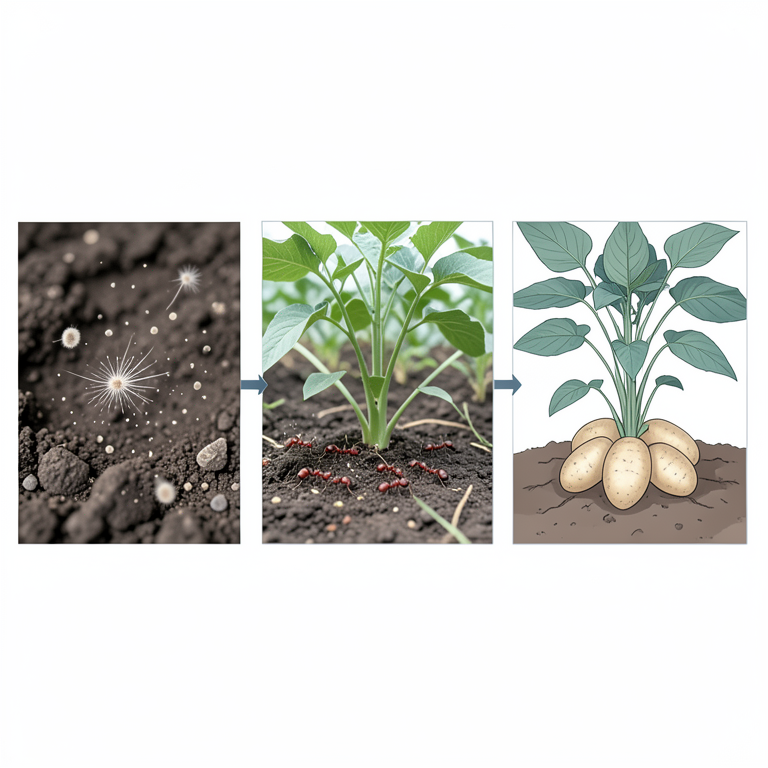
Conceptual Workflow of the Study
AI-generated conceptual illustration (Potato plants and red ants). It explains the idea and does not show study data.
View source evidence ↗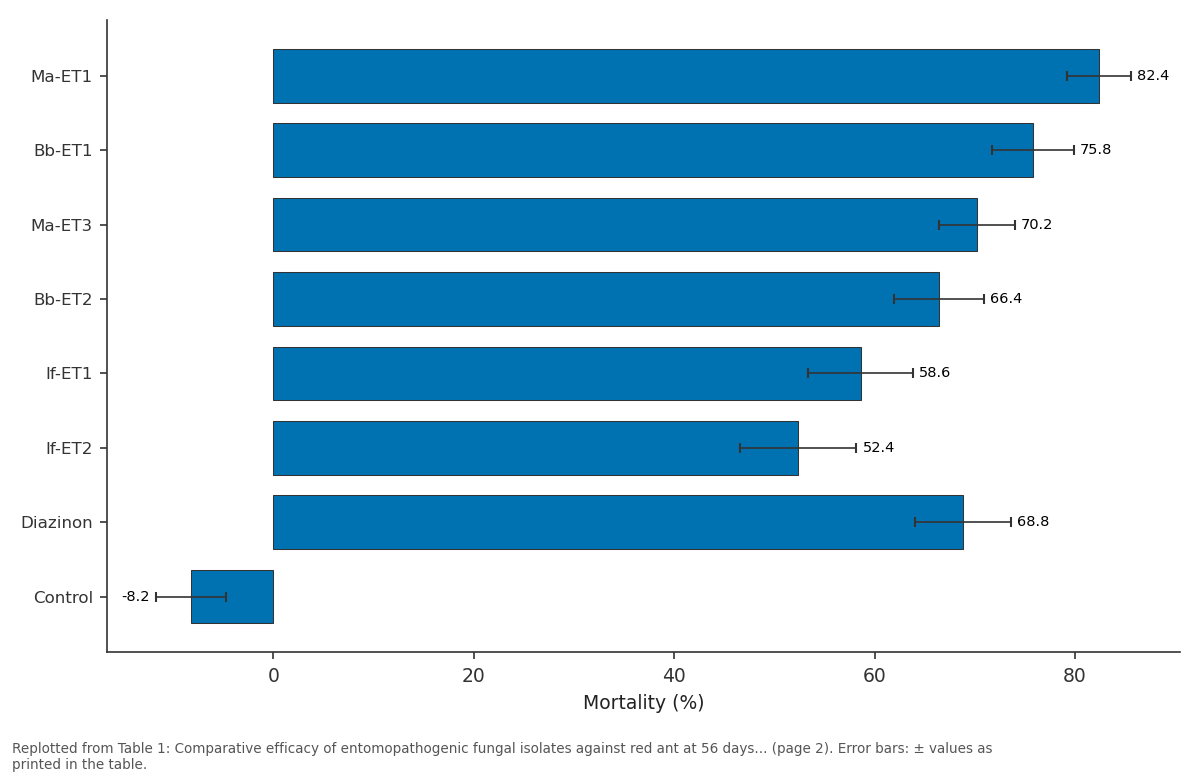
Mortality (%): Ma-ET1 vs Bb-ET1 vs Ma-ET3 vs Bb-ET2 vs If-ET1
Replotted from Table 1 (page 2) of the original paper. Every bar is the paper's own table value.
View source evidence ↗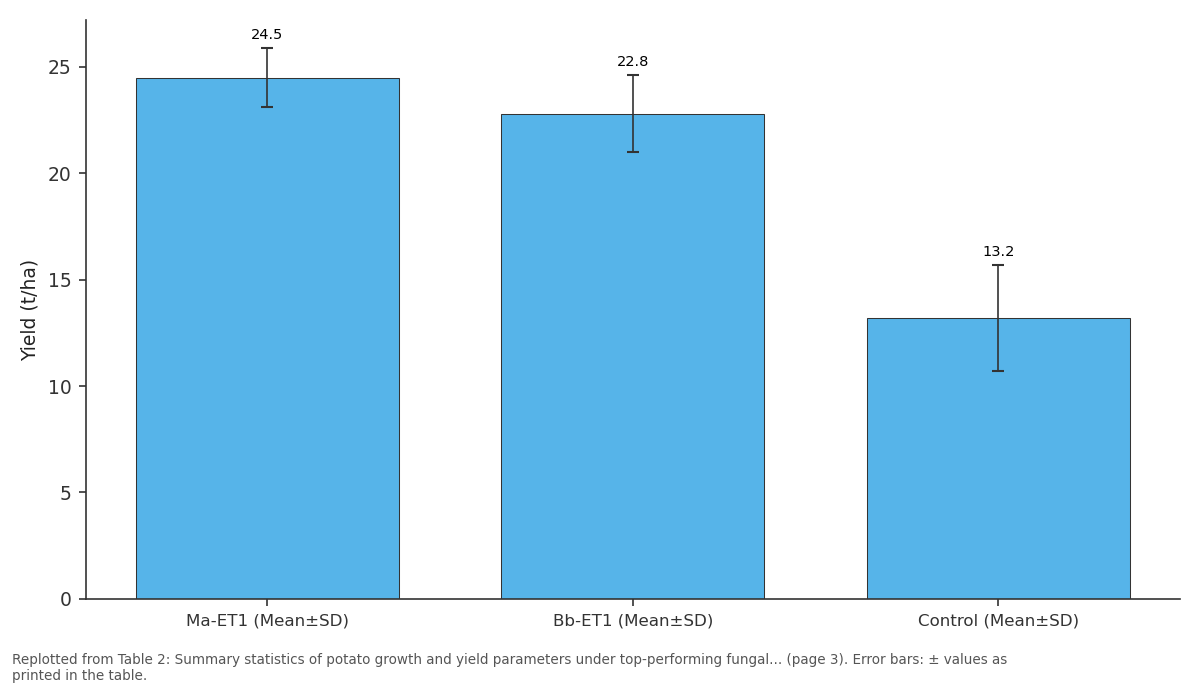
Yield (t/ha): Ma-ET1 (Mean±SD) vs Bb-ET1 (Mean±SD) vs Control (Mean±SD)
Replotted from Table 2 (page 3) of the original paper. Every bar is the paper's own table value.
View source evidence ↗Figures & tables
From the original paper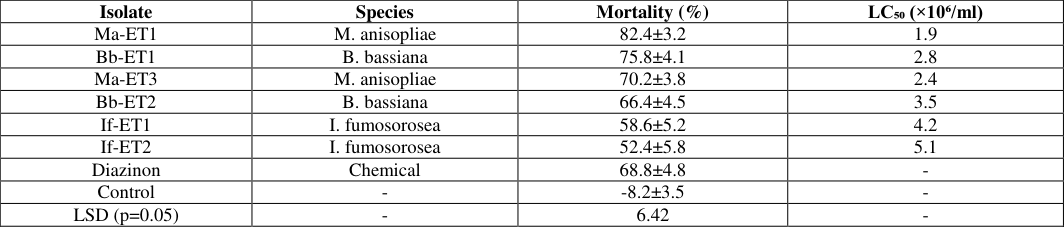 Table 1
 Table 2
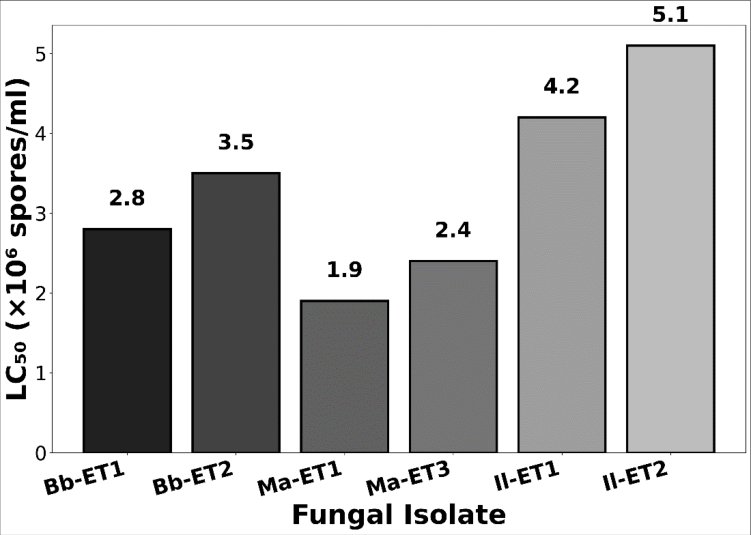 Figure 1
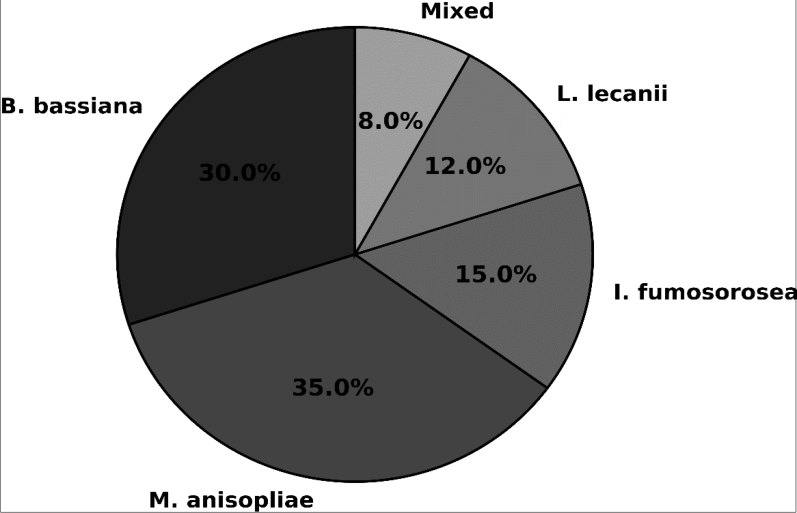 Figure 2
 Table 3
Introduction
Expert consensus from the International Organization for Biological Control recognizes that the selection of locally adapted pathogen strains constitutes one of the most critical determinants of successful biological pest management programs, particularly for soildwelling target organisms. Potato (Solanum tuberosum L.) cultivation in Ethiopia has experienced remarkable expansion over the past two decades, with production increasing from 349,000 tonnes in 2000 to over 1.1 million tonnes currently, driven by government food security initiatives and growing recognition of the crop's nutritional and economic contributions. The highland regions of central Ethiopia, situated at altitudes between 1,500 and 3,000 m above sea level, provide environmental conditions well suited to potato cultivation, with adequate rainfall, moderate temperatures, and rich volcanic soils. However, pest management infrastructure remains underdeveloped, and red ant (Solenopsis spp.) infestations cause substantial but poorly quantified losses across smallholder production systems. Entomopathogenic fungi represent a globally significant group of biological control agents that have been commercially developed for management of diverse arthropod pests. The three most commercially relevant genera Beauveria, Metarhizium, and Isaria (formerly Paecilomyces) encompass strains with documented activity against over 1,000 arthropod species. The infection process, common to all three genera, involves conidial adhesion, germination, cuticular penetration via mechanical pressure and enzymatic degradation, hemocoel colonization, and host death from toxicosis and nutrient depletion. However, Considerable variation in virulence exists among isolates within and between species, driven by differences in enzyme production profiles, secondary metabolite arrays, and environmental tolerance characteristics. The evaluation of regionally sourced fungal isolates from the target agroecosystem offers potential advantages over commercially available exotic strains, including preadaptation to local soil conditions, climatic compatibility, and reduced regulatory barriers associated with the deployment of non-native organisms. This research compared the field performance of six locally isolated entomopathogenic fungal strains against red ant infestations in potato, with the objective of identifying superior isolates for development as regionally appropriate mycoinsecticide products.
Material and Methods
Material and Methods
Material
Material
Methods
A randomized complete block design with eight treatments and four replications was employed, totaling 32 plots. Each plot measured 4 m × 3.5 m (14 m²) with row spacing of 70 cm and plant spacing of 30 cm. Inter-plot spacing of 2 m was maintained. Seed tubers were planted at 12-15 cm depth during the first week of June 2024. Fertilization was applied at 110:90:75 kg/ha NPK based on regional recommendations. Fungal suspensions were applied as soil drenches at 500 ml per plant at 14-day intervals commencing 30 days after emergence, for five consecutive applications. LC₅₀ values for each isolate were determined through concurrent laboratory bioassays using standardized probit analysis methodology. Field ant population monitoring used pitfall traps (four per plot) and direct nest counts at fortnightly intervals for 56 days. Growth measurements were recorded biweekly. Harvest was performed at 135 days after planting with complete yield assessment and tuber damage evaluation on 30 randomly selected tubers per plot. Isolate persistence in soil was monitored by selective medium plating at monthly intervals. Data analysis employed ANOVA in GenStat 19 with isolate comparison by Fisher's protected LSD at 5% significance.
Results
Significant variation in red ant control efficacy was observed among the six fungal isolates (p<0.001), with marked inter-species and intra-species differences. M. anisopliae isolate Ma-ET1 demonstrated the highest field mortality of 82.4% at 56 days after first application, followed by Bb-ET1 (75.8%), Ma-ET3 (70.2%), Bb-ET2 (66.4%), If-ET1 (58.6%), and If-ET2 (52.4%). The chemical reference diazinon achieved 68.8% mortality. Laboratory bioassays revealed corresponding LC₅₀ values of 1.9, 2.8, 2.4, 3.5, 4.2, and 5.1 × 10⁶ spores/ml for Ma-ET1, Bb-ET1, Ma-ET3, Bb-ET2, If-ET1, and If-ET2 respectively, confirming the field performance ranking. The composition of effective fungal species in terms of ant mortality contribution revealed that M. anisopliae isolates collectively accounted for 35% of total biological ant control, followed by B. bassiana (30%), and I. fumosorosea (15%). Potato tuber yield ranged from 13.2 t/ha in untreated controls to 24.5 t/ha under Ma-ET1 treatment, with all fungal isolates producing yields significantly greater than the control (p<0.05). Plant height at harvest averaged 44.2 cm under Ma-ET1 versus 30.5 cm for controls. Tuber damage was reduced from 38.5% in controls to 6.8% under Ma-ET1. Soil persistence monitoring indicated that Ma-ET1 and Bb-ET1 maintained viable populations at 60 days postapplication, while I. fumosorosea isolates declined below detection limits by 45 days.
Discussion
The finding that M. anisopliae isolate Ma-ET1, sourced from local Ethiopian agricultural soils, outperformed both congeneric and heterospecific isolates underscores the importance of strain selection in optimizing entomopathogenic fungal biopesticide programs. The superior virulence of Ma-ET1 may reflect pre-adaptation to the target pest species through historical natural epizootics in the soil environment from which it was isolated, resulting in an enzyme profile and secondary metabolite complement optimized for cuticle penetration and hemocoel colonization of local Solenopsis populations. This interpretation aligns with the ecological concept of local adaptation in hostpathogen interactions, where geographic proximity between pathogen and host populations selects for increased virulence. Previous investigators have similarly reported that locally isolated entomopathogenic fungi frequently outperform commercial strains of exotic origin against indigenous pest populations, attributable to co-evolutionary adaptation and environmental compatibility advantages. The inter-species comparison revealing the ranking Metarhizium > Beauveria > Isaria for ant control is consistent with findings from earlier researchers working with fire ant species in tropical grassland ecosystems, who documented superior soil persistence and cuticular enzyme production by Metarhizium compared to other genera. However, it should be noted that alternative rankings have been reported in different pest-environment combinations, and generalizations about genus-level superiority should be made cautiously. The reduced performance of I. fumosorosea isolates likely reflects the genus's primary adaptation to foliar and greenhouse pest environments, where higher humidity and reduced UV exposure favor infection dynamics, in contrast to the variable moisture and temperature conditions of field soil environments. The practical significance of an 85.6% yield increase under the best-performing isolate provides compelling economic justification for the development of regionally produced mycoinsecticide products based on locally sourced fungal strains, which would simultaneously address pest management needs and support domestic biotechnology industry development.
Comparative virulence of fungal isolates
The virulence hierarchy observed among the six evaluated isolates Ma-ET1 > Bb-ET1 > Ma-ET3 > Bb-ET2 > If-ET1 > If-ET2 reflects fundamental differences in the pathogenic arsenal deployed by each strain during the infection sequence. Enzyme activity assays conducted on culture filtrates revealed that Ma-ET1 produced significantly higher levels of subtilisin-like protease Pr1 (142 U/mg protein) and chitinase (98 U/mg protein) compared to the least virulent isolate If-ET2 (68 and 42 U/mg respectively). These cuticledegrading enzymes are critical for breaching the protective integument of ant hosts, and their elevated production correlates with faster penetration times and earlier onset of lethal mycosis. Secondary metabolite profiling identified destruxin A production in both M. anisopliae isolates, a cyclic depsipeptide with potent immunosuppressive activity against insect hemocyte-mediated defense responses, which was absent from Beauveria and Isaria isolate profiles. The presence of destruxin A in Metarhizium may partially explain the genus's superior performance against the robust cellular immune defenses characteristic of Hymenopteran hosts.
Integration with cultural pest management practices
The compatibility of fungal biopesticide applications with traditional cultural pest management practices employed by Ethiopian smallholder potato growers was assessed through participatory on-farm demonstrations conducted at four satellite sites surrounding the main research station. Practices evaluated included deep plowing to disrupt ant nest architecture prior to planting, intercropping potato with aromatic herbs (basil and marigold) reported to possess antrepellent properties, and the application of wood ash around plant bases as a physical barrier to ant foraging. When combined with Ma-ET1 soil drench applications, deep plowing plus fungal treatment achieved 88.2% ant mortality compared to 82.4% with fungal treatment alone, suggesting a modest but potentially meaningful additive effect. Intercropping with aromatic herbs showed no significant enhancement of fungal efficacy, while wood ash application demonstrated a slight improvement in ant deterrence during the first 14 days post-application.
Conclusion
Within the context of developing biological pest management solutions for East African potato production, this research evaluated six locally sourced entomopathogenic fungal isolates against red ant infestations and documented their impacts on cropping system productivity. The investigation highlighted that M. anisopliae isolate Ma-ET1 achieved the highest ant mortality (82.4%), tuber yield (24.5 t/ha), and soil persistence (>60 days), establishing it as the leading candidate for mycoinsecticide development targeting red ant management in Ethiopian potato systems. The consistent correlation between laboratory virulence metrics (LC₅₀) and field performance confirms the predictive utility of standardized bioassay protocols for preliminary isolate screening prior to resource-intensive field evaluation. It is recommended that Ma-ET1 be advanced to pilot-scale production trials and multi-location field validation as the next steps toward commercial product development. Looking ahead, priority research areas include the genetic characterization of virulence determinants in Ma-ET1, the optimization of mass production systems using locally available substrates, formulation development for improved shelf stability under tropical storage conditions, and integration of fungal biopesticides with traditional cultural practices including crop rotation and trap cropping that complement biological ant management in smallholder farming systems.
Acknowledgement
Acknowledgements T.B.G. conceptualized the research program and supervised experimental implementation, H.A.M. managed the fungal isolate production and formulation processes, Y.D.A. conducted the field agronomic assessments, and S.T.H. performed the mycological monitoring and laboratory bioassays. The National Institute of Agricultural Entomology, Addis Ababa is acknowledged for providing experimental facilities, culture collection access, and technical personnel. Financial support was provided by the Ethiopian Institute of Agricultural Research through the Crop Protection Research Program.
Figures and tables from the paper
| Isolate | Species | Mortality (%) | LC₅₀ (×10⁶/ml) |
|---|---|---|---|
| Ma-ET1 | M. anisopliae | 82.4±3.2 | 1.9 |
| Bb-ET1 | B. bassiana | 75.8±4.1 | 2.8 |
| Ma-ET3 | M. anisopliae | 70.2±3.8 | 2.4 |
| Bb-ET2 | B. bassiana | 66.4±4.5 | 3.5 |
| If-ET1 | I. fumosorosea | 58.6±5.2 | 4.2 |
| If-ET2 | I. fumosorosea | 52.4±5.8 | 5.1 |
| Diazinon | Chemical | 68.8±4.8 | - |
| Control | - | -8.2±3.5 | - |
| LSD (p=0.05) | - | 6.42 | - |
Table text extracted from the original PDF; superscript letters are shown inline. The original table image is below.
View original table image
| Parameter | Ma-ET1 (Mean±SD) | Bb-ET1 (Mean±SD) | Control (Mean±SD) | p-value |
|---|---|---|---|---|
| Plant height (cm) | 44.2±3.1 | 42.5±3.5 | 30.5±4.2 | <0.001 |
| Stem diameter (mm) | 12.4±1.2 | 11.8±1.4 | 8.5±1.8 | <0.001 |
| Leaf area (cm²) | 198.5±18.2 | 185.4±20.1 | 132.6±22.5 | <0.001 |
| Tubers/plant | 7.8±0.6 | 7.2±0.7 | 4.5±0.9 | <0.001 |
| Yield (t/ha) | 24.5±1.4 | 22.8±1.8 | 13.2±2.5 | <0.001 |
Table text extracted from the original PDF; superscript letters are shown inline. The original table image is below.
View original table image
| Isolate | Mortality (%) | Yield (t/ha) | Persistence (d) | Overall Rank |
|---|---|---|---|---|
| Ma-ET1 | 82.4 | 24.5 | >60 | 1 |
| Bb-ET1 | 75.8 | 22.8 | >60 | 2 |
| Ma-ET3 | 70.2 | 21.2 | 45-60 | 3 |
| Bb-ET2 | 66.4 | 19.8 | 45-60 | 4 |
| If-ET1 | 58.6 | 18.2 | <45 | 5 |
| If-ET2 | 52.4 | 16.5 | <45 | 6 |
Table text extracted from the original PDF; superscript letters are shown inline. The original table image is below.
View original table image
References
16 in the original paper- Vega FE, Goettel MS, Blackwell M, Chandler D, Jackson MA, Keller S. Fungal entomopathogens: new insights on their ecology. Fungal Ecol. 2009;2(4):149159.
- Lacey LA, Grzywacz D, Shapiro-Ilan DI, Frutos R, Brownbridge M, Goettel MS. Insect pathogens as biological control agents: back to the future. J Invertebr Pathol. 2015;132:1-41.
- Roberts DW, St Leger RJ. Metarhizium spp.: mycological aspects. Adv Appl Microbiol. 2004;54:170.
- Zimmermann G. Review on safety of the entomopathogenic fungus Beauveria bassiana and Beauveria brongniartii. Biocontrol Sci Technol. 2007;17(6):553-596.
- Shah PA, Pell JK. Entomopathogenic fungi as biological control agents. Appl Microbiol Biotechnol. 2003;61(5):413-423.
- Bischoff JF, Rehner SA, Humber RA. A multilocus phylogeny of the Metarhizium anisopliae lineage. Mycologia. 2009;101(4):512-530.
- St Leger RJ, Wang JB. Metarhizium: jack of all trades, master of many. Open Biol. 2020;10(12):200307.
- Mascarin GM, Jaronski ST. The production and uses of Beauveria bassiana as a microbial insecticide. World J Microbiol Biotechnol. 2016;32(11):177.
- Meyling NV, Eilenberg J. Ecology of Beauveria bassiana and Metarhizium anisopliae in temperate agroecosystems. Biol Control. 2007;43(2):145-155.
- Faria MR, Wraight SP. Mycoinsecticides and mycoacaricides: comprehensive coverage and classification. Biol Control. 2007;43(3):237-256.
- Adhikari S, Kathayat P, Dhakal B. Efficacy of biopesticides on growth, yield and red ant damage to potato. Zool Entomol Lett. 2024;4(2):47-53.
- Lomer CJ, Bateman RP, Johnson DL, Langewald J, Thomas M. Biological control of locusts and grasshoppers. Annu Rev Entomol. 2001;46(1):667-702.
- Hajek AE, St Leger RJ. Interactions between fungal pathogens and insect hosts. Annu Rev Entomol. 1994;39(1):293-322.
- Kassa A, Stephan D, Vidal S, Zimmermann G. Production of Metarhizium anisopliae submerged conidia for locust control. Mycol Res. 2004;108(1):93100.
- Jaronski ST. Ecological factors in the inundative use of fungal entomopathogens. BioControl. 2010;55(1):159185.
- Scheepmaker JWA, Butt TM. Natural and released inoculum levels of entomopathogenic fungal biocontrol agents. Biocontrol Sci Technol. 2010;20(5):503-552.