
Research article · 2026 · Full text
International Journal of Horticulture and Food ScienceEvaluation of cucumber (Cucumis sativus L.) germplasm for resistance to downy mildew (Pseudoperonospora cubensis) based on percent disease index and area under disease progress curve
Volume 8(7) · Pages 49–56 · DOI: 10.33545/26631067.2026.v8.i7a.798 ↗
Research areasPlant Disease Resistance and GeneticsAdvances in Cucurbitaceae ResearchPlant Pathogens and Resistance
Abstract
Author-writtenDowny mildew, caused by Pseudoperonospora cubensis (Berk. & Curt.) Rostov, is one of the most destructive foliar diseases of cucumber (Cucumis sativus L.), resulting in severe yield losses and deterioration of fruit quality under humid and moderate temperature conditions. The rapid evolution of pathogen populations and the emergence of new virulent races have reduced the effectiveness of fungicide-based disease management, making host plant resistance the most economical and environmentally sustainable strategy for disease control. The present investigation was conducted to evaluate fifty cucumber genotypes for resistance to downy mildew under natural epiphytotic conditions using Percent Disease Index (PDI) and Area Under Disease Progress Curve (AUDPC) as quantitative measures of disease severity. Disease observations were recorded at regular intervals following disease initiation, and genotypes were classified into different resistance categories based on their disease response. Significant variation was observed among the evaluated germplasm for both PDI and AUDPC, indicating the existence of substantial genetic variability for downy mildew resistance. Genotypes exhibiting consistently low PDI and AUDPC values were identified as potential sources of resistance, whereas highly susceptible genotypes recorded rapid disease progression and higher AUDPC values. A strong positive correlation between PDI and AUDPC suggested that both parameters effectively described disease development, while AUDPC provided a more comprehensive assessment of temporal disease progression. The identified resistant genotypes constitute valuable genetic resources for cucumber improvement programmes and may serve as donor parents for breeding durable downy mildew-resistant cultivars. The findings also demonstrate the usefulness of integrating PDI and AUDPC for accurate phenotypic characterization of disease resistance in cucumber germplasm.
Summary
Source-checkedPlain-language reading of the full paper, prepared with AI and checked against the text. Each point links to the authors' own words.
Why it matters
- Downy mildew, caused by the pathogen Pseudoperonospora cubensis, is a highly destructive foliar disease in cucumbers that reduces fruit quality and causes severe yield losses in humid, moderate temperatures. View evidence ↗
- Severe epidemics of downy mildew can lead to yield losses ranging from 30% to total crop failure, especially in susceptible cultivars. View evidence ↗
- Because the pathogen evolves rapidly and develops new virulent races, fungicide treatments are becoming less effective, making host plant resistance the most sustainable and economical control method. View evidence ↗
The question
- The study aimed to evaluate fifty diverse cucumber genotypes for downy mildew resistance using two complementary measures: Percent Disease Index (PDI) and Area Under Disease Progress Curve (AUDPC). View evidence ↗
What they did
- The research was conducted at the ICAR-IARI Experimental Farm in New Delhi, India, during the kharif seasons of 2023 and 2024. View evidence ↗
- Fifty cucumber genotypes (CCUH-2501 to CCUH-2550) were tested using a Randomized Complete Block Design (RCBD) with three replications per season. View evidence ↗
- Disease resistance was assessed under natural epiphytotic conditions, with observations recorded every seven days from the start of the disease until the crop matured. View evidence ↗
- Disease severity was measured on expanded leaves using a 0-9 scale, and genotypes were categorized from 'Resistant' (0-10% PDI) to 'Highly Susceptible' (>75% PDI). View evidence ↗
What they found
- Disease severity increased in all genotypes over time, with PDI ranging from 11.1% to 42.2% at 30 days after sowing (DAS) and increasing to 65.6% to 100% by 75 DAS. View evidence ↗
- Genotype CCUH-2535 was identified as the most resistant, recording the lowest final disease severity (66.67%) and the lowest AUDPC value (1850). View evidence ↗
- Genotype CCUH-2516 was the most susceptible, with the highest AUDPC value of 3400, followed by CCUH-2513, CCUH-2517, CCUH-2545, CCUH-2527, and CCUH-2544. View evidence ↗
- A strong positive correlation between PDI and AUDPC indicates that both are effective for describing disease, but AUDPC is superior for assessing how the disease progresses over time. View evidence ↗
What it means
- The authors conclude that the identified resistant genotypes are valuable donor lines for breeding high-yielding cucumber cultivars with improved downy mildew resistance. View evidence ↗
- The authors state that the stability of the identified resistance needs to be confirmed through further evaluations across multiple locations and seasons under diverse environments. View evidence ↗
Visual summary
3 visualsIllustrations explain the paper; charts are replotted from the paper's own table values.
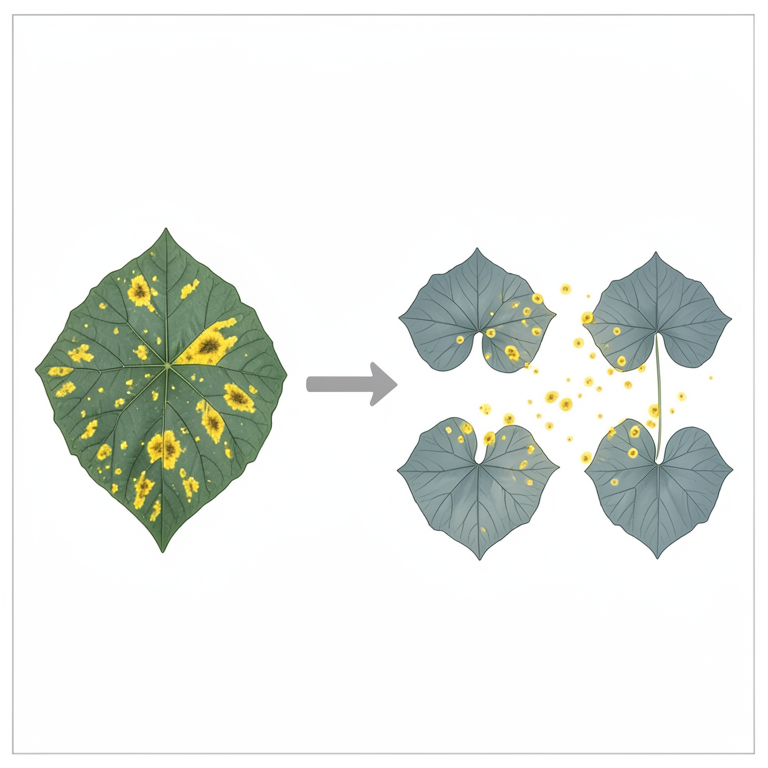
PDI vs AUDPC Comparison
AI-generated conceptual illustration (cucumber plants (Cucumis sativus L.)). It explains the idea and does not show study data.
View source evidence ↗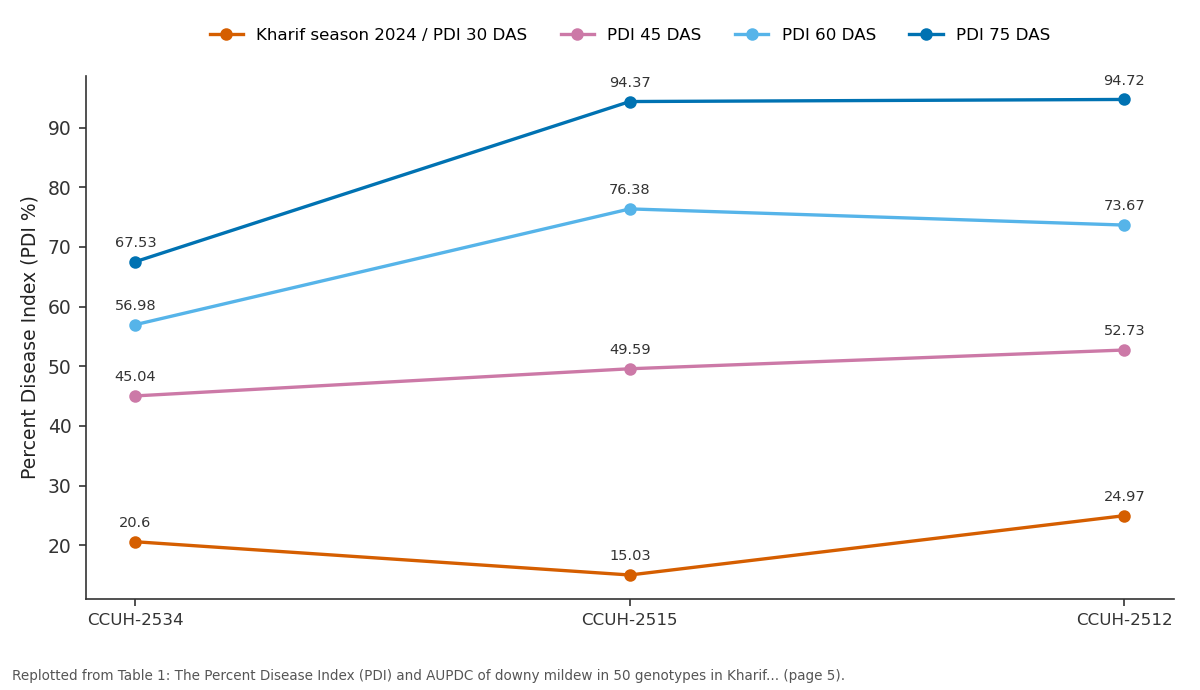
Kharif season 2024 / PDI 30 DAS and PDI 45 DAS and more: CCUH-2534 vs CCUH-2515 vs CCUH-2512
Replotted from Table 1 (page 5) of the original paper. Every bar is the paper's own table value.
View source evidence ↗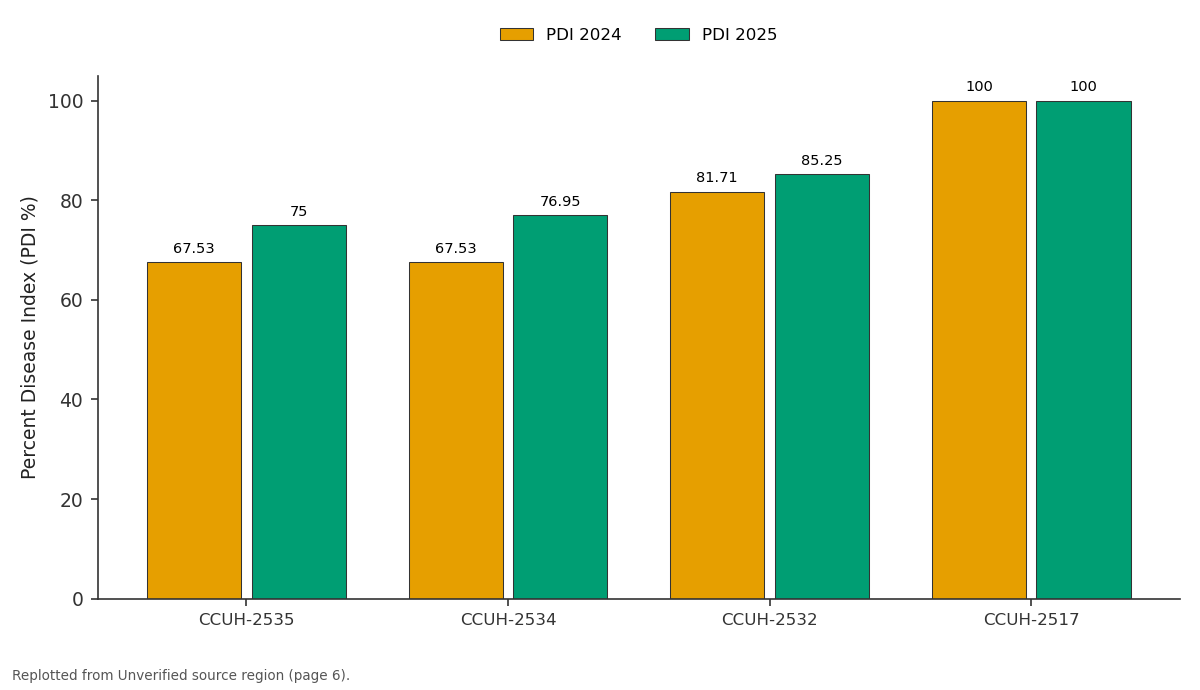
PDI 2024 and PDI 2025: CCUH-2535 vs CCUH-2534 vs CCUH-2532 vs CCUH-2517
Replotted from a table (page 6) of the original paper. Every bar is the paper's own table value.
View source evidence ↗Figures & tables
From the original paper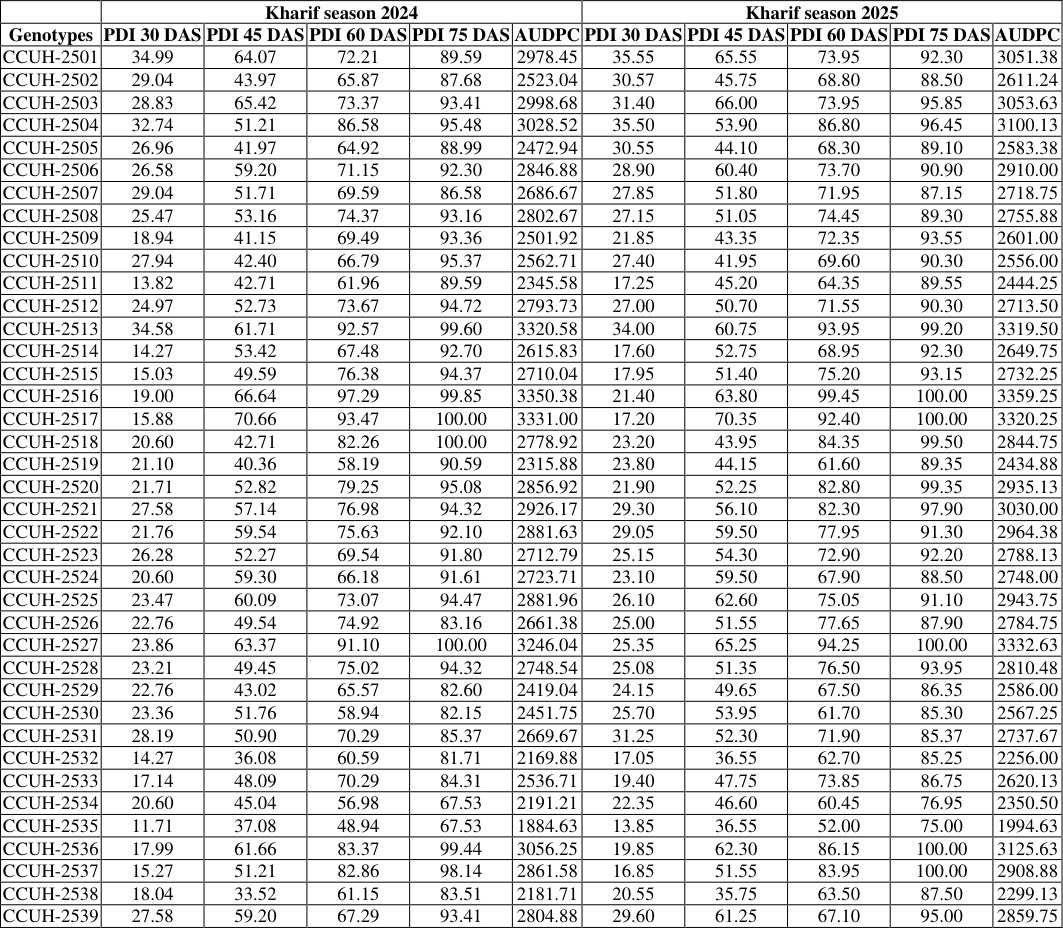 Table 1
Introduction
Cucumber (Cucumis sativus L.) is one of the most economically important vegetable crops belonging to the family Cucurbitaceae and is cultivated extensively throughout tropical, subtropical, and temperate regions of the world. It is valued for its tender fruits, refreshing taste, nutritional quality, and versatility in fresh consumption, processing, and pickling. Cucumber fruits are rich in water, dietary fibre, vitamins C and K, potassium, magnesium, and several bioactive compounds with antioxidant properties. The crop plays a significant role in improving nutritional security while providing substantial income to vegetable growers due to its short duration, high productivity, and year-round market demand. Globally, cucumber occupies several million hectares, with major production concentrated in Asia, particularly China and India, where it contributes significantly to vegetable production and rural livelihoods. Despite its economic importance, cucumber productivity is constrained by numerous biotic stresses, among which downy mildew is regarded as one of the most devastating foliar diseases.
The disease is caused by the obligate oomycete Pseudoperonospora cubensis (Berk. & Curt.) Rostov, a pathogen capable of infecting several economically important cucurbit crops including cucumber, muskmelon, watermelon, pumpkin, bottle gourd, bitter gourd, and squash. Since its first description during the nineteenth century, downy mildew has become one of the most widespread diseases of cucurbits, causing severe epidemics in regions characterized by moderate temperatures, prolonged leaf wetness, and high relative humidity. The pathogen has a worldwide distribution and remains a major challenge to sustainable cucumber production in both openfield and protected cultivation systems. Downy mildew primarily attacks the foliage, resulting in angular chlorotic lesions delimited by leaf veins on the upper leaf surface. Under favorable environmental conditions, grey to purplish sporulation develops on the abaxial leaf surface, representing the sporangiophores and sporangia of the pathogen. As infection progresses, lesions coalesce rapidly, leading to extensive chlorosis, necrosis, premature defoliation, reduced photosynthetic area, and impaired assimilate translocation. Severe infections may result in complete collapse of the foliage, drastically reducing fruit size, marketable yield, and fruit quality. Yield losses ranging from 30% to nearly complete crop failure have been reported during severe epidemics, particularly when susceptible cultivars are grown under conducive environmental conditions. The epidemiology of downy mildew is strongly influenced by environmental factors. Disease development is favoured by temperatures between 15 and 25°C, relative humidity above 90%, prolonged dew periods, and frequent rainfall or overhead irrigation, which facilitate sporulation, dispersal, and infection. Owing to the polycyclic nature of the disease, repeated infection cycles occur throughout the cropping season, resulting in rapid disease escalation. Climate variability, changing rainfall patterns, and increased humidity in many cucumber-growing regions have further intensified disease incidence and increased the frequency of epidemics. Management of downy mildew largely depends on repeated fungicide applications. However, intensive reliance on fungicides has raised serious concerns regarding the development of fungicide-resistant pathogen populations, environmental contamination, increased production costs, and pesticide residues on fresh produce. Moreover, the emergence of new physiological races and highly virulent populations of P. cubensis has frequently overcome previously deployed resistance genes, leading to the breakdown of resistance in commercial cultivars. These challenges highlight the urgent need to identify novel and durable sources of resistance that can be incorporated into cucumber breeding programmes. Host plant resistance represents one of the most effective, economical, and environmentally sustainable approaches for managing downy mildew. The identification of resistant germplasm provides valuable donor parents for breeding programmes and reduces dependence on chemical disease control. Germplasm evaluation under natural or artificial disease pressure remains the cornerstone for discovering new resistance sources. Reliable phenotyping is therefore essential to distinguish resistant, moderately resistant, and susceptible genotypes and to facilitate the genetic improvement of cucumber. Among the quantitative methods used for disease assessment, the Percent Disease Index (PDI) is one of the most widely adopted parameters for estimating disease severity at specific observation dates. PDI provides a snapshot of disease intensity and enables comparison among genotypes based on symptom expression. However, because disease development is dynamic and progresses continuously throughout the crop growth period, single-time assessments may not accurately reflect the overall disease burden experienced by the plant. To overcome this limitation, the Area Under the Disease Progress Curve (AUDPC) has become a standard epidemiological parameter for evaluating temporal disease development. AUDPC integrates disease severity over multiple observation dates, providing a cumulative measure of disease intensity throughout the epidemic. Compared with single disease observations, AUDPC offers a more robust estimate of disease progression, host resistance, and epidemic development. Consequently, the combined use of PDI and AUDPC has been widely recommended for comprehensive evaluation of disease resistance in breeding and pathology research. Although several studies have reported sources of resistance to downy mildew in cucumber, the continuous evolution of P. cubensis populations necessitates periodic re-evaluation of available germplasm. Furthermore, many cucumber collections remain inadequately characterized under Indian agro-climatic conditions, where disease pressure varies considerably across environments. Comprehensive evaluation of diverse germplasm under natural epiphytotic conditions can facilitate the identification of stable resistance sources and broaden the genetic base available for resistance breeding (FAOSTAT (2024); Zitter et al. (1996) [13] ; Lebeda et al. (2011)) [7] . The present investigation was therefore undertaken to evaluate a diverse panel of fifty cucumber genotypes for resistance to downy mildew using PDI and AUDPC as complementary disease assessment parameters. The specific objectives of the study were to (i) quantify the variability in disease response among cucumber genotypes, (ii) identify promising resistant germplasm based on disease severity and disease progression, (iii) compare the effectiveness of PDI and AUDPC for phenotypic evaluation, and (iv) identify potential donor genotypes for utilization in future cucumber improvement programmes aimed at developing durable resistance to downy mildew. The outcomes of this study are expected to contribute valuable information for disease resistance breeding and support the development of sustainable disease management strategies in cucumber.
Materials and Methods
Materials and Methods
Experimental Site
The experiment was conducted during the kharif 2023 and kharif 2024 seasons at the Experimental Farm of the Division of Vegetable Science, ICAR-Indian Agricultural Research Institute (IARI), New Delhi, India. The experimental farm is situated at 28°38′ N latitude and 77°10′ E longitude at an elevation of approximately 228.6 m above mean sea level. The region experiences a subtropical climate characterized by hot summers, a monsoon season with high relative humidity, and cool winters. The kharif season receives substantial rainfall, creating favourable environmental conditions for the natural development of downy mildew.
Experimental Material
A total of 50 cucumber (Cucumis sativus L.) genotypes, designated CCUH-2501 to CCUH-2550, were used in the present investigation. The germplasm represented a diverse collection maintained at the Division of Vegetable Science, ICAR-IARI, New Delhi. The genotypes were selected to represent broad genetic diversity and were evaluated for their reaction to downy mildew under natural epiphytotic conditions.
Experimental Design and Crop Raising
The experiment was laid out in a Randomized Complete Block Design (RCBD) with three replications during each season. Each genotype was represented by one plot in each replication, consisting of 10 healthy plants. Standard agronomic practices recommended for cucumber cultivation in the region were followed throughout the crop growth period. Appropriate doses of farmyard manure and fertilizers were applied before sowing and during crop growth according to the recommended package of practices. Irrigation, intercultural operations, and weed management were carried out uniformly for all experimental plots. No fungicides effective against downy mildew were applied during the experimental period to allow natural disease development.
Disease Development
The experiment was conducted under natural epiphytotic conditions, where downy mildew developed naturally during the cropping season. Disease development was favoured by the prevailing environmental conditions of moderate temperature, prolonged leaf wetness, and high relative humidity during the kharif season. Observations on disease severity were initiated immediately after the appearance of the first visible symptoms of downy mildew and continued at regular intervals until disease development reached maximum severity.
Disease Assessment
Disease severity was recorded on 10 randomly selected plants from each plot in every replication. On each selected plant, disease severity was assessed on all fully expanded leaves using the standard 0-9 disease rating scale, where: Disease observations were recorded at seven-day intervals from disease initiation until crop maturity. The average disease score for each genotype was calculated from observations recorded on ten plants in each replication.
Estimation of Percent Disease Index (PDI)
The Percent Disease Index (PDI) was calculated according to the method described by Wheeler (1969) [12] : The Percent Disease Index (PDI) was calculated according to the method described by Wheeler (1969) [12] :
where: Highly Susceptible (HS)
Estimation of Area Under Disease Progress Curve (AUDPC):
Disease progression over time was quantified by calculating the Area Under Disease Progress Curve (AUDPC) using disease severity observations recorded at successive observation dates according to the method of Shaner and Finney (1977) [11] :
AUDPC was calculated by the formula given below:
Where y i is an assessment of a disease (percentage) at the i th observation, t i is time (in days,) at the i th observation, and n is the total number of observations
The AUDPC values were computed separately for each genotype in each replication and averaged across replications and seasons. Lower AUDPC values indicated slower disease development and greater resistance, whereas higher values reflected rapid disease progression and susceptibility (Wheeler (1969); Shaner & Finney (1977) [11] ;
Jenkins & Wehner (1983)) [5] .
Statistical Analysis
Data on foliar disease score, PDI, and AUDPC recorded during the two seasons were subjected to statistical analysis using analysis of variance (ANOVA) appropriate for a Randomized Complete Block Design (RCBD).
The statistical model included:
The significance of treatment effects was tested at the 5% probability level (P ≤ 0.05). Mean comparisons among genotypes were performed using the Least Significant Difference (LSD) (or Critical Difference, CD) test at the 5% level of significance. Descriptive statistics, including mean, standard deviation, coefficient of variation (CV), minimum, and maximum values, were computed for all disease parameters. These observations clearly demonstrated differential disease progression among the evaluated germplasm and confirmed the existence of useful variation for downy mildew resistance.
Experimental Summary
Experimental Summary
Disease Progression among Genotypes
Disease progression followed a characteristic increasing trend throughout the crop growth period. Across all genotypes, PDI increased steadily from 30 DAS to 75 DAS, indicating continuous pathogen multiplication and favourable environmental conditions for disease development. However, the rate of disease progression varied considerably among genotypes. Resistant and moderately resistant genotypes exhibited slower disease development, whereas susceptible genotypes showed rapid increases in disease severity between successive observations. The slower disease progression observed in resistant genotypes suggests the presence of effective host defence mechanisms capable of restricting pathogen colonization. This trend demonstrates that genotypes with lower disease intensity also experienced slower disease progression, resulting in reduced AUDPC values. Thus, AUDPC effectively complemented PDI by integrating disease development over time and provided a more comprehensive assessment of host resistance.
Area
Area
Overall Disease Response
Natural epiphytotic conditions during the experimental season were highly conducive for downy mildew development, as evidenced by the progressive increase in disease severity across all genotypes. Nevertheless, considerable differences among genotypes in both PDI and AUDPC indicated the presence of exploitable genetic variability for resistance. The identification of genotypes with consistently lower disease severity and reduced AUDPC highlights their potential utility as donor parents in cucumber breeding programmes aimed at developing durable downy mildew-resistant cultivars. [2] ; Savory et al. (2011) [10] ; Ojiambo et al. (2015) [9] ; Keinath (2015) [6] . Host plant resistance remains the most sustainable approach for managing downy mildew because it minimizes dependence on repeated fungicide applications, reduces production costs, and decreases environmental contamination. The emergence of fungicide-resistant populations of P. cubensis and increasing concerns regarding pesticide residues further emphasize the importance of developing resistant cultivars. Consequently, the resistant and moderately resistant genotypes identified in the present study constitute valuable genetic resources for future breeding programmes aimed at developing highyielding cucumber cultivars with durable resistance to downy mildew. Although the present study successfully identified promising resistant sources, the stability of resistance should be confirmed through multi-location and multi-season evaluations under diverse environmental conditions. Since disease development is strongly influenced by climatic factors and pathogen variability, validation across environments will help identify genotypes possessing broadspectrum and stable resistance. Integration of phenotypic screening with molecular marker analysis, quantitative trait locus (QTL) mapping, genome-wide association studies (GWAS), and genomic selection could further accelerate the development of resistant cultivars (Call et al. (2012) [1] ; Naegele et al. (2014) [8] ; Li et al. (2018)). Overall, the findings demonstrate that combining PDI with AUDPC provides a robust and comprehensive approach for evaluating downy mildew resistance in cucumber. The identified resistant germplasm offers valuable opportunities for both conventional and molecular breeding aimed at enhancing disease resistance while reducing dependence on chemical disease management.
Discussion
Discussion
Conclusion
The present investigation revealed substantial genetic variability among the fifty cucumber genotypes evaluated for resistance to downy mildew under natural epiphytotic conditions. Disease severity increased progressively from 30 to 75 DAS, reflecting favourable environmental conditions for disease development and the polycyclic nature of Pseudoperonospora cubensis. Nevertheless, marked differences in disease progression among genotypes demonstrated the existence of valuable resistance sources within the evaluated germplasm. Both Percent Disease Index (PDI) and Area Under the Disease Progress Curve (AUDPC) effectively differentiated resistant and susceptible genotypes, with AUDPC providing a more comprehensive assessment by integrating disease severity over time. Genotypes CCUH-2535, CCUH-2534, CCUH-2532, CCUH-2538, CCUH-2519, and CCUH-2511 consistently exhibited lower disease severity and reduced AUDPC values, indicating slower disease progression and greater levels of resistance. In contrast, CCUH-2516, CCUH-2517, CCUH-2513, CCUH-2527, CCUH-2544, and CCUH-2545 were highly susceptible and experienced rapid disease development throughout the assessment period. The study confirms that integrating sequential disease observations with AUDPC analysis provides a reliable framework for identifying durable sources of resistance in cucumber. The resistant genotypes identified here represent valuable donor lines for breeding programmes aimed at developing high-yielding cultivars with improved resistance to downy mildew. Future work should focus on validating these resistant sources across multiple environments, elucidating the genetic basis of resistance through QTL mapping and genome-wide association studies, and developing molecular markers to facilitate marker-assisted selection. Such integrated approaches will contribute to sustainable cucumber production by reducing dependence on fungicides and enhancing resilience to one of the crop's most economically important diseases.
Figures and tables from the paper
| — | Kharif season 2024 | — | — | — | — | Kharif season 2025 | — | — | — | — |
|---|---|---|---|---|---|---|---|---|---|---|
| Genotypes | PDI 30 DAS | PDI 45 DAS | PDI 60 DAS | PDI 75 DAS | AUDPC | PDI 30 DAS | PDI 45 DAS | PDI 60 DAS | PDI 75 DAS | AUDPC |
| CCUH-2501 | 34.99 | 64.07 | 72.21 | 89.59 | 2978.45 | 35.55 | 65.55 | 73.95 | 92.30 | 3051.38 |
| CCUH-2502 | 29.04 | 43.97 | 65.87 | 87.68 | 2523.04 | 30.57 | 45.75 | 68.80 | 88.50 | 2611.24 |
| CCUH-2503 | 28.83 | 65.42 | 73.37 | 93.41 | 2998.68 | 31.40 | 66.00 | 73.95 | 95.85 | 3053.63 |
| CCUH-2504 | 32.74 | 51.21 | 86.58 | 95.48 | 3028.52 | 35.50 | 53.90 | 86.80 | 96.45 | 3100.13 |
| CCUH-2505 | 26.96 | 41.97 | 64.92 | 88.99 | 2472.94 | 30.55 | 44.10 | 68.30 | 89.10 | 2583.38 |
| CCUH-2506 | 26.58 | 59.20 | 71.15 | 92.30 | 2846.88 | 28.90 | 60.40 | 73.70 | 90.90 | 2910.00 |
| CCUH-2507 | 29.04 | 51.71 | 69.59 | 86.58 | 2686.67 | 27.85 | 51.80 | 71.95 | 87.15 | 2718.75 |
| CCUH-2508 | 25.47 | 53.16 | 74.37 | 93.16 | 2802.67 | 27.15 | 51.05 | 74.45 | 89.30 | 2755.88 |
| CCUH-2509 | 18.94 | 41.15 | 69.49 | 93.36 | 2501.92 | 21.85 | 43.35 | 72.35 | 93.55 | 2601.00 |
| CCUH-2510 | 27.94 | 42.40 | 66.79 | 95.37 | 2562.71 | 27.40 | 41.95 | 69.60 | 90.30 | 2556.00 |
| CCUH-2511 | 13.82 | 42.71 | 61.96 | 89.59 | 2345.58 | 17.25 | 45.20 | 64.35 | 89.55 | 2444.25 |
| CCUH-2512 | 24.97 | 52.73 | 73.67 | 94.72 | 2793.73 | 27.00 | 50.70 | 71.55 | 90.30 | 2713.50 |
| CCUH-2513 | 34.58 | 61.71 | 92.57 | 99.60 | 3320.58 | 34.00 | 60.75 | 93.95 | 99.20 | 3319.50 |
| CCUH-2514 | 14.27 | 53.42 | 67.48 | 92.70 | 2615.83 | 17.60 | 52.75 | 68.95 | 92.30 | 2649.75 |
| CCUH-2515 | 15.03 | 49.59 | 76.38 | 94.37 | 2710.04 | 17.95 | 51.40 | 75.20 | 93.15 | 2732.25 |
| CCUH-2516 | 19.00 | 66.64 | 97.29 | 99.85 | 3350.38 | 21.40 | 63.80 | 99.45 | 100.00 | 3359.25 |
| CCUH-2517 | 15.88 | 70.66 | 93.47 | 100.00 | 3331.00 | 17.20 | 70.35 | 92.40 | 100.00 | 3320.25 |
| CCUH-2518 | 20.60 | 42.71 | 82.26 | 100.00 | 2778.92 | 23.20 | 43.95 | 84.35 | 99.50 | 2844.75 |
| CCUH-2519 | 21.10 | 40.36 | 58.19 | 90.59 | 2315.88 | 23.80 | 44.15 | 61.60 | 89.35 | 2434.88 |
| CCUH-2520 | 21.71 | 52.82 | 79.25 | 95.08 | 2856.92 | 21.90 | 52.25 | 82.80 | 99.35 | 2935.13 |
| CCUH-2521 | 27.58 | 57.14 | 76.98 | 94.32 | 2926.17 | 29.30 | 56.10 | 82.30 | 97.90 | 3030.00 |
| CCUH-2522 | 21.76 | 59.54 | 75.63 | 92.10 | 2881.63 | 29.05 | 59.50 | 77.95 | 91.30 | 2964.38 |
| CCUH-2523 | 26.28 | 52.27 | 69.54 | 91.80 | 2712.79 | 25.15 | 54.30 | 72.90 | 92.20 | 2788.13 |
| CCUH-2524 | 20.60 | 59.30 | 66.18 | 91.61 | 2723.71 | 23.10 | 59.50 | 67.90 | 88.50 | 2748.00 |
| CCUH-2525 | 23.47 | 60.09 | 73.07 | 94.47 | 2881.96 | 26.10 | 62.60 | 75.05 | 91.10 | 2943.75 |
| CCUH-2526 | 22.76 | 49.54 | 74.92 | 83.16 | 2661.38 | 25.00 | 51.55 | 77.65 | 87.90 | 2784.75 |
| CCUH-2527 | 23.86 | 63.37 | 91.10 | 100.00 | 3246.04 | 25.35 | 65.25 | 94.25 | 100.00 | 3332.63 |
| CCUH-2528 | 23.21 | 49.45 | 75.02 | 94.32 | 2748.54 | 25.08 | 51.35 | 76.50 | 93.95 | 2810.48 |
| CCUH-2529 | 22.76 | 43.02 | 65.57 | 82.60 | 2419.04 | 24.15 | 49.65 | 67.50 | 86.35 | 2586.00 |
| CCUH-2530 | 23.36 | 51.76 | 58.94 | 82.15 | 2451.75 | 25.70 | 53.95 | 61.70 | 85.30 | 2567.25 |
| CCUH-2531 | 28.19 | 50.90 | 70.29 | 85.37 | 2669.67 | 31.25 | 52.30 | 71.90 | 85.37 | 2737.67 |
| CCUH-2532 | 14.27 | 36.08 | 60.59 | 81.71 | 2169.88 | 17.05 | 36.55 | 62.70 | 85.25 | 2256.00 |
| CCUH-2533 | 17.14 | 48.09 | 70.29 | 84.31 | 2536.71 | 19.40 | 47.75 | 73.85 | 86.75 | 2620.13 |
| CCUH-2534 | 20.60 | 45.04 | 56.98 | 67.53 | 2191.21 | 22.35 | 46.60 | 60.45 | 76.95 | 2350.50 |
| CCUH-2535 | 11.71 | 37.08 | 48.94 | 67.53 | 1884.63 | 13.85 | 36.55 | 52.00 | 75.00 | 1994.63 |
| CCUH-2536 | 17.99 | 61.66 | 83.37 | 99.44 | 3056.25 | 19.85 | 62.30 | 86.15 | 100.00 | 3125.63 |
| CCUH-2537 | 15.27 | 51.21 | 82.86 | 98.14 | 2861.58 | 16.85 | 51.55 | 83.95 | 100.00 | 2908.88 |
| CCUH-2538 | 18.04 | 33.52 | 61.15 | 83.51 | 2181.71 | 20.55 | 35.75 | 63.50 | 87.50 | 2299.13 |
| CCUH-2539 | 27.58 | 59.20 | 67.29 | 93.41 | 2804.88 | 29.60 | 61.25 | 67.10 | 95.00 | 2859.75 |
Table text extracted from the original PDF; superscript letters are shown inline. The original table image is below.
View original table image
References
13 in the original paper- Call AD, Criswell AD, Wehner TC, Klosinska U, Kozik A, Havey MJ. Fine mapping of the cucumber downy mildew resistance locus dm4.1. Theor Appl Genet. 2012;124:1163-1171.
- Cohen Y. Downy mildew of cucurbits. In: Spencer DM, editor. The Downy Mildews. London: Academic Press; 1981. p. 341-354.
- Cohen Y, Rubin AE, Galperin M, Vaknin M. First report of resistance of Pseudoperonospora cubensis to cyazofamid. Plant Dis. 2015;99:186-191.
- FAOSTAT. FAOSTAT Database. Rome: Food and Agriculture Organization of the United Nations; 2024.
- Jenkins SF, Wehner TC. A system for the measurement of foliar diseases in cucurbits. Cucurbit Genet Coop Rep. 1983;6:10-12.
- Keinath AP. From native plants in Central America to cultivated crops worldwide: The emergence of cucurbit downy mildew. Plant Dis. 2015;99:1130-1140.
- Lebeda A, Cohen Y, Widrlechner MP. Cucurbit downy mildew (Pseudoperonospora cubensis): Biology, ecology and management. Eur J Plant Pathol. 2011;129:157-192.
- Naegele RP, Wehner TC, Quesada-Ocampo LM, Hausbeck MK. Heritability and genetic analysis of cucumber downy mildew resistance. J Am Soc Hortic Sci. 2014;139:313-321.
- Ojiambo PS, Holmes GJ, Quesada-Ocampo LM. Epidemiology of cucurbit downy mildew. Annu Rev Phytopathol. 2015;53:499-519.
- Savory EA, Granke LL, Quesada-Ocampo LM, Varbanova M, Hausbeck MK, Day B. The cucurbit downy mildew pathogen Pseudoperonospora cubensis. Mol Plant Pathol. 2011;12:217-226.
- Shaner G, Finney RE. The effect of nitrogen fertilization on the expression of slow-mildewing resistance in wheat. Phytopathology. 1977;67:10511056.
- Wheeler BEJ. An Introduction to Plant Diseases. New York: John Wiley & Sons; 1969.
- Zitter TA, Hopkins DL, Thomas CE, editors. Compendium of Cucurbit Diseases. St. Paul (MN): APS Press; 1996.