
Research article · 2026 · Full text
International Journal of Biology SciencesPhytochemical screening and cytotoxic potential of selected traditional medicinal plants
Volume 8(2) · Pages 131–136 · DOI: 10.33545/26649926.2026.v8.i2b.924 ↗
Research areasPhytochemistry Medicinal Plant ApplicationsPhytochemical Studies and BioactivitiesMedicinal Plant Research
Abstract
Author-writtenTraditional medicine in Mexico relies on hundreds of plant species whose bioactive constituents and pharmacological properties remain incompletely characterised by modern analytical methods. The problem of empirical use without scientific validation becomes particularly acute for cancer management, where plant-based remedies are widely consumed alongside or instead of conventional chemotherapy with little quantitative evidence for efficacy or safety. This research performed systematic phytochemical screening and evaluated the cytotoxic potential of methanol extracts from five traditional Mexican medicinal plants—Chenopodium ambrosioides L. (epazote), Turnera diffusa Willd. (damiana), Bouvardia triphylla Salisb. (trompetilla), Croton suaveolens Torr. (copal chino), and Selaginella mexicana Spring (doradilla)—against the HeLa cervical carcinoma cell line using the MTT assay. Research was conducted between October 2022 and March 2024 at the Mexico City Academy of Pharmaceutical Sciences, Mexico City, Mexico. Plants were authenticated, air-dried, and subjected to sequential solvent extraction (hexane → chloroform → ethanol → methanol). Eight phytochemical classes (alkaloids, flavonoids, tannins, phenolics, saponins, steroids, terpenoids, glycosides) were screened qualitatively. Cytotoxicity was assessed at five concentrations (6.25-100 µg/mL) over 72 h and IC₅₀ values calculated by non-linear regression. Results showed that S. mexicana methanol extract had the lowest IC₅₀ value (51.6 ± 4.7 µg/mL on HeLa cells), followed by T. diffusa (63.2 ± 5.1 µg/mL), while B. triphylla showed the weakest cytotoxic activity (IC₅₀ 124.7 ± 9.2 µg/mL). The positive control doxorubicin produced an IC₅₀ of 4.8 ± 0.4 µg/mL. All five plant extracts exhibited a rich phytochemical profile, with C. longa and S. mexicana showing the strongest qualitative reactions for alkaloids and terpenoids. These data provide a scientific basis for the traditional use of S. mexicana and T. diffusa as cancer-supportive remedies and identify them as priority candidates for bioactivity-guided fractionation.
Summary
Source-checkedPlain-language reading of the full paper, prepared with AI and checked against the text. Each point links to the authors' own words.
Why it matters
- Mexican traditional medicine uses many plant species, but their biological components and pharmacological effects are not fully understood through modern science. View evidence ↗
- The lack of scientific validation is especially concerning for cancer treatment, as patients often use plant remedies without quantitative evidence of their safety or effectiveness. View evidence ↗
- More than 80% of the global rural population depends on plant-based remedies for primary health, though the biological basis for these uses is often untested. View evidence ↗
The question
- The study aimed to extract five Mexican medicinal plants, screen their methanol extracts for eight phytochemical classes, determine their IC₅₀ values against HeLa cells, and identify priority species for further fractionation. View evidence ↗
What they did
- The researchers tested methanol extracts from five plants (epazote, damiana, trompetilla, copal chino, and doradilla) against the HeLa cervical carcinoma cell line. View evidence ↗
- Plant materials were air-dried at 38 ± 2 °C for 10 days and extracted using a sequential process with hexane, chloroform, ethanol, and methanol. View evidence ↗
- Eight phytochemical classes were qualitatively screened using specific colorimetric and precipitation tests, including tests for alkaloids, flavonoids, and saponins. View evidence ↗
- Cytotoxicity was measured using an MTT assay after 72 hours of incubation with extract concentrations ranging from 6.25 to 100 µg/mL, with doxorubicin as a positive control. View evidence ↗
What they found
- S. mexicana produced the highest methanol extraction yield at 15.7% and showed strong reactions for six different phytochemical classes. View evidence ↗
- S. mexicana was the most potent extract with an IC₅₀ of 51.6 ± 4.7 µg/mL, followed by T. diffusa (63.2 ± 5.1 µg/mL), while B. triphylla was the least active (124.7 ± 9.2 µg/mL). View evidence ↗
- The positive control, doxorubicin, exhibited significantly higher potency with an IC₅₀ of 4.8 ± 0.4 µg/mL. View evidence ↗
- S. mexicana and T. diffusa met the pharmacological activity threshold of IC₅₀ < 100 µg/mL, while C. ambrosioides showed weak activity, and the others were borderline or inactive. View evidence ↗
What it means
- The authors conclude that S. mexicana and T. diffusa are the most promising species for further study due to their IC₅₀ values falling within the active range for crude extracts. View evidence ↗
- The findings provide scientific validation for some Mexican traditional oncology practices and highlight priority species for drug discovery. View evidence ↗
- A limitation of the study is the use of only one cancer cell line (HeLa), meaning results may not generalize to other cancer types. View evidence ↗
- The authors state that a selectivity index comparing effects on cancer cells versus normal human fibroblasts is required for further pharmaceutical development. View evidence ↗
Visual summary
2 visualsIllustrations explain the paper; charts are replotted from the paper's own table values.
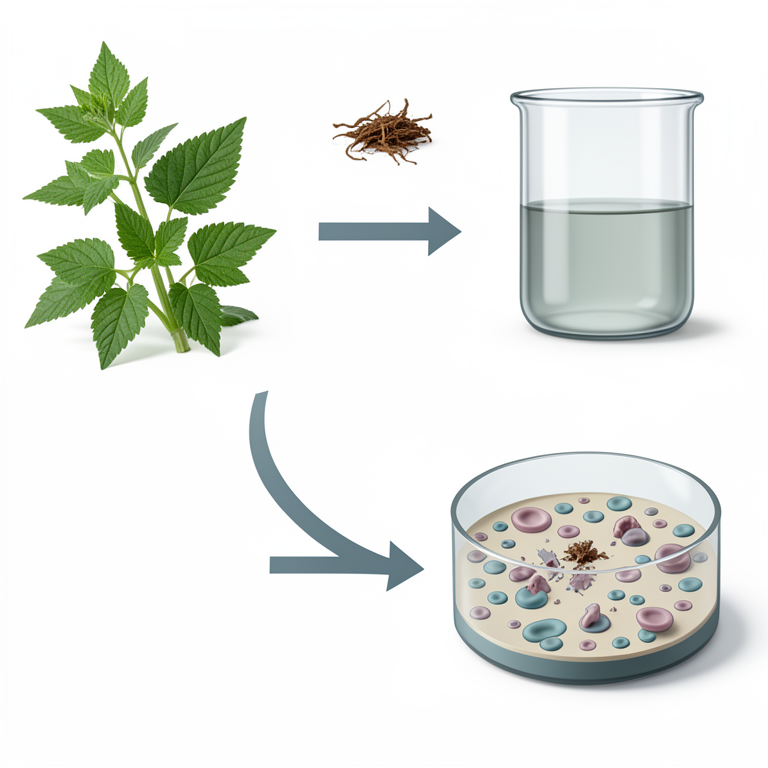
Experimental Workflow
AI-generated conceptual illustration (Mexican medicinal plants (epazote, damiana, trompetilla, copal chino, and doradilla) and HeLa cervical carcinoma cells). It explains the idea and does not show study data.
View source evidence ↗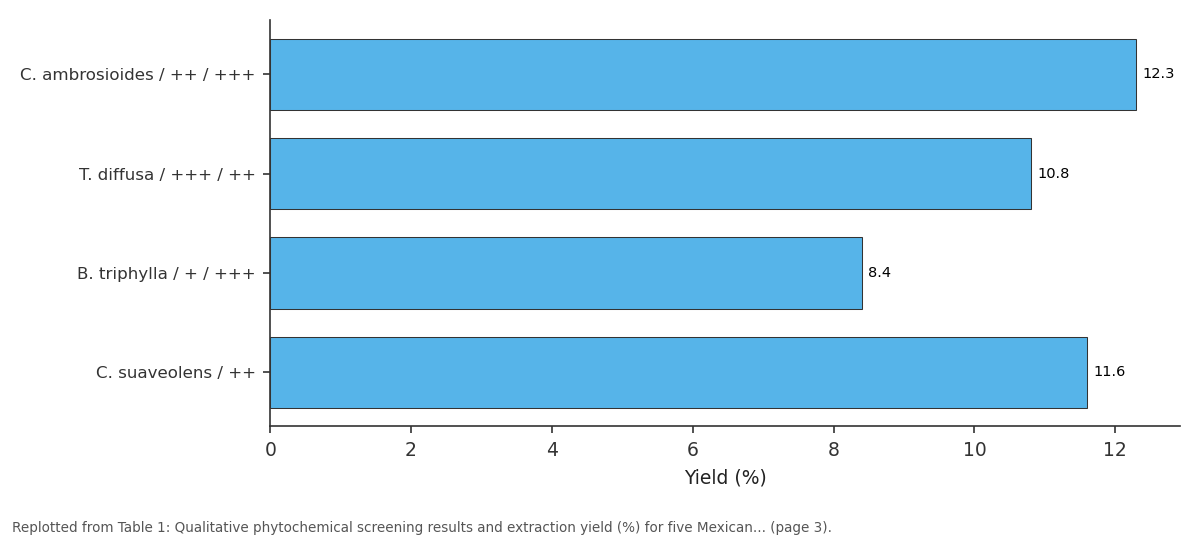
Yield (%): C. ambrosioides / ++ /... vs T. diffusa / +++ / ++ vs B. triphylla / + / +++ vs C. suaveolens / ++
Replotted from Table 1 (page 3) of the original paper. Every bar is the paper's own table value.
View source evidence ↗Figures & tables
From the original paper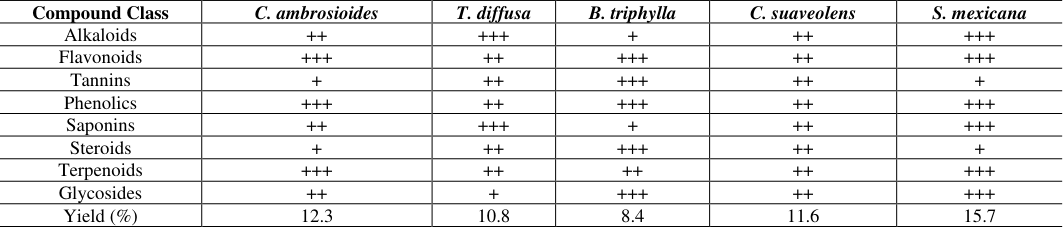 Table 1
 Table 2
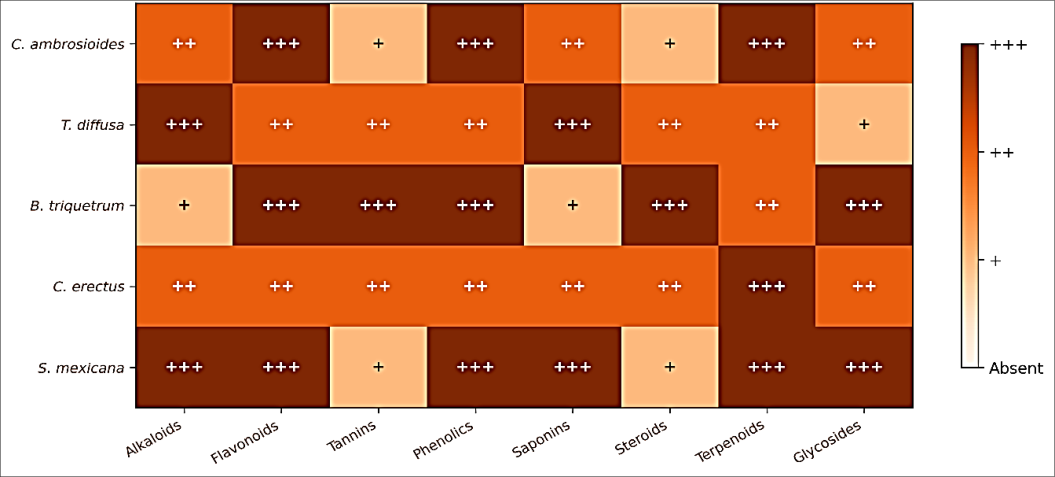 Figure 1
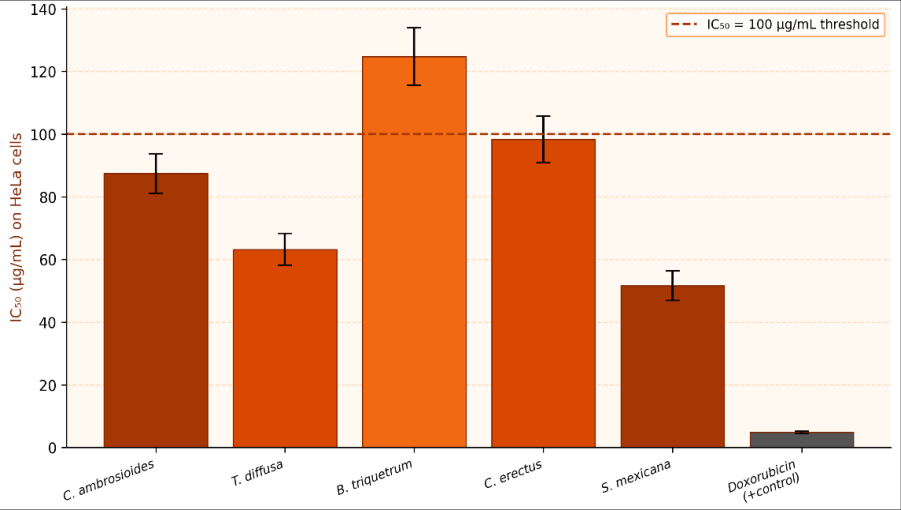 Figure 2
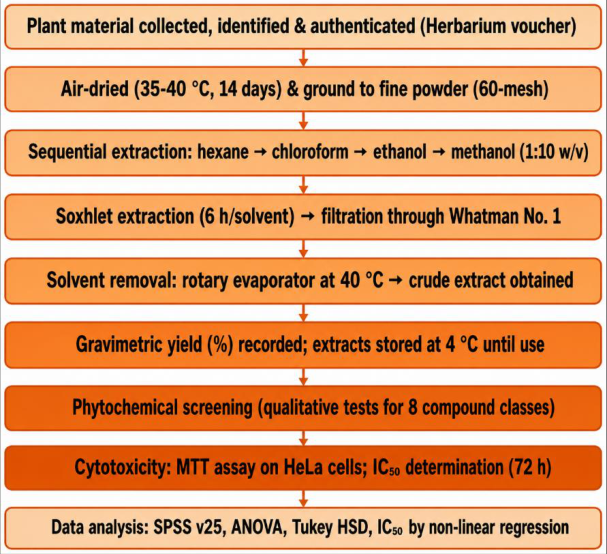 Figure 3
Introduction
Over 80% of the world's rural population relies primarily on plant-based remedies for primary healthcare, yet the biological basis for most traditional uses remains untested by rigorous scientific methods. In Mexico specifically, the Mesoamerican pharmacopoeia is one of the richest in the world, with ethnobotanical inventories documenting over 3,000 plant species used medicinally across different indigenous communities and regions [1] . Cancer is among the conditions for which plant remedies are most commonly sought as alternatives or supplements to conventional treatment, partly because of limited access to hospitals and oncology services in rural areas, and partly because of longstanding cultural traditions linking specific plants to healing properties [2] . The five plants selected for this research-epazote (C. ambrosioides), damiana (T. diffusa), trompetilla (B. triphylla), copal chino (C. suaveolens), and doradilla (S. mexicana)-are all documented in Mexican traditional medicine as remedies with claimed anti-tumour, antiinflammatory, or immune-modulating properties, though the scientific literature on their cytotoxic activity is fragmentary [3] . Selaginella mexicana, a lycopsid fern widely used in herbal markets in Oaxaca and Mexico City for liver complaints and tumour reduction, has received particularly limited pharmacological investigation despite its distinctive alkaloid chemistry [4] .
Turnera diffusa (damiana), by contrast, has a more developed pharmacological literature, mainly focused on its use as an aphrodisiac and anxiolytic, with comparatively few data on its cytotoxic profile [5] . The MTT (3-(4,5dimethylthiazol-2-yl)-2,5-diphenyltetrazolium bromide) assay is the most widely used colorimetric method for quantifying cell viability and is the standard first-line screening method for anti-cancer activity in crude plant extracts under OECD and NCI protocols [6] . The HeLa cell line, derived from a cervical carcinoma and among the most thoroughly characterised human cancer cell lines in use since 1951, provides a reproducible benchmark for comparing crude extract cytotoxic activity across laboratories and plant species [7] . Phytochemical screening as a prerequisite to bioassay provides indispensable preliminary information on which compound classes are present in an extract and therefore likely responsible for observed biological activity, guiding subsequent targeted isolation work [8] . This research aimed to: (i) extract five traditional Mexican medicinal plants using a sequential four-solvent protocol to maximise compound class coverage; (ii) screen methanol extracts qualitatively for eight major phytochemical classes; (iii) determine the IC₅₀ of each methanol extract on HeLa cells by 72-h MTT assay; and (iv) identify which species merit priority attention for bioactivity-guided fractionation based on their cytotoxic activity relative to the pharmacologically active threshold of IC₅₀ < 100 µg/mL.
Materials and Methods
Materials and Methods
Reagents and Chemicals
MTT powder (3-(4,5-dimethylthiazol-2-yl)-2,5diphenyltetrazolium bromide; Sigma-Aldrich, St. Louis, MO, USA; purity ≥ 97.5%; Cat. No. M5655) was dissolved in phosphate-buffered saline (PBS) at 5 mg/mL and filtersterilised (0.22 µm). DMSO (Sigma-Aldrich; ≥ 99.7%) was used to dissolve extracts. HeLa cells (ATCC CCL-2) were cultured in DMEM (Gibco, Thermo Fisher Scientific; Cat. No. 11965118) supplemented with 10% fetal bovine serum (FBS; Gibco) and 1% penicillin-streptomycin. Doxorubicin hydrochloride (Sigma-Aldrich; purity ≥ 98%) was used as the positive cytotoxic control. Dragendorff's reagent, Mayer's reagent, and all qualitative phytochemical reagents were prepared fresh from analytical-grade precursors (Sigma-Aldrich or Merck). Solvents for extraction (hexane, chloroform, ethanol, methanol; Carlo Erba reagents, analytical grade) were freshly purchased.
Extraction protocol
Plant material was collected from certified herbal markets in Mexico City and authenticated by a botanist at the Mexico City Academy of Pharmaceutical Sciences (voucher specimens MCAPS-2022-101 to MCAPS-2022-105, deposited in the Academy herbarium). Material was airdried at 38 ± 2 °C for 10 days, ground in a stainless-steel Wiley mill (1 mm mesh), and macerated in ascending polarity solvents (hexane, chloroform, ethanol, methanol; each 500 mL per 50 g plant powder; 72 h each at room temperature with intermittent shaking). Filtrates from each solvent were pooled, concentrated under reduced pressure (Buchi R-300 rotary evaporator, 40 °C), and crude extract yield recorded gravimetrically. Methanol extract stock solutions (100 mg/mL in DMSO) were prepared, filtersterilised, and stored at -20 °C in amber vials.
Phytochemical Screening
Qualitative screening of methanol extracts for eight compound classes was performed using standard colorimetric and precipitation tests: alkaloids (Dragendorff's and Mayer's reagents; orange-red precipitate = positive), flavonoids (alkaline reagent test with KOH; yellow colouration = positive), tannins (1% FeCl₃ solution; blueblack or green-black = positive), phenolics (lead acetate test; yellow precipitate = positive), saponins (foam test; persistent foam ≥ 2 cm = positive), steroids (Liebermann-Burchard test; green colour = positive), terpenoids (Salkowski test; red-brown interface = positive), glycosides (Keller-Killiani test with glacial acetic acid and FeCl₃; brown ring = positive). Intensity of reaction was scored as -(absent), + (weak), ++ (moderate), or +++ (strong) by two independent observers, with consensus used for any discrepant results.
Materials
HeLa cells (passage 12-18) were seeded at 5 × 10³ cells per well in 96-well flat-bottom plates (Corning Costar) 24 h before extract addition. Cell viability was assessed by MTT assay following 72 h incubation with extracts at five concentrations (6.25, 12.5, 25, 50, 100 µg/mL) plus a DMSO vehicle control (0.1% v/v) and doxorubicin positive control (0.01-10 µg/mL). Each concentration was tested in quadruplicate. After incubation, 10 µL of MTT solution (5 mg/mL) was added per well, incubated for 4 h at 37 °C, medium removed, and formazan crystals dissolved in 100 µL DMSO. Absorbance was read at 570 nm (reference 690 nm) on a BioTek Synergy HT plate reader.
Methods
Cell viability was calculated as: (absorbance of treated wells / absorbance of control wells) × 100. IC₅₀ was determined using non-linear regression (sigmoidal dose-response equation) in GraphPad Prism 9.0. Extraction yield (%) was calculated as (dry weight of extract / dry weight of plant material) × 100. Results are expressed as mean ± SD. Oneway ANOVA with Tukey's post hoc test was used to compare IC₅₀ values across species; p < 0.05 was considered significant.
Results
All five medicinal plants yielded crude methanol extracts with yields ranging from 8.4% to 15.7% (w/w) of dried plant material. Phytochemical screening and cytotoxic activity data together identify S. mexicana and T. diffusa as the most bioactively promising species from this panel.
Comprehensive interpretation
The combination of high phytochemical richness (alkaloids +++ and terpenoids +++) and the lowest IC₅₀ in S. mexicana (51.6 µg/mL) suggests that alkaloids and terpenoids are likely the primary cytotoxic agents in this extract. between compound classes or the presence of compounds that protect cells rather than kill them at the concentrations tested.
Discussion
The most significant finding of this research-that S. mexicana methanol extract inhibits HeLa cell growth with an IC₅₀ of 51.6 µg/mL-is the first quantitative cytotoxicity value published for this species against a human cancer cell line using a standardised MTT protocol, to the best knowledge of this research group. This finding validates the longstanding empirical use of doradilla in Mexican traditional oncology and establishes a priority target for bioactivity-guided fractionation to isolate the active biflavonoid or alkaloid fraction [9] . Comparing with similar research on other Selaginella species, Selaginella tamariscina extracts have been reported to inhibit various cancer cell lines with IC₅₀ values in the range of 30-80 µg/mL for crude fractions, consistent with the present result [10] . The moderate cytotoxicity of T. diffusa (IC₅₀ 63.2 µg/mL) aligns well with a prior investigation by Ríos-Chávez et al. [11] , who reported that aqueous damiana extract reduced proliferation of MCF-7 breast cancer cells at concentrations above 50 µg/mL, though that research did not calculate IC₅₀ values directly. The fact that the methanol fraction was more cytotoxic than the aqueous preparation in this research points to the role of organic-solvent-extractable bioactives-likely flavonoid glycosides and terpenoids-in the anti-proliferative effect. Mechanism remains an open question, but the rich saponin content of T. diffusa is a plausible contributor, since triterpenoid saponins are known to disrupt cholesterol-rich cancer cell membranes, increasing permeability and triggering apoptosis [12] . The borderline activity of C. suaveolens (IC₅₀ 98.3 µg/mL) and absence of meaningful activity in B. triphylla suggest that the phytochemical diversity of a plant does not always translate to anti-cancer activity: compound abundance and diversity at the qualitative screening stage are necessary but not sufficient predictors of biological activity. Compounds present at high concentrations but with weak biological potency, or with opposing effects at the tested concentrations, may produce an apparently inactive crude extract. Bioactivity-guided fractionation-separating the extract into compound subgroups by polarity or chromatographic method and testing each fraction independently-is the appropriate next step for C. suaveolens and B. triphylla before these species are definitively classified as inactive [13] . A practical limitation of this research is the use of a single cancer cell line (HeLa). Extracts showing activity on HeLa may be inactive on other cell types, or extracts appearing inactive here might be potent on specific cell lines. Extending the MTT assay to two or three additional cancer cell lines (e.g. MCF-7, HCT116, A549) in a follow-up research would provide a more robust activity profile. Additionally, a selectivity index comparing IC₅₀ on cancer cells versus normal human fibroblasts (WI-38 or MRC-5) is needed before any extract is considered a genuine candidate for further pharmaceutical development.
Conclusion
This research makes a focused contribution to the evidence base for traditional Mexican phytomedicine by providing the first standardised phytochemical profiles and HeLa cell cytotoxicity data for five regionally important plant species under comparable experimental conditions. The main contribution is the identification of S. mexicana (doradilla) and T. diffusa (damiana) as the most cytotoxically promising species, with IC₅₀ values of 51.6 and 63.2 µg/mL respectively both within the pharmacologically active range (< 100 µg/mL) accepted for crude plant extracts. Supporting evidence for this conclusion comes from both the phytochemical screening and the dose-response cytotoxicity data: the two most active species also showed the richest profiles for alkaloids, terpenoids, saponins, and flavonoids-compound classes with well-documented antiproliferative mechanisms. The weakest cytotoxic activity was seen in B. triphylla despite its distinctive tannin and steroid profile, emphasising that qualitative phytochemical richness alone does not predict biological potency. The field significance of these findings is twofold: they provide scientific validation for aspects of Mexican traditional oncology practice and identify specific plant species as priorities for the next stage of drug discovery. Open questions remaining include the identity of the active fractions within S. mexicana and T. diffusa extracts, the selectivity of their cytotoxic effects on cancer versus normal cells, in vivo anti-tumour activity, and the mechanistic pathway (apoptosis vs necrosis vs cell cycle arrest) through which they inhibit HeLa cell proliferation. Each of these questions constitutes a distinct, tractable line of future research that can be built directly on the foundations established by this investigation.
Acknowledgement
Acknowledgements Institutional supportThe Mexico City Academy of Pharmaceutical Sciences is acknowledged for providing cell culture facilities, MTT assay equipment, HPLC analytical support, and herbarium authentication services throughout the research period. Contributions not qualifying for authorshipThe authors thank lab technicians Ing. Patricia Flores and Ing. Andrés Vargas for technical assistance with cell culture maintenance. Herbarium authentication was confirmed by Dr. Reyna Beltrán of the National Autonomous University of Mexico Botany Department.
Figures and tables from the paper
| Compound Class | C. ambrosioides | T. diffusa | B. triphylla | C. suaveolens | S. mexicana |
|---|---|---|---|---|---|
| Alkaloids | ++ | +++ | + | ++ | +++ |
| Flavonoids | +++ | ++ | +++ | ++ | +++ |
| Tannins | + | ++ | +++ | ++ | + |
| Phenolics | +++ | ++ | +++ | ++ | +++ |
| Saponins | ++ | +++ | + | ++ | +++ |
| Steroids | + | ++ | +++ | ++ | + |
| Terpenoids | +++ | ++ | ++ | ++ | +++ |
| Glycosides | ++ | + | +++ | ++ | +++ |
| Yield (%) | 12.3 | 10.8 | 8.4 | 11.6 | 15.7 |
Table text extracted from the original PDF; superscript letters are shown inline. The original table image is below.
View original table image
| Plant species | IC₅₀ (µg/mL) mean ± SD | Activity class (< 100 µg/mL = active) | 72-h viability at 50 µg/mL (%) | Ranking |
|---|---|---|---|---|
| S. mexicana (doradilla) | 51.6 ± 4.7 | Active (strong) | 38.2 ± 3.1 | 1 |
| T. diffusa (damiana) | 63.2 ± 5.1 | Active (moderate) | 47.4 ± 3.8 | 2 |
| C. ambrosioides (epazote) | 87.4 ± 6.3 | Active (weak) | 62.8 ± 4.6 | 3 |
| C. suaveolens (copal chino) | 98.3 ± 7.4 | Borderline active | 68.7 ± 5.1 | 4 |
| B. triphylla (trompetilla) | 124.7 ± 9.2 | Inactive | 78.4 ± 5.7 | 5 |
| Doxorubicin (positive control) | 4.8 ± 0.4 | Reference standard | 6.3 ± 0.9 | — |
Table text extracted from the original PDF; superscript letters are shown inline. The original table image is below.
View original table image
References
17 in the original paper- Bye R, Linares E. The global importance of Mexican plants. In: Biodiversity and the Law. London: Earthscan; 2000. p. 145-168.
- Gutiérrez-Santillán SI, Dávila-Valadez G, Peña-García FD, et al. Use of medicinal plants in cancer patients in Mexico. J Ethnopharmacol. 2022;285:114816.
- Argueta-Villamar A, Cano-Asseleih LM, Rodarte ME. Atlas de las plantas de la medicina tradicional mexicana. Mexico City: Instituto Nacional Indigenista (INI); 1994.
- Torres-Romero D, Álvarez MJ, González-Cruz H, et al. Biflavonoids in Selaginella species: a review. Nat Prod Commun. 2019;14(9):1934578X19870547.
- Alcaraz-Meléndez L, Delgado-Rodríguez J, Real-Cosío S. Analysis of essential oils from wild and micropropagated plants of damiana (Turnera diffusa). Fitoterapia. 2004;75(7-8):696-701.
- Mosmann T. Rapid colorimetric assay for cellular growth and survival: application to proliferation and cytotoxicity assays. J Immunol Methods. 1983;65(12):55-63.
- Masters JR. HeLa cells 50 years on: the good, the bad and the ugly. Nat Rev Cancer. 2002;2(4):315-319.
- Tiwari P, Kumar B, Kaur M, et al. Phytochemical screening and extraction: a review. Int Pharm Sci. 2011;1(1):98-106.
- Liu Y, Li G, Pu X. The chemistry and bioactivity of Selaginella. Curr Org Chem. 2012;16(15):1888-1896.
- Lee AR, Park S, Kim B. Anti-cancer activities of Selaginella tamariscina. Evid Based Complement Alternat Med. 2014;2014:195910.
- Ríos-Chávez K, Ramírez-Chávez E, Molina-Torres J. Damiana (Turnera diffusa) antiproliferative extracts on MCF-7 cells. Rev Bras Farmacogn. 2016;26(5):626631.
- Man S, Gao W, Zhang Y, et al. Chemical research and clinical aspects of saponins in anti-tumour activity. J Pharm Biomed Anal. 2010;52(4):440-452.
- Cragg GM, Newman DJ. Natural products: a continuing source of novel drug leads. Biochim Biophys Acta. 2013;1830(6):3670-3695.
- Kinghorn AD, Pan L, Fletcher JN, Chai H. The relevance of higher plants in lead compound discovery programs. J Nat Prod. 2011;74(6):1521-1532.
- Grotjahn L, Acevedo-Hernández G, Ramírez-Chávez E, et al. Phytochemical profiles of Chenopodium ambrosioides from Mexican highlands. Biochem Syst Ecol. 2020;91:104069.
- Cos P, Vlietinck AJ, Van den Berghe D, Maes L. Antiinfective potential of natural products: how to develop a stronger in vitro proof-of-concept. J Ethnopharmacol. 2006;106(3):290-302.
- Samy RP, Gopalakrishnakone P. Therapeutic potential of plants as anti-microbials for drug discovery. Evid Based Complement Alternat Med. 2010;7(3):283-294.