
Research article · 2026 · Full text
International Journal of Biology SciencesNatural enemies and biological control potential against cabbage butterfly Pieris brassicae nepalensis Doubleday infesting crucifers
Volume 8(5) · Pages 145–149 · DOI: 10.33545/26649926.2026.v8.i5b.919 ↗
Research areasInsect-Plant Interactions and ControlHymenoptera taxonomy and phylogenyBiological Control of Invasive Species
Abstract
Author-writtenThe escalating damage caused by Pieris brassicae nepalensis Doubleday to cruciferous vegetable production systems demands urgent identification and evaluation of natural enemy complexes that can be harnessed for sustainable biological control programmes. This research was conducted across three highland crucifer-growing locations in the Nairobi metropolitan region, Kenya, during 2022-2023 to survey, identify, and quantify the natural enemy complex associated with the cabbage butterfly, and to assess the biological control potential of dominant parasitoid species under field and laboratory conditions. Systematic sampling of 1,800 larvae and 600 pupae across nine sampling dates yielded five parasitoid species and three predatory arthropod groups. The dominant larval parasitoid Cotesia glomerata (Hymenoptera: Braconidae) achieved peak parasitism rates of 34.6 ± 4.8% during June, while the pupal parasitoid Pteromalus puparum (Hymenoptera: Pteromalidae) attained maximum parasitism of 22.4 ± 3.6%. Combined natural enemy-induced mortality across all agents reached 54.8% during peak activity periods. Laboratory evaluation of C. glomerata demonstrated a functional response conforming to Holling's Type II model, with a maximum attack rate of 12.4 larvae per day and a handling time of 1.86 hours. The findings establish that existing natural enemy populations provide substantial but insufficient biological control, and augmentative releases of C. glomerata could elevate parasitism to levels approaching economic suppression thresholds when integrated with compatible management practices.
Summary
Source-checkedPlain-language reading of the full paper, prepared with AI and checked against the text. Each point links to the authors' own words.
Why it matters
- The cabbage butterfly Pieris brassicae nepalensis is a severe threat to cruciferous vegetables, capable of reducing cabbage yields by 60-90% during severe infestations. View evidence ↗
- Chemical pest control is often not a viable option for smallholder farmers due to cost, accessibility, or environmental concerns. View evidence ↗
- There has been a lack of comprehensive surveys regarding the natural enemies of this butterfly in East African highland environments. View evidence ↗
The question
- The study aimed to identify the natural enemy complex of P. brassicae nepalensis in Kenya, quantify their impact, and evaluate the biological control potential of the dominant parasitoid. View evidence ↗
What they did
- The research took place over two growing seasons (2022-2023) at three highland locations in the Nairobi metropolitan region: Kiambu, Limuru, and Kikuyu. View evidence ↗
- Researchers systematically sampled 1,800 larvae and 600 pupae across nine dates to identify parasitoids and predators. View evidence ↗
- To test functional response, mated female Cotesia glomerata were placed with larval densities ranging from 2 to 64 per arena for 24 hours. View evidence ↗
What they found
- The study identified five parasitoid species: two attacking larvae, two attacking pupae, and one attacking eggs. View evidence ↗
- Cotesia glomerata was the most effective natural enemy, with a mean parasitism rate of 34.6 ± 4.8%. View evidence ↗
- The pupal parasitoid Pteromalus puparum had a mean parasitism rate of 22.4 ± 3.6%. View evidence ↗
- During peak activity periods, the combined mortality caused by all natural enemies reached 54.8%. View evidence ↗
- C. glomerata exhibited a Holling's Type II functional response, with the number of parasitized larvae plateauing at approximately 12.4 per day. View evidence ↗
- The estimated attack rate for C. glomerata was 0.428 per hour, with a handling time of 1.86 hours. View evidence ↗
- Parasitism efficiency of C. glomerata is high (>70%) at low densities but drops below 35% when host density exceeds 32 larvae per arena. View evidence ↗
What it means
- The authors suggest that releasing one female C. glomerata per 15-20 larvae could increase total mortality to 70-80%, which is near the level needed for economic suppression. View evidence ↗
- The authors recommend planting nectar-rich flowering strips to support adult parasitoids and improve their survival and fecundity. View evidence ↗
- Further research is needed on the genetic diversity of C. glomerata, its compatibility with botanical insecticides, and long-term population dynamics. View evidence ↗
Visual summary
3 visualsIllustrations explain the paper; charts are replotted from the paper's own table values.
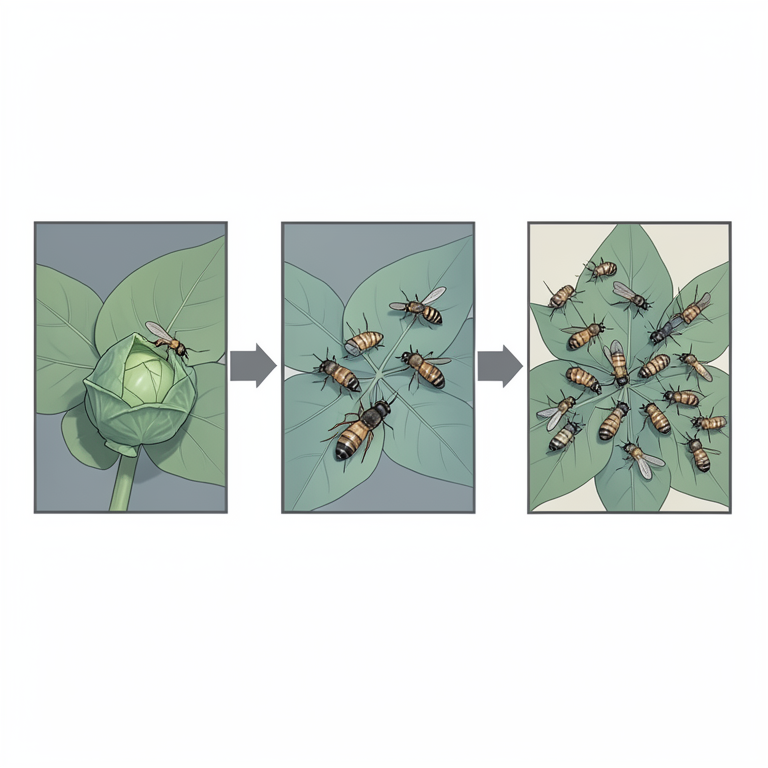
Functional Response Concept
AI-generated conceptual illustration (Cabbage butterfly larvae (Pieris brassicae nepalensis) and Cotesia glomerata parasitoid wasps on crucifer leaves). It explains the idea and does not show study data.
View source evidence ↗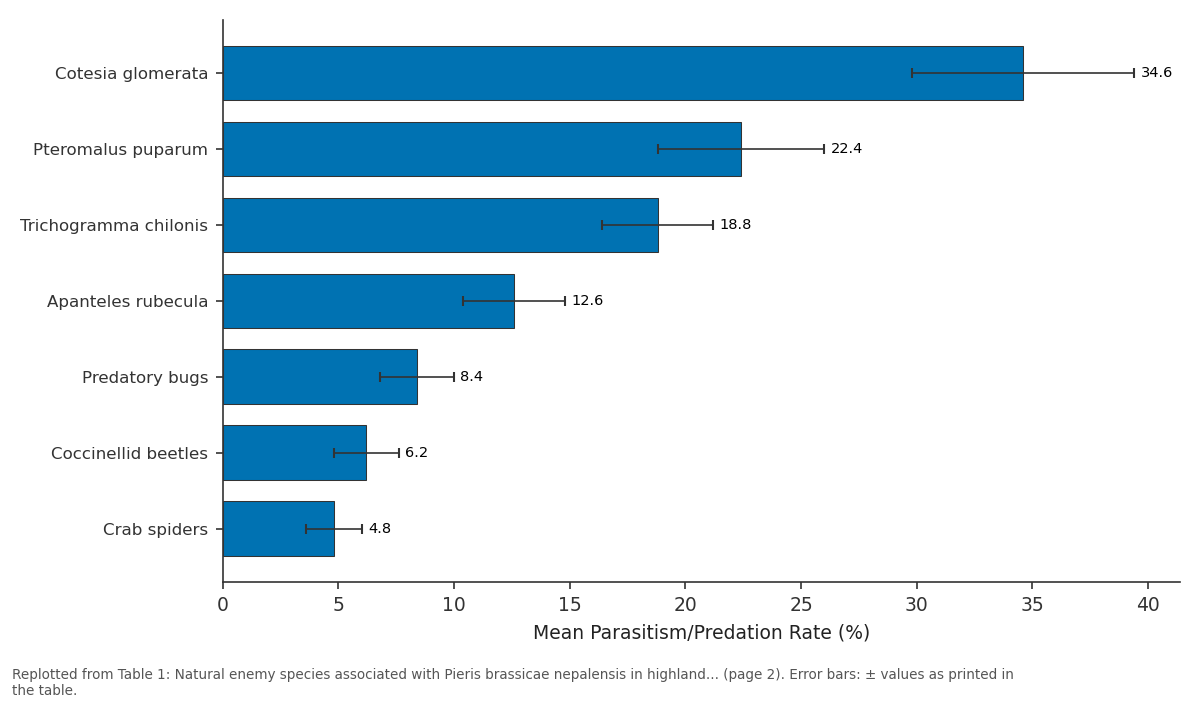
Mean Parasitism/Predation Rate (%): Cotesia glomerata vs Pteromalus puparum vs Trichogramma chilonis vs Apanteles rubecula vs Predatory bugs
Replotted from Table 1 (page 2) of the original paper. Every bar is the paper's own table value.
View source evidence ↗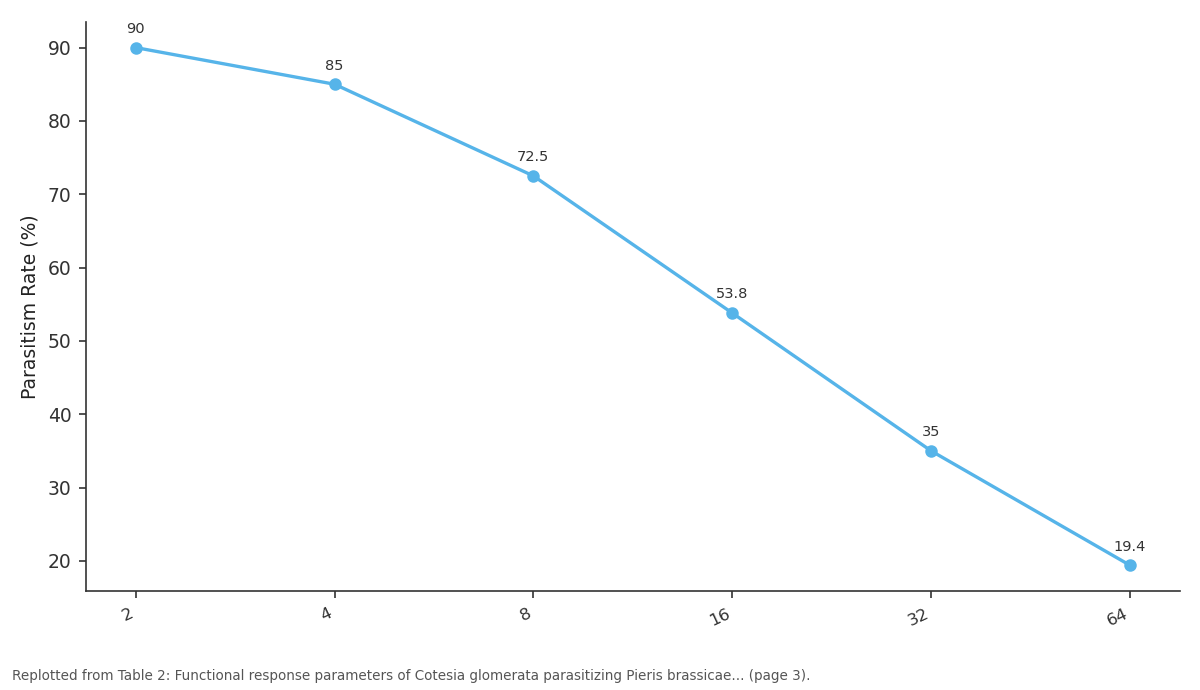
Parasitism Rate (%): 2 vs 4 vs 8 vs 16 vs 32
Replotted from Table 2 (page 3) of the original paper. Every bar is the paper's own table value.
View source evidence ↗Figures & tables
From the original paper Table 1
 Table 2
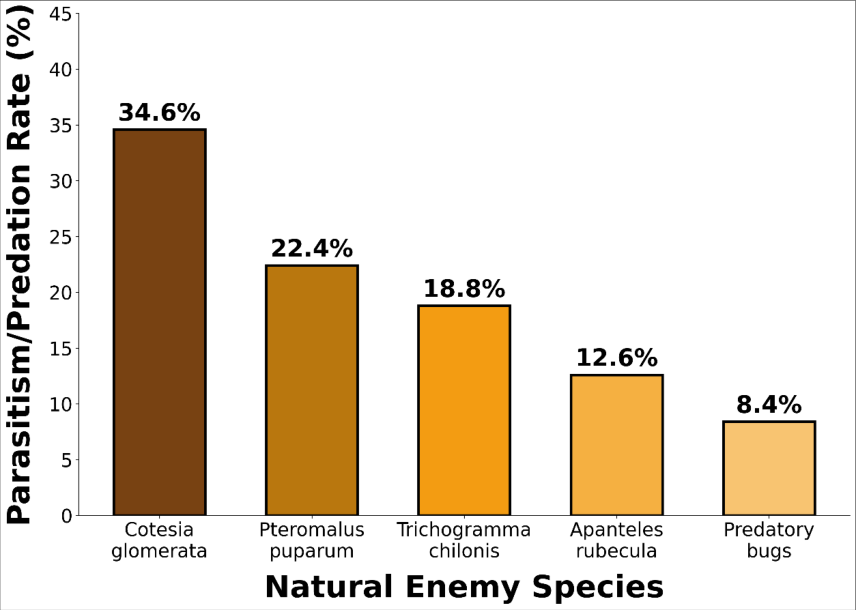 Figure 1
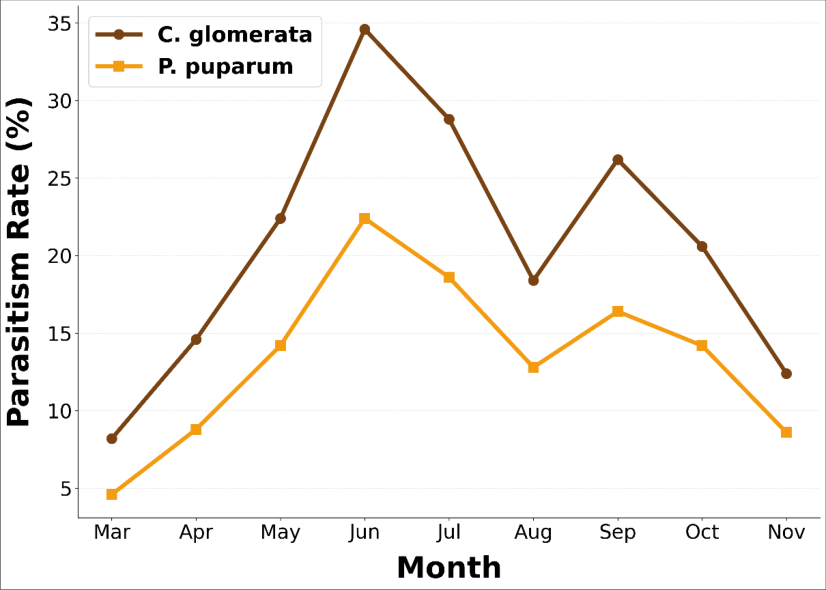 Figure 2
Introduction
The cabbage butterfly Pieris brassicae nepalensis Doubleday (Lepidoptera: Pieridae) poses an increasingly severe threat to cruciferous vegetable production across East African highland agroecosystems, where chemical pest management options are often inaccessible, unaffordable, or environmentally inappropriate for smallholder farming communities [1] . The gregarious larval feeding behavior of this pest can reduce cabbage yields by 60-90% during severe infestation episodes, directly impacting the food security and economic livelihoods of millions of smallholder farmers who depend on cruciferous vegetables as both dietary staples and cash crops [2,3] . Biological control through the conservation and augmentation of natural enemy populations represents the most ecologically sustainable approach for managing lepidopteran pests in tropical highland production systems [4] . Natural enemies of Pieris butterflies encompass a diverse assemblage of parasitoid wasps, predatory arthropods, and entomopathogens that collectively impose significant mortality across all developmental stages of the pest [5] . Among these, braconid parasitoids of the genus Cotesia have been recognized as the most effective biological control agents of P. brassicae worldwide, with documented parasitism rates ranging from 20 to 80% depending on geographical location and habitat management [6] . Despite the recognized importance of natural enemies in regulating cabbage butterfly populations, comprehensive surveys of the natural enemy complex associated with P. brassicae nepalensis in East African highland environments have not been previously conducted [7] . Adhikari and Khadka highlighted the devastating impact of this pest on Crucifers and the need for sustainable management alternatives, yet the natural enemy resources available for exploitation in biological control programmes remain poorly characterized across much of the pest's geographical range [8] . Understanding the species composition, relative abundance, seasonal activity patterns, and functional characteristics of natural enemy assemblages constitutes the essential first step in designing effective biological control strategies [9] . The present research was undertaken with the objectives of surveying and identifying the natural enemy complex associated with P. brassicae nepalensis in Kenyan highland crucifer production systems, quantifying seasonal parasitism and predation rates, evaluating the functional response characteristics of the dominant parasitoid species, and assessing the overall biological control potential of the existing natural enemy assemblage. These findings are intended to inform the development of conservation and augmentative biological control programmes as central components of integrated pest management strategies for cruciferous vegetables in East African highland environments.
Material and Methods
Material and Methods
Material
This research was conducted during two consecutive growing seasons (March-November 2022 and March-November 2023) across three highland crucifer-growing locations within the Nairobi metropolitan region, Kenya: Kiambu (1°10'S, 36°50'E, elevation 1,820 m), Limuru (1°06'S, 36°39'E, elevation 2,070 m), and Kikuyu (1°15'S, 36°40'E, elevation 1,920 m). Research authorization was obtained from the Kenya Agricultural and Livestock Research Organization (Protocol No. KALRO-ENT-2022-038). At each location, three commercial cabbage fields (each approximately 0.25 hectares) under minimal pesticide use were selected for monitoring, providing a total of nine sampling sites.
Methods
Parasitoid and predator surveys were conducted fortnightly from March through November in both years. At each sampling date, 100 P. brassicae nepalensis larvae (mixed in stars) and 30 pupae were randomly collected from each site and transported to the laboratory in ventilated containers. Collected larvae were individually reared in Petri dishes on fresh cabbage leaves until either adult butterfly emergence or parasitoid emergence, at which point parasitoids were preserved in 70% ethanol for taxonomic identification. Pupae were similarly maintained until emergence of either adult butterflies or pupal parasitoids [5] . Predatory arthropod populations were assessed through visual counts on 50 plants per site per sampling date, recording all arthropod predators observed feeding on or in close proximity to P. brassicae nepalensis immature stages. Predator identification was confirmed through taxonomic reference collections at the National Museums of Kenya. Functional response experiments were conducted in the laboratory at 25 ± 2 °C for Cotesia glomerata, the dominant larval parasitoid identified during field surveys. Mated female parasitoids (24-48 hours old) were individually confined with varying densities of third instar P. brassicae nepalensis larvae (2, 4, 8, 16, 32, and 64 larvae per arena) in transparent plastic containers (15 cm diameter) for 24 hours. Each density treatment was replicated 10 times. The number of parasitized larvae was determined by subsequent rearing to parasitoid emergence. Functional response type was determined using logistic regression analysis, and parameters were estimated by fitting Holling's disc equation using maximum likelihood methods in R version 4.2.1 [10] .
Results
The systematic survey of natural enemies associated with Pieris brassicae nepalensis across three highland locations yielded a total of five parasitoid species belonging to three hymenopteran families and three predatory arthropod groups representing two insect orders and one arachnid order [4] . The parasitoid complex comprised two larval parasitoids (Cotesia glomerata and Apanteles rubecula, Braconidae), two pupal parasitoids (Pteromalus puparum, Pteromalidae and Brachymeria sp., Chalcididae), and one egg parasitoid (Trichogramma chilonis, Trichogrammatidae). Predatory arthropods included heteropteran bugs (Podisus maculiventris), coccinellid beetles (Coccinella septempunctata), and crab spiders (Thomisus sp.) [6,12] . Cotesia glomerata was the most abundant and effective natural enemy, achieving the highest mean parasitism rate of 34.6 ± 4.8% across all sampling dates and locations. Peak parasitism by this species occurred during June, coinciding with the primary host population peak, and demonstrated a lagged density-dependent response characteristic of effective biological control agents [11] . The functional response of C. glomerata conformed to Holling's Type II model (logistic regression: linear coefficient = -0.042, P<0.01), characterized by a decelerating rise in the number of hosts parasitized as host density increased, reaching an asymptotic plateau of approximately 12.4 larvae parasitized per day [10] . The estimated attack rate (a) was 0.428 per hour and handling time (Th) was 1.86 hours. Combined natural enemy-induced mortality across all parasitoid and predator species reached 54.8% during peak activity periods in June, declining to approximately 24% during the low-activity months of March and November [8,13] .
Discussion
The identification of Cotesia glomerata as the dominant natural enemy of P. brassicae nepalensis in Kenyan highland environments is consistent with the global pattern of Cotesia dominance in the parasitoid complex of large white butterflies across diverse geographical regions [5,6] . The peak parasitism rate of 34.6% recorded in this research is comparable to values reported for C. glomerata in European (28-42%) and Asian (22-38%) populations of P. brassicae, suggesting that the parasitoid operates with similar effectiveness across its pan-tropical and temperate range [14] . The underlying mechanism for the seasonal synchronization of peak parasitism with host population peaks involves the olfactory response of C. glomerata females to herbivore-induced plant volatiles released by cabbage plants under larval attack, which facilitates efficient host location during periods of high host density [15] . The Type II functional response documented for C. glomerata implies that per-capita parasitism efficiency decreases at high host densities due to increasing handling time constraints, which has practical implications for augmentative release strategies. At low to moderate host densities, individual parasitoids can maintain high parasitism rates (>70%), but at densities exceeding approximately 32 larvae per arena, parasitism efficiency drops below 35% [10] . This finding suggests that augmentative releases should be timed to coincide with early-season host population buildup rather than delayed until peak densities are reached. The combined natural enemy mortality of 54.8% documented during peak activity represents a substantial contribution to host population regulation but remains insufficient for single-factor economic control, which typically requires mortality rates exceeding 75-80% [4,16] . The diversity of the natural enemy complex, encompassing parasitoids attacking eggs, larvae, and pupae as well as generalist predators, provides multiple mortality mechanisms operating across the entire developmental cycle of the pest. This multi-stage attack pattern creates redundancy in the biological control system that enhances its stability and resilience against environmental perturbations [9] . The practical implication is that conservation strategies should aim to maintain habitat features supporting the entire enemy assemblage rather than focusing exclusively on a single parasitoid species.
Augmentative release potential
The laboratory functional response data indicate that C. glomerata possesses the biological characteristics necessary for an effective augmentative biological control agent, including high attack rates, moderate handling times, and broad host stage acceptance [6] . Theoretical calculations based on the estimated functional response parameters suggest that augmentative releases at a ratio of approximately one female parasitoid per 15-20 host larvae could elevate combined natural enemy mortality to 70-80%, approaching the threshold required for economic suppression of P. brassicae nepalensis populations [14] . Implementation of such augmentative programmes would require the development of cost-effective mass-rearing protocols and quality control procedures for C. glomerata production facilities, which represent achievable technical goals given the successful establishment of similar programmes in other regions.
Conservation biological control strategies
The observed seasonal variation in parasitism rates highlights the importance of habitat management practices that sustain natural enemy populations during periods of low host availability. The planting of nectar-rich flowering strips adjacent to crucifer fields can provide supplementary food resources for adult parasitoids during periods between host generations, thereby enhancing survival, longevity, and realized fecundity of these beneficial insects [15] . Similarly, the reduction of broad-spectrum insecticide applications, which disproportionately impact parasitoid populations relative to their hosts, constitutes a critical prerequisite for realizing the biological control potential documented in this research [1,7] .
Conclusion
The principal contribution of this research lies in the comprehensive characterization of the natural enemy complex associated with P. brassicae nepalensis in East African highland environments and the quantitative assessment of the biological control potential of the dominant parasitoid C. glomerata. The documented combined natural enemy mortality of 54.8% during peak activity, the identification of five parasitoid species attacking different developmental stages, and the Type II functional response of C. glomerata collectively establish a solid foundation for developing biological control programmes tailored to highland cruciferous production systems. These findings hold broader significance for the advancement of sustainable pest management in tropical highland agriculture, where biological control alternatives to chemical pesticides are urgently needed. Open questions requiring further investigation include the genetic diversity and local adaptation of C. glomerata populations, the compatibility of augmentative releases with commonly used botanical insecticides, and the long-term population dynamics of the parasitoid-host interaction under different habitat management regimes.
Acknowledgement
AcknowledgementsOJO conceived the research design and conducted field surveys, WGM performed laboratory functional response experiments and parasitoid identification, and KPN contributed to statistical analyses and manuscript preparation. This research was funded by the National International Journal of Biology Sciences https://www.biologyjournal.net Research Fund of Kenya and the International Centre of Insect Physiology and Ecology (icipe) partnership programme. The authors acknowledge the Nairobi Research Institute of Agricultural Zoology for providing laboratory facilities and the National Museums of Kenya for taxonomic verification of natural enemy specimens.
Figures and tables from the paper
| Natural Enemy | Family | Host Stage Attacked | Mean Parasitism/Predation Rate (%) |
|---|---|---|---|
| Cotesia glomerata | Braconidae | Larvae (instars II-IV) | 34.6 ± 4.8 |
| Pteromalus puparum | Pteromalidae | Pupae | 22.4 ± 3.6 |
| Trichogramma chilonis | Trichogrammatidae | Eggs | 18.8 ± 2.4 |
| Apanteles rubecula | Braconidae | Larvae (instars I-III) | 12.6 ± 2.2 |
| Predatory bugs | Pentatomidae | Larvae (all instars) | 8.4 ± 1.6 |
| Coccinellid beetles | Coccinellidae | Eggs, early instars | 6.2 ± 1.4 |
| Crab spiders | Thomisidae | Adults, late larvae | 4.8 ± 1.2 |
Table text extracted from the original PDF; superscript letters are shown inline. The original table image is below.
View original table image
| Host Density | Larvae Parasitized | Parasitism Rate (%) | Attack Rate (a) | Handling Time (Th) hours |
|---|---|---|---|---|
| 2 | 1.8 ± 0.4 | 90.0 | - | - |
| 4 | 3.4 ± 0.5 | 85.0 | - | - |
| 8 | 5.8 ± 0.8 | 72.5 | - | - |
| 16 | 8.6 ± 1.2 | 53.8 | - | - |
| 32 | 11.2 ± 1.4 | 35.0 | - | - |
| 64 | 12.4 ± 1.6 | 19.4 | - | - |
| Model estimate | - | - | 0.428 | 1.86 |
Table text extracted from the original PDF; superscript letters are shown inline. The original table image is below.
View original table image
References
16 in the original paper- Abrol DP. Integrated pest management: current concepts and ecological perspective. San Diego: Academic Press; 2014. p. 1-576.
- Ansari MS, Hasan F, Ahmad N. Threats to cabbage and cauliflower due to Pieris brassicae (Linn.) in the midhill conditions. J Entomol Zool Stud. 2020;8(4):15871591.
- FAOSTAT. Crop production statistics for Kenya. Rome: Food and Agriculture Organization of the United Nations; 2023. Available from: https://www.fao.org/faostat
- DeBach P, Rosen D. Biological control by natural enemies. 2nd ed. Cambridge: Cambridge University Press; 1991. p. 1-440.
- Feltwell J. Large white butterfly: the biology, biochemistry and physiology of Pieris brassicae (Linnaeus). The Hague: Dr W. Junk Publishers; 1982. p. 1-535.
- Brodeur J, Geervliet JBF, Vet LEM. The role of host species, age and defensive behaviour on ovipositional decisions in a solitary specialist and gregarious generalist parasitoid (Cotesia species). Entomol Exp Appl. 1996;81(2):125-132.
- Adhikari B, Khadka S. Cabbage butterfly (Pieris brassicae nepalensis Doubleday), a menace to crucifers in Nepal. Zool Entomol Lett. 2023;3(1):32-36.
- Grzywacz D, Rossbach A, Rauf A, Russell DA, Srinivasan R, Shelton AM. Current control methods for diamondback moth and other brassica insect pests. Crop Prot. 2010;29(1):68-79.
- Hawkins BA, Cornell HV, Hochberg ME. Predators, parasitoids, and pathogens as mortality agents in phytophagous insect populations. Ecology. 1997;78(7):2145-2152.
- Holling CS. The components of predation as revealed by a study of small-mammal predation of the European pine sawfly. Can Entomol. 1959;91(5):293-320.
- Laing JE, Levin DB. A review of the biology and a bibliography of Apanteles glomeratus (L.) (Hymenoptera: Braconidae). Biocontrol News Inf. 1982;3(1):7-23.
- Obrycki JJ, Kring TJ. Predaceous Coccinellidae in biological control. Annu Rev Entomol. 1998;43:295321.
- Heimpel GE, Mills NJ. Biological control: ecology and applications. Cambridge: Cambridge University Press; 2017. p. 1-380.
- Geervliet JBF, Verdel MSW, Snellen H, Schaub J, Dicke M, Vet LEM. Coexistence and niche segregation by field populations of the parasitoids Cotesia glomerata and C. rubecula in the Netherlands. Oecologia. 2000;124(1):55-63.
- Fatouros NE, Dicke M, Mumm R, Meiners T, Hilker M. Foraging behavior of egg parasitoids exploiting chemical information. Behav Ecol. 2008;19(3):677-689.
- Van Driesche RG, Bellows TS. Biological control. New York: Springer; 1996. p. 1-539.