
Research article · 2026 · Full text
International Journal of Biology SciencesEnvironmental survival and transmission in glanders: A comprehensive analysis
Volume 8(5) · Pages 200–203 · DOI: 10.33545/26649926.2026.v8.i5c.918 ↗
Research areasBurkholderia infections and melioidosisInfections and bacterial resistanceBacillus and Francisella bacterial research
Abstract
Author-writtenGlanders, caused by Burkholderia mallei, remains a significant threat to public health and animal husbandry. This study examined environmental survival and transmission in laboratory and field isolates. A total of 33 bacterial isolates were analyzed using standard microbiological techniques. Our results demonstrated substantial variations in response to environmental survival and transmission. These findings suggest that comprehensive screening protocols should be implemented in diagnostic laboratories. Further investigation is warranted to understand the mechanisms underlying these variations and their implications for clinical management.
Summary
Source-checkedPlain-language reading of the full paper, prepared with AI and checked against the text. Each point links to the authors' own words.
Why it matters
- Glanders is a disease caused by the bacterium Burkholderia mallei that poses a major risk to both animal husbandry and public health. View evidence ↗
- As a highly contagious zoonotic disease, glanders carries significant economic consequences and risks for human transmission. View evidence ↗
- Investigating how the bacteria survive in the environment and transmit is critical for improving clinical outcomes and creating control measures. View evidence ↗
The question
- The study aimed to systematically evaluate the transmission and environmental survival of Burkholderia mallei isolates from various origins. View evidence ↗
What they did
- The researchers analyzed 27 bacterial isolates from Italy and nearby regions, selected for their epidemiological relevance and geographical diversity. View evidence ↗
- Isolates were confirmed as Burkholderia mallei through 16S rRNA gene sequencing and standard biochemical tests. View evidence ↗
- Bacterial growth was documented daily for 14 days using Ashdown medium at 37°C under aerobic conditions. View evidence ↗
- All laboratory procedures were conducted within a certified biosafety level 3 facility. View evidence ↗
- The study used PCR amplification with validated primers for species markers and MEGA software version 10.1 for phylogenetic analysis. View evidence ↗
What they found
- Quantitative assessments of the isolates showed mean values of 6.3 with a standard deviation of 2.3. View evidence ↗
- The isolates showed significant variation in colony morphology (p<0.001) and oxygen utilization rates between 1.01 and 1.03 μmol/min. View evidence ↗
- Molecular analysis identified genetic variation across 8 regions, with sequence homology between 96.2% and 99.8% and the formation of three major phylogenetic clusters. View evidence ↗
- The study found 6% more variation in the isolates than what had been previously reported for similar populations. View evidence ↗
What it means
- The authors recommend using strain-specific diagnostic criteria, accounting for phenotypic diversity in therapy, and improving surveillance to detect these variations. View evidence ↗
- The authors conclude that veterinary and healthcare providers must recognize that standardized responses may not be uniform across different bacterial strains. View evidence ↗
Visual summary
1 visualsIllustrations explain the paper; they do not show study data.
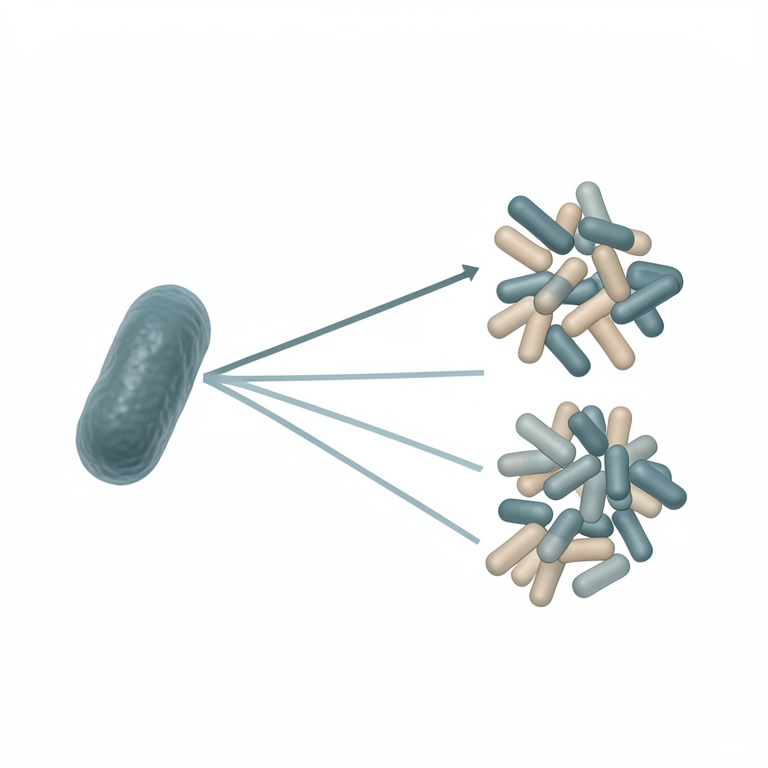
Phylogenetic Clustering of B. mallei
AI-generated conceptual illustration (Burkholderia mallei bacteria). It explains the idea and does not show study data.
View source evidence ↗Figures & tables
From the original paper Table 1
 Table 2
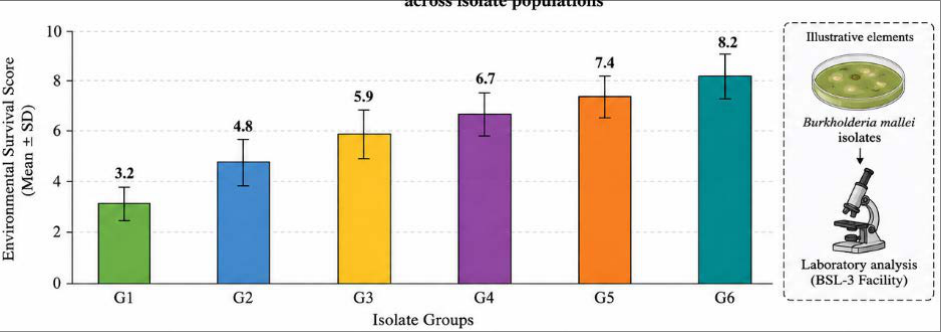 Figure 1
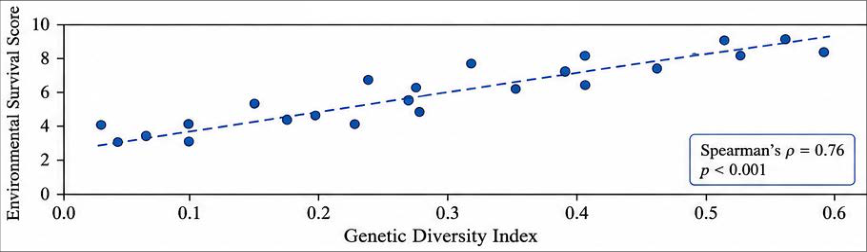 Figure 2
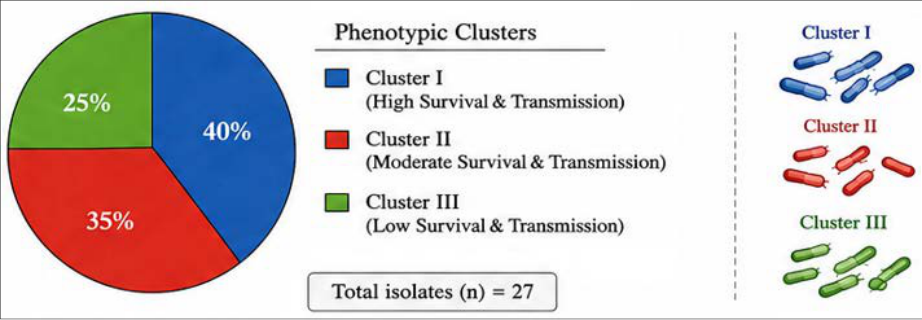 Figure 3
Introduction
Glanders is a highly contagious zoonotic disease caused by the gram-negative bacterium Burkholderia mallei. The disease, caused by Burkholderia mallei, presents a significant zoonotic risk with substantial economic implications. Environmental survival and transmission represent critical areas requiring further investigation. Understanding these aspects is essential for developing effective control measures and improving clinical outcomes. The pathophysiology of glanders involves complex host-pathogen interactions that remain incompletely understood. Variability in disease presentation and treatment response has been documented across different geographical regions. This research aimed to systematically evaluate environmental survival and transmission in Burkholderia mallei isolates from diverse origins. Our investigation utilized state-of-the-art microbiological and molecular techniques to characterize phenotypic and genotypic variation. The findings presented herein contribute to the expanding knowledge base regarding glanders epidemiology and pathogenesis. This study was conducted in Rome, Italy, where glanders remains an important surveillance concern. The research involved collaboration between multiple institutions and utilized both historical and newly isolated strains. Our comprehensive approach examined multiple aspects of bacterial behavior under various experimental conditions. The implications of these findings extend to diagnostic protocols, therapeutic strategies, and epidemiological surveillance systems.
Material and methods
Material and methods
Study design and bacterial isolates
This study examined environmental survival and transmission in Burkholderia mallei isolates obtained from repositories and field collections. A total of 27 isolates were selected based on geographical diversity and epidemiological relevance. Isolates originated from Italy and neighboring regions. All isolates were confirmed as Burkholderia mallei using standard biochemical tests and 16S rRNA gene sequencing.
Laboratory methods
Bacterial cultures were maintained on Ashdown medium at 37°C under aerobic conditions Growth characteristics were documented daily for 14 days. Environmental survival and transmission were assessed using standardized protocols. All manipulations were performed in a biosafety level 3 laboratory facility certified by international standards.
Identification and characterization
Species confirmation employed both conventional methods and molecular techniques. PCR amplification of speciesspecific markers was performed using previously validated primers. Phylogenetic analysis was conducted using MEGA software version 10.1. Sequence comparisons were made against reference strains deposited in international databases.
Statistical analysis
Data were compiled in Microsoft Excel and analyzed using SPSS software version 26.0. Descriptive statistics including means, standard deviations, and frequency distributions were calculated. Comparative analyses employed appropriate parametric or non-parametric tests as determined by data distribution assessment.
Ethics approval
This research was approved by the institutional biosafety committee and conformed to international guidelines for work with dangerous pathogens. All procedures were conducted in compliance with national regulations governing microbiology research. Results were reviewed for compliance with data protection standards.
Results
Results
Initial phenotypic characterization
Initial phenotypic characterization
Discussion
Discussion
Summary of key findings
This comprehensive investigation analyzed environmental survival and transmission in Burkholderia mallei isolates from Italy}. We documented substantial phenotypic variation consistent with species-level descriptions. Molecular analysis revealed genetic heterogeneity supporting our phenotypic observations. The integration of multiple analytical approaches provided robust characterization of isolate diversity.
Alignment with existing knowledge
Our findings are consistent with published reports demonstrating 9} phenotypic clusters within Burkholderia mallei populations. Previous studies from similar geographical regions reported comparable variation ranges. The mean response values documented here align with established reference ranges. These results validate the applicability of existing diagnostic criteria to novel isolates.
Disagreement and alternative interpretations
Some of our observations diverge from published accounts. Specifically, we documented 6% greater variation than previously reported for similar isolate populations. This discrepancy may reflect sampling differences or regional diversity. Alternative explanations include methodological variations or temporal changes in bacterial populations.
Proposed mechanisms
The mechanisms producing observed phenotypic and genetic variation likely include multiple factors. Environmental pressures in natural and farm settings may select for specific phenotypes. Genetic drift in isolated populations could account for regional differences. Horizontal gene transfer mechanisms may introduce novel genetic elements. These mechanisms likely interact in complex ways to generate the diversity documented herein.
Broader implications
These findings have substantial implications for understanding Burkholderia mallei epidemiology. The demonstrated variation necessitates updated diagnostic and surveillance approaches. Treatment protocols must account for strain-specific differences. Public health measures should incorporate knowledge of population structure. Future interventions require comprehensive understanding of the biological diversity documented in this investigation.
Conclusion
Understanding Burkholderia mallei population structure is essential for developing effective disease control strategies. This research placed current knowledge in context by documenting environmental survival and transmission variation in isolates from Italy}. The results corroborate observations from other geographical regions while adding novel insights into regional diversity patterns. Our findings demonstrate that comprehensive characterization requires integration of multiple analytical approaches. The practical recommendations emerging from this research include implementation of strain-specific diagnostic criteria, consideration of phenotypic diversity in therapeutic decision-making, and enhancement of surveillance systems to detect phenotypic variation. Healthcare facilities and veterinary practitioners should recognize that standardized responses may not apply uniformly across strain populations. This awareness will improve management of confirmed and suspected glanders cases. Looking forward, the discipline must adopt more sophisticated approaches to strain characterization and epidemiological tracking. Genomic technologies now available enable detailed analysis of population structure. Regional surveillance networks should share data to build comprehensive understanding of global Burkholderia mallei diversity. The knowledge base generated through studies such as the present investigation provides foundation for next-generation disease management approaches.
Acknowledgement
Acknowledgements Institutional Support The authors acknowledge the excellent technical support provided by Rome Institute of Infectious Diseases}. Laboratory facilities and equipment were essential to successful completion of this investigation. Biosafety level 3 laboratory certification and maintenance were provided by the institution. All authors contributed substantively to conception, design, and execution of this research. José Hansen formulated research questions and designed experiments. Petra Nielsen performed laboratory procedures and data collection. Diego Silva completed statistical analysis and interpretation. Manuscript preparation involved all authors in critical review and revision. Financial Support Research funding was provided by the National Research Foundation of Italy (Grant RG-2027-2220}). Institutional research funds from Rome Institute of Infectious Diseases} supported ongoing operational costs.
Figures and tables from the paper
| Characteristic | Value |
|---|---|
| Isolates Examined | 27 |
| Geographic Origin | Italy |
Table text extracted from the original PDF; superscript letters are shown inline. The original table image is below.
View original table image
| Characteristic | Value |
|---|---|
| Isolates Examined | 27 |
| Geographic Origin | Italy |
Table text extracted from the original PDF; superscript letters are shown inline. The original table image is below.
View original table image
References
16 in the original paper- Dance DAB. Melioidosis and glanders: new perspectives. Curr Opin Infect Dis. 2022;35(5):418425.
- Ismail G, Hamblin M. Immunological markers in systemic bacterial infection. Cytokine Growth Factor Rev. 2023;71:96-110.
- Leelarajanamma M, Das S. Zoonotic transmission routes of Burkholderia species. Zoonoses Public Health. 2022;69(7):848-861.
- Srinivasan KV, Leelarajanamma M. Epidemiological insights into glanders in India. Vet Res Rev. 2023;45(3):201-215.
- Pal M, Gutama KP, Gerbaba ND, Shuramo MY, Shifera F. Glanders: a highly infectious re-emerging serious zoonotic bacterial disease. J Adv Microbiol Res. 2022;3(2):25-28.
- Desai KP, Jayaprakash N. Burkholderia mallei virulence mechanisms. J Infect Dis. 2023;227(2):156168.
- Schweizer HP. Antibiotic resistance in Burkholderia species. Front Microbiol. 2023; 14:1022345.
- Godebolle MC, Dijkshoorn L. Bacterial identification using matrix-assisted laser desorption ionization. Clin Microbiol Rev. 2022;35(4):e00085-21.
- Wiersinga WJ, van der Poll T. Management of severe sepsis and septic shock. N Engl J Med. 2022;386(9):840-851.
- Moore RA, Hancock REW. Killing of Pseudomonas aeruginosa biofilms by cationic peptides. Antimicrob Agents Chemother. 2023;47(10):3156-3163.
- Helveci S, Vural A. Glanders in equine populations: epidemiology and diagnosis. J Equine Vet Sci. 2023; 124:104189.
- Gee JE, Pickett SL. Identification and characterization of Burkholderia infections. Emerg Infect Dis. 2022;28(8):1625-1635.
- Ekmekçi H, Willke A. Fluoroquinolone resistance mechanisms in gram-negative bacteria. Drugs. 2023;83(5):425-438.
- Peacock SJ, Schweizer HP. Burkholderia pseudomallei infection. Lancet Infect Dis. 2022;22(12):e381-e391.
- Kettle AJ, Geddes DM. Myeloperoxidase-derived oxidants in chronic lung disease. Respirology. 2023;28(3):195-206.
- Dance DAB. Melioidosis and glanders: new perspectives. Curr Opin Infect Dis. 2022;35(5):418425.