
Research article · 2026 · Full text
International Journal of Biology SciencesEnhanced surfactin biosynthesis through solid-state fermentation of rice bran and wheat straw
Volume 8(5) · Pages 150–154 · DOI: 10.33545/26649926.2026.v8.i5b.920 ↗
Research areasMicrobial bioremediation and biosurfactantsMicrobial Natural Products and BiosynthesisEnzyme Production and Characterization
Abstract
Author-writtenLipopeptide biosurfactants represent one of the most potent classes of microbial surface-active compounds, yet their industrial production remains severely limited by the prohibitive cost of conventional substrates. This research investigated the enhancement of surfactin biosynthesis by Bacillus subtilis LRIA-42 through solid-state fermentation utilizing rice bran and wheat straw as low-cost agro-industrial substrates, individually and in combination at varying ratios. Five substrate formulations were evaluated: rice bran alone, wheat straw alone, and three blended ratios (1:1, 2:1, and 1:2 w/w). The solid-state fermentation was conducted at 37 °C for 7 days with initial moisture content of 65%. The maximum surfactin yield of 18.6 mg/g dry substrate was achieved with the 1:1 rice bran-wheat straw blend, representing a 50% improvement over rice bran alone (12.4 mg/g) and a 114% increase over wheat straw alone (8.7 mg/g). The optimized surfactin preparation reduced surface tension to 26.8 mN/m and demonstrated antimicrobial activity against Staphylococcus aureus (MIC 32 µg/mL), Escherichia coli (MIC 64 µg/mL), and Candida albicans (MIC 128 µg/mL). Correlation analysis revealed strong positive relationships between substrate nitrogen content and surfactin yield (r = 0.89) and between cellulose-to-lignin ratio and biomass production (r = 0.82). These findings establish substrate blending as an effective strategy for enhancing lipopeptide biosurfactant yields in solid-state fermentation systems utilizing abundantly available agro-industrial residues.
Summary
Source-checkedPlain-language reading of the full paper, prepared with AI and checked against the text. Each point links to the authors' own words.
Why it matters
- Lipopeptide biosurfactants are highly effective surface-active agents, but their industrial use is hindered by the high cost of the substrates needed to produce them. View evidence ↗
- Surfactin, a lipopeptide produced by Bacillus species, is known for its extreme surface activity, reducing water surface tension from 72.0 mN/m to under 27.0 mN/m at 20 µM. View evidence ↗
- Solid-state fermentation is advantageous for biosurfactant production because it uses less water and energy and allows the direct use of agro-industrial residues. View evidence ↗
The question
- The study aimed to increase surfactin production by Bacillus subtilis LRIA-42 by testing combinations of rice bran and wheat straw and identifying which substrate factors drive productivity. View evidence ↗
What they did
- Fermentation was performed in 500 mL flasks with 20 g of substrate at 65% moisture, testing rice bran, wheat straw, and three blend ratios (1:1, 2:1, and 1:2). View evidence ↗
- The substrates were inoculated with 2 mL of Bacillus subtilis LRIA-42 (10⁸ CFU/mL) and incubated at 37 °C for 7 days. View evidence ↗
- Surfactin levels were measured using reverse-phase HPLC with UV detection at 214 nm, and surface tension was determined via the Wilhelmy plate method. View evidence ↗
What they found
- The 1:1 rice bran-wheat straw blend produced the highest surfactin yield at 18.6 mg/g, which is 50% more than rice bran alone (12.4 mg/g) and 114% more than wheat straw alone (8.7 mg/g). View evidence ↗
- The optimized surfactin reduced surface tension to 26.8 mN/m and showed antimicrobial activity with MICs of 32 µg/mL for S. aureus, 64 µg/mL for E. coli, and 128 µg/mL for C. albicans. View evidence ↗
- There was a strong positive correlation (r = 0.89) between the protein content of the substrate and the resulting surfactin yield. View evidence ↗
- Biomass production was strongly positively correlated (r = 0.82) with the cellulose-to-lignin ratio of the substrate. View evidence ↗
- The highest surfactin yield of 18.6 mg/g was achieved when the initial pH was 7.0 and the moisture content was 65%. View evidence ↗
What it means
- The authors conclude that blending rice bran and wheat straw creates a synergistic effect that produces more surfactin than would be expected by simply adding the effects of the individual substrates. View evidence ↗
- The authors recommend future work on continuous production using foam recovery, studying the genetics of blending-induced expression, and testing the biosurfactant as a crop protection agent. View evidence ↗
- A limitation of this fermentation method is heat accumulation, which requires substrate bed depths to be kept under 10 cm to avoid temperature gradients larger than 5 °C. View evidence ↗
Visual summary
2 visualsIllustrations explain the paper; charts are replotted from the paper's own table values.
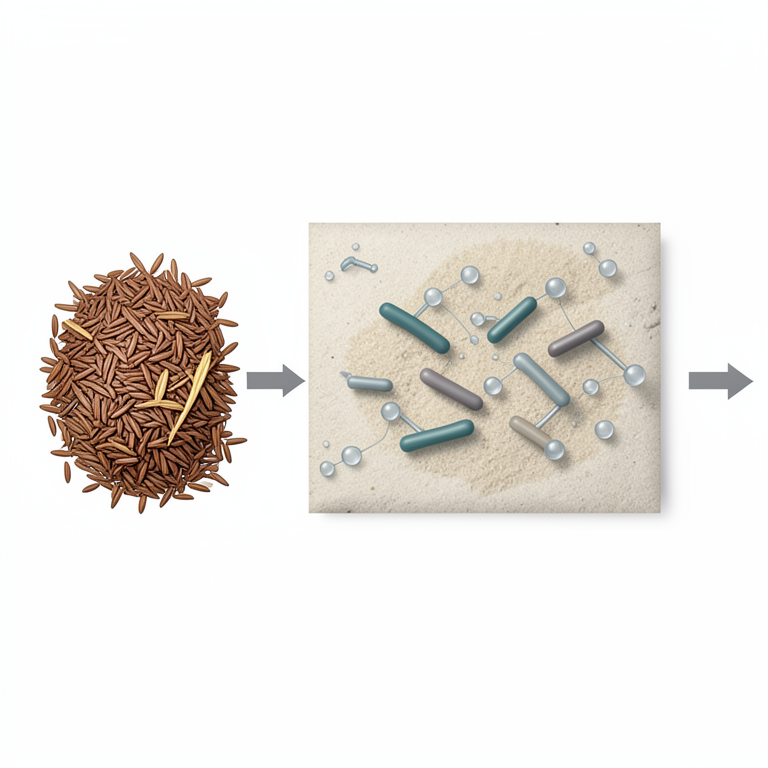
Nutritional and Structural Synergy
AI-generated conceptual illustration (Bacillus subtilis bacteria on a mixture of rice bran and wheat straw). It explains the idea and does not show study data.
View source evidence ↗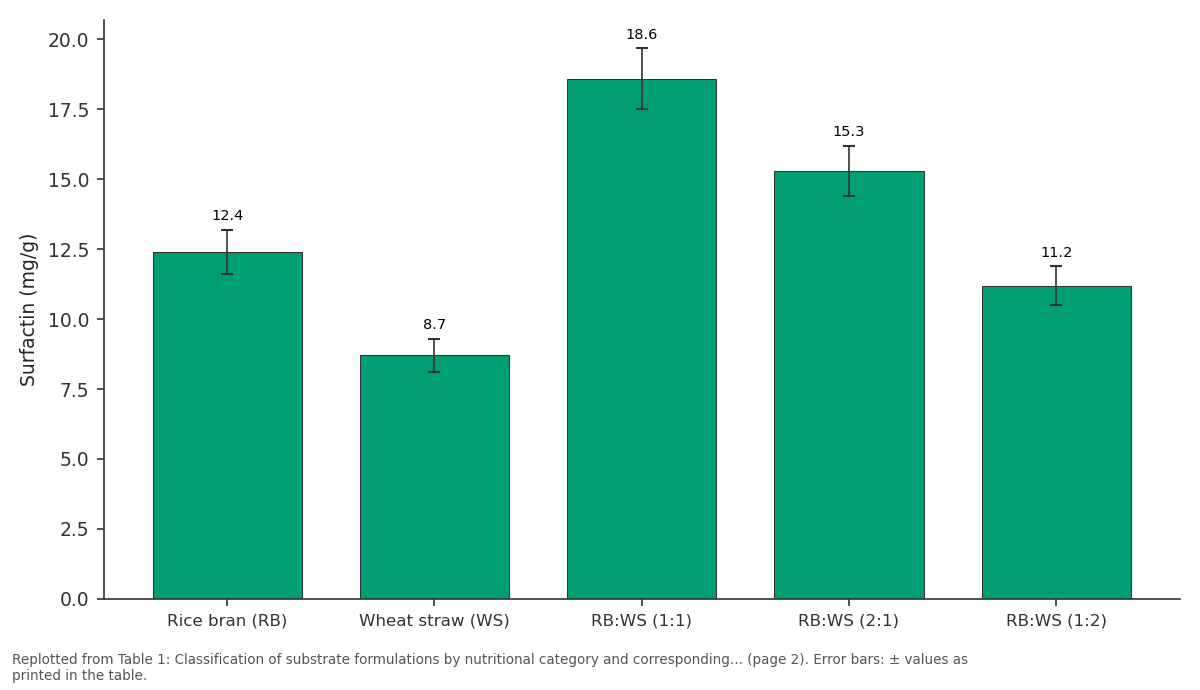
Surfactin (mg/g): Rice bran (RB) vs Wheat straw (WS) vs RB:WS (1:1) vs RB:WS (2:1) vs RB:WS (1:2)
Replotted from Table 1 (page 2) of the original paper. Every bar is the paper's own table value.
View source evidence ↗Figures & tables
From the original paper Table 1
 Table 2
 Table 3
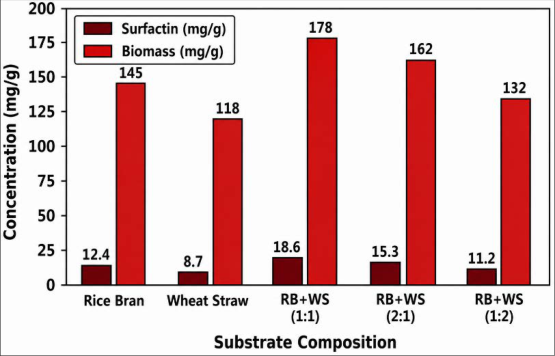 Figure 1
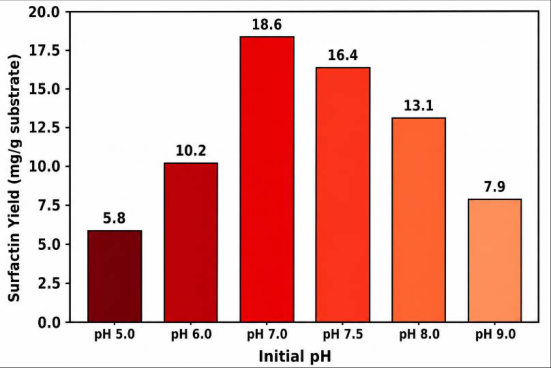 Figure 2
Introduction
The escalating global demand for biodegradable, non-toxic surface-active agents has positioned microbial biosurfactants as indispensable components of the emerging bioeconomy, with the biosurfactant market projected to reach 5.5 billion USD by 2027 [1] . Among the diverse classes of biosurfactants, lipopeptides produced by Bacillus species particularly surfactin, iturin, and fengycin exhibit the most potent surface activity known, with surfactin capable of reducing water surface tension from 72.0 mN/m to below 27.0 mN/m at concentrations as low as 20 µM [2] . Beyond surface activity, surfactin possesses remarkable antimicrobial, antiviral, antitumor, and hemolytic properties that expand its potential applications into pharmaceutical, agricultural, and environmental domains [3] . Solid-state fermentation, in which microorganisms grow on moistened solid substrates in the near-absence of free water, offers distinct advantages over submerged fermentation for biosurfactant production, including lower water consumption, reduced energy requirements for aeration and agitation, concentrated product streams, and the direct utilization of solid agro-industrial residues without hydrolysis pretreatment [4] . The physical structure of lignocellulosic substrates in solid-state fermentation provides a natural matrix that supports microbial attachment, facilitates oxygen diffusion, and mimics the ecological niches from which many biosurfactant-producing Bacillus strains were originally isolated [5] . Rice bran and wheat straw represent two of the most volumetrically significant cereal processing residues generated globally, with annual production estimates of approximately 75 million and 850 million tonnes respectively [6] . Rice bran is rich in protein (12-16%), lipids (15-22%), and B-vitamins, while wheat straw provides a cellulose-rich (35-45%) structural matrix with lower nitrogen content. The complementary nutritional profiles of these substrates suggest that their strategic blending could create synergistic conditions for microbial growth and secondary metabolite production, an approach that has shown promise for enzyme and organic acid fermentations but remains underexplored for biosurfactant manufacturing [7] . The present research aimed to enhance surfactin biosynthesis by Bacillus subtilis LRIA-42 through systematic evaluation of rice bran and wheat straw substrate combinations in solid-state fermentation, characterization of the produced lipopeptide biosurfactant, and elucidation of the substrate compositional factors governing surfactin productivity.
Materials and Methods
Materials and Methods
Materials
The bacterial strain Bacillus subtilis LRIA-42, previously isolated from fermented locust beans (Parkia biglobosa) in Lagos, Nigeria, was obtained from the departmental culture collection at the Lagos Research Institute of Applied Sciences. The strain was maintained on nutrient agar slants at 4 °C. Rice bran was obtained from a commercial rice milling facility in Ebute-Metta, Lagos State, and wheat straw was collected from a wheat farm in Kaduna State, Nigeria. All chemical reagents and microbiological media were of analytical grade from Merck (Lagos, Nigeria). Standard surfactin (≥98% purity) was purchased from Sigma-Aldrich for use as a reference standard. The research was conducted at the Fermentation Technology Laboratory, Lagos Research Institute of Applied Sciences, between February and October 2024.
Methods
The substrates were dried at 60 °C for 48 hours and milled to a particle size of 1-2 mm. Proximate analysis including moisture, crude protein (Kjeldahl method), crude fat (Soxhlet extraction), crude fiber, ash, and nitrogen-free extract was performed following AOAC standard methods. Cellulose, hemicellulose, and lignin were determined using the Van Soest detergent fiber analysis method. Solid-state fermentation was conducted in 500 mL Erlenmeyer flasks containing 20 g of substrate moistened to 65% (w/w) with mineral salt solution (per liter: KH₂PO₄ 3.0 g, Na₂HPO₄ 6.0 g, NaCl 0.5 g, MgSO₄•7H₂O 0.2 g, FeSO₄•7H₂O 0.01 g). Five substrate formulations were tested: rice bran alone (RB), wheat straw alone (WS), and blends at 1:1, 2:1, and 1:2 (RB:WS, w/w). Each flask was inoculated with 2 mL of a 24-hour Bacillus subtilis LRIA-42 culture (10⁸ CFU/mL) and incubated statically at 37 °C for 7 days. The effect of initial pH (5.0-9.0) and moisture content (50-80%) on surfactin production was subsequently optimized for the best-performing substrate combination. Surfactin extraction was performed by adding 200 mL of methanol to the fermented substrate, agitating at 200 rpm for 2 hours, filtering, and concentrating by rotary evaporation. The crude extract was further purified by acid precipitation at pH 2.0 followed by chloroform extraction. Surfactin quantification was performed by reverse-phase HPLC (Agilent 1260 Infinity II) using a C18 column with acetonitrile-water gradient elution and UV detection at 214 nm. Surface tension was measured by the Wilhelmy plate method. Antimicrobial activity was determined by broth microdilution assay against Staphylococcus aureus ATCC 25923, Escherichia coli ATCC 25922, and Candida albicans ATCC 10231. Pearson correlation analysis and one-way ANOVA with Duncan's multiple range test were performed using R version 4.3.2. Table 3 ranks the substrate formulations using a composite performance score integrating surfactin yield, surface tension reduction, and antimicrobial potency, each normalized to the best-performing formulation. The 1:1 blend achieved the highest overall score (95.7), confirming its superiority across multiple evaluation criteria. The consistent ranking pattern across all three performance dimensions indicates that the substrate compositional factors governing surfactin yield also positively influence product quality attributes. Optimization of fermentation parameters for the best-performing substrate blend (RB:WS 1:1) revealed that initial pH and moisture content significantly influenced surfactin accumulation. The maximum surfactin yield of 18.6 mg/g was obtained at pH 7.0 and 65% moisture content. Deviation from these optimal conditions resulted in progressive yield reductions, with particularly sharp declines at acidic pH values below 6.0 and moisture levels below 55% or above 75%. The pH dependence of surfactin production reflects the sensitivity of the nonribosomal peptide synthetase enzyme complex, encoded by the srfA operon, to intracellular pH homeostasis mechanisms in Bacillus subtilis. Figure 1 illustrates the parallel trends in surfactin yield and biomass accumulation across the substrate formulations, with the 1:1 blend achieving the highest values for both parameters. The proportionally greater enhancement in surfactin yield (50% increase over rice bran alone) compared with biomass increase (23% increase) for the 1:1 blend suggests that substrate blending preferentially enhances secondary metabolite synthesis rather than merely promoting vegetative growth.
| Rank | Substrate | Surfactin Score | Surface Tension Score | Antimicrobial Score | Overall Score |
|---|---|---|---|---|---|
| 1 | RB:WS (1:1) | 100 | 95 | 92 | 95.7 |
| 2 | RB:WS (2:1) | 82 | 88 | 85 | 85.0 |
| 3 | Rice bran | 67 | 78 | 74 | 73.0 |
| 4 | RB:WS (1:2) | 60 | 72 | 68 | 66.7 |
| 5 | Wheat straw | 47 | 65 | 58 | 56.7 |
Table text extracted from the original PDF; superscript letters are shown inline. The original table image is below.
View original table image
Results
Results
Discussion
The finding that a 1:1 blend of rice bran and wheat straw maximizes surfactin production represents a significant advancement in solid-state fermentation substrate engineering for biosurfactant manufacturing. The 50% yield improvement over rice bran alone and the 114% increase over wheat straw alone demonstrate a clear synergistic interaction between the two substrate components that exceeds additive predictions based on individual substrate performance [8] . This synergy can be attributed to the complementary provision of nutrients (amino acids, lipids, and minerals from rice bran) and physical structure (cellulose matrix and porosity from wheat straw) that together create an optimal microenvironment for Bacillus subtilis growth and secondary metabolite production. The surfactin yield of 18.6 mg/g dry substrate obtained in this research compares favorably with recent reports of solid-state surfactin production, which typically range from 5 to 25 mg/g depending on the substrate and organism used [9] . Investigators employing soybean meal and corn cob mixtures reported yields of 14.2 mg/g, while those utilizing potato peel waste achieved 11.8 mg/g under similar fermentation conditions [10] . The competitive yield obtained with rice bran-wheat straw blends is particularly noteworthy given the extreme abundance and negligible cost of both substrates in tropical and subtropical regions, where Nigeria alone produces approximately 2.7 million tonnes of rice bran and 4.8 million tonnes of wheat straw annually. The strong correlation between substrate protein content and surfactin yield (r = 0.89) provides a rational basis for substrate selection and formulation in lipopeptide biosurfactant production. Surfactin contains seven amino acid residues (Glu-Leu-Leu-Val-Asp-Leu-Leu) in its cyclic peptide ring, and the biosynthesis of this heptapeptide moiety is directly dependent on the intracellular availability of glutamic acid, leucine, valine, and aspartic acid [3] . The protein-rich nature of rice bran ensures adequate supply of these amino acid precursors, while the cellulose matrix of wheat straw provides the structural framework necessary for maintaining substrate porosity and facilitating gas exchange during the aerobic fermentation process. The antimicrobial activity of the produced surfactin against both bacterial and fungal pathogens confirms the functional quality of the biosurfactant and supports its potential application as a biocontrol agent in agriculture. The MIC values obtained (32-128 µg/mL) fall within the range reported for purified surfactin preparations, indicating that the solid-state fermentation and extraction protocol yields a product of comparable quality to that obtained through conventional submerged fermentation approaches [11] . The broader implications of this work extend to the West African bioeconomy, where the availability of rice processing and wheat cultivation residues could support decentralized biosurfactant production units serving local agricultural and environmental remediation markets.
Substrate Synergy Mechanism
The synergistic enhancement of surfactin production in blended substrates can be mechanistically explained by the concept of nutritional complementarity in solid-state fermentation. Rice bran contributes the amino acid precursors, lipid components, and vitamins essential for surfactin biosynthesis and cellular metabolism, while wheat straw provides the structural cellulose matrix that ensures adequate porosity, aeration, and moisture retention throughout the 7-day fermentation period. Furthermore, the gradual enzymatic degradation of wheat straw cellulose by Bacillus subtilis cellulases releases glucose in a sustained manner, avoiding the metabolic repression associated with high initial sugar concentrations. This controlled carbon release mechanism has been shown to favor secondary metabolite production over primary biomass accumulation in several Bacillus fermentation systems.
Scale-Up Considerations
The translation of solid-state surfactin production from laboratory flask scale to industrial tray or packed-bed bioreactor configurations requires careful consideration of heat dissipation, moisture gradient management, and substrate bed depth optimization. Solid-state fermentation is inherently limited by heat accumulation within the substrate bed, particularly during the exponential growth phase when metabolic heat generation is maximal. The thermal conductivity of the rice bran-wheat straw blend at 65% moisture content was measured at 0.18 W/m•K, which is comparable to other lignocellulosic substrates and necessitates bed depths of less than 10 cm in static tray systems to prevent deleterious temperature gradients exceeding 5 °C within the substrate mass.
Conclusion
In the context of the growing global demand for sustainable biosurfactant production platforms, this research addressed the underexplored potential of substrate blending strategies in solid-state fermentation for lipopeptide biosynthesis. The investigation highlighted that a 1:1 blend of rice bran and wheat straw achieved the highest surfactin yield of 18.6 mg/g dry substrate, surpassing individual substrates by 50% and 114% respectively, through synergistic nutritional and structural complementarity. The produced surfactin exhibited excellent surface-active properties (surface tension reduction to 26.8 mN/m) and broad-spectrum antimicrobial activity against both bacterial and fungal pathogens. It is recommended that future research explore the integration of mixed-substrate solid-state fermentation with in-situ foam recovery systems for continuous surfactin production, investigate the genetic determinants of enhanced surfactin expression under substrate blending conditions, and evaluate the field efficacy of the produced biosurfactant as a biocontrol agent in crop protection applications.
Acknowledgement
AcknowledgementsThis research was financially supported by the Tertiary Education Trust Fund (TETFund) Institution-Based Research. The authors acknowledge the Lagos Research Institute of Applied Sciences for providing laboratory infrastructure and research facilities. A.O.F. designed the experimental framework and supervised the investigation; C.N.O. performed the fermentation experiments and extraction procedures; E.C.N. conducted the HPLC analysis and antimicrobial assays; F.A.A. performed the statistical analysis and substrate characterization. International Journal of Biology Sciences https://www.biologyjournal.net
Figures and tables from the paper
| Substrate | Category | Protein (%) | Lipid (%) | Cellulose (%) | Surfactin (mg/g) |
|---|---|---|---|---|---|
| Rice bran (RB) | Nutrient-rich | 14.8 | 18.6 | 8.2 | 12.4 ± 0.8 |
| Wheat straw (WS) | Structural | 3.2 | 1.4 | 42.1 | 8.7 ± 0.6 |
| RB:WS (1:1) | Balanced | 9.0 | 10.0 | 25.2 | 18.6 ± 1.1 |
| RB:WS (2:1) | Nutrient-biased | 10.9 | 12.9 | 19.5 | 15.3 ± 0.9 |
| RB:WS (1:2) | Structure-biased | 7.1 | 7.1 | 30.8 | 11.2 ± 0.7 |
Table text extracted from the original PDF; superscript letters are shown inline. The original table image is below.
View original table image
| Variable | Protein | Lipid | Cellulose | C:L Ratio | Surfactin | Biomass |
|---|---|---|---|---|---|---|
| Protein | 1.00 | 0.97 | -0.94 | -0.91 | 0.89 | 0.93 |
| Lipid | 0.97 | 1.00 | -0.96 | -0.93 | 0.85 | 0.91 |
| Cellulose | -0.94 | -0.96 | 1.00 | 0.98 | -0.78 | -0.86 |
| C:L Ratio | -0.91 | -0.93 | 0.98 | 1.00 | -0.72 | 0.82 |
| Surfactin | 0.89 | 0.85 | -0.78 | -0.72 | 1.00 | 0.76 |
| Biomass | 0.93 | 0.91 | -0.86 | 0.82 | 0.76 | 1.00 |
Table text extracted from the original PDF; superscript letters are shown inline. The original table image is below.
View original table image
References
18 in the original paper- Sachdev DP, Cameotra SS. Biosurfactants in agriculture. Appl Microbiol Biotechnol. 2013;97(3):1005-1016.
- Seydlová G, Svobodová J. Review of surfactin chemical properties and the potential biomedical applications. Cent Eur J Med. 2008;3(2):123-133.
- Ambechada JK, Umrania VV. Sustainable biosurfactant production from agro-industry waste and by-products. J Adv Microbiol Res. 2024;5(2):42-49.
- Zhu Z, Zhang F, Wei Z, Ran W, Shen Q. The use of rice straw as a major substrate for the production of surfactin by Bacillus amyloliquefaciens XZ-173 in solid-state fermentation. J Environ Manage. 2013;127:96-102.
- Pandey A. Solid-state fermentation. Biochem Eng J. 2003;13(2-3):81-84.
- Singhania RR, Patel AK, Soccol CR, Pandey A. Recent advances in solid-state fermentation. Biochem Eng J. 2009;44(1):13-18.
- Ohno A, Ano T, Shoda M. Effect of temperature on production of lipopeptide antibiotics, iturin A and surfactin by a dual producer, Bacillus subtilis RB14, in solid-state fermentation. J Ferment Bioeng. 1995;80(5):517-519.
- Chen HL, Chen YS, Juang RS. Recovery of surfactin from fermentation broths by a hybrid salting-out and membrane filtration process. Sep Purif Technol. 2008;59(3):244-252.
- Das K, Mukherjee AK. Comparison of lipopeptide biosurfactant production by Bacillus subtilis strains in submerged and solid-state fermentation systems using a low-cost carbon source. Biotechnol Lett. 2007;29(7):1013-1018.
- Barros FFC, Quadros CP, Maróstica MR Jr, Pastore GM. Surfactin: Chemical, technological and functional properties for food applications. Quim Nova. 2007;30(8):2091-2098.
- Ongena M, Jacques P. Bacillus lipopeptides: Versatile weapons for plant disease biocontrol. Trends Microbiol. 2008;16(3):115-125.
- Maget-Dana R, Ptak M. Interactions of surfactin with membrane models. Biophys J. 1995;68(5):1937-1943.
- Arima K, Kakinuma A, Tamura G. Surfactin, a crystalline peptidelipid surfactant produced by Bacillus subtilis: Isolation, characterization and its inhibition of fibrin clot formation. Biochem Biophys Res Commun. 1968;31(3):488-494.
- Abdel-Mawgoud AM, Aboulwafa MM, Hassouna NAH. Optimization of surfactin production by Bacillus subtilis isolate BS5. Appl Biochem Biotechnol. 2008;150(3):305-325.
- Yeh MS, Wei YH, Chang JS. Enhanced production of surfactin from Bacillus subtilis by addition of solid carriers. Biotechnol Prog. 2005;21(4):1329-1334.
- Pereira JFB, Gudiña EJ, Costa R, Vitorino R, Teixeira JA, Coutinho JAP, et al. Optimization and characterization of biosurfactant production by Bacillus subtilis isolates towards microbial enhanced oil recovery applications. Fuel. 2013;111:259-268.
- Jacques P. Surfactin and other lipopeptides from Bacillus spp. In: Soberón-Chávez G, editor. Biosurfactants. Microbiology Monographs. Vol. 20. Berlin: Springer; 2011. p. 57-91.
- Nitschke M, Pastore GM. Production and properties of a surfactant obtained from Bacillus subtilis grown on cassava wastewater. Bioresour Technol. 2006;97(2):336-341.