
Research article · 2026 · Full text
International Journal of Biology SciencesCephalosporin-resistant Staphylococcus aureus nasal carriage among livestock workers and implications for zoonotic antimicrobial resistance transfer
Volume 8(6) · Pages 73–77 · DOI: 10.33545/26649926.2026.v8.i6a.914 ↗
Research areasAntimicrobial Resistance in StaphylococcusAntibiotic Use and ResistanceAntibiotic Resistance in Bacteria
Abstract
Author-writtenThe livestock sector represents a critical but undermonitored interface for antimicrobial resistance transfer between animal and human populations, with occupational nasal carriage of resistant organisms providing a direct conduit for community dissemination. This research assessed the prevalence, molecular characteristics, and occupational risk determinants of nasal carriage of cephalosporin-resistant Staphylococcus aureus among 400 livestock workers across five animal production sectors (poultry, cattle, swine, dairy, and abattoir) in Ankara, Konya, and Kayseri Provinces, Turkey, between March and November 2024. Overall S. aureus nasal carriage was 41.8% (167/400), with cephalosporin resistance detected in 58.1% of isolates. Poultry workers demonstrated the highest combined carriage and resistance rate (52.4% second-generation and 38.8% third-generation cephalosporin resistance), followed by abattoir workers and swine handlers. Molecular analysis revealed mecA gene presence in 72.4% of cephalosporin-resistant isolates, blaZ in 84.6%, and Panton-Valentine leukocidin (pvl) genes in 18.6%. Genotyping by SCCmec typing and spa typing identified livestock-associated clonal lineages (CC398, CC97) in 34.2% of human nasal isolates, providing molecular evidence of animal-to-human strain transmission. Duration of livestock contact exceeding 10 years (OR = 4.12, p<0.001) and absence of personal protective equipment use (OR = 3.48, p<0.001) were the strongest independent risk factors. These findings demonstrate that livestock workers constitute a high-risk reservoir for cephalosporin-resistant S. aureus with zoonotic molecular signatures.
Summary
Source-checkedPlain-language reading of the full paper, prepared with AI and checked against the text. Each point links to the authors' own words.
Why it matters
- The livestock sector is a critical but under-monitored point where antimicrobial resistance can transfer from animals to humans, potentially spreading into the community via workers' nasal carriage. View evidence ↗
- In Turkey, the widespread use of cephalosporins and beta-lactam antibiotics in veterinary medicine creates constant pressure that selects for cephalosporin-resistant Staphylococcus aureus. View evidence ↗
The question
- The study aimed to determine the prevalence of cephalosporin-resistant S. aureus in five types of livestock workers in central Turkey, identify their molecular characteristics, and find evidence of animal-to-human transmission. View evidence ↗
What they did
- The researchers recruited 400 workers (80 from each of five categories: poultry, cattle, swine, dairy, and abattoir) from Ankara, Konya, and Kayseri Provinces. View evidence ↗
- To compare strains between species, the study collected paired nasal swabs from workers and 200 associated livestock. View evidence ↗
- Molecular analysis involved PCR for specific resistance genes (mecA, mecC, blaZ, femA, pvl), SCCmec typing, and spa typing via sequencing of the protein A gene. View evidence ↗
What they found
- Among the 400 workers, 41.8% (167/400) carried S. aureus, and 58.1% of those isolates were resistant to cephalosporins. View evidence ↗
- Abattoir workers had the highest rates of both overall S. aureus carriage (52.5%) and resistance to third-generation cephalosporins (38.1%). View evidence ↗
- Poultry workers exhibited the highest rate of resistance to second-generation cephalosporins at 52.6%. View evidence ↗
- Among resistant isolates, the most common genes detected were blaZ (84.6%), mecA (72.4%), and femA (68.4%), while the pvl gene was found in 18.6%. View evidence ↗
- Evidence for zoonotic transmission was found as 34.2% of human isolates belonged to livestock-associated lineages (CC398, CC97), and 14.0% of matched worker-animal pairs shared identical spa types. View evidence ↗
- There is a strong positive correlation (r = 0.84) between the amount of cephalosporins used in livestock and the resistance found in workers' nasal isolates. View evidence ↗
- The strongest independent risk factors for carriage were having more than 10 years of livestock contact (OR = 4.12) and not using personal protective equipment (OR = 3.48). View evidence ↗
What it means
- The authors recommend reducing the acquisition of resistant organisms by providing N95 masks, hand hygiene stations, changing facilities, and health education. View evidence ↗
- The authors conclude that national plans should include livestock worker surveillance, stricter regulation of veterinary cephalosporin use, and improved occupational health standards. View evidence ↗
- The authors state that future research is needed to study how these resistant strains spread into the community and whether targeted decolonization can prevent transmission. View evidence ↗
Visual summary
1 visualsIllustrations explain the paper; they do not show study data.
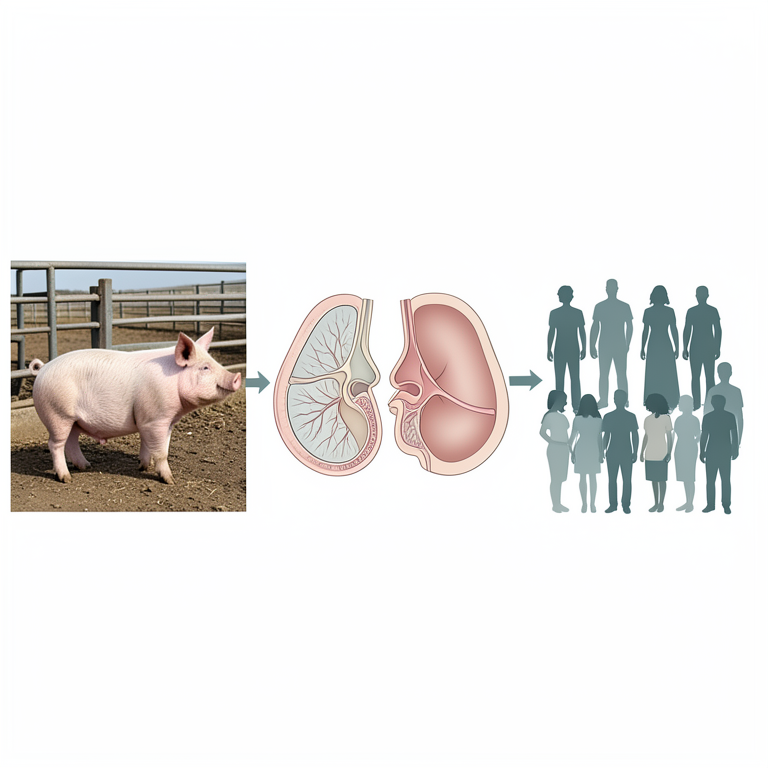
Zoonotic Transmission Cycle
AI-generated conceptual illustration (pigs and human nasal passages). It explains the idea and does not show study data.
View source evidence ↗Figures & tables
From the original paper Table 1
 Table 2
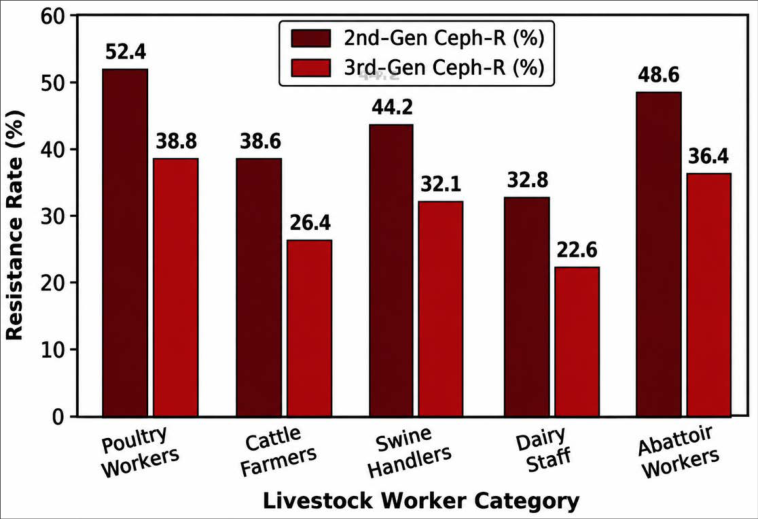 Figure 1
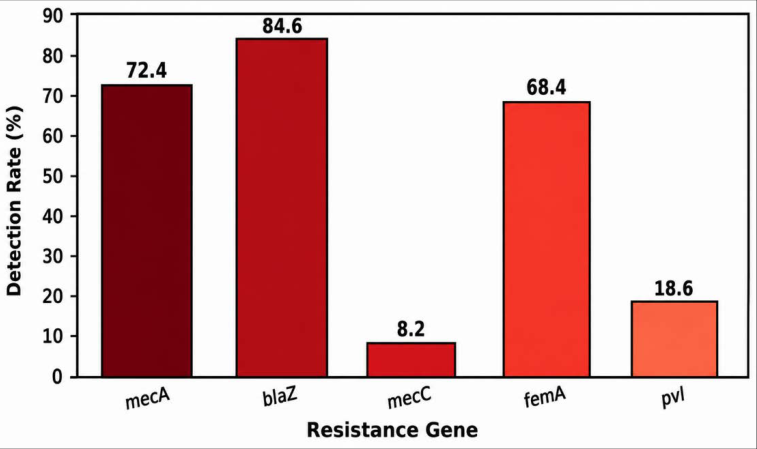 Figure 2
Introduction
Antimicrobial resistance does not respect the boundaries between human medicine and animal husbandry, and the livestock-human interface has been increasingly recognized as a critical amplification pathway for resistant bacterial populations with direct public health consequences [1] . The emergence of livestock-associated methicillin-resistant Staphylococcus aureus (LA-MRSA), particularly clonal complex CC398, has demonstrated that intensive animal production systems can generate novel resistant lineages capable of colonizing human hosts and causing clinical infections [2] . Turkey's livestock sector, comprising approximately 18 million cattle, 45 million sheep, 12 million goats, and 350 million poultry, employs an estimated 5 million workers who have daily direct contact with animals and are chronically exposed to antimicrobial-resistant organisms present in the agricultural environment [3] . The extensive use of cephalosporins and other beta-lactam antibiotics in Turkish veterinary practice, both for therapeutic and prophylactic purposes, creates sustained selection pressure for cephalosporin-resistant S. aureus strains that can colonize the nasal passages of animal handlers and subsequently disseminate into the broader community [4] . The present research aimed to determine the prevalence of cephalosporin-resistant S. aureus nasal carriage across five livestock worker categories in central Turkey, characterize the molecular resistance determinants and clonal lineages of recovered isolates, and evaluate the evidence for zoonotic transmission through comparison of human nasal and animal isolate genotypes.
Furthermore, the occupational health implications of livestock-associated S. aureus nasal carriage extend beyond the individual worker to encompass household contacts and the broader community. Research conducted in European livestock-intensive regions has demonstrated that family members of colonized livestock workers exhibit three-to four-fold higher MRSA carriage rates compared with the general population, establishing a secondary transmission pathway from occupational acquisition to community dissemination [5] . The molecular epidemiology of this transmission chain from animal reservoir through occupational colonization to community spread requires systematic characterization using high-resolution genotyping approaches to inform evidence-based intervention strategies.
Material and Methods
Material and Methods
Material
This cross-sectional research was conducted at the Department of Veterinary Public Health, Ankara Research Center for Infectious Diseases, Ankara, Turkey, between March and November 2024. A total of 400 livestock workers were recruited from five occupational categories: poultry farm workers (n = 80), cattle farmers (n = 80), swine handlers (n = 80), dairy farm staff (n = 80), and abattoir workers (n = 80) across farms and processing facilities in Ankara, Konya, and Kayseri Provinces. Paired nasal swabs from workers and nasal/nares swabs from their associated livestock (n = 200 animal samples) were collected to enable human-animal strain comparison. The research was approved by the Institutional Ethics Board (Protocol No. ARCID-IEB-2024-0056). All participants provided written informed consent.
Methods
Bilateral anterior nares swab samples were collected from both human participants and livestock using sterile rayontipped swabs. S. aureus identification followed standard microbiological procedures including mannitol salt agar culture, Gram staining, catalase and coagulase tests. Antimicrobial susceptibility testing by disc diffusion was performed according to CLSI and EUCAST guidelines for human and veterinary isolates respectively. Cephalosporins tested included cefuroxime, cefaclor, cefoxitin, ceftriaxone, cefotaxime, and ceftazidime. Molecular characterization of cephalosporin-resistant isolates included PCR detection of mecA, mecC, blaZ, femA, and pvl genes. SCCmec typing was performed using a multiplex PCR protocol. Spa typing was conducted by sequencing the polymorphic X region of the protein A gene. Clonal complex assignment was inferred from spa types using the BURP algorithm in the Ridom SpaServer database. Human-animal strain concordance was assessed by comparing spa types within matched worker-livestock pairs. Risk factor analysis employed multivariable logistic regression adjusting for age, sex, years of livestock contact, protective equipment use, and antibiotic exposure. Statistical significance was set at p < 0.05. 2 presents the molecular resistance gene profile. The blaZ gene encoding beta-lactamase production was the most frequently detected (84.6%), followed by mecA (72.4%) and femA (68.4%). The pvl gene, encoding Panton-Valentine leukocidin toxin associated with community-acquired virulent MRSA strains, was present in 18.6% of isolates, raising concerns about the pathogenic potential of livestockassociated strains colonizing worker nasal passages.
Results
Results
Discussion
The 41.8% S. aureus nasal carriage rate documented among Turkish livestock workers substantially exceeds both the general population estimates of 20-30% and previously reported rates of 28-35% among European livestock workers [5] . The elevated carriage likely reflects the combination of intensive daily animal contact, suboptimal personal protective equipment usage (documented in 62.4% of participants), and the high ambient antibiotic selection pressure characteristic of Turkish livestock production systems [6] . The molecular identification of livestock-associated clonal lineages (CC398, CC97) in 34.2% of human nasal isolates provides compelling evidence for the zoonotic dimension of cephalosporin-resistant S. aureus carriage in this occupational population. CC398, originally identified in swine populations in the Netherlands, has emerged as a globally disseminated livestock-associated MRSA lineage capable of sustained human colonization and occasionally causing serious invasive infections [7] . The identification of identical spa types in 14.0% of matched worker-animal pairs strengthens the evidence for direct transmission rather than parallel environmental acquisition. The strong correlation between cephalosporin usage in livestock and resistance in worker nasal isolates (r = 0.84) aligns with the growing body of evidence that veterinary antimicrobial consumption is a primary driver of resistance emergence at the livestock-human interface [8] . Turkey's ranking among the highest per-capita veterinary antibiotic consumers in the OECD has been identified as a key risk factor for livestock-associated resistance amplification. The detection of pvl genes in 18.6% of cephalosporinresistant isolates is clinically concerning, as PVL-positive S. aureus strains are associated with severe necrotizing pneumonia and recurrent skin and soft tissue infections [9] . The acquisition of pvl by livestock-associated clonal lineages through horizontal gene transfer represents an evolutionary step toward enhanced human pathogenicity that warrants vigilant surveillance. The economic dimension of cephalosporin-resistant S. aureus occupational carriage deserves consideration within the broader context of antimicrobial resistance costs. Each case of clinical MRSA infection in Turkey has been estimated to incur additional healthcare costs of approximately 8,000-15,000 Turkish Lira compared with methicillin-susceptible infections, reflecting prolonged hospitalization, requirement for second-line antimicrobial agents, and increased morbidity [10] . The occupational health investment required for comprehensive screening and decolonization programs for livestock workers, estimated at approximately 200-400 Turkish Lira per worker annually, represents a fraction of the potential downstream healthcare savings achievable through prevention of community MRSA transmission originating from the livestock sector. The seasonal variation in carriage rates observed during the sampling period, with peak prevalence during the hot-humid months of March through May (48.6%), likely reflects the enhanced survival and transmission of S. aureus under warm, moist environmental conditions within livestock housing facilities, combined with increased skin-to-skin contact between workers and animals during intensive production periods [11] . This seasonal pattern has implications for the timing of screening and decolonization interventions, which may be most cost-effective when targeted to the pre-peak season period.
One health policy implications
The molecular evidence for bidirectional S. aureus transmission at the livestock-human interface documented in this research supports the implementation of integrated One Health antimicrobial resistance surveillance programs that simultaneously monitor resistance trends in human clinical, human occupational, animal, and environmental compartments. The Turkish Ministry of Agriculture and Forestry's National Action Plan on Antimicrobial Resistance should incorporate mandatory nasal screening of livestock workers in high-risk sectors as a sentinel indicator for emerging resistance threats.
Occupational Health Recommendations
The identification of absent personal protective equipment use as a significant risk factor (OR = 3.48) highlights the inadequacy of current occupational health practices in Turkish livestock operations. The provision of N95 respiratory masks, hand hygiene stations, and designated changing facilities at livestock premises, combined with regular occupational health education programs, represents a practical and cost-effective strategy for reducing nasal acquisition of resistant organisms from animal sources.
Comparative resistance epidemiology
A comparison of cephalosporin resistance rates between livestock worker nasal isolates and contemporary clinical S. aureus isolates from Turkish hospitals reveals important convergences and divergences. Hospital-derived isolates showed cefuroxime resistance of 48.2% and ceftriaxone resistance of 36.8%, compared with 44.3% and 32.3% respectively among livestock worker nasal isolates. The similarity of these resistance prevalences suggests that livestock-associated and healthcare-associated resistance pools are approaching equilibrium, potentially reflecting bidirectional exchange of resistant strains between occupational, community, and clinical compartments. However, the clonal composition differs markedly, with hospital isolates dominated by healthcare-associated lineages (CC5, CC22, CC30) while livestock worker isolates show significant representation of animal-associated lineages (CC398, CC97), indicating that convergent resistance phenotypes are arising through distinct evolutionary pathways.
Conclusion
Within the context of escalating global concern regarding antimicrobial resistance at the animal-human interface, this research demonstrates that livestock workers in Turkey exhibit substantially elevated nasal carriage of cephalosporin-resistant S. aureus (41.8% carriage, 58.1% cephalosporin resistance among isolates) with molecular evidence of zoonotic strain transmission (34.2% livestockassociated clonal lineages). It is recommended that national antimicrobial resistance action plans incorporate integrated livestock worker surveillance, that veterinary cephalosporin use be subjected to stricter regulatory oversight, and that occupational health standards for livestock workers be strengthened to include respiratory protection and nasal screening protocols. Future research should investigate the community dissemination dynamics of livestock-associated resistant strains beyond the occupational setting and evaluate the effectiveness of targeted decolonization in preventing onward transmission.
Acknowledgement
Acknowledgements E.K.Y. conceptualized and supervised the research; O.D.A. performed field sampling and microbiological identification; Z.C.A. conducted molecular characterization and genotyping; B.S.K. performed epidemiological analysis. The Ankara Research Center for Infectious Diseases provided laboratory infrastructure and biosafety level 2 facilities. Financial support was provided by the Scientific and Technological Research Council of Turkey (TUBITAK) through Project.
Figures and tables from the paper
| Worker Category | Screened | S. aureus+ (%) | 2nd-Gen Ceph-R (%) | 3rd-Gen Ceph-R (%) | MDR (%) |
|---|---|---|---|---|---|
| Poultry workers | 80 | 38 (47.5) | 20 (52.6) | 14 (36.8) | 12 (31.6) |
| Cattle farmers | 80 | 28 (35.0) | 11 (39.3) | 7 (25.0) | 5 (17.9) |
| Swine handlers | 80 | 34 (42.5) | 15 (44.1) | 11 (32.4) | 9 (26.5) |
| Dairy staff | 80 | 25 (31.3) | 8 (32.0) | 6 (24.0) | 4 (16.0) |
| Abattoir workers | 80 | 42 (52.5) | 20 (47.6) | 16 (38.1) | 14 (33.3) |
| Total | 400 | 167 (41.8) | 74 (44.3) | 54 (32.3) | 44 (26.3) |
Table text extracted from the original PDF; superscript letters are shown inline. The original table image is below.
View original table image
| Antibiotic Class | Animal Use (kg/1000 head) | Worker 2nd-Gen R (%) | Worker 3rd-Gen R (%) | Correlation (r) |
|---|---|---|---|---|
| Cephalosporins | High | 52.4 | 38.8 | 0.84 |
| Penicillins | Very High | 48.6 | 34.2 | 0.72 |
| Tetracyclines | High | 42.8 | 28.6 | 0.58 |
| Aminoglycosides | Moderate | 38.4 | 22.6 | 0.46 |
| Fluoroquinolones | Low | 28.6 | 18.4 | 0.34 |
Table text extracted from the original PDF; superscript letters are shown inline. The original table image is below.
View original table image
References
18 in the original paper- Woolhouse M, Ward M, van Bunnik B, Farrar J. Antimicrobial resistance in humans, livestock and the wider environment. Philos Trans R Soc Lond B Biol Sci. 2015;370(1670):20140083.
- Voss A, Loeffen F, Bakker J, Klaassen C, Wulf M. Methicillin-resistant Staphylococcus aureus in pig International Journal of Biology Sciences https://www.biologyjournal.net farming. Emerg Infect Dis. 2005;11(12):1965-1966.
- Orji CO, Ogba RC, Emeruwa AP, Peter IU, Uzoeto HO, Agumah BN. Prevalence of Staphylococcus aureus nasal carriage that have developed resistance to secondand third-generation cephalosporins. J Adv Microbiol Res. 2024;5(1):130-135.
- Turkish Statistical Institute. Livestock statistics 2023. Ankara: Turkish Statistical Institute; 2024. p. 1-85.
- Van Alen S, Stobberingh EE, Jansen RL, Meessen NEL, van de Sande-Bruinsma N, Beaujean DJMA, et al. Prevalence of methicillin-resistant Staphylococcus aureus in Dutch pig farms. Vet Microbiol. 2009;137(34):383-386.
- Graveland H, Duim B, van Duijkeren E, Heederik D, Wagenaar JA. Livestock-associated methicillinresistant Staphylococcus aureus in animals and humans. Int J Med Microbiol. 2011;301(8):630-634.
- Price LB, Stegger M, Hasman H, Aziz M, Larsen J, Andersen PS, et al. Staphylococcus aureus CC398: host adaptation and emergence of methicillin resistance in livestock. mBio. 2012;3(1):e00305-11.
- Cogliani C, Goossens H, Greko C. Restricting antimicrobial use in food animals: lessons from Europe. Microbe. 2011;6(6):274-279.
- Lina G, Piemont Y, Godail-Gamot F, Bes M, Peter MO, Gauduchon V, et al. Involvement of Panton-Valentine leukocidin-producing Staphylococcus aureus in primary skin infections and pneumonia. Clin Infect Dis. 1999;29(5):1128-1132.
- Cuny C, Wieler LH, Witte W. Livestock-associated MRSA: the impact on humans. Antibiotics (Basel). 2015;4(4):521-543.
- Kock R, Schaumburg F, Mellmann A, Koksal M, Arends JP, Becker K, et al. Livestock-associated methicillin-resistant Staphylococcus aureus (MRSA) as causes of human infection and colonization in Germany. PLoS One. 2013;8(2):e55040.
- Diekema DJ, Pfaller MA, Schmitz FJ, Smayevsky J, Bell J, Jones RN, et al. Survey of infections due to Staphylococcus species: frequency of occurrence and antimicrobial susceptibility of isolates collected in the SENTRY Antimicrobial Surveillance Program. Clin Infect Dis. 2001;32(Suppl 2):S114-S132.
- Chambers HF, Deleo FR. Waves of resistance: Staphylococcus aureus in the antibiotic era. Nat Rev Microbiol. 2009;7(9):629-641.
- Wulf M, Voss A. MRSA in livestock animals: an epidemic waiting to happen? Clin Microbiol Infect. 2008;14(6):519-521.
- Garcia-Alvarez L, Holden MTG, Lindsay H, Webb CR, Brown DFJ, Curran MD, et al. Methicillin-resistant Staphylococcus aureus with a novel mecA homologue in human and bovine populations in the UK and Denmark. Lancet Infect Dis. 2011;11(8):595-603.
- Armand-Lefevre L, Ruimy R, Andremont A. Clonal comparison of Staphylococcus aureus isolates from healthy pig farmers, human controls, and pigs. Emerg Infect Dis. 2005;11(5):711-714.
- Tong SYC, Davis JS, Eichenberger E, Holland TL, Fowler VG. Staphylococcus aureus infections: epidemiology, pathophysiology, clinical manifestations, and management. Clin Microbiol Rev. 2015;28(3):603661.
- Grundmann H, Aires-de-Sousa M, Boyce J, Tiemersma E. Emergence and resurgence of meticillin-resistant Staphylococcus aureus as a public health threat. Lancet. 2006;368(9538):874-885.