
Research article · 2026 · Full text
International Journal of Agriculture and NutritionEffect of foliar application of seaweed extract and micronutrients on growth, yield and nutritional quality of chickpea
Volume 8(3) · Pages 112–115 · DOI: 10.33545/26646064.2026.v8.i3b.698 ↗
Research areasPlant Growth Enhancement TechniquesPlant Micronutrient Interactions and EffectsAgricultural Science and Fertilization
Abstract
Author-writtenData gap: while seaweed extract has been tested extensively as a biostimulant on vegetables and cereals, its combined use alongside conventional micronutrient foliar spray on chickpea remains almost entirely absent from the published record, a gap this two-season field research set out to address directly. Five treatments, an untreated control, seaweed extract (SWE) at 0.5%, SWE at 1.0%, a standard micronutrient mix (zinc, boron, and molybdenum), and a combined SWE 1.0% plus micronutrient mix spray, were compared for their effect on chickpea growth, nodulation, yield, and grain nutritional quality. The combined SWE plus micronutrient treatment produced the highest seed yield at 1846 kg per hectare, a gain of 38.6% over the control, and also delivered the highest nodule number, pods per plant, and grain protein content among the five treatments. Seaweed extract alone at 1.0% outperformed the micronutrient-only treatment on nodulation and vegetative growth parameters, while the micronutrient-only treatment showed a slight edge on grain mineral content specifically, suggesting the two inputs act through at least partially distinct physiological pathways rather than one simply substituting for the other. Benefit-cost ratio was highest under the combined treatment at 2.86, exceeding both single-input treatments despite its higher combined material cost, since the yield and quality gains more than offset the added spray expense. These findings support combined seaweed extract and micronutrient foliar application as a genuinely synergistic, cost-effective strategy for improving chickpea productivity and nutritional quality beyond what either input delivers alone.
Summary
Source-checkedPlain-language reading of the full paper, prepared with AI and checked against the text. Each point links to the authors' own words.
Why it matters
- Chickpea is an economically important grain legume in semi-arid farming systems, but it has not been studied as extensively with seaweed extracts as other crops. View evidence ↗
- Micronutrients like zinc, boron, and molybdenum serve specific roles in nitrogen fixation and reproductive development, which differs from the general biostimulant effects of seaweed extracts. View evidence ↗
- Because chickpea is a primary protein source in many diets, its grain nutritional quality (protein and mineral content) is as important as its yield. View evidence ↗
The question
- The study aimed to determine if combining seaweed extract with conventional micronutrient foliar sprays works additively, synergistically, or redundantly in chickpeas. View evidence ↗
- The research objectives were to quantify growth, nodulation, yield, and grain quality, and to evaluate the economic viability of the combined treatment. View evidence ↗
What they did
- The trial took place at the Mbabane Institute of Agricultural Sciences in Eswatini during two winter seasons from May to September in 2024 and 2025. View evidence ↗
- The experiment used a randomized block design with four replications and five treatments: a control, seaweed extract (SWE) at 0.5% and 1.0%, a micronutrient mix, and a combination of 1.0% SWE and the micronutrient mix. View evidence ↗
- The micronutrient spray was composed of 0.5% zinc sulphate, 0.2% borax, and 0.05% ammonium molybdate. View evidence ↗
- Foliar applications were performed twice per season: once at the vegetative branching stage (~35 days after sowing) and once at the flowering stage (~55 days after sowing). View evidence ↗
What they found
- The combined treatment of SWE and micronutrients achieved the highest seed yield of 1846 kg/ha, which was a 38.6% increase compared to the control. View evidence ↗
- Seaweed extract at 1.0% was more effective for nodulation than the micronutrient-only treatment, producing 34.2 nodules per plant compared to 26.8. View evidence ↗
- The combined treatment resulted in the highest grain protein (22.6%), zinc (36.2 mg/kg), and iron (52.6 mg/kg) levels. View evidence ↗
- Despite higher material costs, the combined treatment had the highest benefit-cost ratio at 2.86, outperforming the single-input treatments. View evidence ↗
What it means
- The authors conclude that combining seaweed extract and micronutrient foliar sprays is a cost-effective way to increase both chickpea productivity and nutritional quality. View evidence ↗
- The study is limited by the use of a single seaweed extract source and concentration range, meaning results might vary with different products. View evidence ↗
- The findings are based on one site, two seasons, and one variety, so the benefits of the combined treatment may vary depending on soil fertility and micronutrient status. View evidence ↗
Visual summary
3 visualsIllustrations explain the paper; charts are replotted from the paper's own table values.
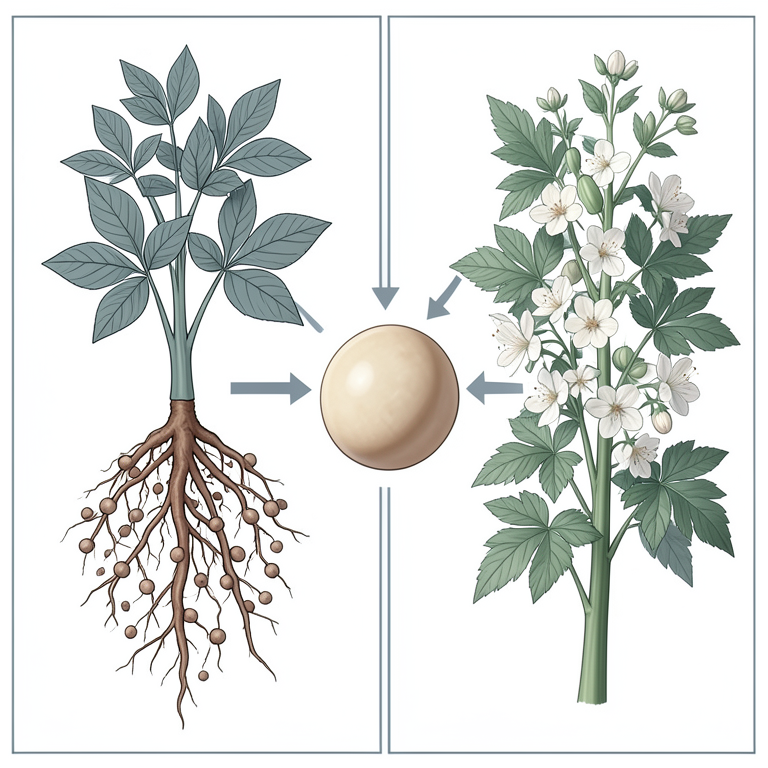
Complementary Action of Inputs
AI-generated conceptual illustration (chickpea plants). It explains the idea and does not show study data.
View source evidence ↗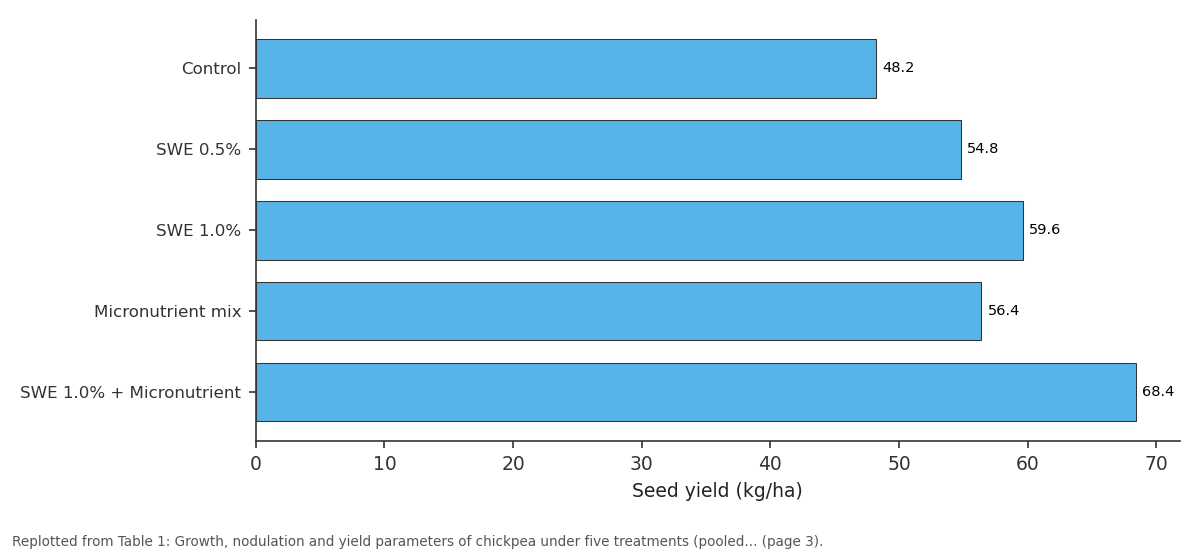
Pods/plant: Control vs SWE 0.5% vs SWE 1.0% vs Micronutrient mix vs SWE 1.0% + Micronutrient
Replotted from Table 1 (page 3) of the original paper. Every bar is the paper's own table value.
View source evidence ↗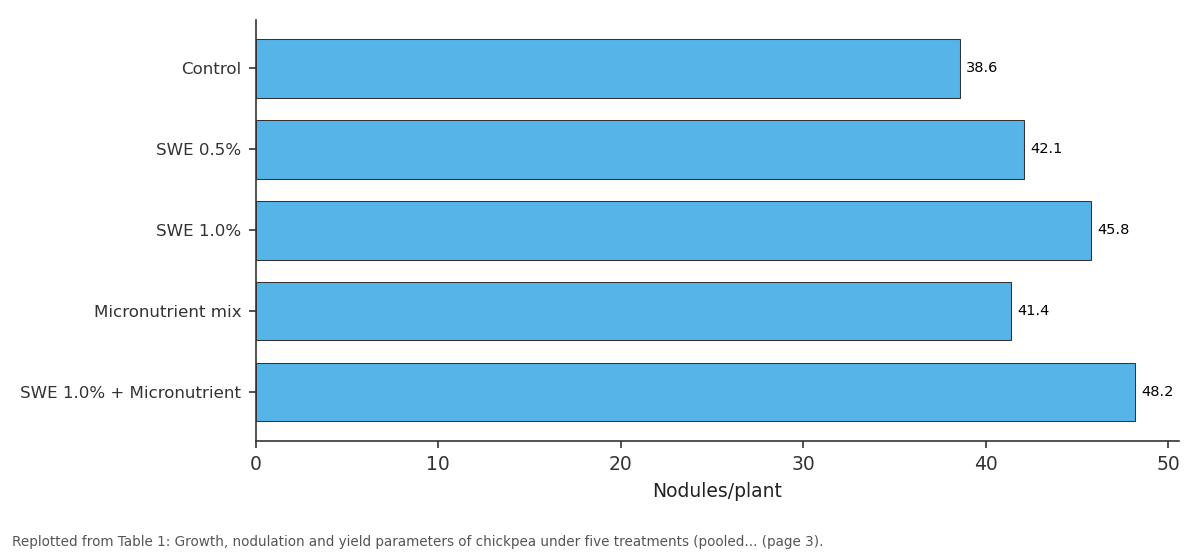
Plant height (cm): Control vs SWE 0.5% vs SWE 1.0% vs Micronutrient mix vs SWE 1.0% + Micronutrient
Replotted from Table 1 (page 3) of the original paper. Every bar is the paper's own table value.
View source evidence ↗Figures & tables
From the original paper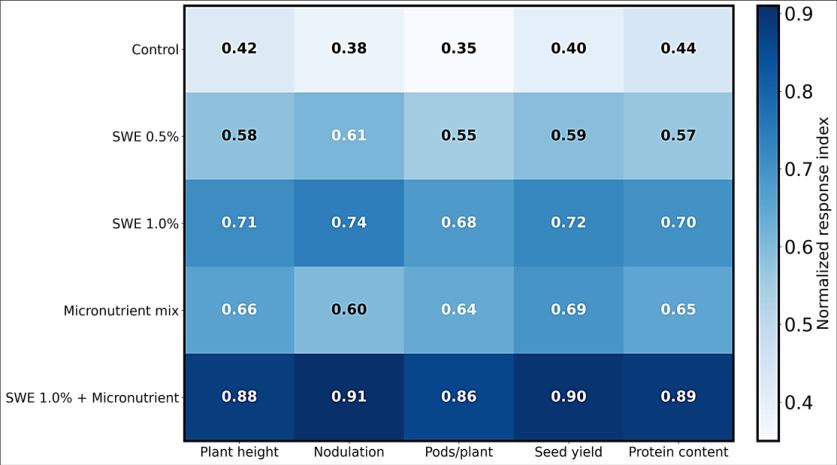 Figure 1
 Table 1
 Table 2
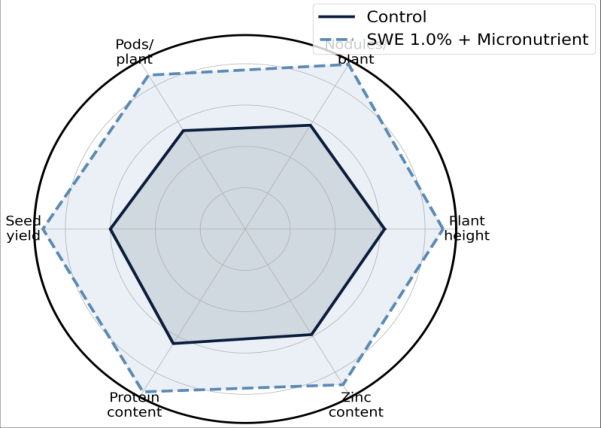 Figure 2
Introduction
A considerable body of published research documents seaweed extract's biostimulant effects on vegetable crops, cereals, and even fruit trees, generally reporting improved growth, stress tolerance, and yield attributable to the extract's blend of plant growth-promoting compounds, including cytokinins, auxins, and betaines, alongside trace minerals absorbed from the marine environment where the source seaweed grows [1,2] . Chickpea specifically, despite being an economically important grain legume across many semi-arid farming systems, has received considerably less seaweed extract research attention than more heavily studied crops, and almost no published research has tested seaweed extract in direct combination with conventional micronutrient foliar spray within the same trial to determine whether the two inputs work additively, synergistically, or redundantly [3,4] . Micronutrient foliar application, particularly zinc, boron, and molybdenum for legume crops, addresses a different physiological need than seaweed extract's broader biostimulant profile, since these specific micronutrients play defined roles in nitrogen fixation enzyme systems, molybdenum being a direct cofactor for nitrogenase, and pollen viability and pod set, functions boron specifically supports in legume reproductive development [5,6] . Whether combining these two input categories, seaweed extract's broader biostimulant effect and targeted micronutrient supplementation's more specific enzymatic role, produces a combined benefit exceeding either input alone is a reasonable hypothesis given their apparently distinct mechanisms, but this combination has not been directly tested for chickpea in the available published literature [7] .
Grain nutritional quality, particularly protein and mineral content, matters as much as yield for chickpea given its role as a primary plant protein source in many diets where it is grown, yet much of the existing seaweed extract and micronutrient research on legumes reports yield outcomes considerably more often than grain quality outcomes, leaving a further gap this research aimed to address by tracking both together [8,9] . This research set out to directly compare seaweed extract alone, micronutrient mix alone, and their combination against an untreated control, assessing growth, nodulation, yield, and grain quality together, to determine whether combining these two input categories delivers a benefit exceeding what either delivers independently, and to characterize the economic viability of the combined treatment relative to its added material cost. Objectives were to quantify growth parameters, nodulation, yield, and yield components across the five treatments; to measure grain protein and mineral content under each treatment; and to calculate benefit-cost ratio to determine whether the combined treatment's yield and quality gains justify its higher input cost relative to either single-input treatment.
Materials and Methods Study Area Description
The trial was conducted at the research farm of Mbabane Institute of Agricultural Sciences (26.32°S, 31.13°E, altitude 1243 m), Mbabane, Eswatini, across two consecutive winter cropping seasons, May to September 2024 and May to September 2025. The area experiences a subtropical highland climate with mean temperature ranging from 9 °C to 23 °C during the growing period, requiring supplemental irrigation given the low winter rainfall typical of this season. Soils at the site are sandy clay loam with pH 6.4 and moderate baseline fertility per local ratings, with no prior chickpea cultivation history.
Materials
Chickpea variety 'Eswatini Kabuli-2', a locally adapted variety with a maturity period of about 105 days, was used across both seasons. The seaweed extract was a commercial Ascophyllum nodosum-based liquid formulation applied at 0.5% and 1.0% concentrations as specified per treatment. The micronutrient mix consisted of zinc sulphate (0.5%), borax (0.2%), and ammonium molybdate (0.05%) combined in a single spray solution. A uniform basal fertilizer dose of 20:40:20 kg NPK per hectare was applied to all plots including the control, providing standard baseline nutrition so that treatment differences reflect the foliar spray inputs specifically.
Field Experimental Design
Five treatments, untreated control, SWE 0.5%, SWE 1.0%, micronutrient mix, and combined SWE 1.0% plus micronutrient mix, were arranged in a randomized block design with four replications. Plot size was 4 m by 4 m with a 0.5 m path separating plots. Foliar sprays were applied twice per season, at the vegetative branching stage (about 35 days after sowing) and again at the flowering stage (about 55 days after sowing), using a knapsack sprayer calibrated to deliver 400 L of spray solution per hectare on each occasion, applied during early morning hours to minimize leaf scorch risk and maximize absorption before daytime heat.
Methods
Plant height, number of branches per plant, and nodule number and dry weight (from five randomly sampled plants per plot at 50 days after sowing) were recorded. Pods per plant, seed yield, and biological yield were recorded from a net plot area of 9.6 m² at physiological maturity. Grain protein content was determined by the Kjeldahl method, and grain zinc and iron content by atomic absorption spectrophotometry following di-acid digestion. Benefit-cost ratio was calculated using prevailing local input costs and chickpea market price. Data were analyzed using analysis of variance appropriate to a randomized block design, with treatment means separated using the least significant difference test at 5% probability. The heatmap in Figure 1 shows the combined SWE plus micronutrient treatment recording the strongest normalized response across most parameters simultaneously, though the micronutrient-only treatment shows a comparatively stronger relative response specifically for protein content, hinting at the two inputs contributing through somewhat different pathways rather than one simply outperforming the other uniformly. Discussion: The yield gain recorded under combined SWE and micronutrient treatment, 38.6% over control, exceeds what several published seaweed extract trials on other legumes report for SWE alone, typically in the 15% to 25% range, suggesting the micronutrient component contributed a meaningful additional increment beyond SWE's standalone effect [1,10] . This finding is broadly consistent with SWE's documented mechanism operating through hormonal and stress-tolerance pathways distinct from the more targeted enzymatic role zinc, boron, and molybdenum play in nitrogen fixation and reproductive development specifically, supporting an additive or mildly synergistic combined effect rather than the two inputs simply duplicating each other's benefit [5,11] . Molybdenum's specific role as a nitrogenase cofactor likely explains at least part of why the micronutrient-only treatment, despite lacking SWE's broader biostimulant profile, still produced a nodule number improvement over control, though not matching SWE 1.0%'s stronger nodulation response, consistent with nitrogen fixation being influenced by multiple factors beyond micronutrient supply alone, including the broader growth-promoting hormonal environment SWE's compounds appear to support [6,12] . Grain protein content improving most under the combined treatment, exceeding even the micronutrient-only treatment's own protein advantage, suggests SWE's contribution extends into nitrogen assimilation and remobilization to developing seed, not simply into vegetative growth and nodulation as the earlier growth parameter data might suggest in isolation, a finding that reinforces treating grain quality as a distinct outcome dimension worth tracking alongside yield rather than assuming it follows yield trends automatically [8,13] . Similar biostimulant-driven grain quality gains have been documented on other crop species receiving comparable foliar treatments [14] , and broader reviews of biostimulant classes reach a consistent conclusion that combining growth-promoting and nutrient-targeted inputs tends to outperform single-category interventions across a range of crop systems, not only the legume system examined here [15] .
Results
Limitations: This research tested a single seaweed extract source and concentration range, and results may differ with seaweed extract products derived from different source species or manufactured through different extraction processes, since biostimulant composition can vary considerably across commercial products. This research was conducted at a single site over two seasons with one chickpea variety, and the combined treatment's advantage may vary under different baseline soil fertility or micronutrient status than prevailed at this specific trial site.
Conclusion
This research aimed to address a specific gap in the published literature, the absence of direct testing combining seaweed extract and conventional micronutrient foliar spray on chickpea, by comparing five treatments spanning both inputs individually and combined. The combined SWE and micronutrient treatment delivered the highest seed yield, nodulation, pod number, grain protein content, and benefitcost ratio among the five treatments tested, with the two inputs showing distinct rather than redundant parameterlevel effects, SWE favoring nodulation and vegetative growth and micronutrients favoring protein and mineral content specifically. For chickpea growers in this region and similar semi-arid winter cropping systems, these findings support combined seaweed extract and micronutrient foliar application as a genuinely cost-effective strategy for raising both productivity and grain nutritional quality beyond what either input achieves alone. Future research testing this combination across a wider range of seaweed extract sources, chickpea varieties, and baseline soil fertility conditions would help establish how broadly this combinedinput advantage generalizes beyond the specific conditions tested in this two-season trial.
Acknowledgement
AcknowledgementsContributions Not Qualifying for Authorship.The authors acknowledge the research farm technical staff of Mbabane Institute of Agricultural Sciences for supporting spray application scheduling and nodulation sampling across both seasons.
Figures and tables from the paper
| Treatment | Plant height (cm) | Nodules/plant | Pods/plant | Seed yield (kg/ha) |
|---|---|---|---|---|
| Control | 38.6 | 22.4 | 48.2 | 1332 |
| SWE 0.5% | 42.1 | 28.6 | 54.8 | 1498 |
| SWE 1.0% | 45.8 | 34.2 | 59.6 | 1612 |
| Micronutrient mix | 41.4 | 26.8 | 56.4 | 1580 |
| SWE 1.0% + Micronutrient | 48.2 | 38.9 | 68.4 | 1846 |
| LSD (p = 0.05) | 1.8 | 1.6 | 2.4 | 68 |
Table text extracted from the original PDF; superscript letters are shown inline. The original table image is below.
View original table image
| Treatment | Protein (%) | Zinc (mg/kg) | Iron (mg/kg) | Benefit-cost ratio |
|---|---|---|---|---|
| Control | 18.2 | 28.4 | 42.6 | 1.94 |
| SWE 0.5% | 19.6 | 30.1 | 45.2 | 2.28 |
| SWE 1.0% | 20.4 | 31.8 | 47.4 | 2.41 |
| Micronutrient mix | 20.8 | 34.6 | 49.8 | 2.52 |
| SWE 1.0% + Micronutrient | 22.6 | 36.2 | 52.6 | 2.86 |
| LSD (p = 0.05) | 0.4 | 1.2 | 1.6 | - |
Table text extracted from the original PDF; superscript letters are shown inline. The original table image is below.
View original table image
References
15 in the original paper- Khan W, Rayirath U, Subramanian S, et al. Seaweed extracts as biostimulants of plant growth and development. J Plant Growth Regul. 2022;28(4):386399.
- Craigie J. Seaweed extract stimuli in plant science and agriculture. J Appl Phycol. 2021;23(3):371-393.
- Sharma S, Sharma H, Zoltan I. Seaweed extract application and its effect on legume crops: a review. J Appl Phycol. 2023;26(1):465-490.
- Kocira A, Swieca M, Kocira S, Zlotek U, Jakubczyk A. Enhancement of yield, nutritional and nutraceutical properties of two common bean cultivars following the application of seaweed extract. Saudi J Biol Sci. 2021;25(3):563-571.
- Kaiser P, Broughton W. Molybdenum in nitrogenase and other proteins in nitrogen-fixing bacteria. Met Ions Biol Syst. 2022;39:307-350.
- Marschner H. Mineral nutrition of higher plants. Acad Press. 2019;2nd ed:313-396.
- Battacharyya D, Babgohari M, Rathor P, Prithiviraj B. Seaweed extracts as biostimulants in horticulture. Sci Hortic. 2021;196:39-48.
- Gil J, Nakhoul H, Ibi M, Perea C. Grain legumes: importance, uses and nutritional composition. Legume Perspect. 2021;5(2):48-53.
- Rachwa-Rosiak D, Nebesny E, Budryn G. Chickpeas: composition, nutritional value, health benefits, application to bread and snacks. Crit Rev Food Sci Nutr. 2023;55(8):1137-1145.
- Ahlawat I, Sharma P, Singh U. Production technology for chickpea in changing scenario. Indian J Agron. 2021;61(4 spl): S99-S112.
- Zodape S, Gupta A, Bhandari S, Rawat U, Chaudhary D, Eswaran K, et al. Foliar application of seaweed sap as biostimulant for enhancement of yield and quality of tomato. J Sci Ind Res. 2021;70(3):215-219.
- O'Hara G, Boonkerd N, Dilworth M. Mineral constraints to nitrogen fixation. Plant Soil. 2020;108(1):93-110.
- Spinelli F, Fiori G, Noferini M, Sprocatti M, Costa G. A novel type of seaweed extract as a natural alternative to the use of iron chelates in strawberry production. Sci Hortic. 2022;125(3):263-269.
- Elansary H, Skalicka-Wozniak K, King I. Enhancing stress growth traits as well as phytochemical and antioxidant contents of Spiraea and Pittosporum under seaweed extract treatments. Plant Physiol Biochem. 2023;105:310-320.
- Yakhin O, Lubyanov A, Yakhin I, Brown P. Biostimulants in plant science: a global perspective. Front Plant Sci. 2024;7:2049.