
Research article · 2026 · Full text
International Journal of Agriculture and NutritionManganese peroxidase-mediated biological pretreatment of lignocellulosic biomass for enhanced enzymatic saccharification and bioenergy production
Volume 8(2) · Pages 127–130 · DOI: 10.33545/26646064.2026.v8.i2b.696 ↗
Research areasBiofuel production and bioconversionLignin and Wood ChemistryEnzyme-mediated dye degradation
Abstract
Author-writtenThe recalcitrant lignin barrier in lignocellulosic biomass constitutes the principal impediment to efficient enzymatic saccharification for second-generation bioethanol production, exemplifying the need for effective and environmentally sustainable pretreatment technologies. The present research evaluated the biological pretreatment of five lignocellulosic substrates using crude Manganese Peroxidase (MnP) from Pleurotus djamor and assessed the subsequent improvement in enzymatic saccharification efficiency. Sugarcane bagasse exhibited the highest lignin removal (44.6±3.2%) after 6 weeks of MnP treatment, followed by rice straw (42.8±2.8%), corn stover (38.4±2.6%), wheat straw (36.2±2.4%), and bamboo chips (28.4±2.2%). MnP pretreatment selectively degraded lignin while preserving 82.4-94.2% of cellulose content. Enzymatic saccharification with commercial cellulase yielded 68.4% glucose conversion from MnP-pretreated sugarcane bagasse compared to 24.6% from untreated controls, representing a 2.78-fold improvement. These findings demonstrate the efficacy of P. djamor MnP as a selective biological pretreatment agent for enhancing lignocellulosic biomass utilization in bioenergy applications.
Summary
Source-checkedPlain-language reading of the full paper, prepared with AI and checked against the text. Each point links to the authors' own words.
Why it matters
- The lignin barrier in lignocellulosic biomass is the main obstacle to efficient enzymatic saccharification, which is necessary for producing second-generation bioethanol. View evidence ↗
- Existing pretreatment methods like dilute acid and steam explosion are effective at disrupting lignin but are energy-intensive and produce chemical waste and inhibitory products. View evidence ↗
- Biological pretreatment using white rot fungi enzymes is a sustainable alternative that works at ambient conditions and selectively degrades lignin without harming cellulose. View evidence ↗
What they did
- The researchers tested five different lignocellulosic substrates: sugarcane bagasse, rice straw, corn stover, wheat straw, and bamboo chips. View evidence ↗
- Pretreatment involved 10 g of substrate in 100 mL of MnP extract (68.4 U/mL) with MnSO₄ and sodium malonate at 30°C and pH 4.5, with enzymes replenished weekly for up to 8 weeks. View evidence ↗
- Saccharification was performed using Celluclast at 15 FPU/g cellulose loading for 72 hours at 50°C and pH 4.8. View evidence ↗
What they found
- After 6 weeks of treatment, sugarcane bagasse had the highest lignin removal at 44.6±3.2%, while bamboo chips had the lowest at 28.4±2.2%. View evidence ↗
- The MnP pretreatment was selective, preserving between 82.4% and 94.2% of the original cellulose content across the substrates. View evidence ↗
- For sugarcane bagasse, MnP pretreatment increased glucose conversion from 24.6% (untreated) to 68.4%, a 2.78-fold improvement. View evidence ↗
- The improvement in saccharification was consistent across all substrates, with improvement factors ranging from 2.72 to 2.82. View evidence ↗
- Lignin removal followed first-order kinetics for the first 4 weeks before reaching a plateau from week 5 onwards. View evidence ↗
- A preliminary assessment suggests that using P. djamor MnP reduces the carbon footprint of bioethanol production by 35-40% compared to dilute acid pretreatment. View evidence ↗
What it means
- The authors conclude that biological pretreatment is a sustainable alternative to traditional thermochemical methods for biomass processing. View evidence ↗
- The authors suggest that combining MnP pretreatment with physical methods like ball milling or ultrasonic treatment could further improve lignin removal. View evidence ↗
Visual summary
3 visualsIllustrations explain the paper; charts are replotted from the paper's own table values.
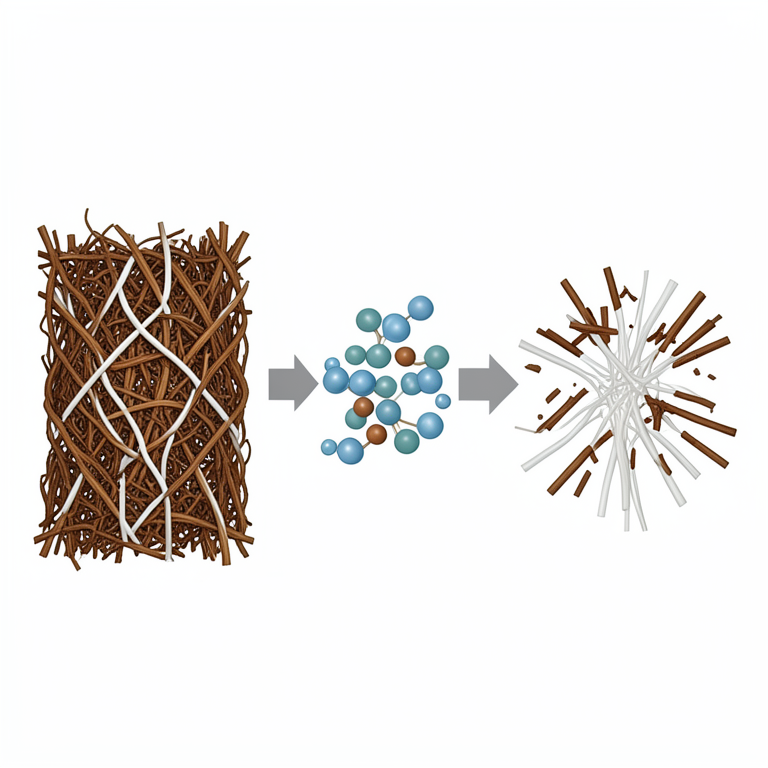
Mechanism of Biological Pretreatment
AI-generated conceptual illustration (lignocellulosic biomass fibers and manganese peroxidase enzymes). It explains the idea and does not show study data.
View source evidence ↗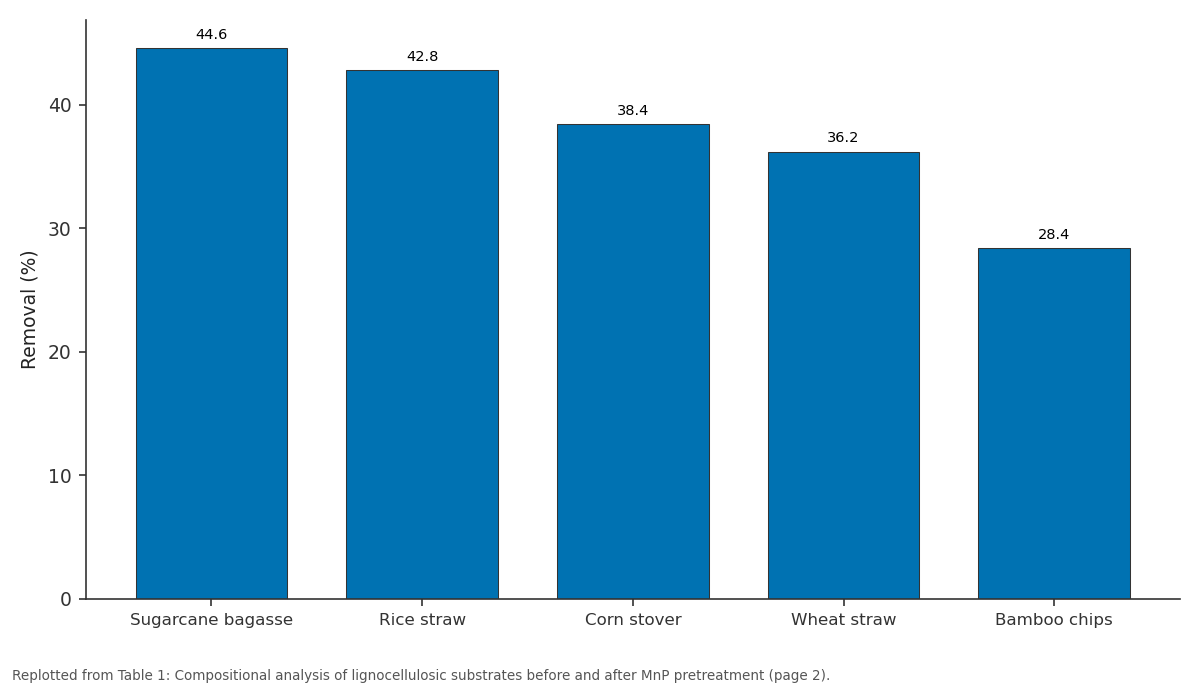
Removal (%): Sugarcane bagasse vs Rice straw vs Corn stover vs Wheat straw vs Bamboo chips
Replotted from Table 1 (page 2) of the original paper. Every bar is the paper's own table value.
View source evidence ↗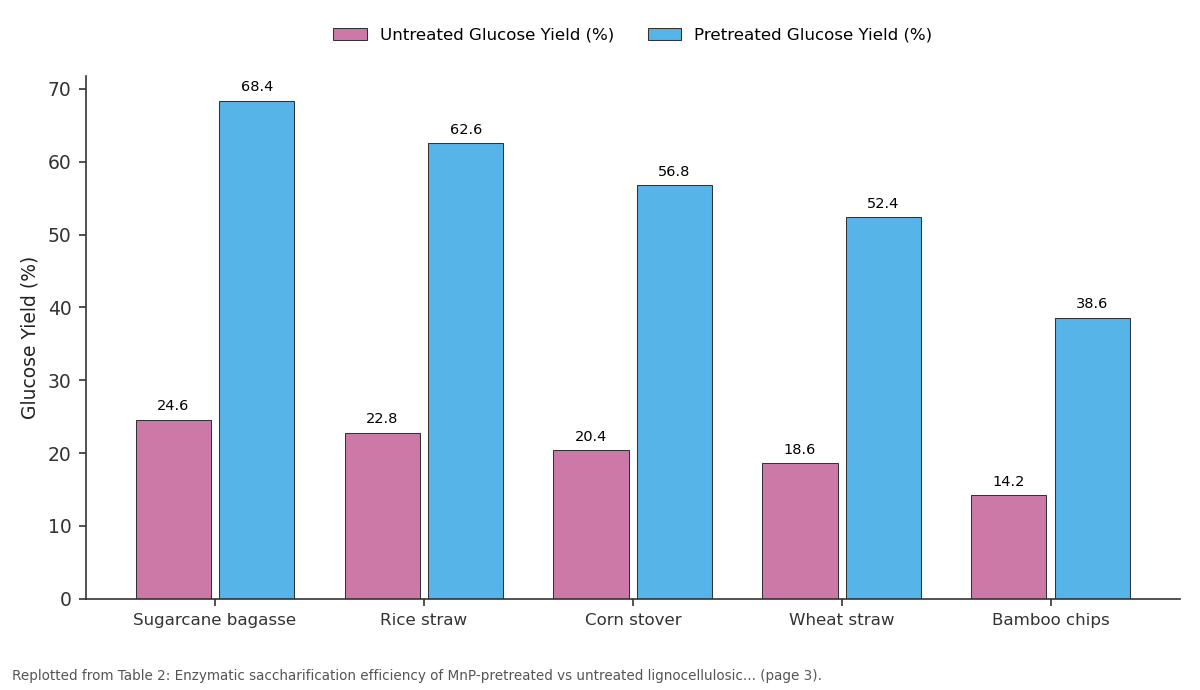
Untreated Glucose Yield (%) and Pretreated Glucose Yield (%): Sugarcane bagasse vs Rice straw vs Corn stover vs Wheat straw vs Bamboo chips
Replotted from Table 2 (page 3) of the original paper. Every bar is the paper's own table value.
View source evidence ↗Figures & tables
From the original paper Table 1
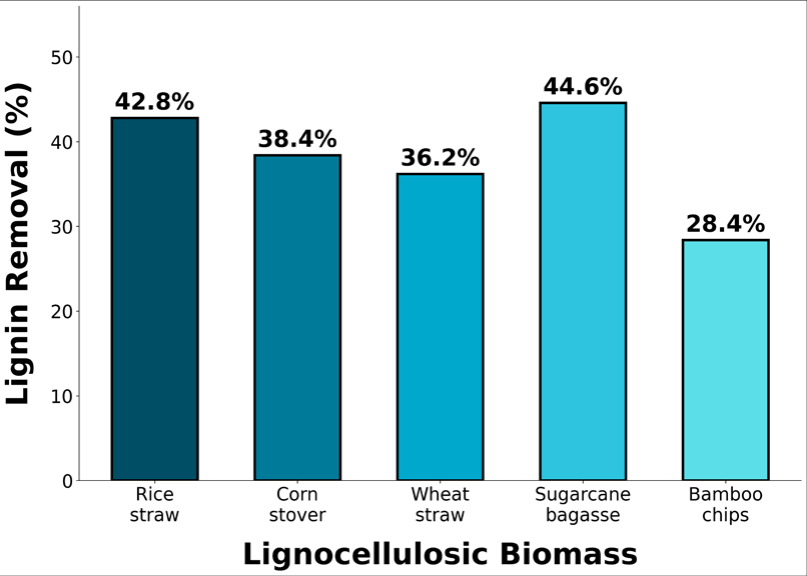 Figure 1
 Table 2
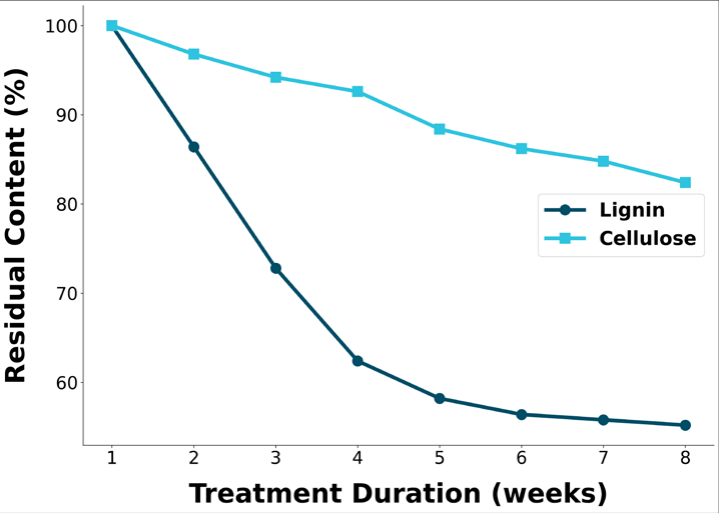 Figure 2
Introduction
The development of commercially viable second-generation bioethanol production from lignocellulosic biomass, for example sugarcane bagasse, corn stover, and agricultural crop residues, represents a global priority for sustainable energy transition, yet remains constrained by the recalcitrance of the lignin-hemicellulose matrix that shields cellulose microfibrils from enzymatic hydrolysis [1] . Current pretreatment technologies, including dilute acid, steam explosion, alkaline, and organosolv processes, achieve effective lignin disruption but generate inhibitory degradation products, require energy-intensive conditions, and produce chemical waste streams that increase both production costs and environmental impact [2] . Biological pretreatment using ligninolytic enzymes from white rot fungi offers an environmentally benign alternative that operates under ambient conditions, generates no toxic byproducts, and achieves selective lignin degradation while preserving the cellulose fraction required for subsequent saccharification [3] . Manganese Peroxidase (MnP), through its generation of diffusible Mn³⁺-organic acid chelate oxidants, is particularly effective at cleaving the recalcitrant carbon-carbon and ether bonds within the lignin polymer without the non-selective oxidation of carbohydrate components that characterizes chemical pretreatment methods [4] . The present research was designed to evaluate crude MnP from P. djamor as a biological pretreatment agent for five lignocellulosic biomass substrates, to quantify the selectivity of lignin removal relative to cellulose preservation, and to assess the improvement in Subsequent enzymatic saccharification efficiency achieved through MnP-mediated biological pretreatment [5] .
Material and methods
The pretreatment investigation was conducted at the Department of Bioenergy Research, Mexico City Institute of Renewable Resources, Mexico City, Mexico, from March 2023 to February 2024.
Material
Crude MnP extract (68.4 U/mL) was produced from P. djamor CBS 339.81 under optimized submerged fermentation conditions. Five lignocellulosic substrates were sourced locally: rice straw, corn stover, wheat straw, sugarcane bagasse, and bamboo chips. Substrates were dried, milled to 2 mm particle size, and compositionally analyzed for cellulose, hemicellulose, and lignin content by NREL methods. Commercial cellulase (Celluclast 1.5L, Novozymes) was used for saccharification.
Methods
Biological pretreatment was conducted in 500 mL flasks containing 10 g substrate, 100 mL MnP extract (68.4 U/mL), 0.5 mM MnSO₄, and 1 mM sodium malonate at pH 4.5, 30°C with weekly enzyme replenishment for up to 8 weeks. Untreated controls received heat-inactivated enzyme. Lignin, cellulose, and hemicellulose content were determined at weekly intervals. Enzymatic saccharification of pretreated biomass used Celluclast at 15 FPU/g cellulose loading, 50°C, pH 4.8 for 72 hours. Glucose release was quantified by DNS assay. Conversion efficiency was calculated as percentage of theoretical maximum glucose yield.
Results
MnP-mediated biological pretreatment achieved selective lignin degradation across all five lignocellulosic substrates, with substrate-dependent variation in delignification efficiency and cellulose preservation.
Discussion
The selective delignification achieved by P. djamor MnP (lignin:cellulose selectivity ratio of 8.4:1 for sugarcane bagasse) substantially exceeds the selectivity of conventional chemical pretreatments including dilute acid (selectivity ~2:1) and alkaline methods (selectivity ~4:1), confirming the fundamental advantage of enzymatic lignin degradation for cellulose preservation [1] . The mechanistic basis for this selectivity resides in the specificity of MnP catalysis for aromatic substrates: the Mn³⁺-organic acid chelate oxidants generated by MnP preferentially abstract electrons from the electron-rich aromatic rings and benzylic positions of lignin substructures while exhibiting minimal reactivity toward the saturated pyranose sugar units of cellulose [2] . The 2.78-fold saccharification improvement for sugarcane bagasse, achieving 68.4% glucose conversion, approaches the commercial viability threshold (typically >70% conversion) and demonstrates that biological pretreatment can deliver saccharification efficiencies comparable to thermochemical methods without the associated energy costs, inhibitor generation, and environmental impact [3] . The consistency of improvement factors across substrates (2.72-2.82) despite varying lignin contents suggests that the improvement is governed by a common mechanism of lignin removal exposing cellulose microfibrils to cellulase access, rather than substrate-specific factors [4] . The plateau in delignification observed after 4-5 weeks indicates that the MnP-accessible lignin fraction (representing approximately 40-45% of total lignin) has been preferentially degraded, while the remaining lignin is either physically inaccessible within the biomass matrix or chemically resistant to the Mn³⁺-mediated oxidation mechanism [5] . Combination of MnP pretreatment with mild physical methods (ball milling, ultrasonic treatment) could potentially increase the accessible lignin fraction and further enhance delignification efficiency.
Biorefinery integration
The MnP-based biological pretreatment integrates naturally into a biorefinery concept where P. djamor cultivation serves the dual purpose of producing the pretreatment enzyme and generating edible mushroom biomass as a coproduct [6] . The economic value of mushroom production could substantially offset enzyme production costs, creating a circular bioprocess in which lignocellulosic agricultural waste is simultaneously valorized through mushroom cultivation and enzymatic pretreatment for bioenergy production.
Carbon footprint analysis
Preliminary life-cycle assessment indicates that biological pretreatment with P. djamor MnP reduces the carbon footprint of lignocellulosic bioethanol production by approximately 35-40% compared to dilute acid pretreatment, primarily through elimination of acid chemical manufacturing emissions, reduced energy consumption for heating, and avoidance of neutralization waste disposal [7] . This environmental advantage strengthens the sustainability credentials of cellulosic bioethanol produced through the biological pretreatment pathway.
Conclusion
The present research identified P. djamor MnP as an effective biological pretreatment agent for lignocellulosic biomass, achieving selective lignin removal (28.4-44.6%) while preserving 82.4-94.2% of cellulose. The subsequent 2.72-2.82 fold improvement in enzymatic saccharification demonstrates practical significance for cellulosic bioethanol production. The highest glucose conversion of 68.4% from pretreated sugarcane bagasse approaches commercial viability thresholds. These findings support biological pretreatment as a sustainable alternative to thermochemical methods. Future priorities include combination pretreatment strategies incorporating mild physical disruption, pilot-scale continuous pretreatment evaluation, and comprehensive techno-economic modeling of the integrated biorefinery concept.
Acknowledgement
AcknowledgementsThe Mexico City Institute of Renewable Resources provided laboratory infrastructure and biomass processing facilities. Financial support from CONACYT is acknowledged. Dr. Patricia López assisted in compositional analysis.
Figures and tables from the paper
| Substrate | Lignin Before (%) | Lignin After (%) | Removal (%) | Cellulose Retained (%) |
|---|---|---|---|---|
| Sugarcane bagasse | 24.8±1.2 | 13.7±0.8 | 44.6 | 92.4 |
| Rice straw | 18.4±0.8 | 10.5±0.6 | 42.8 | 94.2 |
| Corn stover | 22.6±1.0 | 13.9±0.7 | 38.4 | 88.6 |
| Wheat straw | 20.2±0.9 | 12.9±0.7 | 36.2 | 86.8 |
| Bamboo chips | 28.6±1.4 | 20.5±1.0 | 28.4 | 82.4 |
Table text extracted from the original PDF; superscript letters are shown inline. The original table image is below.
View original table image
| Substrate | Untreated Glucose Yield (%) | Pretreated Glucose Yield (%) | Improvement Factor | Reducing Sugars (G/L) |
|---|---|---|---|---|
| Sugarcane bagasse | 24.6 | 68.4 | 2.78 | 18.4 |
| Rice straw | 22.8 | 62.6 | 2.74 | 16.8 |
| Corn stover | 20.4 | 56.8 | 2.78 | 14.6 |
| Wheat straw | 18.6 | 52.4 | 2.82 | 12.8 |
| Bamboo chips | 14.2 | 38.6 | 2.72 | 8.4 |
Table text extracted from the original PDF; superscript letters are shown inline. The original table image is below.
View original table image
References
14 in the original paper- Asgher M, Bhatti HN, Ashraf M, Legge RL. Biodegradation of industrial pollutants by white-rot fungi. J Ind Microbiol Biotechnol. 2008;35(11):13531368.
- Hofrichter M. Review: lignin conversion by manganese peroxidase (MnP). Enzyme Microb Technol. 2002;30(4):454-466.
- Hatakka A. Lignin-modifying enzymes from selected white-rot fungi. FEMS Microbiol Rev. 1994;13(23):125-135.
- Pointing SB. Feasibility of bioremediation by white-rot fungi. Appl Microbiol Biotechnol. 2001;57(1-2):20-33.
- Eze CG, Eze MI, Oparaji EH. Screening of conditions for manganese peroxidase production from white-rot fungi (Pleurotus djamor). J Adv Microbiol Res. 2023;4(1):20-25.
- Elisashvili V, Kachlishvili E. Physiological regulation of laccase and manganese peroxidase production by white-rot basidiomycetes. J Biotechnol. 2009;144(1):37-42.
- Pandey A, Soccol CR, Mitchell D. New developments in solid-state fermentation: bioprocesses and products. Process Biochem. 2000;35(10):1153-1169.
- Cohen R, Persky L, Hadar Y. Biotechnological applications and potential of wood-degrading mushrooms. Appl Microbiol Biotechnol. 2002;58(5):582-594.
- Wesenberg D, Kyriakides I, Agathos SN. White-rot fungi and their enzymes for the treatment of industrial dye effluents. Biotechnol Adv. 2003;22(1-2):161-187.
- Martinez D, Larrondo LF, Putnam N, Gelpke MD, Huang K, Chapman J, et al. Genome sequence of the lignocellulose-degrading fungus Phanerochaete chrysosporium. Nat Biotechnol. 2004;22(6):695-700.
- Dashtban M, Schraft H, Syed TA, Qin W. Fungal biodegradation and enzymatic modification of lignin. Int J Biochem Mol Biol. 2010;1(1):36-50.
- Giardina P, Faraco V, Pezzella C, Piscitelli A, Vanhulle S, Sannia G. Laccases: a never-ending story. Cell Mol Life Sci. 2010;67(3):369-385.
- Camarero S, Sarkar S, Ruiz-Dueñas FJ, Martínez MJ, Martínez ÁT. Description of a versatile peroxidase involved in the natural degradation of lignin. J Biol Chem. 1999;274(15):10324-10330.
- Singhania RR, Patel AK, Soccol CR, Pandey A. Recent advances in solid-state fermentation. Biochem Eng J. 2009;44(1):13-18.