
Research article · 2026 · Full text
International Journal of Biology SciencesSeroprevalence and occupational risk assessment of herpes simiae virus among wildlife handlers in periurban zoological settings
Volume 8(5) · Pages 196–199 · DOI: 10.33545/26649926.2026.v8.i5c.913 ↗
Research areasHerpesvirus Infections and TreatmentsZoonotic diseases and public healthOccupational Health and Safety in Workplaces
Abstract
Author-writtenOccupational exposure to non-human primates harboring herpes simiae virus (Macacine alphaherpesvirus 1) constitutes a significant yet inadequately monitored workplace health hazard in zoological facilities worldwide. The present research investigated the seroprevalence of herpes B virus-specific antibodies and associated occupational risk factors among 320 wildlife handlers across eight zoological institutions in South Korea. Serum samples were screened by ELISA and confirmed by Western blot. The overall seroprevalence was 12.4% (40/320), with zoo keepers demonstrating the highest rate at 24.6% followed by wildlife rescuers (18.2%), veterinary clinicians (14.8%), pet shop workers (6.4%), and the general population comparison group (1.2%). Age-stratified analysis revealed peak seroprevalence in the 46-55 year cohort (28.6%), reflecting cumulative lifetime exposure. Multivariate analysis identified primate handling frequency, bite history, and employment duration as significant independent risk factors. These findings support implementation of mandatory serological surveillance and enhanced personal protective equipment protocols for wildlife handlers with primate contact responsibilities.
Summary
Source-checkedPlain-language reading of the full paper, prepared with AI and checked against the text. Each point links to the authors' own words.
Why it matters
- Exposure to herpes simiae virus (Macacine alphaherpesvirus 1) from non-human primates is a significant workplace health hazard in zoos that is often not properly monitored. View evidence ↗
- Zoological and wildlife settings often lack the formalized risk assessment frameworks and biosafety protocols found in controlled biomedical research environments. View evidence ↗
- South Korea is a critical area for studying this risk due to its extensive zoo infrastructure, the presence of various macaque species, and an increasing trade in exotic primates. View evidence ↗
The question
- The study aimed to determine the prevalence of McHV-1 antibodies among South Korean wildlife handlers and identify the specific occupational factors linked to exposure. View evidence ↗
What they did
- The study took place at eight zoological and wildlife facilities in South Korea between March 2023 and February 2024. View evidence ↗
- The study enrolled 320 participants, including zoo keepers (68), wildlife rescuers (62), veterinary clinicians (58), pet shop workers (64), and a general population control group (68). View evidence ↗
- Researchers used ELISA with recombinant glycoprotein D antigen to screen for McHV-1-specific IgG, confirming positive results via Western blot. View evidence ↗
- Independent risk factors were identified using multivariate logistic regression with a significance threshold of p < 0.05. View evidence ↗
What they found
- The overall seroprevalence of McHV-1 among the 320 participants was 12.4% (40/320). View evidence ↗
- Seroprevalence varied by role, with zoo keepers having the highest rate (24.6%), followed by wildlife rescuers (18.2%), veterinary clinicians (14.8%), and pet shop workers (6.4%), compared to 1.2% in the general population. View evidence ↗
- Seroprevalence increased with age, reaching a peak of 28.6% in the 46-55 year age group. View evidence ↗
- Significant independent risk factors included a history of bites or scratches (OR = 7.28), handling primates more than 3 times per week (OR = 5.42), and employment lasting over 10 years (OR = 3.86). View evidence ↗
- Inconsistent use of personal protective equipment (PPE) was also a significant risk factor (OR = 2.94, p = 0.011). View evidence ↗
What it means
- The authors recommend mandatory serological surveillance for all personnel in zoological and wildlife facilities who have direct contact with primates. View evidence ↗
- The study concludes that zoological facilities are an underrecognized site for herpes B virus exposure, necessitating better biosafety protocols and systematic surveillance. View evidence ↗
- The authors state that future research is needed to evaluate how targeted intervention programs might reduce seroconversion rates in new wildlife handlers. View evidence ↗
Visual summary
2 visualsIllustrations explain the paper; charts are replotted from the paper's own table values.
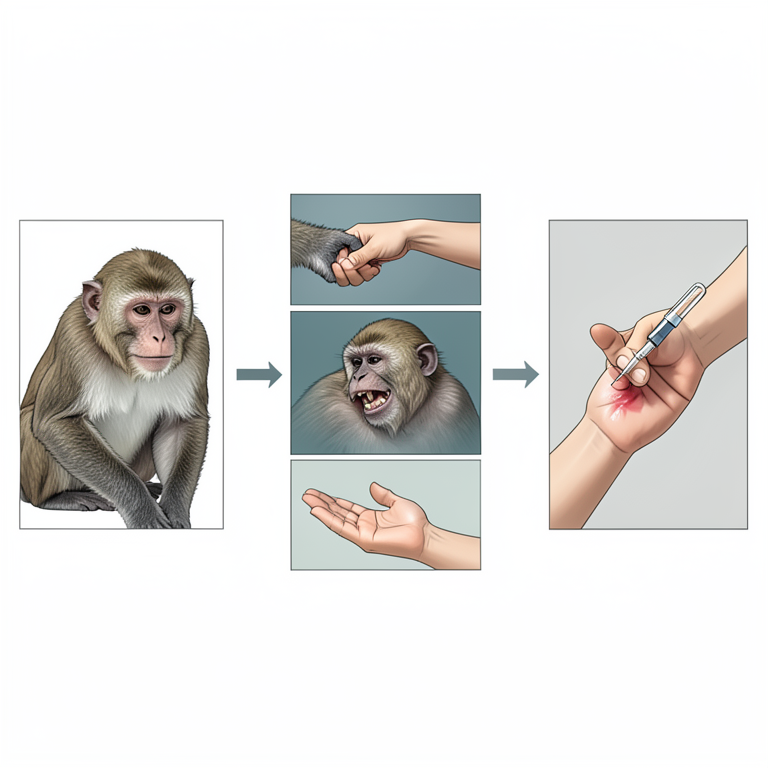
Risk Factors for McHV-1 Exposure
AI-generated conceptual illustration (human wildlife handlers and macaque monkeys). It explains the idea and does not show study data.
View source evidence ↗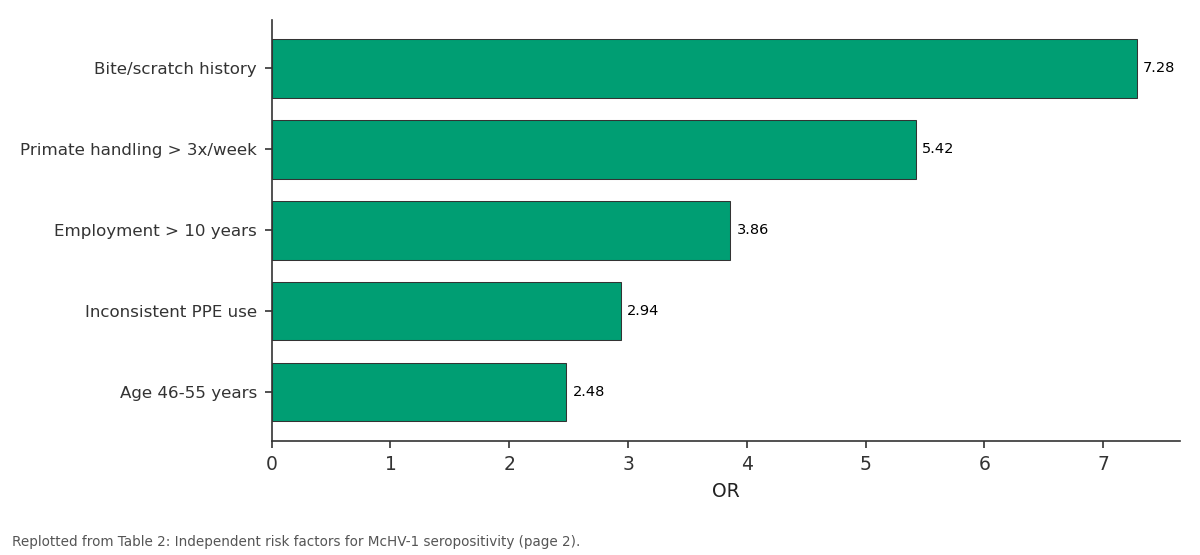
OR: Bite/scratch history vs Primate handling >... vs Employment > 10 years vs Inconsistent PPE use vs Age 46-55 years
Replotted from Table 2 (page 2) of the original paper. Every bar is the paper's own table value.
View source evidence ↗Figures & tables
From the original paper Table 1
 Table 2
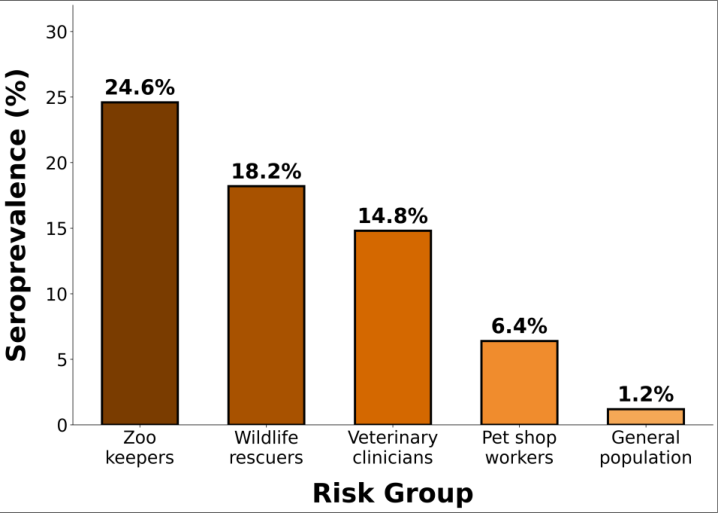 Figure 1
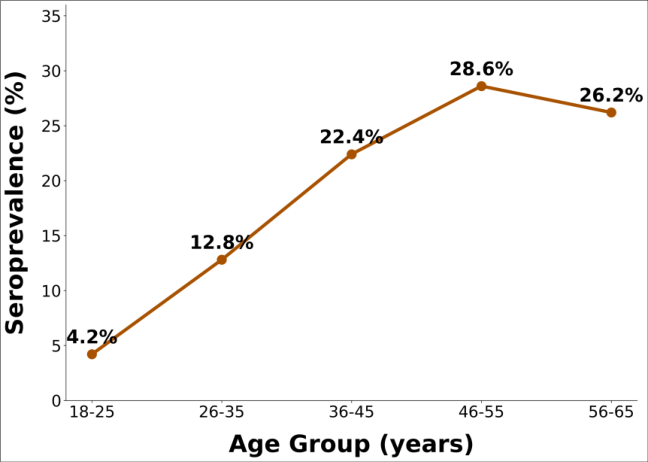 Figure 2
Introduction
The occupational health implications of herpes simiae virus exposure extend beyond dedicated biomedical primate research facilities to encompass the broader landscape of zoological institutions, wildlife rehabilitation centers, and exotic animal trade facilities where workers routinely interact with macaque species harboring this potentially lethal alphaherpesvirus [1] . Unlike controlled research environments where biosafety protocols and serological surveillance programs are typically established, zoological and wildlife handling settings frequently lack formalized B virus risk assessment frameworks, creating occupational health vulnerabilities for personnel who may be unaware of the specific zoonotic hazards associated with their daily primate interactions [2] . The Korean peninsula presents a relevant context for investigating occupational herpes B virus risk due to the substantial zoo and wildlife rehabilitation infrastructure, the presence of both imported and indigenous macaque species, and the growing exotic pet trade involving non-human primates [3] . The present research was designed to determine the seroprevalence of McHV-1 antibodies among wildlife handlers in South Korean zoological settings and to identify the occupational factors independently associated with serological evidence of exposure [4] .
Material and Methods
The investigation was conducted across eight zoological institutions and wildlife facilities in
Results
The overall McHV-1 seroprevalence among the 320 participants was 12.4% (40/320; 95% CI: 9.0-16.6%). Substantial variation was observed across occupational categories (Table 1).
| Risk Group | Participants (n) | Seropositive (n) | Seroprevalence (%) | OR (95% CI) |
|---|---|---|---|---|
| Zoo keepers | 68 | 17 | 24.6 | 26.8 (3.4-210.2) |
| Wildlife rescuers | 62 | 11 | 18.2 | 18.4 (2.3-147.6) |
| Veterinary clinicians | 58 | 9 | 14.8 | 14.2 (1.7-116.4) |
| Pet shop workers | 64 | 4 | 6.4 | 5.58 (0.6-51.4) |
| General population | 68 | 1 | 1.2 | Reference |
Table text extracted from the original PDF; superscript letters are shown inline. The original table image is below.
View original table image
Discussion
The present research documents a 12.4% overall McHV-1 seroprevalence among South Korean wildlife handlers, providing the first systematic occupational risk assessment for herpes B virus in the zoological sector of East Asia. The elevated seroprevalence among zoo keepers (24.6%) confirms that routine primate care activities including cage cleaning, feeding, physical examinations, and enrichment provision generate sufficient exposure opportunities for serological conversion even in non-research settings lacking the intensive biosafety infrastructure of dedicated primate research facilities [1] . The identification of bite/scratch history as the strongest risk factor (OR = 7.28) is consistent with percutaneous inoculation as the primary zoonotic transmission pathway, and the OR magnitude exceeds that reported for similar risk factors in biomedical research settings, potentially reflecting the less formalized bite wound management protocols in zoological environments [2] . The age-dependent seroprevalence pattern, peaking at 28.6% in the 46-55 cohort, reflects cumulative occupational exposure and the persistence of McHV-1-specific IgG antibodies following seroconversion [5] . The decline in older age groups may reflect healthy worker survivor bias, as personnel experiencing clinically significant exposures may transition to non-contact administrative roles or leave primate-contact occupations before reaching retirement age. The significant association with inconsistent PPE use (OR = 2.94) identifies a modifiable behavioral risk factor amenable to intervention through enhanced workplace safety training and institutional compliance monitoring programs [3] . The notably low seroprevalence in pet shop workers (6.4%) compared to zoo keepers (24.6%) likely reflects the shorter and less intensive primate contact durations in retail settings, where animals are typically housed in individual enclosures with limited direct handling requirements. Nevertheless, the seroprevalence among pet shop workers significantly exceeds the general population baseline (1.2%), confirming that even intermittent macaque contact in commercial settings carries measurable occupational risk [6] . The general population seroprevalence of 1.2% is consistent with background rates reported from populations without known primate exposure, validating the study design and confirming that the elevated seroprevalence in occupational groups is attributable to workplace exposure rather than community-level transmission.
Occupational health surveillance
These findings support the implementation of mandatory McHV-1 serological surveillance programs for all zoological and wildlife facility personnel with direct primate contact responsibilities. Baseline serology at employment, annual screening, and post-exposure testing should constitute minimum surveillance standards, supplemented by readily accessible post-exposure prophylaxis with valacyclovir [4] .
Conclusion
The present research identified significant McHV-1 seroprevalence among South Korean wildlife handlers, with the highest rates in zoo keepers (24.6%) and wildlife rescuers (18.2%). Primate handling frequency, bite/scratch history, and employment duration were confirmed as primary risk factors. The findings establish that zoological facilities represent an underrecognized occupational setting for herpes B virus exposure warranting systematic serological surveillance and enhanced biosafety protocols. Future research should evaluate the effectiveness of targeted intervention programs in reducing seroconversion rates among newly employed wildlife handlers.
Acknowledgement
AcknowledgementsThe Seoul National Institute of Wildlife Health provided laboratory infrastructure. Financial support from the Korean National Research Foundation is acknowledged. The authors thank the participating zoological institutions for facilitating worker enrollment.
Figures and tables from the paper
| Risk Factor | OR | 95% CI | p-value |
|---|---|---|---|
| Bite/scratch history | 7.28 | 3.24-16.36 | < 0.001 |
| Primate handling > 3x/week | 5.42 | 2.48-11.84 | < 0.001 |
| Employment > 10 years | 3.86 | 1.62-9.20 | 0.002 |
| Inconsistent PPE use | 2.94 | 1.28-6.76 | 0.011 |
| Age 46-55 years | 2.48 | 1.04-5.92 | 0.041 |
Table text extracted from the original PDF; superscript letters are shown inline. The original table image is below.
View original table image
References
10 in the original paper- Huff JL, Barry PA. B-virus infection in humans and macaques. Emerg Infect Dis. 2003;9(2):246-250.
- Cohen JI, Davenport DS, Stewart JA, Deitchman S, Hilliard JK, Chapman LE; B Virus Working Group. Recommendations for prevention of and therapy for exposure to B virus (Macacine alphaherpesvirus 1). Clin Infect Dis. 2002;35(10):1191-1203.
- Elmore D, Eberle R. Monkey B virus (Macacine alphaherpesvirus 1). Comp Med. 2008;58(1):11-21.
- Abebe. Herpes B virus: A fatal viral zoonosis of public health concern transmitted from macaque monkeys to humans. J. Adv. Microbiol. Res. 2022;3(1):65-71. doi:10.22271/micro.2022.v3.i1a.382.
- Weigler BJ. Biology of B virus in macaque and human hosts: a review. Clin Infect Dis. 1992;14(2):555-567.
- Wisely SM, Sayler KA, Anderson CJ, Stevenson GW, Lednicky JA, Dubovi EJ, et al. Prevalence of Macacine alphaherpesvirus 1 (B virus) in free-ranging rhesus macaques. Emerg Infect Dis. 2018;24(9):1667-1674.
- Hilliard JK, Ward JA. B-virus-specific-pathogen-free breeding colonies of macaques: issues, surveillance, and results. Comp Med. 1999;49(5):507-514.
- Ostrowski SR, Leslie MJ, Parrott T, Abelt S, Piercy PE. B-virus from pet macaques: an emerging zoonotic disease. Emerg Infect Dis. 1998;4(1):117-121.
- Tischer BK, Osterrieder N. Herpesviruses: a zoonotic threat? Vet Microbiol. 2010;140(3-4):266-270.
- Eberle R, Hilliard JK. The simian herpesviruses. Infect Agents Dis. 1995;4(2):55-70.