
Research article · 2026 · Full text
International Journal of Advanced Chemistry ResearchEffectiveness of tanuvas grand supplementation in dairy animals in the Cauvery Delta Region of Tamil Nadu: A field trial
Volume 8(6) · Pages 73–76 · DOI: 10.33545/26646781.2026.v8.i6a.704 ↗
Research areasRuminant Nutrition and Digestive PhysiologyReproductive Physiology in LivestockLivestock Farming and Management
Abstract
Author-writtenA field study was conducted to evaluate the effect of TANUVAS GRAND supplementation on the productive and reproductive performance of dairy animals under farmers' conditions in Karur district. A total of 500 dairy animals comprising crossbred cows (81.2%), non-descript cows (11.0%), and buffaloes (7.8%) were supplemented with TANUVAS GRAND daily for 90 days. Productive and reproductive performance related to milk yield and repeat breeding were recorded before and after TANUVAS GRAND supplementation. The results showed that the majority of animals showed an increase in milk yield ranging from 0.5 to 1.5 L/day, with crossbred cows responding comparatively more than non-descript cows and buffaloes. Milch Animals in mid-lactation (4-6 months) showed the greatest improvement in milk production compared to the animals in other physiological condition (early or late lactation). The supplementation also improved reproductive performance, by reducing the prevalence of repeat breeding from 100% before supplementation to approximately 55% after the intervention. The study concludes that regular supplementation with TANUVAS GRAND to the cross-bred milch animals, coupled with scientific feeding practices will enhance milk production, improve reproductive efficiency, and increase the profitability of dairy farmers.
Summary
Source-checkedPlain-language reading of the full paper, prepared with AI and checked against the text. Each point links to the authors' own words.
Why it matters
- Rural dairy farming often suffers from low productivity and poor reproduction because animals lack essential vitamins and minerals. View evidence ↗
- TANUVAS GRAND was developed by Tamil Nadu Veterinary and Animal Sciences University to improve rumen microorganism growth and address nutritional gaps. View evidence ↗
What they did
- The trial involved 500 dairy animals in the Karur district, each receiving 20 mL of TANUVAS GRAND daily for 90 days. View evidence ↗
- Researchers measured milk yield, reproductive performance (specifically repeat breeding), animal health, and resulting additional income. View evidence ↗
- The study population consisted of 81.2% crossbred cows, 11% non-descript cows, and 7.8% buffaloes. View evidence ↗
What they found
- Most animals saw a milk yield increase of 0.5 to 1.5 L/day, with crossbred cows showing the strongest response. View evidence ↗
- Among crossbred cows, 23.2% of farmers reported a 1.0 L/day increase, 21.1% reported 0.5 L/day, and 17.5% reported 1.5 L/day. View evidence ↗
- Non-descript cows had modest improvements, with only 4.9% reporting a 1.0 L/day increase and 1.2% reporting 0.5 L/day. View evidence ↗
- Buffaloes showed limited response, with 3.2% reporting a 0.5 L/day increase and 2.4% reporting a 1.0 L/day increase. View evidence ↗
- Animals in mid-lactation (4-6 months) experienced the highest milk yield improvement, while those in late lactation (7-9+ months) showed the lowest. View evidence ↗
- Reproductive performance improved as the prevalence of repeat breeding dropped from 100% before supplementation to approximately 55% after. View evidence ↗
- While nearly all animals had reproductive constraints initially, only about half continued to have issues after 90 days of supplementation. View evidence ↗
What it means
- The authors conclude that TANUVAS GRAND, combined with scientific feeding, is an effective strategy to improve reproductive health, productivity, and farmer income. View evidence ↗
- The authors state that larger studies across various agro-climatic regions are needed to validate the results in different field conditions. View evidence ↗
Visual summary
1 visualsIllustrations explain the paper; they do not show study data.
Comparative Response by Animal Type
AI-generated conceptual illustration (crossbred cows, non-descript cows, and water buffaloes). It explains the idea and does not show study data.
View source evidence ↗Figures & tables
From the original paper Table 1
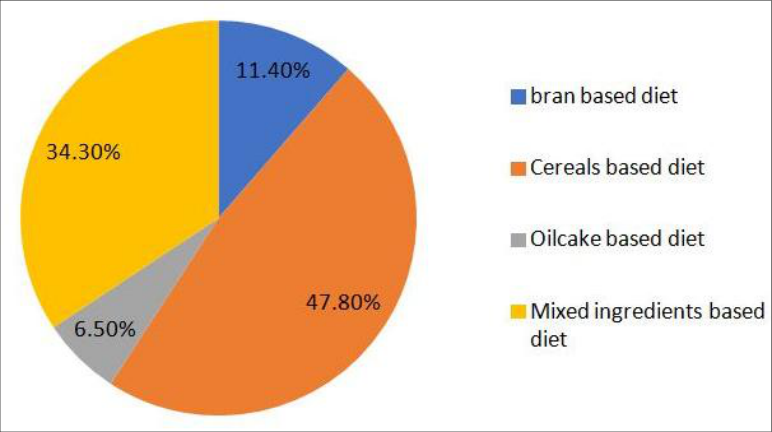 Figure 1
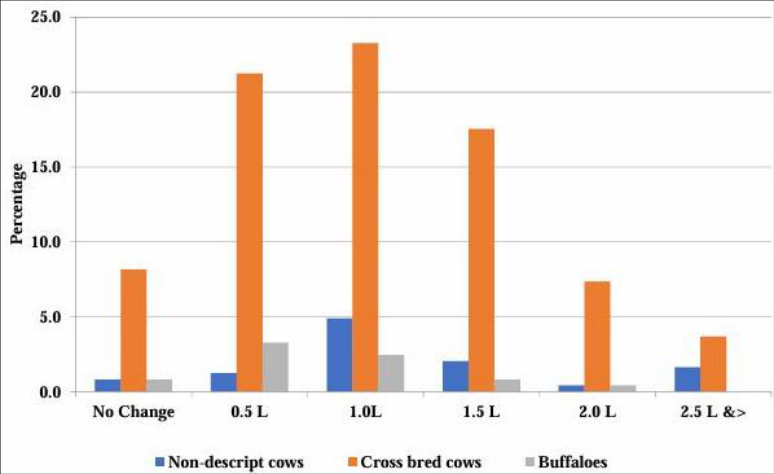 Figure 2
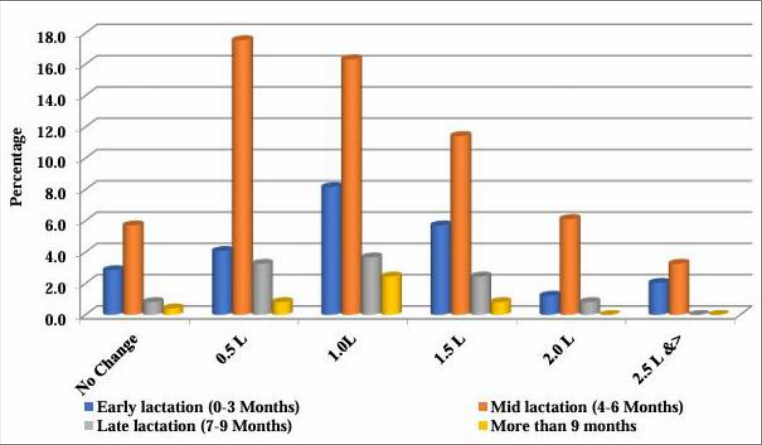 Figure 3
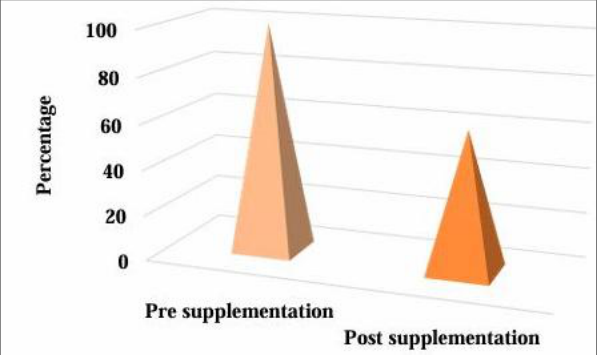 Figure 4
Introduction
India has ranked first in global milk production for several years and contributes nearly onefourth of the world's total milk production. The dairy sector has emerged as one of the strongest pillars of the rural economy and plays a vital role in ensuring food and nutritional security. At present, dairy is the largest agricultural commodity in India, contributing about 5% to the national economy and providing direct employment to more than 8 crore farmers (National Account Statistics). Despite this progress, dairy farming in rural areas is often constrained by low animal productivity and poor reproductive performance, largely due to deficiencies of essential minerals and vitamins. Dairy farmers largely depend on crop residues, locally available grains, rice bran, oil cakes and gruel based diets that do not completely meet the nutrient need of the animal (Arulnathan et al., 2023; Suresh et al., 2016) [1, 2] . Imbalanced feeding leads to altered rumen function contributing to reduced digestibility of feed, decreased milk yield, fertility and overall health of the animals (Murugeswari et al., 2025) [3] . To address these nutritional constraints, Tamil Nadu Veterinary and Animal Sciences University (TANUVAS) developed TANUVAS GRAND, a nutritional supplement designed to selectively promote the growth of beneficial rumen microorganisms. The supplement contains copper sulphate, cobalt sulphate, and urea as sources of copper, cobalt, sulphur, and nitrogen respectively. The product TANUVAS GRAND (Gruel Rooted Additive Nourishment Drops) has been patented (Intellectual Property India Patent No. 415409, Tamil Nadu Veterinary and Animal Sciences University). The present field study was undertaken to assess the effectiveness of TANUVAS GRAND supplementation on the productive and
Materials and methods
A total of 1,500 bottles of TANUVAS GRAND feed supplement were distributed to 500 dairy animals in Karur district. The animals were supplemented with 20 mL of TANUVAS GRAND per day for a period of 90 days under farmers' field conditions. The productive and reproductive performance of the animals was evaluated before and after supplementation. Data were collected from the selected beneficiary farmers on milk yield, reproductive performance (including repeat breeding), animal health status, and the additional income generated due to increased milk production. Milk yield was recorded at fortnightly intervals throughout the 90-day supplementation period. The pre-and post-supplementation data were compiled and analyzed to assess the effect of TANUVAS GRAND supplementation.
Results and discussion 3.1 Selection of animals for trial
The selected animals comprised 81.2% cross bred cows, 11% non-descript cows and 7.8% buffaloes. The selected animals during TANUVAS GRAND distribution were 24.1% early lactation, 60.4% mid lactation and 15.5% were in late lactation. The data on feeding regimen adopted by the dairy farmers for experimental animals were documented and presented.
Profile of the selected benefeciaries
Out of the total farmers selected, 68.16% were male and 31.84% were female beneficiaries. The results of the survey indicated that the educational status of selected beneficiaries was 13.5% uneducated, 47.3% educated upto SSLC or HSC and 11.0% graduate or postgraduate. Thus, majority of the selected benefeciaries (86.5%) were educated and involved in the dairy cattle management. The feeding regimen adopted by the farmers for feeding the selected dairy cattle is depicted in Figure 1. The selected farmers were feeding rice gruel to their animals as traditional method of feeding. About 47.8% of farmers adopted cereals based diet, 34.3% of farmers adopted mixed ingredients based diet, 11.4% of farmers adopted oil cake based diet and the rest of the farmers (6.5%) of farmers adopted bran based diet. It can be concluded that majority of the farmers adopted cereals based diet of this district.
Breed-wise response to milk production consequent to daily intervention
The impact of the TANUVAS GRAND supplementation on daily milk production in non-descript cows, crossbred cows, and buffaloes is presented in Table 1. The results revealed considerable variations in the milk yield improvement among the different breeds. Among crossbred cows, the majority of farmers reported a substantial increase in milk production following the TANUVAS GRAND supplementation. Nearly one-fourth (23.2%) of the respondents observed an increase of 1.0 L/day, followed by 21.1% reporting an increase of 0.5 L/day and 17.5% reporting an increase of 1.5 L/day. A smaller proportion of farmers experienced increases of 2.0 L/day (7.3%) and more than 2.5 L/day (3.7%), whereas only 8.1% reported no change in milk yield (Figure 2). These findings indicate that crossbred cows exhibited the highest responsiveness to the TANUVAS GRAND supplement. In the case of non-descript cows, the improvement in milk production was comparatively modest. About 4.9% of the respondents reported an increase of 1.0 L/day, while 2.0%, 1.6%, and 1.2% observed increases of 1.5 L/day, ≥ 2.5 L/day and above, and 0.5 L/day, respectively. Only 0.4% reported a 2.0 L/day increase, whereas 0.8% indicated no change in milk production. The relatively lower improvement may be attributed to the lower genetic potential of non-descript cattle. Among buffaloes, the response was relatively limited. Approximately 3.2% of the respondents reported an increase of 0.5 L/day, followed by 2.4% reporting a 1.0 L/day increase. Less than 1% reported an increase of 1.5 L/day, while only a negligible proportion experienced a 2.0 L/day increase. No respondents reported an increase exceeding 2.5 L/day, suggesting that the productivity gains in buffaloes were comparatively lower than those observed in crossbred cows.
| Animal type | No of animals (n=500) | Percentage |
|---|---|---|
| Crossbred cows | 406 | 81.2% |
| Non-descript cows | 55 | 11.0% |
| Buffaloes | 39 | 7.8% |
Table text extracted from the original PDF; superscript letters are shown inline. The original table image is below.
View original table image
Overall, the findings demonstrate that the TANUVAS GRAND supplement positively influenced milk production across all categories, with crossbred cows showing greatest response, followed by non-descript cows and buffaloes.
Lactation stage-wise response to milk production following TANUVAS GRAND supplementation
The response of dairy animals to 90 days of TANUVAS GRAND supplementation varied according to the stage of lactation (Figure 3). Overall, animals in the mid-lactation (4-6 months) showed the greatest improvement in milk yield, followed by those in early lactation (0-3 months), whereas animals in the late lactation (7-9 months) and more than 9 months of lactation showed lower responses. The findings of the study indicated that majority of dairy animals experienced an increase in milk production ranging from 0.5 to 1.5 L/day following TANUVAS GRAND supplementation, irrespective of lactation stage. However, the interventions showed the effectiveness in mid-lactation stage. The findings of the study are in line with the findings of the Balakrishnan, V., & Murugeswari, R. (2013) [4] , Murugeswari et al. ( 2025) [3] and Saravanan et al. ( 2025) [5] .
Effect of TANUVAS GRAND supplementation on reproductive performance of dairy cattle
The effect of 90 days of TANUVAS GRAND supplementation on the reproductive performance of dairy cattle is presented in Figure 4. The findings indicate a marked improvement in reproductive efficiency following supplementation. Prior to supplementation, a higher proportion of animals exhibited reproductive disorders or poor reproductive performance, whereas the proportion of animals experiencing such problems declined considerably after supplementation. The percentage distribution presented in Figure 4 reveals that reproductive problems were substantially reduced following the intervention. Before supplementation, nearly all of the selected animals experienced one or more reproductive constraints, while after 90 days of TANUVAS GRAND supplementation, only about half of the animals continued to exhibit reproductive issues. This substantial reduction demonstrates the positive influence of nutritional supplementation on reproductive health under field conditions. The balanced nutritional composition of TANUVAS GRAND likely corrected mineral deficiencies and improved the physiological status of the animals, resulting in better reproductive outcomes.
Conclusion
The present study demonstrated that daily supplementation of TANUVAS GRAND for 90 days significantly improved the productive and reproductive performance of dairy cattle under farmers' field conditions. The majority of animals showed an increase in milk yield ranging from 0.5 to 1.5 L/day, with crossbred cows exhibiting the greatest response, particularly during mid-lactation. The supplementation also reduced the incidence of repeat breeding, indicating improved reproductive efficiency. The proportion of animals affected by reproductive disorders declined markedly after supplementation, indicating enhanced fertility and reproductive efficiency. These findings suggest that regular supplementation with TANUVAS GRAND, along with scientific feeding and management practices, can serve as an effective strategy for improving reproductive health, increasing productivity, and enhancing the economic returns of dairy farming. Further large-scale studies across different agro-climatic regions are warranted to validate these findings under diverse field conditions.
Funding
The fund was provided by Government of India in the name of National Agricultural Development Programme (NADP) scheme
References
5 in the original paper- Arulnathan N, Chellapandian M, Senthilkumar S, Ramesh J, Murugeswari R, Thirumeignanam PAD. Effect of critical nutrient supplementation (TANUVAS GRAND) on production performance in dairy cattle in Tirunelveli district of Tamil Nadu. Pharma Innov J. 2023;12(5):819-821.
- Suresh R, Balakrishnan V, Vasan P. A survey on feeding pattern of rice gruel among the farmers of northeastern agroclimatic zone of Tamil Nadu. Int J Sci Environ Technol. 2016;5:2566-2569.
- Murugeswari R, Balakrishnan V, Valli C, Kanaka VMS. Economic viability on supplementation of TANUVAS GRAND to dairy cattle for enhancing productivity in Tamil Nadu Irrigated Agriculture Modernization Project area in Tamil Nadu. Int J Vet Sci Anim Husb. 2025;10(SP-12):1-5.
- Balakrishnan V, Murugeswari R. Effect of TANUVAS GRAND on milk production. In: Proceedings of the National Conference on Current Nutritional Concepts for Productivity Enhancement in Livestock and Poultry; 2013; Madras Veterinary College, Chennai. p. 170.
- Saravanan M, Diraviam J, Murugeswari R. TANUVAS GRAND for enhancing milk yield of dairy cattle in Karur district of Tamil Nadu. Int J Agric Ext Soc Dev. 2025;9(1):44-46.