
Research article · 2026 · Full text
International Journal of Biology SciencesPrevalence and antibiotic susceptibility patterns of proteus species from healthcare facility effluents and the Nairobi River Basin, Kenya
Volume 8(3) · Pages 150–154 · DOI: 10.33545/26649926.2026.v8.i3b.904 ↗
Research areasPharmaceutical and Antibiotic Environmental ImpactsAntibiotic Resistance in BacteriaAntibiotic Use and Resistance
Abstract
Author-writtenThe discharge of inadequately treated healthcare facility effluents into surface water bodies contributes significantly to the environmental dissemination of antimicrobial-resistant bacteria in sub-Saharan Africa. This research investigated the prevalence, species diversity, and antibiotic susceptibility patterns of Proteus species isolated from healthcare facility effluents and the Nairobi River basin in Kenya from January to December 2024. A total of 312 water samples were collected from four healthcare facility effluent discharge points and six river locations at varying distances downstream. Species identification was confirmed through biochemical testing and API 20E characterization, and antimicrobial susceptibility was evaluated using the disk diffusion method for nine antibiotics. Of 312 samples, 156 Proteus isolates were recovered, yielding an overall isolation rate of 50.0%. Proteus mirabilis was the most frequently isolated species (47.4%), followed by P. vulgaris (25.6%), P. penneri (12.8%), P. hauseri (8.3%), and P. stuartii (5.8%). Resistance to ampicillin was the most prevalent (87.3% in effluent isolates versus 71.5% in river isolates), while amikacin demonstrated the highest efficacy with resistance rates of only 18.6% and 12.3%, respectively. A statistically significant inverse correlation was observed between distance from the effluent discharge point and mean resistance rates (r = -0.94; p<0.001). Seasonal analysis revealed peak isolation during the wet season months of June through August. These findings demonstrate that healthcare effluents serve as critical point sources for antimicrobial-resistant Proteus species entering the Nairobi River ecosystem, with resistance levels attenuating progressively with distance from the discharge source.
Summary
Source-checkedPlain-language reading of the full paper, prepared with AI and checked against the text. Each point links to the authors' own words.
Why it matters
- In sub-Saharan Africa, the release of poorly treated wastewater from healthcare facilities is a major driver of antimicrobial-resistant bacteria spreading into the environment. View evidence ↗
- Proteus species are significant gram-negative opportunistic pathogens that impact both clinical health and the environment. View evidence ↗
- Proteus species are known to cause various infections, including pneumonia, septicaemia, wound infections, and urinary tract infections, especially in immunocompromised patients or those with catheters. View evidence ↗
The question
- The study aimed to determine the prevalence and diversity of Proteus species in healthcare effluents and the Nairobi River, assess their resistance to specific antibiotic classes, and analyze how these patterns change over time and distance. View evidence ↗
What they did
- The study took place in Nairobi County, Kenya, between January and December 2024, sampling four healthcare effluent sites and the Nairobi River. View evidence ↗
- Researchers collected 312 water samples monthly from six river stations located 0.1, 0.5, 1.0, 3.0, 7.0, and 15.0 km downstream from effluent discharge points. View evidence ↗
- The study tested susceptibility against nine antibiotics across three classes: β-lactams, quinolones, and aminoglycosides. View evidence ↗
- Proteus species were identified using the API 20E system, and antibiotic susceptibility was measured using the Kirby-Bauer disk diffusion method. View evidence ↗
What they found
- Proteus isolates were recovered from 50.0% of the 312 water samples analyzed. View evidence ↗
- The rate of Proteus isolation was significantly higher in healthcare effluent samples (57.5%) than in river samples (40.0%). View evidence ↗
- P. mirabilis was the most common species found (47.4%), followed by P. vulgaris (25.6%), P. penneri (12.8%), P. hauseri (8.3%), and P. stuartii (5.8%). View evidence ↗
- Isolates from healthcare effluents showed statistically significant higher resistance rates across all nine tested antibiotics compared to those from the river. View evidence ↗
- Ampicillin had the highest resistance rates (87.3% effluent, 71.5% river), while amikacin was the most effective antibiotic (18.6% effluent, 12.3% river resistance). View evidence ↗
- Proteus isolation rates were significantly higher during the wet season, specifically from June through August. View evidence ↗
What it means
- The authors conclude that healthcare effluents are critical point sources for antimicrobial resistance in urban Kenya, based on high isolation rates and distance-dependent resistance patterns. View evidence ↗
- The authors note that the molecular mechanisms of resistance, the role of horizontal gene transfer, and the actual impact on downstream human and animal populations remain unknown. View evidence ↗
Visual summary
1 visualsIllustrations explain the paper; charts are replotted from the paper's own table values.
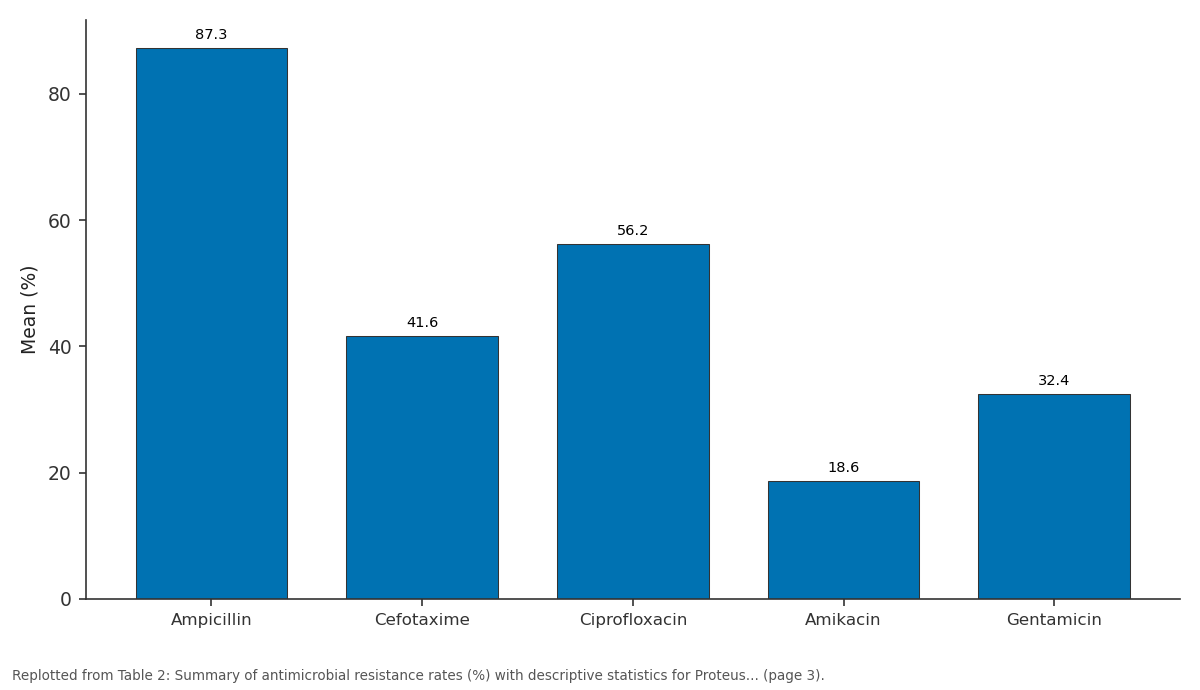
Mean (%): Ampicillin vs Cefotaxime vs Ciprofloxacin vs Amikacin vs Gentamicin
Replotted from Table 2 (page 3) of the original paper. Every bar is the paper's own table value.
View source evidence ↗Figures & tables
From the original paper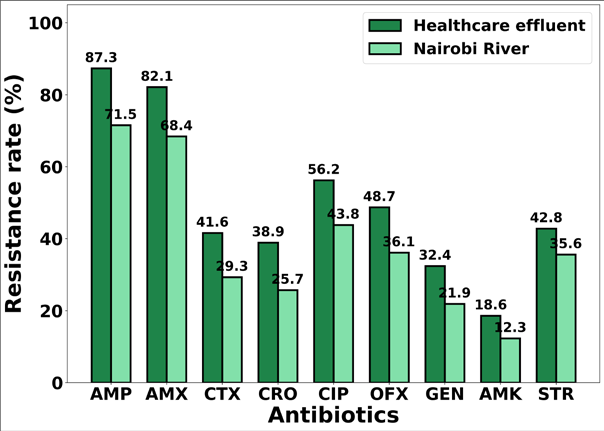 Figure 1
 Table 1
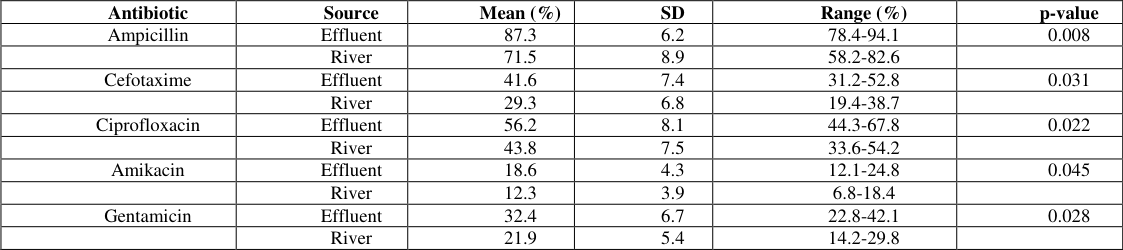 Table 2
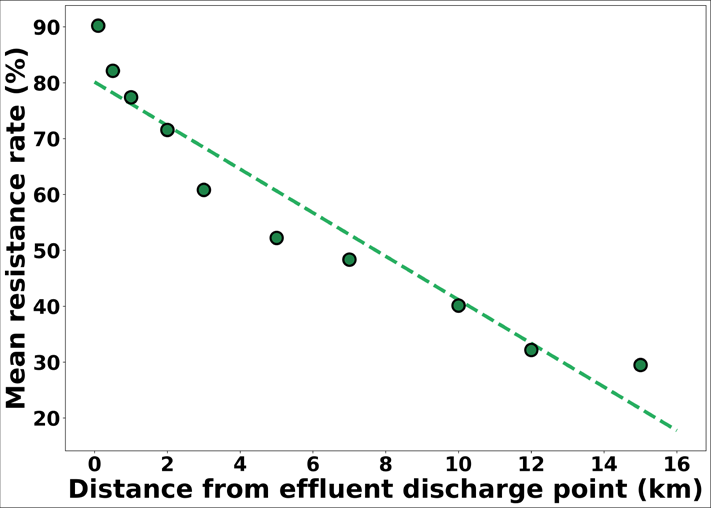 Figure 2
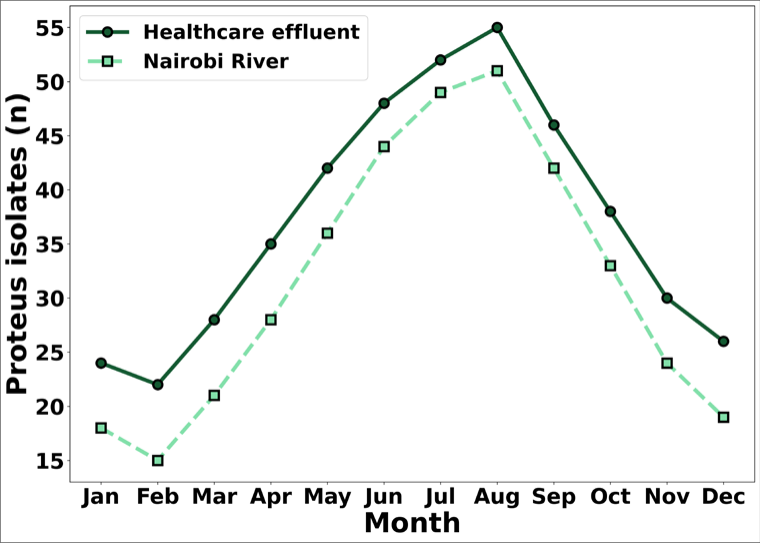 Figure 3
Introduction
An estimated 4.95 million deaths were associated with bacterial antimicrobial resistance globally in 2019, with sub-Saharan Africa bearing a disproportionately heavy burden of 23.7 deaths per 100,000 attributable to drug-resistant infections [1] . These alarming statistics have catalysed international efforts to understand the complex pathways through which antimicrobial resistance emerges, amplifies, and disseminates across the human-animalenvironment interface. Among the environmental reservoirs implicated in resistance propagation, healthcare facility effluents have been identified as particularly significant contributors, given their characteristic content of antimicrobial residues, resistant bacterial populations, and mobile genetic elements carrying resistance determinants [2,3] . Members of the genus Proteus, belonging to the family Morganellaceae, constitute an important group of gram-negative opportunistic pathogens with both clinical and environmental significance [4] . These organisms are recognized for their capacity to cause urinary tract infections, particularly catheter-associated infections, as well as wound infections, pneumonia, and septicaemia in immunocompromised patients [5] . Proteus species possess intrinsic resistance to colistin and tetracycline, and have demonstrated increasing propensity for acquiring resistance to β-lactam antibiotics through the production of extended-spectrum β-lactamases, AmpC cephalosporinases, and carbapenemases [6] . The horizontal transfer of these resistance mechanisms through plasmids, integrons, and transposons facilitate rapid dissemination within microbial communities inhabiting wastewater environments [7] . In Kenya, the Nairobi River system traverses the capital city and receives substantial inputs from healthcare facilities, industrial operations, and domestic sources along its course. Despite its ecological importance and the dependence of downstream communities on its waters for agricultural and domestic purposes, the river has been documented as a recipient of untreated or partially treated effluents from numerous healthcare facilities [8] . Previous investigations have documented the presence of antimicrobial-resistant Enterobacteriaceae in Kenyan surface waters [9,10] , yet specific data addressing the diversity and resistance characteristics of Proteus species along the healthcare effluent-to-river continuum remain limited. This research was therefore designed to evaluate the prevalence and species diversity of Proteus from healthcare facility effluents and the Nairobi River basin, to characterize their susceptibility profiles against β-lactam, quinolone, and aminoglycoside antibiotics, and to examine the spatial and seasonal dynamics of resistance patterns along the river system.
Material and methods
Material and methods
Material
This research was conducted along the Nairobi River and at four healthcare facility effluent discharge sites within Nairobi County, Kenya, from January to December 2024. Ethical clearance was granted by the Nairobi Metropolitan University Research Ethics Committee (Approval No. NMU/REC/2023/145), and a research permit was obtained from the National Commission for Science, Technology, and Innovation (Permit No. NACOSTI/P/2024/8821). The four healthcare facilities were selected based on their bed capacity (exceeding 200 beds each) and the direct discharge of effluents into tributaries feeding the Nairobi River. Six river sampling stations were established at distances of 0.1, 0.5, 1.0, 3.0, 7.0, and 15.0 kilometres downstream from the nearest effluent discharge point. A total of 312 water samples were collected at monthly intervals throughout the twelve-month period using sterile 1-litre polyethylene bottles. Samples were placed in insulated transport containers with ice packs and delivered to the laboratory within four hours of collection. Antimicrobial agents evaluated included β-lactams (ampicillin 10 µg, amoxicillin 25 µg, cefotaxime 30 µg, ceftriaxone 30 µg), quinolones (ciprofloxacin 5 µg, ofloxacin 5 µg), and aminoglycosides (gentamicin 10 µg, amikacin 30 µg, streptomycin 10 µg). Antimicrobial disks were sourced from HiMedia Laboratories (Mumbai, India). Escherichia coli ATCC 25922 served as the reference strain for quality control purposes.
Methods
Water samples were processed using the membrane filtration technique. Aliquots of 100 mL were filtered through 0.45 µm cellulose nitrate membrane filters (Sartorius, Göttingen, Germany) and placed onto MacConkey agar plates. Following incubation at 37°C for 24 hours, non-lactose-fermenting colonies were subcultured onto nutrient agar for purification. Presumptive Proteus identification was based on characteristic swarming motility on blood agar, positive urease reaction, phenylalanine deaminase production, and hydrogen sulphide generation on triple sugar iron agar. Species-level identification was confirmed using the API 20E system (bioMérieux, Marcyl'Étoile, France). Antimicrobial susceptibility testing followed the Kirby-Bauer disk diffusion protocol on Mueller-Hinton agar in accordance with Clinical and Laboratory Standards Institute recommendations [11] . Inhibition zone diameters were measured and categorized as susceptible, intermediate, or resistant. Multidrug resistance was defined as nonsusceptibility to at least one agent in three or more antimicrobial classes. Pearson correlation analysis was employed to assess the relationship between distance from the effluent source and resistance rates. Seasonal comparisons were performed using analysis of variance with Tukey's post-hoc test. All statistical analyses were conducted using R version 4. The spatial distribution of Proteus species across the sampling continuum revealed a decreasing gradient in isolation frequency with increasing distance from the effluent discharge points. River stations located within one kilometre of discharge sites yielded proportionally more isolates than those situated further downstream, although the relative species composition remained broadly similar across all sampling categories (Table 1). Resistance rates were consistently higher among healthcare effluent isolates compared with river isolates across all nine antibiotics evaluated (Table 2). The differences were statistically significant for all agents tested. The β-lactam class demonstrated the highest overall resistance, with ampicillin and amoxicillin resistance exceeding 68% even in river isolates. Aminoglycosides exhibited the lowest resistance rates, with amikacin resistance remaining below 19% in effluent samples. A strong inverse correlation was established between distance from the effluent discharge point and mean antimicrobial resistance rates among river isolates (r = -0.94; p<0.001; Figure 2). Resistance rates decreased from 89.2% at 0.1 km to 28.4% at 15.0 km downstream, suggesting a dilution and attenuation effect as resistant organisms move further from the source. Seasonal analysis revealed significantly higher isolation rates during the wet season months of June through August (F = 14.82; p<0.001; Figure 3), with peak isolation coinciding with the period of maximum rainfall and increased surface runoff.
| Antibiotic | Source | Mean (%) | SD | Range (%) | p-value |
|---|---|---|---|---|---|
| Ampicillin | Effluent | 87.3 | 6.2 | 78.4-94.1 | 0.008 |
| River | 71.5 | 8.9 | 58.2-82.6 | ||
| Cefotaxime | Effluent | 41.6 | 7.4 | 31.2-52.8 | 0.031 |
| River | 29.3 | 6.8 | 19.4-38.7 | ||
| Ciprofloxacin | Effluent | 56.2 | 8.1 | 44.3-67.8 | 0.022 |
| River | 43.8 | 7.5 | 33.6-54.2 | ||
| Amikacin | Effluent | 18.6 | 4.3 | 12.1-24.8 | 0.045 |
| River | 12.3 | 3.9 | 6.8-18.4 | ||
| Gentamicin | Effluent | 32.4 | 6.7 | 22.8-42.1 | 0.028 |
| River | 21.9 | 5.4 | 14.2-29.8 |
Table text extracted from the original PDF; superscript letters are shown inline. The original table image is below.
View original table image
| Species | Effluent N (%) | River (< 1 km) N (%) | River (> 1 km) N (%) | Total N (%) |
|---|---|---|---|---|
| P. mirabilis | 44 (47.8) | 18 (50.0) | 12 (42.9) | 74 (47.4) |
| P. vulgaris | 24 (26.1) | 8 (22.2) | 8 (28.6) | 40 (25.6) |
| P. penneri | 12 (13.0) | 5 (13.9) | 3 (10.7) | 20 (12.8) |
| P. hauseri | 7 (7.6) | 3 (8.3) | 3 (10.7) | 13 (8.3) |
| P. stuartii | 5 (5.4) | 2 (5.6) | 2 (7.1) | 9 (5.8) |
| Total | 92 (100.0) | 36 (100.0) | 28 (100.0) | 156 (100.0) |
Table text extracted from the original PDF; superscript letters are shown inline. The original table image is below.
View original table image
Discussion
This research provides comprehensive evidence that healthcare facility effluents constitute a major point source for antimicrobial-resistant Proteus species entering the Nairobi River ecosystem. The overall isolation rate of 50.0%, the predominance of P. mirabilis, and the elevated resistance profiles observed in effluent-derived isolates collectively underscore the public health significance of inadequately treated healthcare wastewater in urban Kenyan settings. Several aspects of the present findings align with previously reported observations from comparable African settings. The isolation rate of 50.0% is consistent with the range of 38-58% documented in healthcare wastewater investigations conducted in Nigeria, Zimbabwe, and Cameroon [8,12,13] . The dominance of P. mirabilis at 47.4% corroborates its well-established status as the most clinically prevalent Proteus species globally [4] , and mirrors the species distribution reported from hospital sewage in Central Africa [8] . The high resistance rates to β-lactam antibiotics, particularly ampicillin (87.3%) and amoxicillin (82.1%), parallel findings from West African investigations where penicillin-class resistance among environmental Enterobacteriaceae consistently exceeded 75% [14,15] . However, the inverse correlation (r = -0.94) was stronger than the moderate correlations reported in South Africa and Egypt [16,17] , possibly reflecting differences in river hydrology and pollution inputs. The relatively low aminoglycoside resistance contrasts with elevated rates documented in some East African clinical settings [18] , suggesting that environmental selection pressures may differ from those within healthcare institutions. The seasonal variation in isolation rates, with peak recovery during the wet season, can be explained by increased surface runoff mobilizing bacteria from contaminated soils into the river system [9] . The broader implications are relevant for downstream communities relying on river water for irrigation and domestic use, as multidrug-resistant bacteria were detected at distances exceeding seven kilometres from the discharge point, reinforcing calls for dedicated healthcare wastewater treatment systems [2,3] .
Spatial dynamics of resistance attenuation
The sharp decline in resistance between the 0.1 km and 3.0 km stations, followed by gradual decrease at greater distances, suggests that initial dilution is the primary driver of resistance attenuation proximally. Beyond three kilometres, additional factors including bacteriophage predation, competition with indigenous microbial communities, and ultraviolet radiation exposure may further reduce resistant Proteus populations. These patterns have implications for buffer zone designation around effluent discharge points.
One health perspectives on environmental antimicrobial resistance
The detection of clinically significant resistance phenotypes in environmental water sources underscores the relevance of the One Health framework for addressing antimicrobial resistance in Kenya. The Nairobi River basin, supporting human livelihoods, livestock production, and urban agriculture, represents a critical nexus where resistant organisms of healthcare origin may enter agricultural food chains and return to the human population through contaminated produce and animal products.
Conclusion
The principal contribution of this research lies in establishing a quantitative relationship between healthcare effluent discharge and the spatial distribution of antimicrobial-resistant Proteus species in the Nairobi River basin. The high isolation rates, the dominance of P. mirabilis, the elevated β-lactam resistance profiles, and the strong distance-dependent attenuation pattern collectively provide robust evidence that healthcare effluents function as critical point sources for environmental antimicrobial resistance in urban Kenya. These findings contribute to the growing body of evidence supporting the integration of environmental surveillance into national antimicrobial resistance action plans, particularly within the One Health framework. Open questions remain regarding the molecular mechanisms underlying the observed resistance phenotypes, the role of horizontal gene transfer in maintaining resistance in downstream river sections, and the degree to which resistant Proteus populations in river water contribute to antimicrobial resistance acquisition in downstream human and animal populations.
Acknowledgement
AcknowledgementsThe authors express their gratitude to the Nairobi Metropolitan University for providing laboratory facilities and institutional support for this research. J.K.M. designed the investigation, coordinated field sampling, and prepared the manuscript. G.W.O. performed laboratory analyses including bacteriological culture and antimicrobial susceptibility testing. P.O.N. conducted statistical analysis and contributed to data interpretation. F.A.L. assisted with sample collection, biochemical identification, and manuscript revision. All authors reviewed and approved the final manuscript. This research was supported by the National Research Fund of Kenya and by a capacitybuilding grant from the East African Health Research Commission.
Figures and tables from the paper
References
18 in the original paper- Murray CJL, Ikuta KS, Sharara F, Swetschinski L, Robles Aguilar G, Gray A, et al. Global burden of bacterial antimicrobial resistance in 2019: a systematic analysis. Lancet. 2022;399(10325):629-655.
- Manaia CM, Rocha J, Scaccia N, Maez R, Tuber O, Balode M, et al. Antibiotic resistance in wastewater treatment plants: tackling the black box. Environ Int. 2018; 115:312-324.
- Rizzo L, Manaia C, Merlin C, Schwartz T, Dagot C, Ploy MC, et al. Urban wastewater treatment plants as hotspots for antibiotic-resistant bacteria and genes spread into the environment: a review. Sci Total Environ. 2013; 447:345-360.
- O'Hara CM, Brenner FW, Miller JM. Classification, identification, and clinical significance of Proteus, Providencia, and Morganella. Clin Microbiol Rev. 2000;13(4):534-546.
- Armbruster CE, Mobley HLT, Pearson MM. Pathogenesis of Proteus mirabilis infection. EcoSal Plus. 2018;8(1): ESP-0009-2017.
- Jacoby GA. AmpC β-lactamases. Clin Microbiol Rev. 2009;22(1):161-182.
- Partridge SR, Kwong SM, Firth N, Jensen SO. Mobile genetic elements associated with antimicrobial resistance. Clin Microbiol Rev. 2018;31(4):e00088-17.
- Njoya AM, Eheth JS, Yogne YP, Metsopkeng CS, Moldovan CV, Belengfe SC, et al. Proteus bacteria species from hospital sewage and Mfoundi River in Yaoundé (Cameroon, Central Africa): comparison of the diversity, abundance and susceptibility against some β-lactams, quinolones and aminoglycosides antibiotics. J Adv Microbiol Res. 2022;3(2):34-46.
- K'Oreje KO, Vergeynst L, Ombaka D, De Wispelaere P, Okoth M, Van Langenhove H, et al. Occurrence patterns of pharmaceutical residues in wastewater, surface water and groundwater of Nairobi and Kisumu City, Kenya. Chemosphere. 2016; 149:238-244.
- Kariuki S, Revathi G, Corkill J, Kiiru J, Mwituria J, Mirza N, et al. Escherichia coli from communityacquired urinary tract infections resistant to fluoroquinolones and extended-spectrum beta-lactams. J Infect Dev Ctries. 2007;1(3):257-262.
- Clinical and Laboratory Standards Institute. Performance standards for antimicrobial susceptibility testing. 33rd ed. CLSI supplement M100. Wayne (PA): Clinical and Laboratory Standards Institute; 2023.
- Mbanga J, Dube S, Munyanduki H. Antimicrobial resistance profiles of Staphylococcus aureus and Enterobacteriaceae isolates from hospital wastewater in Bulawayo, Zimbabwe. Afr J Microbiol Res. 2020;14(8):458-466.
- Adesoji AT, Ogunjobi AA. Detection of extendedspectrum beta-lactamase resistance genes among bacteria isolated from selected drinking water distribution channels in southwestern Nigeria. Biomed Res Int. 2016; 2016:7149295.
- Odumosu BT, Adeniyi BA, Chandra R. Analysis of integrons and associated gene cassettes in clinical isolates of multidrug-resistant Pseudomonas aeruginosa from Southwest Nigeria. Ann Clin Microbiol Antimicrob. 2013; 12:29.
- Osei Sekyere J, Govinden U, Bester LA, Essack SY. Colistin and tigecycline resistance in carbapenemaseproducing Gram-negative bacteria: emerging resistance mechanisms and detection methods. J Appl Microbiol. 2016;121(3):601-617.
- Verlicchi P, Al Aukidy M, Zambello E. Occurrence of pharmaceutical compounds in urban wastewater: removal, mass load and environmental risk after secondary treatment-a review. Sci Total Environ. 2012; 429:123-155.
- Hendricks R, Pool EJ. The effectiveness of sewage treatment processes to remove faecal pathogens and antibiotic residues. J Environ Sci Health A. 2012;47(2):289-297.
- Seni J, Falgenhauer L, Simeo N, Mirambo MM, Imirzalioglu C, Matee M, et al. Multiple ESBLproducing Escherichia coli sequence types carrying quinolone and aminoglycoside resistance genes circulating in companion and domestic farm animals in Mwanza, Tanzania, harbour commonly occurring plasmids. Front Microbiol. 2016; 7:142.