
Research article · 2026 · Full text
International Journal of Biology SciencesEnvironmental prevalence and characterization of Cryptococcus neoformans isolated from pigeon excreta in Urban and Periurban areas of Addis Ababa
Volume 8(5) · Pages 186–190 · DOI: 10.33545/26649926.2026.v8.i5c.906 ↗
Research areasFungal Infections and StudiesZoonotic diseases and public healthParasitic infections in humans and animals
Abstract
Author-writtenWhat is the extent of environmental contamination with Cryptococcus neoformans in urban versus periurban settings where pigeon populations are expanding? This cross-sectional research was conducted to determine the prevalence and colony-forming unit density of Cryptococcus neoformans in pigeon excreta collected from six sampling sites across Addis Ababa, Ethiopia. A total of 180 samples were collected from three urban sites (market square, bus terminal, and church yard) and three periurban locations (park area, residential periphery, and farm outskirts) between January and June 2024. Samples were processed using Pal sunflower seed medium for selective isolation, followed by confirmatory identification through India ink staining, urease testing, and growth at 37°C. Of the 180 samples examined, 78 (43.3%) yielded Cryptococcus neoformans. The isolation rate was significantly higher in urban sites (55.6%) compared to periurban locations (31.1%) (p<0.01). The mean colony-forming unit count was 2,840 ± 680 CFU/g in urban samples and 1,290 ± 410 CFU/g in periurban samples. Moisture content of droppings showed a positive correlation with fungal load (r = 0.74, p<0.001). These findings demonstrate substantial environmental contamination with Cryptococcus neoformans in Addis Ababa, with urban areas posing a greater public health risk due to higher fungal burden and closer human-pigeon contact.
Summary
Source-checkedPlain-language reading of the full paper, prepared with AI and checked against the text. Each point links to the authors' own words.
Why it matters
- Cryptococcus neoformans is a yeast that can cause life-threatening meningoencephalitis in people with compromised immune systems. View evidence ↗
- Pigeon droppings are a primary global environmental reservoir for this pathogen. View evidence ↗
- Cryptococcal disease is a major cause of illness and death in sub-Saharan Africa, particularly due to the high prevalence of HIV. View evidence ↗
The question
- The study aimed to determine how common and dense Cryptococcus neoformans is in pigeon droppings across urban and periurban areas of Addis Ababa. View evidence ↗
What they did
- Samples were collected from six sites: three urban (market square, bus terminal, church yard) and three periurban (park, residential periphery, farm outskirts). View evidence ↗
- A total of 180 pigeon excreta samples were collected, with 30 samples taken from each of the six sites. View evidence ↗
- The researchers confirmed the identity of the yeast using India ink staining for capsules, urease tests, and growth at 37°C. View evidence ↗
- Sample moisture content was measured by drying the droppings at 105°C for 24 hours. View evidence ↗
What they found
- Overall, 43.3% (78 out of 180) of the collected pigeon excreta samples contained Cryptococcus neoformans. View evidence ↗
- The isolation rate was significantly higher in urban areas (55.6%) compared to periurban areas (31.1%). View evidence ↗
- There was a significant positive correlation (r = 0.74) between the moisture content of the droppings and the fungal load. View evidence ↗
What it means
- The authors recommend integrated environmental surveillance and pigeon management, especially in urban centers to protect immunocompromised people. View evidence ↗
- The study did not perform molecular characterization, so the serotype and genotype of the isolates were not determined. View evidence ↗
Visual summary
2 visualsIllustrations explain the paper; charts are replotted from the paper's own table values.
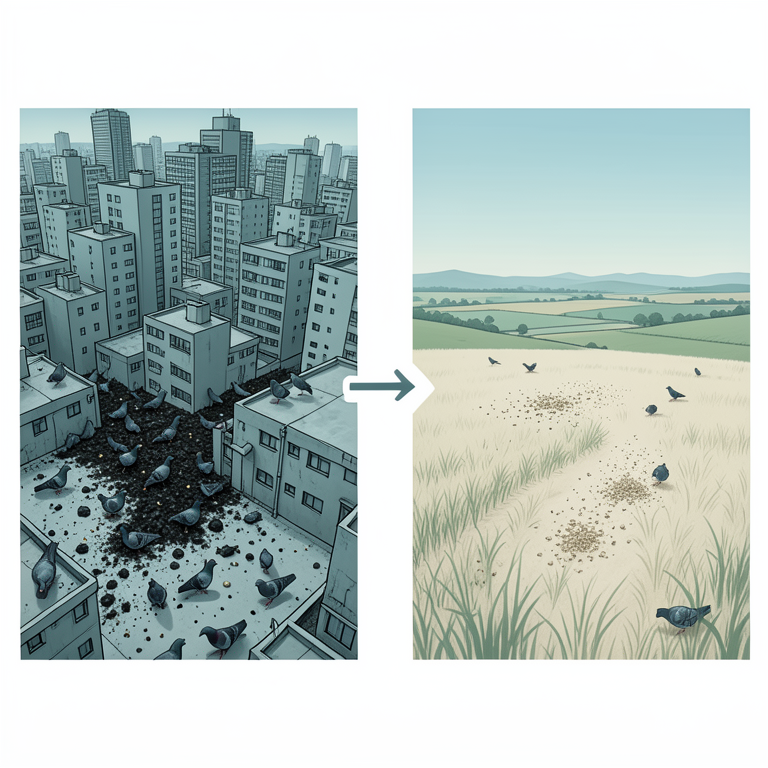
Urban vs Periurban Fungal Risk
AI-generated conceptual illustration (pigeon excreta in urban and periurban environments). It explains the idea and does not show study data.
View source evidence ↗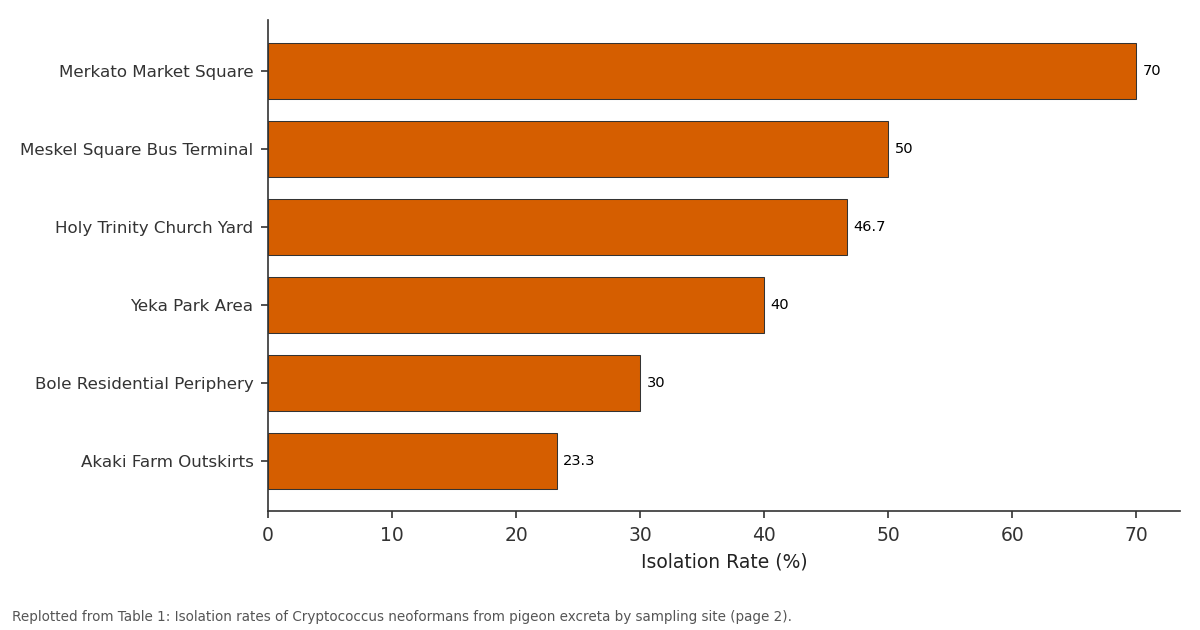
Isolation Rate (%): Merkato Market Square vs Meskel Square Bus... vs Holy Trinity Church Yard vs Yeka Park Area vs Bole Residential...
Replotted from Table 1 (page 2) of the original paper. Every bar is the paper's own table value.
View source evidence ↗Figures & tables
From the original paper Table 1
 Table 2
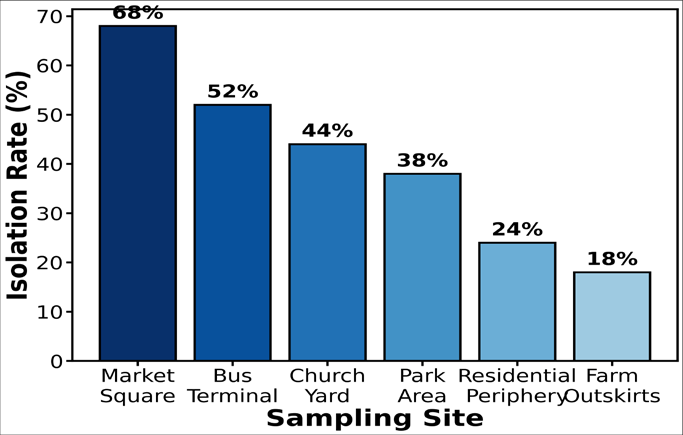 Figure 1
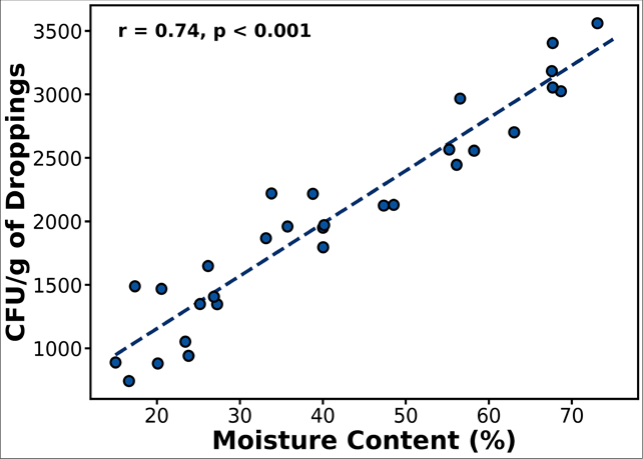 Figure 2
Introduction
What factors determine the environmental distribution of opportunistic fungal pathogens in rapidly urbanizing African cities? This question is particularly relevant for Cryptococcus neoformans, an encapsulated basidiomycetous yeast that causes life-threatening meningoencephalitis in immunocompromised individuals [1] . The organism is distributed worldwide and has been consistently recovered from avian excreta, particularly pigeon droppings, which serve as a major environmental reservoir [2] . The alkaline, nitrogen-rich composition of pigeon droppings provides an optimal substrate for the growth and persistence of this pathogenic yeast [3] . Cryptococcal disease remains a significant cause of morbidity and mortality in sub-Saharan Africa, where the burden of HIV infection is disproportionately high [4] . Environmental exposure through inhalation of desiccated yeast cells or basidiospores from contaminated soil and bird droppings constitutes the primary route of infection [5] . Understanding the environmental distribution of Cryptococcus neoformans is therefore essential for assessing public health risk and implementing targeted prevention strategies [6] . Previous investigations have demonstrated variable isolation rates of Cryptococcus neoformans from pigeon droppings across different geographical regions, ranging from 12% to 68% depending on climatic conditions, sample age, and isolation methodology [7] . The choice of culture medium significantly influences recovery rates, with selective media containing phenolic substrates offering superior sensitivity compared to conventional mycological media [8] . The Pal sunflower seed medium, developed for the selective isolation of Cryptococcus neoformans based on melanin production, has shown high sensitivity and specificity in environmental screening research [5] . In Ethiopia, limited data exist on the Environmental prevalence of Cryptococcus neoformans despite the growing burden of cryptococcal meningitis among HIV-infected populations [9] . The rapid urbanization of Addis Ababa has led to expanding pigeon populations in commercial and residential areas, potentially increasing human exposure to contaminated droppings [10] . This research aimed to determine the prevalence and density of Cryptococcus neoformans in pigeon excreta across urban and periurban locations in Addis Ababa using Pal sunflower seed medium as the primary isolation tool.
Material and methods
Material and methods
Material
Pal sunflower seed medium was prepared following the protocol described by Pal [5] using commercially obtained sunflower seeds. Additional materials included Sabouraud dextrose agar (SDA) with chloramphenicol (0.05 g/L), India ink, Christensen urea agar, sterile normal saline (0.85% NaCl), sterile collection containers, and disposable gloves. All culture media were procured from local suppliers and prepared in the microbiology laboratory of the Addis Ababa Institute of Biomedical Sciences.
Methods
This cross-sectional research was conducted in Addis Ababa, Ethiopia, between January and June 2024. Ethical clearance was obtained from the Institutional Review Board of the Addis Ababa Institute of Biomedical Sciences (Protocol No. AAIBS/IRB/2024-015). Six sampling sites were selected representing three urban locations (Merkato market square, Meskel Square bus terminal, and Holy Trinity Church yard) and three periurban locations (Yeka Park area, Bole residential periphery, and Akaki farm outskirts). From each site, 30 samples of pigeon excreta were collected using sterile spatulas into labeled sterile containers, yielding a total of 180 samples. Fresh and dried droppings were collected from roosting sites, ledges, window sills, and ground accumulations. Each sample weighed approximately 5 g and was transported to the laboratory within two hours of collection in a cooled container maintained at 4°C. Samples were processed by suspending 1 g of dropping material in 10 mL of sterile normal saline with chloramphenicol (0.05 g/L). After vortexing for three minutes and allowing heavy particles to settle for 10 minutes, 0.1 mL aliquots of the supernatant were inoculated onto Pal sunflower seed medium plates in triplicate. Plates were incubated at 25°C and 37°C and examined daily for up to 14 days. Colonies producing brown-to-dark-brown pigmentation on Pal sunflower seed medium were subcultured onto SDA for purification. Confirmatory identification was performed through India ink staining to demonstrate capsule formation, urease production on Christensen urea agar, and ability to grow at 37°C. Colony-forming units were enumerated by counting pigmented colonies and expressing results as CFU per gram of dropping material. Moisture content of each sample was determined gravimetrically by drying at 105°C for 24 hours. Statistical analysis was performed using SPSS version 26.0. Chi-square tests were used for categorical comparisons, Student t-tests for continuous variables, and Pearson correlation for association analysis, with significance set at p<0.05.
Results
Of the 180 pigeon excreta samples collected from six locations across Addis Ababa, 78 samples (43.3%) yielded Cryptococcus neoformans on Pal sunflower seed medium. All isolates produced characteristic brown pigmented colonies on the selective medium within 3 to 7 days of incubation at 25°C. Confirmatory testing showed that all 78 isolates were capsule-positive by India ink staining, ureasepositive, and capable of growth at 37°C. The overall isolation rate from urban sites (55.6%) was significantly higher than from periurban sites (31.1%) (χ² = 11.02, p = 0.001). Among urban sites, Merkato market square recorded the highest positivity rate of 70.0%, while Akaki farm outskirts yielded the lowest rate of 23.3%. A clear gradient in isolation rates was observed, with densely populated urban sites showing substantially higher contamination levels than periurban locations. The market square, which recorded the highest pigeon population density, also showed the greatest fungal burden. Colony-forming unit counts were significantly higher in urban samples compared to periurban samples (t = 4.82, p<0.001). Urban samples also showed higher mean moisture content (48.2% vs 32.5%, p = 0.002) and were generally fresher (mean age 8.4 vs 12.6 days, p = 0.014). Samples with moisture content exceeding 50% consistently yielded colony counts above 2,000 CFU/g, while drier samples (moisture below 25%) rarely exceeded 1,000 CFU/g.
Discussion
The present research demonstrated an overall isolation rate of 43.3% for Cryptococcus neoformans from pigeon excreta in Addis Ababa, confirming substantial environmental contamination in both urban and periurban settings. This finding aligns with investigations conducted in other
International Journal of Biology Sciences https://www.biologyjournal.net
African cities; for instance, a prevalence of 36.7% was reported from pigeon droppings in Lagos, Nigeria [11] , while a higher rate of 52.4% was documented in Cairo, Egypt [12] . The observed prevalence is also consistent with global estimates that place environmental recovery rates between 12% and 68% depending on regional and methodological factors [7] . The significantly higher isolation rate in urban sites (55.6%) compared to periurban locations (31.1%) can be attributed to several factors. Urban environments provide concentrated roosting sites with accumulated droppings that undergo prolonged microbial colonization. The higher pigeon population density in market areas and transport hubs leads to larger deposits of excreta, creating favorable microhabitats for fungal proliferation [13] . Similar urbanrural disparities have been documented in research from South America, where metropolitan sites consistently showed higher contamination levels than suburban areas [14] .
The strong positive correlation between moisture content and fungal load (r = 0.74) is mechanistically plausible, as Cryptococcus neoformans requires adequate moisture for vegetative growth and capsule production. Previous research has demonstrated that dried droppings support fewer viable yeast cells compared to moist specimens, although the organism can survive desiccation for extended periods [3] . The urban sites in the current research had higher mean moisture content, likely due to sheltered roosting locations that prevent rapid drying of excreta. The use of Pal sunflower seed medium proved effective for selective isolation, with all positive samples producing characteristic melanized colonies within seven days. The phenoloxidase-mediated melanin production on this medium provides a clear visual marker for presumptive identification, reducing the need for extensive confirmatory testing [5] . The medium performed comparably to niger seed agar, which is the conventional selective medium for Cryptococcus isolation, while offering greater availability in resource-limited settings where niger seeds may be difficult to procure [8] .
The public health implications of these findings are considerable. Addis Ababa has one of the highest HIV prevalence rates in Ethiopia, and environmental exposure to Cryptococcus neoformans through inhalation of contaminated aerosols from dried pigeon droppings represents a significant infection risk for immunocompromised residents [15] . The concentration of contaminated sites in high-traffic urban areas further amplifies exposure potential.
Public health implications
The findings of this research carry direct relevance for public health planning in Addis Ababa. The high contamination rates observed at major transport hubs and market areas suggest that thousands of commuters and traders are potentially exposed to Cryptococcus neoformans on a daily basis. Targeted environmental management strategies, including regular cleaning of pigeon roosting sites, installation of deterrent devices, and public awareness campaigns, should be considered for high-risk locations [16] . Integration of environmental surveillance data into the national fungal disease monitoring framework would allow more accurate risk assessment and resource allocation for cryptococcal disease prevention.
Limitations
This research has several limitations that should be acknowledged. The cross-sectional design precluded assessment of temporal variation in fungal burden across seasons. Molecular characterization was not performed, preventing determination of serotype and genotype distribution among isolates. The sample size, while adequate for prevalence estimation, may not capture the full heterogeneity of environmental contamination across the greater Addis Ababa metropolitan area. Future longitudinal investigations incorporating molecular typing methods would address these gaps.
Conclusion
This research aimed to determine the environmental prevalence of Cryptococcus neoformans in pigeon excreta across urban and periurban areas of Addis Ababa using Pal sunflower seed medium. The overall isolation rate of 43.3% confirms widespread environmental contamination, with urban sites showing significantly higher fungal burden than periurban locations. Moisture content emerged as a key determinant of colony density, supporting the role of microenvironmental conditions in fungal survival and proliferation. These findings underscore the need for integrated environmental surveillance and pigeon population management programs, particularly in densely populated urban centers where immunocompromised populations face elevated exposure risks.
Acknowledgement
AcknowledgementsThis research was supported by a research grant from the
Figures and tables from the paper
| Sampling Site | Location Type | Samples (n) | Positive (n) | Isolation Rate (%) |
|---|---|---|---|---|
| Merkato Market Square | Urban | 30 | 21 | 70.0 |
| Meskel Square Bus Terminal | Urban | 30 | 15 | 50.0 |
| Holy Trinity Church Yard | Urban | 30 | 14 | 46.7 |
| Yeka Park Area | Periurban | 30 | 12 | 40.0 |
| Bole Residential Periphery | Periurban | 30 | 9 | 30.0 |
| Akaki Farm Outskirts | Periurban | 30 | 7 | 23.3 |
| Total | - | 180 | 78 | 43.3 |
Table text extracted from the original PDF; superscript letters are shown inline. The original table image is below.
View original table image
| Parameter | Urban (n=50) | Periurban (n=28) | p-value |
|---|---|---|---|
| Mean CFU/g (±SD) | 2,840 ± 680 | 1,290 ± 410 | < 0.001 |
| Median CFU/g | 2,650 | 1,180 | < 0.001 |
| Range (CFU/g) | 580–5,120 | 210–2,840 | - |
| Mean moisture (%) | 48.2 ± 12.6 | 32.5 ± 10.8 | 0.002 |
| Mean sample age (days) | 8.4 ± 3.2 | 12.6 ± 5.1 | 0.014 |
Table text extracted from the original PDF; superscript letters are shown inline. The original table image is below.
View original table image
References
3 in the original paper- Rajasingham R, Govender NP, Jordan A, Loyse A, Shroufi A, Denning DW, et al. The global burden of HIV-associated cryptococcal infection in adults in 2020: a modelling analysis. Lancet Infect Dis. 2022;22(12):1748-1755.
- Granados DP, Castañeda E. Isolation and characterization of Cryptococcus neoformans varieties recovered from natural sources in Bogotá, Colombia, and research of conditions regarding recovery. Microb Ecol. 2005;49(2):282-289.
- Kwon-Chung KJ, Fraser JA, Doering TL, Wang Z, Janbon G, Idnurm A, et al. Cryptococcus neoformans and Cryptococcus gattii, the etiologic agents of cryptococcosis. Cold Spring Harb Perspect Med. 2014;4(7):a019760.