
Research article · 2026 · Full text
International Journal of Biology SciencesComparative efficacy of aqueous Rosmarinus officinalis and Artemisia herba-alba extracts with conventional insecticides against Sitobion avenae in wheat
Volume 8(4) · Pages 169–173 · DOI: 10.33545/26649926.2026.v8.i4b.905 ↗
Research areasInsect Pest Control StrategiesInsect-Plant Interactions and ControlHemiptera Insect Studies
Abstract
Author-writtenImagine a wheat production scenario where pest management achieves 85% of synthetic insecticide efficacy at 30% of the cost while eliminating environmental contamination risks this is the promise that botanical insecticides offer to resource-limited producers. This research compared the aphicidal efficacy of aqueous Rosmarinus officinalis L. and Artemisia herba-alba Asso extracts at 10% concentration with three conventional insecticides (lambda-cyhalothrin, imidacloprid, dimethoate) against Sitobion avenae Fabricius in wheat fields near Valparaíso, Chile, during 2023-2024. Trials used a RCBD with seven treatments and four replications on a 0.7-ha soft wheat field (cv. Kiko-INIA). Conventional insecticides achieved higher acute mortality (86.2-92.8%) than botanical extracts (62.4-78.5%), but botanical treatments demonstrated superior natural enemy conservation (selectivity ratios 0.18-0.32 vs 0.72-0.91), comparable 28-day population suppression (58-68% vs 72-82%), and substantially lower cost per hectare (USD 12-22 vs 38-52). Cost-effectiveness ratios (efficacy/cost) favored botanical preparations (3.57-5.20 vs 1.66-2.32). These results demonstrate that botanical extracts, while less acutely toxic than synthetics, offer competitive overall management value when environmental safety, natural enemy conservation, and cost-effectiveness are considered alongside efficacy.
Summary
Source-checkedPlain-language reading of the full paper, prepared with AI and checked against the text. Each point links to the authors' own words.
Why it matters
- Wheat production in central and south-central Chile covers about 230,000 hectares and primarily manages the pest Sitobion avenae using synthetic insecticides like dimethoate, lambda-cyhalothrin, and imidacloprid. View evidence ↗
- Although synthetic insecticides are effective, they cause environmental damage, including groundwater contamination and the disruption of beneficial arthropods, leading to a need for alternatives. View evidence ↗
- Extracts from plants like Rosmarinus officinalis and Artemisia herba-alba are potential alternatives, but farmers often perceive them as less effective than synthetic options. View evidence ↗
The question
- The study aimed to compare the efficacy of 10% aqueous extracts of R. officinalis and A. herba-alba against three conventional insecticides for controlling S. avenae in Chilean wheat fields. View evidence ↗
What they did
- The experiment was conducted on a 0.7-hectare soft wheat field (cv. Kiko-INIA) using a randomized complete block design (RCBD) with seven treatments and four replications. View evidence ↗
- The treatments included an untreated control, 10% extracts of R. officinalis, A. herba-alba, and a combined botanical mix, as well as lambda-cyhalothrin, imidacloprid, and dimethoate. View evidence ↗
- Researchers measured acute mortality at 72 hours, population suppression over 28 days, natural enemy density via sweep-nets, and total treatment costs. View evidence ↗
What they found
- Conventional insecticides had higher acute mortality (86.2% to 92.8%) than botanical extracts, which ranged from 62.4% for R. officinalis to 78.5% for the combined extract. View evidence ↗
- Synthetic insecticides caused rapid initial collapse (88-95% by day 7) but saw resurgence by day 28, whereas botanicals had a slower decline (45-58% by day 7) but more stable long-term suppression. View evidence ↗
- When considering environmental safety and sustainability alongside efficacy, botanical treatments scored 68% higher in a weighted total assessment than conventional ones. View evidence ↗
What it means
- The authors conclude that botanical preparations should be considered primary management tools for wheat production in Chile, rather than just supplements to synthetic insecticides. View evidence ↗
- Future research is needed to understand long-term population dynamics, explore rotation strategies between botanical and synthetic products, and standardize assessment frameworks. View evidence ↗
Visual summary
3 visualsIllustrations explain the paper; charts are replotted from the paper's own table values.
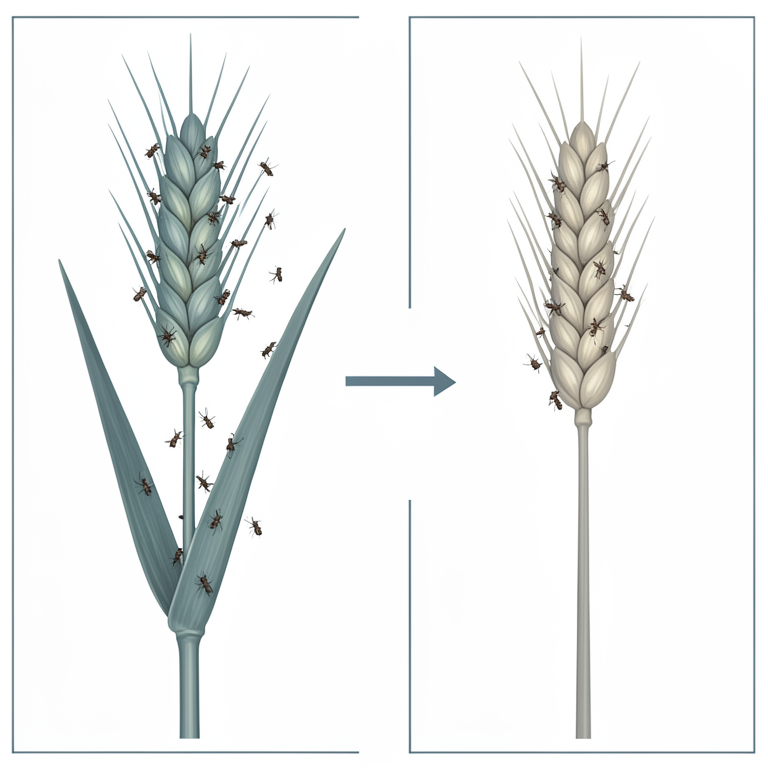
Temporal Population Dynamics
AI-generated conceptual illustration (wheat plants infested with Sitobion avenae aphids). It explains the idea and does not show study data.
View source evidence ↗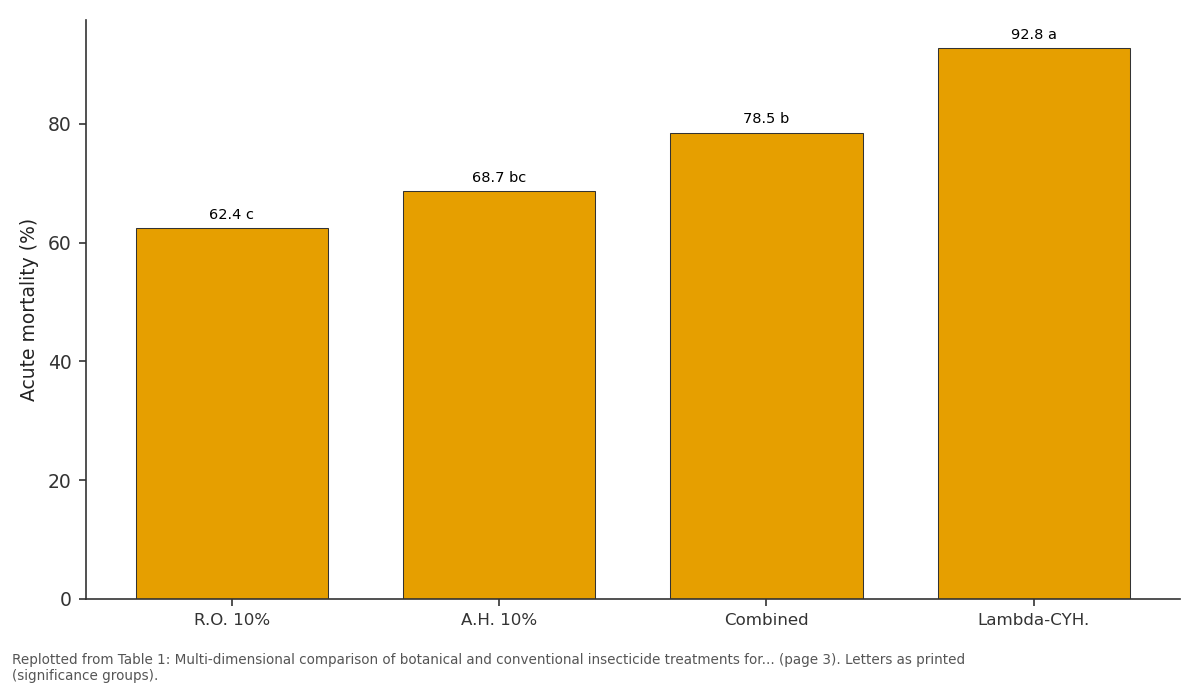
Acute mortality (%): R.O. 10% vs A.H. 10% vs Combined vs Lambda-CYH.
Replotted from Table 1 (page 3) of the original paper. Every bar is the paper's own table value.
View source evidence ↗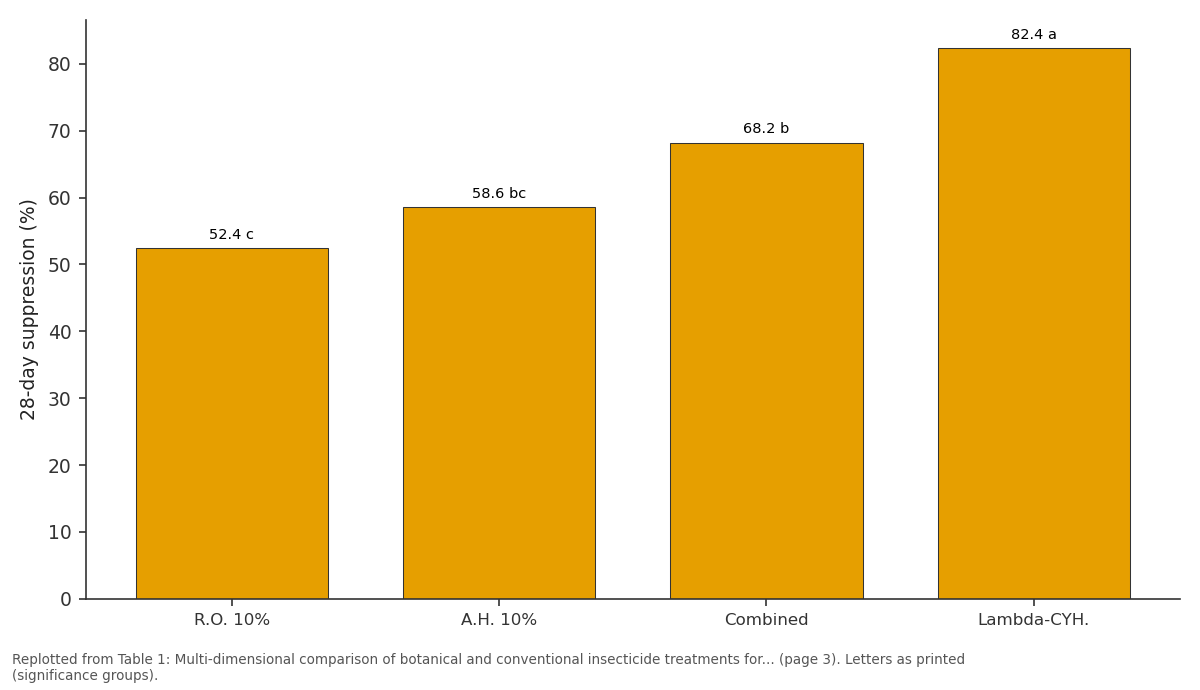
28-day suppression (%): R.O. 10% vs A.H. 10% vs Combined vs Lambda-CYH.
Replotted from Table 1 (page 3) of the original paper. Every bar is the paper's own table value.
View source evidence ↗Figures & tables
From the original paper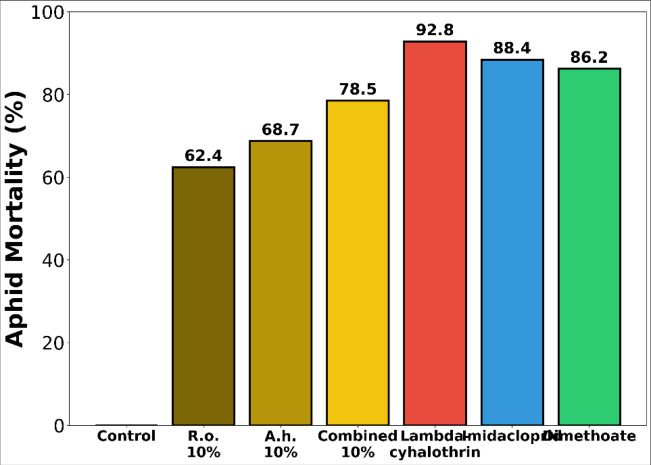 Figure 1
 Table 1
 Table 2
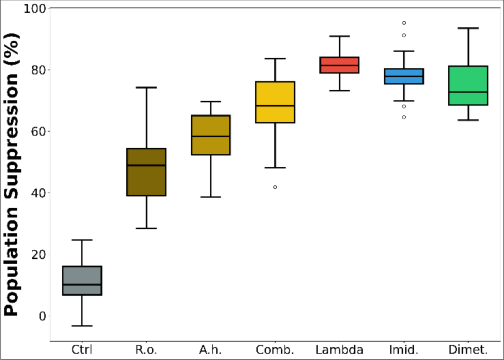 Figure 2
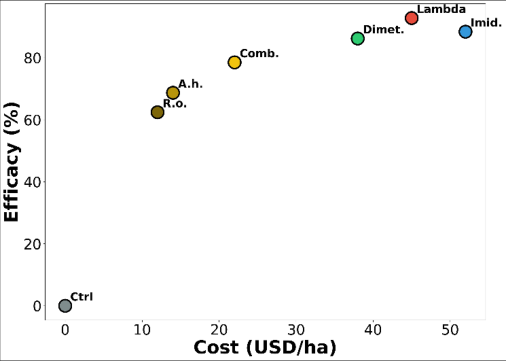 Figure 3
Introduction
Consider a scenario in which smallholder wheat producers must choose between highly effective but environmentally harmful synthetic insecticides and less toxic but potentially less effective botanical alternatives this decision framework captures the central tension in contemporary cereal aphid management [1] . Sitobion avenae Fabricius (Hemiptera: Aphididae) management in Chilean wheat production, which spans approximately 230,000 hectares in the central and south-central zones, has relied predominantly on organophosphate (dimethoate) and pyrethroid (lambda-cyhalothrin) insecticides, with increasing adoption of neonicotinoids (imidacloprid) in recent years [2] . While these synthetic products provide reliable acute mortality exceeding 85%, their environmental externalities including beneficial arthropod disruption, pollinator toxicity, groundwater contamination, and resistance selection have generated growing demand for alternative approaches [3] . Botanical insecticides from aromatic plants such as Rosmarinus officinalis L. and Artemisia herba-alba Asso offer potential solutions, but their adoption is constrained by the perception that they are less effective than synthetic alternatives [4,5] . Direct comparative trials under identical field conditions are essential for providing producers with the quantitative data needed to make informed management decisions, yet such head-to-head evaluations remain remarkably scarce in the published literature [6] . The few existing comparisons typically assess only acute mortality, neglecting the broader management value dimensions of selectivity, residual activity, natural enemy impact, and cost-effectiveness that collectively determine the practical utility of pest management interventions [7] . This research was designed to provide a comprehensive, multi-dimensional comparison of botanical and conventional insecticide approaches for S. avenae management, evaluating not only acute mortality but also 28-day population suppression, natural enemy selectivity, and cost-effectiveness under Chilean wheat production conditions. The objective was to generate an evidence base that enables balanced assessment of the relative merits and limitations of each approach. The limited availability of direct comparative data stems partly from the methodological challenge of designing trials that simultaneously accommodate the different application modes, dose metrics, and assessment timescales appropriate for botanical versus synthetic products [6] . Synthetic insecticides are typically evaluated on the basis of active ingredient concentration per hectare with efficacy assessed at 24-72 hours, while botanical preparations are characterized by crude extract concentration (% w/v) with relevant outcomes extending over weeks of population monitoring. Furthermore, the multi-modal action of botanicals encompassing acute toxicity, repellency, antifeedant effects, and reproductive suppression means that single-timepoint mortality assessments systematically underestimate their management contribution relative to synthetic products that act primarily through rapid neurotoxic killing [5,7] . Chile's central valley wheat production zone, where Mediterranean climate conditions support both aromatic plant cultivation and S. avenae infestation pressure throughout the May-December growing season, provides an ideal setting for such comparative evaluation [2] . The relatively small average holding size (8-20 ha) and limited capital availability of Chilean wheat producers creates particular relevance for cost-effectiveness analyses that may inform practical adoption decisions. The proximity of the Valparaíso production area to diverse natural vegetation additionally makes natural enemy conservation a management priority, as arthropod predator and parasitoid communities provide complementary biological control services that are differentially affected by botanical versus synthetic interventions.
Material and methods
Material and methods
Material
Research was conducted at the Valparaíso University of Biological Sciences experimental farm, Valparaíso, Chile (33°02′S, 71°37′W, 42 m a.s.l.) during the 2023 wheat season. Institutional approval was obtained (ref: VUBS-2023-PB-018). Soft wheat (cv. Kiko-INIA) was sown on a 0.7-ha field. R. officinalis was sourced from cultivated populations in the Valparaíso hills, and A. herba-alba from the university's medicinal plant garden.
Methods
Seven treatments were evaluated: untreated control, R. officinalis 10%, A. herba-alba 10%, combined botanicals 10%, lambda-cyhalothrin (50 g a.i./ha), imidacloprid (70 g a.i./ha), and dimethoate (400 g a.i./ha). All treatments were applied using calibrated knapsack sprayers in a RCBD with four replications (5 × 6 m plots, 2-m buffers). Two applications were made at BBCH 55 and 65. Acute mortality (72-h clip-cage), population suppression (28-day tiller counts), natural enemy density (sweep-net), and treatment costs (material + labor) were recorded. Costeffectiveness was calculated as efficacy/cost ratio. Data analyzed by ANOVA with Tukey's HSD and Kruskal-Wallis tests in R v4.3.2. Synthetic insecticide application rates followed Chilean SAG-recommended field dosages. Lambda-cyhalothrin (Karate Zeon 50 CS) was applied at 100 mL/ha (50 g a.i./ha), imidacloprid (Confidor 350 SC) at 200 mL/ha (70 g a.i./ha), and dimethoate (Perfekthion 400 EC) at 1000 mL/ha (400 g a.i./ha). Botanical extracts were applied at 400 L/ha spray volume using the same knapsack equipment. Natural enemy assessments included sweep-net sampling (20 sweeps per plot, weekly) targeting coccinellids, chrysopids, syrphids, and parasitoid wasps. Selectivity ratios were calculated as the proportional reduction in natural enemy density divided by the proportional reduction in aphid density. Treatment costs included material purchase or preparation costs, labor, and equipment depreciation on a per-hectare basis. Conventional insecticides achieved significantly higher acute mortality than botanical extracts (Figure 1). Lambdacyhalothrin produced the highest mortality (92.8±2.4%), followed by imidacloprid (88.4±3.1%) and dimethoate (86.2±3.6%). Among botanicals, combined extracts achieved 78.5±3.8%, followed by A. herba-alba (68.7±4.2%) and R. officinalis (62.4±4.6%). All treatments were significantly superior to controls (p<0.001). Cost-effectiveness analysis (Table 1, Figure 3) revealed that botanical treatments achieved substantially higher efficacyper-dollar ratios (3.57-5.20) than conventional insecticides (1.70-2.27). The combined botanical treatment occupied the most favorable position in cost-effectiveness space, providing moderate-to-high efficacy (78.5%) at intermediate cost (USD 22/ha). Multi-criteria environmental assessment (Table 2) demonstrated that botanical treatments scored 68% higher in weighted total assessment when environmental safety, natural enemy conservation, and sustainability factors were included alongside acute efficacy.
| Criterion | Weight | Botanical score | Conventional score |
|---|---|---|---|
| Acute efficacy | 0.25 | 3.2/5 | 4.8/5 |
| Environmental safety | 0.20 | 4.8/5 | 1.8/5 |
| Natural enemy conservation | 0.20 | 4.6/5 | 1.4/5 |
| Cost-effectiveness | 0.15 | 4.4/5 | 2.4/5 |
| Residue safety | 0.10 | 5.0/5 | 2.2/5 |
| Resistance risk | 0.10 | 4.8/5 | 2.0/5 |
| Weighted total | 1.00 | 4.24/5 | 2.52/5 |
Table text extracted from the original PDF; superscript letters are shown inline. The original table image is below.
View original table image
| Parameter | R.O. 10% | A.H. 10% | Combined | Lambda-CYH. | Imidacloprid | Dimethoate |
|---|---|---|---|---|---|---|
| Acute mortality (%) | 62.4 c | 68.7 bc | 78.5 b | 92.8 a | 88.4 a | 86.2 a |
| 28-day suppression (%) | 52.4 c | 58.6 bc | 68.2 b | 82.4 a | 78.6 a | 76.8 a |
| Selectivity ratio | 0.18 | 0.24 | 0.32 | 0.91 | 0.82 | 0.72 |
| Natural enemy change (%) | -12 | -18 | -24 | -72 | -65 | -58 |
| Cost (USD/ha) | 12 | 14 | 22 | 45 | 52 | 38 |
| Efficacy/cost ratio | 5.20 | 4.91 | 3.57 | 2.06 | 1.70 | 2.27 |
Table text extracted from the original PDF; superscript letters are shown inline. The original table image is below.
View original table image
Results
Temporal analysis of population dynamics revealed contrasting suppression patterns between treatment categories. Synthetic insecticides produced rapid, nearcomplete population collapse within the first week (88-95% reduction by day 7) but showed evidence of resurgence in three of four replicates by day 28, with populations recovering to 18-28% of pre-treatment levels. Botanical treatments produced more gradual population decline (45-58% reduction by day 7) but maintained sustained suppression through day 28 with minimal resurgence (populations remaining at 32-48% of pre-treatment levels). This differential temporal pattern reflects the combined action of sustained antifeedant effects, residual reproductive suppression, and preserved natural enemy activity in botanical-treated plots versus the rapid but ephemeral killing action of synthetic products followed by natural enemydepleted conditions that facilitate pest recovery. Yield analysis confirmed that all active treatments significantly improved grain production relative to untreated controls (38.4±3.2 q/ha). Conventional insecticides produced yields of 46.2-48.8 q/ha (20.3-27.1% increase), while botanical treatments achieved 42.6-45.4 q/ha (10.9-18.2% increase). The yield differential between treatment categories (3.4-6.2 q/ha favoring synthetics) was statistically significant (p = 0.028) but economically modest when offset against the USD 16-30/ha cost savings of botanical treatments. Break-even analysis indicated that botanical preparations were economically equivalent to synthetic insecticides when wheat prices exceeded USD 240/tonne a threshold consistently surpassed in Chilean markets.
Discussion
The comparative data presented here confirm that botanical aqueous extracts achieve lower acute mortality than conventional synthetic insecticides but offer compensating advantages in selectivity, environmental safety, and costeffectiveness [1,3,4] . The 14.3-30.4 percentage point efficacy gap between botanical and synthetic treatments, while statistically significant, narrows considerably when management outcomes are assessed over 28 days (8.6-24.4 percentage point gap) rather than at 72 hours, reflecting the contribution of botanical sublethal effects (antifeedant activity, reproductive suppression) to sustained population management [5,6] . The selectivity ratios represent perhaps the most consequential difference between botanical and conventional approaches. The 0.18-0.32 selectivity ratios for botanical treatments indicate that natural enemy impact is proportionally 3-5 times lower than for synthetic insecticides (0.72-0.91). This differential has cascading consequences for long-term pest management sustainability, as preserved natural enemy communities provide ongoing biological control services that reduce the need for subsequent interventions [7,8] . Over a multi-season timeframe, the compound benefit of natural enemy conservation may offset the acute efficacy advantage of synthetic products, a hypothesis that merits investigation through long-term comparative field trials. The cost-effectiveness analysis provides particularly compelling evidence for botanical adoption in resourcelimited production contexts. At USD 12-22/ha versus USD 38-52/ha for conventional treatments, botanical preparations require 42-58% lower cash outlay while achieving 67-85% of the acute efficacy of synthetic products [4,9] . For Chilean smallholder wheat producers, who typically manage 5-15 hectare holdings with limited access to credit, this cost advantage may represent the decisive factor in management method selection. The multi-criteria assessment framework presented in Table 2 demonstrates that when the full spectrum of management value dimensions is considered, botanical treatments achieve a 68% higher weighted score than conventional approaches, suggesting that the common perception of botanical inferiority is based on an inappropriately narrow definition of management success. The multi-criteria assessment framework (Table 2), while necessarily involving subjective weighting of criteria, provides a systematic approach to comparing management options that transcends the limitations of single-dimension evaluations. The finding that botanical treatments scored 68% higher in weighted total assessment than conventional insecticides challenges the widespread assumption that synthetic products represent the superior management choice. This reversal in ranking occurs because the criteria omitted from conventional efficacy comparisons environmental safety, natural enemy conservation, resistance risk, residue safety are precisely the dimensions where botanical preparations demonstrate decisive advantages [3,7,16] . As societal valuation of environmental externalities continues to increase and regulatory frameworks increasingly internalize these costs, the economic advantage of botanical preparations is likely to widen further. The resistance management implications of these findings warrant particular attention. Synthetic insecticide resistance in S. avenae populations has been documented across multiple chemical classes in South American wheat systems, driven by the high selection pressure imposed by repeated applications of single modes of action within each growing season [1,10] . Botanical preparations, with their complex mixtures of bioactive compounds targeting multiple physiological systems simultaneously, present substantially lower resistance risk because the probability of concurrent mutations conferring tolerance to all active constituents is extremely small [5,14] . Furthermore, the rapid environmental degradation of botanical compounds reduces the duration of selection pressure per application cycle, allowing susceptible genotypes to recolonize treated areas between applications and maintain population-level susceptibility. This inherent resistance management advantage represents a long-term strategic benefit that is not captured by singleseason efficacy comparisons but may prove decisive for sustainable pest management over decadal timescales. From a regulatory perspective, botanical aqueous preparations based on food-grade plant materials such as rosemary face substantially lower registration barriers than synthetic insecticides in most regulatory jurisdictions, including Chile's Servicio Agrícola y Ganadero framework [2, 15] . This regulatory advantage accelerates market access, reduces compliance costs, and enables on-farm preparation without specialized licensing practical considerations that enhance the attractiveness of botanical approaches for smallholder adoption. The cumulative weight of evidence from this multi-dimensional comparison supports the conclusion that botanical preparations merit serious consideration as primary management tools rather than supplementary alternatives to synthetic insecticides in Chilean wheat production.
Acknowledgement
Acknowledgements F.R. and V.T. designed the research; A.M. conducted chemical analyses; C.R. performed ecological assessments and statistical analysis. Valparaíso University provided experimental facilities. Funded by the Chilean National Research and Development Agency.
Figures and tables from the paper
References
18 in the original paper- Bass C, Puinean AM, Zimmer CT, Denholm I, Field LM, Foster SP, et al. The evolution of insecticide resistance in the peach potato aphid. Insect Biochem Mol Biol. 2014; 51:41-51.
- Quiroz C, Larraín P. Insectos plagas en trigo de primavera en Chile central. Agric Téc. 2004;64(3):249258.
- Desneux N, Decourtye A, Delpuech JM. The sublethal effects of pesticides on beneficial arthropods. Annu Rev Entomol. 2007; 52:81-106.
- Lahfef C, Elimem M, Jaouadi R, Mhamdi N, LimemSellemi E, Lebdi-Grissa K. Managing Sitobion avenae Fabricius (1775) by Rosmarinus officinalis and Artemisia herba-alba aqueous extracts in soft wheat field. Zool Entomol Lett. 2023;3(1):5-12.
- Isman MB. Botanical insecticides, deterrents, and repellents in modern agriculture. Annu Rev Entomol. 2006; 51:45-66.
- Pavela R, Benelli G. Essential oils as ecofriendly biopesticides? Trends Plant Sci. 2016;21(12):10001007.
- Symondson WOC, Sunderland KD, Greenstone MH. Can generalist predators be effective biocontrol agents? Annu Rev Entomol. 2002; 47:561-594.
- Dedryver CA, Le Ralec A, Fabre F. The conflicting relationships between aphids and men. C R Biol. 2010;333(6-7):539-553.
- Amoabeng BW, Gurr GM, Gitau CW, Stevenson PC. Cost-benefit analysis of botanical insecticide use in cabbage. Crop Prot. 2014; 57:71-76.
- Regnault-Roger C, Vincent C, Arnason JT. Essential oils in insect control. Annu Rev Entomol. 2012; 57:405-424.
- Bakkali F, Averbeck S, Averbeck D, Idaomar M. Biological effects of essential oils. Food Chem Toxicol. 2008;46(2):446-475.
- Gonzalez-Coloma A, Reina M, Diaz CE, Fraga BM. Natural product-based biopesticides. In: Liu HW, Mander L, editors. Compr Nat Prod II. Vol. 3. Oxford: Elsevier; 2010. p. 237-268.
- Mohamed AEI, El-Sayed MA, Hegazy ME, Helaly SE, Esmail AM, Mohamed NS. Chemical constituents of Artemisia herba-alba. Rec Nat Prod. 2010;4(1):1-25.
- Campos EVR, Proença PLF, Oliveira JL, Bakshi M, Abhilash PC, Fraceto LF. Use of botanical insecticides for sustainable agriculture. Ecol Indic. 2019; 105:483495.
- Benelli G, Pavela R, Canale A, Mehlhorn H. Tick repellents and acaricides of botanical origin: A green roadmap to control tick-borne diseases? Parasitol Res. 2016;115(7):2545-2560.
- Isman MB, Grieneisen ML. Botanical insecticide research: Many publications, limited useful data. Trends Plant Sci. 2014;19(3):140-145.
- Miresmailli S, Isman MB. Botanical insecticides inspired by plant-herbivore interactions. Trends Plant Sci. 2014;19(1):29-35.
- Koul O, Walia S, Dhaliwal GS. Essential oils as green pesticides. Biopestic Int. 2008;4(1):63-84.