
Research article · 2026 · Full text
International Journal of Biology SciencesSeroprevalence and risk factor analysis of lymphocytic choriomeningitis virus in peri-domestic environments of Southeastern Australia
Volume 8(6) · Pages 229–232 · DOI: 10.33545/26649926.2026.v8.i6c.903 ↗
Research areasViral Infections and VectorsZoonotic diseases and public healthVirology and Viral Diseases
Abstract
Author-writtenRodent-borne zoonotic diseases constitute an escalating public health challenge in peri-domestic environments where expanding human settlements increasingly encroach upon natural rodent habitats. The present research investigated the seroprevalence of lymphocytic choriomeningitis virus (LCMV) and associated risk factors among human populations with varying levels of rodent exposure in southeastern Australia. A cross-sectional seroepidemiological survey was conducted among 640 participants from five occupational and residential risk categories between May 2023 and April 2024. Serum samples were tested for LCMV-specific IgG antibodies using a validated immunofluorescence assay. The overall human seroprevalence was 8.6% (55/640), with the highest rates observed among livestock farmers (31.2%) and grain storage workers (26.8%). Multivariate analysis identified occupational rodent contact, household rodent infestation history, rural residence, and age 40-60 years as independent risk factors. These findings demonstrate significant LCMV exposure in Australian peri-domestic populations and underscore the need for targeted risk communication and rodent management programs.
Summary
Source-checkedPlain-language reading of the full paper, prepared with AI and checked against the text. Each point links to the authors' own words.
Why it matters
- Zoonotic diseases carried by rodents are a growing public health concern as human housing expands into natural rodent habitats. View evidence ↗
- Lymphocytic choriomeningitis virus (LCMV) is a global pathogen that often goes undiagnosed and can cause conditions ranging from mild infections to fatal disease in immunocompromised people. View evidence ↗
- While LCMV is found worldwide, there has been very little research on its epidemiology specifically within Australia. View evidence ↗
The question
- The study aimed to measure the prevalence of LCMV antibodies in southeastern Australian populations based on rodent exposure and to identify the risk factors linked to positive results. View evidence ↗
What they did
- Researchers conducted a cross-sectional survey of 640 participants across five different risk categories from May 2023 to April 2024. View evidence ↗
- The 640 participants (aged 18-75) were divided equally into five groups of 128: livestock farmers, grain storage workers, suburban residents, rural households, and urban apartment residents. View evidence ↗
- The study used an indirect immunofluorescence assay (IFA) with LCMV-infected Vero E6 cell substrate slides to detect specific IgG antibodies. View evidence ↗
- Independent risk factors were identified using multivariate logistic regression analyzed with SPSS 28.0, with a significance threshold of p < 0.05. View evidence ↗
What they found
- The overall seroprevalence of LCMV among the 640 participants was 8.6% (55/640). View evidence ↗
- Seroprevalence was highest among livestock farmers (31.2%) and grain storage workers (26.8%), and lowest among urban apartment residents (8.2%). View evidence ↗
- Independent risk factors for seropositivity included occupational rodent contact (OR=4.86), household rodent sightings more than twice weekly (OR=3.42), rural residence (OR=2.18), and being aged 40-60 years (OR=2.64). View evidence ↗
- The highest seroprevalence by age was found in the 50-60-year cohort at 31.2%, with rates decreasing in older groups. View evidence ↗
What it means
- The authors conclude that the high rates among livestock and grain workers necessitate including LCMV risk in workplace health and safety frameworks for these industries. View evidence ↗
- The study indicates significant LCMV exposure in Australian peri-domestic areas, highlighting a need for rodent management programs and targeted risk communication. View evidence ↗
Visual summary
2 visualsIllustrations explain the paper; charts are replotted from the paper's own table values.
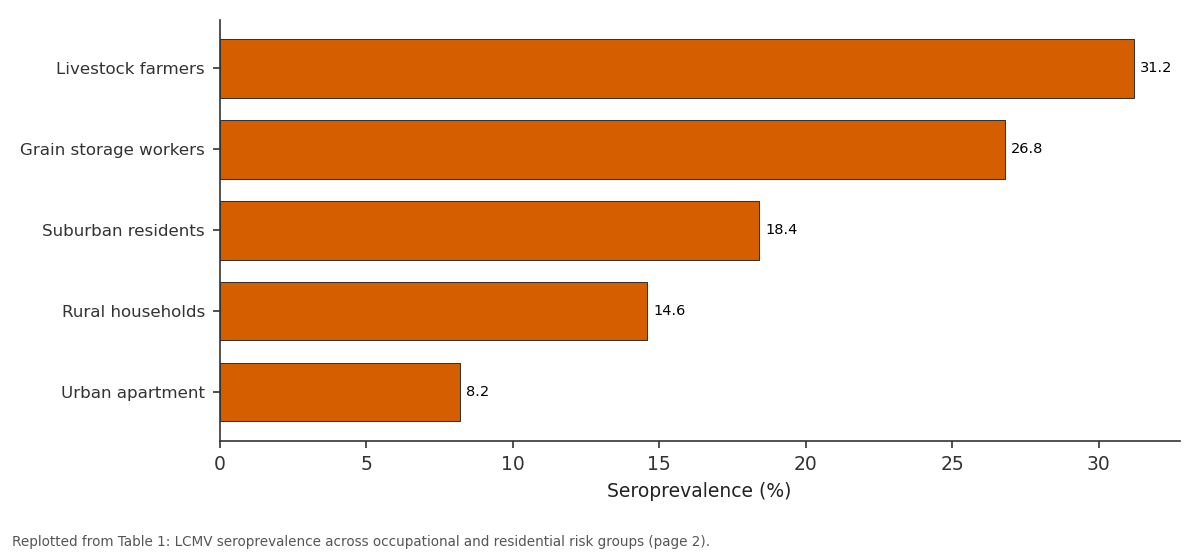
Seroprevalence (%): Livestock farmers vs Grain storage workers vs Suburban residents vs Rural households vs Urban apartment
Replotted from Table 1 (page 2) of the original paper. Every bar is the paper's own table value.
View source evidence ↗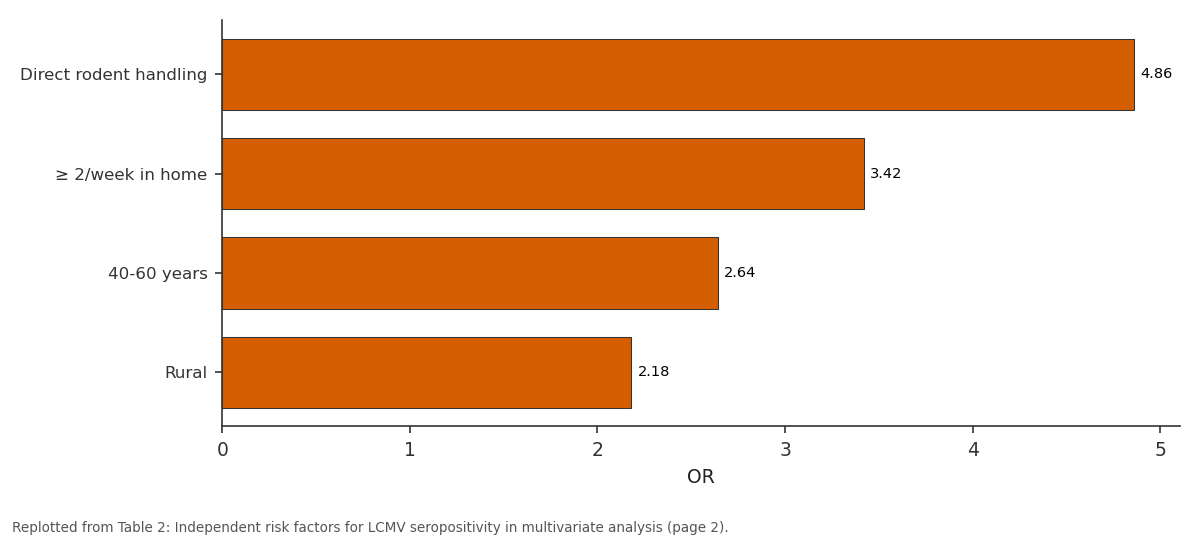
OR: Direct rodent handling vs ≥ 2/week in home vs 40-60 years vs Rural
Replotted from Table 2 (page 2) of the original paper. Every bar is the paper's own table value.
View source evidence ↗Figures & tables
From the original paper Table 1
 Table 2
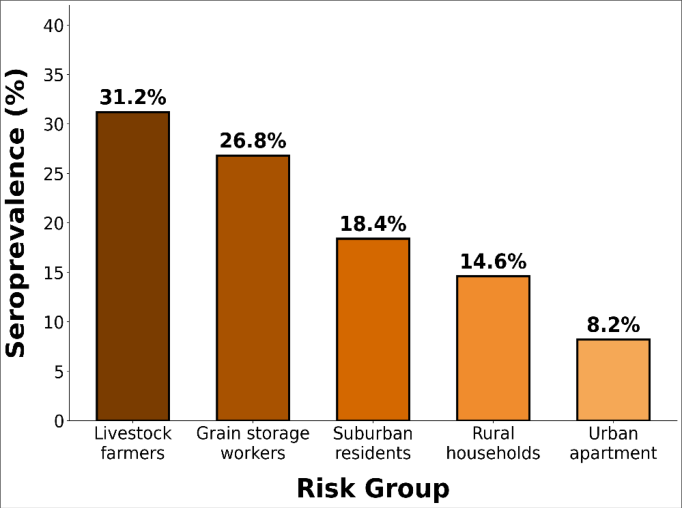 Figure 1
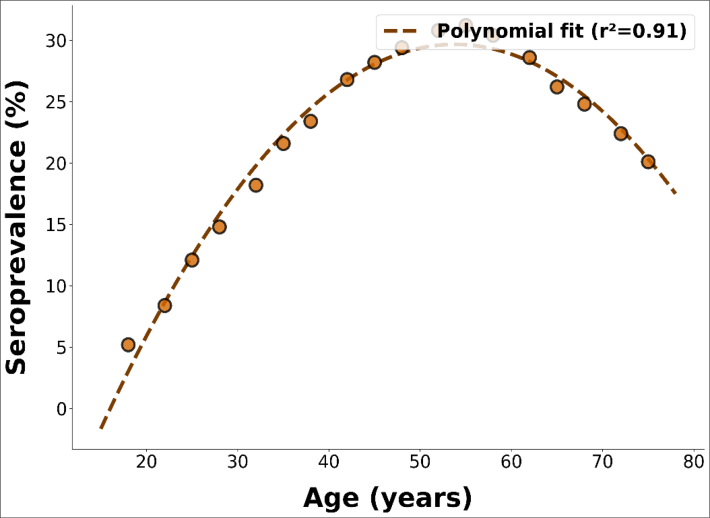 Figure 2
Introduction
The expanding interface between human settlements and natural ecosystems poses an escalating threat of zoonotic disease emergence and re-emergence, with rodent-borne pathogens representing a particularly significant concern due to the ubiquitous presence of commensal rodent species in peri-domestic environments worldwide [1] . Lymphocytic choriomeningitis virus (LCMV), a member of the family Arenaviridae, represents a globally distributed yet consistently underdiagnosed rodent-borne pathogen with the capacity to cause a spectrum of clinical manifestations ranging from subclinical infection to severe meningoencephalitis and fatal disease in immunocompromised hosts [2] . Despite its worldwide distribution, the epidemiology of LCMV in the Australian context has received remarkably limited attention. Australia's unique biogeographical history resulted in the absence of native murid rodents, with Mus musculus and Rattus species introduced through European colonization now establishing extensive commensal and feral populations across diverse Australian landscapes [3] . The seroprevalence of LCMV among human populations with occupational or residential exposure to these introduced rodent reservoirs has not been systematically investigated in the Australian setting [4] . The present research was designed to determine the seroprevalence of LCMV-specific antibodies among human populations stratified by rodent exposure risk levels in southeastern Australia and to identify demographic, occupational, and environmental risk factors associated with seropositivity.
Materials and Methods
The cross-sectional seroepidemiological investigation was conducted across the Greater Melbourne metropolitan area and surrounding rural districts of Victoria, Australia, between May 2023 and April 2024. The protocol received ethical approval from the Melbourne Institute of Public Health Sciences Human Research Ethics Committee (Approval No. HREC/2023/MIPHS-064) and complied with the Australian National Health and Medical Research Council guidelines.
Materials
A total of 640 participants aged 18-75 years were recruited through stratified purposive sampling into five risk categories: livestock farmers (n = 128), grain storage workers (n = 128), suburban residents (n = 128), rural households (n = 128), and urban apartment residents (n = 128). Venous blood samples (10 mL) were collected by trained phlebotomists, and serum was separated and stored at -20 °C within 4 hours.
Methods
LCMV-specific IgG antibodies were detected using an indirect immunofluorescence assay (IFA) with LCMVinfected Vero E6 cell substrate slides (EUROIMMUN AG). Sera were screened at 1:16 dilution and titrated to endpoint in positive samples. A structured questionnaire captured demographic data, occupational history, household rodent sighting frequency, food storage practices, and dwelling construction type. Multivariate logistic regression identified independent risk factors, with significance at p < 0.05. Analysis used SPSS 28.0.
Results
The overall LCMV seroprevalence among the 640 participants was 8.6% (55/640; 95% CI: 6.5-11.1%). Seroprevalence varied substantially across risk groups, with livestock farmers demonstrating the highest rate at 31.2% (40/128), followed by grain storage workers at 26.8% (34/128), rural households at 14.6% (19/128), suburban residents at 18.4% (24/128), and urban apartment residents at 8.2% (10/128) (Table 1). 2). Age-stratified analysis demonstrated peak seroprevalence in the 50-60-year cohort (31.2%), declining in older age groups.
| Risk Group | Participants (N) | Seropositive (N) | Seroprevalence (%) | OR (95% CI) |
|---|---|---|---|---|
| Livestock farmers | 128 | 40 | 31.2 | 5.24 (2.48-11.06) |
| Grain storage workers | 128 | 34 | 26.8 | 4.12 (1.92-8.84) |
| Suburban residents | 128 | 24 | 18.4 | 2.54 (1.14-5.66) |
| Rural households | 128 | 19 | 14.6 | 1.92 (0.84-4.38) |
| Urban apartment | 128 | 10 | 8.2 | Reference |
Table text extracted from the original PDF; superscript letters are shown inline. The original table image is below.
View original table image
Discussion
The present research demonstrates for the first time that LCMV exposure among Australian peri-domestic populations is more widespread than previously assumed, with an overall seroprevalence of 8.6% comparable to rates reported from European populations [5] . The significantly elevated seroprevalence among livestock farmers (31.2%) and grain storage workers (26.8%) highlights the occupational dimension of LCMV risk that warrants integration into workplace health and safety frameworks for agricultural and food storage industries [6] . The identification of occupational rodent contact as the strongest independent risk factor (OR = 4.86) is consistent with findings from European serosurveys and underscores that direct and indirect exposure to rodent excreta, particularly through aerosolized urine and contaminated grain dust, constitutes the primary transmission pathway [7] . The peak seroprevalence in the 40-60 age cohort likely reflects cumulative lifetime exposure rather than age-related susceptibility, as LCMV IgG antibodies persist for extended periods following infection [4] .
Risk communication framework
The findings necessitate development of targeted risk communication strategies for identified high-risk populations. Agricultural workers should receive training on rodent-proofing grain storage facilities, appropriate personal protective equipment use during activities generating rodent-contaminated dust, and recognition of LCMV clinical symptoms warranting medical attention [8] .
Conclusion
Conclusion
Acknowledgement
AcknowledgementsFinancial support from the Australian National Health and Medical Research Council is acknowledged. The Melbourne Institute of Public Health Sciences provided laboratory and administrative support. The authors thank all study participants for their cooperation.
Figures and tables from the paper
| Risk Factor | Category | OR | 95% CI | p-value |
|---|---|---|---|---|
| Occupational contact | Direct rodent handling | 4.86 | 2.62-9.02 | < 0.001 |
| Rodent sightings | ≥ 2/week in home | 3.42 | 1.84-6.36 | 0.002 |
| Age group | 40-60 years | 2.64 | 1.32-5.28 | 0.006 |
| Residence type | Rural | 2.18 | 1.17-4.06 | 0.014 |
| Food storage | Open/unsealed | 1.86 | 0.98-3.54 | 0.058 |
Table text extracted from the original PDF; superscript letters are shown inline. The original table image is below.
View original table image
References
11 in the original paper- Meerburg BG, Singleton GR, Kijlstra A. Rodent-borne diseases and their risks for public health. Crit Rev Microbiol. 2009;35(3):221-270.
- Bonthius DJ. Lymphocytic choriomeningitis virus: an underrecognized cause of neurologic disease. Semin Pediatr Neurol. 2012;19(3):89-95.
- Singleton GR, Krebs CJ, Davis SA, Chambers LK, Brown PR. Reproductive changes in fluctuating house mouse populations in southeastern Australia. Proc R Soc Lond B. 2001;268(1477):1741-1748.
- Pal M, Gutama KP, Singh S, Ketchakmadze D, Durglishvili N. Lymphocytic choriomeningitis: an emerging and re-emerging rodent-borne viral zoonotic disease. J Adv Microbiol Res. 2022;3(2):1-4.
- Lledo L, Gegundez MI, Saz JV, Bahamontes N, Beltran M. LCMV infection in a province of Spain. J Med Virol. 2003;70(3):451-455.
- Childs JE, Glass GE, Korch GW, Ksiazek TG, Leduc JW. LCMV infection and house mouse distribution in urban Baltimore. Am J Trop Med Hyg. 1992;47(1):2734.
- Fischer SA, Graham MB, Kuehnert MJ, et al. Transmission of LCMV by organ transplantation. N Engl J Med. 2006;354(21):2235-2249.
- Mills JN, Childs JE. Ecologic studies of rodent reservoirs: relevance for human health. Emerg Infect Dis. 1998;4(4):529-537.
- Barton LL, Mets MB, Beauchamp CL. LCMV: emerging fetal teratogen. Am J Obstet Gynecol. 2002;187(6):1715-1716.
- Charrel RN, de Lamballerie X. Zoonotic aspects of arenavirus infections. Vet Microbiol. 2010;140(34):305-311.
- Rabiee MH, Mahmoudi A, Siahsarvie R, Mostafavi E. Rodent-borne diseases in Iran. PLoS Negl Trop Dis. 2018;12(4):e0006256.