
Research article · 2026 · Full text
International Journal of Advanced Chemistry ResearchKinetics and mechanistic analysis of nutrient release from biochar-based slow-release fertilizer systems
Volume 8(7) · Pages 19–28 · DOI: 10.33545/26646781.2026.v8.i7a.702 ↗
Research areasPolymer-Based Agricultural EnhancementsPhosphorus and nutrient managementAgricultural Science and Fertilization
Abstract
Author-writtenThe conventional soluble fertilizers are known to dissipate the nutrients almost instantly and therefore a significant amount of the fertilizers goes to waste and is not utilized by the plants very effectively. That is a big problem. In this study, biochar slow-release fertilizers (BC-SRF) that was made of rice husk, paddy straw, or sawdust to retain the nutrients was prepared. It seems to be a smart way of running things in a more efficient way. We tested on such systems and some little kinetic modeling to see how it all works. The nutrient impregnation and precipitation process ensured that the nutrients were absorbed in the biochars and this made it to be controlled. The next test was a batch release water test, in which the releases of nutrients were tracked as a function of time. It was a biphasic pattern (a burst at the Adobe and decreasing release since then) that all the BC-SRF have displayed. In my opinion, preliminary outburst can be hard to resist at all. They tried first-order, Highguchi and Korsmeyer-Peppas models in order to analyse the data. The Higuchi and Korsmeyer-Peppas seemed to have suited all biochar and crops better. It determines the release mechanism of the diffusion across the pores of the biochar to be the predominant release mechanism. Korsmeyer-Peppas had a n value of 0.50-0.62, this implies that the value of diffusion is predominant though there are a couple of exceptions in form of anomalous stuff within the particles as well as on the surface that can turn around. The first order model was just DOIng well in the first part and not the long-sustained release. The different kinetics parameters were due to the different feedstocks and were demonstrating the contribution of the pore structure and surface chemistry to the transportation of nutrients. It is the part that gets a little snarled to explain it all. We even conducted pot experiments on rice plants and plant of chickpea. Overall, this presents reasons why the controlled release is useful in timing nutrients in the most convenient manner to the plants in order to improve its nutrient uptake to the environment. Others will think that it is too early and it seems that it is a good promise.
Summary
Source-checkedPlain-language reading of the full paper, prepared with AI and checked against the text. Each point links to the authors' own words.
Why it matters
- Conventional soluble fertilizers often lead to significant nutrient loss through leaching, runoff, and volatilization, resulting in economic waste and environmental damage. View evidence ↗
- Biochar is a promising material for slow-release fertilizers because its porous structure and surface chemistry allow it to store nutrients via entrapment, electrostatic bonds, and ion exchange. View evidence ↗
- While biochar-based fertilizers are known to reduce waste, the specific mechanisms and controlling factors of their nutrient release are not yet fully understood. View evidence ↗
The question
- The study aims to develop a biochar-based slow-release fertilizer system and use kinetic modeling to analyze how nutrients are released. View evidence ↗
What they did
- Biochars were produced from rice husk, paddy straw, and sawdust via pyrolysis at 500°C for 2 hours. View evidence ↗
- Nutrient release was measured using batch release experiments in deionized water and soil extract, with sampling intervals ranging from 0.5 hours to 21 days. View evidence ↗
- The effectiveness of the fertilizers was tested in pot experiments using rice (Oryza sativa) and chickpea (Cicer arietinum) plants. View evidence ↗
- The researchers applied first-order, Higuchi, and Korsmeyer-Peppas kinetic models to analyze the nutrient release data. View evidence ↗
What they found
- The nutrient loading efficiency varied by feedstock, with paddy straw biochar showing the highest efficiency at 77.6 ± 4.1%, followed by sawdust (74.2 ± 3.8%) and rice husk (69.8 ± 3.5%). View evidence ↗
- All biochar types exhibited a biphasic release pattern, consisting of an initial rapid burst of nutrients followed by a prolonged sustained release phase. View evidence ↗
- Paddy straw biochar provided the longest sustained release, while rice husk biochar reached equilibrium the fastest. View evidence ↗
- The Higuchi and Korsmeyer-Peppas models provided a significantly better fit for the release data than the first-order model across all tested biochar and crop combinations. View evidence ↗
- The release exponent (n) from the Korsmeyer-Peppas model ranged from 0.50 to 0.62, indicating that nutrient transport is primarily driven by diffusion. View evidence ↗
- Paddy straw biochar exhibited release mainly via Fickian diffusion, with n values of 0.53 ± 0.03 for rice and 0.50 ± 0.03 for chickpea. View evidence ↗
- Rice husk and sawdust biochars showed anomalous (non-Fickian) transport, suggesting a combination of diffusion and reversible physicochemical interactions. View evidence ↗
What it means
- The authors conclude that biochar-based fertilizers effectively limit the initial burst release and provide gradual nutrient delivery through physical entrapment and surface interactions. View evidence ↗
- The study suggests that the developed kinetic models are valuable tools for designing biochar fertilizers with specific, desired nutrient release rates. View evidence ↗
- The authors state that future research should apply these release kinetics to real-world soil-plant interactions to better assess nutrient availability and uptake efficacy. View evidence ↗
Visual summary
3 visualsIllustrations explain the paper; charts are replotted from the paper's own table values.
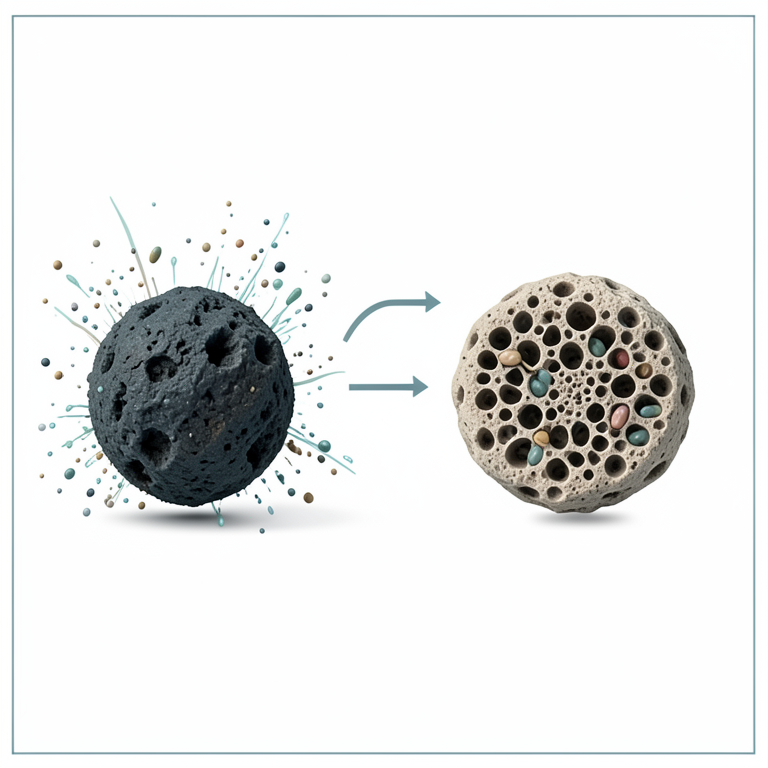
Biphasic Nutrient Release Concept
AI-generated conceptual illustration (biochar particle in water). It explains the idea and does not show study data.
View source evidence ↗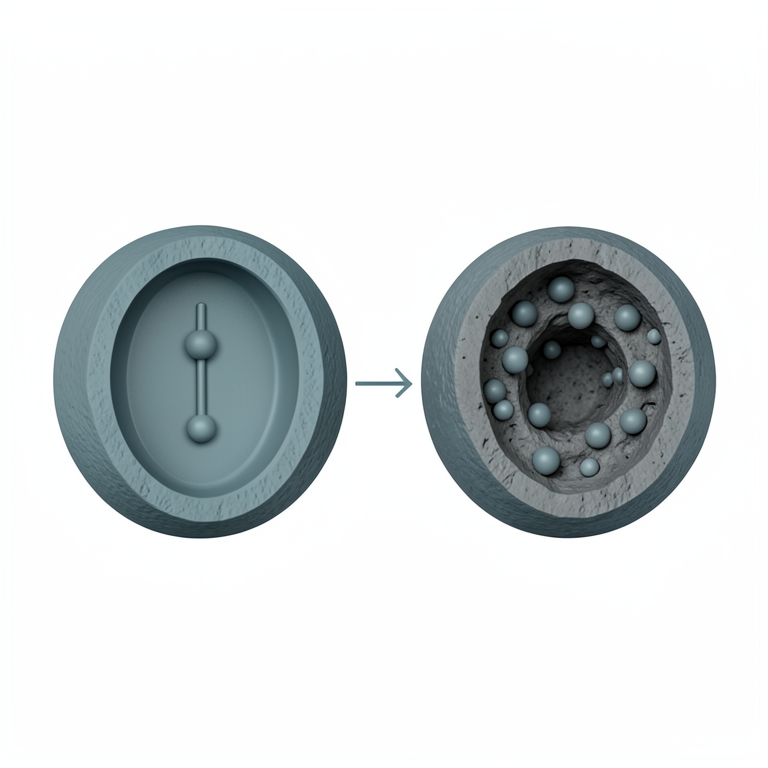
Diffusion vs. Anomalous Transport
AI-generated conceptual illustration (biochar particles with internal pore structures). It explains the idea and does not show study data.
View source evidence ↗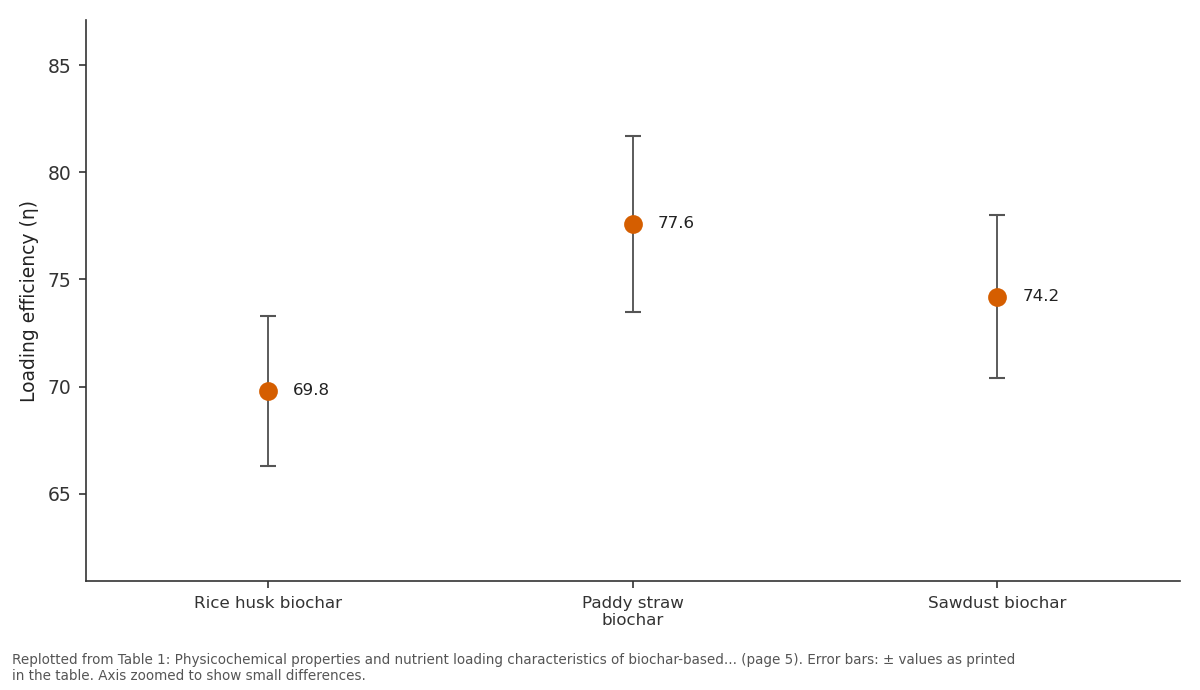
Loading efficiency (η): Rice husk biochar vs Paddy straw biochar vs Sawdust biochar
Replotted from Table 1 (page 5) of the original paper. Every bar is the paper's own table value.
View source evidence ↗Figures & tables
From the original paper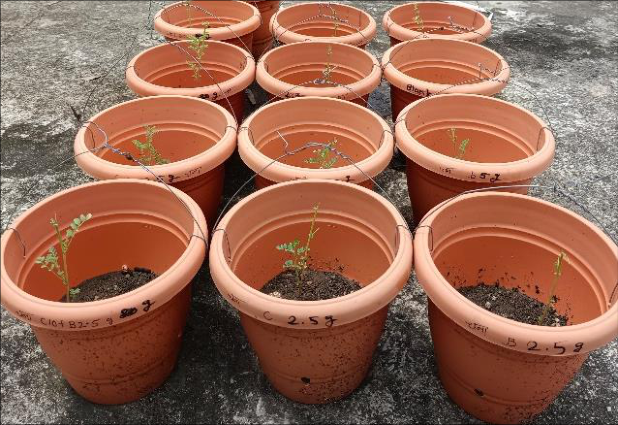 Figure 1
 Table 1
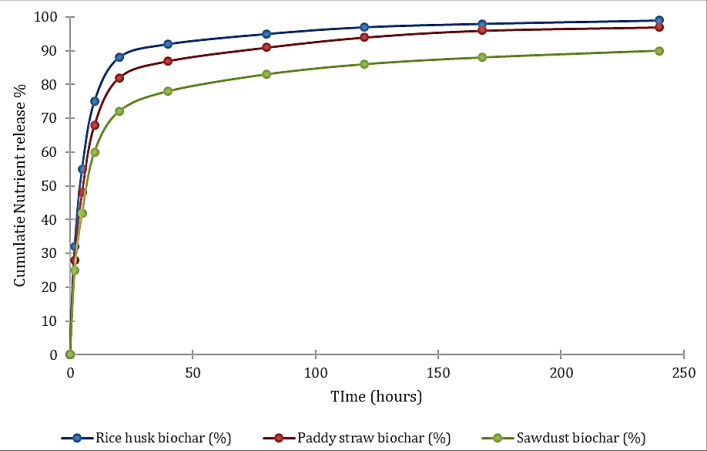 Figure 2
 Table 2
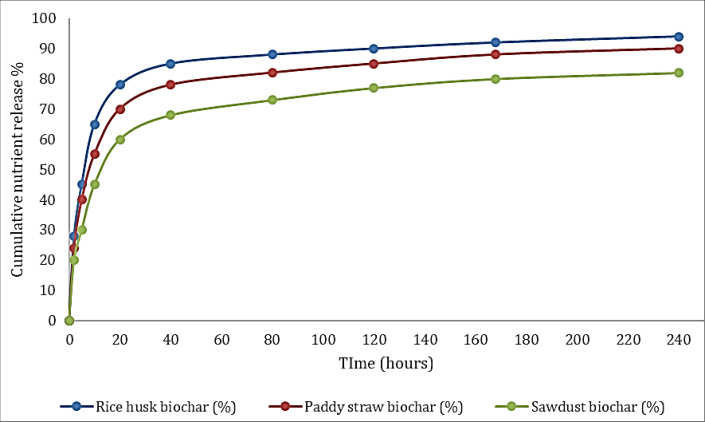 Figure 3
Introduction
Adequate yield of agriculture has proved to be a critical aspect due to the extensive application of conventional forms of soluble fertilizer but, the effectiveness of nutrient utilization of such fertilizers remains a thorny question (Chien et al., 2009; Lehmann and Joseph, 2024) [5,20] . The nitrogen, phosphorus and potassium that have been formed in the soil plant system are lost to a great extent through leaching, runoff, volatilization and fixation (Glaser et al., 2002; Hardie et al., 2015) [8,11] . This is translated to waste of money and bad environmental conditions (Jeffery et al., 2011) [15] . The primary reason of such losses is that the nutrients are easy to dissolve as soon as they are applied (Haydar et al., 2024; Lawrencia et al., 2021) [12,19] . This creates an imbalance in the nutrient supply and the demand of the plant (Azeem et al., 2014; Guo et al., 2015) [3,9] . Despite the new kinds of fertilizers, the uncontrollable release of nutrients is a major issue in the productivity of the agriculture industry, particularly in non-loose soils and intensive agricultural systems (Haydar et al., 2024; Igalavithana et al., 2015) [12,14] . Hence, the necessity to improve the time of nutrient supply has been turned into the priority in the development of fertilizers (Guo et al., 2015; Laird, 2008) [9,18] . The slow-release systems of fertilizer are considered one of the effective methods of reducing the wastage of nutrients (Guo et al., 2015; Laird, 2008) [9,18] .
It is achieved through controlling the rate of leaching of nutrients and retention (Azeem et al., 2014; Han et al., 2009) [3,10] . Among other materials that have been investigated, the biochar material has been given the highest attention (Ahmad et al., 2014) [1] . It is porous, that has a high surface area as well a flexible surface chemistry, and this renders it unique (Zhao et al., 2013). Entrapment in the pores, where they are able to form electrostatic bonds and exchange ions, and even complex on the surface, are some of the ways through which biochar can store nutrients (Chen et al., 2008; Li et al., 2017) [4,21] . Moreover, biochar may be produced with a diverse variety of biomass products and be subjected to any pyrolysis or other treatment to enhance its properties (Simanjuntak et al., 2024; Zhao et al., 2013). All these make biochar a sufficient competitor in the manufacture of slow-acting manure to manage the allocation of nutrient without seven-layered synthetic wrappings. The release mechanisms of nutrients by biochar-based slowrelease fertilizer (BC-SRF) systems are poorly understood despite the fact that multiple researches have confirmed that biochar-based fertilizers can reduce nutrient wastage and enhance nutrient retention in soils (Wang et al., 2023) [31] . Many studies examine the overall tendencies of the nutrient releasing, but they do not adequately research the data on the key controlling factors of releasing and the key modes of transportation (Gao et al., 2019) [7] . Instead of directly measuring the contribution of surface desorption, intraparticle diffusion and ion-exchange processes, we are likely to characterize them by kinetic modeling (Higuchi, 1963; Korsmeyer et al., 1983) [13,16] . Moreover, the various kinetic models are not always congruent with each other in terms of comparison and therefore, there is no easy way of extrapolating across the behaviors of the various types of biochar and nutrient loading strategies regarding release (Ritger and Peppas, 1987) [25] . This is part of the failure of quantitatively designing and optimising BC-SRF systems in agronomic use (Mukherjee and Lal, 2013) [23] . It has to be bridged so a systematic kinetic analysis of biochar features and nutrient release behavior is required to establish predictive relationships between biochar features and characteristics (Higuchi, 1963; Korsmeyer et al., 1983) [13, 16] . Kinetic modeling offers a measurable process of differentiating diffusion controlled, surface controlled and unusual transport (Macdonald, 1977; Peppas and Sahlin, 1989) [22] . This enables one to have a more insightful understanding of experimental release information (Peppas and Sahlin, 1989; Shi et al., 2024) [24,26] . Controlled-release equations are typically considered to be first-order, Higuchi, and Korsmeyer-Peppas equations. They provide the convenient parameters to measure rate of release and process (Costa and Sousa Lobo, 2001; Kumar et al., 2025; Siepmann and Göpferich, 2001; Siepmann and Peppas, 2001) [6,17,27,28] . Their use in BC-SRF systems is however not studied in detail especially how model parameters relate to physical processes of the biochar matrix (Macdonald, 1977) [22] . The aim of the research will be to come up with a biocharbased slow release system of fertilizers and to critically analyze the system behavior, which is the release of nutrients, using kinetic modeling techniques. We designed controlled experiments of batch release that are to produce time-resolved nutrient release. First-order, Higuchi and Korsmeyer-Peppas were then used to analyse these profiles. The main idea of this study consists in the following: biochar-based slow-release fertilizers have their essential nutrients that diffuse under the influence of diffusion as the kinetics of the ion-exchange reactions between the nutrients and the functional groups on the surface of biochar. This investigation will aid in developing a quantitative foundation in order to plan and apply biochar-based fertilizer frameworks to identify the main release mechanisms and attract important kinetic parameters. This will boost the nutrient supply period to satisfy the uptake needs of the plants.
Materials and methods
Materials and methods
Biochar preparation
The biochars produced in the course of research were founded on the three sources of agricultural wastes, such as rice husk, straw, and sawdust. These feedstock was chosen through the fact that they were found in the area and they were used in rice and bean sub-systems. Homogeneity of the biochars was also achieved in the area where the feedstocks were obtained. The feedstocks were dried by air and rinsed manually to remove any impurities and ground and sifted to below 2mm size particle and this will permit the heat to transfer into the thermal treatment process. The pretreatment of the feedstocks by drying in the oven was carried out in an ovary at 105 o C and over 24 hours to dry out all the water that was contained in the feedstock. The pyrolysis experiment was performed in a small laboratory furnace, in low oxygen. The heating rate was maintained at 10 C /minute until the temperature reached 500 C, and maintained at 500 C, so that the entire conversion could occur in 2 hours' time. This was done in the flow of nitrogen gases so as to prevent any oxidation. The furnace was left to cool down to a room temperature under a nitrogen environment after the pyrolysis. We sampled rice husk biochar, paddy straw biochar and sawdust biochar individually. A sieving and crushing of the particles were done to achieve a size between 250-500 µm which would be used in future to carry out nutrient loading and release experiments. We took the step further and treated all the biochar samples slightly in order to capture as many nutrients as possible and make the biochar samples to be reacting to the surface. Our samples of biochar were combined with 0.1 M HCL solution and stirred with it 2 hours. This was done to remove the mineral ash in the biochars so as to be able to access the surface functionalities. We then proceeded with washing the samples with deionized water until the samples were in the neutral pH. They were then dried in the oven at a temperature of 80 o C in a period of 12 hours.
Nutrient loading strategy
To prepare biochars (rice husk biochar, paddy straw biochar and sawdust biochar), impregnation and precipitation of biochar were controlled by manipulating the impregnation process. This approach proved helpful in the distribution of the nutrients in the biochar. The biochars were loaded in the same state to be able to compare the rates in which the nutrients were released. The macronutrients of the various concentrations were then put into the nutrient solution in the aqueous; the aqueous solution was made with the assistance of the analytical grade of reagents and the de-ionized water. Biochar samples were then added to the aqueous nutrient solution one by one and the ratio maintained simultaneously. The diffusion of the nutrient elements in the pore sizes was attempted by stirring the impregnation agent. This impregnation occurred at room temperature and was stirred by continuous agitation at least throughout the period of 24 hours. We also used a low thermal treatment on the obtained biochars after an impregnation process to enhance the retention of nutrients. We also employed loading in few incidences but in precipitation-assisted loading by which precipitation of nutrient species was added by changing pH such that they would precipitate in biochar pore structure. The loaded biochar samples that had been loaded with the nutrient were then isolated by means of the filtration process. Moreover, we dried them in an oven at a temperature of 60 o C until they attained constant weights. We defined the nutrient loading efficiency as the ratio of the original mass of nutrients loading onto the solution and the mass of nutrient that was left in the biochar after loading. The loading efficiency (η,) was calculated using the formula below:
M" loaded" is the mass of nutrient which the biochar holds after loading and M" initial" is the total mass of nutrient which was originally added to the solution. All the nutrient loading was experimented in triplicate and average values were reported to be reproducible and have an experimental reliability.
Release Experiments
The slow-release fertilizer systems made of biochar were tested using the batch release experiments in order to measure their release of nutrients. All experiments were done individually on the nutrient-enriched rice husk biochar, paddy straw biochar and sawdust biochar. In this manner, their release rates were ensured to be compared. The aim of deionized water was primarily to disconnect the natural trends of release of nutrients in the soil with the medium of release. The soap extract solution used in some of the tests was to simulate the ionic strength and chemistry of the agricultural soil of most parts of the world. The extract solution consisting of soil was prepared through mixing of a certain percent of the air-dried soil and the deionized water that was further filtered to remove the soil solids. In both release experiments; pre-prepared quantity of nutrient-status biochar was loaded into glass containers that had been filled with a pre-determined amount of a nutrient release medium. This was maintained at room temperatures and mixed at a constant rate to make sure that it was thoroughly mixed and dispel the resistance to the mass transfer. A set quantity of nutrient release medium was sampled at preset time intervals and an equal quantity of a fresh medium subsidized. The intervals between samples of the first release were minimal (0.5, 1, 2, 4, and 8 hours), and the goal was on the fast discharge of nutrients. The time interval to sustain the release period was fine (1, 3, 7, 14, and 21 days). The 0.45 µm membrane filters were used to filter all the samples. To determine the concentrations of the filtered nutrients; standardized tests that were suitable to each nutrient were used. The nitrogen compounds, phosphorus and potassium levels were determined with the help of the UV-visible spectrophotometry and Inductively Coupled Plasma Optical Emission Spectrometry respectively. The release experiments were optimized under triple release condition conditions of replication, and therefore the total release of each of the types of nutrients could be registered by the calculated concentration.
Kinetic modelling
The evaluation of the nutrient release behaviour of the biochar-based slow-release fertilizer systems was conducted using the use of kinetic models, which are commonly used in explaining the effect of the release mechanisms that control the release behaviour. All kinetic analyses were conducted without considering rice husk biochar, paddy straw biochar and sawdust biochar by using the identical modelling assumptions. The experimental releases were based on the data of fractional nutrient released (M t/M) in which, M t is the total amount of nutrient released in time t and M is the nutrient released in equilibrium (Costa and Sousa Lobo, 2001; Macdonald, 1977) [6,22] . The behaviour of release that was pre-eminently dictated by the surface desorption in the initial release phase in the first stage of release was determined using first-order kinetics (Siepmann and Gopferich, 2001) [27,28] . The model assumes the releasing rate in direct proportionality to the available nutrient content that remains not released and takes the form:
Where 𝑘 1 is the first-order release rate constant (Askarizadeh et al., 2023 [2] ; Siepmann and Göpferich, 2001) [27,28] . The Higuchi model was employed to evaluate diffusioncontrolled nutrient release from the porous biochar matrix (Higuchi, 1963) [13] . This model relates cumulative nutrient release to the square root of time and is given by:
Where 𝑘 𝐻 is the Higuchi diffusion constant (Higuchi, 1963; Macdonald, 1977) [22] .
To further examine the release mechanism, the Korsmeyer-Peppas empirical model was fitted to the experimental data (Korsmeyer et al., 1983; Peppas and Sahlin, 1989) [16,24] :
Where k is the kinetic constant which includes structural properties of the system and n is the release exponent which manifest the dominant transport mechanism. The nonlinear regression analysis was used to obtain model parameters and the coefficient of determination (R 2) was used to assess the goodness of fit (Siepmann and Peppas, 2001) [27,28] . All kinetic tests were done on the basis of averaged experimental data of triplicate release tests.
Pot experiment during growth of rice and chickpea.
A pot experiment was conducted to investigate the growth of plants and their absorption of nutrients through biocharbased slow-release fertilizer systems in controlled situations. The purpose of this experiment was to complement the research which studies the release of nutrients by determining how nutrient-loaded biochar performed in soilplant systems. Air-dried sieved soil was added to the plastic pots in the same quantities. Cereal and legumes Rice (Oryza sativa) and chickpea (Cicer arietinum) were chosen as representatives. Individual crops were cooked in separate pots. There was the addition of nutrient-enriched rice husk biochar, paddy straw biochar, and sawdust biochar at a certain amount per soil. Uncontrolled pots that were not added with biochar were used as control. The pots were sown with seeds planted in them. Natural light was used to grow the seedlings. The pots were randomly placed in order to minimize the positional effects and be exposed equally to the environmental factors. The soil was maintained at approximately field capacity by frequent watering, and no other nutrient releasing fertilizers were applied in the course of the experiment to concentrate on the effect of nutrient release by biochar. The growth of plants was constantly checked during the cultivation process. The seedlings were observed visually in terms of their establishment and initial development. The end of the experiment saw the harvesting of the plants to be evaluated further. Fig. 1 illustrates the pot experiment setup that would be used in determining the growth of rice and chickpea given varying biochar-based fertilizer treatments. developed under controlled conditions in order to assess the nutrient release and plant uptake of biochar-based slowrelease fertilizer regimes. The pots were also patterned in a randomized pattern in order to maintain similar exposure to environmental factors and the degree to which plants respond to the various fertilizer formulations that were made using biochar was monitored to evaluate the agronomic performance of various biochar-based formulations.
Results and discussion
Results and discussion
Loading nutrient characteristics
The nutrient loading analysis was showing that much of the applied nutrients are getting stuck up in the biochar materials. The values of loading efficiency reveal that biochar materials can be used to serve the purpose of trapping the nutrients. The nutrients are trapped by both filling of the pores, adsorption, and ion exchange between the nutrient components and the oxygen-containing functional groups on the surface of the biochar materials.
The biochars that had high nutrient content depicted an appreciable increase of mass compared to the untreated ones, confirming effective incorporation of the nutrients.
The low standard variation between the replicate samples of loading process demonstrates that it was a reproducible process on all the biochar samples. This is essential in the adequate interpretation of the results of nutrient release kinetic models. The positive nutrient load properties of all the three biochars give them a good basis towards controlled-release functionality. These properties will presumably be significant in the regulation of nutrient release during experiment batch release and subsequent kinetic analyses.
Nutrient release profiles
The profiles of cumulative nutrient release of biochar-based slow-release fertilizer systems are illustrated in Fig. 2 and Fig. 3. The experimental replicas and all the types of biochar exhibited a definite biphasic pattern. This trend was characterized by a quick release period and a more prolonged sustained release period. This steadiness in action is a desirable indication of that there is a constant liberation system at play, of which the arrangement of nutrients and the arrangement of the biochar is affected. During the first release phase, much of the total nutrient content was lost during the first few hours of incubation. This burst release is due to the fact that loosely bound nutrients on the outer surface and the more or less nearsurface of biochar dissolve rapidly. The magnitude of the initial burst however varied across the different types of biochar. The initial release of rice husk biochar was higher, possibly because it had more easily released nutrients or those on its surface. Another one, paddy straw biochar, however, exhibited a more moderate initial burst, whereas sawdust biochar exhibited behaviour that was in between.
At the point when the initial release occurred, there was a transition to sustained release stage. This step was characterized by an upward and constant cumulative release of nutrients over an extended duration. The release rate decreased much during this period, and showed a nearlinear, or square-root of time dependence. This implies the controlled movement of the nutrients in the inner pore structure of the biochar. The sustained release rate of paddy straw biochar was the longest of the three biochars, which is due to the large pore volume and loading capacity. Sawdust biochar also demonstrated a steady but a little faster release rate as compared to paddy straw biochar whereas rice husk biochar was able to reach equilibrium at a faster rate. The prolonged liberation phase prevailed in the total liberation duration and significantly contributed to the prolonged provision of nutrients. The cumulative nutrient release of each type of biochar under the experiment reached a stable equilibrium value at the close of the experiment, without any symptoms of abrupt changes in the rate of release. This means that the lowly soluble nutrient fractions were exhausted. Comparison of nutrient release behaviours of rice husk biochar, paddy straw biochar and sawdust biochar in rice plant systems. The differences in the release profiles between biochars are attributed to differences in the pore structure of the biochars and their nutrient binding properties whereas the variation between the rice and chickpea systems are attributed to differences in the rate of nutrient uptake of the crops. Mean standard deviation (n = 3) is represented by error bars.
Kinetic model fitting
The data of experimental nutrient release of rice husk biochar, paddy straw biochar, and sawdust biochar in the rice and chickpea systems were calculated using the firstorder, Higuchi and Korsmeyer-Peppas kinetic model to comprehend the behavior of the nutrient release quantitatively. Table 2 (a& b) summarizes the estimated kinetic parameters and their coefficients of determination. The Higuchi and Korsmeyer-Peppas models were found to have significantly better coefficients of determination compared to the first-order model in all biochar-crop combinations. This shows that they are more indicative of the general release process. The first stage of release was then modelled by the first order process, which consisted of rapid desorption of loosely bound nutrients on the biochar surface. Its predictive accuracy was however lower during the sustained release phase when intermolecular mass transfer restrictions were more relevant. The fact that the experimental data was similar to the Higuchi model may corroborate the assumption that the primary release mechanism depends on diffusion as the diffusion-controlled nutrient transport through the porous biochar matrix. The variability of the Higuchi diffusion constant of the biochars indicates certain changes in the pore structure and nutrient loading. The diffusion constants were lower in paddy straw biochar, as it is in accordance with the longer sustained release manifestation in the release profiles. Conversely, the diffusion constants of rice husk biochar were larger, which means that the nutrient release was faster. The Korsmeyer-Peppas model provided more information with the release exponent (n) taking values between those of Fickian diffusion and anomalous transport characteristics. The husk biochar of rice tended to be higher in terms of n values, meaning more release on the surface. Conversely, the paddy straw biochar n values indicated that the transport was due to diffusion. In both crop systems, sawdust biochar exhibited a behavior that was in between. The repeated experiment of the kinetic parameters of the experiments is a validation of the reliability and repeatability of the biocharbased slow-release fertilizer system. The Higuchi and Korsmeyer-Peppas models were identified as the most suitable to describe the nutrient release of the biochar-based slow-release systems of fertilizers by the goodness-of-fit analysis and their applicability to the mechanisms involved. Mechanistic interpretation of these models was then applied in the following discussion.
| Biochar type | Model | Parameter | Value | Unit | R² |
|---|---|---|---|---|---|
| Rice husk biochar | First-order | k₁ | 0.094 ± 0.006 | h⁻¹ | 0.86 |
| Higuchi | kH | 0.238 ± 0.012 | h⁻¹ᐟ² | 0.95 | |
| Korsmeyer-Peppas | k | 0.171 ± 0.010 | - | 0.96 | |
| n | 0.62 ± 0.04 | - | 0.96 | ||
| Paddy straw biochar | First-order | k₁ | 0.071 ± 0.005 | h⁻¹ | 0.84 |
Table text extracted from the original PDF; superscript letters are shown inline. The original table image is below.
View original table image
Mechanistic interpretation
The dominant nutrient release mechanisms which were observed to prevail in the biochar-based slow-release fertilizer systems were explained using the release exponent (n) obtained through the Korsmeyer-Peppas model. The estimated n values (see Table 2, a and b) were found to be between 0.50-0.62 in all the biochar-crop combinations and allowed the classification of nutrient transport behavior into a definite mechanistic group.
In systems with n values near the lower range of this range (n 0.5053), as was the case with paddy straw biochar in both rice (n = 0.53 + 0.03) and chickpea (n = 0.50 + 0.03) systems, release was mainly via Fickian diffusion. The nutrient transportation is mainly regulated in this regime via the concentration-gradient-based diffusion due to the connectedness of a pore network of a biochar matrix. The biochar framework then works as a passive diffusion barrier and resistance to intraparticle diffusion prevails over the reaction kinetics of the surface. This is similar to the high level of agreement observed with the Higuchi model whereby the pore-controlled diffusion is the driving force of nutrient release in the sustained release phase. Conversely, the biochar of higher n (n 0.57, 0.62) such as rice husk biochar (n=0.62 + 0.04 to rice; n=0.55 + 0.04 to chickpea) and sawdust biochar (n=0.57 + 0.04 to rice; 0.55 + 0.04 to chickpea) are in the anomalous (non-Fickian) transport region. These values imply that there are many processes governing the release with the movement of nutrients depending on a combination of intraparticle diffusion and reversible physicochemical interactions. Such interactions consist of adsorption and desorption, exchange ion with surface functional groups, and weak complexation with surfaces. The factors may temporarily decelerate the nutrient flow and induce outliers of the behavior that would be determined by ideal diffusion. The variations in n values of biochar type exhibit differences in nutrient-biochar interaction because of pore structure, surface chemistry and positioning of nutrients in the matrix which are feedstock specific. Loosely attached nutrients on the external surfaces or shallow pores are also associated with a high release at the early stages and high n values. Conversely, those nutrients that are deeper in the pore network or more strongly attached to surface functional groups demonstrate slower behavior of transport and diffusion dominated behavior.
Comprehensively, the mechanistic description on the basis of the Korsmeyer-Peppas release exponent (n = 0.50, 0.62) provides a good framework on the description of diffusiondominated and mixed transport behavior in biochar-based fertilizer systems. This quantitative meaning relates structural characteristics of biochar and outer chemistry to that of nutrient release efficiency, relying on the efficient creation of controlled-release fertilizer patterns and the advancement of such molecules.
Discussion 4.1 Dominant release mechanism
According to the kinetic study, the diffusion process and subsequent surface interaction is the primary control of release of the nutrients of the biochar release fertilizer (Higuchi, 1963; Korsmeyer et al., 1983; Siepmann and Peppas, 2001) [13,16,28] . This is demonstrated by the fact that Higuchi and Korsmeyer-Peppas equations fits better than the first-order equation particularly at the slow-release stage (Costa & Sousa Lobo, 2001; Siepmann and Goeferich, 2001) [6,28] . This two-phase release, corresponding to the initial burst and the slower release, is an indicator of change in the release of nutrients on the surface to the release by diffusion into the bulk biochar (Peppas and Sahlin, 1989; Ritger and Peppas, 1987) [25] . The predominant mechanisms of diffusion are largely because biochar has a porous nature (Lehmann and Joseph, 2024; Zhao et al., 2013) [20] . The biochar has a porous structure comprising of micro-and mesoporous network that is tortuous in character thereby regulating the diffusion of nutrients to its surrounding environment (Higuchi, 1963; Macdonald, 1977) [13,22] . Once the surface-bound nutrients are exhausted in the early release stage, the rate-limiting step is intraparticle diffusion producing an invariant process of release. This is with the square-root-of-time dependence proposed by Higuchi model and diffusion-dominated weakly anomalous transport processes as suggested by the Korsmeyer-Peppas analysis (Ritger and Peppas, 1987) [25] .
Once surface-bound nutrients are exhausted during the early release stage, intraparticle diffusion occurs as the rate controlling step, thus leading to a constant release rate. This is consistent with square-root-of-time dependence of the Higuchi model and the diffusion-dominated weakly anomalous transport processes, as is indicated with the Korsmeyer-Peppas analysis (Higuchi, 1963; Korsmeyer et al., 1983) [13] .
In addition to the physical transport diffusion resistance, the rates of the nutrient release are also regulated by the surface chemistry of biochar. The functionality groups containing oxygen, including the carboxyl and hydroxyl groups, may develop an electrostatic interaction or reversible complex with nutrient ions (Mukherjee and Lal, 2013) [23] . These forces transiently block the nutrients on the pore surface thereby slowing their dissolution in the release medium (Peppas and Sahlin, 1989) [24] . Consequently, diffusion combined with reversible surface interactions can be used to explain the process of nutrient transport hence explaining the mixed transport properties of selected biochar systems (Peppas and Sahlin, 1989; Siepmann and Peppas, 2001) [24,27,28] . The degree of release diffusion controlled versus surface-controlled will depend upon the distribution of nutrients in the biochar matrix (Zhao et al., 2013). The contribution of those in the outer surfaces or shallow pores is disproportionate to the initial burst and those in the deeper parts of the pore matrix have longer diffusion distances and more surface interactions and release later (Macdonald, 1977) [22] . This distribution is the cause of the biphasic release pattern and the effectiveness of biochar as an organized system to control the release of nutrients (Guo et al., 2015; Ritger and Peppas, 1987) [9,25] . The comparison between the proposed solution and the conventional slow-release fertilizers is provided as well.
The nutrient release behavior of the fertilizer system that is dependent on biochar as tested in the given study demonstrates a well-regulated release of nutrients (as compared to the conventional slow release fertilizers (SRFs) into the soil) (Azeem et al., 2014; Lawrencia et al., 2021) [3,19] . Traditional SRFs, particularly those made of soluble salts or fine layers of polymer, are more likely to release the nutrients at a higher rate during the initial days in case of application thus exhibiting sharp rise in the availability of nutrients (Azeem et al., 2014) [3] ] . The biochar-based fertilizer system had a relatively lower rate of release of nutrients and the release was sustained over a longer period as shown by the kinetic model analysis (Higuchi, 1963; Korsmeyer et al., 1983) [16] . A significant decrease in the initial burst release is also among the key advantages of the biochar-based formulation (Haydar et al., 2024; Lawrencia et al., 2021) [12,19] . The standard SRFs tend to leech a large volume of nutrient material at their first encounter with water making their application inefficient leading to better leaching losses of nutrients (Azeem et al., 2014) [3] . The burst release in current configuration was limited and most of the nutrients were released gradually. This is due to physical entrapment of nutrients in the biochar pore structure and nutrient interaction with the surface functional groups, which limit the fast dissolution of nutrients. This usually leads to the ineffective utilization and loss of nutrients due to leaching (Chien et al., 2009; Hardie et al., 2015) [5,11] .
The biochar based fertilizer has an extended release phase meaning that the nutrients are bound in the carrier matrix because the release is slower than conventional SRF (Guo et al., 2015; Lawrencia et al., 2021) [9,19] . This extended retention is especially useful in the extended nutrient provision, hence, removing the necessity to apply fertilizers on a regular basis (Jeffery et al., 2011; Laird, 2008) [15,18] . The transport process controlled by diffusion which can be seen in this paper proves the possibility of biochar in a reservoir of nutrients capable of supplying controlled nutrient release (Higuchi, 1963; Peppas and Sahlin, 1989) [13, 24] .
Farming and environmental consequences.
The biochemical characteristics of biochar-based fertilizer system influence nutrient management of soils in agriculture directly by controlling the release of nutrients of the soil. The systems assist in regulating the speed through which nutrients are discharged into the soil solution. This is relevant in the early and middle stage of plant growth as a constant and balanced supply of nutrients is significant to ensure equal growth and avoid nutrient deficiency or toxicity. Use of the nutrients is also enhanced by the systems. The gradual nature of the nutrients release helps to make the nutrient to have enhanced time in the root zone where the plant has a higher likelihood of using it before it is lost. This is critical in the areas where the irrigation or occurrence of rainfall is erratic, and the water-soluble fertilizers are bound to be washed away. Thus, biocharfertilizers in slow mode are capable of providing an equivalent or even better supply of nutrients to crops without requiring higher application rates. Environmentally, the release of nutrients can be controlled to avoid losses of nutrients out of the root zone. The rapid dissipation of the nutrient may lead to leaching loss particularly in the mobile nutrient like nitrate. Low concentration gradient, which drives the nutrients down, can be minimized by the slow release of the nutrients, which may lead to minimal effects of contamination of groundwater and surface water. This is especially significant in light soils that are unable to retain nutrients in large capacity.
Overall, the application of biochar slow-release fertilizers is an efficient solution in enhancing the efficiency of the nutrient delivery with minimum negative effects on the environment. Such systems are associated with the necessity to align the availability of nutrients with agricultural demands and reduce their loss with the aim of supporting sustainable practices in nutrient management. Their findings also validate the earlier outcomes regarding the application of the controlled-release fertilizers and biochar amendments in enhancing the nutrient use efficiency and reducing environmental losses (Guo et al., 2015; Jeffery et al., 2011; Lawrencia et al., 2021) [9,15,19] .
Conclusions
It has been shown in this work that in the biochar-based slow-release fertilizer systems, diffusion of nutrients takes place not only through diffusion-regulated transport processes, but also through interaction with the surface. We applied the first-order, Higuchi and Korsmeyer-peppas models to investigate the properties of nutrient release during the initial burst and slow release areas. Of them, Higuchi and Korsmeyer-Peppas models were more descriptive of data on nutrient release. The kinetic results of this experiment would make sense in explaining and modeling the N-releasing process of biocharfertilizer systems. The results indicate that the N-releasing rate can be controlled by the nature of biochar, and, therefore, the developed kinetic model is a valuable instrument in designing and developing N-releasing biocharfertilizers with the desired N-releasing rate. Future research can explore the use of release kinetics to the system of soil-plant interaction to enhance the assessment of nutrient availability, nutrient uptake efficacy, and efficacy in the realistic agricultural environment. This will apply to the use of results of kinetics studies that are conducted in the laboratory scale.
Figures and tables from the paper
| Parameter | Unit | Rice husk biochar | Paddy straw biochar | Sawdust biochar |
|---|---|---|---|---|
| Specific surface area | m² g⁻¹ | 298.6 ± 7.9 | 325.1 ± 9.2 | 313.5 ± 8.4 |
| Total pore volume | cm³ g⁻¹ | 0.39 ± 0.03 | 0.45 ± 0.04 | 0.41 ± 0.03 |
| Average pore diameter | nm | 5.1 ± 0.5 | 5.8 ± 0.6 | 5.4 ± 0.6 |
| Nutrient loading | mg g⁻¹ | 64.2 ± 3.8 | 72.6 ± 4.3 | 68.5 ± 4.1 |
| Loading efficiency (η) | % | 69.8 ± 3.5 | 77.6 ± 4.1 | 74.2 ± 3.8 |
Table text extracted from the original PDF; superscript letters are shown inline. The original table image is below.
View original table image
References
32 in the original paper- Ahmad M, Rajapaksha AU, Lim JE, Zhang M, Bolan N, Mohan D, Vithanage M, Lee SS, Ok YS. Biochar as a sorbent for contaminant management in soil and water: A review. Chemosphere. 2014; 99:19-33. DOI:10.1016/j.chemosphere.2013.10.071.
- Askarizadeh M, Esfandiari N, Honarvar B, Sajadian SA, Azdarpour A. Kinetic modeling to explain the release of medicine from drug delivery systems. ChemBioEng Reviews. 2023; 10:1006-1049. DOI:10.1002/cben.202300027.
- Azeem B, Kushaari K, Man ZB, Basit A, Thanh TH. Review on materials and methods to produce controlled-release coated urea fertilizer. Journal of Controlled Release. 2014; 181:11-21. DOI:10.1016/j.jconrel.2014.02.020.
- Chen B, Zhou D, Zhu L. Transitional adsorption and partition of nonpolar and polar aromatic contaminants by biochars of pine needles with different pyrolytic temperatures. Environmental Science & Technology. 2008; 42:5137-5143. DOI:10.1021/es8002684.
- Chien SH, Prochnow LI, Cantarella H. Recent developments of fertilizer production and use to improve nutrient efficiency and minimize environmental impacts. In: Sparks DL, editor. Advances in Agronomy. Vol. 102. San Diego (CA): Academic Press; 2009. p. 267-322. DOI:10.1016/S0065-2113(09)01008-6.
- Costa P, Sousa Lobo JM. Modeling and comparison of dissolution profiles. European Journal of Pharmaceutical Sciences. 2001; 13:123-133. DOI:10.1016/S0928-0987(01)00095-1.
- Gao S, DeLuca TH, Cleveland CC. Biochar additions alter phosphorus and nitrogen availability in agricultural ecosystems: A meta-analysis. Science of the Total Environment. 2019; 654:463-472. DOI:10.1016/j.scitotenv.2018.11.124.
- Glaser B, Lehmann J, Zech W. Ameliorating physical and chemical properties of highly weathered soils in the tropics with charcoal: A review. Biology and Fertility of Soils. 2002; 35:219-230. DOI:10.1007/S00374-002-0466-4.
- Guo M, He Z, Uchimiya SM, editors. Agricultural and Environmental Applications of Biochar: Advances and Barriers. Madison (WI): Soil Science Society of America; 2015.
- Han X, Chen S, Hu X. Controlled-release fertilizer encapsulated by starch/polyvinyl alcohol coating. Desalination. 2009; 240:21-26. DOI:10.1016/j.desal.2008.01.047.
- Hardie MA, Oliver G, Clothier BE, Bound SA, Green SA, Close DC. Effect of biochar on nutrient leaching in a young apple orchard. Journal of Environmental Quality. 2015; 44:1273-1282. DOI:10.2134/jeq2015.02.0068.
- Haydar MS, Ghosh D, Roy S. Slow and controlled release nanofertilizers as an efficient tool for sustainable agriculture: Recent understanding and concerns. Plant Nano Biology. 2024; 7:100058. DOI:10.1016/j.plana.2024.100058.
- Higuchi T. Mechanism of sustained-action medication. Theoretical analysis of rate of release of solid drugs dispersed in solid matrices. Journal of Pharmaceutical Sciences. 1963; 52:1145-1149. DOI:10.1002/jps.2600521210.
- Igalavithana AD, Ok YS, Usman ARA, Al-Wabel MI, Oleszczuk P, Lee SS. The effects of biochar amendment on soil fertility. In: Guo M, He Z, Uchimiya SM, editors. Agricultural and Environmental Applications of Biochar: Advances and Barriers. Madison (WI): Soil Science Society of America; 2015. p. 123-144. DOI:10.2136/sssaspecpub63.2014.0040.
- Jeffery S, Verheijen FGA, van der Velde M, Bastos AC. A quantitative review of the effects of biochar application to soils on crop productivity using metaanalysis. Agriculture, Ecosystems & Environment. 2011; 144:175-187. DOI:10.1016/j.agee.2011.08.015.
- Korsmeyer RW, Gurny R, Doelker E, Buri P, Peppas NA. Mechanisms of solute release from porous hydrophilic polymers. International Journal of Pharmaceutics. 1983; 15:25-35. DOI:10.1016/0378-5173(83)90064-9.
- Kumar R, Rahman A, Lamba J, Adhikari S, Torbert HA. Harnessing biochar for nitrate removal from contaminated soil and water environments: Economic implications, practical feasibility, and future perspectives. Biochar. 2025; 7:94. DOI:10.1007/S42773-025-00486-8.
- Laird DA. The charcoal vision: A win-win-win scenario for simultaneously producing bioenergy, permanently sequestering carbon, while improving soil and water quality. Agronomy Journal. 2008; 100:178-181. DOI:10.2134/agronj2007.0161.
- Lawrencia D, Wong SK, Low DYS, Goh BH, Goh JK, Ruktanonchai UR, Soottitantawat A, Lee LH, Tang SY. Controlled release fertilizers: A review on coating materials and mechanism of release. Plants. 2021; 10:238. DOI:10.3390/plants10020238.
- Lehmann J, Joseph S, editors. Biochar for Environmental Management: Science, Technology and Implementation. London: Routledge; 2024.
- Li H, Dong X, da Silva EB, de Oliveira LM, Chen Y, Ma LQ. Mechanisms of metal sorption by biochars: Biochar characteristics and modifications. Chemosphere. 2017; 178:466-478. DOI:10.1016/j.chemosphere.2017.03.072.
- Macdonald DD. The mathematics of diffusion. In: Gerischer H, Tobias CW, editors. Transient Techniques in Electrochemistry. New York (NY): Springer; 1977. p. 47-67. DOI:10.1007/978-1-4613-4145-1_3.
- Mukherjee A, Lal R. Biochar impacts on soil physical properties and greenhouse gas emissions. Agronomy. 2013; 3:313-339. DOI:10.3390/agronomy3020313.
- Peppas NA, Sahlin JJ. A simple equation for the description of solute release. III. Coupling of diffusion and relaxation. International Journal of Pharmaceutics. 1989; 57:169-172. DOI:10.1016/0378-5173(89)903062.
- Ritger PL, Peppas NA. A simple equation for description of solute release. I. Fickian and non-Fickian release from non-swellable devices in the form of slabs, spheres, cylinders or discs. Journal of Controlled Release. 1987; 5:23-36. DOI:10.1016/0168-3659(87)90034-4.
- Shi G, Hou R, Li T, Fu Q, Chen Q, Xue P, Yang X. Effects of biochar on the transformation and utilization of nitrogen fertilizer in the black soil region of Northeast China. Science of the Total Environment. 2024; 953:176218. DOI:10.1016/j.scitotenv.2024.176218.
- Siepmann J, Göpferich A. Mathematical modeling of bioerodible, polymeric drug delivery systems. Advanced Drug Delivery Reviews. 2001; 48:229-247. DOI:10.1016/S0169-409X (01)00116-8.
- Siepmann J, Peppas NA. Modeling of drug release from delivery systems based on hydroxypropyl methylcellulose (HPMC). Advanced Drug Delivery Reviews. 2001; 48:139-157. DOI:10.1016/S0169-409X (01)00112-0.
- Simanjuntak JP, Abdul Aziz MS, Zainon MZ. Biochar production and characterization from pebble-sized feedstock coconut shells as an alternative solid fuel. Ecological Engineering & Environmental Technology. 2024; 25:251-259. DOI:10.12912/27197050/192618.
- Tusar HM, Uddin MK, Mia S, Suhi AA, Wahid SBA, Kasim S, Sairi NA, Alam Z, Anwar F. Biochar-acid soil interactions A review. Sustainability. 2023; 15:13366. DOI:10.3390/su151813366.
- Wang K, Hou J, Zhang S, Hu W, Yi G, Chen W, Cheng L, Zhang Q. Preparation of a new biochar-based microbial fertilizer: Nutrient release patterns and synergistic mechanisms to improve soil fertility. Science of the Total Environment. 2023; 860:160478. DOI:10.1016/j.scitotenv.2022.160478.
- Zhao L, Cao X, Mašek O, Zimmerman A. Heterogeneity of biochar properties as a function of feedstock sources and production temperatures. Journal of Hazardous Materials. 2013;256-257:1-9. DOI:10.1016/j.jhazmat.2013.04.015.