
Research article · 2026 · Full text
International Journal of Agriculture and NutritionEvaluation of biofertilizers and organic manures on yield and protein content of chickpea
Volume 8(1) · Pages 97–101 · DOI: 10.33545/26646064.2026.v8.i1b.674 ↗
Research areasAgricultural Science and FertilizationAgriculture, Plant Science, Crop ManagementLegume Nitrogen Fixing Symbiosis
Abstract
Author-writtenGrowers often treat Rhizobium inoculation as an afterthought rather than a central input decision for chickpea, despite the crop's well-documented dependence on effective nodulation for both yield and grain quality. A field research over two consecutive seasons at Enugu compared five nutrient management combinations, an untreated control, Rhizobium inoculation alone, phosphate-solubilizing bacteria (PSB) alone, farmyard manure alone, and a combined package of Rhizobium, PSB, and vermicompost, on nodulation, seed yield, and seed protein content of chickpea. The combined Rhizobium-PSB-vermicompost treatment produced the highest seed yield at 1642 kg per hectare, a gain of 58% over the control, alongside the highest seed protein content at 22.9%, roughly 5.1 percentage points above the control. Nodule number and nodule dry weight followed a broadly similar ranking, though PSB alone underperformed relative to Rhizobium alone on nodulation-related parameters despite showing a comparable yield response, pointing to phosphorus availability acting through a pathway separate from nodulation itself. Correlation analysis linked nodule dry weight most strongly to seed protein content among the parameters tested, ahead of seed yield, which supports treating nodulation quality as a leading indicator of nutritional outcome rather than only a yield predictor. These findings support combined microbial-organic nutrient management as a practical strategy for raising both the tonnage and the nutritional value of chickpea grown on nutrient-limited soils typical of this region.
Summary
Source-checkedPlain-language reading of the full paper, prepared with AI and checked against the text. Each point links to the authors' own words.
Why it matters
- Chickpea is a highly valued grain legume because it provides essential protein for human diets and improves soil nitrogen for subsequent crops. View evidence ↗
- The process of nitrogen fixation in chickpeas is energy-intensive and depends heavily on the availability of phosphorus for proper nodule function. View evidence ↗
- Organic amendments like vermicompost and farmyard manure provide slow-release nutrients and support the soil microbial communities that biofertilizers rely on. View evidence ↗
The question
- The study aimed to compare the effects of individual biofertilizers (Rhizobium, PSB), farmyard manure, and a combined package on chickpea nodulation, yield, and protein content. View evidence ↗
- The researchers also sought to identify which parameter, nodule number, nodule dry weight, or seed yield, best predicts the final seed protein content. View evidence ↗
What they did
- The experiment took place at the Enugu Institute of Agricultural Sciences in Nigeria over two consecutive dry seasons from November 2023 to February 2025. View evidence ↗
- The study used sandy clay loam Alfisols characterized by a pH of 6.3 and low available phosphorus (8.4 mg per kg). View evidence ↗
- The study used a randomized block design with four replications across five treatments: a control, Rhizobium alone, PSB alone, farmyard manure (5 t/ha), and a combined package (Rhizobium, PSB, and 2.5 t/ha vermicompost). View evidence ↗
- Nodulation parameters were measured 45 days after sowing using five randomly sampled plants per plot. View evidence ↗
What they found
- The combined Rhizobium-PSB-vermicompost treatment achieved the highest seed yield of 1642 kg/ha, which was a 58% increase compared to the control. View evidence ↗
- The combined treatment also resulted in the highest seed protein content at 22.9%, compared to 17.8% in the control group. View evidence ↗
- PSB alone increased seed yield by 23% over the control (compared to 33% for Rhizobium alone), despite having significantly lower nodulation performance than the Rhizobium treatment. View evidence ↗
- Nodule dry weight showed a stronger correlation with seed protein content (r = 0.79) than seed yield did (r = 0.61). View evidence ↗
- The combined treatment significantly improved all growth metrics, increasing nodule number from 18.4 to 41.3 per plant and biological yield from 3120 to 4210 kg/ha compared to the control. View evidence ↗
What it means
- The authors conclude that a combined package of Rhizobium, PSB, and vermicompost is superior to any single input for increasing both yield and protein in chickpeas grown on phosphorus-limited soils. View evidence ↗
- The study was limited to a single site with no prior inoculation history, so the results might differ in areas with established native Rhizobium populations. View evidence ↗
- Because nodulation was only measured at 45 days, the study could not establish the timing of peak nodule activity throughout the entire growth cycle. View evidence ↗
Visual summary
3 visualsIllustrations explain the paper; charts are replotted from the paper's own table values.
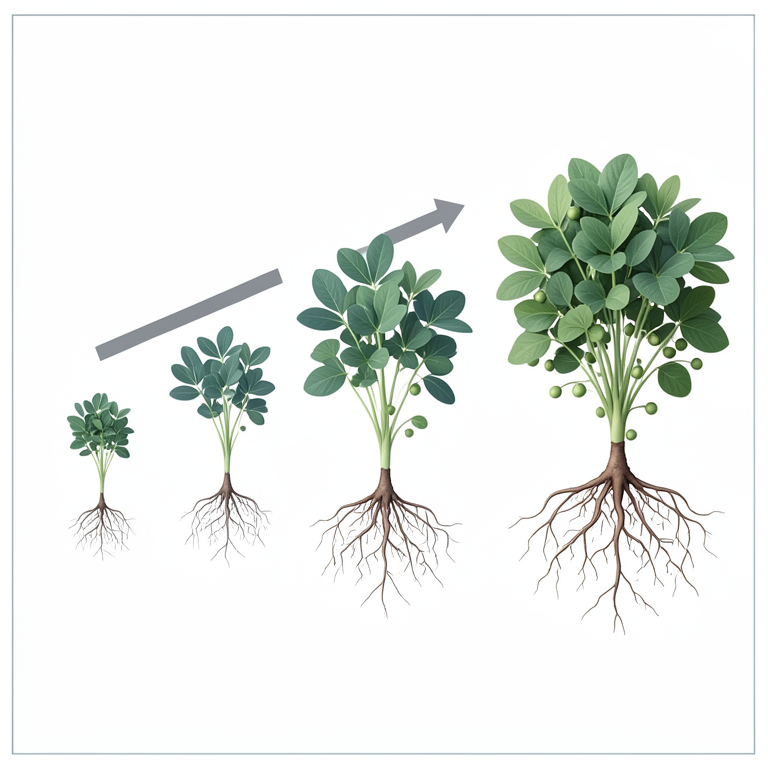
Treatment Comparison Layout
AI-generated conceptual illustration (chickpea plants). It explains the idea and does not show study data.
View source evidence ↗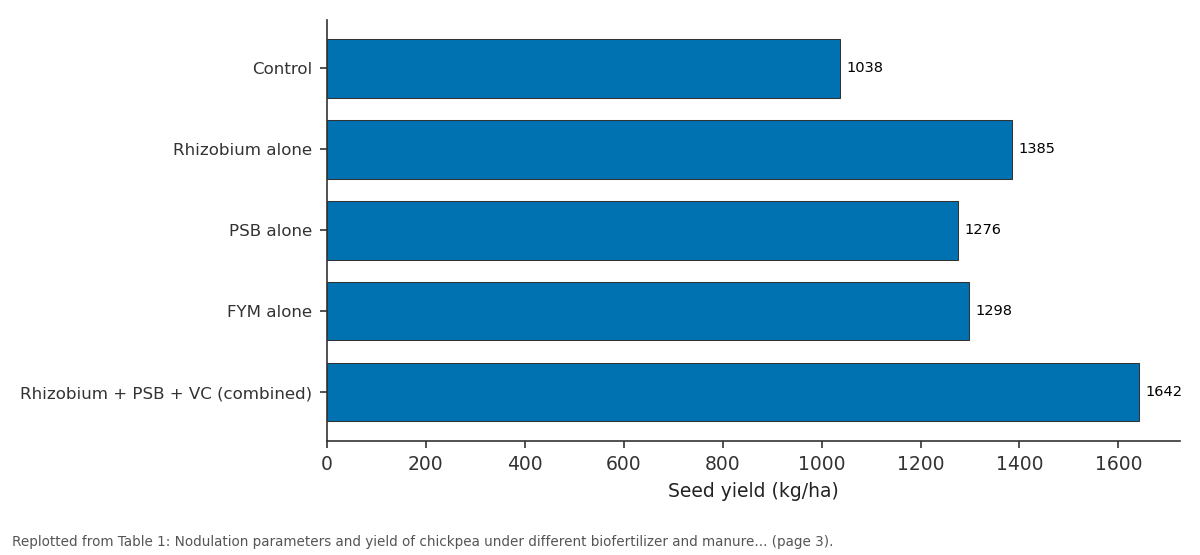
Seed yield (kg/ha): Control vs Rhizobium alone vs PSB alone vs FYM alone vs Rhizobium + PSB + VC...
Replotted from Table 1 (page 3) of the original paper. Every bar is the paper's own table value.
View source evidence ↗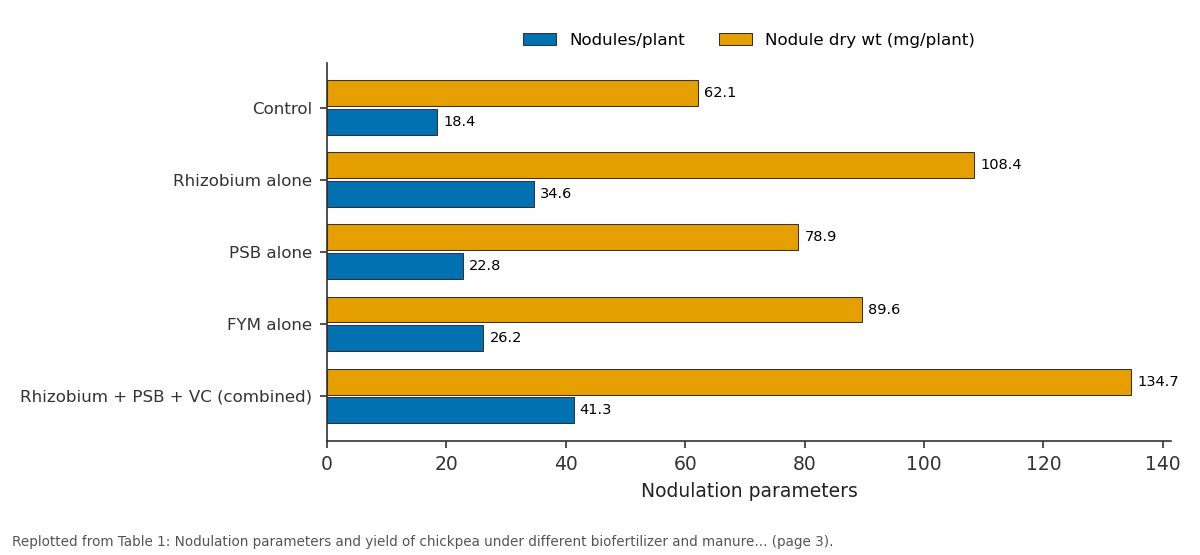
Nodules/plant and Nodule dry wt (mg/plant): Control vs Rhizobium alone vs PSB alone vs FYM alone vs Rhizobium + PSB + VC...
Replotted from Table 1 (page 3) of the original paper. Every bar is the paper's own table value.
View source evidence ↗Figures & tables
From the original paper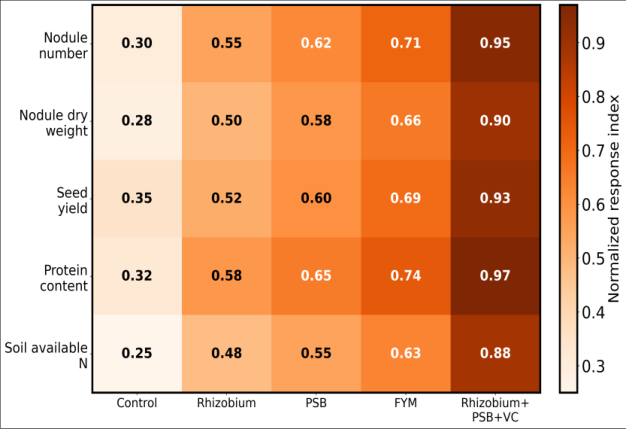 Figure 1
 Table 1
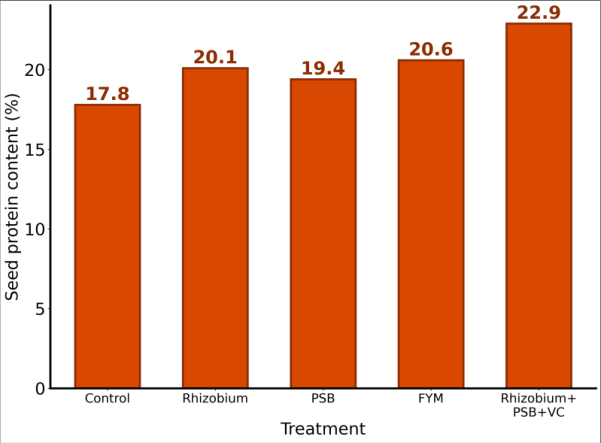 Figure 2
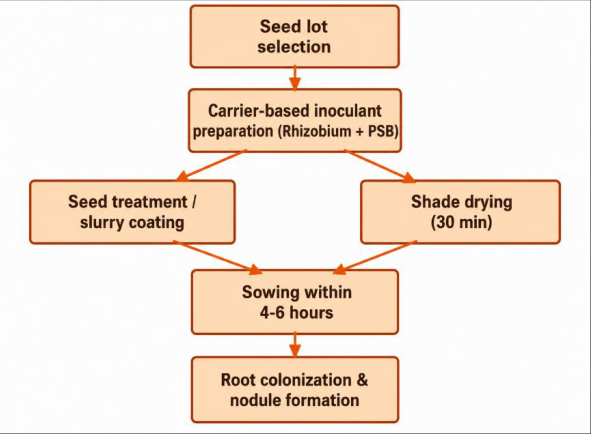 Figure 3
Introduction
Chickpea occupies an unusual position among grain legumes: it is valued as much for the protein it delivers to human diets as for the nitrogen it leaves behind in the soil for the next crop, yet the microbial partnership underpinning both benefits, symbiotic nitrogen fixation through Rhizobium nodulation, receives inconsistent attention from growers who treat inoculation as optional rather than foundational [1,2] . Effective nodulation depends on more than simply introducing Rhizobium to the seed or soil; phosphorus availability strongly influences nodule initiation and function, since the energyintensive process of nitrogen fixation is itself phosphorus-demanding [3,4] . Phosphatesolubilizing bacteria (PSB) address this dependency by converting fixed soil phosphorus into plant-available forms, and research combining Rhizobium with PSB in other legume systems generally reports better outcomes than either input applied alone, though the relative contribution of each component to yield versus grain quality is not always disentangled in the existing literature [5,6] . Organic amendments such as farmyard manure and vermicompost add a further dimension, supplying a slow-release nutrient base and supporting the broader soil microbial community that Rhizobium and PSB populations depend on for long-term persistence in field soil [7,8] . Where these organic and microbial components have been combined into single integrated packages for other legumes, results have generally exceeded what farmyard manure, Rhizobium, or PSB deliver individually, though chickpea-specific research combining all three components within one trial, while also tracking grain protein alongside yield, remains comparatively limited [9,10] . This research set out to compare Rhizobium alone, PSB alone, farmyard manure alone, and a combined Rhizobium-PSB-vermicompost package against an untreated control, measuring nodulation, seed yield, and seed protein content together rather than treating yield and nutritional quality as separate research questions. A further aim was to test which of the measured parameters, nodule number, nodule dry weight, or seed yield, correlates most strongly with seed protein content, since this has practical value for identifying an early-season indicator of eventual grain quality outcome. Specific objectives were to quantify nodulation parameters, seed yield, and biological yield across the five treatments; to measure seed protein content under each regime; and to test correlation strength between nodulation parameters and seed protein content to identify the most useful predictive indicator for extension and research purposes.
Materials and Methods
Materials and Methods
Study Area Description
The trial was conducted at the research farm of Enugu Institute of Agricultural Sciences (6.44°N, 7.50°E, altitude 223 m), Enugu, Nigeria, across two consecutive dry seasons, November 2023 to February 2024 and November 2024 to February 2025, when residual soil moisture from the preceding wet season supports chickpea cultivation without full irrigation dependence. The site lies within a derived savanna agro-ecological zone with mean temperature ranging from 21 °C to 32 °C across the growing period and negligible rainfall during the trial window. Soils are sandy clay loam Alfisols with pH 6.3, organic carbon of 0.51%, available phosphorus of 8.4 mg per kg (classified as low per local fertility ratings), and no prior history of chickpea cultivation or Rhizobium inoculation at the site. Materials: Chickpea variety 'ICCV-Enugu Selection', a locally adapted kabuli-type variety with a maturity period of about 100 days, was used across both seasons. The Rhizobium inoculant was a peat-based carrier formulation of Mesorhizobium ciceri with a minimum viable count of 10^8 CFU per gram, procured from a certified regional biofertilizer laboratory. The PSB inoculant carried Bacillus megaterium at an equivalent viable count, applied as seed treatment. Farmyard manure was applied at 5 t per hectare, analyzed before application (0.48% N, 0.29% P2O5, 0.44% K2O dry-weight basis), and vermicompost was applied at 2.5 t per hectare in the combined treatment (1.4% N, 0.6% P2O5, 0.8% K2O dry-weight basis).
Field Experimental Design
Five treatments, control (no biological or organic input), Rhizobium inoculation alone, PSB inoculation alone, farmyard manure alone at 5 t per hectare, and a combined package (Rhizobium plus PSB seed treatment plus vermicompost at 2.5 t per hectare), were arranged in a randomized block design with four replications. Plot size was 4 m by 4 m with a 0.5 m path separating plots. Seed inoculation, where applicable, was carried out immediately before sowing using a slurry-coating method with a jaggerybased adhesive to ensure inoculant adherence, followed by shade drying for 30 minutes before sowing within four to six hours to preserve inoculant viability. Seed was sown at a row spacing of 30 cm and plant-to-plant spacing of 10 cm. A uniform starter dose of 15:40:20 kg NPK per hectare was applied to all plots including the control, providing a small starter nitrogen dose common in local chickpea recommendations without masking the treatment effects of biological nitrogen fixation.
Methods
Nodule number and nodule dry weight per plant were recorded from five randomly sampled plants per plot at 45 days after sowing, the peak nodulation stage for this variety under local conditions. Seed yield and biological yield were recorded from a net plot area of 9.6 m² at physiological maturity. Seed protein content was determined by the Kjeldahl method, multiplying total nitrogen by a factor of 6.25. Soil available phosphorus was measured before sowing and after harvest using the Olsen method to track any change attributable to PSB activity. Pearson correlation coefficients were computed between nodulation parameters and seed protein content across all plots. Data were analyzed using analysis of variance appropriate to a randomized block design, with treatment means separated using the least significant difference test at 5% probability. The heatmap in Figure 1 shows the combined Rhizobium-PSB-vermicompost treatment recording the strongest normalized response across all five parameters simultaneously, with no other single treatment matching it on more than three of the five measures at once, which is a fairly unusual pattern given how often single-input treatments in similar trials outperform combined packages on at least one specific metric. Seed protein content climbed from 17.8% in the control to 22.9% under the combined treatment, and this ranking matched the nodule dry weight ranking in Table 1 more closely than it matched the seed yield ranking, hinting that nodule mass, rather than yield itself, may be the more direct physiological driver of grain protein accumulation in this crop.
| Treatment | Nodules/plant | Nodule dry wt (mg/plant) | Seed yield (kg/ha) | Biological yield (kg/ha) |
|---|---|---|---|---|
| Control | 18.4 | 62.1 | 1038 | 3120 |
| Rhizobium alone | 34.6 | 108.4 | 1385 | 3680 |
| PSB alone | 22.8 | 78.9 | 1276 | 3510 |
| FYM alone | 26.2 | 89.6 | 1298 | 3590 |
| Rhizobium + PSB + VC (combined) | 41.3 | 134.7 | 1642 | 4210 |
| LSD (p = 0.05) | 2.6 | 8.9 | 72 | 184 |
Table text extracted from the original PDF; superscript letters are shown inline. The original table image is below.
View original table image
Results
Results
Comprehensive Interpretation
Correlation analysis across all plots supported the pattern visible in the raw treatment means: nodule dry weight correlated with seed protein content at r = 0.79, stronger than the correlation between seed yield and protein content at r = 0.61. This ordering matters for how nodulation data should be used and interpreted; a grower or researcher checking nodule development at 45 days after sowing is arguably getting a better early read on eventual grain protein outcome than they would get from any early-season yield proxy, since yield outcomes on several later factors, pod set, seed filling duration, and moisture stress timing, that nodule mass at 45 days cannot fully anticipate.
Discussion
The combined treatment's advantage over every single-input treatment on every measured parameter fits the broader pattern reported across integrated nutrient management research on other grain legumes, where organic, microbial, and phosphorus-solubilizing components appear to reinforce rather than simply add to one another [9,11] . Vermicompost likely played a supporting role beyond its direct nutrient contribution, given its established effect on improving soil microbial community structure and providing a more hospitable rhizosphere environment for both Rhizobium and PSB populations to establish and persist through the season [7, 12] . PSB alone raising yield nearly as much as Rhizobium alone, despite far weaker nodulation performance, argues against treating nodulation enhancement as the sole mechanism through which biofertilizers raise legume yield. Phosphorus availability affects a wide range of plant processes beyond nodule formation, including root development and general photosynthetic capacity, and the yield response recorded under PSB alone likely reflects this broader phosphorusmediated growth benefit rather than an indirect nodulation effect [3,13] . This distinction has practical relevance for growers on phosphorus-deficient soils who may see meaningful yield benefit from PSB even where Rhizobium populations are already naturally well-established from prior legume cropping history. The stronger correlation between nodule dry weight and seed protein than between seed yield and seed protein is a less commonly reported finding in the chickpea literature, where research has more often focused on yield as the primary outcome variable and treated protein content as a secondary measure [14,15] . If this relationship holds beyond the present two-season, single-site trial, nodule dry weight assessment at mid-season could offer research programmes and seed quality-focused buyers a useful early indicator of eventual grain protein outcome, potentially informing harvest-timing or segregation decisions before grain protein testing becomes possible at harvest.
Practical Applications
For growers on phosphorus-limited soils similar to the trial site, combining Rhizobium and PSB seed inoculation with a moderate vermicompost application appears to deliver meaningfully better outcomes on both tonnage and grain protein than any single input, at an incremental cost that is modest relative to farmyard manure alone given the small seed-treatment quantities of biological inoculants required. Extension programmes recommending chickpea inputs for this region could reasonably prioritize this combined package as a default recommendation rather than presenting Rhizobium, PSB, and organic manure as interchangeable or optional add-ons.
Limitations
This research was conducted at a single site with no prior chickpea or Rhizobium inoculation history, meaning the strong response to inoculation recorded here may be smaller at sites with an established native Rhizobium population already adapted to chickpea. Nodulation was assessed only at 45 days after sowing rather than tracked across the full growth cycle, so the timing of peak nodule activity relative to seed protein accumulation was not directly established. Extending this trial across sites with varying native Rhizobium populations and phosphorus status would help clarify how generalizable these findings are.
Conclusion
The main contribution of this research is showing that a combined Rhizobium-PSB-vermicompost package outperforms Rhizobium, PSB, or farmyard manure applied individually on both seed yield and seed protein content of chickpea grown on a phosphorus-limited soil with no prior inoculation history. Supporting evidence came from consistent gains across nodulation parameters, yield, and protein content under the combined treatment, alongside a correlation analysis showing nodule dry weight as a stronger predictor of seed protein content than seed yield itself. For chickpea production on similar nutrient-limited soils, this combined biological-organic package offers a practical route to raising both farm income and the nutritional value of the harvested crop without a proportionally large increase in input cost. Open questions remain around how these results generalize to soils with established native Rhizobium populations, whether the nodule-dry-weight-to-protein relationship holds across a wider range of growing conditions, and whether mid-season nodulation assessment could be developed into a practical, low-cost tool for predicting grain quality outcomes ahead of harvest.
Acknowledgement
Acknowledgements Institutional SupportThe authors thank the research farm and soil microbiology laboratory staff of Enugu Institute of Agricultural Sciences for field maintenance and inoculant quality control support throughout both seasons.
Figures and tables from the paper
References
17 in the original paper- Saxena M, Singh K. Chickpea improvement: challenges and opportunities. Legume Res. 2021;44(5):601-609.
- Serraj R, Sinclair T, Purcell L. Symbiotic N2 fixation response to drought. J Exp Bot. 2022;50(340):143-155.
- Kohler J, Caravaca F, Carrasco L, Roldan A. Contribution of Pseudomonas mendocina and Glomus International Journal of Agriculture and Nutrition https://www.agriculturejournal.net intraradices to aggregate stabilization and promotion of biological fertility. Soil Biol Biochem. 2020;39(11):2851-2857.
- Sharma S, Prasad R. Effect of phosphorus and biofertilizers on symbiosis, growth and yield of chickpea. Indian J Agron. 2019;44(3):629-632.
- Zaidi A, Khan M, Ahemad M, Oves M. Plant growth promotion by phosphate-solubilizing bacteria. Acta Microbiol Immunol Hung. 2021;56(3):263-284.
- Elkoca E, Kantar F, Sahin F. Influence of nitrogen fixing and phosphorus solubilizing bacteria on the nodulation, plant growth, and yield of chickpea. J Plant Nutr. 2020;33(3):367-379.
- Arancon N, Edwards C, Bierman P, Metzger J, Lucht C. Effects of vermicomposts produced from cattle manure on plant growth and soil quality. Pedobiologia. 2023;49(4):297-306.
- Gopal M, Gupta A, Palaniswami C, Dhanapal R, Thomas G. Coconut leaf vermiwash: a bio-liquid fertilizer for improving plant growth. Curr Sci. 2020;98(9):1202-1210.
- Rokhzadi A, Asgharzadeh A, Darvish F, NourMohammadi G, Majidi E. Influence of plant growthpromoting rhizobacteria on dry matter accumulation and yield of chickpea. Am-Eurasian J Agric Environ Sci. 2021;3(2):253-257.
- Verma J, Yadav J, Tiwari K, Singh N. Impact of plant growth promoting rhizobacteria on crop production. Int J Agric Res. 2022;5(11):954-983.
- Ahmad F, Ahmad I, Khan M. Screening of free-living rhizospheric bacteria for their multiple plant growth promoting activities. Microbiol Res. 2021;163(2):173181.
- Chaoui H, Zibilske L, Ohno T. Effects of earthworm casts and compost on microbial activity and plant nutrient uptake. Soil Biol Biochem. 2023;35(2):295302.
- Richardson A. Prospects for using soil microorganisms to improve the acquisition of phosphorus by plants. Aust J Plant Physiol. 2021;28(9):897-906.
- Jukanti A, Gaur P, Gowda C, Chibbar R. Nutritional quality and health benefits of chickpea. Br J Nutr. 2022;108(S1): S11-S26.
- Wood J, Grusak M. Nutritional value of chickpea. Chickpea Breed Manage. 2020;1st ed:101-142.
- Yadav R, Sharma R. Effect of biofertilizers and nutrient management on nodulation and yield of chickpea. Legume Res. 2024;40(2):324-329.
- Namvar A, Sedghi M, Sharifi R. Effect of Rhizobium inoculation and nitrogen fertilizer on seed yield and physiological traits of chickpea. Notulae Botanicae. 2021;39(1):189-195.