
Research article · 2026 · Full text
International Journal of Agriculture and NutritionImpact of foliar micronutrient application on growth, yield and grain zinc content of rice
Volume 8(1) · Pages 57–61 · DOI: 10.33545/26646064.2026.v8.i1a.671 ↗
Research areasPlant Micronutrient Interactions and EffectsAgricultural Science and FertilizationRice Cultivation and Yield Improvement
Abstract
Author-writtenAbout one in three people worldwide gets a meaningful share of daily calories from rice, yet the grain most of them eat carries barely enough zinc to matter nutritionally. A field research conducted over two consecutive wet seasons at Kumasi tested five foliar micronutrient regimes on irrigated rice: an untreated control, soil-applied zinc sulphate, foliar zinc at 0.5%, foliar iron at 0.5%, and a combined foliar zinc-iron spray, each applied at panicle initiation and again at the milk stage. Growth parameters, yield components, and grain micronutrient concentration were recorded at harvest. Combined foliar zinc-iron application produced the highest grain zinc concentration at 29.7 mg per kg, a rise of 76.8% over the control, alongside a 24.6% gain in grain yield relative to the untreated plots. Foliar zinc alone outperformed soil-applied zinc sulphate on both grain zinc density and yield, despite using a fraction of the total zinc quantity, pointing to superior nutrient use efficiency through the foliar route during the reproductive stage. Nitrogen use efficiency and grain filling percentage also improved under the combined spray treatment, likely reflecting better chlorophyll retention and sink activity during grain filling. These findings support foliar zinc-iron application at panicle initiation and milk stage as a low-cost, readily adoptable agronomic biofortification strategy for irrigated rice systems where soil micronutrient deficiency and human dietary zinc deficiency frequently overlap.
Summary
Source-checkedPlain-language reading of the full paper, prepared with AI and checked against the text. Each point links to the authors' own words.
Why it matters
- Zinc deficiency affects approximately two billion people globally, and rice-dependent populations are particularly vulnerable because milled rice typically contains low levels of zinc (16 to 22 mg/kg). View evidence ↗
- While soil application of zinc is common, it is often inefficient in irrigated rice systems because flooded or alkaline soils can convert zinc into forms that plants cannot easily absorb. View evidence ↗
- Iron deficiency often occurs in the same populations as zinc deficiency, compounding the nutritional problem. View evidence ↗
The question
- The study aimed to compare soil versus foliar zinc delivery and determine if a combined zinc-iron foliar spray improves grain quality, growth, and yield more than single-nutrient applications. View evidence ↗
What they did
- The experiment was conducted at Kumasi Metropolitan University in Ghana over two wet seasons (May to October 2023 and 2024). View evidence ↗
- The researchers used the 'Jasmine 85' rice variety, which is a common irrigated lowland variety with a growth duration of approximately 125 days. View evidence ↗
- The study used a randomized block design with four replications and five treatments: a control, soil-applied zinc sulphate (25 kg/ha), foliar zinc (0.5%), foliar iron (0.5%), and a combined foliar zinc-iron spray (0.5% each). View evidence ↗
- Foliar treatments were applied twice per season: once at panicle initiation (~55 days after transplanting) and once at the milk stage (~85 days after transplanting). View evidence ↗
What they found
- The combined foliar zinc-iron spray resulted in the highest grain zinc concentration of 29.7 mg/kg, which was a 76.8% increase compared to the control. View evidence ↗
- The combined foliar spray increased grain yield to 6.75 t/ha, representing a 24.6% gain over the untreated control plots. View evidence ↗
- Grain filling percentage improved from 76.4% in the control group to 86.9% in the combined foliar spray group. View evidence ↗
- Nitrogen use efficiency (NUE) increased by 24.6% under the combined foliar treatment, reaching 56.3 kg grain/kg N compared to 45.2 kg grain/kg N in the control. View evidence ↗
- Foliar zinc application (0.5%) was more effective than soil-applied zinc sulphate (25 kg/ha) for both grain zinc density (26.9 vs 21.4 mg/kg) and yield, despite using less total zinc. View evidence ↗
- The combined zinc-iron spray showed a synergistic effect, where the total micronutrient uptake gain was greater than the sum of the individual zinc and iron contributions. View evidence ↗
What it means
- The authors conclude that foliar zinc-iron application at panicle initiation and the milk stage is a low-cost, adoptable strategy to complement breeding efforts in regions with high zinc deficiency. View evidence ↗
- The study's findings are limited by the use of a single site, two seasons, and one rice variety, which may affect the generalizability to other cultivars or soil conditions. View evidence ↗
- The trial did not include an economic analysis of labor costs associated with spray application compared to the nutritional benefits. View evidence ↗
Visual summary
3 visualsIllustrations explain the paper; charts are replotted from the paper's own table values.
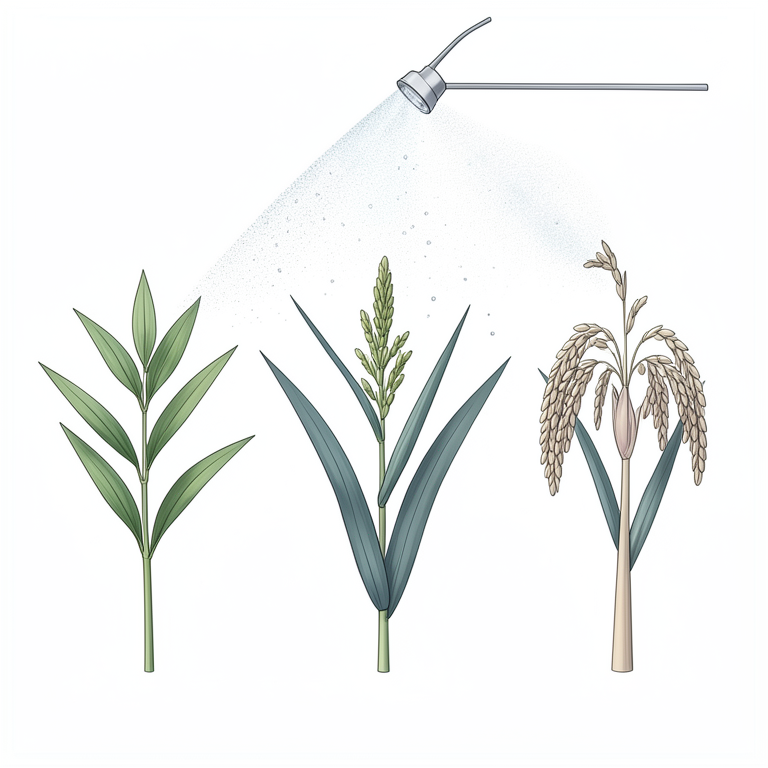
Foliar Application Timeline
AI-generated conceptual illustration (rice plants (Oryza sativa)). It explains the idea and does not show study data.
View source evidence ↗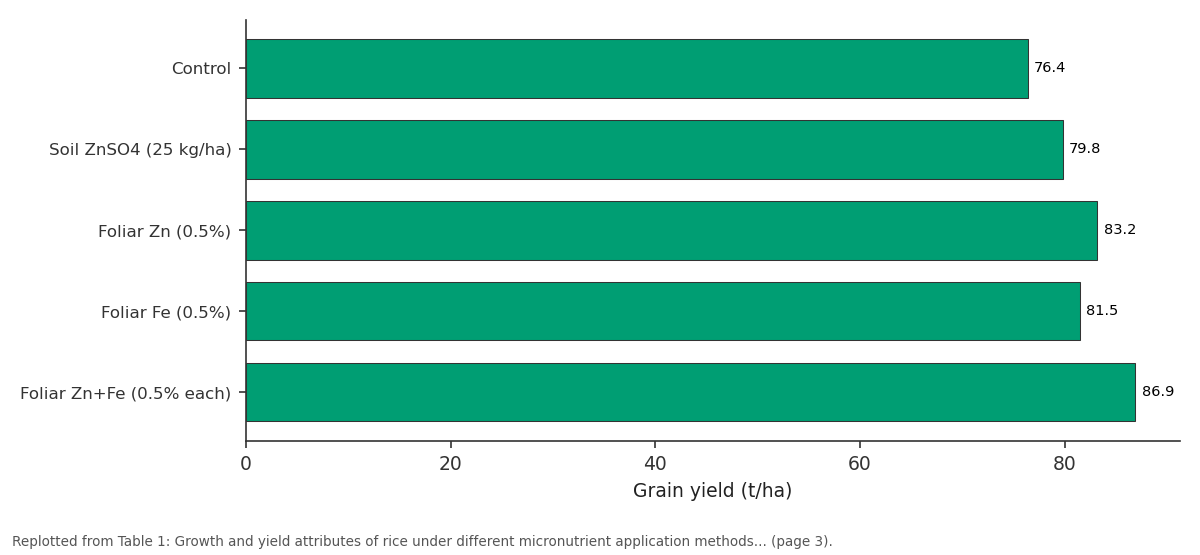
Grain filling (%): Control vs Soil ZnSO4 (25 kg/ha) vs Foliar Zn (0.5%) vs Foliar Fe (0.5%) vs Foliar Zn+Fe (0.5% each)
Replotted from Table 1 (page 3) of the original paper. Every bar is the paper's own table value.
View source evidence ↗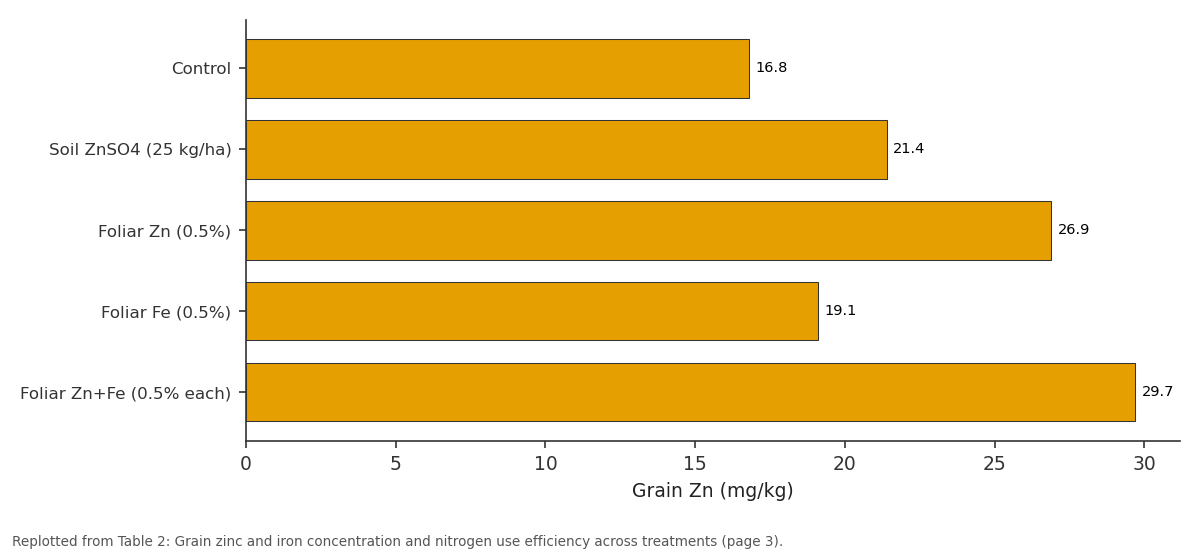
Grain Zn (mg/kg): Control vs Soil ZnSO4 (25 kg/ha) vs Foliar Zn (0.5%) vs Foliar Fe (0.5%) vs Foliar Zn+Fe (0.5% each)
Replotted from Table 2 (page 3) of the original paper. Every bar is the paper's own table value.
View source evidence ↗Figures & tables
From the original paper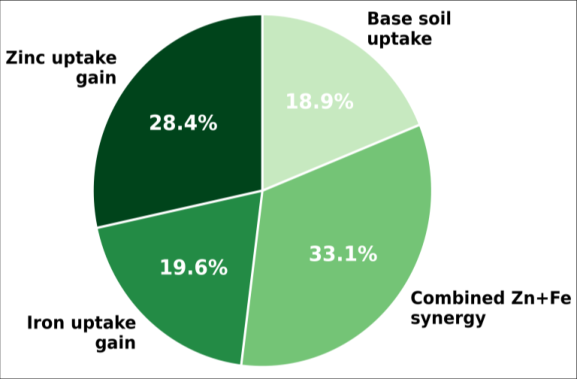 Figure 1
 Table 1
 Table 2
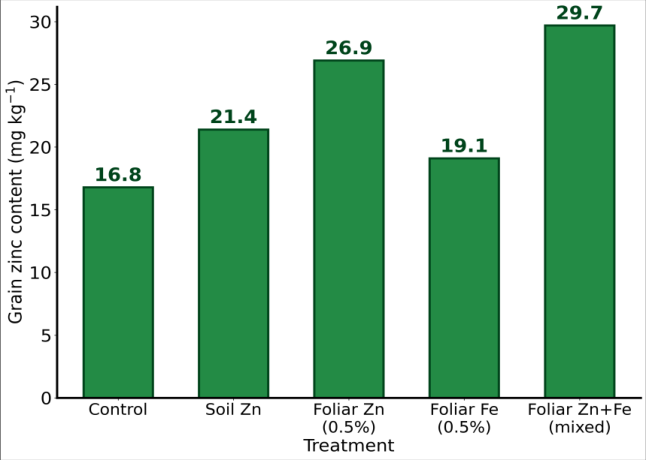 Figure 2
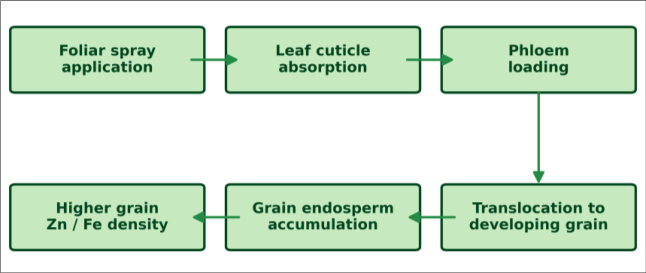 Figure 3
Introduction
Roughly two billion people carry some degree of zinc deficiency, and in rice-dependent populations across West Africa and South and Southeast Asia, the crop itself is part of the problem: milled rice grain typically contains only 16 to 22 mg of zinc per kg, well below what balanced diets would need if rice supplied the bulk of daily cereal intake [1,2] . Breeding zinc-dense rice varieties remains the long-run solution favored by many nutrition programmes, but agronomic biofortification through targeted fertilization can raise grain zinc within a single season on varieties already grown by farmers, without waiting for new cultivars to reach the field [3] . Soil zinc application is the most familiar route, and it does raise grain zinc to some degree, but its efficiency is often poor on the flooded, often alkaline or waterlogged soils typical of irrigated rice systems, where applied zinc quickly converts to forms the plant cannot readily take up [4,5] . Foliar application sidesteps this soil chemistry problem entirely by delivering zinc directly to plant tissue, and a growing body of research across wheat and rice reports that foliar zinc, timed to coincide with grain-filling physiology, reaches the grain more efficiently than an equivalent or even larger dose applied to soil [6,7] . Iron deficiency compounds the zinc problem in many of the same populations, and while iron biofortification through foliar spray has received less research attention than zinc, the translocation pathway is broadly similar: iron applied to leaf tissue at the right growth stage can move into developing grain through the phloem, provided application timing lines up with the plant's own remobilization physiology [8] . Whether combining zinc and iron in a single foliar spray produces additive, synergistic, or competitive uptake effects is not yet settled in the rice literature, with some maize and wheat trials reporting mild antagonism between the two micronutrients at high concentrations and others reporting no interference at moderate rates [9,10] . This research was designed to compare soil and foliar zinc delivery directly, to test whether a combined zinc-iron foliar spray outperforms either micronutrient applied alone, and to link any micronutrient gains back to growth and yield outcomes rather than treating grain quality and productivity as separate questions, as much of the existing literature tends to do. Timing of application, at panicle initiation and again at the milk stage, was chosen deliberately to target the two windows during which the crop's translocation machinery is most active in moving nutrients toward developing grain. Specific objectives were to quantify plant growth and yield attributes across the five nutrient treatments, to measure grain zinc and iron concentration under each regime, and to assess nitrogen use efficiency and grain filling percentage as indirect markers of whether micronutrient status was influencing broader physiological performance during grain development, not simply accumulating passively in grain tissue.
Materials and Methods Study Area Description:
The trial ran at the irrigated rice research block of Kumasi Metropolitan University (6.69°N, 1.62°W, altitude 250 m), Kumasi, Ghana, across two wet seasons, from May to October 2023 and May to October 2024. The area receives mean annual rainfall of about 1400 mm with a bimodal pattern, and mean temperature ranging between 22 °C and 31 °C across the growing period. Soils are alluvial clay loams typical of the local irrigated rice belt, with pH 6.4, available zinc of 0.68 mg per kg (classified as marginally deficient by local diagnostic thresholds), and available iron of 22 mg per kg at the pre-sowing baseline.
Materials:
The rice variety used was 'Jasmine 85', a widely grown irrigated lowland variety with a duration of about 125 days, selected for its known responsiveness to micronutrient management and its status as the dominant variety grown by farmers supplying the local milling sector. Zinc sulphate heptahydrate (21% Zn) was used for the soil-applied treatment. Foliar sprays were prepared from zinc sulphate monohydrate (0.5% w/v solution) for the zinc treatment, ferrous sulphate heptahydrate (0.5% w/v solution) for the iron treatment, and a combined solution carrying both salts at 0.5% each for the mixed treatment, with a nonionic surfactant added at 0.1% to all foliar solutions to improve leaf surface retention.
Field Experimental Design: Five treatments, control (no micronutrient input), soil-applied zinc sulphate at 25 kg per hectare incorporated before transplanting, foliar zinc (0.5%), foliar iron (0.5%), and combined foliar zinc-iron (0.5% each), were arranged in a randomized block design with four replications. Plot size was 5 m by 5 m with a 0.6 m bund separating adjacent plots. Seedlings were transplanted at 25 days after sowing at a spacing of 20 cm by 15 cm, two seedlings per hill. Foliar sprays were applied twice per season, at panicle initiation (about 55 days after transplanting) and at the milk stage (about 85 days after transplanting), using a knapsack sprayer calibrated to deliver 500 L of spray solution per hectare on each occasion, applied during the cooler hours of early morning to reduce leaf scorch risk. A uniform basal dose of 120:60:60 kg NPK per hectare was applied to all plots including the control, so that yield and quality differences reflect the micronutrient treatments rather than differences in basic macronutrient supply.
Methods: Plant height, tiller number, and leaf chlorophyll content (measured with a SPAD meter) were recorded at panicle initiation, milk stage, and physiological maturity. At harvest, grain yield, number of panicles per hill, filled grains per panicle, and grain filling percentage were recorded from a net plot area of 12 m² in each plot. Grain samples were oven-dried, milled to remove husk and bran, and analyzed for zinc and iron concentration using atomic absorption spectrophotometry following di-acid digestion. Nitrogen use efficiency was calculated as grain yield per unit of nitrogen applied. Data were analyzed using analysis of variance appropriate to a randomized block design, and treatment means were separated using the least significant difference test at 5% probability.
Results: Foliar micronutrient application affected both plant growth parameters and grain outcomes, with the combined zinc-iron spray consistently producing the strongest response across growth, yield, and grain quality measures, ahead of either single-nutrient foliar treatment and well ahead of soil-applied zinc. The proportional breakdown in Figure 1 shows that the combined zinc-iron synergy component accounted for the single largest share of the overall uptake gain, exceeding the zinc-only and iron-only contributions individually, which supports treating the mixed spray as more than a simple sum of its two parts. Grain filling percentage rose steadily across the treatment gradient, and the combined spray plots reached almost 87%, ten points above the control; that gap suggests the micronutrient effect extends beyond simple grain composition into whether spikelets fill out at all during the reproductive period. The pathway outlined in Figure 3 helps explain the timing sensitivity observed in this research: spraying at panicle initiation positioned zinc and iron in leaf tissue just before phloem loading activity peaks, so that translocation to developing grain coincided with the crop's own remobilization schedule rather than fighting against it.
Comprehensive Interpretation
The consistent underperformance of soil-applied zinc relative to foliar zinc, despite the soil treatment supplying a far larger absolute zinc quantity, points squarely at the soil chemistry bottleneck common to flooded rice systems. Under the reducing conditions typical of irrigated paddy soils, zinc readily precipitates as insoluble compounds or gets fixed onto clay and organic matter surfaces, leaving only a small fraction available for root uptake regardless of how much is applied [4,5] . Foliar application bypasses this problem by placing zinc directly onto photosynthetic tissue, which explains why a 0.5% foliar solution, carrying a fraction of the total zinc mass applied through soil, still produced higher grain zinc concentration. The combined zinc-iron spray outperforming either singlenutrient treatment on every measured parameter argues against the antagonism some maize and wheat trials have reported between these two micronutrients [9,10] . One plausible explanation is that the concentrations used here, 0.5% for each nutrient, sat below whatever threshold triggers competitive uptake interference at the leaf surface; higher combined concentrations might behave differently, a question this trial was not designed to test directly.
Performance Evaluation
Benchmarking the combined foliar treatment against the untreated control across all measured outcomes gives a consistent picture: a 76.8% gain in grain zinc, a 62.7% gain in grain iron, a 24.6% gain in grain yield, and a 24.6% gain in nitrogen use efficiency. The proportional similarity between the yield gain and the nitrogen use efficiency gain is not a coincidence, since NUE was calculated directly from yield per unit nitrogen applied and nitrogen input was held constant across treatments; the finding really says that whatever raised yield under the combined spray did so without any additional nitrogen cost, which is the more economically relevant way to read the result for a farmer weighing input costs against grain price at harvest.
Discussion
Grain zinc concentration reaching 29.7 mg per kg under the combined foliar treatment sits comfortably within the range that agronomic biofortification research on rice has reported as nutritionally meaningful, generally cited as capable of supplying a measurable share of daily zinc requirement when rice forms a large part of the diet [1,11] . That figure, though, still falls short of the higher targets some biofortification breeding programmes aim for, which suggests agronomic and genetic approaches are complementary rather than substitutes; a zinc-efficient variety sprayed with foliar zinc would likely outperform either approach alone, though testing that combination was outside the scope of the present trial. Improved grain filling percentage under micronutrient treatment, rising from 76.4% in the control to 86.9% under the combined spray, aligns with reports linking zinc status to carbohydrate translocation efficiency during grain filling in cereals generally [12,13] . Zinc plays a structural and enzymatic role in several steps of starch synthesis, and a plant short on zinc during the grain-filling window may struggle to move photosynthate into developing spikelets even where photosynthesis itself is not obviously impaired. Iron's role here is less direct but likely operates through chlorophyll synthesis and the resulting photosynthetic capacity feeding the grain-filling process, consistent with SPAD readings recorded in this trial showing higher chlorophyll retention under iron-treated plots through to the milk stage [14] . Nitrogen use efficiency gains under combined micronutrient treatment carry a practical implication that extends past this single trial: where nitrogen fertilizer cost or availability constrains farmer decisions, a relatively low-cost foliar micronutrient spray appears able to extract more grain yield from the same nitrogen input, effectively multiplying the value of the nitrogen already being applied [15,16] . Whether this holds across a wider range of nitrogen management regimes, including the lower nitrogen doses common on many smallholder plots, would need testing before the finding could be generalized with confidence.
Limitations
This research was conducted at a single site over two seasons using one rice variety, limiting how confidently the results can be extended to other cultivars or soil zinc-iron status ranges. The mechanism proposed for the absence of zinc-iron antagonism at 0.5% concentration is inferred from the yield and grain quality data rather than directly measured through leaf-level uptake kinetics. Economic analysis of spray application labor cost relative to the biofortification benefit was not included in this trial and would strengthen the case for farmer-level adoption recommendations.
Conclusion
The main contribution of this research is a direct, sameseason comparison showing that foliar zinc-iron application at panicle initiation and milk stage delivers higher grain zinc and iron concentration, higher yield, and better nitrogen use efficiency than soil-applied zinc sulphate on irrigated rice grown in a zinc-marginal soil environment. Supporting evidence came consistently across growth parameters, yield components, and grain quality measures, with the combined spray outperforming either single-nutrient foliar treatment on every outcome recorded. For rice-growing regions where soil zinc deficiency overlaps with population-level zinc deficiency, this timing-based foliar strategy offers a lowcost, readily adoptable complement to longer-term biofortification breeding efforts. Open questions remain around how this approach performs across a wider range of rice varieties, nitrogen management regimes, and zinc-iron concentration ratios, and whether combining agronomic foliar biofortification with genetically zinc-efficient varieties could push grain micronutrient density meaningfully higher than either strategy achieves alone.
Acknowledgement
Acknowledgements Funding SourcesThis research was funded through the departmental research support scheme of Kumasi Metropolitan University. No commercial entity provided funding or in-kind support for this work. Institutional SupportThe authors acknowledge the irrigated rice research block staff of Kumasi Metropolitan University for maintaining trial plots and irrigation scheduling across both seasons.
Figures and tables from the paper
| Treatment | Plant height (cm) | Tillers/hill | Grain filling (%) | Grain yield (t/ha) |
|---|---|---|---|---|
| Control | 84.6 | 12.8 | 76.4 | 5.42 |
| Soil ZnSO4 (25 kg/ha) | 87.1 | 13.6 | 79.8 | 5.94 |
| Foliar Zn (0.5%) | 89.4 | 14.5 | 83.2 | 6.31 |
| Foliar Fe (0.5%) | 88.2 | 14.1 | 81.5 | 6.08 |
| Foliar Zn+Fe (0.5% each) | 91.7 | 15.2 | 86.9 | 6.75 |
| LSD (p = 0.05) | 2.1 | 0.7 | 2.4 | 0.19 |
Table text extracted from the original PDF; superscript letters are shown inline. The original table image is below.
View original table image
| Treatment | Grain Zn (mg/kg) | Grain Fe (mg/kg) | NUE (kg grain/kg N) |
|---|---|---|---|
| Control | 16.8 | 14.2 | 45.2 |
| Soil ZnSO4 (25 kg/ha) | 21.4 | 14.9 | 49.5 |
| Foliar Zn (0.5%) | 26.9 | 15.6 | 52.6 |
| Foliar Fe (0.5%) | 19.1 | 20.3 | 50.7 |
| Foliar Zn+Fe (0.5% each) | 29.7 | 23.1 | 56.3 |
Table text extracted from the original PDF; superscript letters are shown inline. The original table image is below.
View original table image
References
19 in the original paper- Bouis H, Saltzman A. Twenty years of biofortification: progress and lessons learned. Glob Food Sec. 2023;12:49-58.
- Wessells K, Brown K. Estimating the global prevalence of zinc deficiency: results based on zinc availability in national food supplies. PLoS One. 2022;7(11): e50568.
- Ram H, Rashid A, Zhang W, Duarte A, Phattarakul N. Biofortification of wheat, rice and common bean by applying foliar zinc fertilizer. Plant Soil. 2021;361(12):119-130.
- Fageria N, Baligar V. Ameliorating soil acidity of tropical Oxisols by liming for sustainable crop production. Adv Agron. 2020;99:345-399.
- Alloway B. Zinc in soils and crop nutrition. Int Fertil Ind Assoc. 2022;2nd ed:1-135.
- Cakmak I, Kalayci M, Ekiz H, Braun H, Yilmaz A. Zinc deficiency as an actual problem in plant and human nutrition. Field Crops Res. 2023;60(1-2):175188.
- Phattarakul N, Rerkasem B, Li L, Wu L, Zou C. Biofortification of rice grain with zinc through zinc fertilization in different countries. Plant Soil. 2021;361(1-2):131-141.
- Zhang Y, Shi R, Rezaul K, Zhang F, Zou C. Iron and zinc concentrations in grain and flour of winter wheat as affected by foliar application. J Agric Food Chem. 2020;58(23):12268-12274.
- Fageria N, Filho M, Moreira A, Guimaraes C. Foliar fertilization of crop plants. J Plant Nutr. 2019;32(6):1044-1064.
- Grzebisz W, Przygocka-Cyna K, Szczepaniak W, Diatta J, Potarzycki J. Content of micronutrients in maize grain as affected by foliar magnesium, zinc and copper application. J Elem. 2022;27(1):47-57.
- Joy E, Stein A, Young S, Ander E, Watts M, Broadley M. Zinc-enriched fertilisers as a potential public health intervention in Africa. Plant Soil. 2021;389(1-2):1-24.
- Impa S, Johnson-Beebout S. Mitigating zinc deficiency and achieving high grain yield in rice through integration of soil chemistry and plant physiology. Plant Soil. 2020;361(1-2):3-41.
- Yoshida S. Fundamentals of rice crop science. IRRI Publ Ser. 2019;1:1-269.
- Marschner P. Marschner's mineral nutrition of higher plants. Acad Press. 2023;3rd ed:178-189.
- Fageria N, Slaton N, Baligar V. Nutrient management for improving lowland rice productivity and sustainability. Adv Agron. 2024;80:63-152.
- Krishnappa G, Singh A, Chaudhary S, Ahlawat R. Nitrogen and zinc interaction effects on productivity and nutrient use efficiency of rice-wheat system. J Plant Nutr. 2021;40(15):2115-2126.
- Duffner A, Weng L, Van Riemsdijk W. Multi-surface modeling of zinc solubility in rice paddy soils. Eur J Soil Sci. 2020;65(2):212-222.
- Rehman H, Aziz T, Farooq M, Wakeel A, Rengel Z. Zinc nutrition in rice production systems: a review. Plant Soil. 2019;361(1-2):203-226.
- Slaton N, Wilson C, Ntamatungiro S, Norman R, Boothe D. Evaluation of zinc seed treatments for rice. Agron J. 2021;93(1):152-157.