
Research article · 2026 · Full text
International Journal of Horticulture and Food ScienceDNA barcoding reveals cryptic diversity among aphid pests of cruciferous
Volume 8(5) · Pages 36–39 · DOI: 10.33545/26631067.2026.v8.i5a.779 ↗
Research areasHemiptera Insect StudiesInvertebrate Taxonomy and EcologyInsect-Plant Interactions and Control
Abstract
Author-writtenCryptic species diversity, defined as the existence of morphologically indistinguishable yet genetically distinct lineages within a nominal taxon, poses significant challenges for pest identification in agricultural systems. This research employed cytochrome c oxidase subunit I (COI) gene barcoding to assess the species diversity and cryptic variation among aphid pests of cruciferous crops in Chiang Mai Province, Thailand. A total of 174 aphid specimens were collected from cabbage, cauliflower, broccoli, and Chinese kale fields across four districts between April and September 2024. Molecular analysis identified three aphid species: Brevicoryne brassicae (38.2%), Myzus persicae (35.6%), and Lipaphis erysimi (26.2%). Intraspecific K2P distances ranged from 0.1% to 2.6%, with notably elevated divergence within M. persicae suggesting the presence of two cryptic lineages. Interspecific distances ranged from 12.3% to 16.8%. Phylogenetic analysis revealed strongly supported species-level clades, with the M. persicae clade subdividing into two distinct subclades corresponding to putative tobacco-adapted and crucifer-adapted host races. These findings highlight the value of molecular barcoding for detecting hidden diversity within morphologically uniform pest populations.
Summary
Source-checkedPlain-language reading of the full paper, prepared with AI and checked against the text. Each point links to the authors' own words.
Why it matters
- Cryptic species diversity occurs when genetically distinct lineages look identical, making it difficult to identify pests in agriculture. View evidence ↗
- Identifying these cryptic populations is important because they can vary in how they prefer host plants, resist insecticides, and transmit pathogens. View evidence ↗
- Highland agriculture in Chiang Mai Province, Thailand, relies heavily on cruciferous crops like cabbage, broccoli, cauliflower, and Chinese kale grown above 300 m. View evidence ↗
The question
- The study aimed to use COI barcoding to identify aphid species and find hidden genetic variation among pests affecting cruciferous crops in Chiang Mai Province. View evidence ↗
What they did
- Researchers collected 174 aphid specimens from four districts in Chiang Mai between April and September 2024 from various cruciferous crops. View evidence ↗
- Genetic divergence was measured using K2P distances, and phylogenetic relationships were analyzed using neighbor-joining trees with 1,000 bootstrap replicates. View evidence ↗
What they found
- The DNA sequencing process had a 90.2% success rate, yielding high-quality sequences for 157 of the 174 collected specimens. View evidence ↗
- Three species were identified: Brevicoryne brassicae (38.2%), Myzus persicae (35.6%), and Lipaphis erysimi (26.2%). View evidence ↗
- Interspecific genetic distances ranged from 12.3% to 16.8%, confirming clear molecular separation between the three species. View evidence ↗
- Myzus persicae showed a bimodal distribution of genetic distances (0.1% to 2.6%), indicating the presence of two cryptic lineages. View evidence ↗
- M. persicae was split into two subclades with 2.4% divergence: Subclade I (32 specimens) preferred crucifers, while Subclade II (24 specimens) had a broader host range. View evidence ↗
What it means
- The authors recommend using molecular diagnostics in monitoring programs to distinguish M. persicae host races for better resistance and virus risk management. View evidence ↗
- The sequencing success rate was lower than in other insect groups because aphids' soft bodies make their DNA prone to degradation. View evidence ↗
- Future work should use whole-genome sequencing and multi-locus approaches to better understand the reproductive isolation of M. persicae host races. View evidence ↗
Visual summary
2 visualsIllustrations explain the paper; charts are replotted from the paper's own table values.
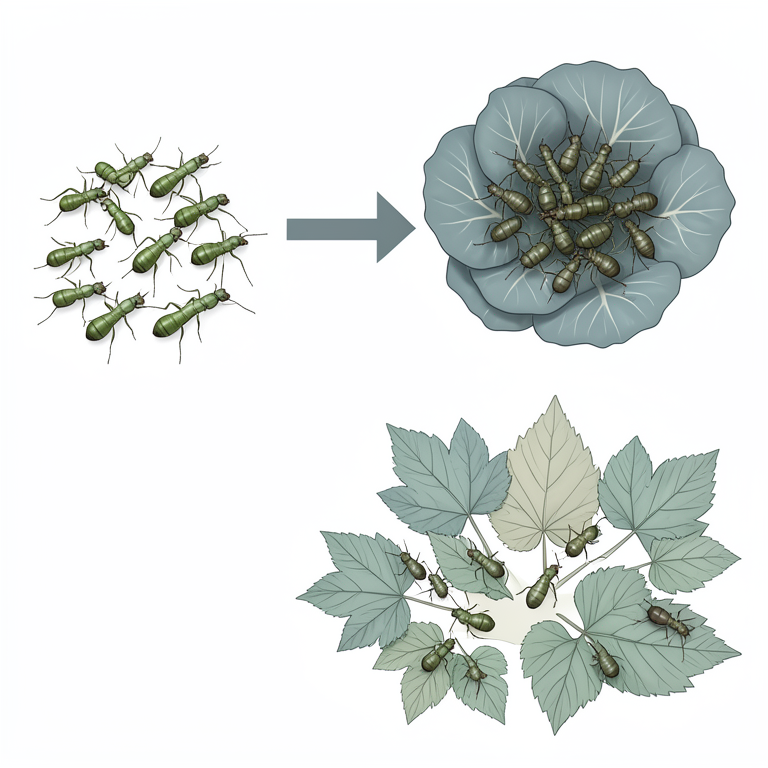
Cryptic Lineages in M. persicae
AI-generated conceptual illustration (Myzus persicae aphids on cruciferous plants). It explains the idea and does not show study data.
View source evidence ↗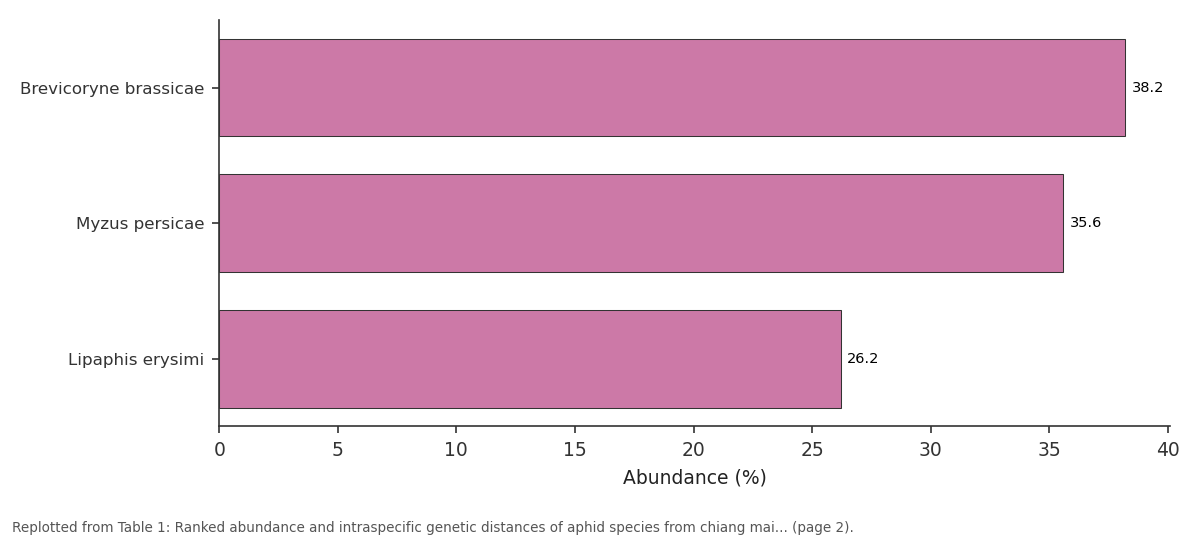
Abundance (%): Brevicoryne brassicae vs Myzus persicae vs Lipaphis erysimi
Replotted from Table 1 (page 2) of the original paper. Every bar is the paper's own table value.
View source evidence ↗Figures & tables
From the original paper Table 1
 Table 2
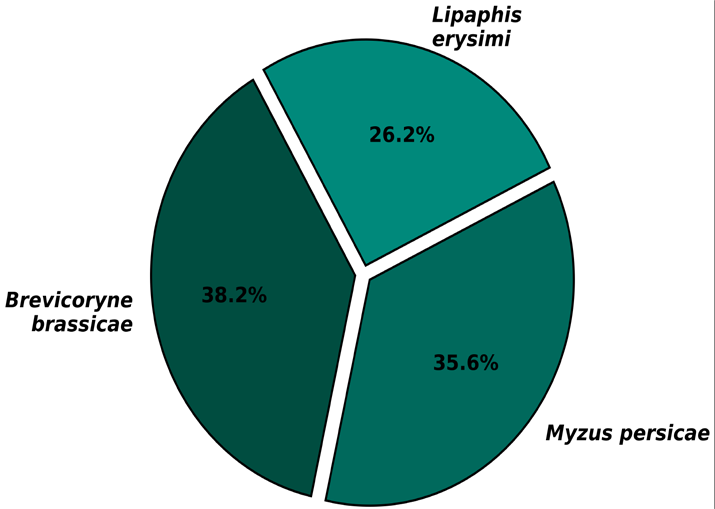 Figure 1
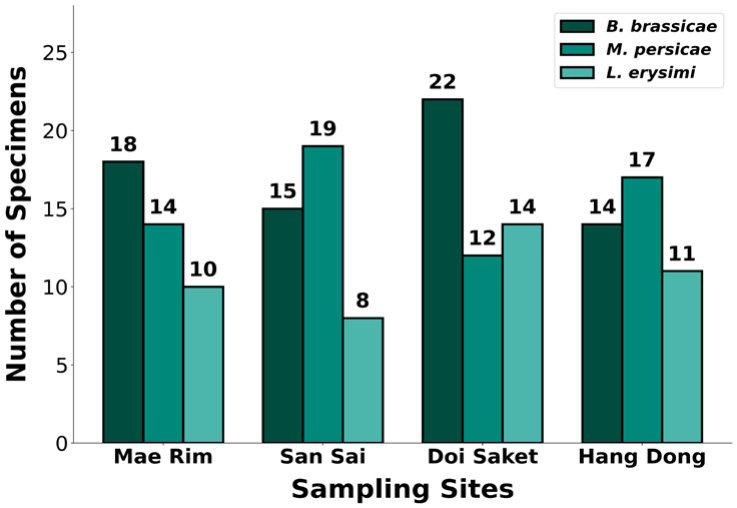 Figure 2
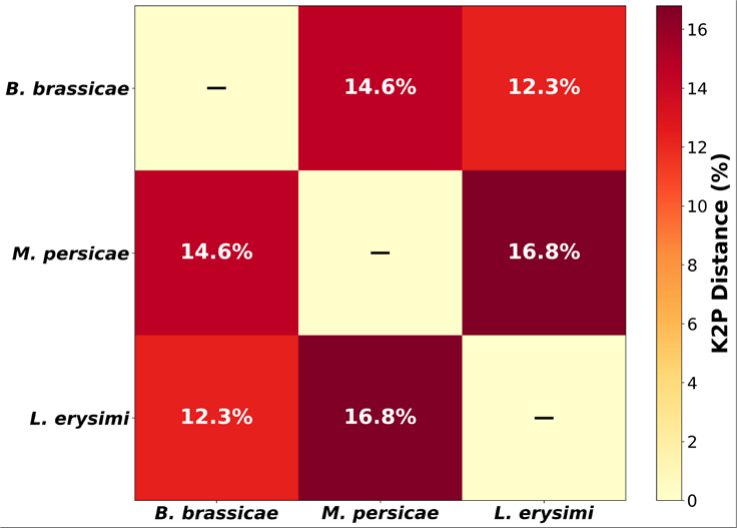 Figure 3
Introduction
Cryptic species diversity refers to the presence of genetically distinct evolutionary lineages that cannot be reliably distinguished through conventional morphological examination [1] . Among agricultural pest insects, the phenomenon of cryptic diversity has profound practical consequences, as morphologically identical pest populations may differ substantially in their host plant preferences, insecticide resistance profiles, and pathogen transmission capabilities [2, 3] . Aphids (Hemiptera: Aphididae) represent a taxonomic group in which cryptic diversity is particularly prevalent, owing to their small body size, limited diagnostic morphological features, and the confounding effects of polyphenism on external appearance [4] . Cruciferous vegetable production in Chiang Mai Province constitutes an important component of highland agriculture in northern Thailand, with cabbage, cauliflower, broccoli, and Chinese kale representing the primary brassicaceous crops cultivated above 300 m elevation [5] . The aphid pest complex on crucifers is dominated by specialist and generalist species whose accurate identification is essential for integrated pest management [3,6] . DNA barcoding using the COI gene provides a standardized approach for aphid species identification that can additionally reveal cryptic lineages within nominal species [1,7] . This research aimed to assess species diversity and detect cryptic genetic variation among aphid pests of cruciferous crops in Chiang Mai Province through COI barcoding. The objectives were to: (i) identify aphid species; (ii) quantify genetic divergence patterns; and (iii) evaluate evidence for cryptic lineages within morphologically uniform species.fenugreek, radish, coriander, and sunflower.
Material and Methods
Material and Methods
Material
Aphid specimens were collected from cruciferous vegetable fields in four districts of Chiang Mai Province, Thailand, between April and September 2024: Mae Rim (18.8969°N, 98.9512°E), San Sai (18.8475°N, 98.9965°E), Doi Saket (18.8766°N, 99.1531°E), and Hang Dong (18.6935°N, 98.9358°E). Host crops included cabbage, cauliflower, broccoli, and Chinese kale. Specimens were collected by leaf sampling and aspiration at biweekly intervals. Ethical approval was obtained from the Chiang Mai Research Center Ethics Committee (Protocol No. CMRC/AB/2024-008). Specimens were preserved in 95% ethanol.
Methods
DNA was extracted using the DNeasy Blood and Tissue Kit (Qiagen) with overnight proteinase K digestion. COI fragments were amplified using LCO1490/HCO2198 primers [8] in 25 μL reactions under cycling conditions of 94°C for 5 min, 35 cycles of 94°C for 30 s, 50°C for 40 s, and 72°C for 1 min, with final extension at 72°C for 10 min. Sequencing was performed bidirectionally on an ABI 3730xl analyzer. Sequences were edited in BioEdit v7.2.5, aligned in MEGA 11 [9] , and compared against BOLD and GenBank [10] . K2P distances were calculated [11] , and neighbor-joining trees constructed with 1,000 bootstrap replicates [12] . showed a broader host association pattern, consistent with the recognized tobacco-adapted and crucifer-adapted host races of M. persicae described in other geographic regions [4, 6] .
Results
Results
Discussion
This research provides the first molecular characterization of the aphid pest complex on cruciferous crops in Chiang Mai Province, revealing three species with evidence of cryptic lineage divergence within M. persicae.
The detection of two genetically distinct M. persicae subclades is consistent with host race differentiation documented globally in this species [4,6] . The 2.4% COI divergence between subclades approaches species delimitation thresholds applied in some aphid taxa [1,3] . The specialist species B. brassicae and L. erysimi exhibited lower intraspecific divergence, consistent with their restricted host ranges. Interspecific distances (12.3-16.8%) confirm unambiguous molecular separation [2,7] . The practical implications extend to resistance management, as tobacco-adapted M. persicae populations carry distinct resistance allele profiles [4] .
Virus transmission implications
The cryptic lineage structure within M. persicae has relevance for understanding differential virus transmission.
M. persicae transmits over 100 plant viruses, and host race identity may influence vector competence for specific viral pathogens affecting cruciferous crops in northern Thailand [3, 6] .
Methodological refinements
The 90.2% sequencing success rate, while adequate, was lower than rates achieved in other insect groups in this research programme. Aphid specimens are prone to DNA degradation due to their soft body structure. Future collections should prioritize immediate ethanol preservation and cold chain maintenance to improve sequencing yields [8,10] .
Conclusion
Aphid pests of cruciferous crops in Chiang Mai Province represent a constant threat to highland vegetable production, yet molecular characterization of this pest complex has been lacking until the present research. Three species were identified through COI barcoding, with the notable finding of cryptic lineage divergence within M. persicae corresponding to putative host-adapted races. Clear interspecific distances confirmed reliable species boundaries for all three taxa. It is recommended that pest monitoring programmes in northern Thailand incorporate molecular diagnostics to distinguish M. persicae host races, enabling targeted resistance management and virus transmission risk assessment.
Future research should employ multi-locus approaches and whole-genome sequencing to fully resolve the extent of reproductive isolation between M. persicae host races in Thai cruciferous production systems and determine whether host race identity influences vector competence for regionally important plant viruses.
Acknowledgement
AcknowledgementsThe authors acknowledge the Chiang Mai Research Center for providing laboratory infrastructure and field station access. S.C.-W. designed the research and drafted the manuscript; N.S.-K. conducted field sampling; K.T.-L. performed molecular and bioinformatic analyses. This research was funded by the Thailand Research Fund.
Figures and tables from the paper
| Rank | Species | n | Abundance (%) | Host Range | Intra. Dist. (%) |
|---|---|---|---|---|---|
| 1 | Brevicoryne brassicae | 60 | 38.2 | Specialist | 0.1-1.3 |
| 2 | Myzus persicae | 56 | 35.6 | Generalist | 0.1-2.6 |
| 3 | Lipaphis erysimi | 41 | 26.2 | Specialist | 0.2-1.4 |
Table text extracted from the original PDF; superscript letters are shown inline. The original table image is below.
View original table image
| M. persicae Subclade | n | Mean Dist. (%) | SD | Primary Host | Divergence (%) |
|---|---|---|---|---|---|
| Subclade I (Crucifer) | 32 | 0.4 | 0.2 | Cabbage, Broccoli | - |
| Subclade II (Generalist) | 24 | 0.6 | 0.3 | Cabbage, Pepper | 2.4 (vs Subclade I) |
Table text extracted from the original PDF; superscript letters are shown inline. The original table image is below.
View original table image
References
12 in the original paper- Foottit RG, Maw HEL, Von Dohlen CD, Hebert PDN. Species identification of aphids through DNA barcodes. Mol Ecol Notes. 2008;8(5):1189-1201.
- Coeur d'Acier A, Cruaud A, Artige E, Genson G, Clamens AL, Pierre E, et al. DNA barcoding and the associated PhylAphidB@se website for the identification of European Aphididae. PLoS One. 2014;9(6):e97620.
- Blackman RL, Eastop VF. Aphids on the World's Crops: An Identification and Information Guide. 2nd ed. Chichester: Wiley; 2000.
- Sokefun OB, Benson GAS. DNA barcoding for deciphering the evolutionary lineages of five insect pests of horticultural crops in Ikorodu Local Government Area of Lagos State, Nigeria. Zool Entomol Lett. 2022;2(2):31-35.
- Saengyot S, Burikam I. Diversity and abundance of aphids on vegetables in Chiang Mai highlands. J Asia Pac Entomol. 2019;22(3):812-820.
- Bass C, Puinean AM, Zimber CT, Denholm I, Field LM, Foster SP, et al. The evolution of insecticide resistance in the peach potato aphid, Myzus persicae. Insect Mol Biol. 2014;23(1):2-20.
- Hebert PDN, Cywinska A, Ball SL, deWaard JR. Biological identifications through DNA barcodes. Proc R Soc Lond B Biol Sci. 2003;270(1512):313-321.
- Folmer O, Black M, Hoeh W, Lutz R, Vrijenhoek R. DNA primers for amplification of mitochondrial cytochrome c oxidase subunit I from diverse metazoan invertebrates. Mol Mar Biol Biotechnol. 1994;3(5):294299.
- Tamura K, Stecher G, Kumar S. MEGA11: Molecular Evolutionary Genetics Analysis version 11. Mol Biol Evol. 2021;38(7):3022-3027.
- Ratnasingham S, Hebert PDN. BOLD: The Barcode of Life Data System. Mol Ecol Notes. 2007;7(3):355-364.
- Kimura M. A simple method for estimating evolutionary rates of base substitutions through comparative studies of nucleotide sequences. J Mol Evol. 1980;16(2):111-120.
- Saitou N, Nei M. The neighbor-joining method: a new method for reconstructing phylogenetic trees. Mol Biol Evol. 1987;4(4):406-425.