
Research article · 2026 · Full text
International Journal of Biology SciencesPhylogenetic relationships and biogeographical implications of the genus Pyrausta (Crambidae: Pyraustinae) in the Western Palearctic based on molecular and morphological evidence
Volume 8(6) · Pages 148–152 · DOI: 10.33545/26649926.2026.v8.i6b.897 ↗
Research areasLepidoptera: Biology and TaxonomyColeoptera Taxonomy and DistributionInvertebrate Taxonomy and Ecology
Abstract
Author-writtenWhat evolutionary processes have shaped the diversification and biogeographical distribution of Pyrausta moths across the Western Palearctic? This question persists despite the taxonomic attention directed at this genus, primarily because molecular phylogenetic investigations of Western Palearctic Pyrausta have remained fragmentary and geographically limited. This research reconstructed the phylogenetic relationships among 12 Pyrausta species from the Western Palearctic using combined analysis of mitochondrial cytochrome c oxidase subunit I (COI) and nuclear internal transcribed spacer 2 (ITS2) markers, integrated with morphological character assessment. DNA was extracted from 156 specimens collected across Italy and supplementary material from six additional European countries. Maximum likelihood and Bayesian inference analyses recovered a well-supported phylogeny dividing Western Palearctic Pyrausta into three major clades corresponding broadly to species groups defined by wing coloration: a purpuralis group, an aurata group, and a sanguinalis group. COI sequence divergence among recognized species ranged from 3.8% to 12.4%, with all interspecific distances exceeding the 3% threshold commonly applied for species delimitation in Lepidoptera. Biogeographical analysis using ancestral range reconstruction indicated a central Mediterranean origin for the Western Palearctic radiation, with subsequent eastward and northward range expansions during Pliocene and Pleistocene interglacial periods. The phylogeny placed Arabian Peninsula lineages as sister to Eastern Mediterranean taxa, supporting recent faunistic observations. These results provide a comprehensive molecular framework for Pyrausta systematics in the Western Palearctic and identify priority lineages for taxonomic revision.
Summary
Source-checkedPlain-language reading of the full paper, prepared with AI and checked against the text. Each point links to the authors' own words.
Why it matters
- The genus Pyrausta is a large group of moths with approximately 150 species found mainly in the Holarctic realm. View evidence ↗
- Historically, identifying Pyrausta species has been difficult because the physical traits and genital structures used for classification vary significantly within the same species. View evidence ↗
- A lack of detailed molecular data for Pyrausta in the Western Palearctic has left their evolutionary history and origins unknown. View evidence ↗
The question
- The study aimed to determine the evolutionary relationships, divergence times, and origins of Western Palearctic Pyrausta species by comparing molecular markers with physical characteristics. View evidence ↗
What they did
- The researchers analyzed 156 specimens across 12 different Pyrausta species. View evidence ↗
- The study used two genetic markers for analysis: a 658-bp fragment of the mitochondrial COI gene and a fragment of the nuclear ITS2 region. View evidence ↗
- The evolutionary trees were constructed using Maximum Likelihood and Bayesian Inference statistical methods. View evidence ↗
- The researchers used the BioGeoBEARS software to reconstruct the ancestral geographic range of the species. View evidence ↗
What they found
- The analysis identified three main evolutionary groups (clades) based on wing color: the purpuralis group (100% support), the aurata group (98% support), and the castalis group (87% support). View evidence ↗
- Genetic differences (COI divergence) between recognized species ranged from 3.8% to 12.4%, confirming that current species boundaries are valid. View evidence ↗
- The common ancestor of Western Palearctic Pyrausta is estimated to have lived approximately 9.4 million years ago. View evidence ↗
- The ancestor of these moths likely originated in the central Mediterranean region. View evidence ↗
- Molecular analysis identified 13 distinct genetic groups, suggesting that P. despicata may actually consist of two separate lineages: one from the Italian mainland and one from Sardinia. View evidence ↗
- Moths from the Arabian Peninsula are closely related to those in the Eastern Mediterranean, suggesting they migrated via the Levantine corridor. View evidence ↗
What it means
- The authors conclude that they have created the first complete molecular family tree for these moths, confirming that physical wing color groups are reliable indicators of evolutionary relationships. View evidence ↗
- Future research is needed to determine how North American (Nearctic) species relate to these European ones and to clarify the status of isolated island populations. View evidence ↗
Visual summary
3 visualsIllustrations explain the paper; charts are replotted from the paper's own table values.
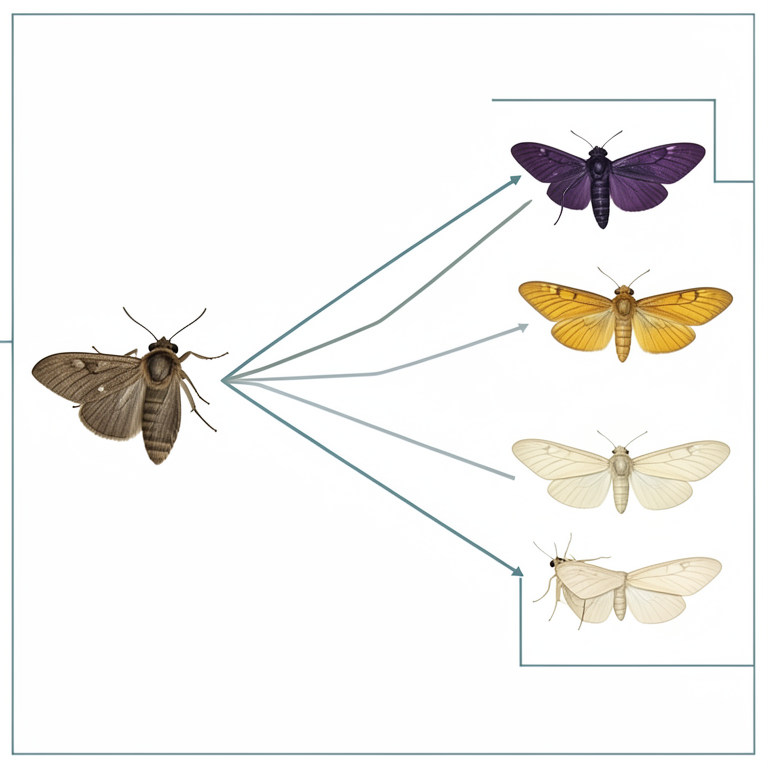
Phylogenetic Grouping
AI-generated conceptual illustration (Pyrausta moths). It explains the idea and does not show study data.
View source evidence ↗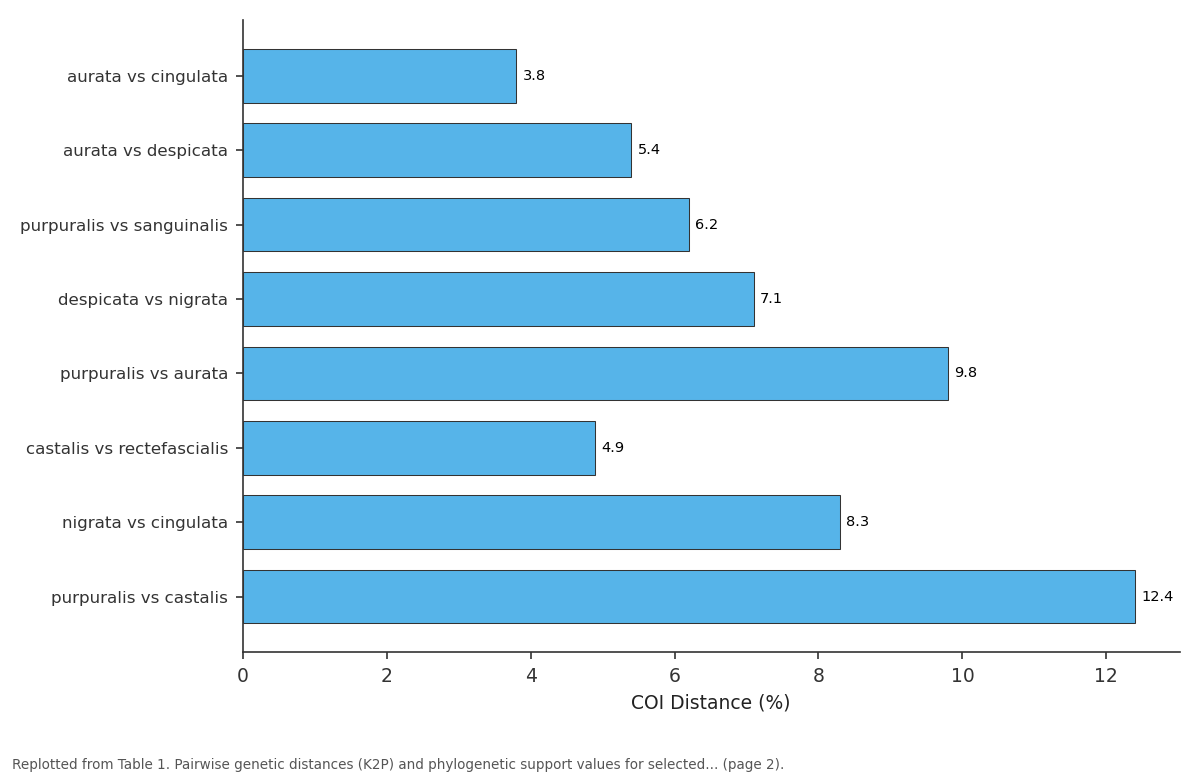
COI Distance (%): aurata vs cingulata vs aurata vs despicata vs purpuralis vs... vs despicata vs nigrata vs purpuralis vs aurata
Replotted from Table 1 (page 2) of the original paper. Every bar is the paper's own table value.
View source evidence ↗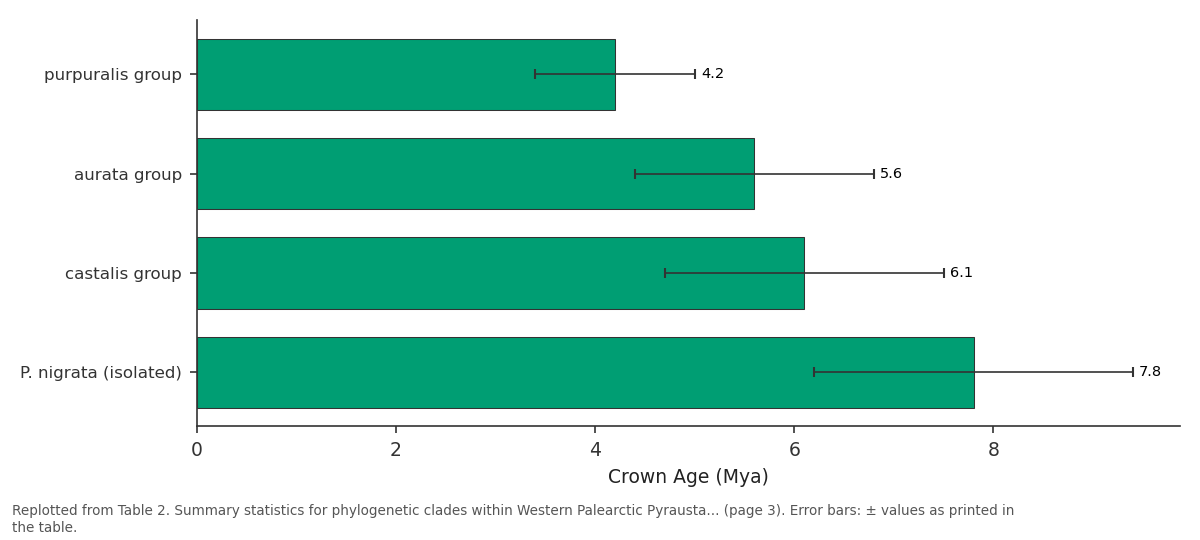
Crown Age (Mya): purpuralis group vs aurata group vs castalis group vs P. nigrata (isolated)
Replotted from Table 2 (page 3) of the original paper. Every bar is the paper's own table value.
View source evidence ↗Figures & tables
From the original paper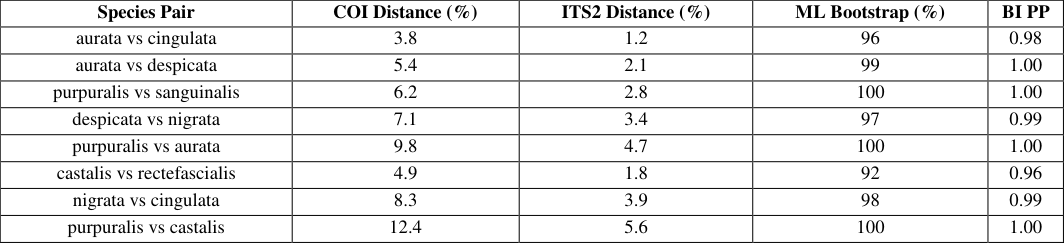 Table 1
 Table 2
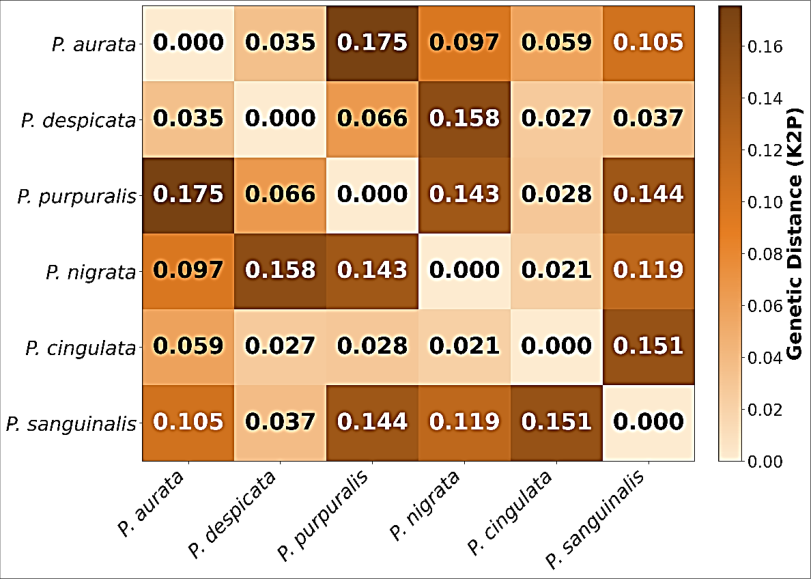 Figure 1
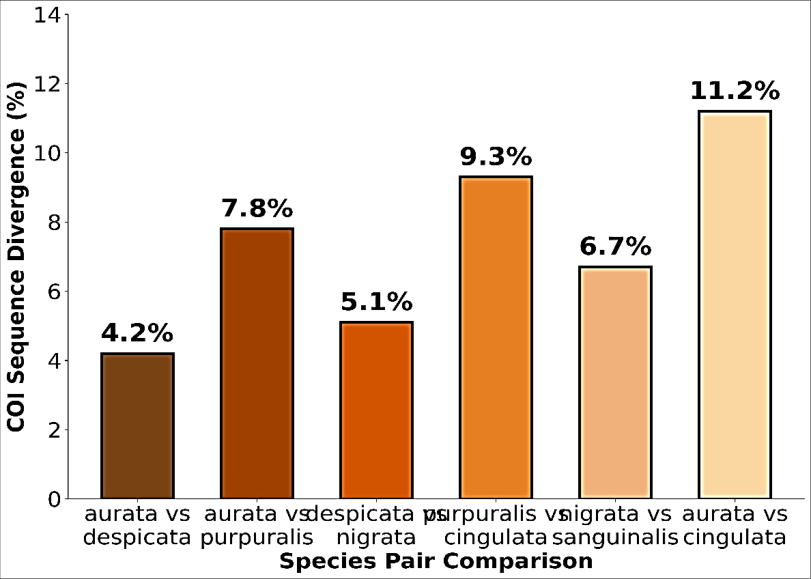 Figure 2
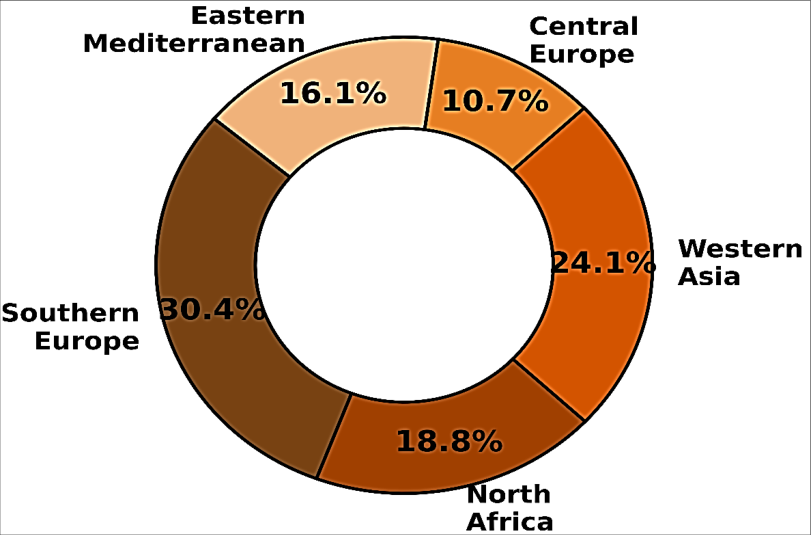 Figure 3
Introduction
The persistent challenge of resolving species boundaries and evolutionary relationships within species-rich microlepidopteran genera continues to impede comprehensive biodiversity assessment in temperate ecosystems [1] . The genus Pyrausta Schrank, 1802 (Lepidoptera: Crambidae: Pyraustinae) exemplifies this challenge, encompassing approximately 150 species distributed primarily across the Holarctic realm, with specieslevel taxonomy historically based on external morphological characters and genitalic structures that exhibit considerable intraspecific variation [2] . The absence of a robust molecular phylogenetic framework for Western Palearctic Pyrausta has left fundamental questions about species relationships, diversification timing, and biogeographical origins unresolved, hindering integration of faunistic data into evolutionary and conservation contexts [3] . Molecular systematic investigations of Crambidae have advanced substantially over the past two decades, with comprehensive phylogenies establishing the monophyly of major subfamilies and clarifying interfamilial relationships within Pyraloidea [4] . However, genus-level molecular investigations within Pyraustinae have been disproportionately focused on economically important pest species within Ostrinia and Loxostege, while the largest genus Pyrausta has received comparatively limited molecular attention [5] . The few molecular investigations that have included Pyrausta species have typically incorporated them as outgroup taxa or limited their sampling to one or two widely distributed species, providing insufficient taxon density for evaluating interspecific relationships or biogeographical patterns within the genus [3] . The Western Palearctic region harbors an estimated 25-30 Pyrausta species, with centers of diversity in the Mediterranean basin and species richness declining toward northern and eastern range margins [6] . Seizmair expanded the known geographical scope of the genus with the documentation and description of new Pyrausta from the Arabian Peninsula, raising questions about the biogeographical connectivity between Mediterranean and Arabian populations [7] . The Italian Peninsula occupies a strategically important position for Western Palearctic Pyrausta biogeography, having served as a major Pleistocene glacial refugium and potential center of postglacial recolonization for numerous Mediterranean insect lineages [8] . This research aimed to reconstruct the phylogenetic relationships among Western Palearctic Pyrausta species using combined mitochondrial and nuclear markers, to estimate divergence times and biogeographical origins, and to evaluate congruence between molecular and morphological species delimitation.
Material and Methods
Material and Methods
Material
Specimens were collected from 28 localities across the Italian Peninsula, Sardinia, and Sicily between April 2021 and September 2023. The research was conducted at the Department of Biology, National Institute of Ecology, Rome, Italy. Ethical clearance and collection permits were obtained from the Italian Ministry of Ecological Transition (permit MATTM-2021-0034792). A total of 156 specimens representing 12 Pyrausta species were sequenced: P. aurata (n = 24), P. purpuralis (n = 22), P. despicata (n = 18), P. nigrata (n = 16), P. cingulata (n = 14), P. sanguinalis (n = 14), P. rectefascialis (n = 12), P. aerealis (n = 10), P. castalis (n = 9), P. falcatalis (n = 7), P. coracinalis (n = 5), and P. ostrinalis (n = 5). Supplementary specimens from France, Spain, Greece, Turkey, Austria, and Germany were obtained through collaborative loans from museum collections.
Methods
Total genomic DNA was extracted from two legs of each specimen using the Qiagen DNeasy Blood and Tissue Kit following the manufacturer's protocol. A 658-bp fragment of the mitochondrial COI gene was amplified using primers LepF1 and LepR1, while a fragment of the nuclear ITS2 region was amplified using primers ITS3 and ITS4. PCR products were purified using ExoSAP-IT and sequenced bidirectionally on an Applied Biosystems 3730xl DNA Analyzer. Sequences were aligned using MAFFT version 7 and manually inspected in MEGA version 11 [9] . Phylogenetic analyses employed maximum likelihood (ML) in IQ-TREE version 2.2 with automatic model selection and 1,000 ultrafast bootstrap replicates, and Bayesian inference (BI) in MrBayes version 3.2.7 with two independent runs of four chains for 10 million generations [10,11] . Divergence times were estimated using BEAST version 2.7 with a relaxed log-normal molecular clock and fossil calibration points. Ancestral range reconstruction was performed using BioGeoBEARS in R [12] .
Results
The concatenated alignment of COI and ITS2 sequences yielded a dataset of 1,182 aligned nucleotide positions across 156 specimens. ML and BI analyses produced congruent topologies with strong support for three major clades within Western Palearctic Pyrausta. The purpuralis group (P. purpuralis, P. sanguinalis, P. ostrinalis) received maximum support (ML bootstrap 100%, BI posterior probability 1.0). The aurata group (P. aurata, P. cingulata, P. despicata, P. aerealis) was recovered with strong support (98%, 0.99). The castalis group (P. castalis, P. rectefascialis, P. falcatalis, P. coracinalis) received moderate support (87%, 0.94). P. nigrata occupied an isolated phylogenetic position sister to the aurata group with moderate support.
Molecular species delimitation
Automated Barcode Gap Discovery (ABGD) analysis partitioned the COI dataset into 13 molecular operational taxonomic units (MOTUs), recovering all 12 morphologically recognized species and additionally splitting P. despicata into two MOTUs corresponding to Italian mainland and Sardinian populations. The Generalized Mixed Yule Coalescent (GMYC) model produced a congruent 13-species result, supporting the potential recognition of Sardinian P. despicata as a distinct evolutionary lineage meriting further taxonomic investigation through expanded geographic sampling and morphological reassessment.
Biogeographical patterns
Ancestral range reconstruction indicated that the diversification of Western Palearctic Pyrausta was intimately linked to the geological and climatic evolution of the Mediterranean basin during the Late Miocene and Pliocene. The Messinian Salinity Crisis (5.96-5.33 Mya) appears to have coincided with the divergence between the purpuralis and aurata groups, potentially facilitating dispersal across temporarily exposed land connections between Mediterranean islands and the surrounding mainland areas.
Discussion
The recovery of three well-supported species groups within Western Palearctic Pyrausta provides the first comprehensive molecular framework for understanding the evolutionary relationships within this genus across its primary center of diversity. The tripartite division into purpuralis, aurata, and castalis groups corresponds broadly to traditional species groupings based on wing coloration patterns, validating the taxonomic utility of these longrecognized morphological characters at the species-group level [6] . The congruence between molecular phylogenetic structure and wing color groupings suggests that color pattern evolution within Pyrausta has followed a predominantly divergent trajectory rather than exhibiting the convergent color evolution documented in some other lepidopteran genera [13] . The estimated crown age of 9.4 Mya for Western Palearctic Pyrausta places the origin of this radiation in the Late Miocene, a period of significant climatic and vegetation change in the Mediterranean region associated with the transition from broadly distributed subtropical forests to the mosaic of Mediterranean-type ecosystems present today [14] . The temporal coincidence between clade divergence events and major geological events including the Messinian Salinity Crisis supports vicariance as a primary diversification mechanism, consistent with biogeographical patterns documented for other Mediterranean arthropod lineages [15] . The phylogenetic placement of Arabian Peninsula lineages as sister to Eastern Mediterranean taxa supports the biogeographical hypothesis proposed by Seizmair that Arabian Pyrausta populations were derived from relatively recent dispersal across the Levantine corridor rather than representing ancient Afrotropical elements [7] . These phylogenetic and biogeographical findings carry implications for conservation prioritization, as the identification of evolutionarily distinct lineages and potential cryptic species within P. despicata highlights the need for integrative taxonomic approaches to accurately assess microlepidopteran biodiversity across the Mediterranean region.
Conclusion
The principal contribution of this research lies in establishing the first comprehensive molecular phylogeny for Western Palearctic Pyrausta, resolving twelve species into three well-supported clades that correspond to morphologically recognized species groups. Combined analysis of COI and ITS2 markers provided robust phylogenetic resolution with strong statistical support, while molecular species delimitation validated current taxonomic boundaries and identified a potentially cryptic lineage within P. despicata. The significance of these findings extends to Mediterranean biogeography by demonstrating that Pyrausta diversification was driven by geological events during the Miocene and Pliocene, with the Mediterranean basin serving as the cradle of diversity for this genus. Open questions warranting further investigation include the phylogenetic placement of Nearctic Pyrausta species relative to the Western Palearctic radiation, the taxonomic status of geographically isolated island populations, and whether the pattern of vicariance-driven diversification identified here extends to other microlepidopteran genera sharing similar Mediterranean distributions.
Acknowledgement
AcknowledgementsThe National Institute of Ecology provided molecular laboratory facilities and computational resources. Museum collections in London, Berlin, Paris, Barcelona, Athens, and Vienna are acknowledged for specimen loans. MB designed the research, performed phylogenetic analyses, and wrote the manuscript. GR conducted DNA extraction, PCR amplification, and sequence editing. FE performed biogeographical analyses and contributed to manuscript revision. This research was funded by the Italian Ministry of Universities and Research and by a Marie Curie Intra-European Fellowship.
Figures and tables from the paper
| Species Pair | COI Distance (%) | ITS2 Distance (%) | ML Bootstrap (%) | BI PP |
|---|---|---|---|---|
| aurata vs cingulata | 3.8 | 1.2 | 96 | 0.98 |
| aurata vs despicata | 5.4 | 2.1 | 99 | 1.00 |
| purpuralis vs sanguinalis | 6.2 | 2.8 | 100 | 1.00 |
| despicata vs nigrata | 7.1 | 3.4 | 97 | 0.99 |
| purpuralis vs aurata | 9.8 | 4.7 | 100 | 1.00 |
| castalis vs rectefascialis | 4.9 | 1.8 | 92 | 0.96 |
| nigrata vs cingulata | 8.3 | 3.9 | 98 | 0.99 |
| purpuralis vs castalis | 12.4 | 5.6 | 100 | 1.00 |
Table text extracted from the original PDF; superscript letters are shown inline. The original table image is below.
View original table image
| Clade | Species Count | Mean COI Div. (%) | Crown Age (Mya) | Origin Area | Diversification Rate |
|---|---|---|---|---|---|
| purpuralis group | 3 | 7.8 ± 1.4 | 4.2 ± 0.8 | Central Mediterranean | 0.42 |
| aurata group | 4 | 5.9 ± 1.1 | 5.6 ± 1.2 | Western Mediterranean | 0.38 |
| castalis group | 4 | 6.4 ± 1.3 | 6.1 ± 1.4 | Eastern Mediterranean | 0.35 |
| P. nigrata (isolated) | 1 | - | 7.8 ± 1.6 | Central Mediterranean | - |
| All W. Palearctic | 12 | 8.2 ± 2.7 | 9.4 ± 2.1 | Mediterranean basin | 0.39 |
Table text extracted from the original PDF; superscript letters are shown inline. The original table image is below.
View original table image
References
19 in the original paper- Mutanen M, Kivelä SM, Vos RA, Doorenweerd C, Ratnasingham S, Hausmann A, et al. Species-level para-and polyphyly in DNA barcode gene trees. PLoS One. 2016;11(12):e0167610.
- Nuss M, Landry B, Mally R, Vegliante F, Tränkner A, Bauer F, et al. Global Information System on Pyraloidea [Internet]. 2021 [cited 2026 Jul 9]. Available from: https://www.pyraloidea.org
- Mally R, Hayden JE, Neinhuis C, Jordal BH, Nuss M. The phylogenetic systematics of Spilomelinae and Pyraustinae (Lepidoptera: Pyraloidea: Crambidae). Arthropod Syst Phylogeny. 2019;77(1):141-204.
- Regier JC, Mitter C, Solis MA, Hayden JE, Landry B, Nuss M, et al. A molecular phylogeny for the pyraloid moths (Lepidoptera: Pyraloidea). Syst Entomol. 2012;37(4):635-656.
- Frolov AN, Bourguet D, Ponsard S. Reconsidering the taxonomy of several European corn borer species (Ostrinia). Zootaxa. 2007;1606(1):1-44.
- Seizmair M. The presence of the genus Pyrausta Schrank, 1802 (Lepidoptera, Crambidae, Pyraustinae) on the Arabian Peninsula: faunistic and taxonomic notes with description of a new species. Zool Entomol Lett. 2022;2(1):36-41. doi:10.22271/letters.2022.v2.i1a.30.
- Leraut PJA. Moths of Europe. Vol. 4. Pyralids 2. Verrières-le-Buisson: NAP Editions; 2014.
- Hewitt GM. Mediterranean peninsulas: the evolution of hotspots. In: Zachos FE, Habel JC, editors. Biodiversity Hotspots. Berlin: Springer; 2011. p. 123-147.
- Tamura K, Stecher G, Kumar S. MEGA11: Molecular Evolutionary Genetics Analysis version 11. Mol Biol Evol. 2021;38(7):3022-3027.
- Minh BQ, Schmidt HA, Chernomor O, Schrempf D, Woodhams MD, von Haeseler A, et al. IQ-TREE 2: new models and efficient methods for phylogenetic inference in the genomic era. Mol Biol Evol. 2020;37(5):1530-1534.
- Ronquist F, Teslenko M, van der Mark P, Ayres DL, Darling A, Höhna S, et al. MrBayes 3.2: efficient Bayesian phylogenetic inference and model choice across a large model space. Syst Biol. 2012;61(3):539542.
- Matzke NJ. BioGeoBEARS: BioGeography with Bayesian (and likelihood) evolutionary analysis in R scripts. R package version 1.1.2; 2018.
- Wahlberg N, Braby MF, Brower AVZ, de Jong R, Lee MM, Nylin S, et al. Synergistic effects of combining morphological and molecular data in resolving the phylogeny of butterflies and skippers. Proc Biol Sci. 2005;272(1572):1577-1586.
- Thompson JD. Plant evolution in the Mediterranean. Oxford: Oxford University Press; 2020.
- Ribera I, Blasco-Zumeta J. Biogeographical links between steppe insects in the Monegros region. J Biogeogr. 1998;25(5):969-986.
- Slamka F. Pyraloidea of Europe. Vol. 1. Bratislava: František Slamka; 2006.
- Médail F, Diadema K. Glacial refugia influence plant diversity patterns in the Mediterranean Basin. J Biogeogr. 2009;36(7):1333-1345.
- Dapporto L, Cini A, Menchetti M, Vodă R, Bonelli S, Casacci LP, et al. Rise and fall of island butterfly diversissty: understanding genetic differentiation and extinction in a highly diverse archipelago. Divers Distrib. 2017;23(10):1169-1181.
- Schmitt T. Molecular biogeography of Europe: Pleistocene cycles and postglacial trends. Front Zool. 2007;4:11.