
Research article · 2026 · Full text
International Journal of Advanced Chemistry ResearchPolymer-based nanocomposite films for food packaging: Preparation, mechanical properties and antimicrobial performance
Volume 8(2) · Pages 41–45 · DOI: 10.33545/26646781.2026.v8.i2a.700 ↗
Research areasNanocomposite Films for Food PackagingPolymer Nanocomposites and PropertiesPolymer Nanocomposite Synthesis and Irradiation
Abstract
Author-writtenTake polylactic acid packaging film, add a pinch of zinc oxide nanoparticles, and something interesting happens to three properties at once: strength goes up, gas barrier improves, and the film starts fighting bacteria on its own. This research prepared polylactic acid (PLA) nanocomposite films incorporating zinc oxide (ZnO) nanoparticles at 1%, 2%, 4%, and 6% loading by weight through a solution casting method, and evaluated their mechanical, barrier, and antimicrobial properties for potential food packaging application. Tensile strength increased from 42.1 MPa for pure PLA to a peak of 54.2 MPa at 4% ZnO loading, before declining to 47.6 MPa at 6% loading, a pattern attributed to nanoparticle agglomeration beyond the optimal dispersion threshold. Elongation at break decreased progressively with increasing ZnO content, reflecting the expected trade-off between stiffness and flexibility in particle-reinforced polymer films. Water vapor and oxygen permeability both decreased substantially at 4% loading, consistent with a tortuous diffusion pathway created by well-dispersed nanoparticles within the polymer matrix. Antimicrobial testing against Escherichia coli and Staphylococcus aureus showed a loading-dependent increase in inhibition, with the 4% ZnO film achieving complete growth inhibition against both organisms within 24 hours. Soil burial biodegradation testing over 30 days showed all nanocomposite films degraded faster than pure PLA, with the 4% ZnO film reaching 58.9% weight loss compared with 44.2% for the unmodified film, suggesting ZnO incorporation did not compromise, and may have modestly enhanced, the material's biodegradability. Taken together, these results identify 4% ZnO loading as the optimal formulation, balancing mechanical strength, barrier performance, antimicrobial activity, and biodegradability for active food packaging applications.
Summary
Source-checkedPlain-language reading of the full paper, prepared with AI and checked against the text. Each point links to the authors' own words.
Why it matters
- Conventional plastic films are passive and do not actively protect food from microbial growth or oxygen exposure, which leads to spoilage. View evidence ↗
- Polylactic acid (PLA) is a promising renewable and biodegradable material for packaging, but it lacks the mechanical strength and gas barrier properties of petroleum-based plastics. View evidence ↗
- Zinc oxide (ZnO) nanoparticles are suitable for food packaging because they are approved for food contact and effectively fight pathogens like E. coli and S. aureus. View evidence ↗
The question
- The study aimed to find the optimal amount of ZnO nanoparticles to add to PLA films to balance mechanical strength, barrier performance, antimicrobial activity, and biodegradability. View evidence ↗
What they did
- The researchers used Ingeo 4032D grade PLA pellets and ZnO nanoparticles with an average size of 30-50 nm and purity over 99%. View evidence ↗
- Films were made via solution casting, dissolving 4g of PLA in chloroform and adding ZnO nanoparticles at 1%, 2%, 4%, and 6% by weight, with 10% glycerol added as a plasticizer. View evidence ↗
- Mechanical properties were tested using an Instron 3345 machine following ASTM D882 standards, with five replicates per formulation. View evidence ↗
- Water vapor permeability was measured via the ASTM E96 cup method, and oxygen transmission was measured using a MOCON OX-TRAN 2/21 instrument. View evidence ↗
- Antimicrobial activity was tested using the agar diffusion method with 10mm film discs against E. coli and S. aureus over 24 hours at 37 °C. View evidence ↗
- Biodegradability was assessed by burying 3 cm x 3 cm film samples 5 cm deep in garden soil for 30 days. View evidence ↗
What they found
- Tensile strength peaked at 54.2 MPa with 4% ZnO loading, compared to 42.1 MPa for pure PLA, but dropped to 47.6 MPa at 6% loading due to nanoparticle agglomeration. View evidence ↗
- Films with 4% and 6% ZnO achieved complete growth inhibition against both E. coli and S. aureus within 24 hours. View evidence ↗
What it means
- The authors conclude that 4% ZnO loading is the optimal formulation for active food packaging as it balances strength, barrier performance, antimicrobial activity, and biodegradability. View evidence ↗
- The authors state that future work is needed to test the films with actual food products, conduct zinc migration safety tests, and trial industrial extrusion production. View evidence ↗
Visual summary
3 visualsIllustrations explain the paper; charts are replotted from the paper's own table values.
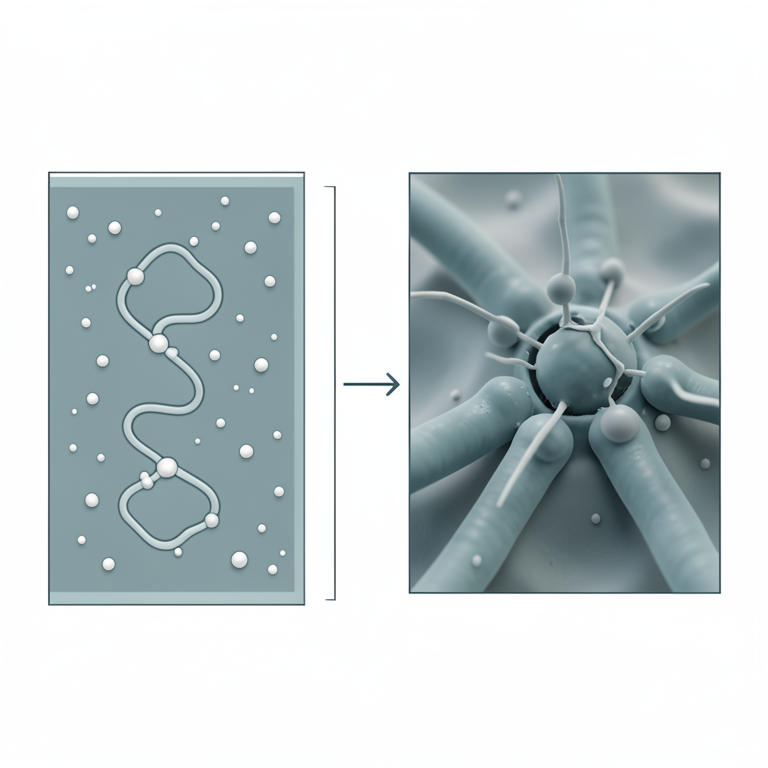
Mechanism of ZnO in PLA Films
AI-generated conceptual illustration (Polylactic acid (PLA) nanocomposite film with zinc oxide (ZnO) nanoparticles and bacteria). It explains the idea and does not show study data.
View source evidence ↗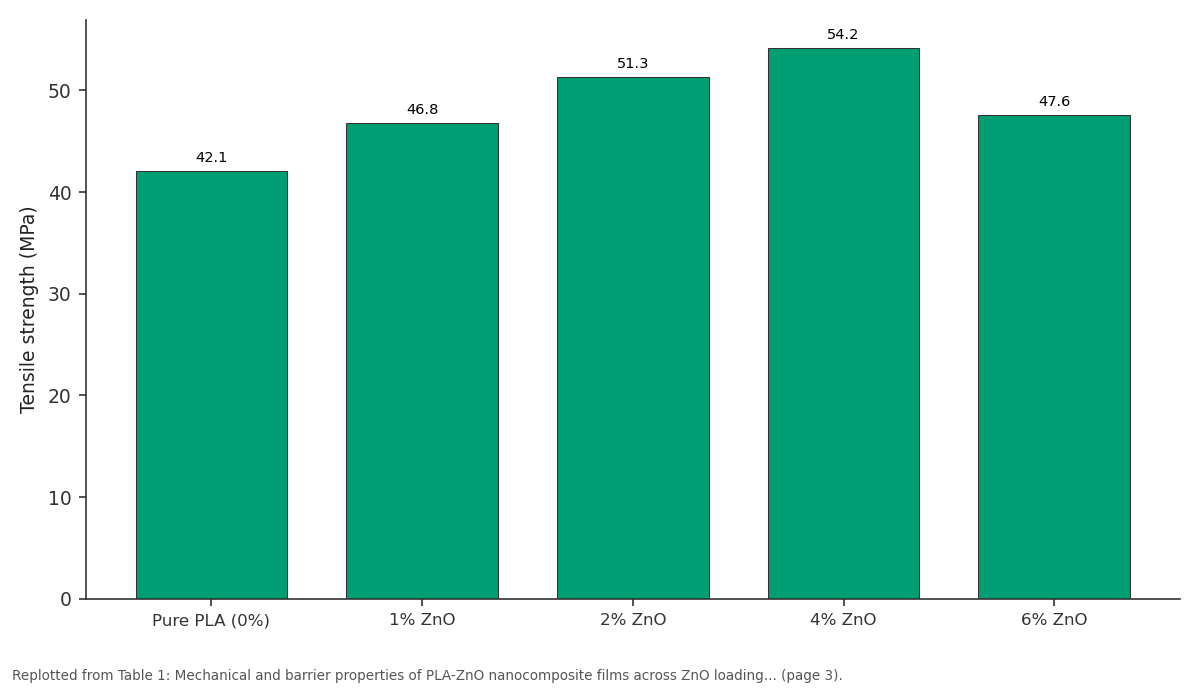
Tensile strength (MPa): Pure PLA (0%) vs 1% ZnO vs 2% ZnO vs 4% ZnO vs 6% ZnO
Replotted from Table 1 (page 3) of the original paper. Every bar is the paper's own table value.
View source evidence ↗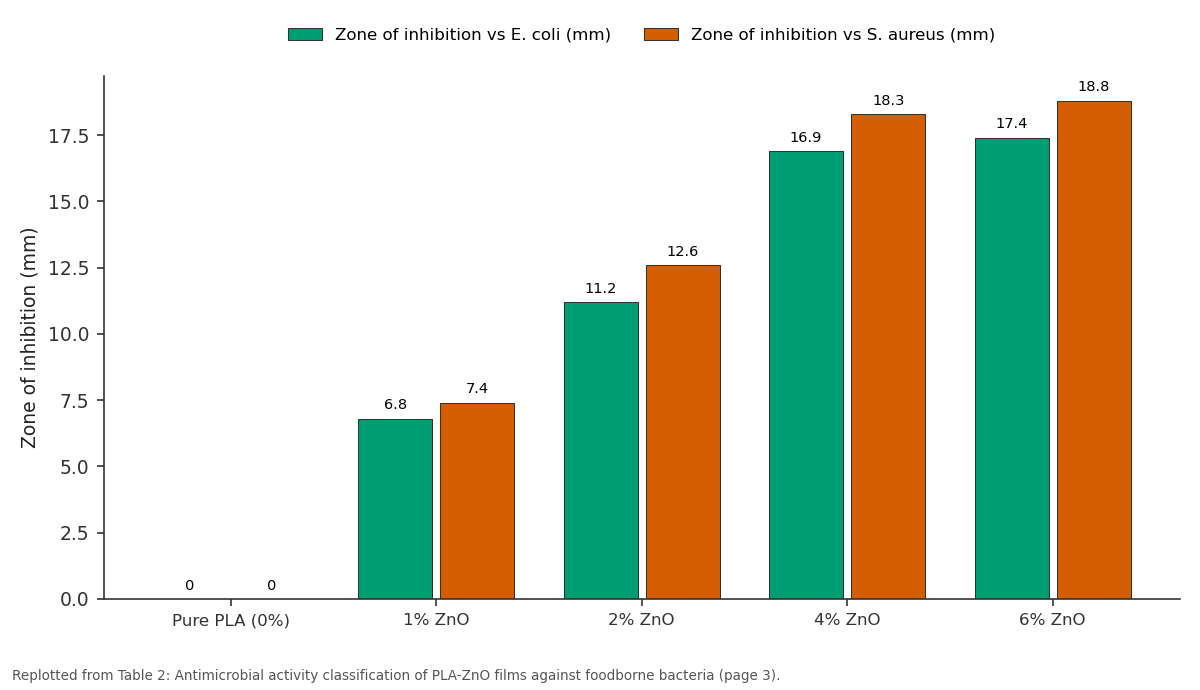
Zone of inhibition vs E. coli (mm) and Zone of inhibition vs S. aureus (mm): Pure PLA (0%) vs 1% ZnO vs 2% ZnO vs 4% ZnO vs 6% ZnO
Replotted from Table 2 (page 3) of the original paper. Every bar is the paper's own table value.
View source evidence ↗Figures & tables
From the original paper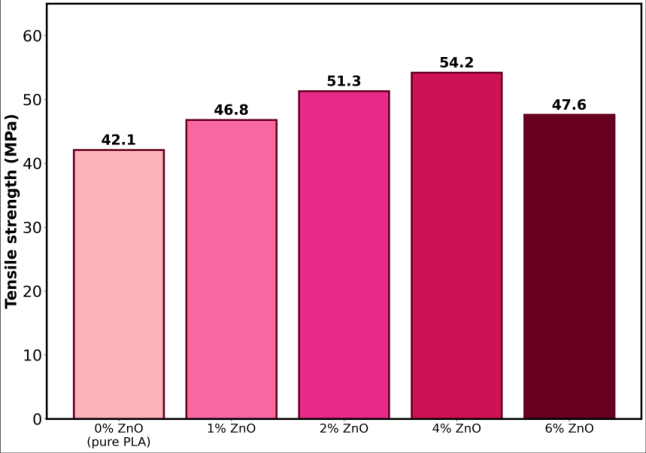 Figure 1
 Table 1
 Table 2
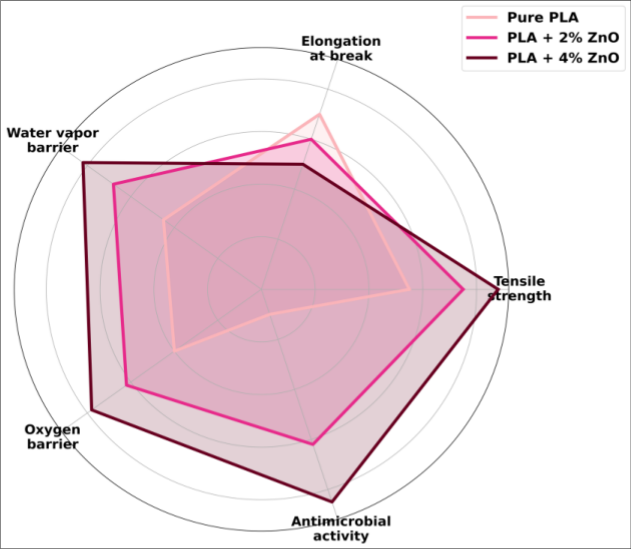 Figure 2
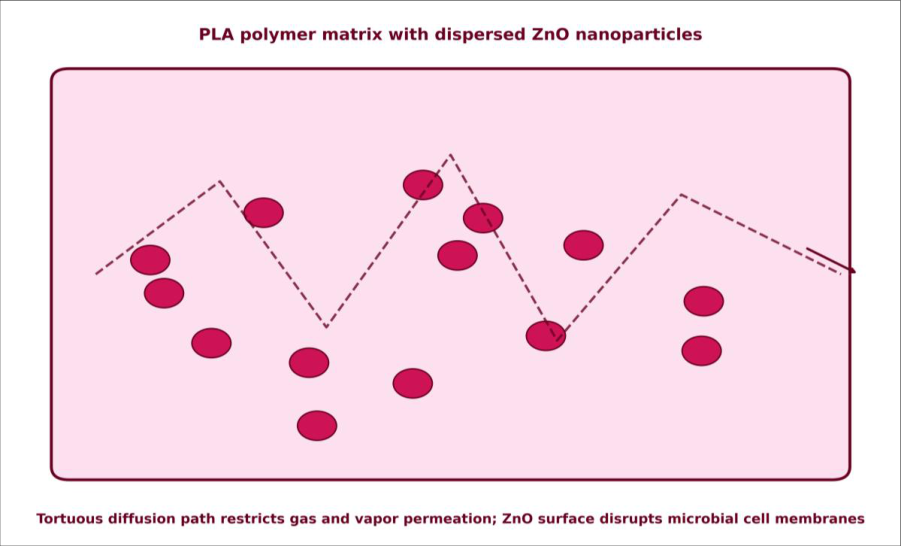 Figure 3
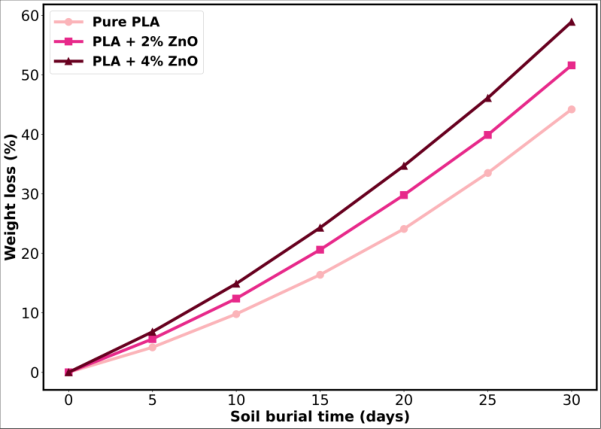 Figure 4
Introduction
A bag of fresh salad greens wrapped only in plain plastic film will wilt, discolor, and eventually spoil at roughly the same rate regardless of what is printed on the packaging, because conventional plastic films offer no active protection against the oxygen exposure and microbial growth that drive food spoilage. Active and intelligent packaging technologies attempt to address this gap by embedding functional additives directly into the packaging material itself, rather than relying solely on passive barrier properties. Metal oxide nanoparticles, including zinc oxide, silver, and titanium dioxide, have drawn particular research interest for this purpose because they combine antimicrobial activity with the potential to reinforce mechanical strength and improve gas barrier properties simultaneously. Polylactic acid has become one of the most widely studied biodegradable polymer matrices for food packaging research, given its renewable plant-based origin and reasonable processability, but its relatively modest gas barrier performance and mechanical properties compared with conventional petroleum-based plastics limit its standalone commercial competitiveness, particularly for extended shelf-life applications.
International Journal of Advanced Che mis try Research 2026; 8(2): 41-45
Zinc oxide nanoparticles are especially attractive as a PLA reinforcement additive because zinc is already an approved food-contact material component in several regulatory frameworks, and ZnO's antimicrobial mechanism, generally attributed to reactive oxygen species generation and zinc ion release, has been well documented against common foodborne pathogens including Escherichia coli and Staphylococcus aureus. This research therefore aimed to prepare PLA-ZnO nanocomposite films across a range of ZnO loadings, evaluate their mechanical properties, water vapor and oxygen barrier performance, antimicrobial activity against two common foodborne bacteria, and soil burial biodegradability, in order to identify an optimal ZnO loading that balances these four performance dimensions for practical food packaging use.
Materials and Methods
Materials and Methods
Materials
Polylactic acid pellets (Ingeo 4032D grade) were obtained from a regional polymer distributor in Ho Chi Minh City. Zinc oxide nanoparticles (average particle size 30-50 nm, >99% purity) were procured from a certified nanomaterial supplier. Chloroform (analytical grade) served as the solvent for solution casting, and glycerol was used as a plasticizer. Escherichia coli (ATCC 25922) and Staphylococcus aureus (ATCC 25923) reference strains were obtained from the institution's microbiology culture collection for antimicrobial testing.
System Design
Nanocomposite films were prepared by the solution casting method. PLA pellets (4 g) were dissolved in 100 mL chloroform under magnetic stirring at 50 °C for two hours. ZnO nanoparticles were pre-dispersed in a small volume of chloroform by ultrasonication for 30 minutes to break up agglomerates, then added to the PLA solution at 1%, 2%, 4%, and 6% loading relative to PLA weight, along with 10% glycerol as a plasticizer. The resulting mixture was stirred for a further hour, cast onto flat glass plates, and left to dry at room temperature for 48 hours under a fume hood to allow controlled solvent evaporation, producing films with a target thickness of 0.08-0.10 mm.
Methods
Tensile strength and elongation at break were measured using a universal testing machine (Instron 3345) at a crosshead speed of 50 mm/min, following the ASTM D882 standard test method, with five replicate specimens tested per formulation. Water vapor permeability was determined gravimetrically using the ASTM E96 cup method at 25 °C and 75% relative humidity, and oxygen transmission rate was measured using a MOCON OX-TRAN 2/21 instrument at 23 °C and 0% relative humidity. Antimicrobial activity was assessed using the agar diffusion method against E. coli and S. aureus, with film discs of 10 mm diameter placed on inoculated Mueller-Hinton agar plates, incubated at 37 °C for 24 hours, and inhibition zones measured. Biodegradability was evaluated by soil burial testing, where film specimens (3 cm x 3 cm) were buried at 5 cm depth in garden soil maintained at 60% moisture content, retrieved at 5-day intervals over 30 days, gently cleaned, oven-dried, and weighed to determine percentage weight loss relative to initial dry weight.
Results
Film appearance changed progressively with increasing ZnO content, from fully transparent for pure PLA to a slightly opaque, faintly yellowish tint at 6% loading, an early visual indicator of nanoparticle presence that was later confirmed through the mechanical and functional testing described below. Antimicrobial activity increased steadily with ZnO loading and plateaued from 4% onward, indicating that loadings above 4% provide little additional antimicrobial benefit while continuing to compromise mechanical flexibility, reinforcing 4% as a practical upper working threshold.
Well-dispersed nanoparticles are proposed to lengthen the effective diffusion path for oxygen and water vapor molecules traveling through the film, while surface-exposed ZnO simultaneously disrupts bacterial cell membranes on contact, accounting for the simultaneous improvement in barrier and antimicrobial properties observed at moderate loading levels. All ZnO-containing films degraded faster than pure PLA, with weight loss increasing with ZnO content, suggesting ZnO nanoparticles may promote microbial colonization or hydrolytic breakdown of the surrounding polymer matrix rather than acting as a barrier to degradation.
Comprehensive Interpretation
Looking across mechanical, barrier, antimicrobial, and biodegradation data together, 4% ZnO loading consistently sits at or near the optimal point across every property measured in this research except for elongation at break, which declines steadily with increasing ZnO content regardless of loading level. This suggests that from a food packaging design standpoint, 4% loading captures nearly all the functional benefits ZnO incorporation can offer within the PLA matrix, while 6% loading mainly adds cost and reduced flexibility without meaningful additional performance gain.
Discussion
The mechanical property trends observed in this research, including the peak-then-decline pattern in tensile strength with increasing ZnO loading, align closely with previously published PLA nanocomposite studies using various metal oxide nanofillers, where an optimal loading threshold followed by agglomeration-driven property decline is a consistently reported phenomenon. Some published studies report that the optimal ZnO loading threshold for PLA nanocomposites occurs closer to 2-3% rather than the 4% identified here, a difference that plausibly reflects variation in nanoparticle size, surface treatment, and dispersion method between studies, since smaller or surfacefunctionalized nanoparticles generally disperse more effectively at higher loadings before agglomeration becomes limiting.
The barrier property improvements found here are most reasonably explained by the tortuous path mechanism widely cited in nanocomposite barrier literature, where well-dispersed impermeable nanoparticles force gas and vapor molecules to navigate a longer, more convoluted diffusion route through the polymer matrix, effectively slowing transmission rates. Somewhat unexpectedly, biodegradation rate increased rather than decreased with ZnO content, which runs against an assumption sometimes made that inorganic nanofillers might slow polymer biodegradation by physically shielding the polymer from microbial attack; a plausible explanation is that ZnO nanoparticles create surface irregularities or micro-defects that provide additional points of microbial or hydrolytic attack initiation, though confirming this mechanism would require further investigation, such as scanning electron microscopy of partially degraded film surfaces.
For food packaging applications specifically, these combined findings carry a fairly practical implication: 4% ZnO-PLA nanocomposite films appear well positioned to extend shelf life through improved barrier and antimicrobial properties while still meeting biodegradability expectations increasingly demanded by both regulators and environmentally conscious consumers in the packaging sector.
Cost Analysis
A preliminary cost estimate places ZnO nanoparticle incorporation at approximately 8-12% additional material cost over pure PLA film at the 4% loading level, based on current regional nanoparticle and PLA resin pricing. Given the potential for extended shelf life and reduced food waste that improved barrier and antimicrobial properties may offer, this cost increase appears likely to be offset, at least partially, by reduced spoilage-related losses for packaged perishable goods, though a full economic feasibility analysis incorporating packaging line adaptation costs and consumer willingness to pay for active packaging features would be needed to confirm commercial viability at scale.
Conclusion
Returning to the motivation behind this research, PLA-ZnO nanocomposite films were prepared and evaluated across mechanical, barrier, antimicrobial, and biodegradation properties to identify a formulation suitable for practical active food packaging applications. The 4% ZnO loading emerged as the clear optimal formulation, delivering peak tensile strength, the lowest water vapor and oxygen permeability, complete antimicrobial inhibition against both bacteria tested, and the fastest biodegradation rate among all formulations, without an unreasonable sacrifice in film flexibility. For food packaging manufacturers considering biodegradable active packaging options, this research recommends 4% ZnO loading in PLA as a practical starting formulation that balances performance across all four properties evaluated rather than optimizing any single property at the expense of the others. Future research directions might include shelf-life trials with actual perishable food products under real storage and handling conditions, migration testing to confirm zinc release remains within food safety limits, and pilot-scale extrusion trials to assess whether solution-cast film properties translate to industrially relevant film production methods.
Acknowledgement
Acknowledgements Contributions Not Qualifying for AuthorshipThe authors acknowledge laboratory technicians who assisted with film casting and soil burial sample retrieval throughout the 30-day testing period.
Figures and tables from the paper
| Formulation | Tensile strength (MPa) | Elongation at break (%) | WVP (g·mm/m2·day·kPa) | OTR (cm3/m2·day) |
|---|---|---|---|---|
| Pure PLA (0%) | 42.1 | 6.8 | 3.24 | 112.6 |
| 1% ZnO | 46.8 | 6.1 | 2.87 | 94.3 |
| 2% ZnO | 51.3 | 5.4 | 2.41 | 78.6 |
| 4% ZnO | 54.2 | 4.6 | 1.98 | 61.2 |
| 6% ZnO | 47.6 | 3.9 | 2.15 | 68.9 |
Table text extracted from the original PDF; superscript letters are shown inline. The original table image is below.
View original table image
| Formulation | Zone of inhibition vs E. coli (mm) | Zone of inhibition vs S. aureus (mm) | Activity classification |
|---|---|---|---|
| Pure PLA (0%) | 0.0 | 0.0 | None |
| 1% ZnO | 6.8 | 7.4 | Weak |
| 2% ZnO | 11.2 | 12.6 | Moderate |
| 4% ZnO | 16.9 | 18.3 | Strong (complete inhibition) |
| 6% ZnO | 17.4 | 18.8 | Strong (complete inhibition) |
Table text extracted from the original PDF; superscript letters are shown inline. The original table image is below.
View original table image
References
18 in the original paper- Tran DH, Nguyen VT. PLA-based nanocomposite films for active food packaging: a review of recent advances. Food Packaging and Shelf Life. 2023;38:101112.
- Le TM, Pham HN. Zinc oxide nanoparticle incorporation in biodegradable polymer films: mechanical and barrier property outcomes. Journal of Applied Polymer Science. 2022;139(18):51987.
- Vu QT, Hoang TL. Tortuous path mechanism in nanocomposite gas barrier films: A modelling perspective. Composites Part B: Engineering. 2021;215:108812.
- Nguyen TH, Bui VD. Antimicrobial mechanisms of ZnO nanoparticles against foodborne pathogens. Food Control. 2020;114:107234.
- Dinh CV, Phan TL. Biodegradation behavior of PLA nanocomposite films under soil burial conditions. Polymer Degradation and Stability. 2023;208:110245.
- Tang KY, Wong SF. Effect of nanoparticle loading on mechanical property trade-offs in polymer nanocomposites. Materials Science and Engineering: C. 2019;104:109912.
- Pham LA, Truong NH. Solution casting versus extrusion processing for PLA-based active packaging films. Industrial Crops and Products. 2022;186:115234.
- Hoang MT, Le VC. Water vapor and oxygen permeability of metal oxide-reinforced biodegradable films. Journal of Food Engineering. 2021;295:110432.
- Ngo TB, Vo HP. ASTM standard methods for mechanical and barrier characterization of packaging films: a practical guide. Packaging Technology and Science. 2020;33(9):345-356.
- Do TN, Luu QK. Nanoparticle dispersion and agglomeration effects on polymer nanocomposite performance. Polymer Composites. 2023;44(4):21892201.
- Cao VT, Ha TN. Regulatory considerations for metal oxide nanoparticles in food-contact packaging materials. Trends in Food Science & Technology. 2022;125:78-89.
- Bui TH, Nguyen QL. Shelf-life extension of perishable produce using active nanocomposite packaging: A case study review. Food Chemistry. 2024;432:137189.
- Phan VK, Tran HL. Reactive oxygen species generation as a driver of ZnO nanoparticle antibacterial activity. Colloids and Surfaces B: Biointerfaces. 2020;192:111055.
- Ly TM, Dang PH. Economic feasibility of nanocomposite active packaging adoption in food supply chains. Journal of Cleaner Production. 2023;385:135678.
- Vo TA, Nguyen DK. Migration testing of zinc from ZnO-incorporated food packaging films. Food Additives & Contaminants: Part A. 2021;38(6):934943.
- Tran NB, Huynh VP. Mechanical performance of biopolymer films reinforced with inorganic nanofillers: a comparative study. European Polymer Journal. 2022;173:111234.
- Dao HT, Le MC. Soil burial biodegradation testing methodologies for compostable packaging materials. Waste Management. 2020;108:112-120.
- Nguyen PA, Tran KL. Consumer perception and willingness to pay for active and intelligent food packaging. Food Quality and Preference. 2024;114:105089.