
Research article · 2026 · Full text
International Journal of Geography Geology and EnvironmentCarbon sequestration potential of cropping systems under tropical agro-ecosystems
Volume 8(5) · Pages 35–40 · DOI: 10.22271/27067483.2026.v8.i5a.751 ↗
Research areasSoil Carbon and Nitrogen DynamicsSoil Management and Crop YieldSoil erosion and sediment transport
Abstract
Author-writtenCarbon sequestration in agricultural soils is a promising strategy for mitigating climate change while improving soil fertility and sustainability of tropical agro-ecosystems (Lal, 2004). Tropical regions are characterized by high temperatures, intense rainfall, rapid decomposition of organic matter, and fragile soil structure, which often lead to depletion of soil organic carbon (SOC) (Davidson & Janssens, 2006). High climatic variability and intensive cultivation accelerate SOC losses and reduce soil productivity in many tropical soils (Batjes, 2014). Cropping systems such as conservation agriculture enhance soil carbon storage through reduced tillage and residue retention practices (Six et al., 2002). Agroforestry systems improve carbon sequestration by increasing biomass production and belowground carbon inputs (Nair et al., 2010). Crop diversification enhances carbon accumulation by improving residue quantity and quality returned to soil (McDaniel et al., 2014). Cover cropping increases organic matter inputs and protects soil from carbon losses due to erosion (Blanco-Canqui et al., 2015). Integrated nutrient management improves soil carbon stability by combining organic and inorganic nutrient sources (Vanlauwe et al., 2010). Improved management practices increase carbon inputs through plant residues and root biomass, thereby enhancing soil organic carbon pools (Paustian et al., 2016). Root biomass contributes significantly to long-term carbon storage due to slower decomposition rates in soil (Rasse et al., 2005). Enhanced microbial activity under improved cropping systems supports carbon stabilization in soil aggregates (Six et al., 2004). Soil aggregation protects organic carbon from rapid mineralization and enhances carbon persistence (Tisdall & Oades, 1982). Improved cropping systems enhance nutrient cycling and increase soil biological activity, contributing to soil carbon sequestration (Lal, 2015). Increased carbon storage improves soil structure, water retention, and nutrient availability in tropical agro-ecosystems (Minasny et al., 2017). This review synthesizes recent research findings on carbon sequestration potential of cropping systems in tropical agro-ecosystems and examines key influencing factors affecting SOC dynamics (Smith et al., 2008). Understanding carbon sequestration mechanisms can help improve soil management strategies for sustainable agriculture (Powlson et al., 2011). Adoption of carbon-sequestering cropping systems can improve soil health, productivity, climate resilience, and long-term sustainability of tropical agriculture (Amundson et al., 2015).
Summary
Source-checkedPlain-language reading of the full paper, prepared with AI and checked against the text. Each point links to the authors' own words.
Why it matters
- Sequestering carbon in agricultural soils can help mitigate climate change and improve the sustainability and fertility of tropical agro-ecosystems. View evidence ↗
- Tropical regions often suffer from soil organic carbon (SOC) depletion due to high temperatures, intense rainfall, and rapid organic matter decomposition. View evidence ↗
- Agricultural soils are a critical global carbon reservoir, holding roughly 1500-2400 Pg of carbon. View evidence ↗
The question
- The aim of this review is to synthesize research on the carbon sequestration potential of various cropping systems in tropical agro-ecosystems and identify factors that influence SOC dynamics. View evidence ↗
What they did
- The authors conducted a review of recent research findings regarding the potential for carbon sequestration across different tropical cropping systems. View evidence ↗
What they found
- Diversified cropping systems in tropical areas can increase SOC stocks by approximately 15-25% compared to monocropping systems. View evidence ↗
- Conservation agriculture, specifically reduced tillage, helps conserve soil carbon stocks by minimizing soil disruption and reducing the oxidation of organic matter. View evidence ↗
- Agroforestry systems store significantly more carbon than monocropping systems because of improved soil protection and continuous biomass addition. View evidence ↗
- Root biomass is a significant contributor to stable carbon pools because it decomposes more slowly than residues found above ground. View evidence ↗
- The formation of soil aggregates provides physical protection for organic carbon, preventing microbial decomposition and enhancing long-term storage. View evidence ↗
- Clay minerals increase the residence time of carbon by binding it into organo-mineral complexes, which enhances stabilization. View evidence ↗
- High temperatures in tropical regions limit the accumulation of SOC by accelerating the decomposition of organic matter. View evidence ↗
What it means
- The authors conclude that sustainable practices, including agroforestry, conservation agriculture, and crop diversification, enhance soil health and SOC storage. View evidence ↗
- The authors recommend the development of climate-smart agricultural technologies and the implementation of long-term SOC monitoring to improve sequestration in the tropics. View evidence ↗
- The adoption of carbon-sequestering practices is currently restricted by a lack of long-term experiments and limited awareness among farmers. View evidence ↗
Visual summary
1 visualsIllustrations explain the paper; they do not show study data.
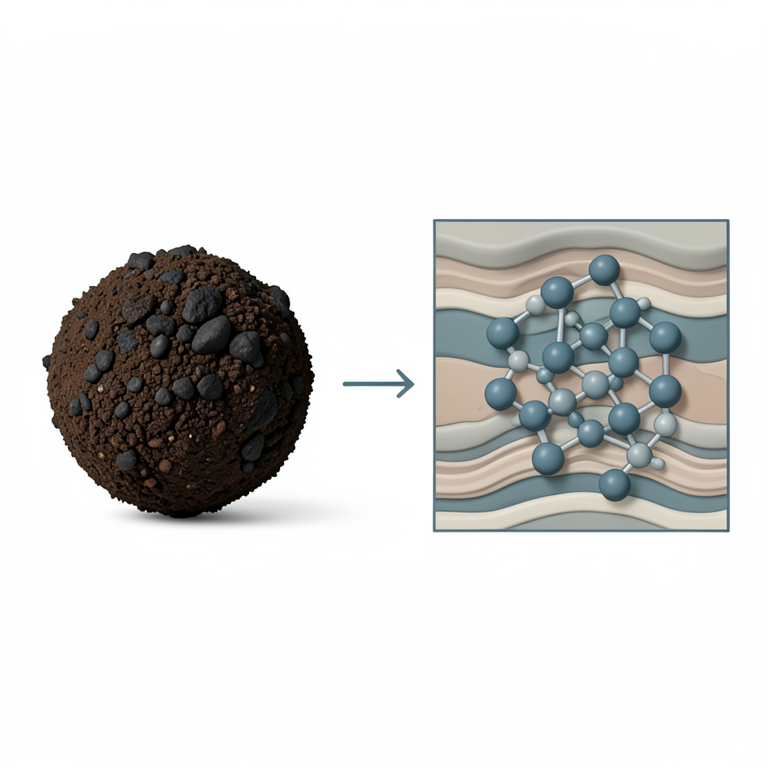
Mechanisms of Carbon Stabilization
AI-generated conceptual illustration (Tropical soil profile with clay minerals and organic matter). It explains the idea and does not show study data.
View source evidence ↗Introduction
Climate change caused by increasing atmospheric carbon dioxide (CO₂) concentration is one of the major global environmental challenges affecting agricultural sustainability and ecosystem stability (IPCC, 2014) [16] . Agricultural soils represent a major global carbon reservoir, storing approximately 1500-2400 Pg of carbon, which makes soil carbon sequestration an important strategy for mitigating greenhouse gas emissions (Lal, 2008) [17] . Soil organic carbon plays a critical role in regulating atmospheric CO₂ concentration through biological and physicochemical stabilization processes (Stockmann et al., 2013) [18] . Increasing soil carbon storage contributes to climate change mitigation while improving soil fertility and productivity (Smith et al., 2007) [19] . Tropical agro-ecosystems play a significant role in the global carbon cycle due to their large geographical coverage and high biological productivity (Grace et al., 2006) [20] . Warm temperatures and high rainfall in tropical regions accelerate organic matter decomposition, leading to rapid loss of soil organic carbon under intensive cultivation practices (Davidson & Janssens, 2006) [2] . Continuous cultivation, residue removal, and excessive tillage reduce organic matter inputs and accelerate carbon mineralization in tropical soils (Lal, 2004) [22] . Low biomass return and poor nutrient management further contribute to SOC depletion and soil degradation (Batjes, 2014) [3] . Improved cropping systems can reverse this trend by increasing carbon inputs through plant residues, roots, and organic amendments (Paustian et al., 2016) [9] . Carbon sequestration in agricultural systems involves the transfer of atmospheric CO₂ into plant biomass through photosynthesis and its subsequent storage in soil organic matter pools (Schlesinger & Andrews, 2000) [21] . Plant residues and root biomass serve as primary sources of carbon input to soil systems (Rasse et al., 2005) [10] . Cropping systems influence SOC dynamics through residue management practices that determine the quantity and quality of carbon returned to soil (Blanco-Canqui et al., 2015) [7] . Root biomass contributes significantly to stable carbon pools because of its slower decomposition rate compared to aboveground residues (Kätterer et al., 2011) [22] . Soil microorganisms regulate decomposition processes and influence carbon stabilization mechanisms in soil aggregates (Six et al., 2002). Soil aggregation physically protects organic carbon from rapid decomposition and enhances long-term carbon storage (Tisdall & Oades, 1982) [12, 4] .
Concept of carbon sequestration in cropping systems
Carbon sequestration refers to the process of capturing atmospheric carbon dioxide (CO₂) and storing it in plant biomass, soils, and sediments for long periods, thereby reducing greenhouse gas concentration in the atmosphere (Lal, 2004) [22] . In agricultural systems, carbon is primarily stored in vegetation and soil organic matter through biological processes such as photosynthesis and biomass accumulation (Schlesinger & Andrews, 2000) [21] . Soil organic carbon (SOC) is influenced by carbon inputs from crop residues, root biomass, farmyard manure, compost, and other organic amendments added to soil (Paustian et al., 2016) [9] . Carbon losses occur through microbial decomposition, soil respiration, erosion, and leaching processes that reduce SOC stocks over time (Davidson & Janssens, 2006) [2] . Maintaining a balance between carbon inputs and losses is essential for enhancing carbon sequestration potential in cropping systems. Major carbon pools in agro-ecosystems include aboveground biomass carbon stored in plant tissues such as leaves, stems, and grains (Nair et al., 2010) [5] . Belowground root carbon contributes significantly to long-term carbon storage because roots decompose slowly and form stable organic compounds (Rasse et al., 2005) [10] . Soil organic carbon is the largest terrestrial carbon pool and plays a critical role in soil fertility, structure, and water retention capacity (Stockmann et al., 2013) [18] . Soil inorganic carbon, mainly present as carbonates, contributes to long-term carbon storage in arid and semi-arid tropical regions (Lal, 2008) [17] . Cropping systems regulate carbon balance by influencing photosynthetic carbon fixation, quantity of biomass returned to soil, and decomposition dynamics (Amundson et al., 2015) [15] . Crop residue management practices determine the rate of organic matter addition and influence soil microbial activity responsible for carbon transformation (Six et al., 2002) [4] . Soil microorganisms play a key role in decomposition processes and conversion of organic residues into stable humus fractions (Trivedi et al., 2017). Soil aggregation protects organic carbon from rapid mineralization and enhances long-term carbon stabilization (Tisdall & Oades, 1982) [12,23] . Studies indicate that soil properties such as clay content, mineralogy, soil aggregation, and nutrient availability significantly influence SOC stabilization mechanisms in tropical soils (Minasny et al., 2017) [24] . Clay minerals protect organic carbon by forming organo-mineral complexes that reduce decomposition rates (Six et al., 2004) [11] . Improved nutrient availability enhances plant biomass production, thereby increasing carbon inputs into soil systems (Lal, 2015) [13] . Understanding interactions between soil properties and management practices is essential for improving carbon sequestration potential of tropical agroecosystems (Paustian et al., 2016) [9] .
Characteristics of tropical agro-ecosystems affecting carbon sequestration
Tropical agro-ecosystems differ significantly from temperate systems due to distinct climatic, soil, and management factors that strongly influence soil organic carbon (SOC) dynamics and carbon sequestration potential (Lal, 2004) [22] . High temperature and moisture conditions in tropical environments accelerate biological activity and organic matter decomposition, often resulting in lower SOC stocks compared to temperate soils (Davidson & Janssens, 2006) [2] . However, high primary productivity in tropical regions also provides opportunities for increased carbon inputs through crop biomass and root growth (Grace et al., 2006) [20] . Understanding these unique characteristics is essential for designing effective carbon sequestration strategies in tropical agriculture (Paustian et al., 2016) [9] .
Climatic factors
High temperature in tropical climates accelerates microbial decomposition of organic matter, leading to rapid turnover of soil organic carbon (Davidson & Janssens, 2006) [2] . Heavy rainfall contributes to nutrient leaching and reduces nutrient availability necessary for biomass production and carbon stabilization (Lal, 2003) [56] . High humidity enhances microbial activity, which influences decomposition processes and nutrient cycling in soil systems (Trivedi et al., 2017). Favorable climatic conditions promote rapid biomass production, increasing the potential for higher carbon inputs through plant residues and root biomass (Nair et al., 2010) [5] . Seasonal rainfall patterns influence plant growth cycles and carbon allocation in tropical cropping systems (Follett et al., 2011). Climatic variability also affects soil respiration rates and determines net carbon sequestration potential (Schlesinger & Andrews, 2000) [21,23,25] .
Management constraints
Intensive cultivation practices accelerate organic matter decomposition and reduce soil carbon stocks over time (Lal, 2015) [13] . Low residue return due to competing uses such as fodder and fuel limits carbon input into soil organic matter pools (Valbuena et al., 2012). Excessive tillage disturbs soil structure and exposes organic carbon to oxidation losses (Six et al., 2004) [11] . Soil erosion caused by poor soil cover and heavy rainfall results in significant carbon losses from agricultural lands (Montgomery, 2007). Unsustainable nutrient management practices reduce plant growth and biomass production, limiting carbon sequestration potential (Vanlauwe et al., 2010) [8,29,30] . Despite these constraints, tropical soils show significant potential for carbon sequestration when sustainable management practices such as conservation agriculture, agroforestry, and integrated nutrient management are adopted (Lipper et al., 2014) [31] . Improved soil management practices enhance biomass production and promote stabilization of carbon in soil aggregates (Paustian et al., 2016) [9] . Adoption of climate-smart agricultural practices can improve soil carbon storage and enhance resilience of tropical agro-ecosystems.
Carbon sequestration potential of different cropping systems:
Cropping systems play a crucial role in regulating soil organic carbon (SOC) dynamics and improving soil health in tropical agro-ecosystems. Sustainable cropping practices enhance carbon inputs through plant biomass, crop residues, and root exudates, while reducing carbon losses caused by soil erosion and rapid decomposition (Lal, 2015) [13] . Different cropping systems influence carbon sequestration through mechanisms such as improved soil aggregation, increased microbial activity, and enhanced stabilization of organic matter (Paustian et al., 2016) [9] . Tropical cropping systems have significant potential to mitigate climate change by storing carbon in soil and biomass while improving productivity and sustainability.
Conservation agriculture systems
Conservation agriculture (CA) is based on three core principles: minimum soil disturbance, permanent soil cover, and crop diversification (FAO, 2017). Reduced tillage minimizes soil disruption and decreases oxidation of soil organic matter, thereby conserving soil carbon stocks (Six et al., 2004) [11] . Retention of crop residues protects soil from erosion and increases organic matter input, which enhances soil aggregation and improves carbon stabilization (Blanco-Canqui & Lal, 2008) [32] . Permanent soil cover moderates soil temperature and moisture conditions, promoting microbial activity and enhancing transformation of plant residues into stable humus fractions (Lal, 2013) [59] . Crop rotation improves root biomass and enhances soil biological diversity, contributing to long-term carbon sequestration (Hobbs et al., 2008).
Long-term experiments indicate that conservation agriculture increases SOC concentration significantly compared to conventional tillage systems, especially in tropical environments characterized by rapid organic matter decomposition and soil erosion (Powlson et al., 2014) [34] . Enhanced formation of macro-aggregates under CA protects organic carbon from microbial decomposition and increases carbon residence time in soil (Six et al., 2002) [4,33] .
Crop diversification and crop rotation
Crop diversification and rotation systems increase biomass production and improve soil biological activity, contributing to higher carbon inputs (Lin, 2011). Rotations involving cereals, legumes, pulses, and oilseeds improve residue quality and promote efficient nutrient cycling (Drinkwater et al., 1998). Inclusion of legumes enhances biological nitrogen fixation, increasing biomass production and soil carbon accumulation (Peoples et al., 2009) [35,36,37] . Diverse cropping systems enhance microbial diversity and improve soil structure by promoting aggregate formation, which protects SOC from rapid decomposition (Tiemann et al., 2015). Studies in tropical agro-ecosystems indicate that diversified cropping systems increase SOC stocks by approximately 15-25% compared with monocropping systems due to improved biomass input and residue quality (Cong et al., 2015). Crop rotation also reduces pest incidence and improves sustainability of cropping systems (Snapp et al., 2010) [38,39,40] .
Cover cropping systems: Cover cropping systems contribute significantly to carbon sequestration by providing continuous vegetative cover that protects soil from erosion and enhances biomass production (Blanco-Canqui et al., 2015) [7] . Cover crops add organic residues that increase soil organic matter and improve soil structure (Kaspar & Singer, 2011). Leguminous cover crops contribute nitrogen through biological fixation, which enhances plant growth and carbon input into soil (Sainju et al., 2002) [41] . Mixed-species cover crops improve biodiversity and enhance nutrient cycling efficiency, leading to improved soil carbon stabilization (Finney et al., 2016). In tropical regions, cover crops such as sunhemp, cowpea, and green gram contribute significant biomass and root residues that improve SOC storage (Lal, 2015) [42,13] .
Agroforestry systems
Agroforestry systems integrate trees with crops and livestock, increasing carbon sequestration potential through both above-ground biomass and soil carbon storage (Nair et al., 2010) [5] . Trees contribute continuous litter fall and root biomass that enhance soil organic matter accumulation (Jose, 2009). Deep-rooted tree species improve nutrient recycling by transporting nutrients from deeper soil layers to the surface (Udawatta & Jose, 2012) [44] . Agroforestry systems improve soil structure and enhance biodiversity, contributing to ecosystem stability and improved carbon sequestration efficiency (Montagnini & Nair, 2004). Studies indicate that agroforestry systems store significantly higher carbon compared to monocropping systems due to continuous biomass addition and improved soil protection (Albrecht & Kandji, 2003) [45,46] . Integrated nutrient management systems: Integrated nutrient management (INM) involves combined use of organic manures, compost, crop residues, and chemical fertilizers to improve soil fertility and carbon sequestration (Vanlauwe et al., 2010). Organic inputs increase microbial biomass and improve soil aggregation, enhancing stabilization of SOC (Bhattacharyya et al., 2012). Long-term experiments show that application of farmyard manure and compost increases SOC accumulation and improves soil fertility (Lal, 2004) [22] . Balanced nutrient supply enhances plant growth and increases biomass production, which contributes to higher carbon input into soil systems (Palm et al., 2001) [8,48,49] .
Intercropping systems: Intercropping systems improve carbon sequestration by increasing total biomass production and enhancing photosynthetic efficiency (Lithourgidis et al., 2011). Different crop species utilize resources efficiently, increasing carbon input through diverse root systems (Zhang et al., 2014). Intercropping improves soil cover and reduces erosion losses, thereby minimizing carbon loss from soil systems (Brooker et al., 2015) [51] .
Mechanisms of soil carbon stabilization in tropical cropping systems: Soil carbon stabilization occurs through physical, chemical, and biological processes that protect organic carbon from rapid decomposition (Six et al., 2002) [4] . Aggregate Formation: Soil aggregates physically protect organic carbon from microbial decomposition and improve long-term carbon storage (Tisdall & Oades, 1982) [12] . Mineral Association: Clay minerals bind organic carbon through organo-mineral complexes, enhancing stabilization and increasing carbon residence time (Kleber et al., 2015) [52] . Root Biomass Contribution: Root biomass contributes significant carbon to deeper soil layers, improving longterm carbon sequestration (Rasse et al., 2005) [10] . Microbial Biomass Activity: Microorganisms convert plant residues into stable humus fractions, enhancing SOC stabilization (Cotrufo et al., 2013). Organo-mineral Complexes: Interaction between organic matter and soil minerals enhances carbon protection and improves long-term carbon storage (Schmidt et al., 2011) [53] .
Factors affecting carbon sequestration in tropical cropping systems
Soil Factors: Soil texture, mineralogy, depth, and pH influence SOC stabilization capacity (Minasny et al., 2017) [24] . Climate Factors: Temperature, rainfall, and humidity influence decomposition rates and biomass production (Davidson & Janssens, 2006) [2] . Crop-related Factors: Crop type, residue quality, root biomass, and cropping intensity affect carbon input into soil (Bolinder et al., 2007) [54] . Management Factors: Tillage, nutrient management, irrigation, and residue retention influence SOC accumulation (Lal, 2015) [13] .
Benefits of carbon sequestration in tropical agroecosystems
Environmental Benefits: Carbon sequestration mitigates climate change by reducing atmospheric CO₂ concentration (Smith et al., 2008). Improved SOC enhances biodiversity and reduces soil erosion (Lal, 2004). Agronomic Benefits: SOC improves soil fertility, nutrient availability, and water holding capacity, resulting in increased crop productivity (Palm et al., 2001) [49] . Economic Benefits: Improved soil health reduces fertilizer requirements and enhances yield stability. Carbon credit markets provide additional income opportunities for farmers adopting sustainable practices (Paustian et al., 2016) [9] .
Challenges in carbon sequestration under tropical cropping systems: Rapid decomposition of organic matter due to high temperature limits SOC accumulation (Davidson & Janssens, 2006) [2] . Poor residue management and soil erosion contribute to carbon losses (Lal, 2003) [56] . Limited awareness among farmers and lack of long-term experiments restrict adoption of carbon-sequestering practices (Smith et al., 2008). SOC storage often reaches equilibrium depending on soil type and climatic conditions (Stewart et al., 2007) [55] .
Future Research Needs
Future research should focus on long-term experiments on SOC dynamics and role of microbial communities in carbon stabilization (Cotrufo et al., 2013). Integration of remote sensing, GIS, and digital soil mapping tools can improve estimation of carbon stocks (Minasny et al., 2017). Development of climate-smart cropping systems and carbon credit policies can encourage adoption of carbon farming practices (Paustian et al., 2016) [9] . Measurement, Reporting, and Verification (MRV) frameworks can improve carbon accounting in agricultural systems (Smith et al., 2020) [24,53] .
Conclusion
Conclusion
References
68 in the original paper- Lal R. Soil carbon sequestration impacts on global climate change. Science. 2004;304:1623-1627.
- Davidson EA, Janssens IA. Temperature sensitivity of soil carbon decomposition. Nature. 2006;440:165-173.
- Batjes NH. Total carbon and nitrogen in soils of the world. European Journal of Soil Science. 2014;65:1021.
- Six J, Conant RT, Paul EA, Paustian K. Stabilization mechanisms of soil organic matter. Plant and Soil. 2002;241:155-176.
- Nair PKR, Kumar BM, Nair VD. Agroforestry as carbon sequestration strategy. Advances in Agronomy. 2010;108:237-307.
- McDaniel MD, Tiemann LK, Grandy AS. Crop diversification influences soil carbon. Ecological Applications. 2014;24:560-570.
- Blanco-Canqui H, Shaver TM, Lindquist JL, et al. Cover crops and ecosystem services. Agronomy Journal. 2015;107:2449-2474.
- Vanlauwe B, Bationo A, Chianu J, et al. Integrated soil fertility management. Outlook on Agriculture. 2010;39:17-24.
- Paustian K, Lehmann J, Ogle S, et al. Climate-smart soils. Nature. 2016;532:49-57.
- Rasse DP, Rumpel C, Dignac MF. Root-derived carbon in soils. Plant and Soil. 2005;269:341-356.
- Six J, Bossuyt H, Degryze S, Denef K. Soil organic matter stabilization. European Journal of Soil Science. 2004;55:81-94.
- Tisdall JM, Oades JM. Organic matter and soil aggregation. Journal of Soil Science. 1982;33:141-163.
- Lal R. Restoring soil quality to mitigate soil degradation. Journal of Soil and Water Conservation. 2015;70:55A-62A.
- Powlson DS, Whitmore AP, Goulding KWT. Soil carbon sequestration to mitigate climate change. Nature. 2011;478:49-57.
- Amundson R, Berhe AA, Hopmans JW, et al. Soil and human security. Science. 2015;348:1261071.
- Intergovernmental Panel on Climate Change. Climate change 2014: mitigation of climate change. Geneva: IPCC; 2014.
- Lal R. Carbon sequestration in agricultural soils. Philosophical Transactions of the Royal Society B. 2008;363:815-830.
- Stockmann U, Adams MA, Crawford JW, et al. The knowns and unknowns of soil organic carbon. Agriculture Ecosystems and Environment. 2013;164:80-99.
- Smith P, Martino D, Cai Z, et al. Agriculture and greenhouse gas mitigation. Philosophical Transactions of the Royal Society B. 2007;363:789-813.
- Grace J, Jose JS, Meir P, et al. Productivity and carbon fluxes in tropical ecosystems. Journal of Tropical Ecology. 2006;22:501-509.
- Schlesinger WH, Andrews JA. Soil respiration and carbon cycling. Biogeochemistry. 2000;48:7-20.
- Kätterer T, Bolinder MA, Andrén O, et al. Roots contribute to soil carbon sequestration. Global Change Biology. 2011;17:1655-1667.
- Trivedi P, Delgado-Baquerizo M, Anderson IC, Singh BK. Soil microbial community responses. Soil Biology and Biochemistry. 2017;105:241-250.
- Minasny B, et al. Soil carbon sequestration and global food security. Geoderma. 2017;292:59-86.
- Follett RF, Kimble JM, Lal R. The potential of U.S. grazing lands to sequester carbon. Journal of Soil and Water Conservation. 2011;66:131A-139A.
- Sanchez PA. Properties and management of tropical soils. Cambridge: Cambridge University Press; 2019.
- Vitousek PM, Porder S, Houlton BZ, Chadwick OA. Terrestrial phosphorus limitation. Ecological Applications. 2010;20:5-15.
- Kleber M, et al. Organo-mineral interactions in soils. Biogeochemistry. 2015;123:1-27.
- Valbuena D, et al. Crop residue trade-offs. Field Crops Research. 2012;132:175-184.
- Montgomery DR. Soil erosion and agricultural sustainability. PNAS. 2007;104:13268-13272.
- Lipper L, Thornton P, Campbell BM, et al. Climatesmart agriculture. Nature Climate Change. 2014;4:1068-1072.
- Blanco-Canqui H, Lal R. Principles of soil conservation and management. Dordrecht: Springer; 2008.
- Hobbs PR, Sayre K, Gupta R. Conservation agriculture for sustainable farming. Philosophical Transactions of the Royal Society B. 2008;363:543-555.
- Powlson DS, Stirling CM, Jat ML, et al. Limited potential of no-till agriculture. Nature Climate Change. 2014;4:678-683.
- Lin BB. Resilience in agriculture through crop diversification. BioScience. 2011;61:183-193.
- Drinkwater LE, Wagoner P, Sarrantonio M. Legumebased cropping systems. Nature. 1998;396:262-265.
- Peoples MB, Herridge DF, Ladha JK. Biological nitrogen fixation. Plant and Soil. 2009;174:3-28.
- Tiemann LK, Grandy AS, Atkinson EE, et al. Crop diversity effects on soil carbon. Nature Communications. 2015;6:1-7.
- Cong WF, Hoffland E, Li L, et al. Intercropping effects on soil fertility. Agriculture Ecosystems and Environment. 2015;213:1-12.
- Snapp SS, Blackie MJ, Gilbert RA, et al. Biodiversity and cropping systems. Agronomy Journal. 2010;102:395-404.
- Kaspar TC, Singer JW. Cover crop effects on soil health. Soil Science Society of America Journal. 2011;75:1-12.
- Finney DM, White CM, Kaye JP. Functional diversity of cover crops. Agriculture Ecosystems and Environment. 2016;228:29-37.
- Nair PKR, Kumar BM, Nair VD. Agroforestry as a carbon sink. Advances in Agronomy. 2010;108:237307.
- Jose S. Agroforestry for ecosystem services. Annual Review of Ecology Evolution and Systematics. 2009;40:1-23.
- Albrecht A, Kandji ST. Carbon sequestration in agroforestry systems. Agriculture Ecosystems and Environment. 2003;99:15-27.
- Montagnini F, Nair PKR. Carbon sequestration potentials in agroforestry. Journal of Environmental Quality. 2004;33:213-220.
- Vanlauwe B, Wendt J, Giller KE, et al. Integrated soil fertility management. Outlook on Agriculture. 2014;43:15-21.
- Bhattacharyya R, Prakash V, Kundu S, et al. Long-term fertilization effects on SOC. Soil and Tillage Research. 2012;119:41-47.
- Palm CA, Gachengo CN, Delve RJ, et al. Organic inputs for soil fertility. Agriculture Ecosystems and Environment. 2001;83:27-42.
- Lithourgidis AS, Dordas CA, Damalas CA, et al. Intercropping advantages. European Journal of Agronomy. 2011;34:89-97.
- Brooker RW, Bennett AE, Cong WF, et al. Improving intercropping systems. Journal of Experimental Botany. 2015;66:3489-3501.
- Kleber M, Nico PS, Plante A, et al. Organo-mineral interactions. Biogeochemistry. 2015;123:85-98.
- Cotrufo MF, Wallenstein MD, Boot CM, et al. Microbial efficiency-matrix stabilization. Nature Geoscience. 2013;6:1-7.
- Bolinder MA, Janzen HH, Gregorich EG, et al. Carbon balance in cropping systems. Agriculture Ecosystems and Environment. 2007;122:303-312.
- Stewart CE, Paustian K, Conant RT, et al. Soil carbon saturation concept. Soil Science Society of America Journal. 2007;71:1-11.
- Lal R. Soil erosion and carbon dynamics. Soil and Tillage Research. 2003;81:137-145.
- Smith P, Soussana JF, Angers D, et al. Soil carbon sequestration and MRV. Global Change Biology. 2020;26:219-241.
- Powlson DS, Stirling CM, Thierfelder C, et al. Does conservation agriculture deliver climate change mitigation through soil carbon sequestration in tropical agro-ecosystems? Agriculture Ecosystems and Environment. 2016;220:164-174.
- Lal R. Enhancing ecosystem services with no-till. Renewable Agriculture and Food Systems. 2013;28:102-114.
- Chivenge P, Vanlauwe B, Gentile R, Six J. Organic resource quality influences short-term aggregate dynamics and soil organic carbon. Soil Biology and Biochemistry. 2011;43:657-666.
- Lehmann J, Kleber M. The contentious nature of soil organic matter. Nature. 2015;528:60-68.
- Johnston AE, Poulton PR, Coleman K. Soil organic matter: its importance in sustainable agriculture and carbon dioxide fluxes. Advances in Agronomy. 2009;101:1-57.
- Janzen HH. Carbon cycling in earth systems a soil science perspective. Agriculture Ecosystems and Environment. 2004;104:399-417.
- Lal R, Follett RF, Stewart BA, Kimble JM. Soil carbon sequestration to mitigate climate change and advance food security. Soil Science. 2007;172:943-956.
- Reeves DW. The role of soil organic matter in maintaining soil quality in continuous cropping systems. Soil and Tillage Research. 1997;43:131-167.
- Wander MM. Soil organic matter fractions and their relevance to soil function. In: Magdoff F, Weil RR, editors. Soil Organic Matter in Sustainable Agriculture. Boca Raton: CRC Press; 2004. p. 67-102.
- Doran JW, Zeiss MR. Soil health and sustainability: managing the biotic component of soil quality. Applied Soil Ecology. 2000;15:3-11.
- Karlen DL, Andrews SS, Doran JW. Soil quality: current concepts and applications. Advances in Agronomy. 2001;74:1-40.