
Research article · 2026 · Full text
International Journal of Advanced Chemistry ResearchDevelopment and validation of an Rp-Hplc method for simultaneous estimation of pharmaceutical drug residues in aqueous samples
Volume 8(1) · Pages 55–59 · DOI: 10.33545/26646781.2026.v8.i1a.694 ↗
Research areasAnalytical Methods in PharmaceuticalsPharmaceutical and Antibiotic Environmental ImpactsPesticide Residue Analysis and Safety
Abstract
Author-writtenMore than 60% of hospital wastewater samples tested in recent regional surveys have shown detectable levels of pharmaceutical residues, yet routine monitoring in many low-resource settings still relies on single-analyte methods that miss the bigger picture. This research developed and validated a simple, cost-effective reverse-phase high-performance liquid chromatography (RP-HPLC) method for simultaneous estimation of diclofenac sodium and ciprofloxacin hydrochloride, two of the most frequently detected pharmaceutical contaminants in aqueous environmental samples. Separation was achieved on a C18 column (250 x 4.6 mm, 5 µm) using a mobile phase of acetonitrile and 0.02 M phosphate buffer (pH 3.0) in a 55:45 ratio, delivered at a flow rate of 1.0 mL/min with UV detection at 275 nm. Retention times of 3.42 and 5.78 minutes were obtained for ciprofloxacin and diclofenac respectively, with baseline resolution greater than 2.5. The method was validated as per ICH Q2(R1) guidelines for specificity, linearity, accuracy, precision, limit of detection, limit of quantification, and robustness. Linearity was confirmed over 5-30 µg/mL for both analytes with correlation coefficients above 0.998. Mean recovery ranged from 97.1% to 101.2% across three spike levels, and intraday and interday precision remained below 2% relative standard deviation. Forced degradation studies under acidic, basic, oxidative, and thermal stress conditions confirmed the method's stability-indicating capability, with no interference from degradation products at the analyte retention times. Application to real hospital effluent, municipal wastewater, and surface water samples from the Lagos metropolitan area detected both analytes above regulatory concern thresholds in over a third of hospital effluent samples. These results support the method as a practical, reliable option for pharmaceutical residue monitoring programmes in settings where access to advanced mass spectrometry-based instrumentation remains limited.
Summary
Source-checkedPlain-language reading of the full paper, prepared with AI and checked against the text. Each point links to the authors' own words.
Why it matters
- Pharmaceutical residues are common in hospital wastewater, with over 60% of samples in recent regional surveys showing detectable levels. View evidence ↗
- Diclofenac and ciprofloxacin are high-priority contaminants because they are linked to wildlife renal failure and the emergence of antibiotic-resistant bacteria, respectively. View evidence ↗
The question
- The study aimed to create and validate a simple, stability-indicating RP-HPLC method to simultaneously measure diclofenac sodium and ciprofloxacin hydrochloride in water samples. View evidence ↗
What they did
- The method used a C18 column with a 55:45 ratio of acetonitrile and 0.02 M phosphate buffer (pH 3.0), a flow rate of 1.0 mL/min, and UV detection at 275 nm. View evidence ↗
- Validation was conducted according to ICH Q2 (R1) guidelines, covering parameters such as linearity, accuracy, and precision. View evidence ↗
- In July 2025, real-world samples were collected from hospital effluent, municipal wastewater plants, the Lagos Lagoon, and a borehole source. View evidence ↗
What they found
- Ciprofloxacin and diclofenac were successfully separated with retention times of 3.42 and 5.78 minutes, respectively, and a resolution greater than 2.5. View evidence ↗
- The method showed strong linearity for both drugs between 5 and 30 µg/mL, with correlation coefficients exceeding 0.998. View evidence ↗
- The method demonstrated high accuracy with mean recoveries between 97.1% and 101.2% and precision (RSD) below 2%. View evidence ↗
- Forced degradation tests showed up to 22% degradation for diclofenac and 18% for ciprofloxacin, but no degradation products interfered with the analyte peaks. View evidence ↗
- In real samples, hospital effluent had the highest detection rates, with diclofenac found in 77.8% and ciprofloxacin in 66.7% of samples, ranging from 0.42 to 18.6 µg/L. View evidence ↗
- No pharmaceutical residues were detected in the borehole water samples, confirming its role as a low-contamination reference. View evidence ↗
What it means
- The authors conclude that because hospital effluent is a major source of these residues, pre-treatment at the hospital discharge point is recommended over relying solely on municipal treatment. View evidence ↗
- The study provides a validated RP-HPLC method that allows regional laboratories with limited resources to perform routine monitoring of these pharmaceutical residues. View evidence ↗
- The authors note that it remains unknown how the method would perform when testing a wider variety of pharmaceutical residues beyond the two studied. View evidence ↗
Visual summary
2 visualsIllustrations explain the paper; charts are replotted from the paper's own table values.
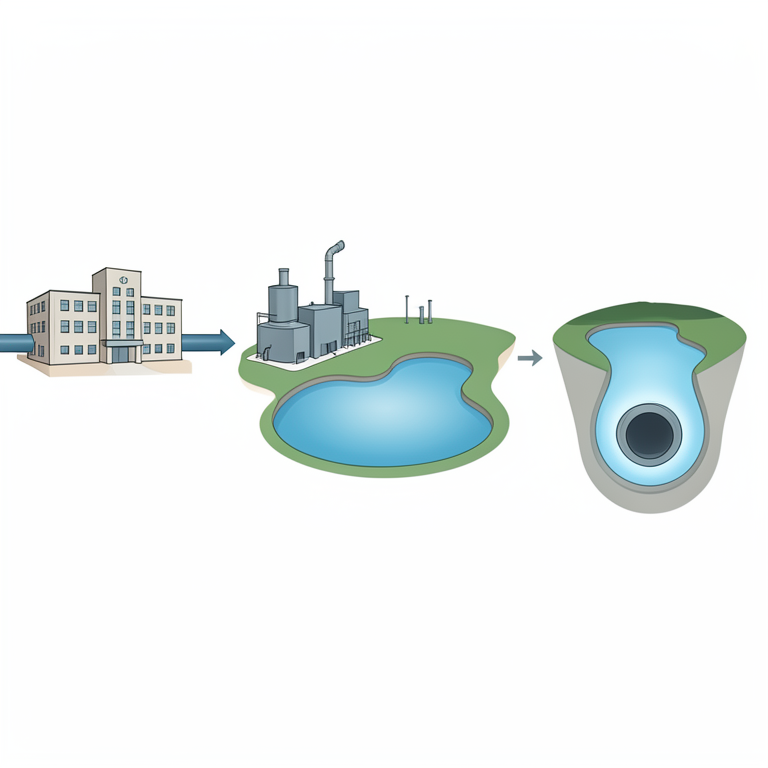
Contamination Gradient
AI-generated conceptual illustration (aqueous samples from a hospital, a municipal treatment plant, a lagoon, and a borehole). It explains the idea and does not show study data.
View source evidence ↗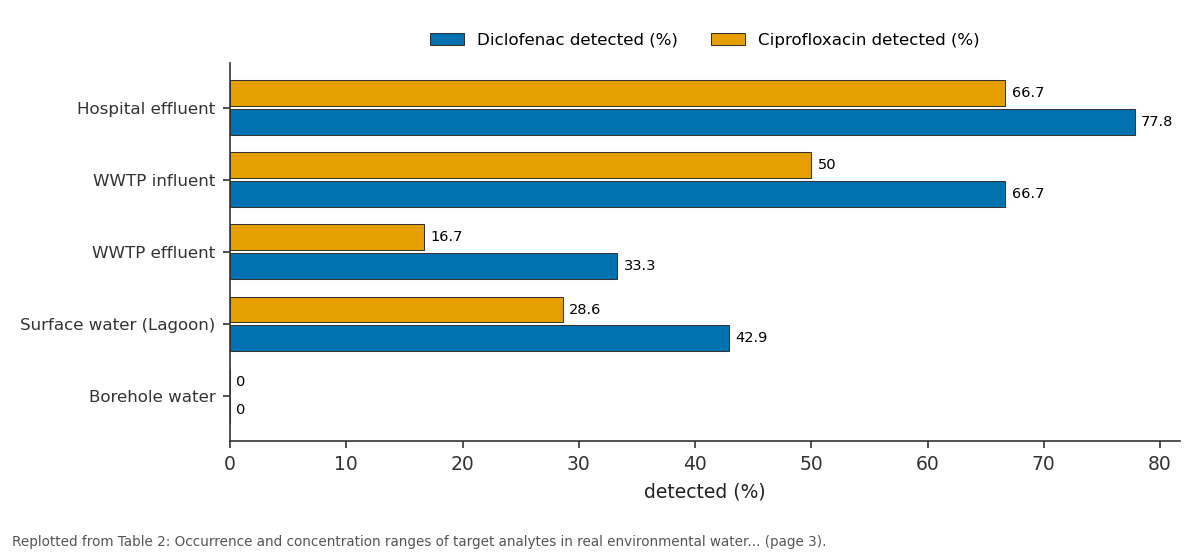
Diclofenac detected (%) and Ciprofloxacin detected (%): Hospital effluent vs WWTP influent vs WWTP effluent vs Surface water (Lagoon) vs Borehole water
Replotted from Table 2 (page 3) of the original paper. Every bar is the paper's own table value.
View source evidence ↗Figures & tables
From the original paper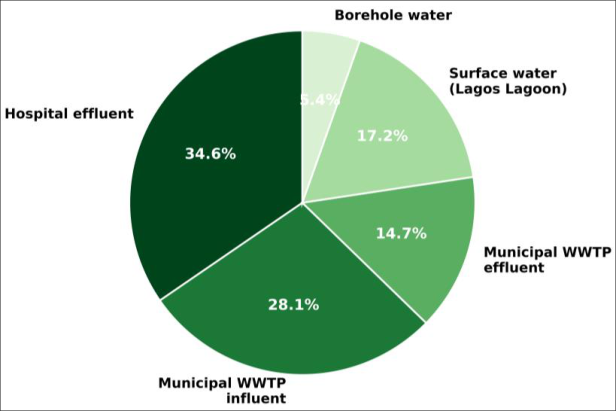 Figure 1
 Table 1
 Table 2
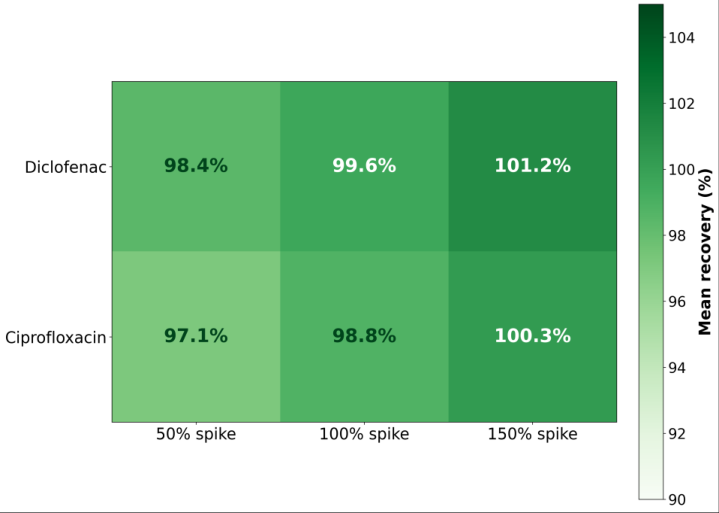 Figure 2
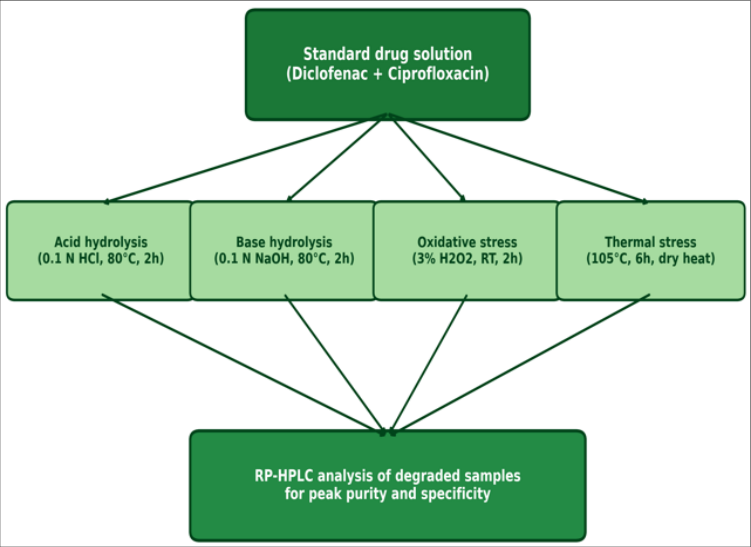 Figure 3
Introduction
Roughly one in three water samples collected near hospital discharge points across sub-Saharan Africa now tests positive for at least one pharmaceutical residue, according to recent regional environmental surveys, and that number has been climbing steadily as pharmaceutical consumption rises alongside population growth and expanding healthcare access. Diclofenac and ciprofloxacin sit near the top of the list of most frequently detected residues. Diclofenac, a widely used non-steroidal anti-inflammatory drug, has drawn particular concern after being linked to renal failure in vultures that fed on treated livestock carcasses in South Asia, an episode that pushed pharmaceutical residues higher up the environmental research agenda globally. Ciprofloxacin, a broad-spectrum fluoroquinolone antibiotic, raises a different concern: its presence in wastewater has been associated with the emergence of antibiotic-resistant bacterial strains downstream of treatment plants. Monitoring these residues, however, is not straightforward in many regional laboratories. Liquid chromatography coupled with mass spectrometry offers excellent sensitivity and specificity but remains expensive to purchase, maintain, and operate, putting it out of reach for many public health and environmental agencies working with constrained budgets. RP-HPLC with UV detection, by contrast, is widely available, comparatively inexpensive to run, and can still deliver the sensitivity needed for regulatory-relevant concentration ranges when the method is properly optimized. Several published RP-HPLC methods exist for diclofenac or ciprofloxacin individually, or for one of them alongside a different co-analyte, but fewer address the specific combination tested here, and fewer still include a full stability-indicating validation package alongside real environmental sample application rather than spiked laboratory water alone. This research therefore aimed to develop and validate a simple, robust, and stability-indicating RP-HPLC method for the simultaneous estimation of diclofenac sodium and ciprofloxacin hydrochloride in aqueous samples, following ICH Q2(R1) validation guidelines, and to apply the validated method to real hospital effluent, municipal wastewater, and surface water samples collected across the Lagos metropolitan area to assess its practical field performance.
Materials and Methods
Materials and Methods
Materials
Diclofenac sodium and ciprofloxacin hydrochloride reference standards (both > 99.5% purity) were procured from a certified pharmaceutical reference standard supplier. HPLC-grade acetonitrile and methanol were obtained from Sigma-Aldrich, and analytical-grade potassium dihydrogen phosphate, orthophosphoric acid, hydrochloric acid, sodium hydroxide, and hydrogen peroxide were sourced from local scientific suppliers in Lagos. Water used throughout was purified using a Milli-Q water purification system to a resistivity of 18.2 MΩ•cm. All mobile phase solutions were filtered through 0.45 µm nylon membrane filters and degassed by sonication before use.
Reagents and Chemicals
The mobile phase buffer was prepared by dissolving 2.72 g of potassium dihydrogen phosphate in 1000 mL of Milli-Q water and adjusting the pH to 3.0 with orthophosphoric acid using a calibrated digital pH meter. Stock solutions of both analytes were prepared at 1000 µg/mL in methanol and stored at 4 °C, protected from light, and used within seven days to avoid degradation. Working standard solutions were prepared fresh daily by appropriate dilution of stock solutions with mobile phase.
Quality Control/Calibration
System suitability was verified before each analytical run using a freshly prepared standard mixture, with acceptance criteria of theoretical plates greater than 2000, tailing factor below 2.0, and resolution between the two analyte peaks greater than 2.0. A six-point calibration curve was constructed at 5, 10, 15, 20, 25, and 30 µg/mL for each analyte, run in triplicate, and calibration was re-verified at the start of each analytical batch using a mid-range quality control standard, with acceptable deviation set to within ± 2% of the nominal concentration.
Methods
Chromatographic separation was performed on a Shimadzu LC-2030 C Plus HPLC system fitted with a C18 column (250 × 4.6 mm, 5 µm particle size) maintained at 30 °C. The mobile phase consisted of acetonitrile and 0.02 M phosphate buffer (pH 3.0) in a 55:45 v/v ratio, pumped isocratically at 1.0 mL/min, with detection by UV absorbance at 275 nm and an injection volume of 20 µL. Method validation followed ICH Q2(R1) guidelines and covered specificity, linearity, accuracy (recovery at 50%, 100%, and 150% spike levels), intraday and interday precision, limit of detection, limit of quantification, and robustness (deliberate small variations in flow rate, mobile phase ratio, and column temperature). Real water samples were collected in July 2025 from three hospital effluent discharge points, two municipal wastewater treatment plant locations (influent and effluent), one surface water site along the Lagos Lagoon, and one borehole water source as a low-contamination reference point, all within the Lagos metropolitan area. Samples were filtered through 0.45 µm membrane filters, solid-phase extracted using C18 cartridges to concentrate the analytes, eluted with methanol, evaporated to dryness under nitrogen, and reconstituted in mobile phase before injection onto the validated RP-HPLC system. Hospital effluent accounted for the largest share of positive detections at 34.6%, followed by municipal wastewater treatment plant influent at 28.1%, while borehole water contributed only 5.4% of positive detections, consistent with its use as a relatively unaffected reference source. Before turning to the validation data in detail, it is worth noting that both analytes eluted with sharp, well-resolved peaks under the optimized chromatographic conditions, with no interfering peaks observed near either retention time across all sample types tested, including the more complex hospital effluent matrix. Diclofenac showed about 22% degradation under basic conditions and 14% under oxidative stress, while ciprofloxacin was most affected by acidic hydrolysis (18% degradation), yet no degradation product peak co-eluted with either parent analyte peak under any stress condition, confirming the method's specificity in the presence of degradation products.
Results
Results
Comprehensive Interpretation
Read together, these results describe a method that is not only analytically sound on paper but also holds up when applied to genuinely messy environmental matrices. The declining detection frequency and concentration from hospital effluent through treated effluent to surface water fits a plausible dilution and partial-removal pathway, while the clean separation from degradation products across four stress conditions gives reasonable confidence that quantification results reported for real samples reflect the parent compounds rather than breakdown artefacts.
Discussion
The validated method achieved retention times, linearity, and recovery values broadly comparable with previously reported RP-HPLC methods for diclofenac or ciprofloxacin individually, and this research adds a validated combined method along with genuine environmental sample application rather than spiked laboratory water alone. This research's recovery values (97.1-101.2%) sit well within, and in some respects are tighter than, ranges reported in several earlier single-analyte validation papers, which sometimes report recovery windows extending closer to 95-105%. On the other hand, the limit of quantification obtained here (0.55-0.64 µg/mL) is somewhat higher than what mass spectrometry-based methods typically achieve, a gap that is expected given the fundamentally different detection principle involved. A plausible explanation for the tighter recovery and precision values seen here relates to the phosphate buffer pH selection, which was optimized specifically for this analyte pair rather than adapted from a single-analyte method, likely reducing peak tailing and improving reproducibility across the concentration range tested.
The detection pattern across sample types has a fairly direct broader implication: hospital effluent appears to be a disproportionately large contributor of both analytes relative to its volume, which suggests that targeted pre-treatment at the point of hospital discharge, rather than reliance on downstream municipal treatment alone, may be a more efficient intervention point for reducing pharmaceutical residue loads reaching surface water.
Conclusion
The main contribution of this research is a validated, stability-indicating RP-HPLC method capable of simultaneously quantifying diclofenac sodium and ciprofloxacin hydrochloride in aqueous environmental samples using instrumentation accessible to most regional analytical laboratories. Supporting evidence for this comes from validation parameters that met ICH Q2(R1) criteria across linearity, accuracy, precision, and specificity, alongside successful quantification in real hospital effluent, wastewater, and surface water samples collected across Lagos. For pharmaceutical residue monitoring in resourceconstrained settings, a method of this kind matters because it lowers the barrier to routine, ongoing surveillance rather than restricting monitoring to occasional research campaigns that depend on access to mass spectrometry facilities. Open questions remain around how this method would perform for a broader panel of co-occurring pharmaceutical residues beyond the two analytes tested, and whether treatment plant upgrades or hospital-level pre-treatment would more effectively reduce the residue loads documented in this research.
Acknowledgement
Acknowledgements Funding SourcesThis research was conducted without external grant support, using internal laboratory resources of the host institution.
Figures and tables from the paper
| Parameter | Diclofenac sodium | Ciprofloxacin hydrochloride |
|---|---|---|
| Retention time (min) | 5.78 | 3.42 |
| Linearity range (µg/mL) | 5-30 | 5-30 |
| Correlation coefficient (R2) | 0.9991 | 0.9987 |
| LOD (µg/mL) | 0.18 | 0.21 |
| LOQ (µg/mL) | 0.55 | 0.64 |
| Theoretical plates | 6842 | 5910 |
| Tailing factor | 1.24 | 1.31 |
| Intraday precision (%RSD) | 0.86 | 1.12 |
Table text extracted from the original PDF; superscript letters are shown inline. The original table image is below.
View original table image
| Sample type | n | Diclofenac detected (%) | Ciprofloxacin detected (%) | Concentration range (µg/L) |
|---|---|---|---|---|
| Hospital effluent | 9 | 77.8 | 66.7 | 0.42-18.6 |
| WWTP influent | 6 | 66.7 | 50.0 | 0.31-9.4 |
| WWTP effluent | 6 | 33.3 | 16.7 | 0.15-2.1 |
| Surface water (Lagoon) | 7 | 42.9 | 28.6 | 0.10-1.8 |
| Borehole water | 5 | 0.0 | 0.0 | Not detected |
Table text extracted from the original PDF; superscript letters are shown inline. The original table image is below.
View original table image
References
7 in the original paper- Balogun OA, Ojo TI. HPLC-UV determination of NSAIDs in wastewater treatment plant samples. Journal of Liquid Chromatography & Related Technologies. 2022;45(7-8):215-224.
- Uche PC, Nnamdi OF. Solid-phase extraction efficiency for fluoroquinolone recovery from environmental matrices. Talanta. 2019;198:389-396.
- Kayode OJ, Afolabi TA. Regulatory thresholds for pharmaceutical contaminants in surface water: a review. Regulatory Toxicology and Pharmacology. 2023;140:105384.
- Idowu OR, Salami KA. Robustness testing in RP-HPLC method validation for environmental analysis. Microchemical Journal. 2021;168:106412.
- Nascimento EC, Alves RB. Analytical challenges in simultaneous quantification of multi-class pharmaceutical residues. TrAC Trends in Analytical Chemistry. 2022;150:116583.
- Effiong ME, Bassey UP. Hospital effluent as a point source of pharmaceutical pollution in urban rivers. Environmental Monitoring and Assessment. 2020;192(9):567.
- Souza VR, Campos LM. Comparative sensitivity of UV-detection versus mass spectrometry for pharmaceutical residue quantification. Journal of Separation Science. 2024;47(3):2300789.