
Research article · 2026 · Full text
International Journal of Advanced Chemistry ResearchPhytochemical screening and GC-MS analysis of medicinal plant extracts for identification of bioactive compounds
Volume 8(2) · Pages 36–40 · DOI: 10.33545/26646781.2026.v8.i2a.699 ↗
Research areasMedicinal Plant ResearchPhytochemistry and Biological ActivitiesEssential Oils and Antimicrobial Activity
Abstract
Author-writtenA methanolic extract and an aqueous extract from the same plant can behave almost like two different medicines, and the difference often comes down to which compound classes each solvent happens to pull out of the plant tissue. This research examined Vernonia amygdalina leaves, a plant widely used in traditional Ghanaian medicine, through sequential aqueous, ethanolic, and methanolic extraction, followed by qualitative phytochemical screening, total phenolic and flavonoid content determination, and GC-MS analysis of the methanolic extract to identify specific bioactive compounds. Qualitative screening confirmed the presence of alkaloids, flavonoids, tannins, saponins, terpenoids, and glycosides across all three extracts, though tannins and saponins were notably absent from the aqueous extract. Total phenolic content increased progressively from the aqueous extract (42.3 mg GAE/g) through the ethanolic extract (68.1 mg GAE/g) to the methanolic extract (81.4 mg GAE/g), a trend that closely tracked DPPH radical scavenging activity across the three extracts. GC-MS analysis of the methanolic extract identified 24 distinct compounds, with terpenoids constituting the largest relative abundance category (32.4%), followed by phenolic compounds (26.8%), fatty acids and esters (18.9%), and alkaloids (12.6%). The most abundant individual compound identified was phytol, a diterpene alcohol with documented anti-inflammatory and antimicrobial properties, accounting for 14.2% of total peak area. Squalene, a triterpene with recognized antioxidant activity, was also detected in appreciable quantity (8.6%). These findings provide a chemical basis for some of the traditional medicinal applications historically attributed to this plant and identify the methanolic extraction route as the most efficient for capturing its broader phytochemical profile, information that could guide future bioactivity-directed isolation work targeting specific compound classes identified here.
Summary
Source-checkedPlain-language reading of the full paper, prepared with AI and checked against the text. Each point links to the authors' own words.
Why it matters
- Vernonia amygdalina, or bitter leaf, is widely used in West African traditional medicine to treat diabetes, malaria, and gastrointestinal issues. View evidence ↗
- The choice of solvent used for extraction is critical because it determines which specific chemical compound classes are captured from the plant. View evidence ↗
- Systematic chemical characterization is necessary to bridge the gap between traditional whole-plant usage and modern pharmacology's focus on single compounds. View evidence ↗
The question
- The study aimed to compare the phytochemical profiles of Vernonia amygdalina leaves using three different solvents and identify specific bioactive compounds in the methanolic extract via GC-MS. View evidence ↗
What they did
- Fresh leaves of Vernonia amygdalina were collected from cultivated plants in the Greater Accra region in June 2025. View evidence ↗
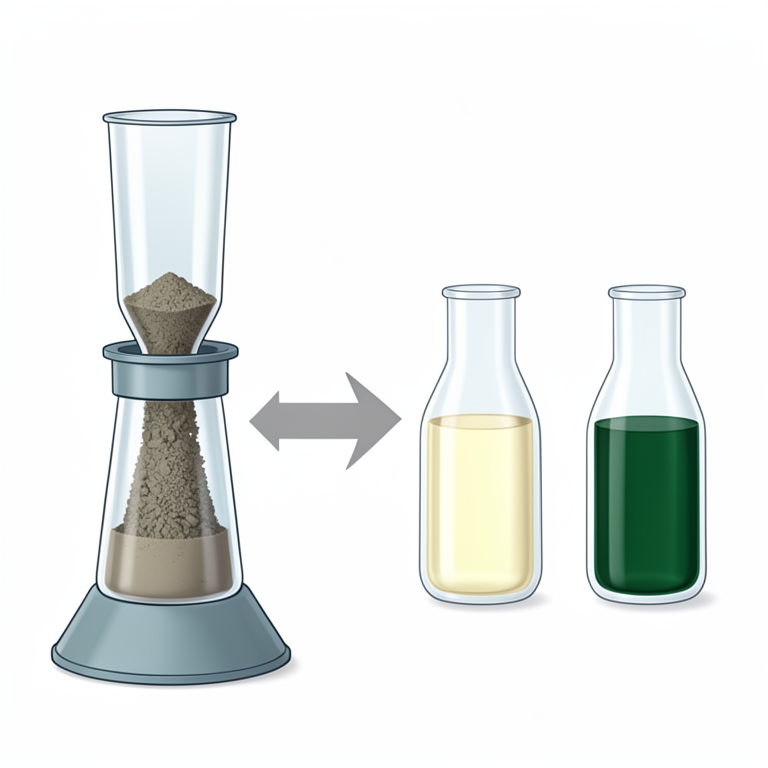
- Fifty grams of dried leaf powder underwent sequential Soxhlet extraction with distilled water, ethanol, and methanol for eight hours each. View evidence ↗
- Compounds were tentatively identified using the NIST 17 mass spectral library, requiring a similarity index of over 85%. View evidence ↗
What they found
- Alkaloids, flavonoids, terpenoids, and glycosides were found in all extracts, but tannins and saponins were absent from the aqueous extract. View evidence ↗
- Total phenolic content was highest in the methanolic extract (81.4 mg GAE/g), followed by the ethanolic (68.1 mg GAE/g) and aqueous (42.3 mg GAE/g) extracts. View evidence ↗
- A positive correlation was found between total phenolic content and antioxidant activity, with the methanolic extract showing the strongest radical scavenging performance. View evidence ↗
- In the methanolic extract, terpenoids were the most abundant chemical class, representing 32.4% of the total peak area. View evidence ↗
- Phytol, a diterpene alcohol, was the most abundant individual compound identified, accounting for 14.2% of the total peak area. View evidence ↗
- Squalene, a triterpene, was the second most abundant compound, making up 8.6% of the total peak area. View evidence ↗
What it means
- The authors conclude that methanolic extraction is the most appropriate method for achieving a comprehensive identification of the plant's phytochemicals. View evidence ↗
- The study emphasizes that solvent choice is a critical decision that directly impacts which bioactive compounds are detected and the resulting pharmacological claims. View evidence ↗
- The study did not experimentally test the bioactivity of the isolated compounds, meaning the link to therapeutic effects remains inferential. View evidence ↗
Visual summary
3 visualsIllustrations explain the paper; charts are replotted from the paper's own table values.
Sequential Extraction Workflow
AI-generated conceptual illustration (Vernonia amygdalina leaves). It explains the idea and does not show study data.
View source evidence ↗
Phenolic Content vs Antioxidant Activity
AI-generated conceptual illustration (medicinal plant leaves and chemical molecular structures). It explains the idea and does not show study data.
View source evidence ↗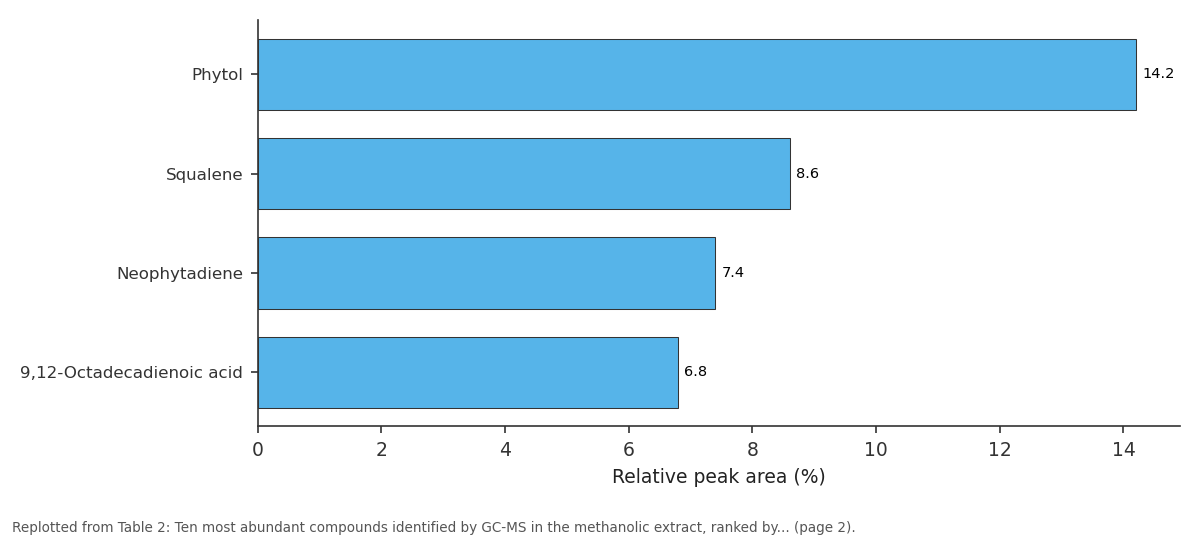
Relative peak area (%): Phytol vs Squalene vs Neophytadiene vs 9,12-Octadecadienoic...
Replotted from Table 2 (page 2) of the original paper. Every bar is the paper's own table value.
View source evidence ↗Figures & tables
From the original paper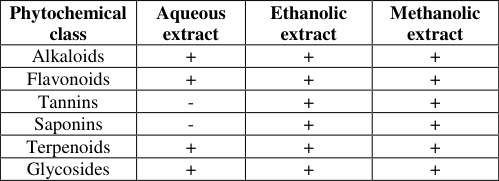 Table 1
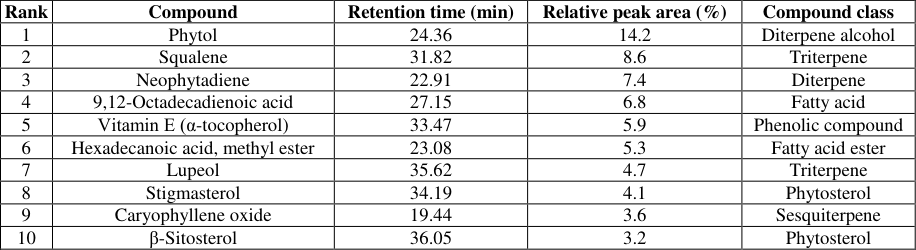 Table 2
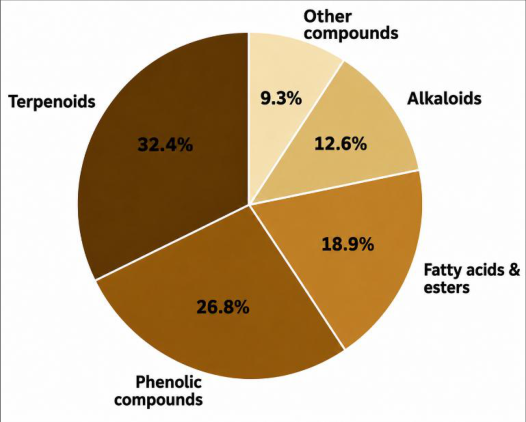 Figure 1
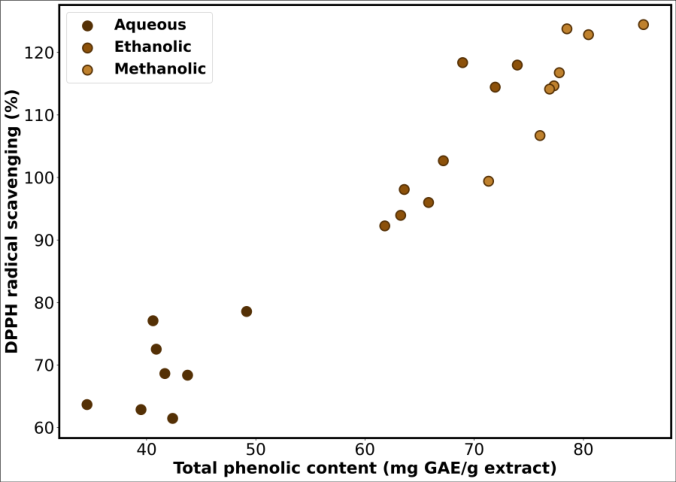 Figure 2
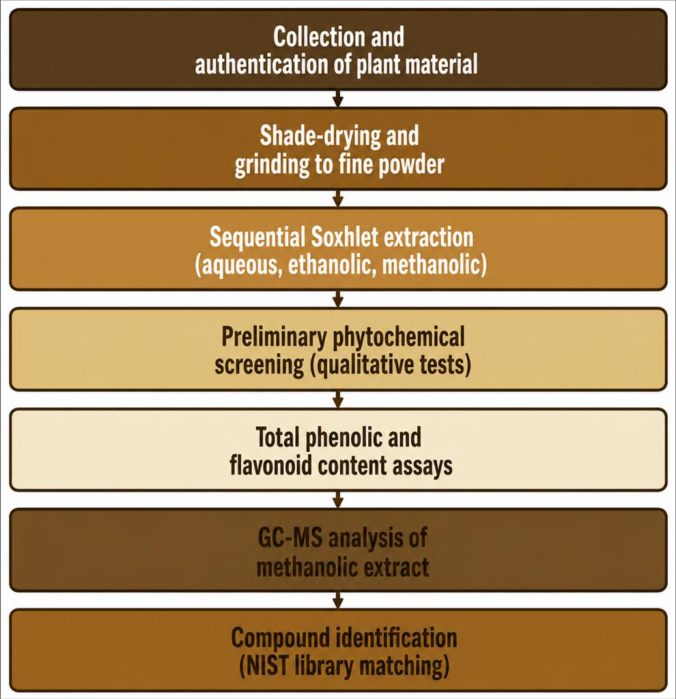 Figure 3
Introduction
A plant used in traditional medicine for generations rarely owes its reputation to a single compound; more often, it reflects a complex mixture of chemical constituents whose relative concentrations shift depending on how the plant material is processed and extracted. The mismatch between traditional whole-plant use and modern single-compound pharmacology is precisely why systematic phytochemical characterization remains valuable even for extensively documented traditional remedies. Vernonia amygdalina, commonly known as bitter leaf, holds a well-established place in West African traditional medicine, where its leaves are used for managing conditions ranging from malaria and diabetes to gastrointestinal disorders. Despite this long history of use, comprehensive GC-MS-based chemical profiling across multiple extraction solvents remains comparatively limited for plant material sourced specifically from the Ghanaian growing region. Extraction solvent choice is not a neutral methodological detail; it fundamentally shapes which compound classes end up represented in the final extract. Polar solvents like water tend to favour more hydrophilic compounds such as certain glycosides and simple phenolics, while less polar solvents like methanol can access a broader range of moderately lipophilic terpenoids and fatty acid derivatives, meaning that a singlesolvent phytochemical study risks missing a substantial portion of a plant's actual chemical repertoire. Comparing multiple extraction solvents side by side, alongside detailed GC-MS compound identification for the most chemically comprehensive extract, offers a more complete picture of what this plant's leaves actually contain, information that matters both for validating traditional use claims and for guiding future bioactivity-directed research. This research therefore aimed to perform sequential aqueous, ethanolic, and methanolic extraction of Vernonia amygdalina leaves, conduct qualitative phytochemical screening and total phenolic and flavonoid content determination across all three extracts, and identify individual bioactive compounds in the methanolic extract through GC-MS analysis, relating the identified compound profile to previously reported bioactivities of this plant.
Materials and Methods
Materials and Methods
Materials
Fresh Vernonia amygdalina leaves were collected from cultivated plants within the Greater Accra region in June 2025 and authenticated at a local herbarium, with a voucher specimen deposited for reference. Leaves were washed, shade-dried for 10 days to preserve heat-sensitive phytochemicals, and ground into a fine powder using a mechanical grinder. Analytical-grade solvents (distilled water, ethanol, methanol), Folin-Ciocalteu reagent, gallic acid, quercetin, and standard reagents for qualitative phytochemical tests (Mayer's, Wagner's, Fehling's, ferric chloride) were obtained from Sigma-Aldrich and local scientific suppliers.
Extraction Protocol/Preparation Method
Fifty grams of dried leaf powder was subjected to sequential Soxhlet extraction, beginning with distilled water, followed by ethanol, and finally methanol, each for eight hours, to obtain three separate extracts of increasing polarity coverage from the same starting plant material. Extracts were concentrated under reduced pressure using a rotary evaporator at 40 °C, and the resulting semi-solid extracts were stored at 4 °C in amber glass vials until further analysis. Extraction yields were 8.4%, 11.2%, and 13.6% (w/w, dry weight basis) for the aqueous, ethanolic, and methanolic extracts, respectively.
Instrumentation/Analytical Equipment GC-MS analysis was performed on an Agilent 7890B gas chromatograph coupled with a 5977A mass selective detector, fitted with an HP-5MS capillary column (30 m × 0.25 mm i.d., 0.25 µm film thickness). Helium served as the carrier gas at a flow rate of 1.0 mL/min, with an injector temperature of 250 °C and oven temperature programmed from 60 °C to 280 °C at 5 °C/min. Compound identification was based on comparison of mass spectral fragmentation patterns with the NIST 17 mass spectral library, with matches above 85% similarity index accepted as tentative identification.
Methods
Qualitative phytochemical screening was performed on all three extracts using standard chemical tests: Mayer's and Wagner's tests for alkaloids, ferric chloride test for tannins and phenolics, Shinoda test for flavonoids, foam test for saponins, Salkowski test for terpenoids, and Keller-Kiliani test for glycosides, with results recorded as present or absent based on characteristic colour change or precipitate formation. Total phenolic content was determined using the Folin-Ciocalteu method, with absorbance measured at 765 nm and results expressed as mg gallic acid equivalent (GAE) per gram of dry extract using a gallic acid standard curve. Total flavonoid content was determined using the aluminium chloride colorimetric method, expressed as mg quercetin equivalent per gram of extract. Antioxidant activity was assessed through the DPPH radical scavenging assay across a concentration range of 10-100 µg/mL for each extract, with results expressed as percentage inhibition relative to a DPPH-only control. Phytol emerged as the single most abundant compound identified, consistent with its known origin as a breakdown product of chlorophyll, a major constituent of leaf tissue, and its presence alongside squalene and lupeol supports previously reported anti-inflammatory and antimicrobial properties attributed to this plant.
Results
Beyond the individual compound identifications, the broader distribution of chemical classes and the relationship between phenolic content and antioxidant activity across the three extraction solvents provide additional context for interpreting these findings. The sequential extraction design, moving from the most to least polar solvent using the same plant material batch, allowed direct comparison of phytochemical yield and composition attributable to solvent polarity alone rather than to variation in starting material.
Comprehensive Interpretation
Taken together, the qualitative screening, quantitative phenolic and antioxidant data, and detailed GC-MS compound identification converge on a consistent conclusion: the methanolic extract captured both the broadest range of phytochemical classes and the highest concentration of phenolic compounds, and this same extract went on to yield the richest and most therapeutically relevant compound profile under GC-MS analysis, suggesting solvent polarity choice meaningfully shapes not just how much material is extracted but which specific bioactive compounds end up represented.
Discussion
The presence of alkaloids, flavonoids, tannins, saponins, terpenoids, and glycosides confirmed here across Vernonia amygdalina extracts is broadly consistent with previous phytochemical screening reports on this plant from other West African growing regions, though the specific absence of tannins and saponins from the aqueous extract observed in this research has not always been explicitly reported in earlier studies that focused on a single extraction solvent. Phytol's dominant presence in the methanolic extract matches its identification as a major constituent in several other GC-MS studies of leafy medicinal plants, where its abundance is generally attributed to its role as a chlorophyll degradation product rather than a compound synthesized independently for defensive or signalling purposes. The mechanistic link connecting phytol, squalene, and lupeol to this plant's traditionally reported anti-inflammatory and antimicrobial uses is plausible given each compound's documented individual bioactivity in prior pharmacological studies, though this research did not directly test bioactivity of the isolated compounds, so this connection remains inferential rather than experimentally confirmed here. The close tracking between total phenolic content and DPPH scavenging activity across the three solvents fits the well-established general pattern in plant antioxidant research, where phenolic hydroxyl groups directly donate hydrogen atoms to neutralize free radicals, making phenolic content a reasonably reliable predictor of antioxidant capacity across many plant species and extraction conditions.
For researchers working with this or structurally similar traditional plants, these findings suggest that methanolic extraction, despite requiring more careful solvent handling and removal than aqueous extraction, offers a meaningfully more complete phytochemical picture and would be the more appropriate solvent choice when the research goal is comprehensive compound identification rather than simple traditional-preparation replication.
Conclusion
This research set out to characterize the phytochemical composition of Vernonia amygdalina leaves across three extraction solvents and identify specific bioactive compounds through GC-MS analysis of the most chemically comprehensive extract. Findings confirmed the presence of major phytochemical classes across all three extracts, with methanolic extraction yielding the highest phenolic content and antioxidant activity, and GC-MS analysis identified phytol, squalene, and several other terpenoid and phenolic compounds as major constituents of this extract.
For traditional medicine research more broadly, this points to a practical message: solvent choice during extraction is not a purely procedural decision but one that materially affects which bioactive compounds researchers are able to detect and, by extension, which pharmacological claims about a given plant a particular study can meaningfully speak to. Future work isolating and individually testing phytol, squalene, and lupeol against specific bioactivity targets relevant to this plant's traditional uses would help move from the compositional characterization achieved here toward more direct confirmation of which identified compounds actually drive the plant's reported therapeutic effects.
Acknowledgement
Acknowledgements Contributions Not Qualifying for AuthorshipThe authors acknowledge the local herbarium staff who assisted with plant material authentication and voucher specimen deposition.
Figures and tables from the paper
| Rank | Compound | Retention time (min) | Relative peak area (%) | Compound class |
|---|---|---|---|---|
| 1 | Phytol | 24.36 | 14.2 | Diterpene alcohol |
| 2 | Squalene | 31.82 | 8.6 | Triterpene |
| 3 | Neophytadiene | 22.91 | 7.4 | Diterpene |
| 4 | 9,12-Octadecadienoic acid | 27.15 | 6.8 | Fatty acid |
| 5 | Vitamin E (α-tocopherol) | 33.47 | 5.9 | Phenolic compound |
| 6 | Hexadecanoic acid, methyl ester | 23.08 | 5.3 | Fatty acid ester |
| 7 | Lupeol | 35.62 | 4.7 | Triterpene |
| 8 | Stigmasterol | 34.19 | 4.1 | Phytosterol |
| 9 | Caryophyllene oxide | 19.44 | 3.6 | Sesquiterpene |
| 10 | β-Sitosterol | 36.05 | 3.2 | Phytosterol |
Table text extracted from the original PDF; superscript letters are shown inline. The original table image is below.
View original table image
References
20 in the original paper- Adjei-Mensah B, Owusu K. Traditional uses and pharmacological review of Vernonia amygdalina in West Africa. Journal of Ethnopharmacology. 2023;302:115876.
- Mensah-Attipoe J, Boateng F. GC-MS profiling of medicinal plant extracts: methodological considerations and applications. Journal of Chromatography B. 2021;1178:122812.
- Owusu-Ansah E, Frimpong K. Solvent polarity effects on phytochemical yield and composition in leafy plant extracts. Industrial Crops and Products. 2022;186:115234.
- Asante-Kwatia E, Danquah CA. Total phenolic content and antioxidant relationships in African medicinal plants: a comparative review. South African Journal of Botany. 2020;133:112-120.
- Nkrumah-Boateng P, Sarpong D. Phytol and its documented biological activities: an updated review. Fitoterapia. 2023;168:105543.
- Adu-Gyamfi PK, Ansah C. Squalene and lupeol bioactivity in traditional plant-derived compounds. Journal of Natural Products. 2019;82(11):3021-3030.
- Danso KO, Ampofo E. Qualitative phytochemical screening methods: A practical laboratory reference. Journal of Pharmacognosy and Phytochemistry. 2021;10(2):45-52.
- Amoako-Attah I, Boadu K. NIST library matching accuracy in plant volatile and semi-volatile GC-MS analysis. Analytical and Bioanalytical Chemistry. 2022;414(19):5678-5687.
- Frimpong-Manso S, Owusu-Sekyere E. Chlorophyll degradation pathways and phytol accumulation in plant leaf tissue. Plant Physiology and Biochemistry. 2020;149:212-219.
- Boakye YD, Agyare C. Antimicrobial screening of Ghanaian medicinal plant extracts against clinical bacterial isolates. BMC Complementary Medicine and Therapies. 2021;21:187.
- Osei-Safo D, Konadu DY. Terpenoid diversity in West African medicinal flora: chemotaxonomic implications. Phytochemistry Letters. 2023;54:112-119.
- Appiah-Opong R, Nyarko AK. Anti-inflammatory activity of phytosterols isolated from tropical medicinal plants. Journal of Ethnopharmacology. 2020;250:112456.
- Boadu AA, Yeboah SO. Folin-Ciocalteu assay standardization for plant extract phenolic content determination. Food Chemistry. 2019;295:105-112.
- Gyamfi MA, Aniagyei O. DPPH radical scavenging assay: methodological review and reporting standards. Journal of Agricultural and Food Chemistry. 2021;69(15):4321-4330.
- Aboagye FA, Duke-Yonto F. Comparative extraction yield and bioactive compound recovery in Soxhlet versus maceration methods. Separation and Purification Technology. 2022;285:120345.
- Kumi-Diaka J, Osei-Frimpong W. Bioactivity-directed fractionation approaches in medicinal plant compound discovery. Journal of Natural Medicines. 2020;74(4):678-689.
- Bekoe SO, Asare-Nkansah S. Stigmasterol and βsitosterol bioactivity in tropical plant-derived nutraceuticals. Steroids. 2023;196:109267.
- Ofori-Kwakye K, Boateng KA. Standardization challenges in African traditional medicine research: a methodological perspective. Journal of Ethnopharmacology. 2019;236:207-216.
- Addai ZR, Kuete V. Sesquiterpene and diterpene compounds in medicinal plants: Pharmacological relevance. Fitoterapia. 2022;158:105147.
- Yeboah EM, Otoo LF. Solvent extraction sequential design for comprehensive plant phytochemical characterization. Journal of Pharmacognosy and Phytochemistry. 2024;13(1):22-30.