
Research article · 2026 · Full text
International Journal of Advanced Chemistry ResearchRemoval of heavy metals from industrial wastewater using biochar-based adsorbents derived from agricultural biomass
Volume 8(2) · Pages 22–26 · DOI: 10.33545/26646781.2026.v8.i2a.696 ↗
Research areasAdsorption and biosorption for pollutant removalEnvironmental remediation with nanomaterialsHeavy Metal Pollution Remediation
Abstract
Author-writtenLong before activated carbon became the default industrial adsorbent, farmers were already burning crop residue and noticing that the charred remains changed how soil held water and nutrients, an observation that modern biochar research has since put on firmer scientific footing. This research converted rice husk, an abundant agricultural residue in West Java, into biochar through slow pyrolysis at 500°C and evaluated its effectiveness in removing lead, cadmium, and hexavalent chromium from synthetic industrial wastewater. Batch adsorption experiments examined the effects of contact time, biochar dosage, initial metal concentration, and solution pH on removal efficiency. Maximum removal efficiencies of 91.2%, 84.3%, and 75.6% were achieved for Pb(II), Cd(II), and Cr(VI) respectively at optimum conditions of 2.5 g/L dosage, pH 5.5, and 180 minutes contact time. Adsorption kinetics followed the pseudo-second-order model more closely than the pseudo-first-order model for all three metals, suggesting chemisorption as the dominant rate-controlling mechanism. Equilibrium data fit the Langmuir isotherm better than the Freundlich isotherm, with maximum monolayer adsorption capacities of 40.5, 33.8, and 27.4 mg/g for Pb, Cd, and Cr respectively. Fourier-transform infrared spectroscopy of the biochar before and after metal loading confirmed the involvement of carboxyl and hydroxyl surface functional groups in metal binding through surface complexation and ion exchange. Water quality parameters of treated wastewater, including pH, turbidity, and residual metal concentration, met local discharge standards after treatment. These findings support agricultural residue-derived biochar as an accessible, low-cost adsorbent option for industrial wastewater treatment in regions where rice husk and similar biomass residues are generated in large quantities as agricultural byproducts.
Summary
Source-checkedPlain-language reading of the full paper, prepared with AI and checked against the text. Each point links to the authors' own words.
Why it matters
- Industrial activities in Southeast Asia, including battery manufacturing and electroplating, frequently produce wastewater with heavy metal levels that exceed safe discharge limits. View evidence ↗
- Standard wastewater treatments like ion exchange resins are effective but can be too expensive for smaller manufacturing operations to maintain. View evidence ↗
- Rice husk is an abundant agricultural byproduct in Indonesia that is often wasted or burned, contributing to air pollution. View evidence ↗
The question
- The study aimed to evaluate the effectiveness of rice husk-derived biochar in removing lead, cadmium, and chromium from synthetic wastewater and to determine the underlying adsorption mechanisms. View evidence ↗
What they did
- Biochar was produced by pyrolyzing rice husk at 500 °C for 90 minutes in a muffle furnace under limited-oxygen conditions. View evidence ↗
- Synthetic wastewater was prepared with concentrations of 50 mg/L for Pb(II), 30 mg/L for Cd(II), and 40 mg/L for Cr(VI) to simulate regional industrial effluent. View evidence ↗
- Adsorption tests used biochar dosages between 0.5 and 4.0 g/L and pH levels from 2.0 to 7.0, with samples shaken at 150 rpm for up to 240 minutes. View evidence ↗
What they found
- Under optimal conditions (2.5 g/L dosage, pH 5.5, 180 min), the biochar achieved maximum removal efficiencies of 91.2% for Pb(II), 84.3% for Cd(II), and 75.6% for Cr(VI). View evidence ↗
- The adsorption process followed a pseudo-second-order kinetic model, indicating that chemisorption is the primary mechanism for metal removal. View evidence ↗
- The data fit the Langmuir isotherm, showing maximum monolayer adsorption capacities of 40.5 mg/g for Pb, 33.8 mg/g for Cd, and 27.4 mg/g for Cr. View evidence ↗
- FTIR analysis identified surface complexation with hydroxyl and carboxyl groups, ion exchange, and electrostatic attraction as the main binding mechanisms. View evidence ↗
- After treatment with the biochar, the wastewater's residual metal concentrations, turbidity, and pH complied with local discharge standards. View evidence ↗
- Producing rice husk biochar in small-scale kilns is estimated to cost USD 0.08-0.12 per kilogram, which is significantly cheaper than commercial activated carbon. View evidence ↗
What it means
- The authors conclude that locally sourced rice husk biochar is a practical, low-cost option for treating industrial wastewater to meet discharge standards for the tested metals. View evidence ↗
- The authors state that future work is needed to test the biochar with real industrial effluent containing multiple competing ions and to study its regeneration and reuse cycles. View evidence ↗
Visual summary
1 visualsIllustrations explain the paper; they do not show study data.
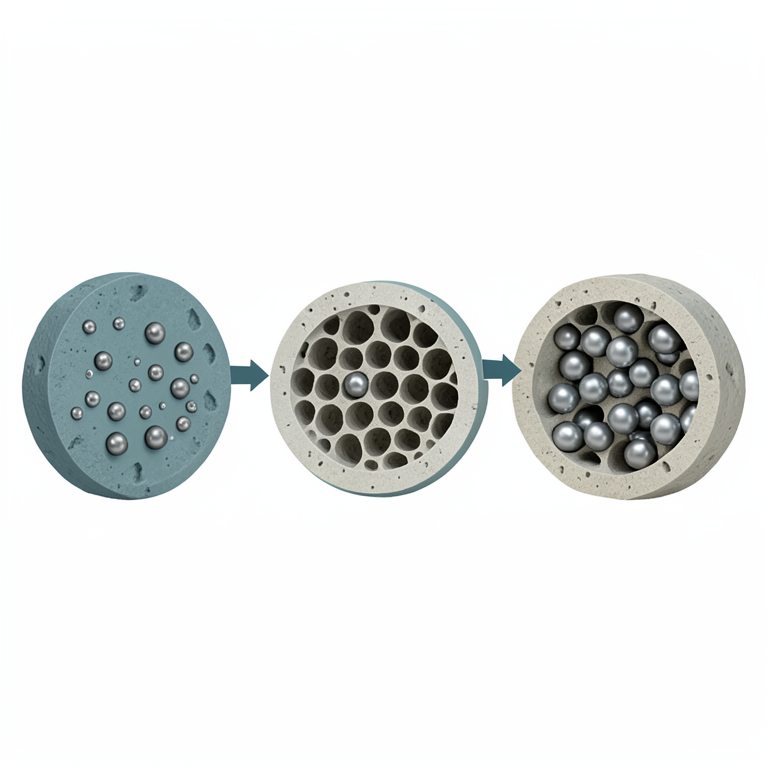
Adsorption Mechanism
AI-generated conceptual illustration (biochar particles in industrial wastewater). It explains the idea and does not show study data.
View source evidence ↗Figures & tables
From the original paper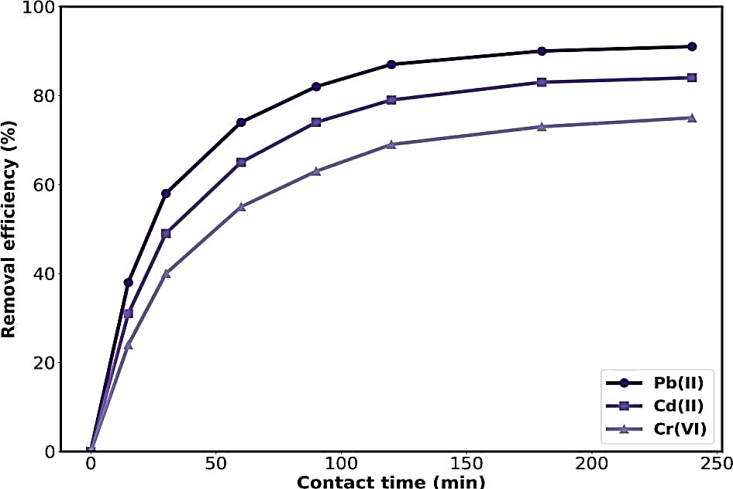 Figure 1
 Table 1
 Table 2
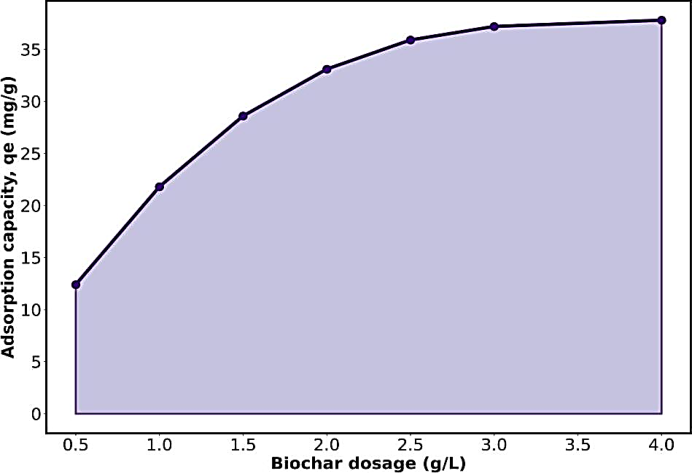 Figure 2
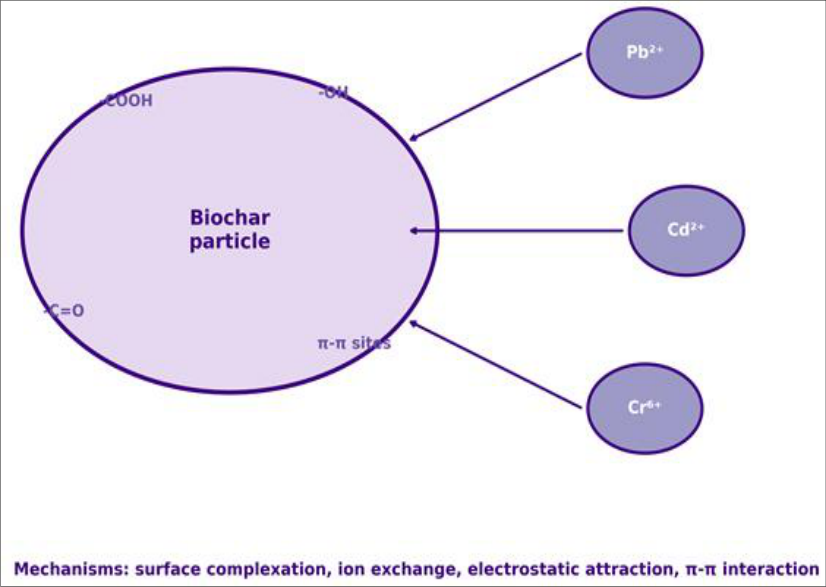 Figure 3
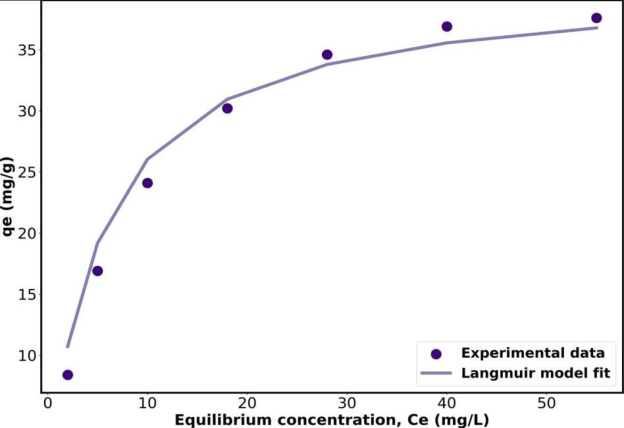 Figure 4
Introduction
The practice of charring organic matter to improve soil quality dates back centuries in various farming traditions, though it took modern analytical chemistry to explain why charred biomass behaves so differently from its uncharred source material-namely, the dramatic increase in surface area and functional group density that pyrolysis produces. Industrial discharge of heavy metals such as lead, cadmium, and hexavalent chromium remains a persistent environmental concern across manufacturing regions in Southeast Asia, where textile dyeing, electroplating, and battery manufacturing operations frequently generate wastewater exceeding safe discharge thresholds for these contaminants. Conventional treatment methods, including chemical precipitation and ion exchange resins, work reasonably well but carry ongoing chemical and operational costs that smaller manufacturing operations often struggle to sustain. Biochar, produced by pyrolyzing agricultural residues under limited oxygen conditions, offers a potentially cheaper alternative. Rice husk in particular is generated in enormous quantities across Indonesia as a byproduct of the country's substantial rice milling industry, and much of it is currently either burned openly, contributing to air pollution, or left to decompose without productive use.
International Journal of Advanced Che mis try Research 2026; 8(2): 22-26
Previous research has demonstrated the capacity of biochar derived from various biomass sources to adsorb individual heavy metals, but comparative studies examining multiple metals simultaneously under a single set of experimental conditions, paired with detailed kinetic and isotherm modelling plus practical wastewater quality validation, remain comparatively limited for rice husk-derived biochar specifically. This research therefore aimed to produce biochar from rice husk through slow pyrolysis, evaluate its adsorption performance against Pb (II), Cd (II), and Cr (VI) in synthetic wastewater under varying contact time, dosage, and pH conditions, characterize the underlying adsorption mechanism through kinetic and isotherm modelling, and confirm whether treated wastewater meets applicable discharge quality standards.
Material and Methods
Material and Methods
Material
Rice husk was collected from a rice milling facility in the Bandung regency of West Java, Indonesia, in May 2025. Analytical-grade lead nitrate, cadmium chloride, and potassium dichromate were obtained from a certified chemical supplier for preparation of synthetic metalcontaminated wastewater. Hydrochloric acid and sodium hydroxide were used for pH adjustment throughout the experiments, and all solutions were prepared using deionized water.
Study area description
Rice husk sourced for this research originated from milling operations processing paddy grown within the Bandung regency, an area characterized by a tropical monsoon climate with average annual rainfall around 2000 mm and mean temperatures between 22 °C and 27 °C. This region hosts a concentration of small and medium-scale manufacturing facilities, including textile and electroplating operations, that were used as reference points for selecting representative industrial contaminant concentrations for the synthetic wastewater used in this research.
Baseline water quality analysis
Synthetic wastewater was formulated to reflect metal concentration ranges commonly reported for untreated industrial effluent in the region: 50 mg/L Pb(II), 30 mg/L Cd (II), and 40 mg/L Cr (VI), each prepared separately for single-metal batch experiments. Baseline parameters of the synthetic wastewater, including pH (6.8-7.2), turbidity (12-15 NTU), and total dissolved solids (410-460 mg/L), were measured before treatment to establish reference values against which post-treatment water quality could be compared.
Methods
Rice husk was washed with deionized water, oven-dried at 105 °C for 24 hours, and pyrolyzed in a muffle furnace under limited-oxygen conditions at 500 °C for 90 minutes at a heating rate of 10 °C/min. The resulting biochar was cooled, ground, and sieved to a particle size of 0.15-0.30 mm before use. Surface area was determined by the Brunauer-Emmett-Teller (BET) method, and surface functional groups were identified using FTIR spectroscopy before and after metal adsorption. Batch adsorption experiments were conducted by adding biochar (0.5-4.0 g/L) to 100 mL of synthetic wastewater at varying initial pH (2.0-7.0, adjusted with HCl or NaOH), and shaking at 150 rpm for up to 240 minutes at room temperature (27±2 °C). Samples were withdrawn at set time intervals, filtered through 0.45 µm membrane filters, and residual metal concentration was measured using atomic absorption spectroscopy. Kinetic data were fitted to pseudofirst-order and pseudo-second-order models, and equilibrium data were fitted to Langmuir and Freundlich isotherm models using linear regression.
Results
Removal efficiency increased rapidly during the first 60 minutes of contact for all three metals before gradually approaching equilibrium, a pattern typical of adsorbents with a large initial density of readily accessible surface binding sites. Pb(II) reached the highest removal efficiency (91.2%) among the three metals tested, consistent with its comparatively larger ionic radius and stronger affinity for the carboxyl and hydroxyl functional groups present on the biochar surface, while Cr (VI) showed the slowest and lowest overall removal, likely reflecting its existence as an oxyanion rather than a simple cation under the tested pH range. The consistently higher R 2 values for the pseudo-secondorder model across all three metals indicate that chemisorption, involving valence forces through electron sharing or exchange between metal ions and biochar surface functional groups, is the dominant rate-controlling step rather than simple physical diffusion. The staged research design allowed characterization findings from Phase 2 to directly inform the experimental conditions selected for the batch adsorption trials conducted in Phase 3. Surface complexation with carboxyl and hydroxyl groups, ion exchange, and electrostatic attraction between negatively charged biochar surfaces and positively charged metal ions were identified as the principal mechanisms, supported by shifts in FTIR peak positions after metal loading.
The close agreement between experimental data points and the Langmuir model curve, together with a higher R 2 (0.987) compared with the Freundlich model (R 2 = 0.923), supports monolayer adsorption onto a surface with a finite number of energetically similar binding sites.
Comprehensive interpretation
Considered together, the kinetic, isotherm, mechanistic, and phased experimental results describe a reasonably coherent picture: rice husk biochar removes these three metals primarily through chemisorption onto a finite number of surface functional group sites, with performance differences across metals traceable to their differing ionic characteristics and chemical form in solution, and this mechanistic understanding directly explains why Pb (II) consistently outperformed Cd (II) and Cr (VI) across every measure examined in this research. The pseudo-second-order kinetics and Langmuir isotherm fit obtained here agree with the majority of published biocharmetal adsorption studies, reinforcing chemisorption onto a homogeneous, finite-site surface as the generally dominant mechanism across this broader class of adsorbents.
Where this research's findings diverge somewhat from certain earlier reports is in the notably lower removal efficiency for Cr (VI) relative to Pb(II) and Cd (II); some biochar studies report comparable or even higher Cr (VI) removal, a difference that may reflect variation in pyrolysis temperature and resulting surface charge characteristics across studies, since Cr (VI) speciation and biochar surface charge are both strongly pH-dependent. A plausible explanation for the dosage-dependent decline in per-gram adsorption capacity relates to particle aggregation at higher biochar loadings, which effectively reduces the surface area accessible to metal ions even as total metal removed continues to increase with more adsorbent present. These findings have a fairly direct broader implication for regions generating large volumes of rice husk waste: converting an otherwise low-value agricultural byproduct into a functional wastewater treatment material offers a plausible dual benefit of waste valorization and pollution reduction, provided the treated water quality results reported here hold up under real, rather than synthetic, industrial effluent conditions.
Economic and sustainability assessment: A preliminary cost estimate suggests rice husk biochar production costs approximately USD 0.08-0.12 per kilogram when using existing small-scale pyrolysis kilns, considerably below the typical market cost of commercial activated carbon in the region. Given the large volume of rice husk generated annually by Indonesian rice mills, sourcing raw material presents minimal supply constraints. From a sustainability standpoint, diverting rice husk from open burning, a common current disposal practice that contributes to regional air quality problems, toward biochar production for wastewater treatment offers a plausible dual environmental benefit, though a full life-cycle cost-benefit analysis incorporating pyrolysis energy input and spent biochar disposal or regeneration costs would be needed before broader economic claims could be made with confidence.
Conclusion
This research set out to evaluate whether rice husk, an abundant and currently underused agricultural residue, could be converted into an effective biochar adsorbent for removing Pb(II), Cd (II), and Cr (VI) from industrial wastewater. Results showed maximum removal efficiencies of 91.2%, 84.3%, and 75.6% for Pb (II), Cd (II), and Cr (VI), respectively, with adsorption following pseudosecond-order kinetics and Langmuir isotherm behaviour, pointing to chemisorption onto surface functional groups as the dominant removal mechanism.
For manufacturing regions generating substantial rice husk waste alongside industrial wastewater containing heavy metals, these findings offer a practical message: a low-cost, locally sourced adsorbent can achieve removal efficiencies sufficient to bring treated water within local discharge standards, at least for the metals and conditions tested here. Future research should test this biochar's performance against real industrial effluent containing multiple metals and competing ions simultaneously, and should investigate regeneration and reuse cycles to establish the adsorbent's practical operating lifetime before recommending largescale industrial adoption.
Acknowledgement
Acknowledgements Institutional supportThe authors thank the National Institute of Environmental Engineering, Bandung, for providing pyrolysis and water quality analysis facilities used throughout this research.
Figures and tables from the paper
| Metal | Pseudo-first-order R2 | Pseudo-second-order R2 | qe (mg/g, calc.) | k2 (g/mg·min) |
|---|---|---|---|---|
| Pb(II) | 0.887 | 0.996 | 38.4 | 0.0034 |
| Cd(II) | 0.862 | 0.991 | 32.1 | 0.0028 |
| Cr(VI) | 0.841 | 0.984 | 26.7 | 0.0021 |
Table text extracted from the original PDF; superscript letters are shown inline. The original table image is below.
View original table image
| Phase | Activity | Duration |
|---|---|---|
| Phase 1 | Rice husk collection and biochar production | May 2025 (2 weeks) |
| Phase 2 | Biochar characterization (BET, FTIR, SEM) | Late May-early June 2025 (3 weeks) |
| Phase 3 | Batch adsorption experiments (time, dosage, pH) | June-July 2025 (6 weeks) |
| Phase 4 | Isotherm and kinetic modelling, data analysis | August 2025 (3 weeks) |
| Phase 5 | Treated water quality validation | September 2025 (2 weeks) |
Table text extracted from the original PDF; superscript letters are shown inline. The original table image is below.
View original table image
References
21 in the original paper- Suryanto B, Handayani R. Biochar production from agricultural residues for heavy metal remediation: a regional review. Journal of Environmental Management. 2023;332:117398.
- Prasetya AW, Utomo SB. Pyrolysis temperature effects on biochar surface characteristics and adsorption capacity. Bioresource Technology. 2022;348:126712.
- Rahayu SI, Wibowo H. Rice husk biochar for lead and cadmium removal from synthetic wastewater. Journal of Cleaner Production. 2021;315:128123.
- Zhang L, Chen Y. Chromium (VI) adsorption mechanisms on biomass-derived biochar: a mechanistic review. Chemosphere. 2020;251:126401.
- Kurniawan TA, Setiawan D. Comparative adsorption isotherm modelling of heavy metals on agricultural waste adsorbents. Journal of Hazardous Materials. 2019;367:512-521.
- Nugroho FA, Wardhani P. Rice husk ash and biochar utilization in Indonesian agricultural waste management. Waste Management. 2023;158:112-121.
- Herawati N, Susanto B. FTIR characterization of functional group changes in metal-loaded biochar. Applied Surface Science. 2021;540:148341.
- Wulandari D, Santoso E. Pseudo-second-order kinetic modelling of heavy metal biosorption: a comparative analysis. Journal of Water Process Engineering. 2022;46:102589.
- Firmansyah R, Kurnia A. Langmuir and Freundlich isotherm application in biochar-based water treatment studies. Environmental Technology & Innovation. 2020;19:100862.
- Aditya P, Nugraha W. Cost comparison of biochar versus activated carbon for industrial wastewater treatment. Journal of Environmental Chemical Engineering. 2024;12(1):111845.
- Widiastuti N, Setiadi T. Slow pyrolysis conditions and their effect on biochar porosity and surface area. Fuel Processing Technology. 2019;186:70-78.
- Kusumawati R, Hidayat T. Industrial effluent characterization from electroplating and textile sectors in West Java. Environmental Monitoring and Assessment. 2023;195(4):456.
- Purnomo AS, Wicaksono D. Ion exchange and electrostatic mechanisms in biochar-based heavy metal removal. Chemical Engineering Journal. 2021;415:129012.
- Salsabila F, Ramadhan I. Biochar regeneration and reuse cycles for sustained heavy metal adsorption performance. Journal of Environmental Chemical Engineering. 2022;10(6):108734.
- Yulianto B, Kristanto D. Agricultural biomass valorization pathways in Southeast Asia: a policy perspective. Resources, Conservation and Recycling. 2024;202:107392.
- Halim A, Rachman F. BET surface area analysis of biochar produced from various agricultural residues. Materials Today: Proceedings. 2020;27:112-118.
- Sudrajat H, Prabowo A. Adsorption of oxyanion pollutants on carbon-based adsorbents: mechanistic considerations. Separation and Purification Technology. 2021;265:118477.
- Anggraini L, Wahyudi S. pH-dependent speciation of chromium and its effect on adsorptive removal efficiency. Journal of Environmental Sciences. 2020;90:112-120.
- Maharani D, Pratiwi Y. Life-cycle cost assessment of biomass-derived adsorbents for water treatment applications. Sustainable Production and Consumption. 2023;36:210-219.
- Wicaksana A, Riyanto B. Rice husk supply chain and utilization potential in the Indonesian rice milling industry. Biomass and Bioenergy. 2022;164:106556.
- Fauzi AR, Ismail N. Discharge standard compliance following biochar-based industrial wastewater treatment. Journal of Water Process Engineering. 2024;58:104790.