
Research article · 2026 · Full text
International Journal of Advanced Chemistry ResearchSynthesis of vinyl esters of cycloaliphatic epoxy resins: A kinetic study
Volume 8(7) · Pages 05–11 · DOI: 10.33545/26646781.2026.v8.i7a.692 ↗
Research areasEpoxy Resin Curing ProcessesPolymer Synthesis and CharacterizationChemical Synthesis and Reactions
Abstract
Author-writtenTwo cycloaliphatic epoxy resins C1 and C2 containing pendant glycidyl and epoxy cyclohexane functional groups, respectively were converted into their corresponding vinyl esters. The esterification reactions were performed using methacrylic acid in presence of triethyl amine/triphenyl phosphine as catalyst. In the present study four vinyl esters are prepared. The vinyl esters of C1 and C2, synthesized in presence of triethyl amine are designated as C1A, C2A and triphenyl phosphine as C1E, C2E. Reaction advancement was assessed by monitoring the acid value as regular intervals. The kinetics of the esterification reactions were best described by a second order rate equation. The chemical structure of all the esters were verified by FTIR spectroscopy. The synthesis of all the esters was analysed by calculating various kinetic parameters, including activation energy, pre-exponential factor, entropy of activation, enthalpy of activation and Gibbs free energy of activation.
Summary
Source-checkedPlain-language reading of the full paper, prepared with AI and checked against the text. Each point links to the authors' own words.
Why it matters
- Cycloaliphatic epoxy resins are valued for their lightweight properties, impact strength, weather resistance, and thermal and electrical characteristics. View evidence ↗
- Despite their benefits, these resins are often expensive and brittle, necessitating modifications to improve their overall performance. View evidence ↗
- Reacting epoxy resins with unsaturated monocarboxylic acids is a practical method to address drawbacks by improving curing and processing behavior. View evidence ↗
The question
- The study aims to perform a comprehensive kinetic investigation to optimize the curing process for higher quality and performance resins. View evidence ↗
What they did
- The researchers converted two cycloaliphatic epoxy resins (C1 with pendant glycidyl and C2 with epoxy cyclohexane groups) into vinyl esters. View evidence ↗
- Methacrylic acid was used for esterification, with either triethyl amine or triphenyl phosphine serving as the catalyst. View evidence ↗
- To prevent gelation and achieve the desired molecular weight, a stoichiometric ratio of 1:0.9 for epoxy resin to methacrylic acid was maintained. View evidence ↗
- Reaction progress was monitored by determining the acid value through titration of unreacted carboxylic groups with methanolic potassium hydroxide. View evidence ↗
What they found
- For vinyl esters C1A and C2A, the reaction followed second-order kinetics, with linear plots up to approximately 72% conversion (r > 0.99). View evidence ↗
- For vinyl esters C1E and C2E, the reaction also followed second-order kinetics, showing linearity up to approximately 88% conversion (r > 0.99). View evidence ↗
- Activation energy, pre-exponential factor, and enthalpy of activation were higher for C1A and C1E compared to C2A and C2E. View evidence ↗
- The data indicates that resins with an epoxycyclohexane group are more reactive than those with a pendant glycidyl group. View evidence ↗
- Positive Gibbs free energy of activation values across all esters suggest the reaction proceeds through an energy-demanding activated state. View evidence ↗
- Large negative entropy of activation values indicate that a highly ordered activated complex is formed during esterification. View evidence ↗
What it means
- The authors conclude that ring structure significantly influences reaction rate, with epoxycyclohexane groups providing higher reactivity due to lower activation energy. View evidence ↗
- The kinetic analysis provides a foundation for optimizing the synthesis and curing behavior of cycloaliphatic vinyl ester resins. View evidence ↗
Visual summary
2 visualsIllustrations explain the paper; charts are replotted from the paper's own table values.
Reactivity Comparison
AI-generated conceptual illustration (cycloaliphatic epoxy resin molecules). It explains the idea and does not show study data.
View source evidence ↗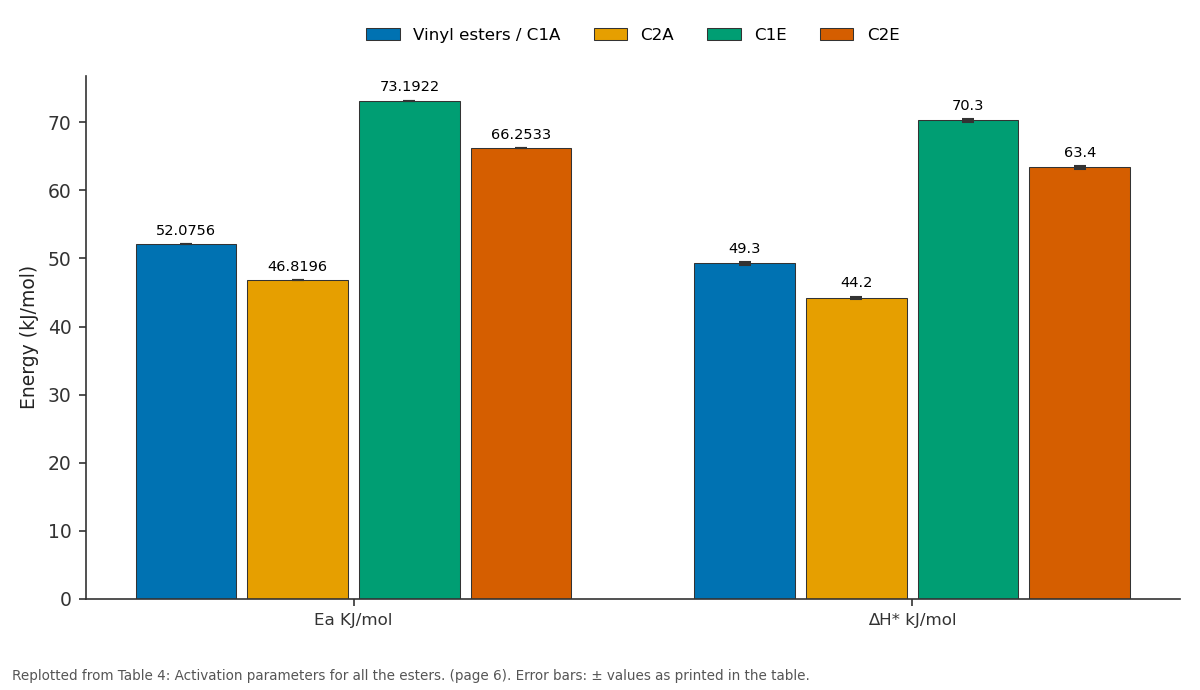
Vinyl esters / C1A and C2A and more: Ea KJ/mol vs ∆H* kJ/mol
Replotted from Table 4 (page 6) of the original paper. Every bar is the paper's own table value.
View source evidence ↗Figures & tables
From the original paper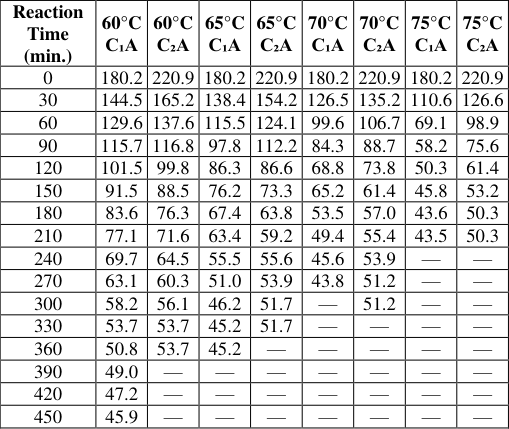 Table 4
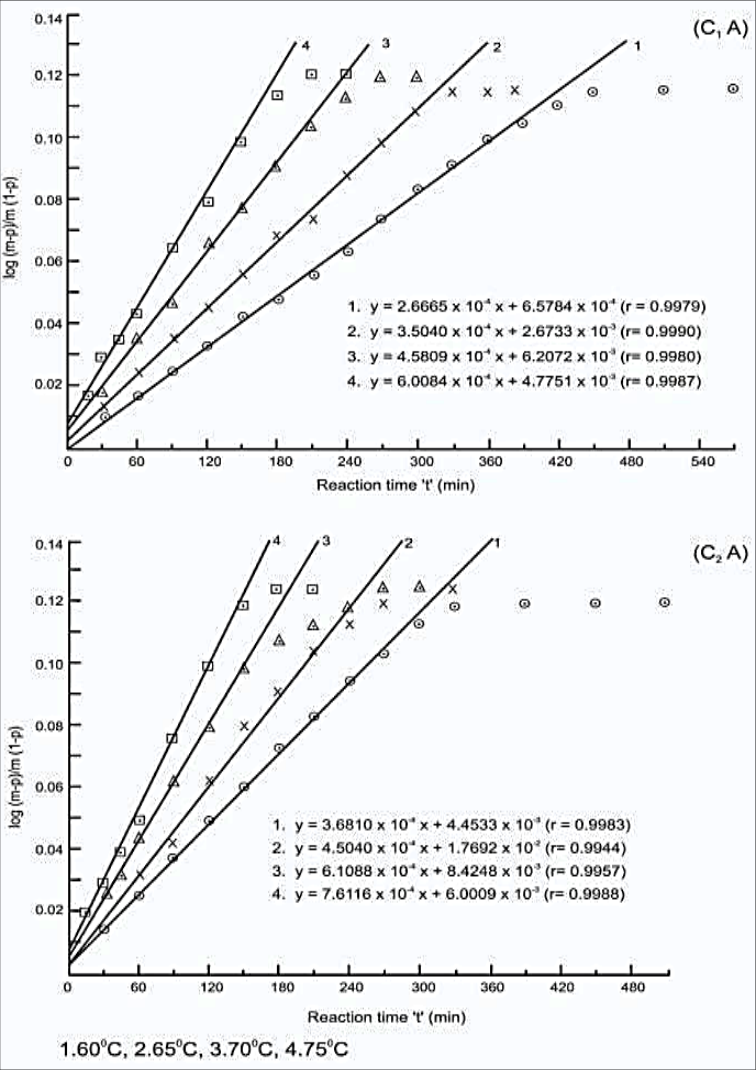 Figure 1
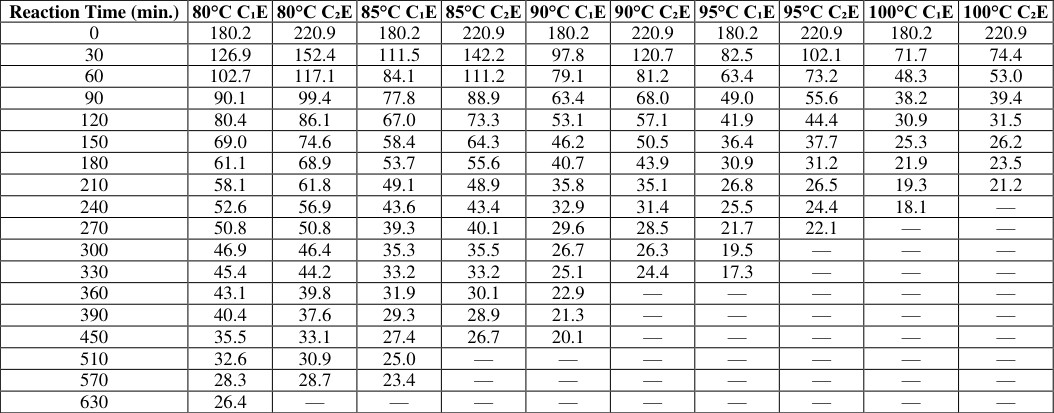 Table 2
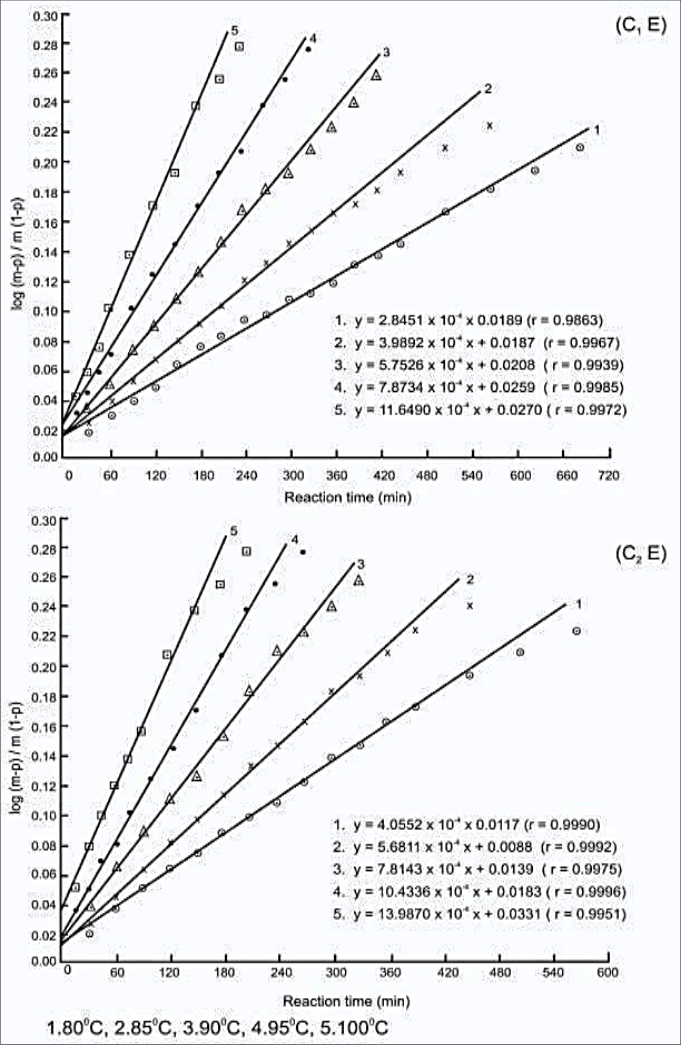 Figure 2
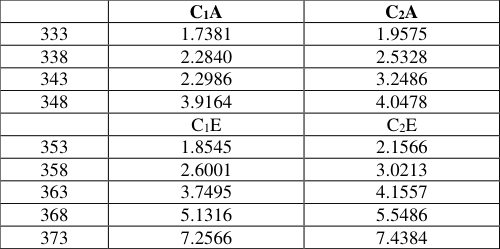 Table 3
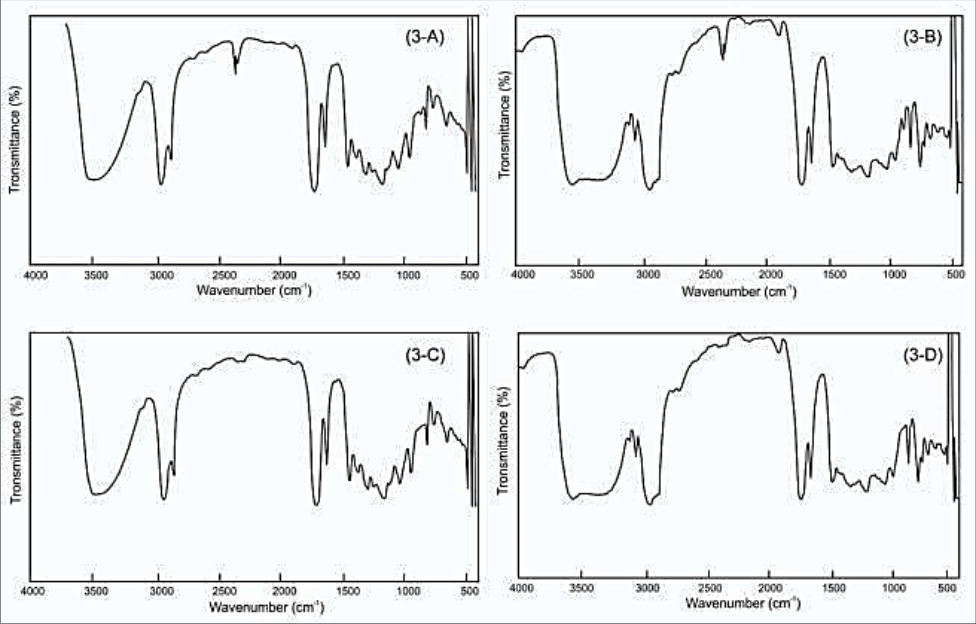 Figure 3
 Table 4
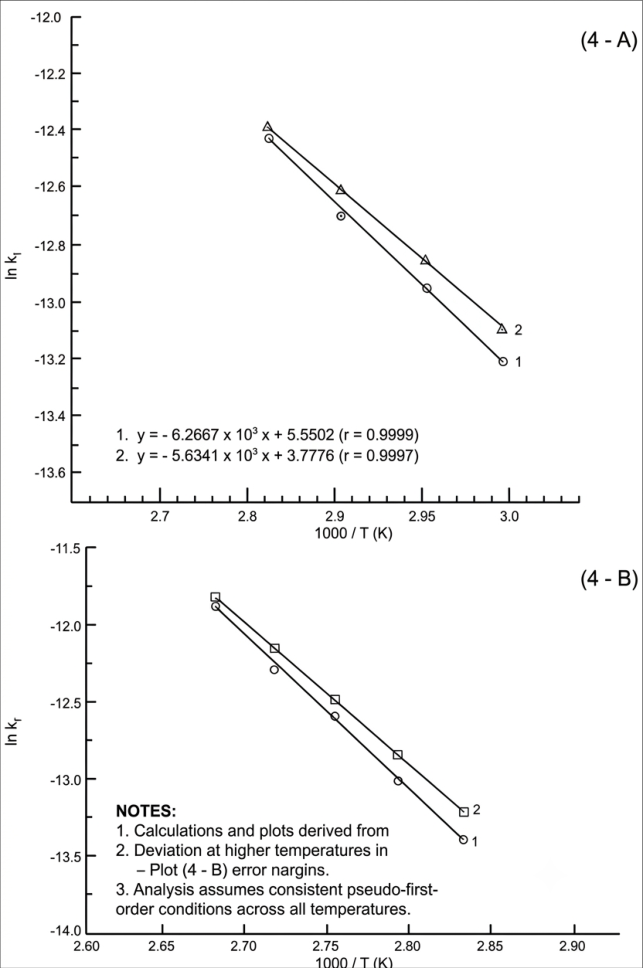 Figure 4
Introduction
Cycloaliphatic epoxy resins have gained received widespread attention in recent years because of their lightweight nature, excellent impact strength, superior weather resistance, and outstanding thermal and electrical properties. Their outstanding properties make them highly suitable for use in outdoor electrical insulation application. However, the principal disadvantages of these resins are their high cost and brittle nature. Consequently, they required modification to enhance their performance [1,2] . The reaction of epoxy resins with unsaturated monocarboxylic acid offers a practical route to improve their processing and curing behaviour, addressing their major drawbacks [3,4] . The incorporation of carbon-carbon double bond in the resins provides reactive cite to polymerize, enabling the development of materials with desired properties [5][6][7] . Epoxy resins are typically esterified with acrylic acid, methacrylic acid, cinnamic acid, crotonic acid, etc to produce vinyl ester resins [8][9][10] . The present study employs methacrylic acid because it offers optimal reactivity during esterification and the cured product with enhanced chemical, thermal, and mechanical properties [11,12] . Basic catalysts such as tertiary amines, phosphines, alkalies or onium salts are widely employed for the acid-epoxide reaction [13,14] . Various parallel and consecutive side reactions usually occur during the esterification reaction, thereby affecting the physical and chemical properties of the cured resin [15,16] . A comprehensive kinetic investigation is required to optimize the curing process and obtain resins with superior quality and performance [17][18][19] .
The reaction was conducted in an electrically heated oil bath regulated by a solid-state relay. Reaction advancement was assessed by monitoring the acid value as regular intervals. The chemical structure of all the prepared esters were verified by FTIR spectroscopy (Nicolet Impact 400D spectrophotometer) using KBr pallets.
Reaction Order and Rate Constant
The order of the reaction was calculated by integral method of analysis. The second order rate equation used for the reaction in which stoichiometric ratio of reactant is not unity can be written as follows [20] :
Where, p = extent of reaction at time where T = absolute temperature (K), R = gas constant (8.314 J/mol K) Entropy, Enthalpy and Free Energy of Activation:
The entropy of activation (∆S) was calculated using the following equation:
h k b = Boltzman constant and h = Plank's constant The enthalpy of activation (∆ 𝐻) and free energy of activation ((∆ 𝐺) were calculated using the following expression.
Result and Discussions
In the present study two cycloaliphatic epoxy resins: diglycidyl hexahydrophthalate (C 1 : CY-184, Epoxide equivalent weight 180) and 3, 4-epoxy cyclohexylmethyl 3' 4'-epoxy cyclohexane carboxylate (C 2 :CY-179, Epoxide equivalent weight 140) were used for the preparation of their esters. In practice complete esterification of epoxy resins is challenging because polymerization can simultaneously occurs with the esterification reaction, resulting a gellation before the desired low acid value is reached. Consequently, an excess of epoxy resin ratio is commonly used in the esterification reactions. In the reaction epoxy resin to methacrylic acid ratio is maintained at 1: 0.9 stoichiometric ratio to prevent gelation and obtain a product with desired molecular weight [21,22] .
Synthesis of Cycloaliphatic epoxy resins based vinyl esters in presence of triethyl amine
The temperature range selected after several trails for the esterification of C 1 and C 2 in presence of triethylamine 60-75°C. To evaluate the activation parameters the esterification of C 1 show plot between In (m-p)/m(1-p) versus reaction time for the synthesis of of C 1 A and C 2 A at 60° 65° 70° and 75°C. The plot were linear at all temperature up to ~72% conversion with highly significant correlation coefficient r> 0.99 which confirm that the reaction followed second order kinetics. 2. It is apparent from the table that the acid value decreases with time fastly up to 70% conversion, then slow down but reaction continued even after 90% conversion. Figure 2 show plot between In (m-p)/m(1-p) versus reaction time for the synthesis of of C 1 E and C 2 E at 80°, 85°, 90°, 95° and 100°C. The plot were linear at all temperature up to ~88% conversion with highly significant correlation coefficient r> 0.99 which confirm that the reaction followed second order kinetics.
Characterization of synthesized vinyl esters
The formation of cycloaliphatic epoxy resin esters was confirmed by FTIR spectroscopy through the presence of characteristic absorption bands corresponding to hydroxyl (-OH), carbonyl (C=O), and carbon-carbon double bond (C=C) functional groups. The FTIR spectra of C₁A, C 2 A, C 1 E, and C 2 E are presented in Figure 3. All spectra exhibit a broad absorption band around 3510 cm⁻¹, which is assigned to the hydroxyl (-OH) group formed as a result of the ring opening of glycidyl and cycloaliphatic epoxy groups during the esterification reaction. A characteristic absorption band at 1635 cm⁻¹ is observed in all spectra, indicating the presence of the acryloyl (C=C) double bond. In addition, absorption bands at approximately 2935 cm⁻¹ and 3050 cm⁻¹ correspond to methyl and methylene stretching vibrations, respectively. These characteristic absorption bands collectively confirm the successful synthesis of vinyl esters from cycloaliphatic epoxy resins.
Kinetic parameters of the esterification reactions:
The second order rate constant k T 60° 65° 70° and 75°C for the synthesis of C 1 A and C 2 A were calculated from slope of plots of figure 1 and are given in Table 3. For the esters C 1 E and C 2 E rate constant at 80°, 85°, 90°, 95° and 100°C were calculated form figure 2 and written also in table 3. Figure 4 shows the plot between ln k T and the reciprocal of temperature for C 1 A, C 2 A, C 1 E and C 2 E. The Arrhenius plots obtained by regression analysis were linear, confirming that the reactions followed Arrhenius kinetics. The activation energy (Ea) and pre-exponential factor (Z) were calculated from the slope and intercept of the plots, respectively. Subsequently, the activation parameters, namely enthalpy of activation (ΔH*), entropy of activation (ΔS*), and Gibbs free energy of activation (ΔG*), were evaluated. The corresponding values are presented in Table 4. As shown in Table 4, the values of activation energy (Ea), pre-exponential factor (Z), and enthalpy of activation (ΔH*) for C₁A and C₁E are higher than those for C₂A and C₂E, respectively. These results indicate that the resin containing the epoxycyclohexane group is more reactive than the resin containing the pendant glycidyl group. The positive values of Gibbs free energy of activation (ΔG*) for all the esters suggest that the esterification reaction proceeds through an energy-demanding activated state. In contrast, the large negative values of entropy of activation (Δs*) indicates the formation of a highly ordered activated complex during the esterification process.
| Activation parameters | Vinyl esters | — | — | — |
|---|---|---|---|---|
| C1A | C2A | C1E | C2E | |
| Ea KJ/mol | 52.0756 | 46.8196 | 73.1922 | 66.2533 |
| Z (mol/lit)-1min-1 | 2.570x 10² | 0.4369x 10² | 4-7018x 105 | 2.4767 x 10⁵ |
| -∆s* J/K mol | 227.3±0.2 | 248.6± 0.2 | 171.5 ±0.3 | 190.6± 0.3 |
| ∆H* kJ/mol | 49.3±0.2 | 44.2±0.2 | 70.3±0.2 | 63.4± 0.2 |
| ∆G* kJ/mol | 126.7±2.0 | 128.4±2.0 | 128.2±2.0 | 128.7±2.0 |
Table text extracted from the original PDF; superscript letters are shown inline. The original table image is below.
View original table image
| — | C1A | C2A |
|---|---|---|
| 333 | 1.7381 | 1.9575 |
| 338 | 2.2840 | 2.5328 |
| 343 | 2.2986 | 3.2486 |
| 348 | 3.9164 | 4.0478 |
| C1E | C2E | |
| 353 | 1.8545 | 2.1566 |
| 358 | 2.6001 | 3.0213 |
| 363 | 3.7495 | 4.1557 |
| 368 | 5.1316 | 5.5486 |
| 373 | 7.2566 | 7.4384 |
Table text extracted from the original PDF; superscript letters are shown inline. The original table image is below.
View original table image
Conclusions
The present study demonstrates that the esterification of cycloaliphatic epoxy resins with methacrylic acid in the presence of triethylamine/triphenyl phosphine as catalysts follows second-order reaction kinetics. The reactivity of the cycloaliphatic epoxy resins (CERs) was found to depend on the nature of the epoxy functional group. The CER containing an epoxycyclohexane group exhibited higher reactivity than the resin containing a pendant glycidyl group, as evidenced by its lower activation energy, confirming the significant influence of ring structure on the reaction rate. The calculated kinetic parameters, including activation energy (Ea), pre-exponential factor (Z), enthalpy of activation (∆H*), entropy of activation (∆s*), and Gibbs free energy of activation (∆G)*, provided valuable insights into the reaction mechanism. The positive values of ∆G* indicate that the esterification proceeds through an energydemanding activated state, whereas the negative values of ∆s* suggest the formation of a highly ordered activated complex during the reaction. Overall, the kinetic analysis provides a better understanding of the esterification process and offers useful information for optimizing the synthesis and curing behavior of cycloaliphatic vinyl ester resins.
Acknowledgement
AcknowledgmentThe authors express their sincere gratitude to the Higher Education U.P. Government for sponsoring this project work and encouragement in promoting academic research. We are also deeply thankful to the Principal of our college Dr. Rajesh Kumar Srivastava for providing the necessary facilities, constant motivation, and a conducive academic environment that made this research work possible.
Figures and tables from the paper
| Reaction Time (min.) | 80°C C₁E | 80°C C₂E | 85°C C₁E | 85°C C₂E | 90°C C₁E | 90°C C₂E | 95°C C₁E | 95°C C₂E | 100°C C₁E | 100°C C₂E |
|---|---|---|---|---|---|---|---|---|---|---|
| 0 | 180.2 | 220.9 | 180.2 | 220.9 | 180.2 | 220.9 | 180.2 | 220.9 | 180.2 | 220.9 |
| 30 | 126.9 | 152.4 | 111.5 | 142.2 | 97.8 | 120.7 | 82.5 | 102.1 | 71.7 | 74.4 |
| 60 | 102.7 | 117.1 | 84.1 | 111.2 | 79.1 | 81.2 | 63.4 | 73.2 | 48.3 | 53.0 |
| 90 | 90.1 | 99.4 | 77.8 | 88.9 | 63.4 | 68.0 | 49.0 | 55.6 | 38.2 | 39.4 |
| 120 | 80.4 | 86.1 | 67.0 | 73.3 | 53.1 | 57.1 | 41.9 | 44.4 | 30.9 | 31.5 |
| 150 | 69.0 | 74.6 | 58.4 | 64.3 | 46.2 | 50.5 | 36.4 | 37.7 | 25.3 | 26.2 |
| 180 | 61.1 | 68.9 | 53.7 | 55.6 | 40.7 | 43.9 | 30.9 | 31.2 | 21.9 | 23.5 |
| 210 | 58.1 | 61.8 | 49.1 | 48.9 | 35.8 | 35.1 | 26.8 | 26.5 | 19.3 | 21.2 |
| 240 | 52.6 | 56.9 | 43.6 | 43.4 | 32.9 | 31.4 | 25.5 | 24.4 | 18.1 | — |
| 270 | 50.8 | 50.8 | 39.3 | 40.1 | 29.6 | 28.5 | 21.7 | 22.1 | — | — |
| 300 | 46.9 | 46.4 | 35.3 | 35.5 | 26.7 | 26.3 | 19.5 | — | — | — |
| 330 | 45.4 | 44.2 | 33.2 | 33.2 | 25.1 | 24.4 | 17.3 | — | — | — |
| 360 | 43.1 | 39.8 | 31.9 | 30.1 | 22.9 | — | — | — | — | — |
| 390 | 40.4 | 37.6 | 29.3 | 28.9 | 21.3 | — | — | — | — | — |
| 450 | 35.5 | 33.1 | 27.4 | 26.7 | 20.1 | — | — | — | — | — |
| 510 | 32.6 | 30.9 | 25.0 | — | — | — | — | — | — | — |
| 570 | 28.3 | 28.7 | 23.4 | — | — | — | — | — | — | — |
| 630 | 26.4 | — | — | — | — | — | — | — | — | — |
Table text extracted from the original PDF; superscript letters are shown inline. The original table image is below.
View original table image
References
22 in the original paper- May C. Epoxy Resins: Chemistry and Technology. New York: Marcel Dekker; 2018.
- Mark HF, Bikales NM, Overberger CG, Menges G. Encyclopedia of polymer science and engineering. Volume 6. New York: Wiley Interscience; 1986.
- Lee SM. Epoxy resin: Chemistry and Technology. New York: Marcel Dekker; 1988.
- Cheng J, Wu E, Zhang Y, Ji J, Guo L. Synthesis and Characterization of novel high impact strength epoxy vinyl ester resin. Chin J Appl Chem. 2015;32:916-921.
- Pachha RR, Thakur R, Patel RD. Studies of vinyl ester resin and their urethanized derivatives. High Performance Polymer. 1993;5(3):195-211.
- Srivastava A. Curing properties of cycloaliphatic epoxy resins and vinyl esters. Int J Chemical Studies. 2026;14(4):20-26.
- Agarwal S, Singhal R, Rai JSP. Curing and rheological behaviour of vinyl ester resins prepared in the presence of tertiary amines. J Macromolecular Science Part A, Pure and Applied Chemistry. 1999;36(5):759-773.
- Jaswal S, Bharti G. New trends in vinyl ester resins. Reviews in Chemical Engineering. 2014;30(6):567-614.
- Li SH, Yang XJ, Huang K, Li M, Xia JL. Preparation and characterization of dimer fatty acids based vinyl ester resin monomer. Adv Mater Res. 2013;712-715:8689.
- Atta AM, ElSaeed SM, Farag RM. New vinyl ester resins based on rosin for coating applications. React Funct Polym. 2006;66:1596-1608.
- Lin Z, Wu W, Wang J, Jin X. Studies on swelling behaviors, mechanical properties, network parameters and thermodynamic interaction of water sorption of 2hydroxyethyl methacrylate/novolac epoxy vinyl ester resin copolymeric hydrogels. React Funct Polym. 2007;67:789-797.
- Hamedani GH, Ibrahimi M, Ghaffarian SR. Synthesis and kinetic study of vinyl ester resins in presence of triethyl amine. Iranian Polymer Journal. 2006;15(11):871-878.
- Yang R, Wang Y, Ran X, Liu W. A comparison study on toughening vinyl ester resins using different nanocarbon materials. Polymers. 2023;15(23):4536.
- Zhang Z, Zhang J, Huang Y, Zhou Z, Yang R, Zhang W. Synthesis of novel vinyl ester resin and its glass fibre composite with good flame retardant and mechanical properties. Material Today Chemistry. 2025;43:102434.
- Chaudhary J. Synthesis, characterization and curing of vinyl ester resins. J Environmental Nanotechnology. 2013;2:42-45.
- Cook WD. Cure kinetics and thermal properties of vinyl ester resins. J Applied Polymer Science. 1997;64(2):285-293.
- Chattopadhyay DK, Panda SS, Raju KVSN. Curing and mechanical properties of epoxy acrylates/ methacrylates UV cured coating. Progress in Organic Coatings. 2005;54(1):10-19.
- Scott TF, Cook WD, Forsythe JS. Kinetics and network structure of thermally cured vinyl ester resins. European Polymer Journal. 2002;38(4):705-716.
- Zhang X, Biraraf V, Wei S, Guo Z, Colorado HA. Vinyl ester resins: Rheological, behaviour, cure kinetics, thermomechanical and tensile properties. AIChE Journal. 2013;60(1):266-274.
- Levenspiel O. Chemical Reaction Engineering. New Delhi: Wiley Eastern; 1972. p. 41.
- Tanaka Y, Bauer RS. Epoxy Resins: Chemistry and Technology. May CA, editor. New York: Marcel Dekker Inc; 1988. p. 285.
- Jing F, Zhao R, Li C, Xi Z, Wang O, Xie H. Influence of epoxy/ acid stoichiometry on the cure behaviour and mechanical property of epoxy vitrimers. Molecules. 2022;27(19):6355.