
Research article · 2026 · Full text
International Journal of Biology SciencesBiochar: A comprehensive review of its role in sustainable soil health and environmental impact
Volume 8(7) · Pages 18–20 · DOI: 10.33545/26649926.2026.v8.i7a.893 ↗
Research areasSoil Carbon and Nitrogen DynamicsThermochemical Biomass Conversion ProcessesAdsorption and biosorption for pollutant removal
Abstract
Author-writtenBiochar, a carbon-rich material produced through the pyrolysis of organic biomass, has gained significant attention due to its diverse applications in agriculture and environmental management. In addition to providing an effective means of biomass waste disposal and disease control, biochar contributes to carbon sequestration by stabilizing carbon derived from plant biomass. The composition and structure of biochar are influenced by factors such as feedstock type, pyrolysis temperature, heating rate, and residence time. The incorporation of biochar into soil can improve soil pH, electrical conductivity, water-holding capacity, and cation exchange capacity. Furthermore, it enhances nutrient retention, reduces nutrient leaching, decreases fertilizer requirements, and mitigates environmental pollution. Biochar also plays a significant role in improving crop growth and productivity. India possesses abundant biomass resources, offering substantial potential for large-scale biochar production. This review examines various biochar production technologies, its physicochemical properties, effects on soil health, carbon sequestration potential and environmental implications.
Summary
Source-checkedPlain-language reading of the full paper, prepared with AI and checked against the text. Each point links to the authors' own words.
Why it matters
- Biochar is a carbon-rich material created from organic biomass via pyrolysis, used widely for environmental management and agriculture. View evidence ↗
- Biochar is valuable because it helps dispose of biomass waste, controls disease, and sequesters carbon by stabilizing plant-derived carbon. View evidence ↗
- The use of biochar is rooted in ancient practices that created highly fertile 'Terra Preta' soils in the Amazon Basin. View evidence ↗
The question
- The review aims to examine biochar production technologies, its physical and chemical properties, and its impact on the environment and soil health. View evidence ↗
What they did
- Pyrolysis, the most common production method, involves thermally decomposing organic materials without oxygen. View evidence ↗
- Gasification produces biochar as a solid residue while simultaneously creating syngas for energy under limited oxygen conditions. View evidence ↗
- Hydrothermal carbonization uses water at high pressure and temperature to mimic coal formation rapidly, which is especially useful for wet biomass. View evidence ↗
What they found
- Using higher temperatures during pyrolysis generally results in biochar with more stability, a larger surface area, and higher carbon content. View evidence ↗
- Biochar created at higher temperatures is more resistant to microbial degradation due to more stable carbon forms. View evidence ↗
- The porous structure of biochar improves soil health and nutrient cycling by providing protection and colonization sites for beneficial microbes. View evidence ↗
- Biochar application has been reported to reduce surface runoff and increase the macro-porosity of the soil. View evidence ↗
- Amending soils with biochar improves aggregate stability, which helps enhance soil resilience and reduce erosion. View evidence ↗
- Meta-analysis shows that biochar improves nutrient use efficiency by effectively retaining nutrients within the root zone. View evidence ↗
- Biochar mitigates climate change by converting biomass carbon into a recalcitrant form, which reduces atmospheric CO2. View evidence ↗
- Applying biochar to agricultural soils is associated with a reduction in the emission of methane and nitrous oxide. View evidence ↗
What it means
- The authors conclude that integrating biochar into agriculture can increase crop productivity, lower reliance on synthetic fertilizers, and support environmental sustainability. View evidence ↗
Visual summary
1 visualsIllustrations explain the paper; they do not show study data.
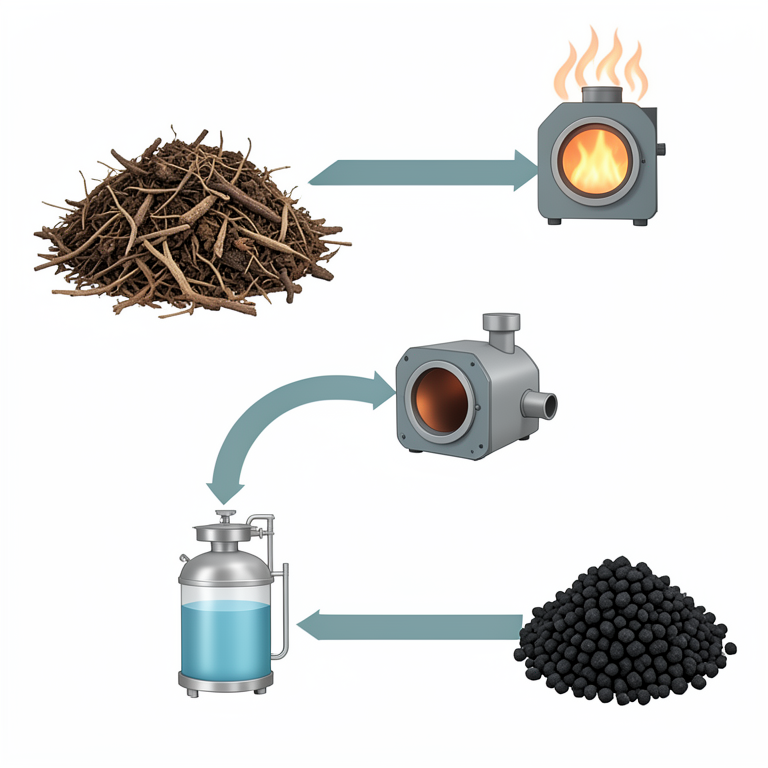
Biochar Production Pathways
AI-generated conceptual illustration (organic biomass and biochar). It explains the idea and does not show study data.
View source evidence ↗Introduction
The concept of biochar originates from ancient agricultural practices in which biomass was intentionally burned under controlled conditions, resulting in the formation of charcoal-rich soils known as Terra Preta. These highly fertile soils, first identified in the Amazon Basin, demonstrate the long-term benefits of biochar application for soil improvement. This historical evidence highlights the strong relationship between biochar and enhanced soil fertility. Biochar has emerged as a promising material capable of addressing several global challenges related to agriculture, environmental degradation, and climate change. Its ability to sequester carbon, improve soil structure, enhance nutrient retention, and promote sustainable agricultural production has attracted considerable attention from researchers and policymakers worldwide (Jeffery et al., 2011) [4] . The growing interest in biochar represents a shift toward integrating traditional agricultural knowledge with modern technological approaches to improve environmental sustainability and agricultural resilience. Given its potential benefits, biochar has become an important subject of research in soil science and environmental management. This review examines the influence of biochar on sustainable soil health and its environmental impacts.
Biochar Production:
Biochar production involves various thermo-chemical processes that convert biomass into a carbon-rich material. The production method, feedstock type, and processing conditions significantly influence the characteristics and quality of the resulting biochar.
Pyrolysis:
Pyrolysis is the most widely used method for biochar production and involves the thermal decomposition of organic materials in the absence of oxygen. The process generally consists of three stages: drying, pyrolysis, and cooling. Temperature, heating rate, and residence time strongly affect the physicochemical properties of biochar. Hightemperature pyrolysis typically produces biochar with greater carbon content, higher surface area, and improved stability. Feedstock selection, including agricultural residues, wood, and animal manure, also influences the final biochar characteristics (Lehmann et al., 2015) [5] .
Gasification:
Gasification is a thermochemical process in which biomass is converted into synthesis gas (syngas) under limited oxygen conditions. The resulting syngas can be utilized for energy production, while the remaining solid residue is biochar. Gasification is suitable for a wide range of feedstocks, including woody biomass and agricultural residues. Reduced oxygen availability during the process generally produces biochar with enhanced stability and carbon content (Roberts et al., 2010) [10] .
Hydrothermal Carbonization (HTC):
Hydrothermal carbonization involves the treatment of biomass with water at elevated temperatures and pressures. This process mimics natural coal formation but occurs within a much shorter timeframe. HTC is particularly advantageous for processing wet biomass and produces biochar with unique physicochemical properties, including increased surface area and distinctive functional groups (Novak et al., 2009) [9] .
Impact of Feedstock Selection:
Feedstock selection plays a crucial role in determining biochar properties. Different biomass materials vary in chemical composition, lignin content, cellulose concentration, and ash content, which directly influence biochar stability, porosity, nutrient content, and surface chemistry. Agricultural residues often produce nutrient-rich biochar suitable for soil amendment, whereas woody biomass generally yields biochar with higher carbon content and greater carbon sequestration potential (Jeffery et al., 2017) [3] .
Influence of Processing Conditions:
Processing conditions such as temperature, residence time, and heating rate significantly affect biochar quality. Higher pyrolysis temperatures generally increase carbon content, aromaticity, and stability while reducing volatile compounds. However, excessively high temperatures may alter biochar structure and potentially generate undesirable emissions (Mohan et al., 2006) [8] . Therefore, optimizing processing conditions is essential for producing biochar tailored to specific agricultural and environmental applications.
Biochar Properties:
The effectiveness of biochar in agriculture and environmental remediation depends largely on its physical, chemical, and biological properties.
Physical Properties 3.1.1 Surface Area:
Surface area is a critical property influencing biochar reactivity and adsorption capacity. A larger surface area provides more active sites for nutrient adsorption and chemical interactions. Biochar produced at higher pyrolysis temperatures generally exhibits greater surface area, enhancing its effectiveness in soil improvement and environmental remediation (Lehmann et al., 2015) [5] .
Porosity:
Biochar porosity influences water retention, aeration, and microbial colonization within soils. Macropores facilitate water movement and root growth, whereas micropores enhance nutrient retention. A balanced pore structure is essential for improving soil quality and productivity (Jeffery et al., 2017) [3] .
Density:
Biochar density affects nutrient retention, durability, and persistence in soil. Lower-density biochar may decompose more rapidly, while higher-density biochar tends to remain stable for longer periods. Appropriate density is therefore important for achieving desired agronomic and environmental benefits (Mohan et al., 2006) [8] .
Chemical Properties 3.2.1 Carbon Content:
Biochar consists predominantly of carbon, and its carbon content determines its stability and carbon sequestration potential. Biochar produced at higher temperatures generally contains more stable forms of carbon, making it resistant to microbial degradation (Lehmann et al., 2011) [6] .
Functional Groups:
Functional groups such as hydroxyl, carboxyl, and phenolic groups present on the biochar surface influence nutrient retention and contaminant adsorption. These functional groups contribute to increased cation exchange capacity and improved soil fertility (Novak et al., 2009) [9] .
pH:
Biochar often exhibits alkaline properties and can help neutralize acidic soils. However, its effect on soil pH depends on feedstock type and production conditions (Jeffery et al., 2017) [3] .
Biological Properties 3.3.1 Microbial Activity:
Biochar provides a favorable habitat for beneficial soil microorganisms. Its porous structure offers protection and colonization sites for microbes, thereby enhancing nutrient cycling and soil health (Lehmann et al., 2011) [6] .
Plant Growth Promotion:
Biochar promotes plant growth by improving nutrient availability, increasing water retention, and stimulating microbial activity in the rhizosphere. These effects contribute to improved root development and enhanced nutrient uptake (Agegnehu et al., 2017) [1] .
Effects of Biochar on Soil
Health: Biochar has demonstrated significant potential for improving soil health through its effects on soil structure, nutrient dynamics, and microbial activity.
Soil Structure Enhancement 4.1.1 Increased Porosity:
The porous nature of biochar enhances soil porosity, improving aeration, water infiltration, and root penetration. Lehmann et al. (2011) [6] reported that biochar application increased soil macroporosity and reduced surface runoff.
Improved Aggregation and Stability:
Biochar promotes soil aggregation by acting as a binding agent between soil particles. Jeffery et al. (2011) [4] observed improved aggregate stability in biochar-amended soils, which can reduce erosion and enhance soil resilience.
Nutrient Retention and Availability 4.2.1 Enhanced Cation Exchange Capacity (CEC):
The high cation exchange capacity of biochar enables it to retain essential nutrients such as potassium, calcium, and magnesium. Major [12] demonstrated that biochar applications effectively retained nutrients within the root zone, thereby improving nutrient use efficiency. [2] suggests that the positive effects of biochar on soil fertility can persist for extended periods due to its high stability and carbon sequestration potential. These long-term benefits make biochar a valuable component of sustainable soil management practices.
Environmental Impact of Biochar:
Beyond agriculture, biochar offers substantial environmental benefits, including carbon sequestration, greenhouse gas mitigation, and environmental remediation. [11] indicate that biochar can significantly enhance long-term soil carbon storage.
Carbon Sequestration
Carbon Sequestration
Environmental Remediation:
Biochar can adsorb pollutants, heavy metals, and organic contaminants from soil and water. Its large surface area and abundance of functional groups make it an effective material for environmental cleanup and water treatment applications.
Greenhouse Gas Mitigation:
Biochar application has been associated with reductions in greenhouse gas emissions, particularly nitrous oxide and methane, from agricultural soils. These reductions contribute to improved environmental sustainability and climate resilience.
Conclusion
Biochar is a carbon-rich product derived from biomass through pyrolysis and offers significant potential for sustainable agricultural and environmental applications. Its ability to improve soil fertility, enhance water retention, increase nutrient availability, and promote carbon sequestration makes it a valuable tool for sustainable land management.
Additionally, biochar provides an environmentally friendly approach to waste management by converting agricultural and organic residues into beneficial products. By integrating biochar into agricultural systems, it is possible to improve crop productivity, reduce dependence on synthetic fertilizers, mitigate climate change, and support long-term environmental sustainability.
References
11 in the original paper- Agegnehu G, Bass AM, Nelson PN, Bird MI. Benefits of biochar, compost and biochar-compost for soil quality, maize yield and greenhouse gas emissions in a tropical agricultural 2017;579:1345-1353.
- Glaser B, Lehmann J, Zech W. Ameliorating physical and chemical properties of highly weathered soils in the tropics with charcoal-a review. Biol Fertil Soils. 2002;35(4):219-230.
- Jeffery S, Abalos D, Prodana M, Bastos AC, van Groenigen JW, Hungate BA, et al. Biochar boosts tropical but not temperate crop yields. Environ Res Lett. 2017;12(5):053001.
- Jeffery S, Verheijen FG, van der Velde M, Bastos AC. A quantitative review of the effects of biochar application to soils on crop productivity using meta analysis. Agric Ecosyst Environ. 2011;144(1):175-187.
- Lehmann J, Rillig MC, Thies J, Masiello CA, Hockaday WC, Crowley D, et al. Biochar effects on soil biota-a review. 2011;43(9):1812-1836.
- Liu Z, Dugan B, Masiello CA, Gonnermann H. Biochar particle size, shape, and porosity act together to influence soil water 2012;7(10):e48388.
- Mohan D, Pittman Jr CU, Steele PH. Pyrolysis of wood/biomass for bio-oil: a critical review. Energy Fuels. 2006;20(3):848-889.
- Novak JM, Lima I, Xing B, Gaskin JW, Steiner C, Das KC, et al. Characterization of designer biochar produced at different temperatures and their effects on a loamy sand. Ann Environ Sci. 2009;3:195-206.
- Roberts KG, Gloy BA, Joseph S, Scott NR. Life cycle assessment of biochar systems: estimating the energetic, economic, and climate change potential. Environ Sci Technol. 2010;44(2):827-833.
- Spokas KA, Novak JM, Stewart CE, Cantrell KB, Uchimiya M, DuSaire MG, et al. Qualitative analysis of volatile organic compounds on biochar. Chemosphere. 2012;87(7):862-866.
- Zhang X, Wang H, He L, Lu K, Sarmah A, Li J, et al. Using biochar for remediation of soils contaminated with heavy metals and organic pollutants. Environ Sci Pollut Res. 2018;25(9):8010-8024.