
Research article · 2026 · Full text
International Journal of Horticulture and Food ScienceComparative study of various mulches on growth, yield and quality attributes of strawberry (Fragaria × ananassa Duch.) cv. Winter Dawn
Volume 8(7) · Pages 08–17 · DOI: 10.33545/26631067.2026.v8.i7a.773 ↗
Research areasBerry genetics and cultivation researchIrrigation Practices and Water ManagementPlant Growth and Agriculture Techniques
Abstract
Author-writtenThe present investigation entitled “Comparative Study of Various Mulches on Growth, Yield and Quality Attributes of Strawberry (Fragaria × ananassa Duch.) cv. Winter Dawn” was carried out during 2025-26 at the Horticulture Experimental Field, Department of Horticulture, School of Advanced Agriculture Sciences and Technology (SAAST), Chhatrapati Shahu Ji Maharaj University, Kanpur, Uttar Pradesh. The experiment was conducted to evaluate the influence of different mulching materials on growth, yield, quality attributes and soil properties of strawberry cv. Winter Dawn. The experiment consisted of seven treatments viz., T₁ Control (No mulch), T₂ Paddy straw mulch, T₃ Wheat straw mulch, T₄ Saw dust mulch, T₅ Cut grass mulch, T₆ Black polythene mulch and T₇ Transparent polythene mulch. Various observations were recorded for vegetative growth, flowering, fruit development, yield, fruit quality and soil parameters. The results revealed that different mulching treatments significantly influenced the growth and yield performance of strawberry. Among all treatments, T₆ (Black polythene mulch) showed superior results with maximum plant height (36.22 cm), plant spread (39.75 cm), number of leaves per plant (31.83), number of flowers per plant (26.37) and fruit diameter (41.85 mm). Black polythene mulch also resulted in early flowering and fruiting compared to other treatments. The maximum yield per plant (493.00 g), yield per plot (12.16 kg) and yield per hectare (121.42 q/ha) were recorded under T₆ Black polythene mulch, while the minimum yield was obtained under control treatment. Quality parameters were also improved with black polythene mulch, recording highest total sugars (7.28%) and total soluble solids (8.54 °Brix). The economic analysis indicated that T₆ Black polythene mulch recorded the highest gross return (₹12,14,200 ha⁻¹), net return (₹8,44,200 ha⁻¹) and benefit-cost ratio (2.28:1), making it the most profitable treatment. It may be concluded that application of black polythene mulch was found most effective for improving growth, yield, quality and profitability of strawberry cv. Winter Dawn under the agro-climatic conditions of Kanpur, Uttar Pradesh.
Summary
Source-checkedPlain-language reading of the full paper, prepared with AI and checked against the text. Each point links to the authors' own words.
Why it matters
- Strawberry is a globally popular and economically significant soft fruit crop. View evidence ↗
- Because strawberry plants have shallow roots, managing soil temperature and moisture is critical for optimal production. View evidence ↗
- Mulching, using organic or inorganic materials, is used to protect fruits from soil contact, suppress weeds, and regulate soil moisture and temperature. View evidence ↗
The question
- The study aimed to evaluate how different mulching materials affect the growth, yield, quality, and soil properties of the 'Winter Dawn' strawberry cultivar. View evidence ↗
What they did
- The researchers tested seven treatments: no mulch (control), paddy straw, wheat straw, saw dust, cut grass, black polythene, and transparent polythene. View evidence ↗
- The study took place during the 2025-26 Rabi season at the Horticulture Experiment Field of Chhatrapati Shahu Ji Maharaj University in Kanpur, Uttar Pradesh. View evidence ↗
- The experiment used a Randomized Block Design with three replications across 21 plots, each measuring 1.0 x 1.0 m². View evidence ↗
What they found
- Black polythene mulch (T6) produced the best growth results, including the maximum plant height (36.22 cm), plant spread (39.75 cm), leaves per plant (31.83), flowers per plant (26.37), and fruit diameter (41.85 mm). View evidence ↗
- Black polythene mulch led to the earliest flowering at 52.80 days, followed by transparent polythene (55.70 days) and paddy straw (58.20 days). View evidence ↗
- The earliest fruiting occurred with black polythene mulch (18.63 days), followed by transparent polythene (20.34 days) and paddy straw (22.65 days). View evidence ↗
- Black polythene mulch achieved the highest yield per plant (493.00 g), per plot (12.16 kg), and per hectare (121.42 q/ha), whereas the control group had the lowest yield. View evidence ↗
- Fruit quality was highest under black polythene mulch, which recorded the maximum total soluble solids (8.54 °Brix) and total sugars (7.28%). View evidence ↗
- Black polythene mulch resulted in the lowest titratable acidity (0.744%), while the control group had the highest (0.915%). View evidence ↗
- Black polythene mulch was the most profitable option, with a gross return of ₹12,14,200 ha⁻¹, a net return of ₹8,44,200 ha⁻¹, and a benefit-cost ratio of 2.28:1. View evidence ↗
What it means
- The authors recommend black polythene mulch for commercial cultivation of 'Winter Dawn' strawberries in the Central Plain Zone of Uttar Pradesh due to its superior growth, yield, and quality results. View evidence ↗
Visual summary
3 visualsIllustrations explain the paper; charts are replotted from the paper's own table values.
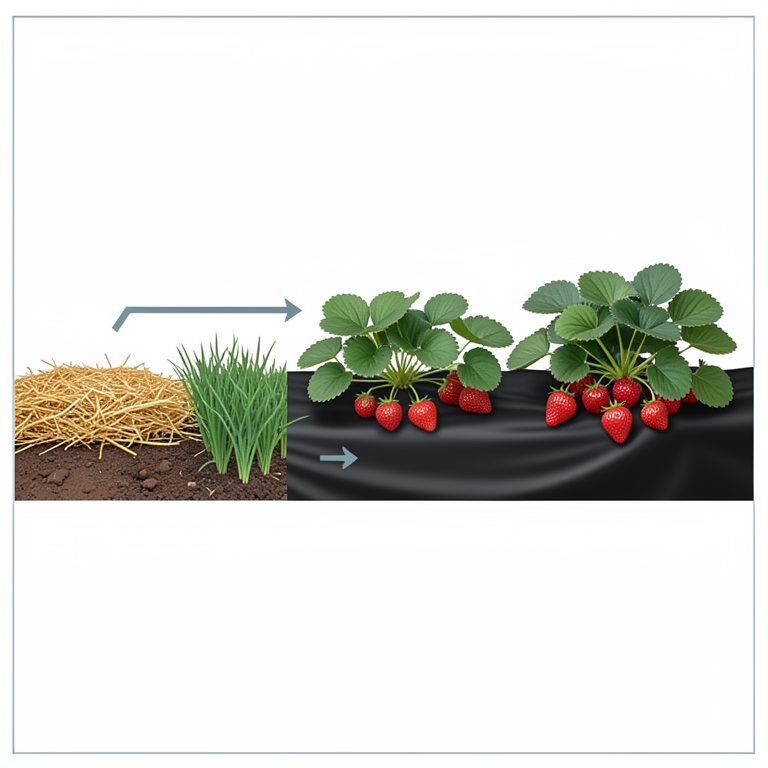
Comparison of Mulch Types on Strawberry Performance
AI-generated conceptual illustration (Strawberry plants (Fragaria × ananassa Duch.) cv. Winter Dawn). It explains the idea and does not show study data.
View source evidence ↗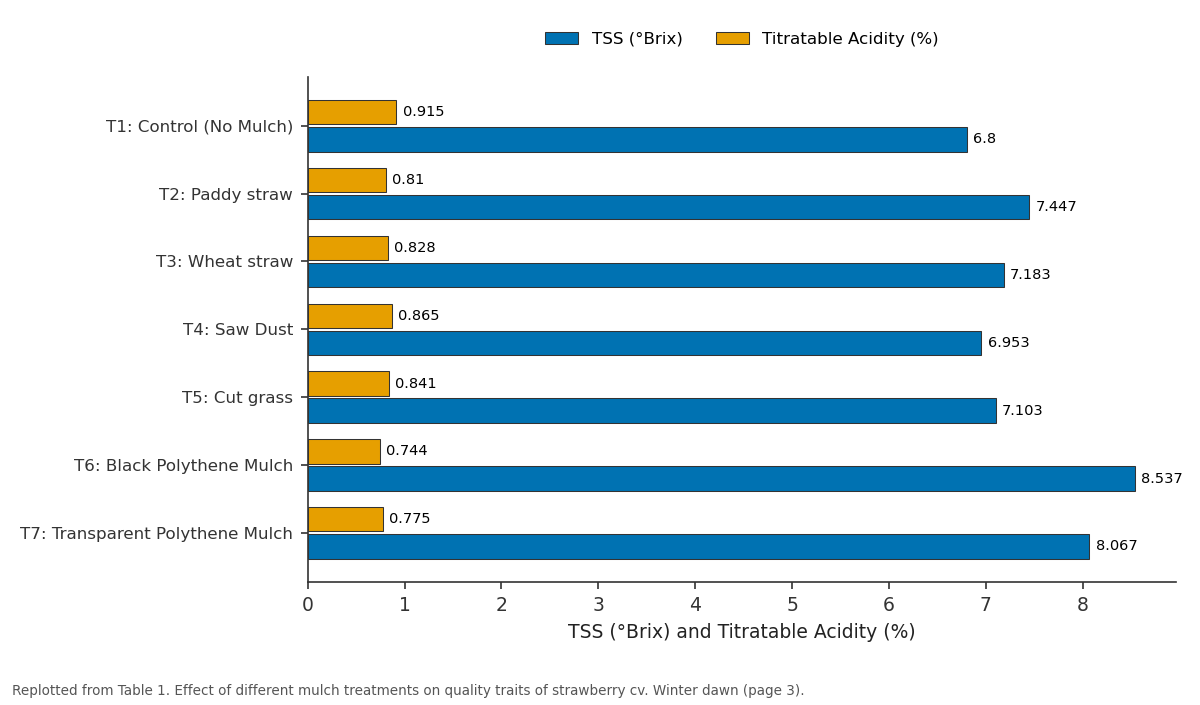
TSS (°Brix) and Titratable Acidity (%): T1: Control (No Mulch) vs T2: Paddy straw vs T3: Wheat straw vs T4: Saw Dust vs T5: Cut grass
Replotted from Table 1 (page 3) of the original paper. Every bar is the paper's own table value.
View source evidence ↗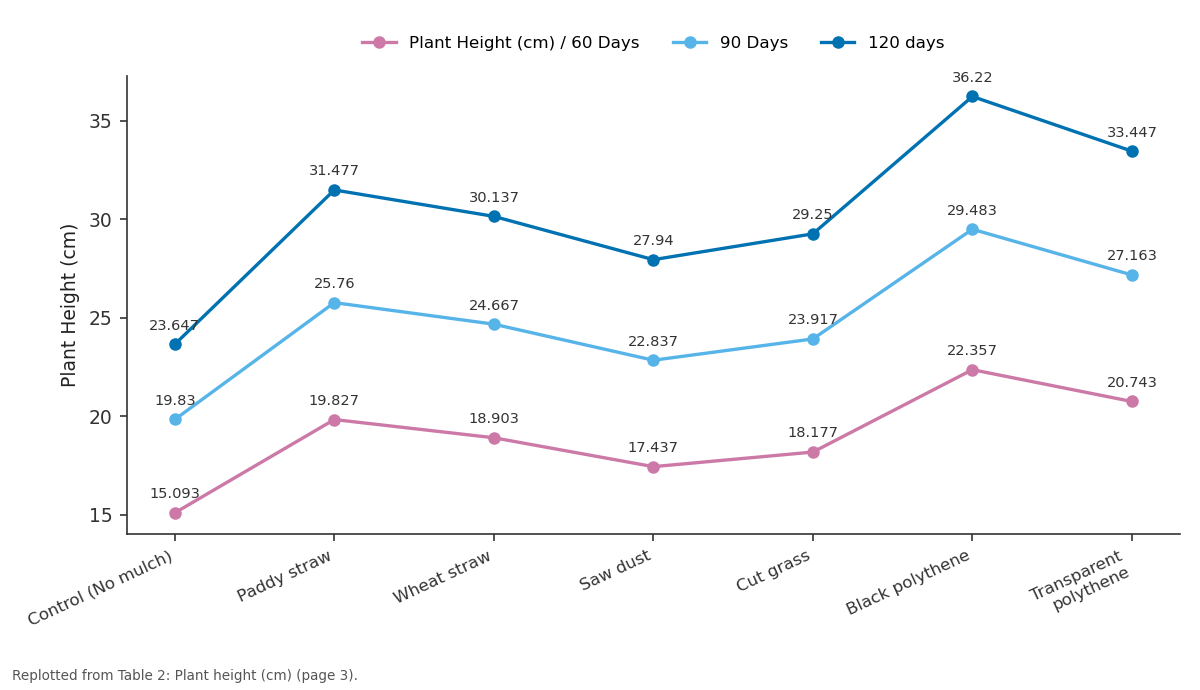
Plant Height (cm) / 60 Days and 90 Days and more: Control (No mulch) vs Paddy straw vs Wheat straw vs Saw dust vs Cut grass
Replotted from Table 2 (page 3) of the original paper. Every bar is the paper's own table value.
View source evidence ↗Figures & tables
From the original paper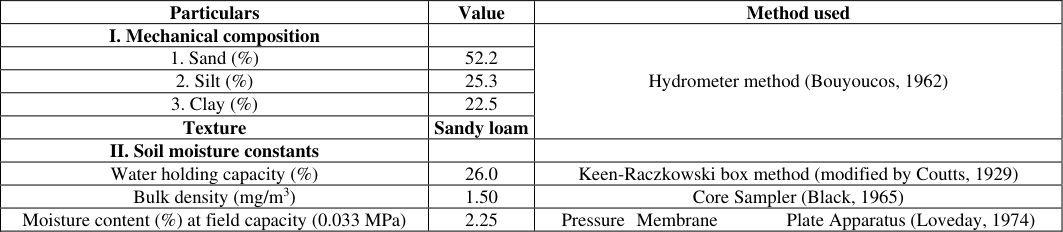 Table 3
 Table 3
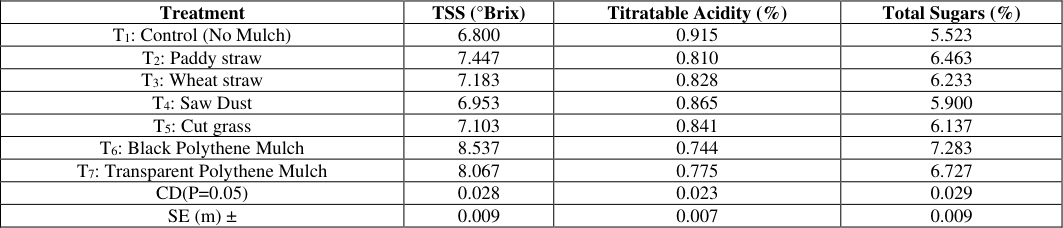 Table 1
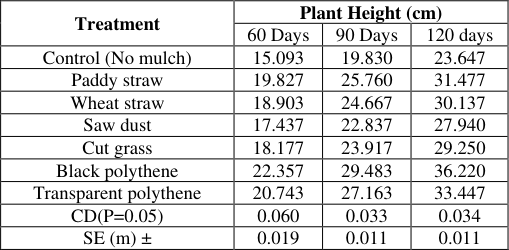 Table 2
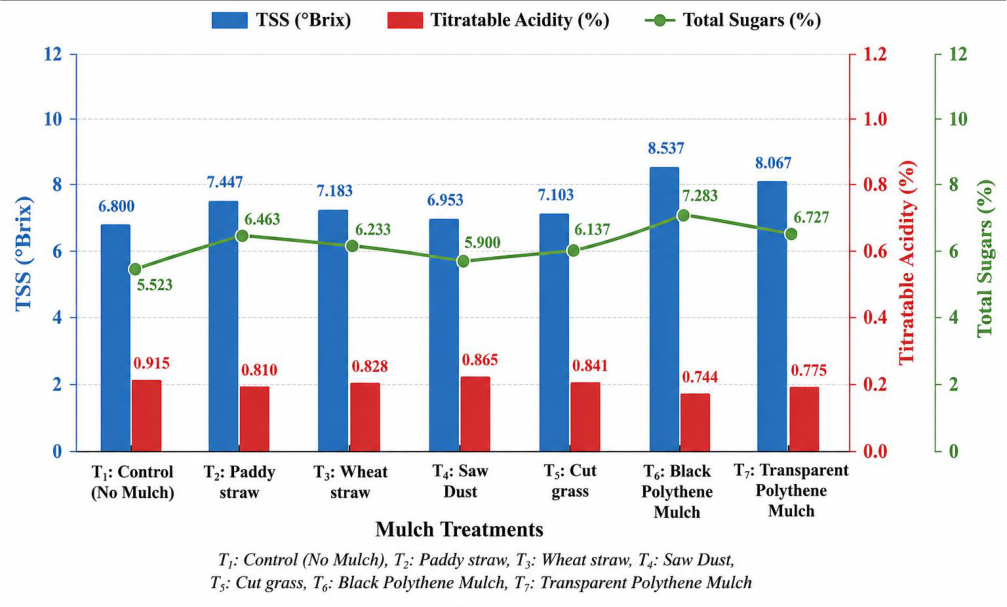 Figure 1
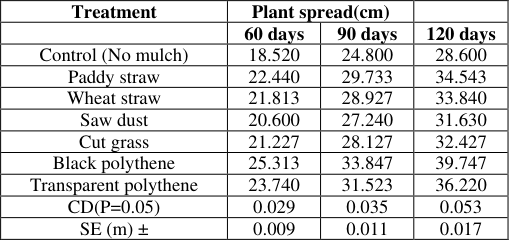 Table 3
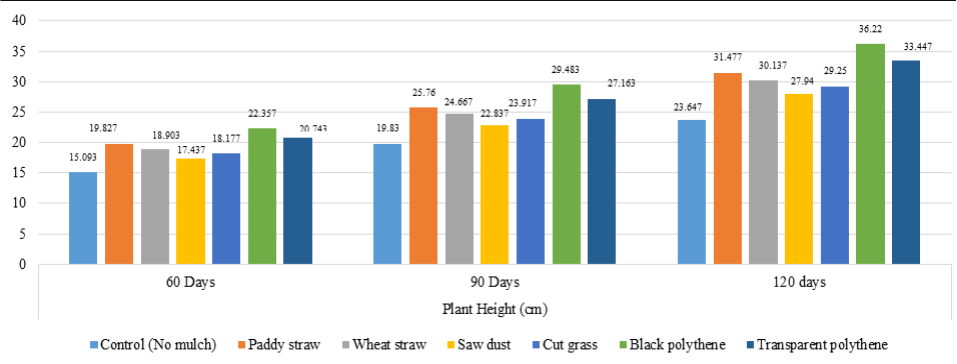 Figure 2
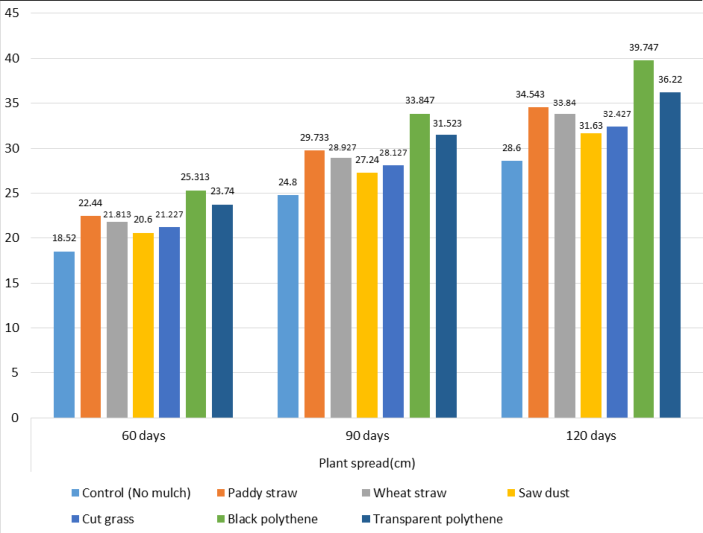 Figure 3
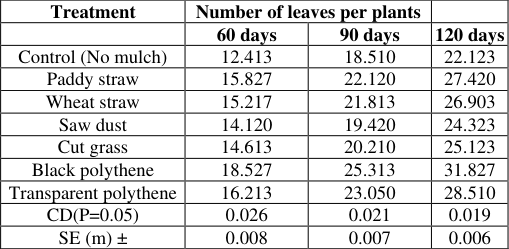 Table 4
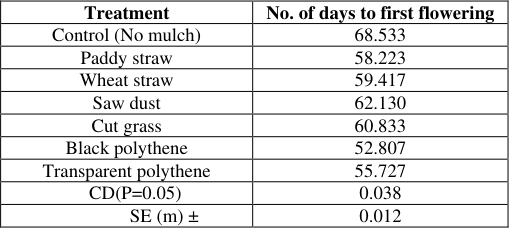 Table 5
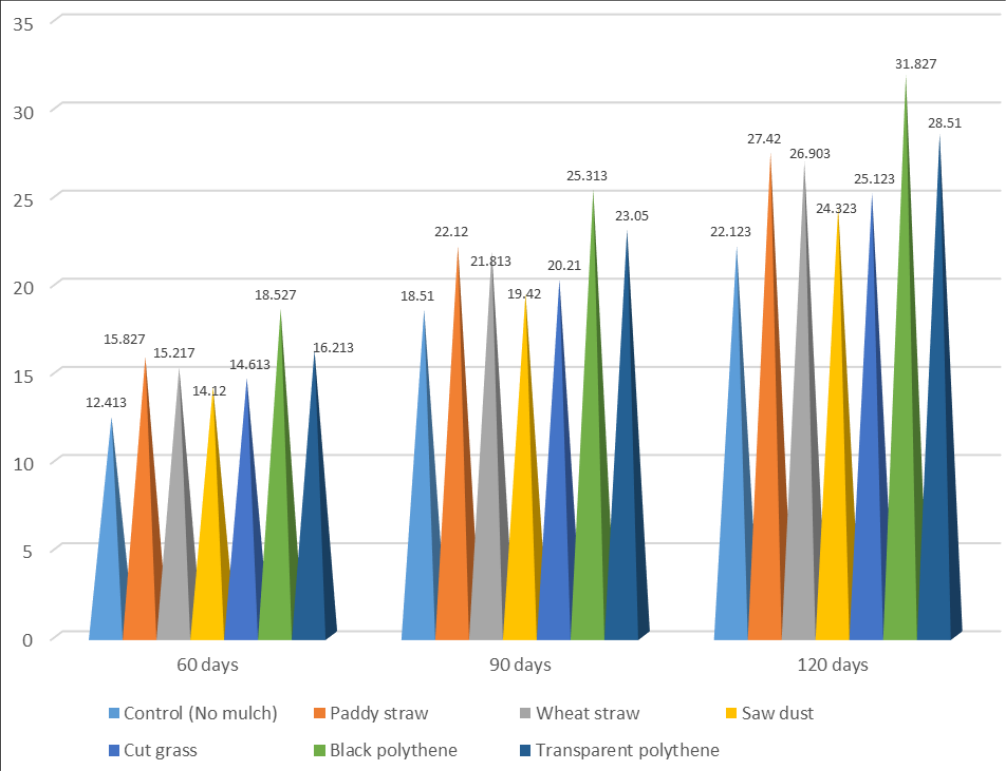 Figure 4
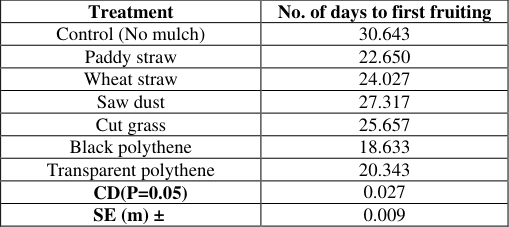 Table 6
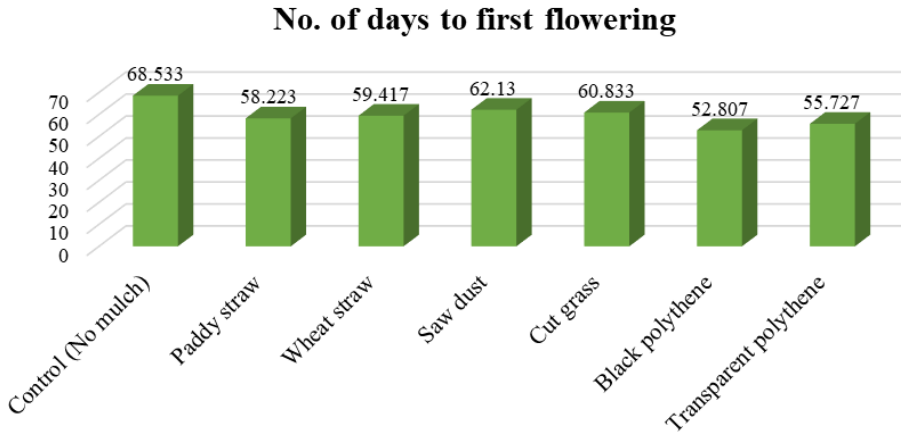 Figure 5
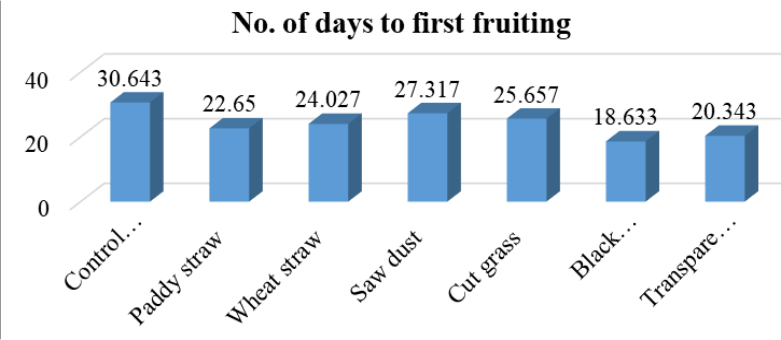 Figure 6
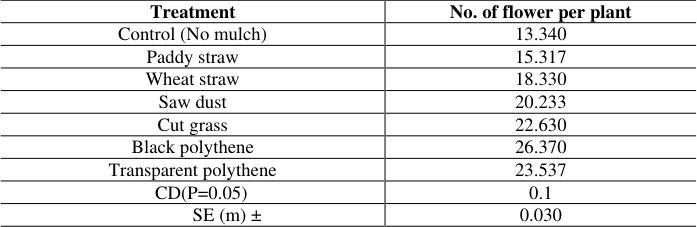 Table 7
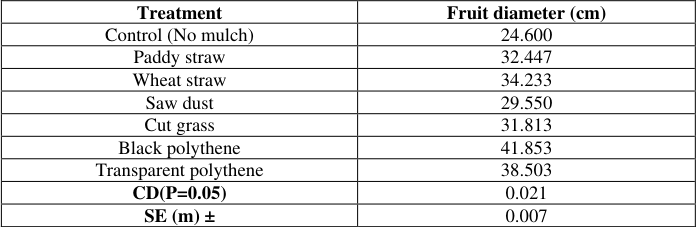 Table 8
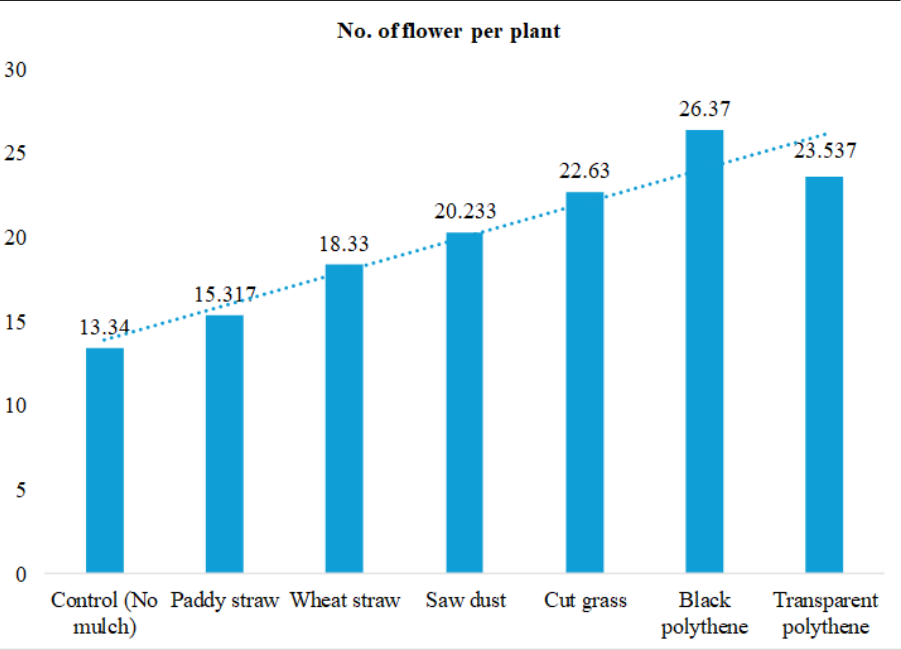 Figure 7
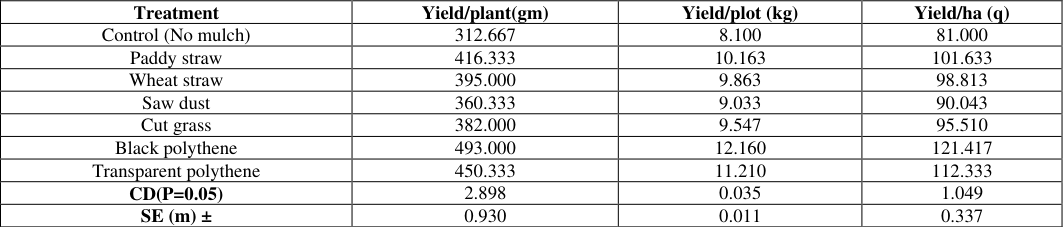 Table 9
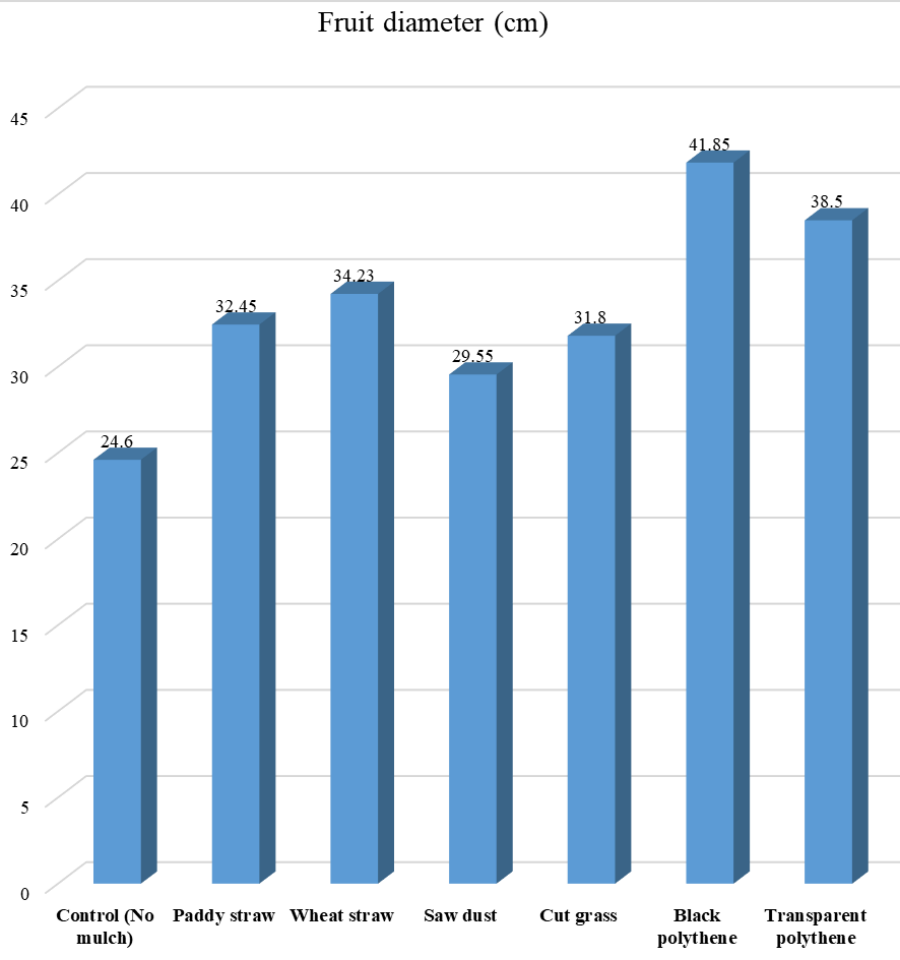 Figure 8
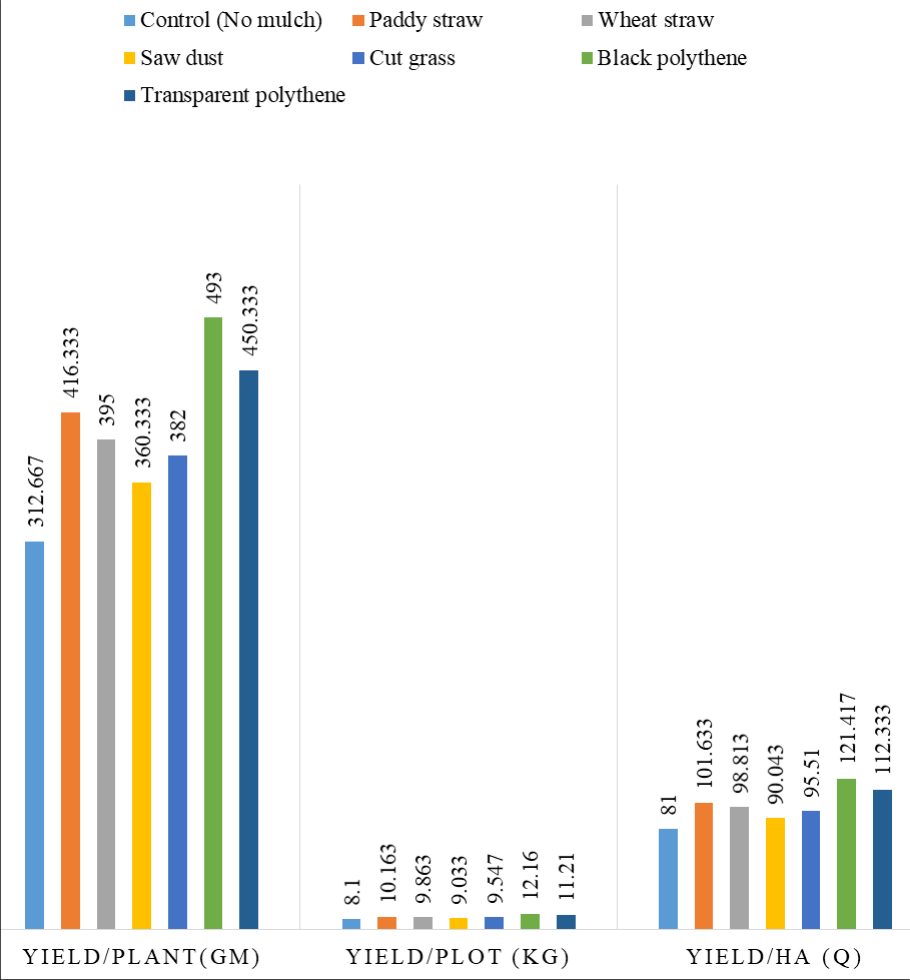 Figure 9
Introduction
Strawberry (Fragaria × ananassa Duch.) is one of the most popular and economically important soft fruit crops of the world. It belongs to the family Rosaceae and is an octoploid plant (2n=56). The fruit is highly appreciated due to its attractive red colour, pleasant aroma, delicious taste and rich nutritional value. Strawberry contains vitamins, minerals and antioxidants which make it valuable for fresh consumption as well as processing into products like jam, juice, ice cream and beverages. The strawberry plant is herbaceous and shallow rooted, therefore proper soil moisture and temperature management are very important for better growth and production. Due to the delicate nature of fruits and their close contact with the soil surface, fruit quality may be affected by soil-borne pathogens and unfavourable environmental conditions. Among different cultural practices, mulching plays an important role in successful strawberry cultivation. Mulching is the process of covering the soil surface around plants with organic or inorganic materials. It helps to conserve soil moisture, regulate soil temperature, suppress weed growth, improve nutrient availability and protect fruits from direct soil contact. Organic mulches such as straw, dry grass, dry leaves and saw dust improve soil health by increasing organic matter and microbial activity, while inorganic mulches like plastic films are effective in moisture conservation and weed control. Black plastic mulch is widely used in strawberry production because it maintains favourable soil conditions, reduces weed competition and promotes better plant growth and yield. Mulching also improves fruit cleanliness, size, quality and market value. Therefore, selection of suitable mulching material is essential for obtaining higher productivity and quality fruits in strawberry cultivation.
Materials and Methods
Materials and Methods
Experimental Site
The experiment was conducted during Rabi season 2025-26 at the Horticulture Experiment Field, Department of Horticulture (Fruit Science), School of Advanced Agriculture Sciences and Technology (SAAST), Chhatrapati Shahu Ji Maharaj University, Kanpur-208024 (U.P.). Kanpur is situated at 26.44° N latitude, 80.33° E longitude, approximately 126 m above sea level, in the North Indo-Gangetic Plain under India's Semi-Arid agroclimatic zone (Zone IV). The crop was grown from October 2025 to March 2026 under cool, dry Rabi season conditions with temperatures ranging from 5-35 °C and relative humidity between 28-96 B %.
Soil
The experimental soil was sandy loam in texture (52.2 % sand, 25.3 % silt, 22.5 % clay) with a water-holding capacity of 26.0% and bulk density of 1.50 mg/m³. Soil pH was 6.15, organic carbon 1.41 g/kg, and available N, P₂O₅, and K₂O were 180.4, 14.93, and 129.4 kg/ha, respectively. The collected soil samples were analyzed for their basic physical and chemical properties using standard analytical procedures. The results pertaining to the physical and chemical characteristics of the soil are presented separately in Table 3.2 and Table 3.3.
| Treatment | Plant spread(cm) | — | — |
|---|---|---|---|
| 60 days | 90 days | 120 days | |
| Control (No mulch) | 18.520 | 24.800 | 28.600 |
| Paddy straw | 22.440 | 29.733 | 34.543 |
| Wheat straw | 21.813 | 28.927 | 33.840 |
| Saw dust | 20.600 | 27.240 | 31.630 |
| Cut grass | 21.227 | 28.127 | 32.427 |
| Black polythene | 25.313 | 33.847 | 39.747 |
| Transparent polythene | 23.740 | 31.523 | 36.220 |
| CD(P=0.05) | 0.029 | 0.035 | 0.053 |
| SE (m) ± | 0.009 | 0.011 | 0.017 |
Table text extracted from the original PDF; superscript letters are shown inline. The original table image is below.
View original table image
| S.no. | Particulars | Value | Method used |
|---|---|---|---|
| 1. | Soil pH (1:2.5, soil: water ratio) | 6.15 | Glass electrode pH meter (Jackson, 1973) |
| 2. | Organic Carbon (g/kg) | 1.41 | Walkley and Black, 1934 |
| 3. | Available N (kg/ha) | 180.4 | Kjeldahl Method (Jackson, 1973) |
| 4. | Available P2O5 (kg/ha) | 14.93 | Bray’s P-1 (Jackson, 1973) |
| 5. | Available K2O (kg/ha) | 129.4 | Ammonium acetate method (Hanway and Heidal, 1952) |
Table text extracted from the original PDF; superscript letters are shown inline. The original table image is below.
View original table image
| Particulars | Value | Method used |
|---|---|---|
| I. Mechanical composition | Hydrometer method (Bouyoucos, 1962) | |
| 1. Sand (%) | 52.2 | |
| 2. Silt (%) | 25.3 | |
| 3. Clay (%) | 22.5 | |
| Texture | Sandy loam | |
| II. Soil moisture constants | ||
| Water holding capacity (%) | 26.0 | Keen-Raczkowski box method (modified by Coutts, 1929) |
| Bulk density (mg/m3) | 1.50 | Core Sampler (Black, 1965) |
| Moisture content (%) at field capacity (0.033 MPa) | 2.25 | Pressure Membrane Plate Apparatus (Loveday, 1974) |
Table text extracted from the original PDF; superscript letters are shown inline. The original table image is below.
View original table image
Treatments and Experimental Design
The experiment comprised seven mulching treatments arranged in a Randomized Block Design (RBD) with three replications and 21 plots (plot size 1.0 × 1.0 m²):
Results and Discussion Total Soluble Solids (TSS, °Brix)
The data regarding Total Soluble Solids (TSS) of strawberry fruits as influenced by different mulching treatments are presented in Table 4.3.2. The analysis of variance revealed significant differences among the treatments. Among all the mulching treatments, Black polythene mulch (T₆) recorded the maximum TSS (8.537 °Brix), followed by Transparent polythene mulch (T₇) with 8.067 °Brix. However, the minimum TSS (6.800 °Brix) was observed under Control (T₁). Among organic mulches, Paddy straw mulch (T₂) showed higher TSS (7.447 °Brix), followed by Wheat straw mulch (T₃) with 7.183 °Brix and Cut grass mulch (T₅) with 7.103 °Brix. The higher TSS under black polythene mulch might be due to better conservation of soil moisture, favourable soil temperature and improved nutrient availability, which enhanced photosynthetic activity and accumulation of sugars in strawberry fruits. The mulch reduced weed competition and maintained a suitable root-zone environment, resulting in better translocation of carbohydrates towards developing fruits. Similar findings have also been reported by Singh et al. (2015) [16] , Sharma and Kumar (2016) [1] and Yadav et al. (2018) [17] .
| Treatment | Number of leaves per plants | — | — |
|---|---|---|---|
| 60 days | 90 days | 120 days | |
| Control (No mulch) | 12.413 | 18.510 | 22.123 |
| Paddy straw | 15.827 | 22.120 | 27.420 |
| Wheat straw | 15.217 | 21.813 | 26.903 |
| Saw dust | 14.120 | 19.420 | 24.323 |
| Cut grass | 14.613 | 20.210 | 25.123 |
| Black polythene | 18.527 | 25.313 | 31.827 |
| Transparent polythene | 16.213 | 23.050 | 28.510 |
| CD(P=0.05) | 0.026 | 0.021 | 0.019 |
| SE (m) ± | 0.008 | 0.007 | 0.006 |
Table text extracted from the original PDF; superscript letters are shown inline. The original table image is below.
View original table image
The titratable acidity of strawberry fruits was significantly influenced by different mulching treatments as presented in Table 4.3.3. The minimum titratable acidity (0.744%) was recorded under Black polythene mulch (T₆), followed by Transparent polythene mulch (T₇) with 0.775%. The maximum acidity (0.915%) was observed in Control (T₁). Among organic mulches, Paddy straw mulch (T₂) recorded lower acidity (0.810%), followed by Wheat straw mulch (T₃) with 0.828% and Cut grass mulch (T₅) with 0.841%. The reduction in acidity under black polythene mulch may be attributed to improved nutrient uptake, especially potassium availability, which plays an important role in the conversion of organic acids into sugars during fruit development. The favourable micro-climatic conditions created by mulching enhanced fruit ripening and quality parameters. Organic mulches also improved fruit quality by increasing soil biological activity and nutrient availability.
TSS: Acid Ratio
The TSS: Acid ratio showed significant variation among different mulch treatments. The highest TSS: Acid ratio (11.47) was recorded under Black polythene mulch (T₆), followed by Transparent polythene mulch (T₇) with 10.41. The lowest ratio (7.43) was observed in Control (T₁). Among organic mulches, Paddy straw mulch (T₂) showed better performance with a TSS: Acid ratio of 9.19. The higher TSS: Acid ratio under black polythene mulch indicates improved sweetness, flavour and overall fruit quality of strawberry cv. Winter Dawn. This improvement might be due to increased sugar accumulation and decreased acid content under favourable soil moisture and temperature conditions provided by mulching.
The data obtained on plant spread after application of different mulching treatments during plant growth and development of strawberry cv. Winter Dawn were recorded after planting and are presented in Table 4.1.1. The results revealed significant variation among different treatments. Among the various treatments, maximum plant spread was observed in treatment T 6 (Black polythene mulch), followed by treatment T 2 (Paddy straw mulch). However, minimum plant spread was recorded under treatment T 1 (Control -No mulch). The improved plant spread under black polythene mulch might be due to better soil moisture conservation, optimum soil temperature, and reduced weed competition, which enhanced vegetative growth of strawberry plants. Overall, the application of mulch treatments significantly improved plant spread of strawberry plants compared to control, with black polythene mulch proving to be the most effective treatment throughout the growth period.
Number of leaves per plant
The data on the effect of various mulching treatments on number of leaves per plant are presented in Table 4.1.3. Among different treatments, maximum number of leaves per plant was recorded in T 6 (Black polythene) treated plants, which was statistically at par with T 7 (Transparent polythene), T 2 (Paddy straw) and T 3 (Wheat straw). However, the minimum number of leaves per plant was observed in T 1 [Control (No mulch)]. The increased number of leaves under black polythene mulch might be due to better soil moisture conservation, favourable soil temperature and improved nutrient availability, which enhanced vegetative growth of strawberry plants. ). Similar findings have also been reported by Sharma and Kumar (2016) [1] .
Days to first fruiting
The observations related to days taken for first fruiting in strawberry revealed noticeable differences among the various mulching treatments used in the present study (Table 4. [16] . [17] .
Yield parameters
The data on yield parameters are presented in Table 4.4.1 and illustrated in Fig. 4.4.1. The findings demonstrated that the crop's yield was greatly impacted by various mulching treatments. The Black polythene treatment had the highest yield per hectare (121.417 q/ha), yield per plot (12.160 kg), and yield per plant (493.000 g) of all the treatments. Conversely, the Control (No mulch) treatment showed the lowest yield per hectare (81.000 q/ha), yield per plot (8.100 kg), and yield per plant (312.667 g). The findings show that mulching, particularly black polythene, increased crop output in comparison to the control treatment.
Acknowledgement
AcknowledgementsThe authors express gratitude to Professor Shiwanand Pandey, Head, Department of Horticulture, SAAST, Chhatrapati Shahu Ji Maharaj University, Kanpur, for granting permission to conduct the experiment at the Horticultural Experiment Field. This work forms part of the M.Sc. thesis of the first author submitted to Chhatrapati Shahu Ji Maharaj University, Kanpur, Uttar Pradesh, India. The guidance provided by advisor Dr. Shiwanand Pandey throughout the course of the experiment is gratefully acknowledged.
Figures and tables from the paper
| Treatment | TSS (°Brix) | Titratable Acidity (%) | Total Sugars (%) |
|---|---|---|---|
| T1: Control (No Mulch) | 6.800 | 0.915 | 5.523 |
| T2: Paddy straw | 7.447 | 0.810 | 6.463 |
| T3: Wheat straw | 7.183 | 0.828 | 6.233 |
| T4: Saw Dust | 6.953 | 0.865 | 5.900 |
| T5: Cut grass | 7.103 | 0.841 | 6.137 |
| T6: Black Polythene Mulch | 8.537 | 0.744 | 7.283 |
| T7: Transparent Polythene Mulch | 8.067 | 0.775 | 6.727 |
| CD(P=0.05) | 0.028 | 0.023 | 0.029 |
| SE (m) ± | 0.009 | 0.007 | 0.009 |
Table text extracted from the original PDF; superscript letters are shown inline. The original table image is below.
View original table image
| Treatment | Plant Height (cm) | — | — |
|---|---|---|---|
| 60 Days | 90 Days | 120 days | |
| Control (No mulch) | 15.093 | 19.830 | 23.647 |
| Paddy straw | 19.827 | 25.760 | 31.477 |
| Wheat straw | 18.903 | 24.667 | 30.137 |
| Saw dust | 17.437 | 22.837 | 27.940 |
| Cut grass | 18.177 | 23.917 | 29.250 |
| Black polythene | 22.357 | 29.483 | 36.220 |
| Transparent polythene | 20.743 | 27.163 | 33.447 |
| CD(P=0.05) | 0.060 | 0.033 | 0.034 |
| SE (m) ± | 0.019 | 0.011 | 0.011 |
Table text extracted from the original PDF; superscript letters are shown inline. The original table image is below.
View original table image
| Treatment | No. of days to first flowering |
|---|---|
| Control (No mulch) | 68.533 |
| Paddy straw | 58.223 |
| Wheat straw | 59.417 |
| Saw dust | 62.130 |
| Cut grass | 60.833 |
| Black polythene | 52.807 |
| Transparent polythene | 55.727 |
| CD(P=0.05) | 0.038 |
| SE (m) ± | 0.012 |
Table text extracted from the original PDF; superscript letters are shown inline. The original table image is below.
View original table image
| Treatment | No. of days to first fruiting |
|---|---|
| Control (No mulch) | 30.643 |
| Paddy straw | 22.650 |
| Wheat straw | 24.027 |
| Saw dust | 27.317 |
| Cut grass | 25.657 |
| Black polythene | 18.633 |
| Transparent polythene | 20.343 |
| CD(P=0.05) | 0.027 |
| SE (m) ± | 0.009 |
Table text extracted from the original PDF; superscript letters are shown inline. The original table image is below.
View original table image
| Treatment | No. of flower per plant |
|---|---|
| Control (No mulch) | 13.340 |
| Paddy straw | 15.317 |
| Wheat straw | 18.330 |
| Saw dust | 20.233 |
| Cut grass | 22.630 |
| Black polythene | 26.370 |
| Transparent polythene | 23.537 |
| CD(P=0.05) | 0.1 |
| SE (m) ± | 0.030 |
Table text extracted from the original PDF; superscript letters are shown inline. The original table image is below.
View original table image
| Treatment | Fruit diameter (cm) |
|---|---|
| Control (No mulch) | 24.600 |
| Paddy straw | 32.447 |
| Wheat straw | 34.233 |
| Saw dust | 29.550 |
| Cut grass | 31.813 |
| Black polythene | 41.853 |
| Transparent polythene | 38.503 |
| CD(P=0.05) | 0.021 |
| SE (m) ± | 0.007 |
Table text extracted from the original PDF; superscript letters are shown inline. The original table image is below.
View original table image
| Treatment | Yield/plant(gm) | Yield/plot (kg) | Yield/ha (q) |
|---|---|---|---|
| Control (No mulch) | 312.667 | 8.100 | 81.000 |
| Paddy straw | 416.333 | 10.163 | 101.633 |
| Wheat straw | 395.000 | 9.863 | 98.813 |
| Saw dust | 360.333 | 9.033 | 90.043 |
| Cut grass | 382.000 | 9.547 | 95.510 |
| Black polythene | 493.000 | 12.160 | 121.417 |
| Transparent polythene | 450.333 | 11.210 | 112.333 |
| CD(P=0.05) | 2.898 | 0.035 | 1.049 |
| SE (m) ± | 0.930 | 0.011 | 0.337 |
Table text extracted from the original PDF; superscript letters are shown inline. The original table image is below.
View original table image
References
15 in the original paper- Ali M, Singh A, Kumar A, Prasad VM. Effect of different mulching materials on growth, yield and quality of strawberry (Fragaria × ananassa Duch.). International Journal of Agriculture Sciences. 2016;8(56):3058-3062.
- Ali S, Islam N, Choudhary S. Productivity of strawberry as influenced by mulch materials and gibberellin under net house condition. Archives of Agriculture and Environmental Science. 2023;8(2):144149.
- Adekalu KO, Oyedele DJ, Adejumo AT. Effect of organic and plastic mulches on water-use efficiency, growth, and yield of strawberry (Fragaria × ananassa Duch.). Agricultural Water Management. 2019;213:3745.
- Brown L, Wilson P. Influence of plastic mulches on strawberry growth and yield under temperate conditions. Horticultural Science. 2018;53(5):741-748.
- Bhat R, Wani MA, Kirmani NA, Nazir N. Effect of mulching on soil hydrothermal regime, weed suppression and yield of strawberry under temperate conditions. Journal of Applied and Natural Science. 2017;9(3):1731-1736.
- Bakshi P, Bhat DJ, Wali VK, Sharma A, Iqbal M. Growth, yield and quality of strawberry (Fragaria × ananassa Duch.) cv. Chandler as influenced by various mulching materials. African Journal of Agricultural Research. 2014;9(7):701-706.
- Chavan PG, Bhosale AM, Deshmukh SS. Effect of different mulching materials on growth and yield of strawberry (Fragaria × ananassa Duch.). International Journal of Chemical Studies. 2018;6(4):1234-1238.
- Chaudhary M, Sharma SD, Verma RK. Influence of organic and inorganic mulches on growth, yield and quality attributes of strawberry (Fragaria × ananassa Duch.). Journal of Pharmacognosy and Phytochemistry. 2018;7(4):2845-2849.
- Chen L, Davis R. Saw dust mulch improves soil moisture and yield stability in strawberry under dry conditions. HortTechnology. 2021;31(2):174-182.
- Dey A, Patra SK, Ghosh S. Effect of different mulching materials on soil moisture conservation, weed dynamics and fruit quality of strawberry. International Journal of Chemical Studies. 2019;7(2):1560-1564.
- Food and Agriculture Organization of the United Nations. FAOSTAT: Crops and Livestock ProductsStrawberry Area Harvested and Production Data. Rome: Food and Agriculture Organization of the United Nations; 2021.
- Ghosh A, Pal PP, Bauri FK. Effect of mulching materials on growth, yield and quality of strawberry grown under sub-tropical conditions. Environment and Ecology. 2016;34(2):512-516.
- Hancock JF, Siefker JH, Schulte NL. Cultivar variation in yield components of strawberries. Horticultural Science. 1983;18(3):312-313.
- Singh R, Shedbalkar UU, Wadhwani SA, Chopade BA. Bacteriagenic silver nanoparticles: synthesis, mechanism, and applications. Applied microbiology and biotechnology. 2015 Jun;99(11):4579-93.
- Yadav KK, Gupta N, Kumar A, Reece LM, Singh N, Rezania S, Khan SA. Mechanistic understanding and holistic approach of phytoremediation: A review on application and future prospects. Ecological engineering. 2018 Sep 1;120:274-98.