
Research article · 2026 · Full text
International Journal of Horticulture and Food ScienceInfluence of bio-enhancers and bio-fertilisers on growth, yield and quality of strawberry (Fragaria × Ananassa Duch.) cv. winter dawn
Volume 8(7) · Pages 01–07 · DOI: 10.33545/26631067.2026.v8.i6a.772 ↗
Research areasAgricultural Science and FertilizationBerry genetics and cultivation researchAgriculture, Plant Science, Crop Management
Abstract
Author-writtenThe research titled "Influence of Bio-enhancers and Bio-fertilisers on Growth, Yield and Quality of Strawberry (Fragaria X ananassa Duch) cv.Winter Dawn" was carried out at the Horticulture Experiment Field, Department of Horticulture, School of Advanced Agriculture Sciences and Technology, Chhatrapati Shahu Ji Maharaj University, Kanpur, in the year 2025-26.The main aim was to assess the impact of Bio-enhancers and Bio-fertilizers on strawberry growth, yield, and quality.The experiment comprised nine treatments featuring various combinations of Panchagavya, Jeevamrit, and Azotobacter, PSB.The results indicated significant enhancements in plant growth, yield, and fruit quality when compared to the control group.The application of bio-enhancers and bio-fertilizers resulted in increased plant height, leaf area, and chlorophyll content, which in turn facilitated improved photosynthesis and fruit production.Yield characteristics such as fruit weight, size, and quantity were also positively affected.Additionally, bio-enhancers and bio-fertilizers enhanced fruit quality metrics, including total soluble solids.This study proposes that utilizing bio-enhancers and bio-fertilizers represents a sustainable and environmentally friendly method to enhance strawberry cultivation, thereby decreasing reliance on chemical fertilizers and pesticides.Statistical evaluation of the collected data indicated significant variations among treatments for all assessed parameters.Particularly, the treatment T6 Panchagavya @3%+ Azotobacter @ 2.5 kg/ha, followed by treatment T8 Jeevamrit @20% + Azotobacter @ 2.5 kg/ha, consistently surpassed other treatments across the majority of parameters.Another notably effective treatment was T5 Jeevamrit @20% + Azotobacter @ 2.5 kg/ha, which consistently outperformed other treatments across most parameters, achieving the highest plant spread (25.00 cm), number of plants (28.00), and days to flowering (32.66 days).The findings highlight the efficacy of Panchagavya and Jeevamrit, which can further enhance growth and fruit quality by promoting growth quality and enhancing fruit set.The favorable effects of biofertilizers, particularly those that include nitrogen-fixing bacteria, can enhance the availability of vital nutrients such as nitrogen, phosphorus, and potassium (NPK) in the soil.Consequently, this can result in higher plant yields and better overall plant health.Additionally, certain Biofertilizers assist in the solubilization of phosphorus, thereby making it more accessible to the roots of plants.In summary, the incorporation of bio-enhancers and bio-fertilizers in the growth, yield, and quality of strawberries, especially those containing PSB, significantly enhances growth and quality attributes such as plant height, plant spread, and yield.
Summary
Source-checkedPlain-language reading of the full paper, prepared with AI and checked against the text. Each point links to the authors' own words.
Why it matters
- Strawberry is a significant temperate fruit crop and is considered one of the world's most important soft fruits, second only to grapes. View evidence ↗
- Bio-fertilizers are important for increasing nutrient availability in the soil during winter, a period when natural nutrient mineralization is typically slow. View evidence ↗
- Using bio-enhancers and bio-fertilizers is proposed as a sustainable alternative to chemical fertilizers and pesticides to improve strawberry cultivation. View evidence ↗
The question
- The study aimed to evaluate how different bio-enhancers and bio-fertilizers affect the growth, yield, and quality of strawberries. View evidence ↗
What they did
- The experiment was conducted during 2025-26 at the Horticulture Experiment Field of Chhatrapati Shahu Ji Maharaj University in Kanpur. View evidence ↗
- The 'Winter Dawn' strawberry cultivar was selected because it performs better in the Kanpur climate than other cultivars. View evidence ↗
- The study tested ten treatments, including a control and various combinations of Panchagavya (3%), Jeevamrit (20%), Azotobacter (2.5 kg/ha), and PSB (2.5 kg/kg). View evidence ↗
- Data were analyzed using a randomized block design (R.B.D.) with significance tested at a 5% level using critical difference (C.D.). View evidence ↗
What they found
- Treatment T6 (Panchagavya 3% + Azotobacter 2.5 kg/ha) produced the greatest plant height (14.21 cm) and plant spread (24.43 cm) compared to the control (10.51 cm height, 16.50 cm spread). View evidence ↗
- The highest leaf count per plant (24.11) was observed in the treatment combining Jeevamrit at 20% with PSB at 2.5 kg/ha. View evidence ↗
- Treatment T6 (Panchagavya 3% + Azotobacter 2.5 kg/ha) achieved the highest fruit yield per hectare (133.38 q) and largest fruit diameter (38.33 cm) compared to the control (81.70 q and 26.66 cm). View evidence ↗
What it means
- The authors recommend treatments T6 (Panchagavya 3% + Azotobacter 2.5 kg/ha) and T8 (Jeevamrit 20% + Azotobacter 2.5 kg/ha) as the best options for increasing yield while maintaining soil fertility. View evidence ↗
- The authors conclude that bio-enhancers and bio-fertilizers lead to improved growth, yield, and quality in strawberry production. View evidence ↗
Visual summary
3 visualsIllustrations explain the paper; charts are replotted from the paper's own table values.
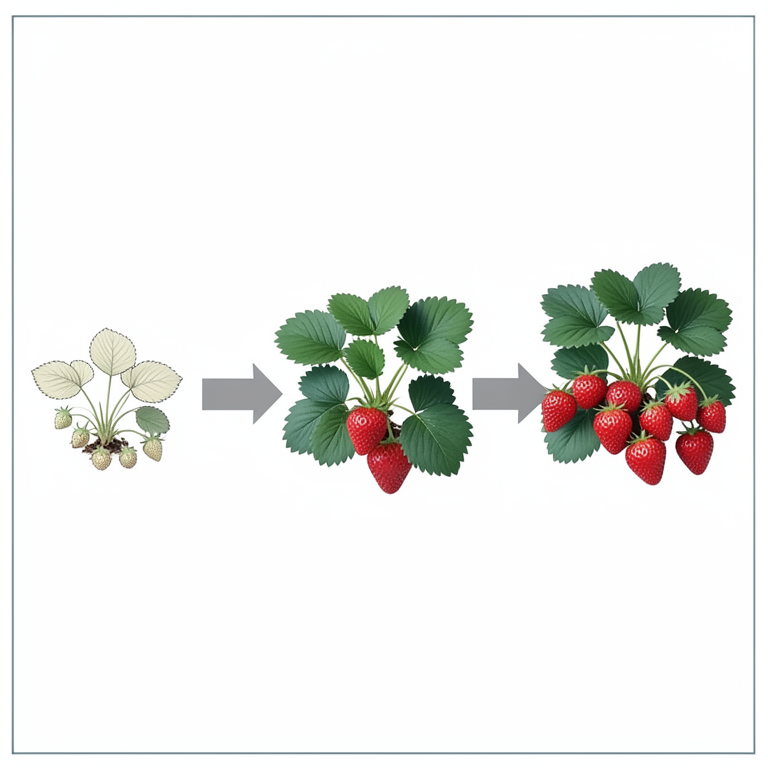
Experimental Treatment Framework
AI-generated conceptual illustration (strawberry plants (Fragaria × Ananassa)). It explains the idea and does not show study data.
View source evidence ↗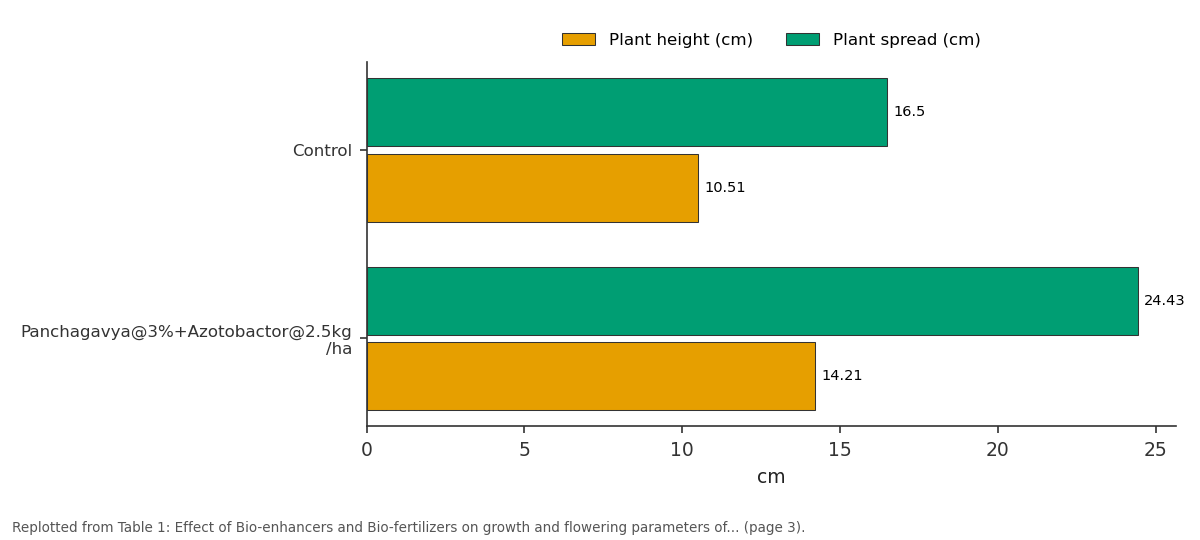
Plant height (cm) and Plant spread (cm): Control vs Panchagavya@3%+Azotobact...
Replotted from Table 1 (page 3) of the original paper. Every bar is the paper's own table value.
View source evidence ↗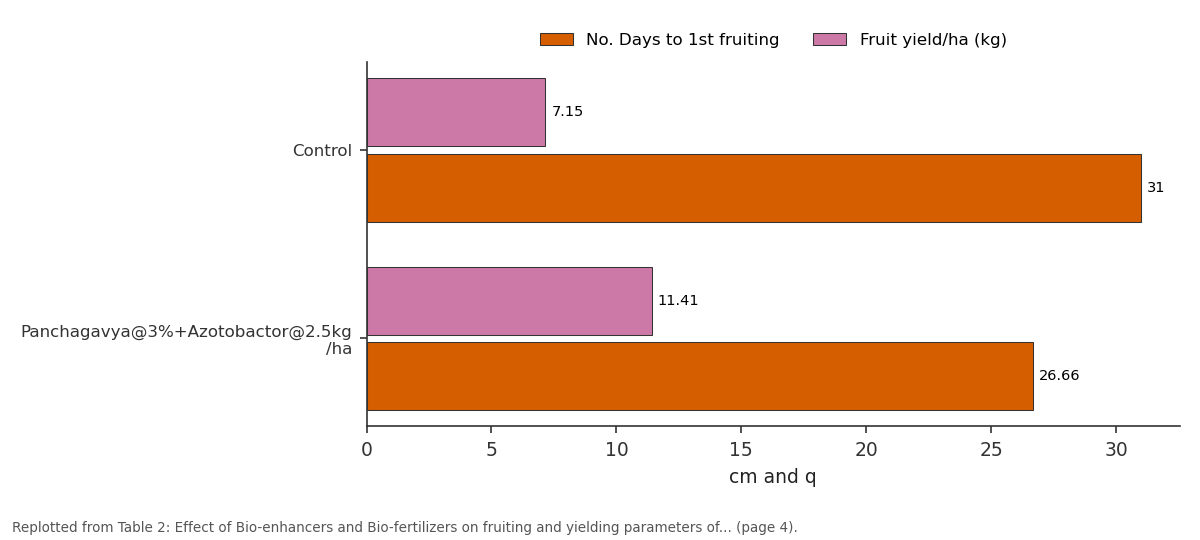
No. Days to 1st fruiting and Fruit yield/ha (kg): Control vs Panchagavya@3%+Azotobact...
Replotted from Table 2 (page 4) of the original paper. Every bar is the paper's own table value.
View source evidence ↗Figures & tables
From the original paper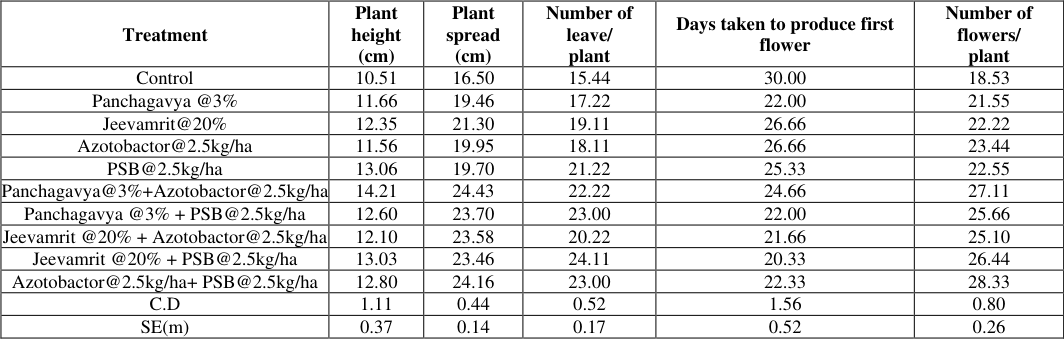 Table 1
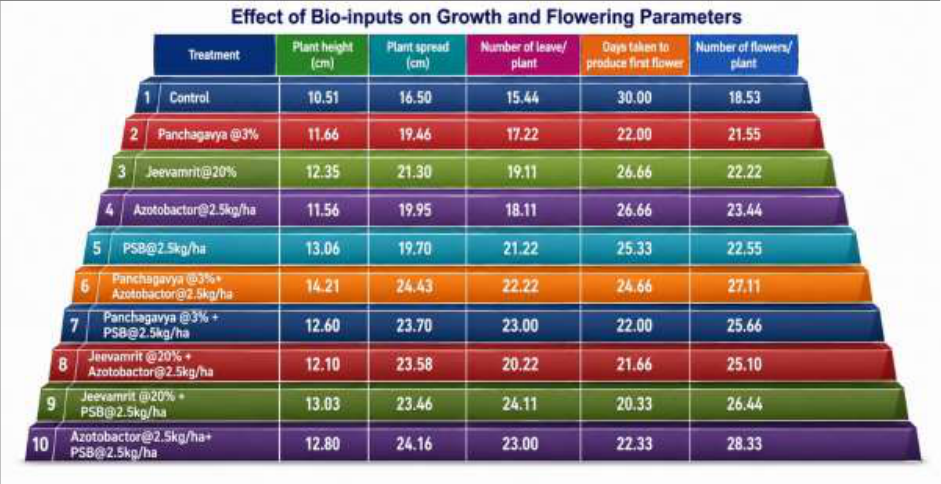 Figure 1
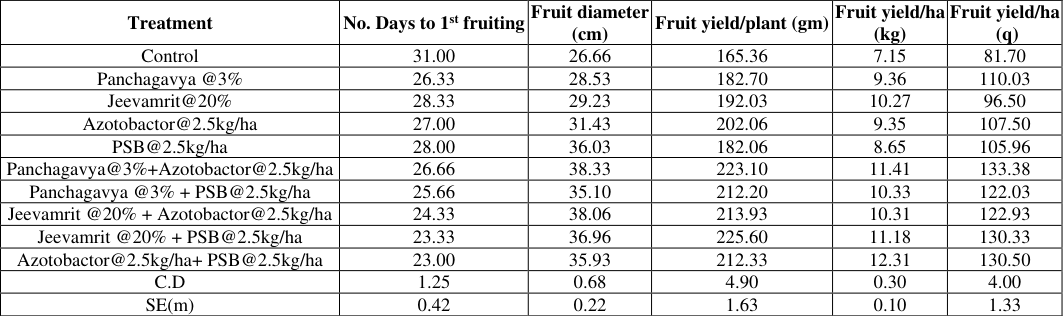 Table 2
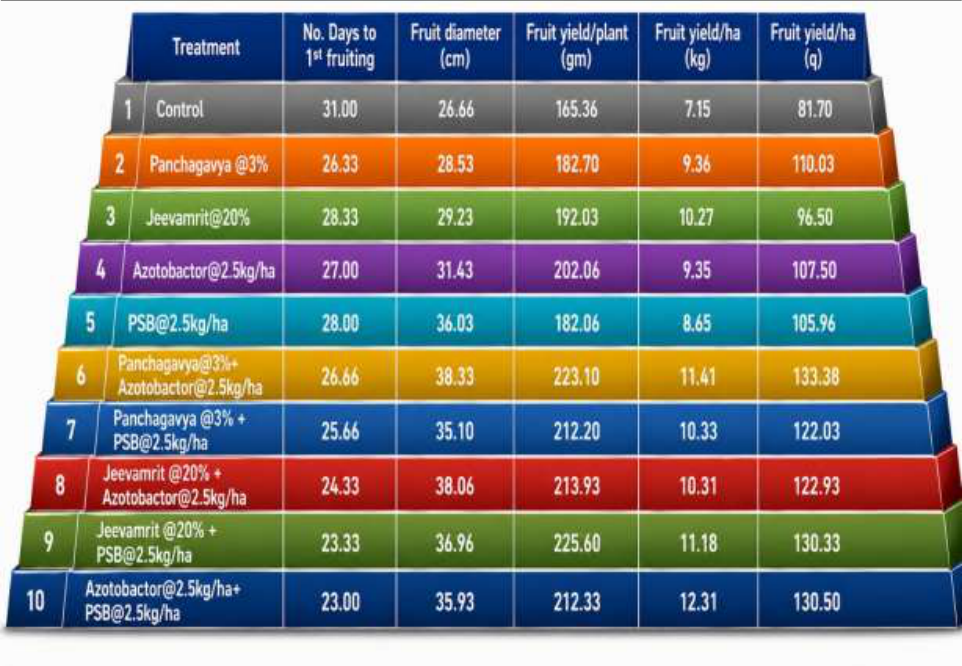 Figure 2
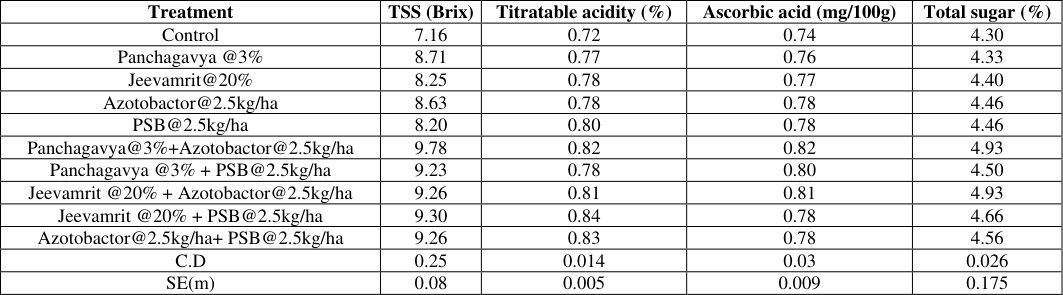 Table 3
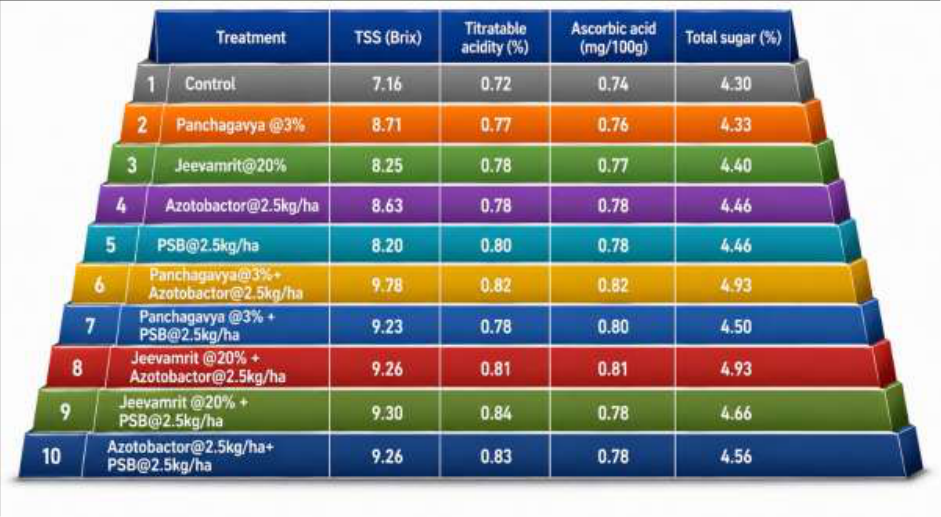 Figure 3
Introduction
Strawberry (Fragaria × ananassa Duch.) is a temperate fruit crop a member of family Rosaceae, with a chromosome number 2n = 56, is a hybrid of genus Fragaria. It was bred for the first time in Brittany, France in 1750 s by crossing two American diploids namely, Fragaria virginiana of North America and Fragaria chiloensis which was brought from Chile (Staudt, 1989). The present cultivars of (Fragaria ananassa Duch) cv. Winter Dawn. There are about 20 recognized species of strawberries in five chromosome groups (x=7): ten diploid, one pentaploid, one hexaploidy and four Octaploids. (Staudt, 1999;Jiajun et al. 2005) [9] which behaves as an annual in sub-tropical region and perennial in temperate region of strawberry. It is an herbaceous crop with prostate growth habit, being one of the most important soft fruits of the world after grape. Being nutritional composition rich.
In vitamin A (60 IU/100g), vitamin C (30-120 mg /100g), fibre iron pectin content (0.55%) and ellagic acid, which has anti cancerous property, strawberry is mainly use as fresh fruit beside antioxidant, it also contains very good amount of phenol, flavonoids, which also exhibit a high level of antioxidant capacity against free radical species. Production of strawberry is presently cultivated in about 75 countries (FAO, 2007). NHB data 2018-19 shows that area and production of strawberry was 1,000 ha. And 5,000 MT respectively. Strawberry is basically a fruit of temperate climate, but during the recent years, Strawberry is being grown in the hilly. Regions of Himachal Pradesh, Uttar Pradesh, Maharashtra, West Bengal, Nilgeeri hills. Delhi, Haryana, Punjab and Rajasthan, Shimla, Solan, Kangra, Kull, Palampur of Himachal Pradesh, Muzaffarnagar, Ghaziabad and Bilaspur of Uttar Pradesh, Kashmir and Uttrakhand About highest level grown countries USA, Spain, Italy, Poland, Mexico and China, particularly between 1200 to 2100m about mean sea level highly grown in strawberry, It is an herbaceous crop with prostate growth habit, which behaves as an annual in sub-tropical region and perennial in temperate region and has gained the status of being one of the most important soft-fruit of the world after grape and ellagic acid, which has anti cancerous property, strawberry is mainly used as fresh fruit. Besides, antioxidants.it also contain very good number of phenols, flavonoids, which also exhibit a high level of antioxidant capacity against free radical species. Bio-fertilizers such as Azotobacter, phosphate-solubilizing bacteria (PSB), potassium-solubilizing bacteria (KSB) and arbuscular mycorrhizal fungi (AMF) play a vital role in enhancing nutrient availability during winter when mineralization of nutrients is slow, the use of bio-enhancers such as Panchagavya and Jeevamrit has been commercially adopted to enhance both the production and quality of strawberries.
Materials and Methods
Materials and Methods
Experimental site Geographical Location
The experimental work was performed at the Horticulture Experiment Field of the Department of Horticulture, School of Advanced Agriculture Sciences and Technology, Chatrapati Shahu Ji Maharaj University, Kalyanpur. This location is positioned at 26°44'N latitude and 82°33'E longitude. The average altitude is 318 meters above sea level. Geographically, it is situated on the right bank of the Ganga River in the central-western region of Uttar Pradesh, within the flat Indo-Gangetic Plains.
Climatic and Weather Conditions
The climate in Kanpur is characterized as a humid subtropical climate influenced by monsoons (Cwa). Summers are marked by high temperatures and humidity, with mercury levels potentially climbing to 48.2°C. Winters are cool and arid, with average temperatures hovering around 25.3°C. The monsoon period contributes substantial precipitation, with an annual rainfall averaging approximately 939mm. Temperatures begin to decline in November and remain low until February. During the winter months, the average temperature is recorded at 14°C.
Planting Material
The plant material utilized consisted of healthy Tissue culture plant of the strawberry cultivar 'Winter Dawn,' which were sourced from (CISH) Central Institute for Subtropical Horticulture Lucknow.
Selection of Cultivar
The Winter Dawn strawberry cultivar is significant due to its excellent performance within the Kanpur climate, offering superior fruit production compared to alternative cultivars. Consequently, the Winter Dawn cultivar was chosen for this particular investigation.
Experimental field preparation
The experimental site for planting strawberry plants underwent thorough preparation, involving repeated ploughing and removal of weeds, grasses, and plant residue Raised beds of 15-20 cm in height were created for the purpose of planting the strawberry plants,
Mulching:
A beneficial practice for strawberries, was employed to enhance fruit quality and yield, improve soil conditions, and protect the plants from pests and diseases., Black polythene sheets were used to mulch the beds, effectively managing weeds, maintaining soil temperature, preventing rotting, retaining moisture, and ultimately improving fruit quality.,
Experimental treatments details
Experimental treatments details
S. No. Symbol
Treatment details 1 T1 Control (without bio-fertilizers and Bio-enhancers) 2 T2 Panchagavya @3% 3 T3 Jeevamrit @20% 4 T4 Azotobacter @2.5kg/ha 5 T5 [email protected]/kg 6 T6 Panchagavya @3% + Azotobacter @2.5kg/ha 7 T7 Panchagavya @3% [email protected]/kg 8 T8 Jeevamrit @20%+ Azotobacter @2.5kg/ha 9 T9 Jeevamrit @20%+ [email protected]/kg 10 T10 Azotobacter @2.5kg/[email protected]/kg
Statistical analysis
The data were analysed according to the procedure for analysis randomized block design (R.B.D.). The overall Significance of Differences among the treatments was tested, using critical difference (C.D.) at 5% level of significance. The data are presented in the form of tables and graphs
Results and Discussion
This chapter details the findings from the current research project, titled "influence of Bio-enhancers and Biofertilizers on growth, yield and quality of strawberry (Fragaria x Ananassa duch) cv. winter dawn" This study was conducted from 2025 to 2026 at the Horticulture experiment field, within the Department of Horticulture at the School of Advanced Agriculture Sciences and Technology, Chhatrapati Shahu Ji Maharaj University, Kanpur, Uttar Pradesh. The gathered data, pertaining to various indicators assessed to determine the impact of "influence of Bio-enhancers and Bio-fertilizers on growth, yield and quality of strawberry (fragaria x ananassa duch)" on the Winter Dawn strawberry cultivar, underwent statistical analysis using established methodologies to ascertain their significance. Furthermore, the influence of biofertilizer on soil fertility levels was also examined within the scope of this investigation. The outcomes for all experimental conditions are presented in this chapter. In addition to tabular representations, experimental results have been illustrated with plates were deemed appropriate. The findings of this research are organized and presented under relevant subheadings. The greatest plant height was recorded in treatment T 6 , which involved the application of Panchagavya at a 3% concentration combined with Azotobacter at 2.5 kg/ha. This was closely followed by treatment T 8 , which utilized Panchagavya, a 3% concentration along with Azotobacter at 2.5 kg/ha. In contrast the control group exhibited an average plant height of 14.21 cm, which was not statistically different from some of the treatment groups.
. The recorded data concerning vegetation expanse at 60, 90, and 120 days after planting (DAP) showed a significant impact from the application of Bio-fertilizers and Bioenhancers within the scope of this study. Treatment T 6 (Panchagavya at 3% along with Azotobacter at 2.5 kg/ha) yielded the greatest vegetation expanse, measuring 22.23 cm. This was followed by treatment T Exhibited a singnificant influences across the diverse treatments examined within the scope of this investigation. The shortest period to first fruiting, recorded at 18.66 days, the data clearly indicates that the application of bioenhancers and bio-fertilizers at 2.5 kg/ha, along with Azotobacter at 2.5 kg/ha, resulted in these varied outcomes. the highest flower count per plant (28.33) was recorded with treatment T 6 , which involved Panchagavya at 3% concentration combined with Azotobacter at 2.5 kg/ha.
Treatments including Panchagavya at 3%, Jeevamrit at 20%, Azotobacter at 2.5 kg/ha, PSB at 2.5 kg/ha, Panchagavya at 3% plus Azotobacter at 2.5 kg/ha, Panchagavya at 3% plus PSB at 2.5 kg/ha, and Jeevamrit at 20% plus PSB at 2.5 kg/ha, the largest fruit diameter (41.43 cm) was recorded with treatment T6, which involved Panchagavya at 3% and Azotobacter at 2.5 kg/ha. This measurement was statistically distinct from all other treatments. The smallest fruit diameter (35.10) was noted in the control group, designated as T 1 (Control). The findings that the application of various bio-enhancer and bio-fertilizer treatments had a notable impact on yield within the scope of this study. The highest yield, measuring 133.38 q, was achieved with treatment T 6 , which involved Panchagavya at a 3% concentration combined with Azotobacter at 2.5 kg/ha. Conversely, the lowest yield, observed at 182.06 g, was recorded under treatment T 4 , consisting solely of Azotobacter at 2.5 kg/ha.
Conclusion
The current study substantiates prior results concerning the effectiveness of a treatment combining Panchagavya at 3% and Azotobacter at 2.5 kg/ha for enhancing the vegetative growth quality of the strawberry cultivar Winter Dawn. Furthermore, these two treatments contributed to an elevated soil fertility status, specifically through an increase in soil organic carbon. Consequently, treatments T 6 (Panchagavya @3% + Azotobacter @ 2.5 kg/ha) and T8 (Jeevamrit @ 20% + Azotobacter @ 2.5 kg/ha) are recommended as optimal interventions for augmenting the yield potential of strawberry cv. Winter Dawn while preserving soil fertility. Panchagavya, an organic formulation, demonstrates capacity for fostering plant growth and bolstering plant immunity. Jeevamrit, being entirely organic, exerts no adverse effects on soil health. Signifying its role in promoting production and sustaining soil vitality. Bio-enhancers and Bio-fertilizers leading the better growth, yield and high improved quality base production of the strawberry. ''Better Production and Environment''.
Chhatrapati Shahu ji Maharaj University Kanpur Uttar Pradesh India, for granting permission to conduct the experiment at the Horticultural Experiment Field. This work forms part of the M.Sc. thesis of the first author submitted to Chhatrapati Shahu Ji Maharaj University, Kanpur, Uttar Pradesh, India. The guidance provided by advisor Dr. Shiwanand Pandey throughout the course of the experiment is gratefully acknowledged to provide the necessary facilities to conduct the research work.
Acknowledgement
AcknowledgementsThe authors acknowledge the support rendered by Professor Dr. Shiwanand Pandey, Head, Department of Horticulture, School of Advanced Agriculture Sciences and Technology,
Figures and tables from the paper
| Treatment | No. Days to 1st fruiting | Fruit diameter (cm) | Fruit yield/plant (gm) | Fruit yield/ha (kg) | Fruit yield/ha (q) |
|---|---|---|---|---|---|
| Control | 31.00 | 26.66 | 165.36 | 7.15 | 81.70 |
| Panchagavya @3% | 26.33 | 28.53 | 182.70 | 9.36 | 110.03 |
| Jeevamrit@20% | 28.33 | 29.23 | 192.03 | 10.27 | 96.50 |
| [email protected]/ha | 27.00 | 31.43 | 202.06 | 9.35 | 107.50 |
| [email protected]/ha | 28.00 | 36.03 | 182.06 | 8.65 | 105.96 |
| Panchagavya@3%[email protected]/ha | 26.66 | 38.33 | 223.10 | 11.41 | 133.38 |
| Panchagavya @3% + [email protected]/ha | 25.66 | 35.10 | 212.20 | 10.33 | 122.03 |
| Jeevamrit @20% + [email protected]/ha | 24.33 | 38.06 | 213.93 | 10.31 | 122.93 |
| Jeevamrit @20% + [email protected]/ha | 23.33 | 36.96 | 225.60 | 11.18 | 130.33 |
| [email protected]/ha+ [email protected]/ha | 23.00 | 35.93 | 212.33 | 12.31 | 130.50 |
| C.D | 1.25 | 0.68 | 4.90 | 0.30 | 4.00 |
| SE(m) | 0.42 | 0.22 | 1.63 | 0.10 | 1.33 |
Table text extracted from the original PDF; superscript letters are shown inline. The original table image is below.
View original table image
| Treatment | TSS (Brix) | Titratable acidity (%) | Ascorbic acid (mg/100g) | Total sugar (%) |
|---|---|---|---|---|
| Control | 7.16 | 0.72 | 0.74 | 4.30 |
| Panchagavya @3% | 8.71 | 0.77 | 0.76 | 4.33 |
| Jeevamrit@20% | 8.25 | 0.78 | 0.77 | 4.40 |
| [email protected]/ha | 8.63 | 0.78 | 0.78 | 4.46 |
| [email protected]/ha | 8.20 | 0.80 | 0.78 | 4.46 |
| Panchagavya@3%[email protected]/ha | 9.78 | 0.82 | 0.82 | 4.93 |
| Panchagavya @3% + [email protected]/ha | 9.23 | 0.78 | 0.80 | 4.50 |
| Jeevamrit @20% + [email protected]/ha | 9.26 | 0.81 | 0.81 | 4.93 |
| Jeevamrit @20% + [email protected]/ha | 9.30 | 0.84 | 0.78 | 4.66 |
| [email protected]/ha+ [email protected]/ha | 9.26 | 0.83 | 0.78 | 4.56 |
| C.D | 0.25 | 0.014 | 0.03 | 0.026 |
| SE(m) | 0.08 | 0.005 | 0.009 | 0.175 |
Table text extracted from the original PDF; superscript letters are shown inline. The original table image is below.
View original table image
References
37 in the original paper- Abu-Zahra TR, Tahboub AA. Strawberry (Fragaria × ananassa Duch.) growth, flowering and yielding as affected by different organic matter sources. International Journal of Botany. 2008;4(4):481-485.
- Adesemoye A, Torbert H, Kloepper J. Increased plant uptake of nitrogen from 15N-depleted fertilizer using plant growth promoting rhizobacteria. Applied Soil Ecology. 2010;56(1):54-58.
- Agronet. Azotobacter. 2012. Available from: http://www.indiaagronet.com/indiaagronet/Manuers%2 0fertilizers/Manure%20Fert.htm
- Ahmad D, Mohammad J. Impact of integrated organic nutrient combinations on fruit yields and quality of strawberry cv. Kurdistan in Iran. Journal of Ornamental and Horticultural Plants. 2012;2(4):251-256.
- Beer K, Singh AK. Effect of vermicompost and biofertilizers on strawberry I: Growth, flowering and yield. Annals of Plant and Soil Research. 2015;17(2):196-199.
- Gupta AK, Tripathi VK. Efficacy of Azotobacter and vermicompost alone and in combination on vegetative growth, flowering and yield of strawberry (Fragaria × ananassa Duch.) cv. Chandler. Progressive Horticulture. 2012;44(2):256-261.
- Hassan HA. Effect of nitrogen fertilizer levels in the form of organic, inorganic and biofertilizer applications on growth, yield and quality of strawberry. Middle East Journal of Applied Sciences. 2015;5(2):604-617.
- Hazarika TK, Ralte Z, Nautiyal BP, Shukla AC. Influence of biofertilizers and bioregulators on growth, yield and quality of strawberry (Fragaria × ananassa Duch.). Indian Journal of Agricultural Sciences. 2015;85(9):1201-1205.
- Jiajun L, Yuhua L, Guodong D, Hanping D, Mingqin D. A natural pentaploid strawberry genotype from the Changbai Mountains in northeast China. HortScience. 2005;40(5):1194-1195.
- Karma B, Kumar S, Gupta AK, Syamal MM. Effect of organic, inorganic and biofertilizer on growth, flowering, yield and quality of strawberry (Fragaria × ananassa Duch.) cv. Chandler. International Journal of Current Microbiology and Applied Sciences. 2017;6(5):2932-2939.
- Khalid S, Qureshi KM, Hafiz LA, Khan KS, Qureshi US. Effect of organic amendments on vegetative growth, fruit yield and quality of strawberry. Pakistan Journal of Agricultural Research. 2013;26(2):104-112.
- Khalid NH. Effect of flowers and runner removal, media type and some mineral nutrients on growth and yield of strawberry under protected cultivation conditions. Doctoral thesis. Baghdad: Agricultural College, University of Baghdad; 2014.
- Kumar MK, Kachawaya DS, Singh MC. Effect of biofertilizers and plant growth regulators on growth, flowering, fruit ion content, yield and fruit quality of strawberry. International Journal of Agriculture, Environment and Biotechnology. 2018;11(3):439-449.
- Kumar A, Prasad VM, Singh D, Bahadur V, David AA, Beer K. Effect of biofertilizers, vermicompost and Trichoderma on yield and economics of strawberry (Fragaria × ananassa Duch.) cv. Sweet Charlie. International Journal of Current Microbiology and Applied Sciences. 2018;7(6):1534-1538.
- Lata R, Dwivedi DH, Ram RR, Meena MI. Efficacy of biological, organic and inorganic substrates of nutrients on yield attributing characters, sensory evaluation and economics of strawberry cv. Chandler under Lucknow conditions. Indian Journal of Horticulture. 2016;73(4):506-510.
- Mehraj H, Hussain MS, Parvin S, Roni MZK, Jamal Uddin AFM. Response of repeated foliar application of boron-zinc on strawberry. International Journal of Experimental Agriculture. 2015;5(1):21-24.
- Mishra AN, Tripathi VK. Effect of biofertilizers on vegetative growth, flowering, yield and quality of strawberry cv. Chandler. In: Proceedings of the International Symposium on Minor Fruits and Medicinal Plants for Health and Ecological Security (ISMF&MP); 2012 Dec 19-22; West Bengal, India. p. 211-215.
- Nazir N. Studies on organic farming techniques for production of quality strawberry (Fragaria × ananassa Duch.). MSc Thesis. Srinagar: Sher-e-Kashmir University of Agricultural Sciences and Technology of Kashmir; 2005.
- Nazir N, Singh SR, Khalil A, Jabeen M, Majeed S. Yield and growth of strawberry cv. Senga Sengana as influenced by integrated organic nutrient management system. Environment and Ecology. 2006;24(3):651654.
- Palencia P, Martinez F, Pestana M, Oliveira AJ, Correia PJ. Effect of Bacillus velezensis and Glomus intraradices on fruit quality and growth parameters in strawberry soilless growing system. The Horticulture Journal. 2015;84(2):122-130.
- Pandit BA, Hassan A, Hassan G, Hayat S, Ahmad MF. Response of biofertilizers on vegetative growth and yield of strawberry under subtropical conditions of Uttar Pradesh. Progressive Horticulture. 2013;45(1):5862.
- Rana R, Chandel JS. Effect of biofertilizers and nitrogen on growth, yield and fruit quality of strawberry. Progressive Horticulture. 2003;35(1):2530.
- Rao SNS. Soil Microbiology. Enfield (NH): Science Publishers; 1999.
- Rueda D, Valencia G, Norman SN, Rueda B, Manjunatha BB, Kundapur B, et al. Effect of Azospirillum spp. and Azotobacter spp. on the growth and yield of strawberry (Fragaria × ananassa) in hydroponic system under different nitrogen levels. Journal of Applied Pharmaceutical Science. 2016;6(1):48-54.
- Singh A, Singh JN. Effect of biofertilizers and bioregulators on growth, yield and nutrient status of strawberry cv. Sweet Charlie. Indian Journal of Horticulture. 2009;66(2):220-224.
- Singh AK, Beer K, Pal AK. Effect of vermicompost and biofertilizers on strawberry I: Growth, flowering and yield. Annals of Plant and Soil Research. 2015;17(2):196-199.
- Subraya BK, Madaiah D, Kumar MD. Effect of integrated nutrient management on growth and physiological parameters of strawberry (Fragaria × ananassa Duch.) under naturally ventilated polyhouse. International Journal of Farm Sciences. 2017;7(3):7275.
- Tripathi VK, Kumar N, Shukla HS, Mishra AN. Influence of Azotobacter, Azospirillum and PSB on growth, yield and quality of strawberry cv. Chandler. In: National Symposium on Conservation Horticulture; 2010; Dehradun, India. p. 198-199.
- Tripathi VK, Kumar S, Gupta AK. Influence of Azotobacter and vermicompost on growth, yield and quality of strawberry cv. Chandler. Indian Journal of Horticulture. 2015;72(2):201-205.
- Tripathi VK, Kumar S, Kaushal K, Suresh K, Vishal D. Influence of Azotobacter, Azospirillum and PSB on vegetative growth, flowering, yield and quality of strawberry cv. Chandler. Progressive Horticulture. 2016;48(1):48-52.
- Sharma VP, Singh R. Growth and fruiting behavior of strawberry (Fragaria sp.) as affected by clocking and gibberellic acid treatments. In: Proceedings of the 11th International Congress on the Use of Plastic in Agriculture; New Delhi, India. 1990. p. 36-41.
- Singh SR, Zargar YM, Najar RG, Ishaq IM, Hakeem AS. Effect of integrated nutrient supply on yield, fertility and quality of strawberry under rainfed temperate conditions. Journal of the Indian Society of Soil Science. 2012;60(1):79-82.
- Tworkoski TJ, Benassi TE, Takeda F. The effect of nitrogen on stolon and ramet growth in four genotypes of Fragaria chiloensis L. Scientia Horticulturae. 2001;88(2):97-106.
- Wange RS, Kozlogoz GA. Effect of biofertilizer on growth, yield and quality of strawberry. Annals of Agricultural Sciences. 1998;43(2):247-254.
- Yadav SK, Khokhar UU, Yadav RP. Integrated nutrient management of strawberry cultivation. Indian Journal of Horticulture. 2010;67(4):445-449.
- Yadav SK, Khokhar UU, Sharma SD, Kumar P. Response of strawberry to organic versus inorganic fertilizers. Journal of Plant Nutrition. 2016;39(2):194203.
- Zargar MY, Baba ZA, Sofi PA. Effect of N, P and biofertilizers on yield and physicochemical attributes of strawberry (Fragaria × ananassa). Agro Thesis. 2008;6(1):3-8.