
Research article · 2026 · Full text
International Journal of Biology SciencesBiomarkers for rapid detection of plant pathogenic bacteria: A comprehensive review
Volume 8(6) · Pages 217–224 · DOI: 10.33545/26649926.2026.v8.i6c.890 ↗
Research areasPlant Pathogenic Bacteria StudiesBiosensors and Analytical DetectionPlant-Microbe Interactions and Immunity
Abstract
Author-writtenPhytopathogenic bacteria pose a severe threat to global agricultural productivity, necessitating the development of rapid and sensitive diagnostic tools to prevent devastating crop losses and ensure food security. This review evaluates the emergence of biomarker-based diagnostics as a transformative alternative to traditional, time consuming and culture-based methods. By targeting specific biological indicators including unique DNA/RNA sequences, effector proteins, volatile organic compounds (VOCs) and host derived metabolic signals like antioxidant enzymes and miRNAs modern diagnostic platforms can achieve early-stage detection even during asymptomatic phases. The integration of these biomarkers with advanced technologies, such as gold and silica nanoparticles, CRISPR-Cas12a systems and microfluidic electrochemical biosensors has significantly enhanced the sensitivity and specificity of pathogen identification. While challenges regarding low pathogen titers in complex plant matrices and the need for field deployable viability assessments persist, the transition toward portable, multiplexed biosensing platforms represents a critical advancement for real-time disease management and the precision of agricultural interventions.
Summary
Source-checkedPlain-language reading of the full paper, prepared with AI and checked against the text. Each point links to the authors' own words.
Why it matters
- Plant pathogenic bacteria are a major threat to global food security and agricultural productivity, making rapid diagnostic tools essential to prevent crop loss. View evidence ↗
- These bacteria cause direct damage to plant cells and organelles, as well as indirect damage such as reduced nutrient assimilation and abnormal growth. View evidence ↗
- Bacterial infections can lead to total yield loss (up to 100%) and annual economic losses reaching $1 billion. View evidence ↗
The question
- The review aims to evaluate biomarker-based diagnostics as a faster, more efficient alternative to traditional culture-based identification methods. View evidence ↗
What they did
- The review examines biomarkers including DNA/RNA sequences, effector proteins, volatile organic compounds (VOCs), and host signals like miRNAs and antioxidant enzymes. View evidence ↗
- The analysis covers the integration of biomarkers with technologies like CRISPR-Cas12a, microfluidic biosensors, and gold or silica nanoparticles. View evidence ↗
What they found
- Antibody-conjugated fluorescent silica nanoparticles can be used to identify Xanthomonas axonopodis pv. vesicatoria. View evidence ↗
- Gold nanoparticle (AuNP) probes conjugated with single-stranded DNA can detect Ralstonia solanacearum through hybridization. View evidence ↗
- Volatile organic compounds (VOCs) allow for the detection of bacterial soft rot up to two weeks before visible symptoms appear. View evidence ↗
- Magnetic microsphere immunoassays for Acidovorax avenae subsp. citrulli reduced processing time from four hours to one hour. View evidence ↗
- Microfluidic electrochemical biosensors for Xanthomonas arboricola provide results three times faster than traditional ELISA. View evidence ↗
- Antioxidant enzymes (SOD, APX, CAT, POX) are induced earlier and at higher levels in non-host resistance interactions than in compatible ones. View evidence ↗
- The SDE1 protein biomarker for Citrus Huanglongbing is detectable in tissues even when bacterial cells are absent because it moves systemically through the phloem. View evidence ↗
- A biosensor using the LptE protein biomarker can detect Erwinia amylovora at the single-cell level in real time without amplification. View evidence ↗
What it means
- The authors recommend developing portable, cost-effective platforms that integrate multiple biomarkers with AI and machine learning for precision disease management. View evidence ↗
- Major constraints include high operational costs, technical complexity, and difficulties in interpreting data from some metabolomic approaches. View evidence ↗
Visual summary
1 visualsIllustrations explain the paper; they do not show study data.
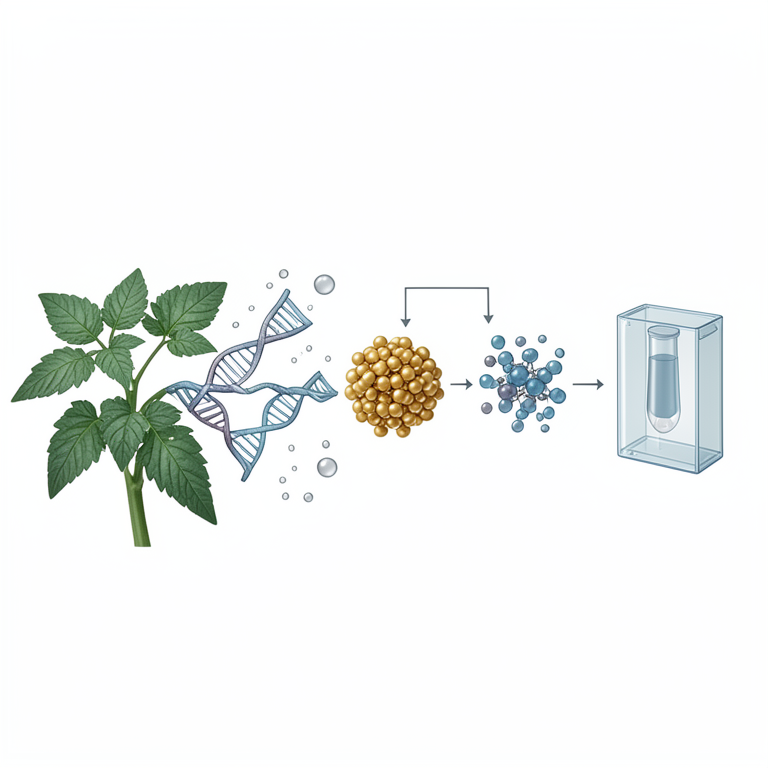
Biomarker Detection Workflow
AI-generated conceptual illustration (infected tomato leaves and plant pathogenic bacteria). It explains the idea and does not show study data.
View source evidence ↗Figures & tables
From the original paper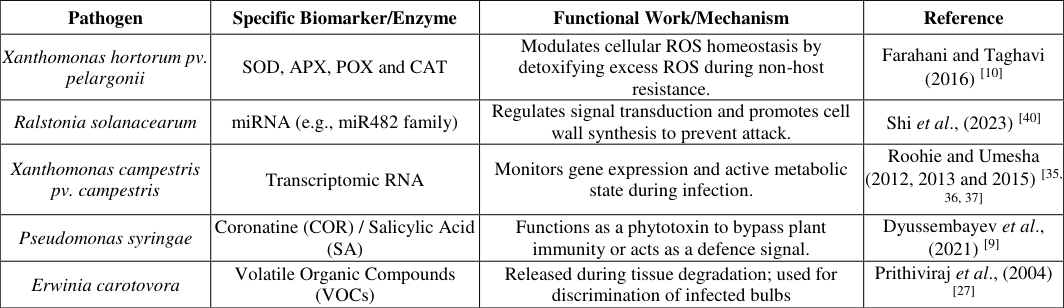 Table 1
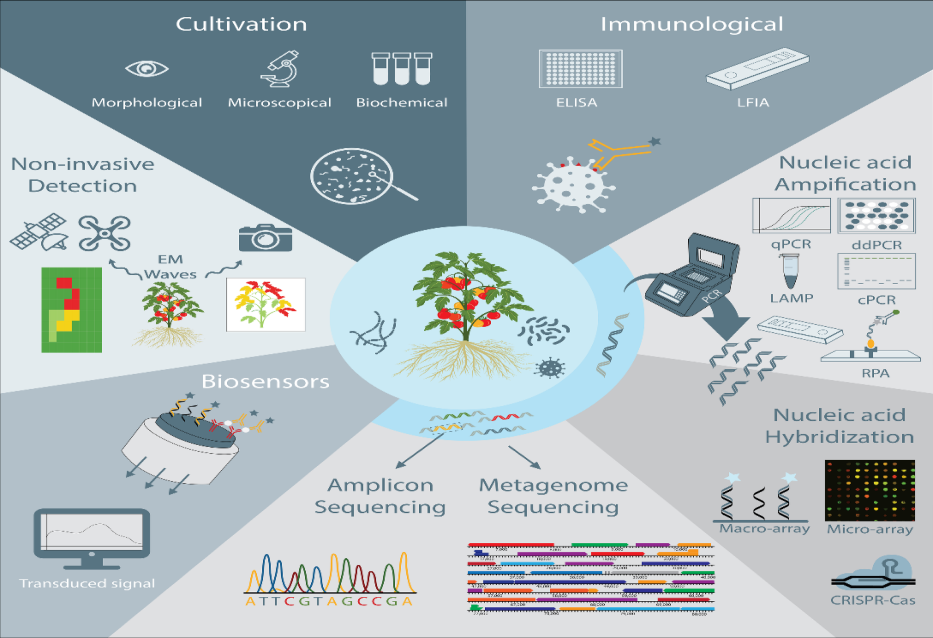 Figure 1
Introduction
Plant pathogens including fungi, bacteria, viruses and nematodes remain major constraints to global agricultural productivity, threatening food security and ecosystem sustainability (Kashyap et al., 2026) [18] . Among them, plant pathogenic bacteria are heterotrophic organisms, which can develop on host plants as parasites, cause direct and indirect damage. Direct damage affects host plant cells, causing cell wall and membrane destruction, organelle damage, hormonal disruption, vascular blockage and cell death. Indirect damage includes plant death, reduced nutrient assimilation and abnormal growth. These disruptions in plant growth and metabolism reduce crop productivity resulting in yield loss of up to 100%, economic losses of up to $1 billion annually and diminished quality of agricultural produce which vary depending on the phytopathogen species, crop and geographical location (Mulungu, 2024) [24] . By detecting and diagnosing these pathogens early, it is possible to implement the control measures to prevent food contamination and improve food safety (Ristaino et al., 2021) [34] . However, many bacterial infections exhibit a period of asymptomatic spread or present symptoms that mimic other physiological stresses, the ability to identify these pathogens at the earliest stages of infection is critical to preventing devastating epidemics (Gai and Wang, 2024) [13] . Traditional diagnostic frameworks primarily relying on culture based isolation and morphological identification are increasingly inadequate for modern agricultural needs because they are labour intensive and often require days or weeks to produce results (Qinhua et al., 2011) [29] . The most often used diagnostic technique for rapid detective plant pathogens is polymerase chain reaction (PCR). The sensitive of DNA in the nest-PCR is 50 ~ 100 fg (Grankvist et al., 1996) [14] . However, the operation procedure is time-consuming, expensive and requires professional technicians to operate the instruments (Yao et al., 2009) [50] . To overcome these bottlenecks, the identification of specific biomarkers measurable biological indicators such as unique DNA sequences, specialized metabolites or volatile organic compounds has emerged as a transformative solution.
Biomarker
Biomarkers are either specific molecules or compounds that serve as measurable quantifiable indicators of how plants react to an external stimulus (Steinfath et al., 2010) [41] . It is a measurable indicator of a biological state or condition that helps distinguish a diseased plant from a healthy one (Strimbu and Tavel, 2010) [43] . It can be used to develop accurate and sensitive methods in the detection and diagnosis of plant pathogens (Bakare et al., 2020) [3] . There is a large variety of plant biomarkers comprised of such materials as phytohormones, enzymes, proteins and nucleic acids. Biomarkers play a key role in monitoring and responding to plant environmental changes. Additionally, they may allow the detection of possible stress long before any physical signs of stress appear (Alharbi, 2020) [1] . These biomarkers provide the foundation for rapid, "point-of-care" diagnostic platforms, including biosensors and microfluidic devices, which enable the precise and real-time detection of plant pathogens even at extremely low concentrations (Rahman et al., 2025) [30] .
Biomarker based approaches for rapid detection of plant pathogenic bacteria
Biomarker based diagnostics have emerged as one of the most promising strategies for the rapid, sensitive and specific detection of plant pathogenic bacteria. Biomarkers include a wide range of biological molecules such as nucleic acids, proteins, metabolites, volatile organic compounds (VOCs), enzymes, antibodies and signalling molecules that are uniquely associated with pathogens or host responses during infection. These biomarkers can be detected using molecular, biochemical, immunological, electrochemical and nanotechnology based approaches, thereby enabling early disease diagnosis and effective disease management.
Fluorescent and nanoparticle based biomarkers
Nanotechnology has significantly enhanced the sensitivity and efficiency of pathogen detection systems. Fluorescent silica nanoparticles conjugated with antibodies have been successfully utilized for the detection of Xanthomonas axonopodis pv. vesicatoria, the causal agent of bacterial spot disease in Solanaceae plants. In this method, pathogenspecific antibodies immobilized on silica nanoparticles generate detectable fluorescent signals upon interaction with bacterial cells, enabling rapid and accurate identification of the pathogen (Yao et al., 2009) [50] . Similarly, fluorescence based silica nanoprobes have also been developed for the detection of Xanthomonas campestris. In this approach, Rubpy labeled IgG antibodies attached to silica nanoparticles recognize bacterial cells and produce measurable fluorescence signals, facilitating rapid pathogen identification (Yao et al., 2009) [50] . Gold nanoparticle (AuNP) based biosensors have further improved the specificity and sensitivity of pathogen detection. For example, Ralstonia solanacearum detection has been achieved using AuNP-conjugated single stranded DNA (ssDNA) probes that hybridize with pathogen-specific DNA sequences, resulting in detectable electrochemical or optical changes (Farber et al., 2019) [11] . Likewise, thiollinked DNA gold nanoparticle probes have been used for detecting various pathovars of Pseudomonas syringae through electrochemical genomic hybridization techniques such as cyclic voltammetry (Vaseghi et al., 2013) [46] . Nanoparticle assisted immunosensors have also been developed for Pantoea stewartii subsp. stewartii, the causal organism of Stewart's wilt in maize. In these systems, monoclonal antibodies target specific capsid proteins or bacterial effectors, while colloidal gold nanoparticles or lanthanide labels enhance signal amplification in lateral flow immunoassays, enabling rapid field level diagnosis (Zhang et al., 2014) [51] .
Volatile biomarkers and metabolite profiling
Volatile organic compounds (VOCs) released during host pathogen interactions serve as important biomarkers for early disease detection. De Lacy Costello (1999) [8] identified volatile organic compounds (VOCs) as critical biomarkers for the rapid and non-destructive detection of bacterial pathogens in stored potato tubers. When infected by bacteria such as Erwinia carotovora (bacterial soft rot), Bacillus polymyxa and Arthrobacter sp., tubers undergo metabolic changes that release a distinct chemical fingerprint into the surrounding headspace. The primary biomarkers identified across these bacterial infections include high concentrations of ethanol, acetaldehyde and acetone. Notably, branched-chain aldehydes such as 2methylpropanal, 2-methylbutanal, and 3-methylbutanal were found to be specific to bacterial presence and were not detected in healthy control tubers, making them highly reliable indicators for diagnostic purposes. These VOC profiles are instrumental in the development of sensor-based "electronic nose" technology coupled with artificial neural networks (ANN). Because these gases are emitted during the earliest stages of tissue breakdown, they allow for the detection of bacterial soft rot up to two weeks before physical symptoms or visible decay become apparent. The differentiation of these bacterial biomarkers from other pathogens such as the absence of common fungal markers like 2-ethyl-1-hexanol in bacterial rots enables the creation of highly specific early warning systems that can significantly reduce postharvest losses in storage facilities. Prithiviraj et al. (2004) [27] demonstrated that specific volatile compounds released from onion bulbs infected with Erwinia carotovora could effectively discriminate infected tissues from healthy ones. Such volatile based diagnostic systems offer non invasive and rapid detection possibilities for bacterial soft rot diseases. Apart from VOCs, metabolomics based profiling has become an important strategy in plant disease diagnostics. Plant metabolite profiling involves comprehensive analysis of metabolites present in plant tissues using advanced analytical platforms such as nuclear magnetic resonance (NMR) spectroscopy and mass spectrometry (MS) coupled with liquid chromatography (LC) or gas chromatography (GC) (Steinhauser and Kopka 2007, Shah et al., 2012 and Hazrati et al., 2022) [17,39,42] . These metabolites act as biomarkers that reflect physiological and biochemical alterations associated with pathogen infection. Metabolomics has been extensively explored for the detection of P. syringae infections. Biomarkers associated with P. syringae include lipopolysaccharides (LPS), flagellins (FLG), quorum sensing signals (QSS), coronatine (COR) and salicylic acid (SA) (Dyussembayev et al., 2021) International Journal of Biology Sciences https://www.biologyjournal.net [9] . Changes in metabolite levels associated with disease development have been successfully used to identify infections caused by P. syringae and co-existing pathogens (Rico et [22,28,33] . Plant metabolite profiling serves as a powerful tool for disease monitoring, primarily due to its high sensitivity in detecting subtle metabolic shifts during early infection stages and its multiplexing capability, which allows for the simultaneous analysis of numerous metabolites. Furthermore, its capacity for high-throughput analysis facilitates the rapid processing of large sample sets. However, these benefits are balanced by significant challenges. The sheer complexity of metabolomes can make data interpretation difficult and the risk of false positives is high since environmental or physiological factors can trigger metabolic changes unrelated to disease. Additionally, the technique often suffers from limited specificity, as different stress conditions may produce similar metabolic signatures and the high cost associated with specialized instrumentation and expertise remains a barrier to widespread implementation.
Pathogen metabolite profiling
In addition to host metabolomics, pathogen specific metabolite profiling provides a direct and highly specific method for bacterial pathogen detection. This technique focuses on identifying metabolites uniquely associated with the pathogen itself. Studies involving P. syringae have demonstrated that pathogen metabolite profiling offers several critical advantages for managing plant diseases. By achieving high specificity toward target pathogens, these methods ensure precise identification and reduce the risk of false positives. Furthermore, they facilitate early stage detection, allowing for the identification of infections before physical symptoms even develop in the host. To enhance efficiency, multiplex analysis enables the simultaneous evaluation of multiple samples alongside varying environmental conditions, a capability supported by extensive research in the field (Scortichini et [4,15,25,38] . However, limitations include high operational costs, technical complexity, large data generation requiring advanced bioinformatics expertise and insufficient sensitivity for detecting low concentrations of pathogenassociated metabolites.
Plant microbiome metabolite analysis
Plant associated microbiome analysis has also gained importance as an indirect biomarker-based approach for disease diagnosis. Changes in microbial community structure and metabolite composition often occur before visible disease symptoms appear. Therefore, microbiome metabolite profiling can provide early warning signals for impending pathogen attacks. Microbiome based analysis provides a robust framework for crop protection by enabling the early detection of pathogen invasion, often before visual symptoms appear. Its broadspectrum monitoring capabilities allow for the simultaneous identification of bacteria, fungi and viruses within a single diagnostic window. Ultimately, these strengths create a significant potential for preventive disease management, providing the data necessary to establish early warning systems that can mitigate outbreaks before they escalate. Nevertheless, microbiome analysis remains challenging due to the highly dynamic and complex nature of microbial communities, limited understanding of microbial interactions, technical difficulties in data interpretation and limited predictive accuracy regarding causal disease relationships.
Molecular biomarkers and PCR-based detection
Molecular biomarkers based on DNA and RNA signatures are among the most reliable tools for plant pathogen diagnosis. Polymerase chain reaction (PCR)-based methods offer high specificity, sensitivity and rapid detection. Molecular diagnostics dominate current strategies for detecting plant pathogenic bacteria due to their high specificity and sensitivity. DNA or RNA sequences unique to the pathogen serve as the primary biomarkers, targeted using amplification and hybridization techniques.
PCR and real time PCR
Polymerase Chain Reaction (PCR) techniques, particularly real-time PCR are widely used in plant pathology for detecting bacterial pathogens. Such methods are based on the amplification of conserved or species-specific genomic regions, enabling high-throughput and accurate detection (López et al., 2009) [21] . However, challenges remain due to the uneven distribution of bacteria within plant tissues, low titers and potential PCR inhibitors present in samples. Integration with other confirmation methods is advised to improve reliability (López et al., 2009) [21] .
Isothermal amplification techniques
Emerging as alternatives to PCR, isothermal nucleic acid amplification methods such as loop-mediated isothermal amplification (LAMP) provide rapid results without the need for thermal cycling equipment. The thermostatic nucleic acid amplification technology has shown great promise by combining rapid operation and high sensitivity, lending itself well to field applications (Yang et al., 2025) [49] .
CRISPR-Based Detection
CRISPR-Cas systems, notably Cas12a have been employed for specific and sensitive detection of pathogenic bacteria, leveraging programmable RNA guides that target pathogenic DNA sequences. This technology enables rapid fluorescence-based detection demonstrating high specificity and adaptability for detecting various pathogenic genes (Rathore et al., 2024) [31] .
Ralstonia solanacearum
Ralstonia solanacearum, the causal agent of bacterial wilt is detected using genomic biomarkers through conventional PCR, multiplex PCR and RT-PCR techniques. Low-Stringency Single Primer PCR (LSSP-PCR) has been particularly valuable for detecting complex DNA polymorphisms that serve as molecular signatures for differentiating pathogen biovars (Umesha and Avinash, 2015 and Avinash et al., 2016) [2,45] .
Xanthomonas perforans and Xanthomonas axonopodis pv. vesicatoria
These bacterial spot pathogens are commonly identified using DNA-based biomarkers. Multiplex PCR assays simultaneously target multiple genetic markers, allowing concurrent detection of both pathogens within a single reaction system (Umesha and Avinash, 2015) [45] .
Xanthomonas oryzae pv. oryzae
Detection of this rice pathogen involves DNA biomarkers and conformational biomarkers through Single-Strand Conformation Polymorphism PCR (SSCP-PCR). This method identifies unique conformations of single-stranded DNA fragments, enabling differentiation among pathogen strains (Umesha and Avinash, 2015) [45] .
Xanthomonas campestris pv. campestris
For this pathogen, both genomic DNA and transcriptomic RNA biomarkers are targeted using RT-PCR approaches. RNA-based biomarkers provide valuable insights into pathogen activity and gene expression during infection (Roohie and Umesha, 2012, 2013 and 2015) [35,36,37] . Tokmakova et al. (2024) [44] investigated the genetic and biochemical profile of Curtobacterium flaccumfaciens (Cff), a critical bacterial wilt pathogen and identified the alaS (alanine synthase) gene as a robust biomarker for species level differentiation. By utilizing this genetic marker alongside BOX-PCR fingerprinting and MALDI-TOF MS proteomic profiling, the researchers demonstrated a highly accurate method for the rapid taxonomic classification of pathogenic strains from diverse leguminous hosts and weeds. Their functional analysis further revealed that virulent Cff isolates exhibit specific caseinase and pectinase activities, which serve as enzymatic indicators of pathogenicity, enabling more precise diagnostic screening during quarantine and field monitoring.
Biosensor based biomarker detection
Biosensors combine a biorecognition element with a transducer to convert pathogen recognition into measurable signals. Various biosensors have been developed addressing the needs for rapid, sensitive and field deployable detection:
Electrochemical immunosensors
A microfluidic electrochemical immune biosensor has been developed for detecting Xanthomonas arboricola. The biosensor employs antibodies as bioreceptors targeting bacterial surface antigens and provides digital outputs three times faster than conventional ELISA methods (Regiart et al., 2017) [32] . These sensors detect electrical changes upon interaction with bacterial biomarkers, allowing sensitive and rapid detection applicable for complex plant matrices (Feng et al., 2015) [12] .
Similarly, a label free electrochemical immunosensor has been designed for detecting citrus canker pathogens through the PthA effector protein biomarker. This sensor utilizes a glassy carbon electrode modified with carbon nanotubes and Prussian Blue to achieve highly sensitive voltammetric detection (Haji-hashemi et al., 2018) [16] .
Optical biosensors
Using fluorescence, colorimetry or Raman spectroscopy, optical biosensors monitor light-based responses upon biomarker recognition. Fluorescent biosensors, enhanced with nanomaterials and CRISPR systems, permit real-time and multiplex pathogen detection with high sensitivity (Zhang et al., 2025) [52] . Raman microspectroscopy can detect unique biochemical signatures of bacteria and even assess bacterial viability on a single-cell level, offering a rapid and specific alternative to molecular methods (Kumar et al., 2020) [19] .
Microfluidic biosensors
Microfluidic platforms integrate biomarker detection within miniaturized devices using microchannels and arrays that allow high-throughput and low-volume testing. These platforms facilitate rapid analysis with enhanced sensitivity and can be adapted for point of care (POC) testing in agricultural settings (Chen et al., 2018) [7] . Multiplexed detection of cancer biomarkers using a microfluidic platform integrating single bead trapping and acoustic mixing techniques. Incorporating biosensing elements such as antibodies, nucleic acids or aptamers, they offer promising routes for automation and multiplex detection.
Microsphere immunoassays
Microsphere immunoassay technology particularly liquid suspension arrays has emerged as a rapid, highly sensitive and high-throughput alternative to traditional planar diagnostic methods for detecting plant pathogenic bacteria. By utilizing spectrally coded polystyrene or magnetic beads conjugated with target-specific antibodies, these multiplex assays can simultaneously isolate distinct plant pathogens directly from crude plant tissue or leaf extracts. A notable application demonstrated by Charlermroj et al. (2013) [6] involved a magnetic microsphere immunoassay engineered to target the destructive fruit blotch bacterium, Acidovorax avenae subsp. citrulli. This suspension array not only provided superior sensitivity compared to standard sandwich ELISA platforms when screening infected cucurbit hosts but also drastically reduced the required analytical processing time from four hours down to a single hour. Furthermore, optimization by Charlermroj et al. (2013) [6] validated the diagnostic precision of this system across fields of various cucurbitaceous crops, providing high relative accuracy and proving that the liquid phase matrix successfully mitigates sample interference from complex plant extracts while managing mixed infections. 2023) [47] Host response biomarkers Apart from detecting pathogen derived molecules, monitoring host physiological and molecular responses also provides valuable biomarkers for disease diagnosis.
Antioxidant enzyme biomarkers
Farahani and Taghavi (2016) [10] investigated antioxidant enzymes as biomarkers for differentiating host and non-host bacterial interactions in Vigna radiata infected with Xanthomonas hortorum pv. pelargonii. The study identified superoxide dismutase (SOD), ascorbate peroxidase (APX), catalase (CAT) and peroxidase (POX) as important biomarkers associated with reactive oxygen species (ROS) detoxification and defence responses.
In incompatible interactions (non-host resistance), these antioxidant enzymes were induced earlier and at significantly higher levels compared to compatible hostpathogen interactions. Thus, antioxidant enzyme expression patterns can serve as early indicators of pathogen recognition and plant defence activation.
MicroRNA (miRNA) biomarkers
Small RNA profiling has revealed that specific microRNAs (miRNAs) function as molecular biomarkers during bacterial infection. Shi et al. (2023) [40] demonstrated that differential expression of miRNAs in tomato plants infected with Ralstonia solanacearum could effectively indicate disease progression. Important biomarkers identified included members of the miR482 family, which regulate nucleotide-binding site leucine-rich repeat (NBS-LRR) resistance genes, along with miRNAs associated with salicylic acid signaling, jasmonic acid pathways and reactive oxygen species management.
Monitoring the upregulation or downregulation of these miRNAs provides valuable insights into early pathogen recognition and host defence regulation. Farahani and Taghavi (2016) [10] Ralstonia solanacearum miRNA (e.g., miR482 family) Regulates signal transduction and promotes cell wall synthesis to prevent attack. Shi et al., (2023) [40] Xanthomonas campestris pv. campestris Transcriptomic RNA Monitors gene expression and active metabolic state during infection.
Roohie and Umesha (2012, 2013 and 2015) [35,36,37]
Pseudomonas syringae
Coronatine (COR) / Salicylic Acid (SA)
Functions as a phytotoxin to bypass plant immunity or acts as a defence signal.
Dyussembayev et al., (2021) [9] Erwinia carotovora Volatile Organic Compounds (VOCs) [16] Pantoea stewartii Capsid Proteins Recognized by monoclonal antibodies in dualamplified immunosensors. Zhang et al., (2014) [51] Candidatus Liberibacter asiaticus (CLas) SDE1 (Sec-delivered effector 1) Secreted protein that moves systemically via phloem; enables detection in asymptomatic tissues Pagliaccia et al., (2017) [26] Erwinia amylovora LptE (Lipopolysaccharide transporter protein E)
Binds to LPS on the bacterial surface; immobilized on SIS sensors for label-free, singlecell detection Lee et al., (2023) [20] Curtobacterium flaccumfaciens alaS (Alanine Synthase) Gene
Acts as a conserved species-specific "DNA barcode" to differentiate pathogenic strains from non-pathogenic relatives.
Tokmakova et al. (2024) [44] Protein and immunological biomarkers Immunoassay based detection employs antibodies targeting bacterial surface proteins or toxins, facilitating specific pathogen identification. However, protein level detection may sometimes lack sensitivity due to low pathogen concentrations or cross-reactivity. Pagliaccia et al. (2017) [26] identified the Sec-delivered effector 1 (SDE1) as a highly effective protein biomarker for the detection of Citrus Huanglongbing (HLB), a destructive bacterial disease caused by Candidatus Liberibacter asiaticus (CLas). The researchers demonstrated that SDE1 is uniquely expressed by the pathogen and can move systemically through the plant's phloem, making it detectable even in tissues where the bacterial cells themselves are absent or unevenly distributed. Lee et al. (2023) [20] developed a biosensor for the rapid detection of fire blight disease caused by Erwinia amylovora, using a protein biomarker. Specifically, they identified the lipopolysaccharide transporter protein E (LptE) as a capture agent because it binds to lipopolysaccharides (LPS) on the bacterial surface. By immobilizing LptE onto a silicon-based SIS sensor, they achieved single-cell level detection of E. amylovora in real time without the need for amplification or labelling. This biomarker-based approach highlights how protein LPS interactions can be harnessed for ultra-sensitive pathogen detection in agriculture and beyond. Paper-Based Lateral Flow Strip Assays (LFSA) These colorimetric biosensors have gained traction as a rapid, portable and user-friendly diagnostic tool. LFSA target bacterial proteins or other analytes and provide visual results within minutes. Despite ease of use, their sensitivity often remains limited when detecting pathogens present in low concentrations, such as few CFU/mL in plant samples.
Recent efforts focus on signal enhancement and multiplexing to address these challenges (Luo et al., 2020) [23] .
Antibody and aptamer biorecognition elements
Biosensor platforms frequently employ antibodies or aptamers as recognition elements for bacterial biomarkers.
These can be integrated into electrochemical, optical, or piezoelectric biosensors, achieving rapid detection with improved specificity (Wang et al., 2025) [48] .
Challenges and future directions
Despite substantial advancements, several challenges persist in developing practical rapid detection methods for plant pathogenic bacteria:
Low pathogen concentrations and latency: Many plant pathogens are present at low titers or unevenly distributed, complicating sampling and detection. Improved sampling protocols and highly sensitive biomarkers are needed.
Specificity and multiplexing: Distinguishing closely related bacterial species or strains requires highly specific biomarkers and multiplex detection capabilities to screen for multiple pathogens simultaneously.
Integration and field deployment: Combining molecular biomarker detection with portable, user-friendly platforms like microfluidics or paper-based sensors will facilitate realworld adoption. Enhancements in signal amplification, sensor robustness and cost-effectiveness remain priorities.
Viability assessment: Detecting pathogen presence alone is insufficient; assessing bacterial viability is critical for disease management. Technologies like Raman microspectroscopy offer the potential to identify live pathogens rapidly.
Conclusion
Biomarker based technologies have revolutionized the detection and diagnosis of plant pathogenic bacteria by enabling rapid, sensitive and highly specific identification of pathogens and host responses. Biomarkers derived from nucleic acids, proteins, metabolites, volatile compounds, antioxidant enzymes and regulatory RNAs have significantly improved diagnostic capabilities. Integration of advanced molecular techniques, nanotechnology, biosensors, metabolomics and microbiome analysis has further enhanced early disease detection and field applicability.
Despite considerable advancements, challenges such as high operational costs, technical complexity, limited specificity in some metabolomic approaches, and difficulties in data interpretation remain major constraints. Future research should focus on developing cost-effective, portable, multiplex and highly sensitive diagnostic platforms that combine multiple biomarkers with artificial intelligence and machine learning tools for precision plant disease management. Refreneces 1. Alharbi RA. Proteomics approach and techniques in identification of reliable biomarkers for diseases. Saudi Journal of Biological Sciences. 2020;27(3):968-974.
Figures and tables from the paper
References
51 in the original paper- Avinash P, Sri R, Shirin M. Discrimination of Ralstonia solanacearum isolates by genetic signatures produced by single-strand conformation polymorphism and lowstringency single specific primer PCR analysis. African Journal of Microbiology Research. 2016;10(30):11281139.
- Bakare OO, Keyster M, Pretorius A. Identification of biomarkers for the accurate and sensitive diagnosis of three bacterial pneumonia pathogens using in silico approaches. BMC Molecular and Cell Biology. 2020;21(1):82.
- Bultreys A, Gheysen I, Maraite H, de Hoffmann E. Characterization of fluorescent and nonfluorescent peptide siderophores produced by Pseudomonas syringae strains and their potential use in strain identification. Applied and Environmental Microbiology. 2001;67(4):1718-1727.
- Chandrashekar CS, Umesha US, Chandan Shivamallu CS. Molecular detection of plant pathogenic bacteria using polymerase chain reaction single-strand conformation polymorphism. Acta Biochimica et Biophysica Sinica. 2012;44(3):217-223.
- Charlermroj R, Himananto O, Seepiban C, Kumpoosiri M, Warin N, Oplatowska M, Oraprapai G, Grant IR, Karoonuthaisiri N, Elliott CT. Multiplex detection of plant pathogens using a microsphere immunoassay technology. PloS one. 2013;8(4):e62344.
- Chen H, Chen C, Bai S, Gao Y, Metcalfe G, Cheng W, Zhu Y. Multiplexed detection of cancer biomarkers using a microfluidic platform integrating single bead trapping and acoustic mixing techniques. Nanoscale. 2018;10(43):20196-20206.
- De Lacy Costello BPJ, Evans P, Ewen RJ, Gunson HE, Ratcliffe NM, Spencer-Phillips PTN. Identification of volatiles generated by potato tubers (Solanum tuberosum cv: Maris Piper) infected by Erwinia carotovora, Bacillus polymyxa and Arthrobacter sp. Plant Pathology. 1999;48(3):345-351.
- Dyussembayev K, Sambasivam P, Bar I, Brownlie JC, Shiddiky MJ, Ford R. Biosensor technologies for early detection and quantification of plant pathogens. Frontiers in Chemistry. 2021;9:636245.
- Farahani AS, Taghavi M. Changes of antioxidant enzymes of mung bean [Vigna radiata (L.) R. Wilczek] in response to host and non-host bacterial pathogens. Journal of Plant Protection Research. 2016;56(1):95101.
- Farber C, Mahnke M, Sanchez L, Kurouski D. Advanced spectroscopic techniques for plant disease diagnostics. A review. TrAC Trends in Analytical Chemistry. 2019;118:43-49.
- Feng M, Kong D, Wang W, Liu L, Song S, Xu C. Development of an immunochromatographic strip for rapid detection of Pantoea stewartii subsp. stewartii. Sensors. 2015;15(2):4291-4301.
- Gai Y, Wang H. Plant disease: A growing threat to global food security. Agronomy. 2024;14(8):1-11.
- Grankvist O, Walther L, Bredberg-Rådén U, Lyamuya E, Mhalu F, Gustafsson Å, Biberfeld G, Wadell G. Nested PCR assays with novel primers yield greater sensitivity to Tanzanian HIV-1 samples than a commercial PCR detection kit. Journal of Virological Methods. 1996;62(2):131-141.
- Guilbaud C, Morris CE, Barakat M, Ortet P, Berge O. Isolation and identification of Pseudomonas syringae facilitated by a PCR targeting the whole P. syringae group. FEMS Microbiology Ecology. 2016;92(1):1-9.
- Haji-Hashemi H, Norouzi P, Safarnejad MR, Larijani B, Habibi MM, Raeisi H, Ganjali MR. Sensitive electrochemical immunosensor for citrus bacterial canker disease detection using fast Fourier transformation square-wave voltammetry method. Journal of Electroanalytical Chemistry. 2018;820:111117.
- Hazrati H, Kudsk P, Ding L, Uthe H, Fomsgaard IS. Integrated LC-MS and GC-MS-based metabolomics reveal the effects of plant competition on the rye metabolome. Journal of Agricultural and Food Chemistry. 2022;70(9):3056-3066.
- Kashyap AS, Manzar N, Sharma PK. Unravelling the wheat leaf blight pathobiome: a shift beyond the one pathogen-one disease paradigm. Journal of Plant Pathology. 2026;108(1):343-357.
- Kumar S, Gopinathan R, Chandra GK, Umapathy S, Saini DK. Rapid detection of bacterial infection and viability assessment with high specificity and sensitivity using Raman microspectroscopy. Analytical and Bioanalytical Chemistry. 2020;412(11):2505-2516.
- Lee UJ, Oh Y, Kwon OS, Park JM, Cho HM, Kim DH, Kim M. Single-cell detection of Erwinia amylovora using bio-functionalized SIS sensor. Sensors. 2023;23(17):7400.
- López MM, Llop P, Olmos A, Marco-Noales E, Cambra M, Bertolini E. Are molecular tools solving the challenges posed by detection of plant pathogenic bacteria and viruses?. Current Issues in Molecular Biology. 2009;11:13-45.
- López-Gresa MP, Torres C, Campos L, Lisón P, Rodrigo I, Bellés JM, Conejero V. Identification of defence metabolites in tomato plants infected by the bacterial pathogen Pseudomonas syringae. Environmental and Experimental Botany. 2011;74:216228.
- Luo K, Kim HY, Oh MH, Kim YR. Based lateral flow strip assay for the detection of foodborne pathogens: principles, applications, technological challenges and opportunities. Critical Reviews in Food Science and Nutrition. 2020;60(1):157-170.
- Mulungu E. Unmasking the hidden threat: a review of damage and losses due to phytopathogenic bacteria. Journal of Current Opinion in Crop Science. 2024;5(4):250-263.
- Nobori T, Wang Y, Wu J, Stolze SC, Tsuda Y, Finkemeier I, Nakagami H, Tsuda K. In Planta Bacterial Multi-Omics Analysis Illuminates Regulatory Principles Underlying Plant-Pathogen Interactions. bioRxiv. 2019:1-38.
- Pagliaccia D, Shi J, Pang Z, Hawara E, Clark K, Thapa SP, Francesco AD, Liu J, Tran T, Bodaghi S, Folimonova SY, Ancona V, Mulchandani A, Coaker G, Wang N, Vidalakis G, Ma W. A pathogen secreted protein as a detection marker for citrus huanglongbing. Frontiers in Microbiology. 2017;8:2041.
- European Journal of Plant Pathology. 2004;110(4):371377.
- Purahong W, Orrù L, Donati I, Perpetuini G, Cellini A, Lamontanara A, Michelotti V, Tacconi G, Spinelli F. Plant microbiome and its link to plant health: host species, organs and Pseudomonas syringae pv. actinidiae infection shaping bacterial phyllosphere communities of kiwifruit plants. Frontiers in Plant Science. 2018;9:1563.
- Qinhua GQ, Li Yan LY, Shao XiuLing SX, Wang YingChao WY. Isolation and identification of Pseudomonas marginalis and its biological characterization. Acta Phytophylacica Sinica. 2011;38(2):183-184.
- Rahman MA, Karthikeyan M, Johnson I, Raja K, Sekar C, Mary XA, Basha JS. Ensuring food security through rapid and in-field detection of diseases in food crops using real time and portable sensors. Analytical Biochemistry. 2025;705:115925.
- Rathore P, Basnet A, Kilonzo-Nthenge A, Dumenyo K, Yadegari Z, Taheri A. Rapid detection of pathogenic E. coli based on CRISPR Cas system. Frontiers in Microbiology. 2024;15:1423478.
- Regiart M, Fernández-Baldo MA, Villarroel-Rocha J, Messina GA, Bertolino FA, Sapag K, Timperman AT, Raba J. Microfluidic immunosensor based on mesoporous silica platform and CMK-3/polyacrylamide-co-methacrylate of dihydrolipoic acid modified gold electrode for cancer biomarker detection. Analytica Chimica Acta. 2017;963:83-92.
- Rico A, McCraw SL, Preston GM. The metabolic interface between Pseudomonas syringae and plant cells. Current Opinion in Microbiology. 2011;14(1):3138.
- Ristaino JB, Anderson PK, Bebber DP, Brauman KA, Cunniffe NJ, Fedoroff NV, Cambria F, Karen AG, Christopher AG, Christopher MJ, Michael DM, Graham KM, Patricia N, Angela R, David GS, Laura T, Wei Q. The persistent threat of emerging plant disease pandemics to global food security. Proceedings of the National Academy of Sciences. 2021;118(23):e2022239118.
- Roohie RK, Umesha S. Development of multiplex PCR for the specific detection of Xanthomonas campestris pv. campestris in cabbage and correlation with disease incidence. Journal of Plant Pathology and Microbiology. 2012;3(127):1-9.
- Roohie RK, Umesha S. DNA polymorphism analysis of Xanthomonas campestris pv. campestris using singlestrand conformation polymorphism (SSCP) and random amplified polymorphic DNA (RAPD). African Journal of Biotechnology. 2013;12(50):6913-6921.
- Roohie RK, Umesha S. Identification of genes associated with black rot resistance in cabbage through suppression subtractive hybridization. 3 Biotech. 2015;5(6):1089-1100.
- Scortichini M, Ferrante P, Marcelletti S, Petriccione M. Omics, epidemiology and integrated approach for the coexistence with bacterial canker of kiwifruit, caused by Pseudomonas syringae pv. actinidiae. Italian Journal of Agronomy. 2014;9(4):163-165.
- Shah SH, Kraus WE, Newgard CB. Metabolomic profiling for the identification of novel biomarkers and mechanisms related to common cardiovascular diseases: form and function. Circulation. 2012;126(9):1110-1120.
- Shi J, Zai W, Xiong Z, Wang K, Shui D, Jing ZG. Small RNA profiling reveals a role of miRNAs in response to Ralstonia solanacearum infection in tomato. Journal of Plant Growth Regulation. 2023;42(6):3342-3355.
- Steinfath M, Strehmel N, Peters R, Schauer N, Groth D, Hummel J, Steup M, Selbig J, Kopka J, Geigenberger P, Van Dongen JT. Discovering plant metabolic biomarkers for phenotype prediction using an untargeted approach. Plant Biotechnology Journal. 2010;8(8):900-911.
- Steinhauser D, Kopka J. Methods, applications and concepts of metabolite profiling: primary metabolism. Plant Systems Biology. 2007:171-194.
- Strimbu K, Tavel JA. What are biomarkers?. Current Opinion in HIV and AIDS. 2010;5(6):463-466.
- Tokmakova AD, Tarakanov RI, Lukianova AA, Evseev PV, Dorofeeva LV, Ignatov AN, Dzhalilov FSU, Subbotin SA, Miroshnikov KA. Phytopathogenic Curtobacterium flaccumfaciens strains circulating on leguminous plants, alternative hosts and weeds in Russia. Plants. 2024;13(5):667.
- Umesha S, Avinash P. Multiplex PCR for simultaneous identification of Ralstonia solanacearum and Xanthomonas perforans. 3 Biotech. 2015;5(3):245-252.
- Vaseghi A, Safaie N, Bakhshinejad B, Mohsenifar A, Sadeghizadeh M. Detection of Pseudomonas syringae pathovars by thiol-linked DNA-Gold nanoparticle probes. Sensors and Actuators B: Chemical. 2013;181:644-651.
- Venbrux M, Crauwels S, Rediers H. Current and emerging trends in techniques for plant pathogen detection. Frontiers in Plant Science. 2023;14:1120968.
- Wang S, Cui X, Zhong Z, Zhang J. Photoactivatable Aptamer-Based Biosensors for Point-of-Care Testing: Advances and Applications. Biosensors. 2025;15(6):336.
- Yang L, Sun Y, Sun L, Wang Z, Feng J, Liang Y. Application of loop-mediated isothermal amplification in plant pathogen detection. Phytopathology. 2025;115(1):6-13.
- Yao KS, Li SJ, Tzeng KC, Cheng TC, Chang CY, Chiu CY, Liao CY, Hsu JJ, Lin ZP. Fluorescence silica nanoprobe as a biomarker for rapid detection of plant pathogens. Advanced Materials Research. 2009;79:513516.
- Zhang F, Zou M, Chen Y, Li J, Wang Y, Qi X, Xue Q. Lanthanide-labeled immunochromatographic strips for the rapid detection of Pantoea stewartii subsp. stewartii. Biosensors and Bioelectronics. 2014;51:2935.
- Zhang Y, Wu Y, Guo A, Liu Y, Sun Q, Zou X, Sun Z. Fluorescent biosensors for the detection of foodborne pathogenic bacteria in food: a comprehensive review. Analytical Methods. 2025;17(41):8298-8316.