
Research article · 2026 · Full text
International Journal of Geography Geology and EnvironmentMapping the research landscape of non-communicable diseases in India: A bibliometric analysis
Volume 8(6) · Pages 154–162 · DOI: 10.22271/27067483.2026.v8.i6b.798 ↗
Research areasscientometrics and bibliometrics researchGlobal Health and EpidemiologyDiverse Approaches in Healthcare and Education Studies
Abstract
Author-writtenIndia is facing a significant public health crisis caused by the growing number of people suffering from chronic illnesses (non-communicable diseases or NCDs) and the associated high costs of treating them. The total NCD-related literature published globally has increased substantially over the last 40 years as researchers have responded to the increasing disease burden and heightened global attention to prevention and control strategies. This research intends to create a map of the research landscape related to NCDs in India by conducting bibliometric analyses using publications from an internationally recognised database of research articles published between 1980 and 2025. Bibliometric indicators will be employed to evaluate publication volume and patterns, citations, prolific authors and institutions, prominent journals, collaboration networks, and thematic developments in the field of NCD research. The bibliography will demonstrate that research output related to NCDs is rapidly increasing, particularly after 2000, due to high levels of interest from both researchers and policymakers in chronic disease prevention and management. The bibliographic analysis will identify trends in both the number of contributors to research on NCDs and the ways researchers are collaborating on NCD research and emerging themes (e.g., digital health, artificial intelligence, risk factor surveillance, and strengthening health systems). The analysis of keywords and themes will provide evidence that researchers are increasingly focusing on a multidisciplinary and technological approach to researching NCDs and that this focus is evolving from one of assessing the disease burden to one of developing technology-based solutions to prevent and manage NCDs. The study will highlight NCD research growth and structure and provide recommendations for advancing scientific evidence and guiding public health policy development related to NCDs in India.
Summary
Source-checkedPlain-language reading of the full paper, prepared with AI and checked against the text. Each point links to the authors' own words.
Why it matters
- India is experiencing a major public health crisis due to an increase in chronic non-communicable diseases (NCDs) and the high costs associated with their treatment. View evidence ↗
- The shift from communicable diseases to NCDs in India is driven by factors such as population growth, aging, urbanization, industrialization, poor diet, and environmental pollution. View evidence ↗
- Heart disease, diabetes, cancer, and respiratory diseases are the primary causes of premature disability and death in India. View evidence ↗
The question
- The study aims to map the research landscape of NCDs in India through a comprehensive bibliometric analysis of publications from 1980 to 2025. View evidence ↗
What they did
- Researchers retrieved data from the Scopus database using search terms including NCD, cardiovascular disease, diabetes, cancer, chronic respiratory disease, and India. View evidence ↗
- The analysis was performed using the R programming language with the Bibliometrix package and Biblioshiny interface, while VOS viewer was used for network visualization. View evidence ↗
- The study only included English-language articles, reviews, conference papers, and book chapters. View evidence ↗
What they found
- NCD research production in India was very low from 1980 to the early 2000s (less than 1-2 papers per year) but grew significantly, exceeding 70 studies published in 2021. View evidence ↗
- The United States is the most prolific contributor to NCD research, followed by significant contributions from India, China, Australia, and the UK. View evidence ↗
- The most cited document in the global NCD research landscape is Abbafati et al. (2020), with over 13,000 citations. View evidence ↗
- The most influential 'motor themes' currently driving NCD research include urban health, mental health, cardiovascular disease, and inequality. View evidence ↗
- NCD research evolved from broad themes like obesity and poverty (1980-2019) to more diverse topics including COVID-19, climate change, and social determinants of health (2020-2023). View evidence ↗
- Core journals for NCD research include The Lancet, PLOS ONE, BMC Public Health, and BMJ Open, among others. View evidence ↗
What it means
- The authors conclude that NCD research has shifted from disease-specific studies toward multidisciplinary and policy-oriented research. View evidence ↗
- The authors recommend that these findings be used by funders, policymakers, and researchers to identify priorities and develop evidence-based strategies for NCDs. View evidence ↗
- The authors state that future research should expand beyond a single database to include others like PubMed and Web of Science for a broader view of productivity. View evidence ↗
Visual summary
1 visualsIllustrations explain the paper; they do not show study data.
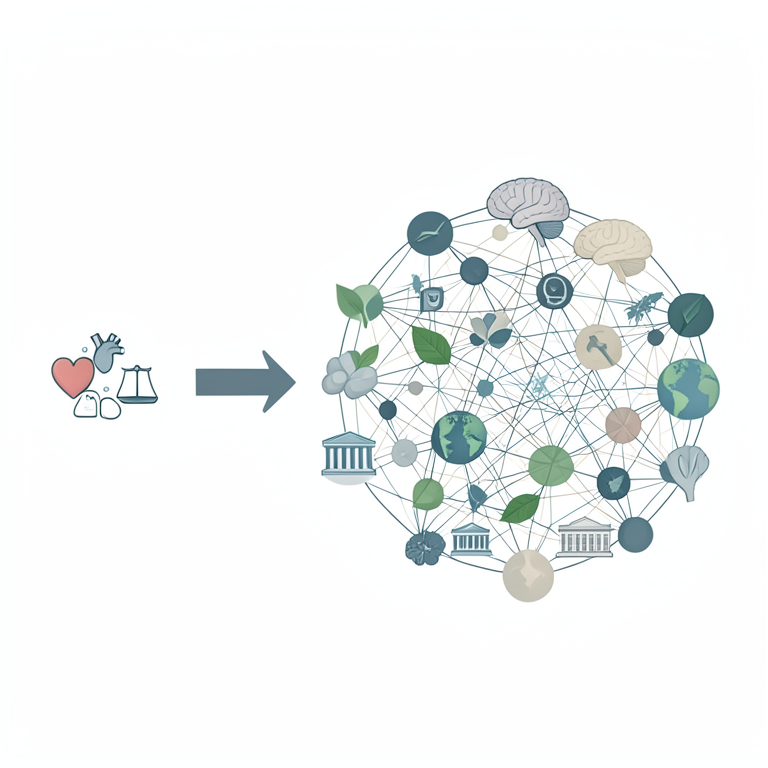
Evolution of NCD Research Focus
AI-generated conceptual illustration (A conceptual map of medical research themes in India). It explains the idea and does not show study data.
View source evidence ↗Figures & tables
From the original paper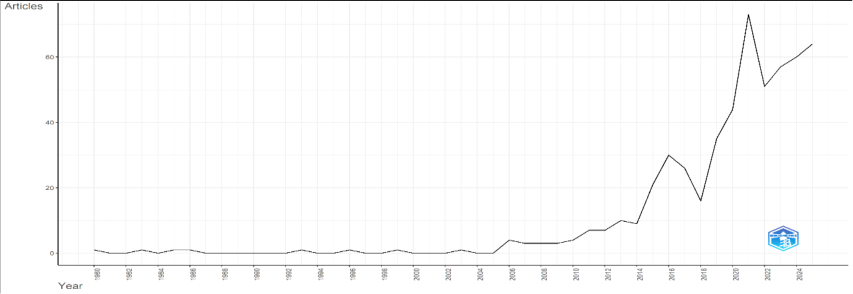 Figure 1
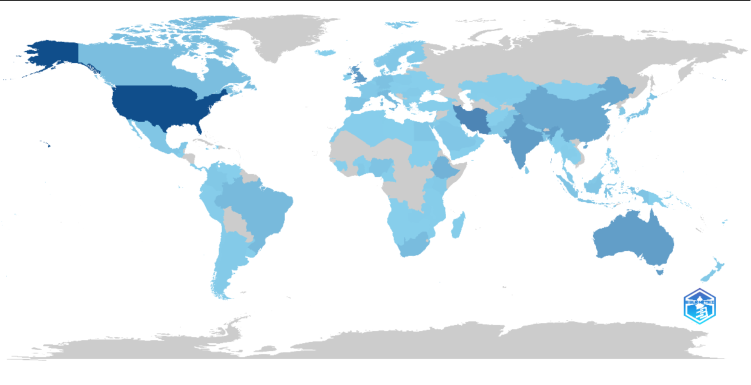 Figure 2
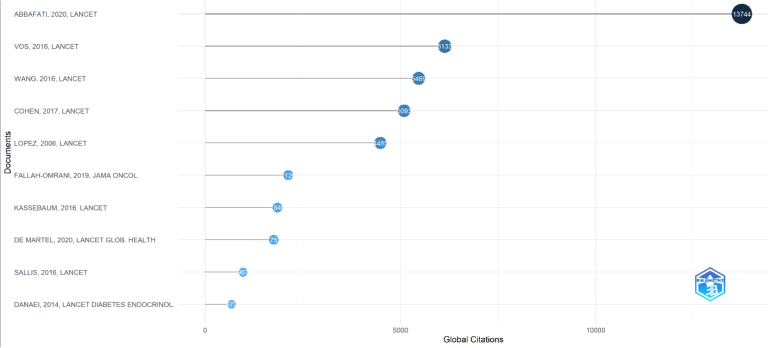 Figure 3
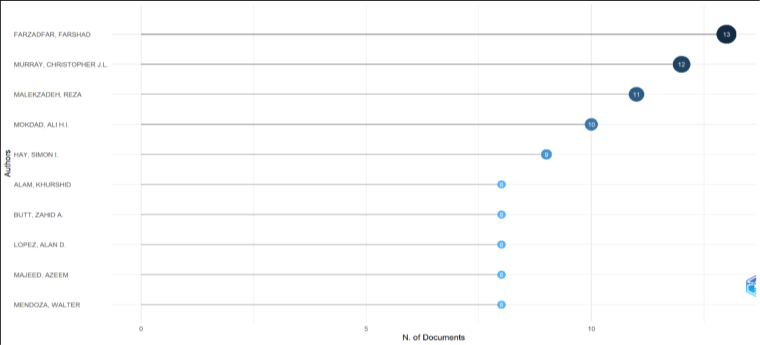 Figure 4
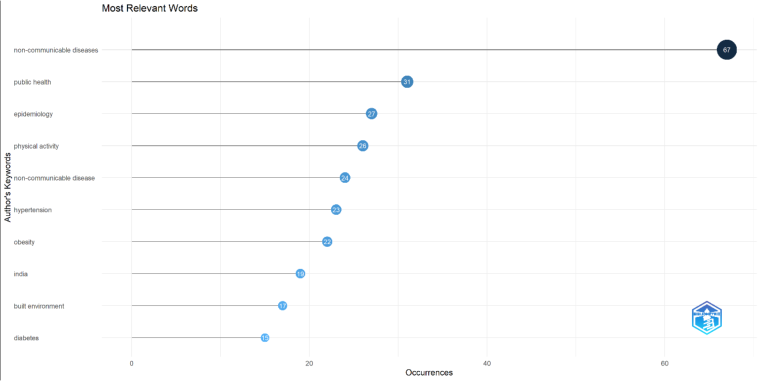 Figure 5
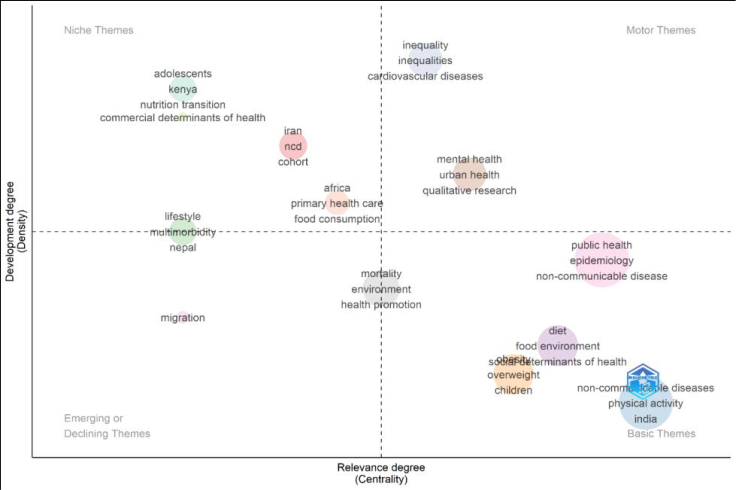 Figure 6
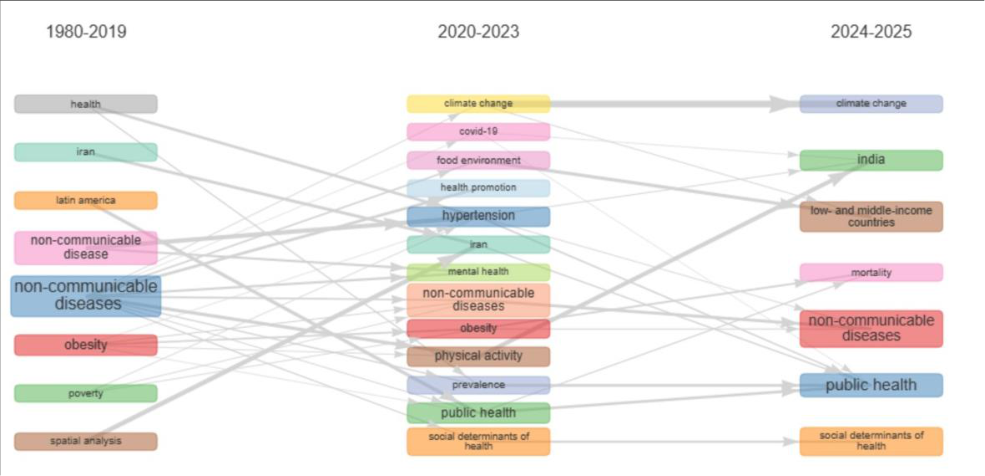 Figure 7
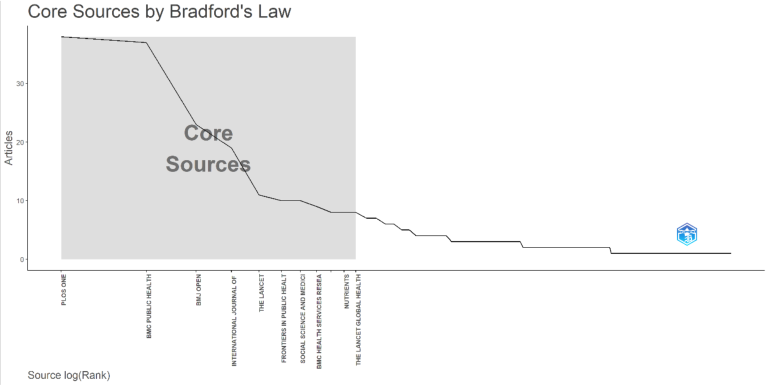 Figure 8
Introduction
Major public health crises of this century include non-communicable disease (NCDs) such as heart disease, diabetes, cancer and lung diseases (Ezzati & Riboli, 2013) [8] . The vast majority of deaths world-wide result from these disease and they have debilitating effects, ruining the quality of life for millions of individuals and increasing overall health care spending. Researchers used to think of NCDs as diseases of rich, developed countries, however; in, low-and middle-income countries, like India, there is a rapidly growing NCDs crisis. The larger population, older population, urbanisation, industrialisation, sedentary lifestyles, poor diets, tobacco and alcohol use and environmental pollution have all contributed to the transition from communicable diseases to these NCDs; therefore, NCDs are a major barrier to sustainable development and improving health outcomes (Allen et al., 2017; Rydin et al., 2012) [1,17] . India is currently undergoing an epidemiological and demographic transition that is producing higher life expectancy, rapid urbanisation, and changing lifestyle styles. Therefore, over the last 40 years there has been a tremendous increase in the prevalence of NCDs with an ever-growing proportion of mortality and morbidity in India being attributed to NCDs. Studies show that the leading causes of premature death and disability in India are heart disease, diabetes, cancer and respiratory diseases (Naghavi et al., 2017) [15] . The increased prevalence of these NCDs is putting a strain on the health care system, limiting economic growth, and straining household finances. To know the extent of disease, risk factors, how to prevent these and mitigate, many organisations (e.g. research institutions, health care organisations, international bodies) have focussed on strengthening the understanding of disease patterns and their respective risk factors -to be able to improve all aspects of disease management including prevention and mitigation (Mony & Srinivasan, 2011; Niessen et al., 2018) [13,16] . Research plays an essential role in addressing many of the complex public health issues being faced today because it produces the evidence necessary to develop sound policies concerning the prevention of disease and the planning of health services. In recent years, NCD research in India has expanded considerably and will continue to do so as the interest from researchers and policymakers continues to grow. Research conducted to date has almost exclusively focussed on studying the prevalence of NCDs and the epidemiological surveillance of NCDs; however, in today's context, NCD research is now addressing many different types of topics such as behavioural risk factors, environmental determinants of health, health equity issues, technology-based interventions for health care, the application of artificial intelligence; accessibility to health care; as well as health system strengthening. As the complexity and scale of the NCD-related challenges have increased, the volume of research that is interdisciplinary and collaborative between institutions has increased significantly, leading to a very rapid accumulation of scientific literature associated with NCDs (Murray et al., 2020) [14] . With the rapid increase in the number and types of scientific publications have created a demand for systematic approaches to assessment of research productivity, research impact, research collaboration networks, and research theme evolution. One way to accomplish this is through bibliometric analysis which is one of the leading quantitative methods for evaluating scientific productivity, assessing research impact, examining collaboration networks and determining the evolutionary directions of context-based knowledge development in particular fields of research (Vos et al., 2020) [20] . Bibliometric analyses can provide a wide range of information about the progress and future direction of scientific research through evaluation of various elements including publication records, citation patterns, co-authorship relationships, international collaborations, institutional contributions and keyword networks. Researchers, policymakers, and funding agencies can use bibliometric research to assist with their identification of significant contributors, emerging themes of part of their work to determine what research cooperation and what degree of knowledge is lacking from existing research on a topic (Donthu et al., 2021; Aria and Cuccurullo, 2017) [7,2] . Bibliometric analysis methodology has been extensively utilized in the health sciences to evaluate trends in the fields of infectious disease, cancer research, mental health, environmental health, digital health, and the use of artificial intelligence. Multiple reports have indicated increases in the number of publications on NCDs globally, with an increase in international collaboration and a continued diversification of themes that had been previously researched. Emerging research topics such as telehealth, machine learning, risk prediction models, precision medicine, and mobile health technologies have been steadily gaining prominence in relation to the larger NCD research community. These changes reflect the continuing evolution of how science is conducted and the need for ongoing review of the progress of science (Bhattacharya et al., 2025; Sweileh et al., 2025) [4, 19] . While the number of NCD publications being produced in India continues to increase year to year, the total review of literature through comprehensive bibliometric assessments to examine the overall trends of NCD research in India remains limited. Prior work has focused primarily on individual diseases, periods of time that were often short, or certain aspects of the research productivity of specific groups and therefore has resulted in a lack of understanding of the general evolution of NCD research in India. This includes a lack of evidence demonstrating the rate of growth in the number of publications produced, citation impact, the productivity of research institutions, research collaboration networks, leading NCD research journals, and the evolution of research topics related to NCD research over a long period of time. Evaluating all of these dimensions is essential so that an understanding of how NCD research has evolved in India can be developed and to identify research priorities in both scientific research as well as public health policy for the future. The objective of the present study is to map the research environment for non-communicable disease research in India by conducting a comprehensive bibliometric analysis of NCD research publications from 1980 to 2025. The study will focus on analyzing publication trends, citation trends, authorship trends, influence of institutions in sharing NCD research publications, research collaboration networks in the field of NCD research, leading journals that publish NCD research articles, and the evolution of research themes within NCD research. As a result, this study will provide an integrated overview of the NCD research environment in India, thereby contributing to an understanding of the overall progress of science in NCD research, identifying potential future research themes, and providing an evidencebased rationale to improve future scientific research and public health policy relating to NCDs.
Literature Review
Non-communicable diseases (NCDs) have become one of the most significant public health challenges worldwide, accounting for the majority of global mortality and disease burden. The increasing prevalence of cardiovascular diseases, diabetes, cancer, and chronic respiratory diseases has attracted substantial research attention over the past few decades. Studies have demonstrated that socio-economic inequalities, urbanization, unhealthy lifestyles, and environmental changes significantly contribute to the growing burden of NCDs, particularly in low-and middleincome countries (Miranda et al., 2008). Allen et al. (2017) [12, 1] found that lower socio-economic groups in developing countries experience a disproportionately higher prevalence of behavioural risk factors such as tobacco use, alcohol consumption, and poor dietary practices, highlighting the strong relationship between poverty and chronic disease risk. Similarly, Stringhini et al. (2017) [18] emphasized the importance of socio-economic status as a determinant of premature mortality and NCD-related health outcomes. In the Indian context, the epidemiological transition from communicable to non-communicable diseases has resulted in a substantial increase in research output focusing on chronic disease prevention, management, and policy interventions. Mony and Srinivasan (2011) [13] conducted one of the earliest bibliometric assessments of NCD research in India and reported a steady increase in publication output, reflecting growing scientific interest in chronic disease-related issues. Their findings highlighted the dominance of epidemiological and clinical studies while identifying gaps in health systems and policy-oriented research. Urbanization has also emerged as an important theme in NCD research. Rydin et al. (2012) [17] argued that the design and planning of urban environments significantly influence health outcomes through factors such as housing conditions, transportation systems, physical activity opportunities, and environmental exposures (Daar et al., 2007) [6] . Their work emphasized the need for integrated urban planning approaches to address chronic disease risk factors and improve population health. Furthermore, Niessen et al. (2018) [16] highlighted the importance of addressing socioeconomic inequalities as part of broader sustainable development strategies for NCD prevention and control in low-and middle-income countries. The rapid growth of scientific literature has increased the importance of bibliometric analysis as a tool for evaluating research productivity, impact, and knowledge structures. Bibliometric methods enable researchers to examine publication trends, citation patterns, collaboration networks, and thematic evolution within specific fields of study (Bloom et al., 2011) [5] . Aria and Cuccurullo (2017) [2] introduced the Bibliometrix package in R, which has become one of the most widely used tools for science mapping and bibliometric analysis. The software facilitates comprehensive analysis of scientific literature through coauthorship networks, co-citation analysis, thematic mapping, and keyword co-occurrence analysis. Donthu et al. (2021) [7] further strengthened the methodological foundation of bibliometric studies by providing detailed guidelines for conducting bibliometric analysis. Their work emphasized the importance of performance analysis and science mapping techniques in identifying influential authors, institutions, journals, and emerging research themes. Bibliometric methods have since been increasingly applied across public health, environmental studies, health informatics, and medical sciences to understand research dynamics and guide future investigations (Beaglehole et al., 2011) [3] . Recent studies indicate that NCD research is becoming increasingly interdisciplinary, incorporating digital health technologies, artificial intelligence, machine learning, and predictive analytics. Emerging themes include telemedicine, mobile health applications, risk prediction models, and precision medicine. These developments reflect the evolving nature of NCD research and demonstrate how technological innovations are reshaping disease prevention and management strategies. The growing integration of technology into healthcare has expanded research opportunities and generated new areas of scientific inquiry. Despite the increasing volume of NCD-related publications, comprehensive bibliometric analyses focusing specifically on India's research landscape remain limited. Existing studies often concentrate on individual diseases, short study periods, or selected dimensions of research productivity. Consequently, there remains a need for a systematic assessment of publication trends, citation impact, institutional contributions, collaboration networks, and thematic evolution over an extended period. A bibliometric analysis covering the period 1980-2025 can provide valuable insights into the development of NCD research in India, identify knowledge gaps, and support evidence-based decision-making for future research and policy initiatives.
Objectives of the study
Objectives of the study
Research methodology
This bibliometric research design analyses the growth, structure, and evolution of non-communicable disease (NCD) research in India over time from 1980-2025. Data for this study was retrieved from the Scopus database, selected for its vast coverage of peer-reviewed research literature including citation data. The bibliographic information was identified by searching on a series of terms: perusing the term combinations NCD, cardiovascular disease, diabetes, cancer, chronic respiratory disease and India. Only Articles, Reviews, Conference papers, and book chapters written in English were included in this analysis.
The bibliographic records were exported in both BibTeX and CSV formats so they could be processed as inputs for the bibliometric analysis in the R programming language using the Bibliometrix package and the Biblioshiny Web Interface, and the VOS viewer software for visualising networks and mapping science. The descriptive indicators computed from the data included: Annual publication growth, citation trends among prolific authors and productive institutions, leading journals and countries contributions. Co-authoring analysis, co-citation analysis, bibliographic coupling analysis, and keyword co-occurrence analysis were conducted to illustrate the collaborations, intellectual structure and emerging themes of NCD research.
The research findings will be presented in tables, graphs, thematic maps, and graphical visualisation of networks to present an overview of the development and future perspectives regarding the NCD research landscape in India.
Analysis & Interpretation
Source: Author's Own Compilation Because of these low publish rates, this indicates that many researchers were not studying NCD until after 2005, and were primarily focused on research related to the two major public health areas of communicable diseases and maternal-child health. Starting after 2005, however, many more studies began being published, and researchers appeared to be realizing that both chronic disease scenarios were on the rise as well as significant changes in the types of diseases prevalent in Indian society. After 2015, this trend dramatically increased; following the publication output of academic institutions in India, the influx of research funding leading to higher allocation amounts for NCD research, and the creation of government policies facilitating the promotion of initiatives or programs and procedures aimed towards preventing and controlling the incidence/prevalence of NCDs. A decrease in production was observed in mid-2018 and mid-2019; however, there was a quick return to producing an unprecedented number of NCD studies and subsequently surpassing previous levels of publication production in 2021 with greater than 70 NCD studies published. While a small fluctuation continues in terms of production through subsequent years, there continues to be an overall positive increase with production levels in each year being greater than 60 NCD studies per year through 2025. Therefore, these findings provide substantiated evidence that there has been a sufficient increase in the scope of NCD research since 2015 and thus demonstrates the increasing importance chronic disease research will continue to play in overcoming the public health challenges of the 21 st century as well as supporting evidence-based development.
Source: Author's Own Compilation And many European countries; demonstrating that there is an international focus on research related to NCDs. For example, the representation of India on the Map demonstrates that India is an increasing contributor to research on NCDs, and is responding to the increasing burden of NCDs and growing concern for public health. As can be seen on the Map, moderate level of productivity for NCDs can found in several areas of South America, the Middle East, Southeast Asia and Africa; suggesting that developing and emerging economies are becoming increasingly involved in NCD research as they develop their research infrastructure and capabilities. However, there are several regions (e.g., much of Africa, parts of Central Asia) that are exhibiting lower levels of productivity for NCD-related research; potentially reflecting inequities in the availability of research funding, research-related infrastructure, and capacity to do research. Overall, the Map indicates that NCD-related research is global in nature, but focused in countries with more developed research ecosystems and those that invest more resources in research on health care and public health. Finally, the Map indicates that international collaboration continues to grow, and global interest in finding solutions to the challenges associated with NCDs continues to expand.
Source: Author's Own Compilation The "Most Cited Global Modifications" study identifies the most important documents related to non-communicable diseases (NCD) according to their total number of citations from any global source to date. Based on citation results provided by Scopus, Abbafati et al. (2020) [20] are identified as the most cited with >13000 citations globally and represent the highest level of evidence of how the NCD has The analysis of "Most Relevant Words" shows the frequency of the author's keywords used across noncommunicable disease (NCD) literature to highlight the major themes of research and areas of scholarly interest. The keyword "non-communicable diseases" was the most frequently used keyword with a total of 67 times, making it the most prominent keyword in NCD literature. The next most popular keywords were "public health" (31), "epidemiology" (27) and "physical activity" (26), suggesting a large amount of research interest in disease surveillance, population health and behavioural risk factors. Other popular keywords included "hypertension", "obesity" and "diabetes", showing an increasing prevalence of these chronic diseases and their relationship to NCD research. The presence of "India" as one of the most relevant keywords indicates the geographical focus of this study, whilst the keyword "built environment" signifies that an increasing number of researchers are recognising the impact of urban planning and environmental factors on health outcomes. Overall, the distribution of the keywords indicates a shift in focus for non-communicable disease research from specific diseases to broader public health and multi-disciplinary approaches, with an emphasis on prevention, management of risk factors and sustainable health interventions.
Source: Author's Own Compilation Themes that are specific but largely isolated areas, which include adolescents, nutrition transition, and commercial determinants of health. The lower left quadrant contains Emerging or Declining Themes that indicate either emerging areas for future study (e.g., migration) or themes that have been decreasingly studied by researchers (e.g., multimorbidity). In general, the thematic map indicates that contemporary NCD research is increasingly addressing health inequality and urban health issues, as well as lifestyle factors and public health interventions. Additionally, there is a growing trend toward multi-disciplinary approaches to non-communicable disease research that can help guide future NCD research directions.
Source: Author's own compilation The core journals have established their role as the primary mechanism for the sharing and communicating of research in epidemiology, public health, health systems, behavioral risk factors, and disease prevention. The steep decline in the number of publications in journals outside of the core zone suggests that there is an increasing distribution of research output across a greater number of journals. This distribution suggests that Bradford's Law has been confirmed and also suggests that there is a high concentration of scientific knowledge in a limited number of very productive sources. These findings provide direct assistance to researchers looking for influential journals in which to perform their literature reviews, to submit their manuscripts for publication, and to disseminate knowledge about NCDs.
Source: Author's own compilation The thematic map showed a growing emphasis on issues like; health inequalities, urban health, mental health, social determinants of health, and climate change. The thematic evolution analysis showed a movement away from disease specific type studies towards multidisciplinary and policy oriented type research. Overall conclusions are; the NCD science volume is growing, becomes increasingly complex, and there is an emergence of a strong policy focus.
Conclusion
This bibliometric analysis presents an overall analysis of the growth and structure of non-communicable disease (NCD) research in India from 1980 to 2025. Results show that, over the last 40 years, NCD research was growing quickly and reflects the increasing recognition that chronic disease is a significant public health concern. Additionally, the analysis provides an overview of how leading authors, institutions, journals, and international collaborations are contributing to the development of scientific knowledge related to the prevention, management, and policy of NCDs. Furthermore, the research themes studied have also undergone a significant change from traditionally styled epidemiological studies to now include broader issues that relate to NCDs, such as health inequalities, social determinants of health, environmental factors, as well as the increasing use of digital health technologies and the impacts of climate change. The increasing use of multi-disciplinary researchers suggests a change towards using more comprehensive methods of understanding and addressing the burden of chronic diseases. Lastly, by mapping the trends in publication activity, citation activity, thematic structures, and collaboration networks of researchers and institutions, the results of this study provide valuable information on the emergence and growth of NCD research in India. Therefore, the findings may be used by researchers, policy-makers and funders to assist in identifying emerging research priorities and developing evidence-based strategies to address the increasing burden of non-communicable diseases.
Policy Implications
This research study has widespread implications for public health policy, health care decision-making, and the planning of research studies in India. An increasing number of published studies regarding non-communicable diseases (NCDs) indicate a continued and increasing need for resources to be allocated towards chronic disease prevention, surveillance, and management (GBD 2019 Diseases and Injuries Collaborators, 2020). Policymakers should support and promote interdisciplinary research that incorporates epidemiology, public health, environmental studies, digital health, and the social sciences to fully understand the complexity of the various factors related to NCDs. Increasingly, social factors, such as poverty, education level, income status, and housing quality are being recognized as factors contributing to health disparity. The expectation is that this trend will continue and that future interventions will need to go beyond clinical-based methods to address larger social and economic factors and environmental factors that influence disease risk (GBD 2019 Risk Factors Collaborators, 2020). Emerging research themes, such as climate change, urban health, mental health, and digital health technologies provide further evidence of the need for increased policy attention and research funding. In addition, greater research collaboration at national and international levels will assist with the sharing of knowledge, improved quality of research, and the development of innovative solutions to the problems associated with NCDs. Research produced from NCD's must be integrated into the health policy development process and the National Action Plans to achieve equitable health care access and improve chronic disease prevention strategies, thus creating sustainable public health outcomes.
Scope for Further Research
The current research sheds light on the gaps in the understanding of non-communicable diseases (NCDs) in India, but there are endless possibilities for future research in the NCD arena in India. To improve the understanding of the landscape of research on NCDs in India, future studies could expand their data sources from single databases to multiple databases such as Web of Science, PubMed, Dimensions, and Scopus. This approach would allow researchers to develop broader views of scientific productivity in India. Future research could also categorize NCDs (such as diabetes, heart disease, cancer, and chronic lung disease) to identify unique subcategories of research trends and knowledge gaps. Advanced scientometric methods, such as citation network analysis, topic modelling, and machine learning-based text mining could be employed to further understand the intellectual structure of NCDcomplementary research. Future studies that use comparative analytic methods to compare India's performance with other developing and industrialized countries would reveal more options. In addition, future researchers could study how research output and research policy and implementation are related, and how research output informs public health policy decisions. These studies will enable more efficient use of scarce research dollars for priority funding, and further the role of research in informing the global burden of NCDs on public health.
Figures and tables from the paper
References
20 in the original paper- Allen L, Williams J, Townsend N, Mikkelsen B, Roberts N, Foster C, et al. Socioeconomic status and non-communicable disease behavioural risk factors in low-income and lower-middle-income countries: a systematic review. Lancet Glob Health. 2017;5(3):e277-e289. doi:10.1016/S2214109X(17)30058-X.
- Aria M, Cuccurullo C. bibliometrix: An R-tool for comprehensive science mapping analysis. J Informetr. 2017;11(4):959-975. doi:10.1016/j.joi.2017.08.007.
- Beaglehole R, Bonita R, Horton R, Adams C, Alleyne G, Asaria P, et al. Priority actions for the noncommunicable disease crisis. Lancet. 2011;377(9775):1438-1447. doi:10.1016/S01406736(11)60393-0.
- Bhattacharya S, Sharma R, Gupta P. Digital horizons in non-communicable disease care: A bibliometric exploration of global research trends. Front Digit Health. 2025;7:1528711.
- Bloom DE, Cafiero ET, Jané-Llopis E, AbrahamsGessel S, Bloom LR, Fathima S, et al. The global economic burden of non-communicable diseases. Geneva: World Economic Forum; 2011.
- Daar AS, Singer PA, Persad DL, Pramming SK, Matthews DR, Beaglehole R, et al. Grand challenges in chronic non-communicable diseases. Nature. 2007;450(7169):494-496. doi:10.1038/450494a.
- Donthu N, Kumar S, Mukherjee D, Pandey N, Lim WM. How to conduct a bibliometric analysis: An overview and guidelines. J Bus Res. 2021;133:285-296. doi:10.1016/j.jbusres.2021.04.070.
- Ezzati M, Riboli E. Behavioral and dietary risk factors for noncommunicable diseases. N Engl J Med. 2013;369(10):954-964. doi:10.1056/NEJMra1203528.
- GBD 2019 Diseases and Injuries Collaborators. Global burden of 369 diseases and injuries in 204 countries and territories, 1990-2019: a systematic analysis for the Global Burden of Disease Study 2019. Lancet. 2020;396(10258):1204-1222. doi:10.1016/S01406736(20)30925-9.
- GBD 2019 Risk Factors Collaborators. Global burden of 87 risk factors in 204 countries and territories, 19902019: a systematic analysis for the Global Burden of Disease Study 2019. Lancet. 2020;396(10258):12231249. doi:10.1016/S0140-6736(20)30752-2.
- Marmot M, Bell R. Social determinants and noncommunicable diseases: time for integrated action. BMJ. 2019;364:l251. doi:10.1136/bmj.l251.
- Miranda JJ, Kinra S, Casas JP, Davey Smith G, Ebrahim S. Non-communicable diseases in low-and middle-income countries: context, determinants and health policy. Trop Med Int Health. 2008;13(10):12251234. doi:10.1111/j.1365-3156.2008.02116.x.
- Mony PK, Srinivasan K. A bibliometric analysis of published non-communicable disease research in India. Indian J Med Res. 2011;134(5):659-666.
- Murray CJL, Aravkin AY, Zheng P, Abbafati C, Abbas KM, Abbasi-Kangevari M, et al. Global burden of diseases, injuries, and risk factors study 2019. Lancet. 2020;396(10258):1204-1222.
- Naghavi M, Abajobir AA, Abbafati C, Abbas KM, Abd-Allah F, Abera SF, et al. Global, regional, and national age-sex specific mortality for 264 causes of death, 1980-2016. Lancet. 2017;390(10100):11511210. doi:10.1016/S0140-6736(17)32152-9.
- Niessen LW, Mohan D, Akuoku JK, Mirelman AJ, Ahmed S, Koehlmoos TP, et al. Tackling socioeconomic inequalities and non-communicable diseases in low-income and middle-income countries under the Sustainable Development agenda. Lancet. 2018;391(10134):2036-2046. doi:10.1016/S01406736(18)30482-3.
- Rydin Y, Bleahu A, Davies M, Dávila JD, Friel S, De Grandis G, et al. Shaping cities for health: complexity and the planning of urban environments in the 21st century. Lancet. 2012;379(9831):2079-2108. doi:10.1016/S0140-6736(12)60435-8.
- Stringhini S, Carmeli C, Jokela M, Avendaño M, Muennig P, Guida F, et al. Socioeconomic status and the 25 × 25 risk factors as determinants of premature mortality. Lancet. 2017;389(10075):1229-1237. doi:10.1016/S0140-6736(16)32380-7.
- Sweileh WM. Role of artificial intelligence in early identification and risk evaluation of non-communicable diseases: A bibliometric analysis of global research trends. Front Public Health. 2025;13:1542975.
- Vos T, Lim SS, Abbafati C, Abbas KM, Abbasi M, Abbasifard M, et al. Global burden of 369 diseases and injuries in 204 countries and territories, 1990-2019. Lancet. 2020;396(10258):1204-1222. doi:10.1016/S0140-6736(20)30925-9